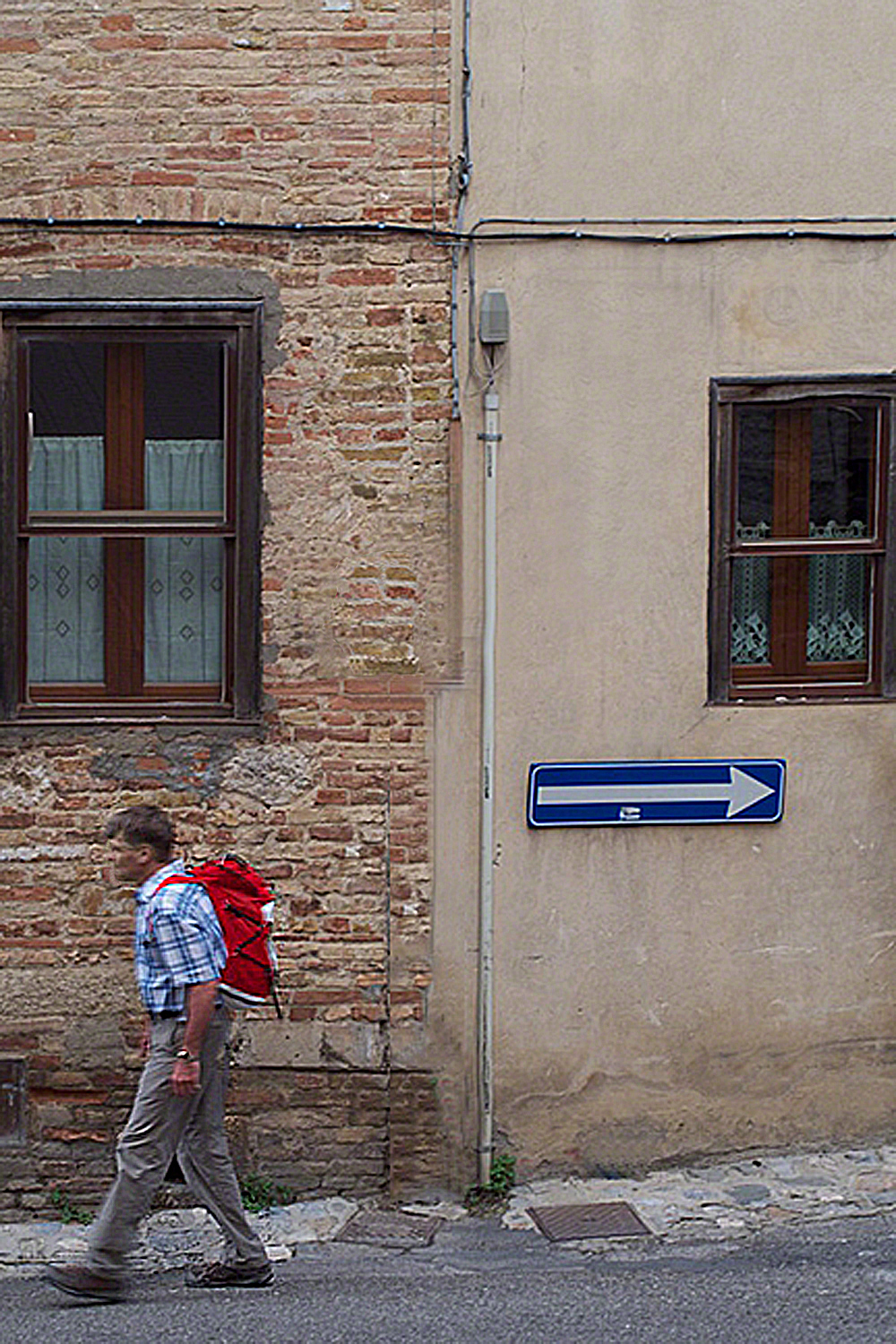
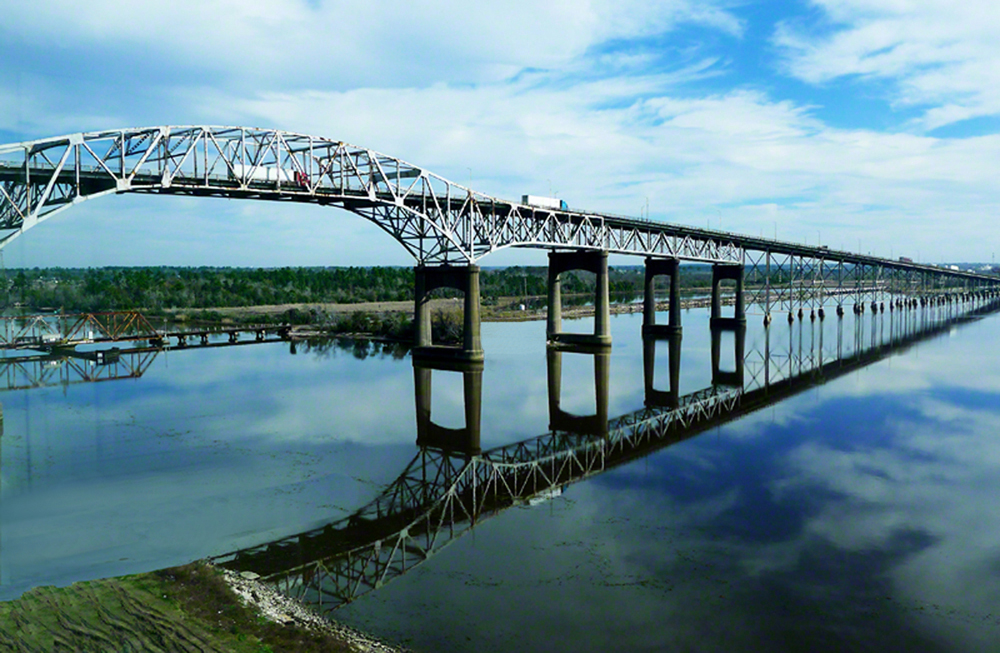
Personal Pearl of Wisdom: It’s not what you put in your composition that counts, it’s what your don’t put in that matters.

Didn’t really need the golf cart.

I always have students feel compelled to put more things into their photos than they really need, and I’m a firm believer in the concept that “if more’s better then too much is just right”. However, when it comes to composition I always want to keep things relatively clean and simple, using Symmetry, Balance, and Order as starting points….although chaos can be a very good thing.

Invariably, photographers that sign up for my BPSOP classes that I teach online, and those that take my “Stretching Your Frame of Mind” workshops think that if they put in a lot of stuff the photo will look better…not so!

Painting is the art of addition, and coming from a background in painting and design, I would start out with a blank canvas on an easel. From there, I would add stuff and the appropriate pigments until I felt that I had enough of each to call whatever it was that I had just painted, a finished ‘work of art’.

That was then.

Photography is the Art of Subtraction.

Now, I put my camera on a tripod, look through the viewfinder, and see that everything is already there. My job now, as a photographer instead of a painter, is to take away enough stuff until I feel that I have a well composed and interesting photograph.

The interesting thing is that sometimes I look at images and see that there’s an opportunity to make a really good image—if the emotion of the scene had been identified and the distracting elements subtracted from the image.

Anything in your frame that doesn’t enhance it is a potential distraction. It only serves only to dilute the image (as the melted ice cubes dilutes the lemonade). In short, all things that do not strengthen the emotion of an image weaken the image.

Removing distractions is often as simple as tightening the composition, or re-positioning the camera; also thinking about keeping it clean and simple.

The Figure-Ground concept is another way. Figure-Ground is one of the concepts in the psychology of Gestalt, and refers to ways to separate the Figure (the subject) from the Ground (the background). By shooting with a narrow DOF, you can also eliminate unwanted stuff and make it work for you by being completely out of focus.

One of my favorite techniques for photographing colorful wildflowers and fall foliage is to narrow the range of focus until just a select part of my subject is sharp, softening the rest of the scene to an appealing blur of color and shape.

Most photographers have no problem seeing what to put in their images, but many struggle with what to leave out. Or how to do it.

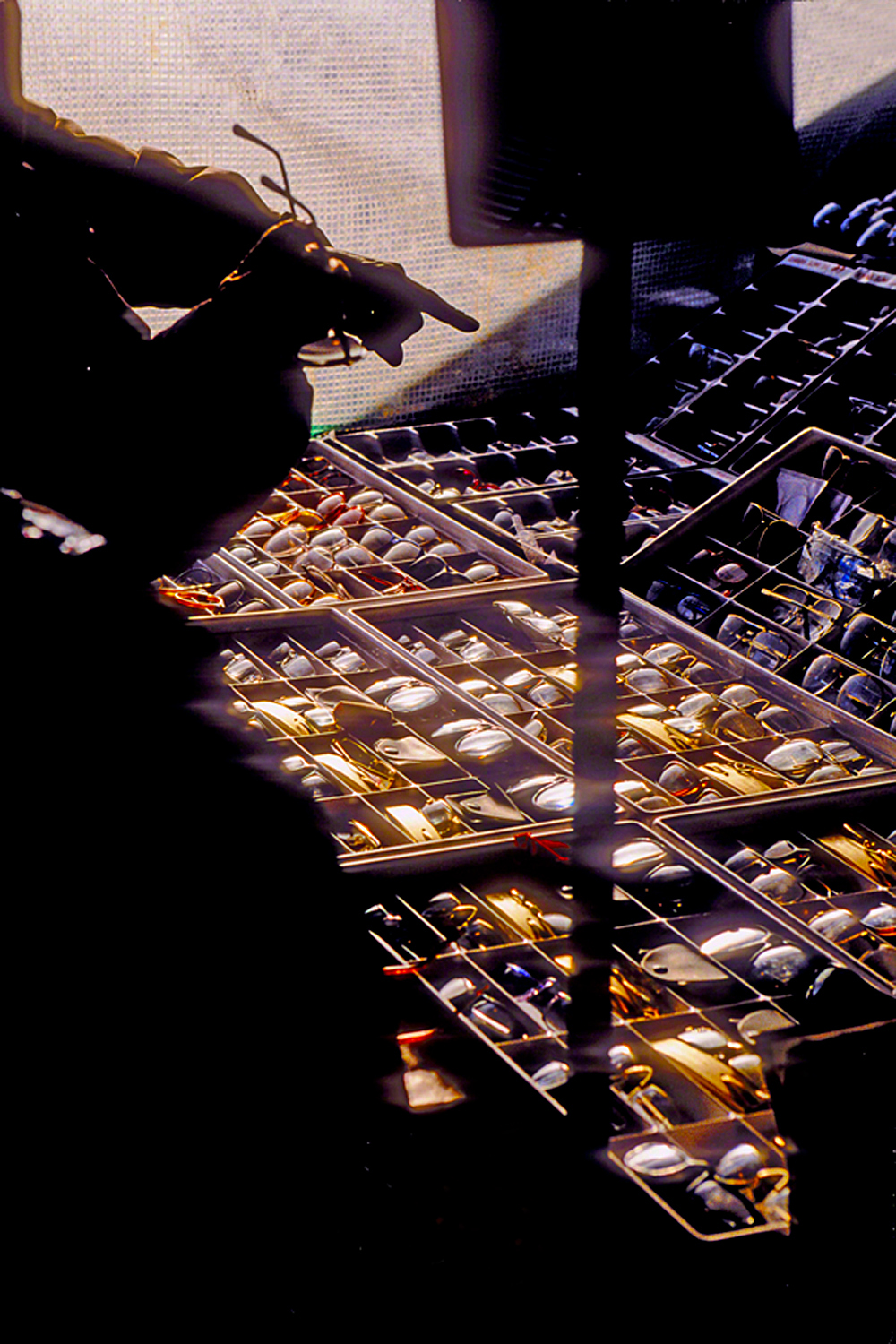
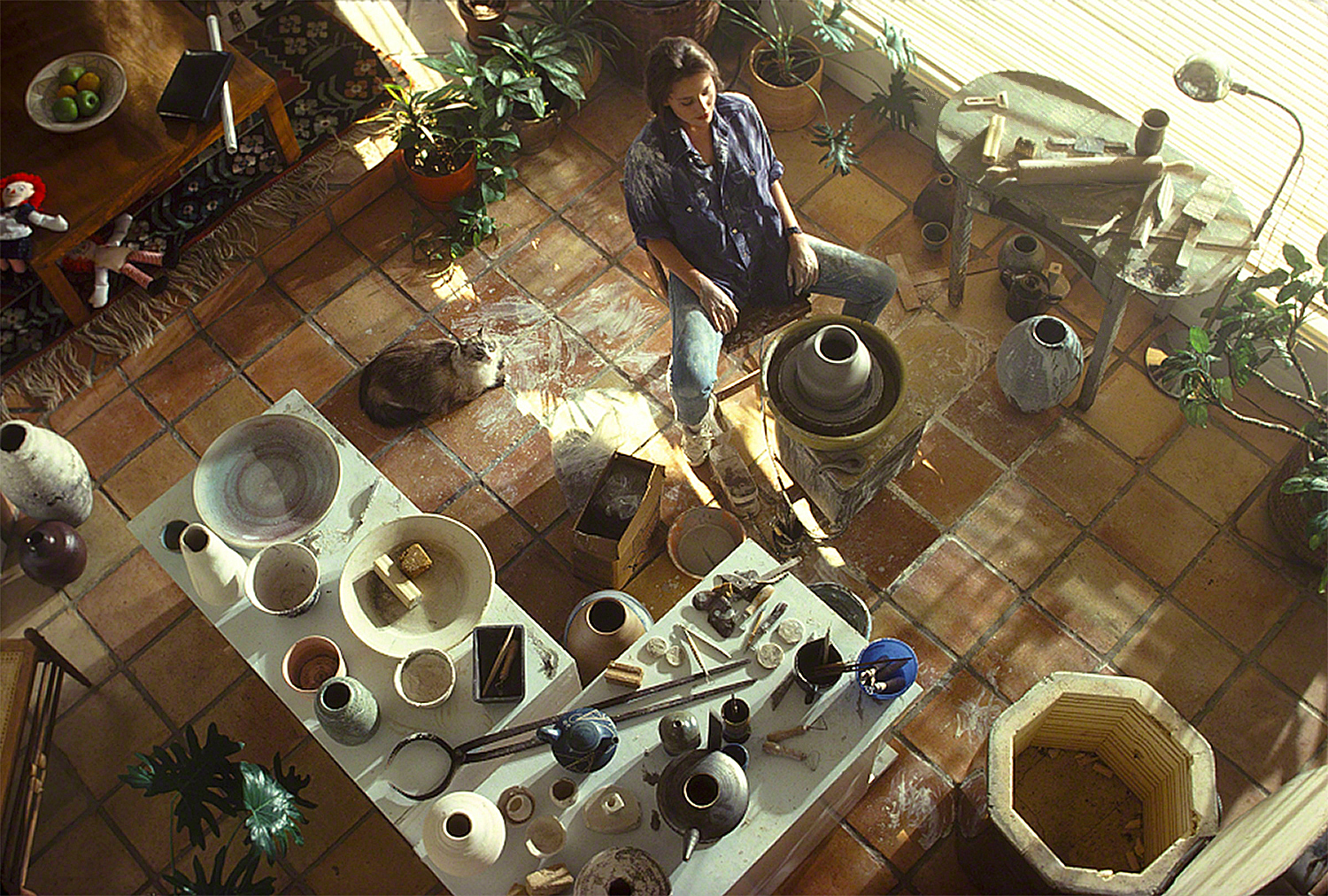
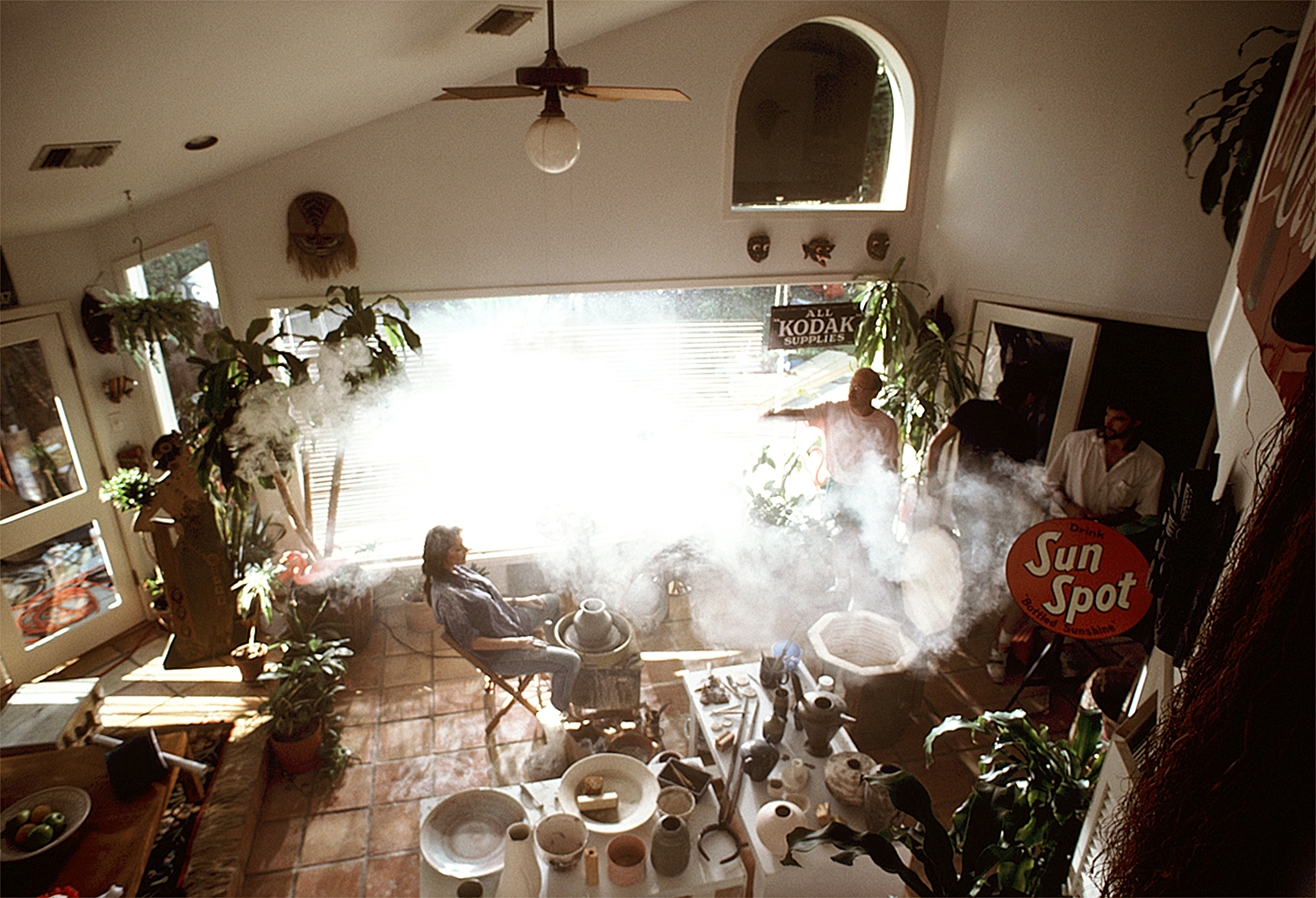
Hired by a country club to photograph their re-modeled golf course for a brochure, I originally included a golf cart in this photo above. Since I had seen that shot a thousand times, I wanted something different; a little less predictable.

As a matter of course, I started taking things out that I felt weren’t really necessary to get the point across. The result was a photo that the viewer had a better chance in remembering since the viewer will always react to that which is the most different.


Visit my website at: www.joebaraban.com, and check out my workshop schedule at the top of this blog. Come shoot with me some time. This coming January Along with William Yu, I’ll be taking a group to China to photograph the flooded rice terraces and also the tribal villages. Next February in conjunction with the Santa Fe Workshops, I’ll be returning to Cuba for the fourth time. My next springtime workshop will Berlin next May; an incredibly beautiful city.

JoeB

Quick Photo Tip: Seeing Between the Lines

Visual Tension

I know all or most of you have at one time or another heard the expression, “Reading between the lines”. I recently heard a friend saying it and it immediately had me thinking of a post I wanted to write. Btw, I never know when an idea will pop into my brain, so I look forward to them each and every time; and have been for six years and almost six hundred posts ago.

When I go out shooting, I always have my Artist Palette securely positioned in the back of my mind. As the photographers that have taken both my online classes with the BPSOP, and the ones that have been with me on one of my “Stretching Your Frame of Mind” workshops I conduct around the planet know, my Artist Palette has all the elements of visual design and composition; it’s the same palette they all are using now as well.

One of the elements we work on in my part I class is ways to create Visual Tension. I’m not talking about the tension that comes from mental or emotional strain. I’m talking about the kind of tension that occurs when forces act upon one another. It’s the anticipation of something about to happen, as in the two forces colliding with one another.

One of the ways to generate visual Tension is to frame a subject within a frame. Framing serves to help define the subject, it adds depth to a composition, and it leads the viewer past the frame and into the picture…to the payoff…or subject.

A more non-traditional way to frame a subject is to put it between two strong lines. This will not only lead the viewer in and provide depth (by the manipulation of lines), but it will give a feeling of motion; as in moving the viewer across the frame.

In the above picture, I was with my workshop in New York one sunrise and while working with one of my students, I pointed out a way to shoot the Brooklyn Bridge in a less predictable way; a way less traveled in photographic jargon.

By placing the skyline in between the thick black lines I not only created visual interest, but visual tension as well. It certainly passes the six-eight second rule…I hate rules you know!!!


Visit my website at: www.joebaraban.com, and check out my workshop schedule at the top of this blog. Come shoot with me some time. This coming January Along with William Yu, I’ll be taking a group to China to photograph the flooded rice terraces and also the tribal villages. Next February in conjunction with the Santa Fe Workshops, I’ll be returning to Cuba for the fourth time. My next springtime workshop will Berlin next May; an incredibly beautiful city.

Send me a photo and question to: AskJoeB@gmail.com, and I’ll create a video critique for you.

JoeB

Life Before Photoshop: Russell Athletics

Look ma, no Photoshop!

Every time I post an image in this category it takes me back to a time when life was so much simpler: no computers, no internet, no texting from your kids and we actually wrote letters and called one another on a princess phone.

One of many things that wasn’t simpler was creating photos in the camera; one click, one exposure. I will invariably have this conversation with students that take my online class with the BPSOP and the ones that take my “Stretching Your Frame of Mind” workshops I conduct around the planet.

These fellow photographers grew up in the digital era where everything is fixable and can be created just by sitting down in front of a computer. They are dumbstruck when I show them my “Life Before Photoshop” PowerPoint presentation, and can’t believe that at one time Adobe was known only as a type of house in the Southwest.

I’m not crying and saying that we had it much tougher without the help of Lightroom and Photoshop, although we did. I have no problem with either software because I use them everyday to some extent. I’m saying that in those days you had to do your own thinking and not let a camera and a computer do it for you.

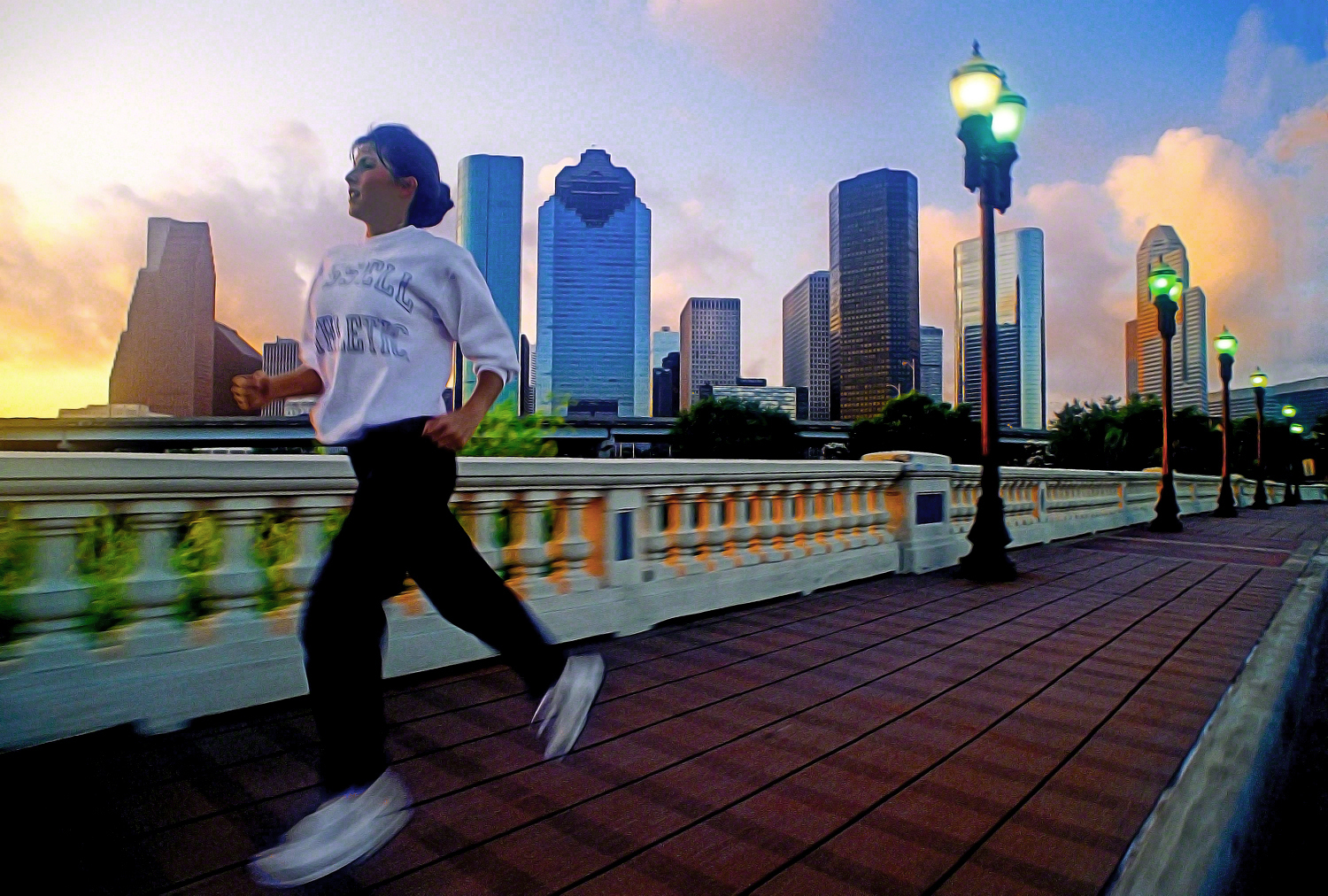
I shot a campaign for Russel Athletics, and among several other photos taken in that campaign, the idea was to capture the athlete during the sport he or she was involved in.

In the above photo I wanted to show motion while at the same time freeze it; easier said than done in those days. I used one 2400WS electronic strobe with the head bouncing off a white umbrella.

In those days I used a Minolta One-Degree spot meter and took a reflected reading off his face.  I then took another reflected reading off the sky behind him.

Since I couldn’t control the exposure of the sky (other than wait until it got darker), I could control the exposure on the athlete. I dialed down the exposure of the flash on his face until it matched the exposure reflecting off the sky. At that point I knew what I was going to get…how you ask?

The setup

Because I had a man in NY designed a Polaroid that fit on the back of my Nikon motor drive. I could pull a 35mm”roid” and check it out before going to film…which was, btw, Kodachrome 25…as in an ISO of 25.

To get the slight blur, I used what was called back then a “sync delay”…let me explain further:

If I were to use a regular flash the flash would have gone off at the beginning of the shutter opening. By using a delay the flash fired at the end of the exposure, and if my shutter speed was slow enough it would record the feeling of motion while freezing the action a the same time with the flash.

This could be achieved so much easier while sitting in front of a computer, but not nearly as fun and challenging.


Visit my website at: www.joebaraban.com, and check out my workshop schedule at the top of this blog. Come shoot with me some time. This coming January Along with William Yu, I’ll be taking a group to China to photograph the flooded rice terraces and also the tribal villages. Next February in conjunction with the Santa Fe Workshops, I’ll be returning to Cuba for the fourth time. My next springtime workshop will Berlin next May; an incredibly beautiful city.

Send me a photo and question to:AskJoeB@gmail.com, and I’ll create a video critique for you.

JoeB


Golden Hour: A Romantic Expression Or A Practical Phrase?

A romantic expression and a practical phrase.

I recently had a student taking my online class with the BPSOP submit a picture that was obviously shot under an overcast sky with no directional light. In other words no light except the gray ambient kind.

Thinking back, I also remember people taking my “Stretching Your Frame of Mind” workshops talking about shooting in the Golden Hour, but not completely understanding exactly what it meant.

In the case of the BPSOP student, she told me in her written explanation of the submitted shot that she had taken it in the Golden Hour. For her to say that, to me, was a signal ( a cry for help) that she was expressing more of a romantic expression…and then and there I had to explain to her exactly what shooting during that time actually meant.

She may well have shot this during the last hour of the day, but that’s only half of the concept. The other half is obviously the quality of the light.

Golden Hour is usually just that. The first hour after sunrise and the last hour before sunset. I say “usually” because the time will vary depending on where you are in relation to the equator, and the time of year.

I say time of year because in the summer months the sun gets high and hot very fast and as far as I’m concerned Golden Hour is more like thirty minutes of quality light.

In the winter months the sun doesn’t get up as high and not nearly as strong, so you have a little more time when the light is right…at least for me.

When the sun is this low (either at sunrise or sunset) it will travel through more atmosphere, the angle the light travels to the Earth is longer, and there’s more water vapor that scatters the rays of the sun. This in turn warms the different hues (colors), minimizes contrast, elongates and renders the shadows light, and also keeps the highlights from becoming too overexposed.

Another way to determine Golden hour is to calculate the degrees the Sun is off the horizon. I’ve found that fifteen to twenty degrees fits into the time frame when the sun is low and warm; and what I consider the Golden Hour.

After explaining this to her she quickly picked up on the fact that shooting in the Golden hour is actually a practical phrase.

Having said all this, there are certainly times when shooting in the Golden Hour is both a romantic expression and a practical phrase, as in the photo taken above.

By the way, have you ever noticed that sunsets are usually more colorful? Want to know why? The reason the sky can be more dramatic is because of dust, debris and pollution that’s had time to build up during the day. You and I help with both!!! Just people walking around causes the dust and debris to rise into the atmosphere.


Visit my website at: www.joebaraban.com, and check out my workshop schedule at the top of this blog. Come shoot with me some time. This coming January Along with William Yu, I’ll be taking a group to China to photograph the flooded rice terraces and also the tribal villages. Next February in conjunction with the Santa Fe Workshops, I’ll be returning to Cuba for the fourth time. My next springtime workshop will Berlin next May; an incredibly beautiful city.

If you send me a photo with a question to: AskjoeB@gmail.com, I’ll create a video critique for you.

JoeB

Food For digital Thought: The Road Less Traveled

coloring outside the lines

I Invariably have the same conversation in both my online class I teach with the BPSOP, and I now have it down to occasionally in my “Stretching Your Frame of Mind” workshops I conduct around our planet…why so you ask?

Because in my workshops a lot of my fellow photographers have taken either my online classes, several past workshops, or both and they know by now that I always encourage photographers not to take the road well-traveled; take the one with fewer footprints.

After a fifty-three year career in advertising, editorial, and corporate photography, while also teaching for thirty-four of those years, I’ve talked to a wide variety of photographers that are content with listening to others tell them (in so many words) to follow the rules, aka, the Yellow Brick Road and at the end of said road will be a great and powerful wizard that will show them the road to photographic Nirvana; the ultimate happiness and spiritual liberation.

But perhaps they won’t find a great and powerful wizard, maybe they’ll find an old circus magician from Kansas (that would be Oz) that will instead take them straight down the one-way road to mediocrity…and a state of non-creative purgatory.

YIKES!!!

Without sounding like someone that always assumes the worst, it seems to me based on years of experience, most photographers out there are afraid to step out and color outside the lines; better safe than sorry is their motto. They have their close friends and family to tell them that their pictures are wonderful, and that can be just good enough; enough to get you through the day.

I’ve found that the majority of the students that come to me are not sure of themselves, and without some level of confidence they trust others to guide them; when in fact they just might know more than those offering advice.

What’s the worst that can happen? They’ll laugh at your art, call you names behind your back, make you cry in front of strangers, and maybe even kick you out of their camera club!!!

There are worse things in life; however, I can’t think of any as I write this post.

🙂

In my opinion you should venture out, get some dirt on your shirt while looking at things from a different perspective. Forget about encountering the ubiquitous negative viewer that may not like what you’ve created in the form of a photograph. Your first attempt may or may not be a “wall hanger”, but that’s to be expected. One has to learn how to balance themselves while trying to stand up and stand before they can walk, and walk before they can run.

Open your eyes to new ways of thinking. Try to remember you’re an artist with a camera as your medium. Work on making not just taking pictures. Bob Marley conveyed it best when he said, “Some people feel the rain while others just get wet”.

Take some chances and follow the road less traveled…even if it means getting wet.

Visit my website at www.joebaraban.com, and check out my workshop schedule at the top of this blog. Come shoot with me some time. This coming January Along with William Yu, I’ll be taking a group to China to photograph the flooded rice terraces and also the tribal villages. Next February in conjunction with the Santa Fe Workshops, I’ll be returning to Cuba for the fourth time. My next springtime workshop will Berlin next May; an incredibly beautiful city.

JoeB

Quick Photo Tip: Call Shotgun!!

I’m so glad I wasn’t driving.

SHOTGUN!

For most of the people that are now reading my blog that have heard or have used this expression, you understand its importance in our society. For those that don’t, it was a common declaration growing up that meant if you said it out loud and before anyone else could say it, you got to sit in the front passenger seat next to the window;  it was written in stone and no one could dispute it; except maybe a much bigger friend.

Now that I’m no longer a kid, although I still consider myself extremely immature, I can sit there whenever I want. As I tell my students that take my online classes with the BPSOP, and those that have been with me on multiple workshops around the planet, I will often quote people that have played a significant part in the way I approach photography. This time it’s Eddie Adams who once said, “When you get lucky, be ready”.

What I mean is that by sitting shotgun with a camera in your lap you just never know what you’re going to see when stopped either at a red light or during rush hour. Btw, I won’t always do this because of the position of the sun, but I’ll jump at the chance when the sun is low on the horizon either early in the morning or late in the afternoon.

In the above photo, it was late in the afternoon and we were downtown stuck in a rush hour traffic jam. I had decided beforehand that it was a good time to call shotgun (even though it was just my wife and I). No one around us seemed to be very happy except me, since I was pre-occupied with the light…as is usually the case.  As I  was looking around for the light, a car driven by a woman pulled up right next to me who appeared to be wearing a white hijab.

I noticed the light hitting all around both sides of her car and brought my camera (my little Lumix DMC-LX7) up to the ready position. I was watching her while she was sitting in the car’s interior shadows,  and it was obvious she didn’t want to be there anymore than anyone else that afternoon. In just the quickest of moments she stuck her head out the window and because I was ready when I got lucky, I got off one shot.

So my fellow photographers, the next time you know that you’ll be stuck in traffic, take a camera along with you and call shotgun. You just never know when and where that “OMG” photo will raise it’s head, and if you’re ready for it and can anticipate what might happen, you’ll thank me for it.


Visit my website at: www.joebaraban.com, and check out my workshop schedule at the top of this blog. Come shoot with me some time. This coming January Along with William Yu, I’ll be taking a group to China to photograph the flooded rice terraces and also the tribal villages. Next February in conjunction with the Santa Fe Workshops, I’ll be returning to Cuba for the fourth time. My next springtime workshop will Berlin next May; an incredibly beautiful city.

If you send me a photo and question to AskJoeB@gmail.com. I’ll create a video critique for you.

JoeB

My Favorite Quotes: Arnold Newman

Symmetry, a sense of order and balance in chaos

When I first started doing my “Stretching Your Frame of Mind” workshops that I conduct around our planet, the year was 1983 and it was for the Maine Workshop; now called the Maine Media Workshops.

In those early years I had the great pleasure and honor to be teaching there (on several occasions) the same week as did Arnold Newman. As a result, we got to be friends and I was actually friendly with his wife Augusta as well.

He wasn’t a fan of rules and would often say so and if you knew Arnold, he often said what was on his mind…no matter what; even to the point of intimidating very young photographers.

One of the points he always talked about were rules, once saying, ” There are no rules nor regulations for perfect compositions”.

Truer words have never been spoken, and because of the latest conversation with yet another one of my fellow photographers seemingly lost in a sea of fake truths, I’m now writing this post.

I recently had a student enrolled in my online class with the BPSOP tell me and I quote, ”  I tend to put more space around my subjects and I must admit every other course I’ve done or book I have read, the instructors will emphasize not going close to the edge. I am a bit confused about this issue.”

MORE’S THE PITY!!

What those so called experts, (and I say experts loosely),  are doing is to get you to walk down a one way path to mediocrity only to be able to rise up out of the mire to take “half-way decent” pictures. If those are the types of images you’ll be satisfied with until the day comes when they pry your cold dead fingers off the shutter release, then to each his own.

If you’re interested in taking photos that transcend conventional, uninspiring, and dare I say mainstream photographs, then I ask you to heed  the words of Arnold Newman and take the path less traveled; forget about rules as they are the shackles that bind creativity.

When arranging the elements to create your perfect composition, remember that balance is important enough to be considered one of the basic elements of visual design; the balance between positive and negative space

Positive space is that which has mass; which is usually your subject. Negative space is everything else, so think about it as well while trying to strive for balance between the two. A great way to check for balance is to turn your camera upside down and look at your photo that way. When you do that you’re looking at it with the left side of your brain, the analytical side so all you’ll see is shapes and relationships between positive and negative space.

The difference between a photo that is composed well can be the difference between a photo that has a sense of order or one that is off balanced and chaotic; that said, chaos can be a good thing if used correctly.

Color outside the lines, take some chances. Try things you’ve never done before. Try putting your subject closer to the middle of your frame, then closer to the edge of your frame, and have him about to leave it and/or look outside it. This will not only imply content outside the frame, making him think about it (which will keep him around longer) but it will also generate visual tension; then compare the two side by side on your monitor.

Above all, stop following and listening to those that think rules are important. Most of the time they don’t know anymore than you do. Writing a book is not necessarily a criteria for knowledge.  Knowledgeable people will tell you that a tomato is a fruit. You have to decide whether you’re going to put it in a fruit salad.

Visit my website at: www.joebaraban.com, and check out my workshop schedule at the top of this blog. Come shoot with me some time. This coming January Along with William Yu, I’ll be taking a group to China to photograph the flooded rice terraces and also the tribal villages. Next February in conjunction with the Santa Fe Workshops, I’ll be returning to Cuba for the fourth time. My next springtime workshop will Berlin next May; an incredibly beautiful city.

Send me a photo and question to: AskjoeB@gmail.com, and I’ll create a video critique for you.

JoeB

Food For digital Thought: Implying Content Outside the Frame

Content outside the frame

I’m closing in fast on fifty years of taking pictures, and by now I’ve learned how to keep the viewer an active part of my images.

I do this to keep him looking at my images for as long as possible, and I don’t know about you but I like for people to enjoy my photography.

There are ways to control how the viewer perceives and processes information that you lay out to him in the form of a photograph. For me, creating stories for the viewer to listen to visually, or making the viewer wonder about certain things in my images, is one of the best ways to keep him around longer.

 One way, and something I’ve been doing for a very long time, is to imply content outside the frame. In other words let the viewer think there’s more to it than meets the eye; there’s something going on outside the frame that he wonders about and tries to figure out just what it is…which keeps him around.

By placing the subject close to the edge of the frame and have him/her looking out will imply that there’s something happening  just outside his field of vision. I like to have the subject smiling as though he/she  was looking at someone they know.

I can’t tell you how many times I’ve offered this suggestion to both my online classes with the BPSOP, and to the people that sign up for my “Stretching Your Frame of Mind” workshops I conduct around the planet.

The response I often get is, “I’ve always been told to have your subject looking, walking, riding, etc., into the frame”; the Leading in Rule…I hate rules!!! Rules are the iron shackles that bind creativity. What I usually tell them is that anyone that tells you this nonsense is hoping to lead you down a one-way path to mediocrity; run away from them as fast as you can.

FYI, Ansel Adams once said, “There are no rules for good pictures, there’s just good pictures”.

So my fellow photographers give it a try, better yet shoot it both ways. Put your subject in the Rule of Thirds (another stupid rule), or have him looking into the frame so the viewer will know what he or she is looking at…then ask yourself if the viewer already knows what he’s looking at then there’s no story, nothing for him to wonder about so why stick around longer than he has to. Then place the subject close to the edge of the frame looking out and compare them side by side.


Visit my website at: www.joebaraban.com, and check out my workshop schedule at the top of this blog. Come shoot with me some time. This coming January Along with William Yu, I’ll be taking a group to China to photograph the flooded rice terraces and also the tribal villages. Next February in conjunction with the Santa Fe Workshops, I’ll be returning to Cuba for the fourth time. My next springtime workshop will Berlin next May; an incredibly beautiful city.

Send me a photo and question to: AskJoeB@gmail.com, and I’ll create a video critique for you.

JoeB

Quick Photo Tip: Implied Photographs

A family of four

I was relating a story to a fellow photographer that was taking my “Stretching Your Frame of Mind” workshop (who had also taken my two online classes with the BPSOP) that I conduct around our planet. I was telling him how I could imply a family of four by only showing one person. It was for a Texas Tourism campaign I worked on about a million years ago.

Every year they sent a photographer down to South Padre Island, a resort area way down on the Texas gulf coast and close to Mexico; and had been doing this for quite some time.

As always, they wanted the photographer to show a family of four on the beach. I asked the art director if we had to do that once again since to me it was a boring predictable photograph that had been done just about every way there was; needless to say his answer was , “Yes absolutely, and if we don’t come back with that shot it’s going to be a problem”.

Well I can tell you that there was no way I was going to take a photo that had been done so many times before me…even though mine would be the best they ever had!!!!!!

🙂

In the above photo, an idea came screaming into my head so I told the art director that if I could imply a family of four could he sell it? He was as tired as I was of shooting the same photo year after year, so he said, “Maybe”?

I went to a general store for tourist on the boardwalk and found what I was looking for…four colorful beach chairs that would glow when backlit. We put just one kid in the chair and left the other ones empty. The art director loved it and would up selling it to the client.

A couple on the seawall

In the photo of the two bicycles almost the identical story happened. This photo was taken for Alabama Tourism, and as always they wanted a couple riding on the seawall. Once again I asked the art director about an idea I had that would imply a couple without showing them; and once again it worked.

So my fellow photographers, you don’t have to be literal when you’re shooting. Think about implied photos so you can give yourself a much better chance in “coloring outside the lines”.


Visit my website at: www.joebaraban.com, and check out my workshop schedule at the top of this blog. Come shoot with me some time. This coming January Along with William Yu, I’ll be taking a group to China to photograph the flooded rice terraces and also the tribal villages. Next February in conjunction with the Santa Fe Workshops, I’ll be returning to Cuba for the fourth time. My next springtime workshop will Berlin next May; an incredibly beautiful city.

Send me a photo and question to: AskJoeB@gmail.com, and I’ll create a video critique for you.

JoeB

Quick Photo Tip: Getting into your zone

“Got him”!!

Although I’m not able to spend a lot of time walking around a city, I know that when I do plan on going out street shooting, I need to prepare myself by getting into a mindset…a zone. I want to blend in so I can best feel the heartbeat of humanity…it’s soul.

Here’s what I suggest:

Don’t think too much..rely on your instinct. Your eyes should be constantly moving in every direction, and paying close attention to what I call my 25X4=100 rule; more of a guideline than a rule…I don’t like rules!!!!!!!!!!!

Watch for unusual movement going in a different direction. Remember that the viewer will always look towards the brightest part of your composition, so look for changes in light.

Anticipate the action, in other words if you’re following someone interesting, look ahead so you can put him or her into the area you’ve created.

Henri Cartier-Bresson was a master at this method. although he would shoot the moment it was happening, he would also set up a composition and wait for the person to walk into his frame; sometimes waiting for quite awhile.

Avoid wearing colorful or bright clothes, as it would not be the best way to integrate yourself into the general population that walks on either side of the street. Having said this, I like to walk on the shady side and shoot into the bright side…why? Because I’m looking for contrast behind the shadows that are tangent with the areas in sunlight.

I have discussed this not only with my online class with the BPSOP, but walking around with my fellow photographers that are taking my “Stretching Your Frame of Mind” workshops I teach around the planet.

I’ll recommend that they have two exposures settings saved in their cameras that they can switch back and forth to. What I mean is that when they’re shooting into the brightest areas on one side of the street, they have one exposure set for that.

When they decide to shoot into the shady side of the street, change over to your exposure that was set for that. This will make a big difference in capturing that moment and have it close to being properly exposed.

Small cameras with small lens…decide on a lens, or have some small bag that can hold one other…just for a change. Going around with a big Canon or Nikon with a big lens might get some looks of envy and make you feel important, (if that’s your thing) but it won’t go very far when you’re trying to stalk that illusive “moment in time”.

You’ll maintain better focus if you walk alone, that is if you’re taking it seriously. A small group of photographers can be fun, but probably not as rewarding as far as the number of quality photos you come home with. Meet up later over a glass of wine at some outdoor restaurant and compare notes.

In the above photo, I was walking down a street in Shanghai, China among the masses and stopped to scan the faces of all the men (mostly wearing the same color jacket). I noticed a man that had stopped and was looking around for something. I had a feeling that this might be the shot so I began to zone in on him. While  I was moving the camera from right to left, keeping one eye on him, he looked right at me.

I had my exposure already set just in case, and the split second I saw him looking at me I clicked the shutter, and as Eddie Adams once said, “When you get lucky, be ready”.


Visit my website at: www.joebaraban.com, and check out my workshop schedule at the top of this blog. Come shoot with me some time. This coming January Along with William Yu, I’ll be taking a group to China to photograph the flooded rice terraces and also the tribal villages. Next February in conjunction with the Santa Fe Workshops, I’ll be returning to Cuba for the fourth time. My next springtime workshop will Berlin next May; an incredibly beautiful city.

Send me a photo and question to: AskJoeB@gmail.com, and I’ll create a video critique for you.

JoeB

My Favorite Quotes: Christine Lavin

Unusual portrait compositions keep me from falling into a rut.

First I wanted to let some of you know that originally had an interest, because of a family issue my completely full workshop with William Yu photographing the flooded rice terraces in China has two openings. This is a once in a lifetime opportunity to see places you only see in National Geographic and shoot with me. Check it out: Yunnan China with William Yu

Ok, Christine Lavin is a New York City based singer songwriter best known for her contemporary folk music. Christine once said, ” There’s a fine line between a rut and a groove”. So how does this translate to the Art of Photography? The best way to explain is through real life examples, and I’ve heard maybe not all of them, but a good many.

For the past six years I’ve taught a couple of classes for the BPSOP, and since 1983, I’ve been conducting my “Stretching Your Frame of Mind” workshops around our ever changing ( 🙁 ) planet; critiquing lots of photos.

Some of my fellow photographers insist in only shooting either one way or one particular subject. For example, shooting everything with a 50MMF/1.4 prime lens, or taking pictures of nothing but dead flowers…yes, dead flowers!!!

That’s all well and good, but what might happen is that the groove you think you’re in suddenly becomes a rut, and because of the comfort level you’ve created and the security you think surrounds you it’s had to break out of it.

That prime lens I just mentioned is difficult to use, in the sense that most people shoot on a program and your photos wind up having the same look…sharp on the subject ( not all the time), and everything else out of focus; one of many reasons I don’t own one.

Don’t get me wrong as I like that look, but just not all the time. I can tell you from years of looking at photographer’s photos, most of the time they don’t even know what’s going to be in focus and what won’t be.

Btw, this happens because a friend has talked someone into buying this lens and that someone has no idea how it works; thus perpetuating the rut.

A groove is a good thing as long as that same someone realizes when to implement that 50mm lens or when to include dead flowers into their composition. As they say, there’s a time and place for everything.

Don’t fall into that trap. Shoot with different lens, at different F/stops. Broaden your visual horizon, open your eyes to the incredible amount of subject matter that is in front, on either side, and behind you: don’t forget my 25X4=100 rule!!!

Visual input is a part of our everyday life, and as photographers we need to embrace what we perceive and translate it into to images that will keep the viewer asking for more.

Visit my website at: www.joebaraban.com, and check out my workshop schedule at the top of this blog. Come shoot with me some time. This coming January Along with William Yu, I’ll be taking a group to China to photograph the flooded rice terraces and also the tribal villages. Next February in conjunction with the Santa Fe Workshops, I’ll be returning to Cuba for the fourth time. My next springtime workshop will Berlin next May; an incredibly beautiful city.

If you send me a photo and question, I’ll create a video critique for you: AskJoeB@gmail.com.

JoeB

Quick Photo Tip: Two Birds With One Stone

 I’m always being asked how do I come up with these weird analogies and the answer is simple. Ideas come into my mind all the time because I’m always watching, reading, and listening…even sleeping. When an idea pops into my mind, I figure I have about five seconds to either pick up my phone, take it out of my pocket, lift it off my nightstand, go to my notes, and jot it down before it vanishes somewhere in the cosmos…usually lost forever; isn’t it hell being old and gray!!!

But I digress.

I like shooting in all kinds of genre be it landscapes, nature, industrial, people, environmental portraits, architecture, etc. The two I like to combine are people and architecture, and this is where the title of this posts comes in.

There are two reasons (birds) I like to do this: one is that people like to see people in photographs. Showing a gondola in Venice floating by itself and tied to a set of stairs down one of the many canals doesn’t say the same thing as a gondola with two young lovers being chauffeured down the same canals by a Gondolier while having a glass of Chianti; especially if they’re backlit by the last rays of a beautiful setting sun.

In my online classes with the BPSOP and in my “Stretching Your Frame of Mind” workshops I conduct around our ever changing planet ( 🙁 ), I’ll often show examples of exactly what I mean; after all isn’t one picture worth a thousand words?

The other reason is I like to include people to show scale of either a building or an architectural detail. The viewer can relate to the size of a person since he’s familiar with average heights, and depending on where you place the person in your composition you can generate visual tension.

For example, placing a person in the middle of the frame and close to the lens gives a feeling of intimacy, whereas placing the person  in the bottom right corner sends a message of loneliness; as well as the feeling of being small in the environment surrounding him or her.

Another way to create Visual Tension is by using body language, gesture, and stopping the action of someone and leaving it un-completed. Blurring a person walking or running through your composition and in front of the building not only adds interest, but adds energy to your images. Color is a good way to draw attention to a person, especially if they’re wearing red.

One last note…when traveling be sure to photograph the people as they are the key to the countries culture.


Visit my website at: www.joebaraban.com, and check out my workshop schedule at the top of this blog. Come shoot with me some time. This coming January Along with William Yu, I’ll be taking a group to China to photograph the flooded rice terraces and also the tribal villages. Next February in conjunction with the Santa Fe Workshops, I’ll be returning to Cuba for the fourth time. My next springtime workshop will Berlin next May; an incredibly beautiful city.

If you send me a photo and question I’ll create a video critique for you: AskJoeB@gmail.com.

JoeB

Quick Photo Tip: Now Look Right at Me.

Photographing people has always come natural to me since the early days of my well spent youth as a stringer for AP, UPI, and being a Black Star photographer. Whether it be simple portraits or including a lot of the environment surrounding them, I’m in my comfort zone.

Over the years as one of the instructors for the BPSOP, an online photography school, and in my “Stretching Your Frame of Mind” workshops I often see portraiture submitted. More often than not my fellow photographers will usually have the subject looking away; that’s fine but they’re missing something important…what you say?

I teach two classes with the BPSOP and they’re about how to incorporate the Elements of Visual Design into your imagery; the most important of all the elements being Line.

With Line, none of the other elements would exist. Three of them: Pattern, Texture, and Shape all require Line to be elements. In fact planes, trains, automobiles, and even you and I couldn’t exist because we all have an outLine.

There are lines and then there are implied lines, and these types of lines are what’s important in portraiture…WHAT?

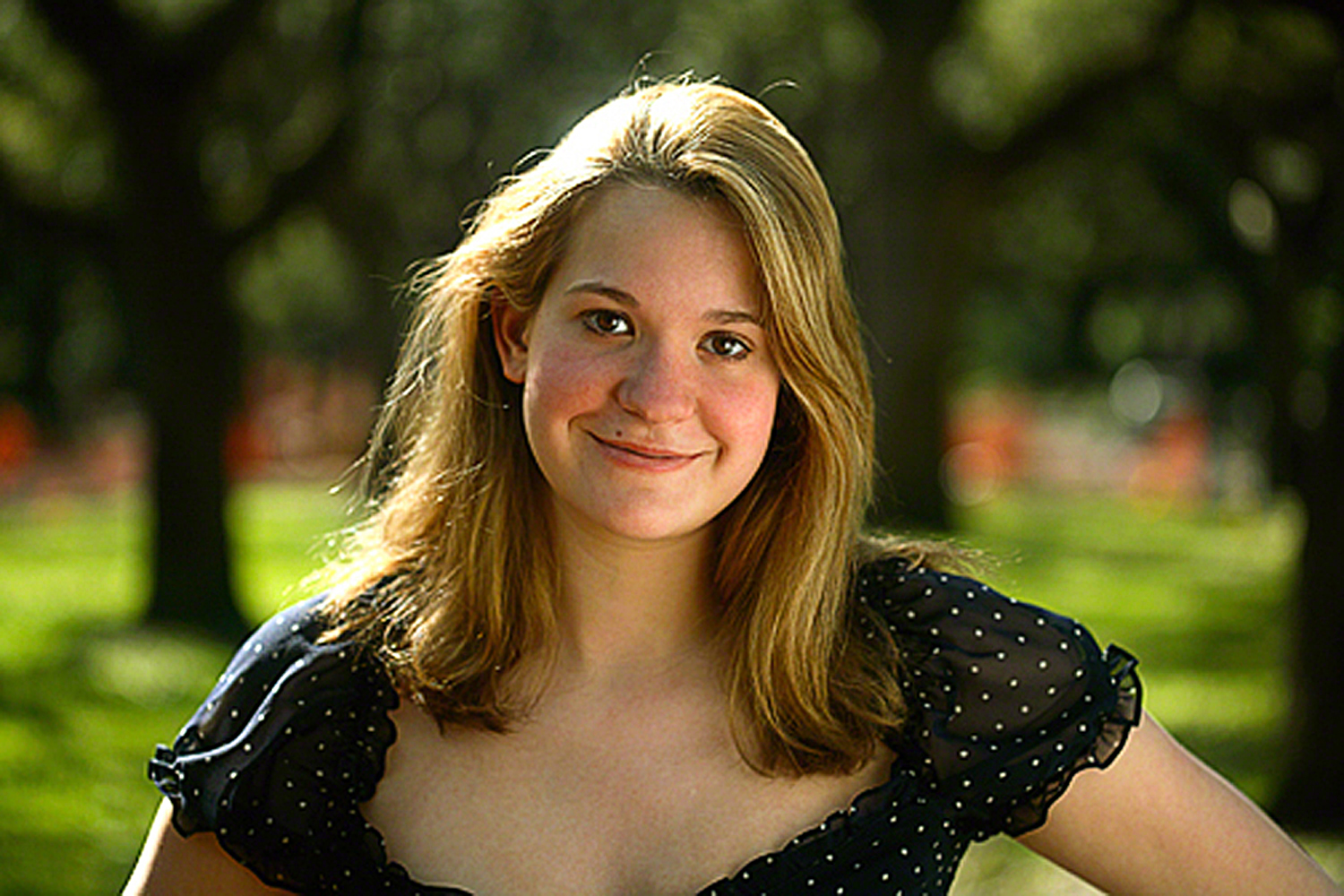
These implied lines are merely suggestions and not directly revealed to the viewer. To me, the implied line between the subject’s eyes and the camera’s lens is very powerful; I’m looking past their conscious thought and right into their soul; of course without stealing it!!!

Implying content outside the frame.

I feel a bond has been created, and a trust arises from the subject willing to look me straight in the eye. That said, there’s one time when I DO want them looking away from the camera.

When you place the subject close to the edge of the frame you’re creating Visual Tension. When you have them looking out of the frame at that point you’re implying content outside of the frame. In other words you’re suggesting to the viewer that there’s more to the story that meets the eye; the viewer will wonder what he/she is looking at.

This makes the viewer an active participant and he will stick around looking longer…isn’t that what you want?

Visit my website at: www.joebaraban.com, and check out new workshops as I add them in 2018. Come shoot with me sometime. I have two spots left in my joint workshop with William Yu to photograph the tribal villages and rice terraces in China

I have two spots left in my Springtime Workshop in Berlin starting May 23rd. My sixth workshop in conjunction with Santa Fe to Cuba is now open to register. It begins February 11th.

Send me a photo and question to: AskJoeB@gmail.com, and I’ll create a video critique for you.

JoeB

Food For digital Thought: Making New Friends

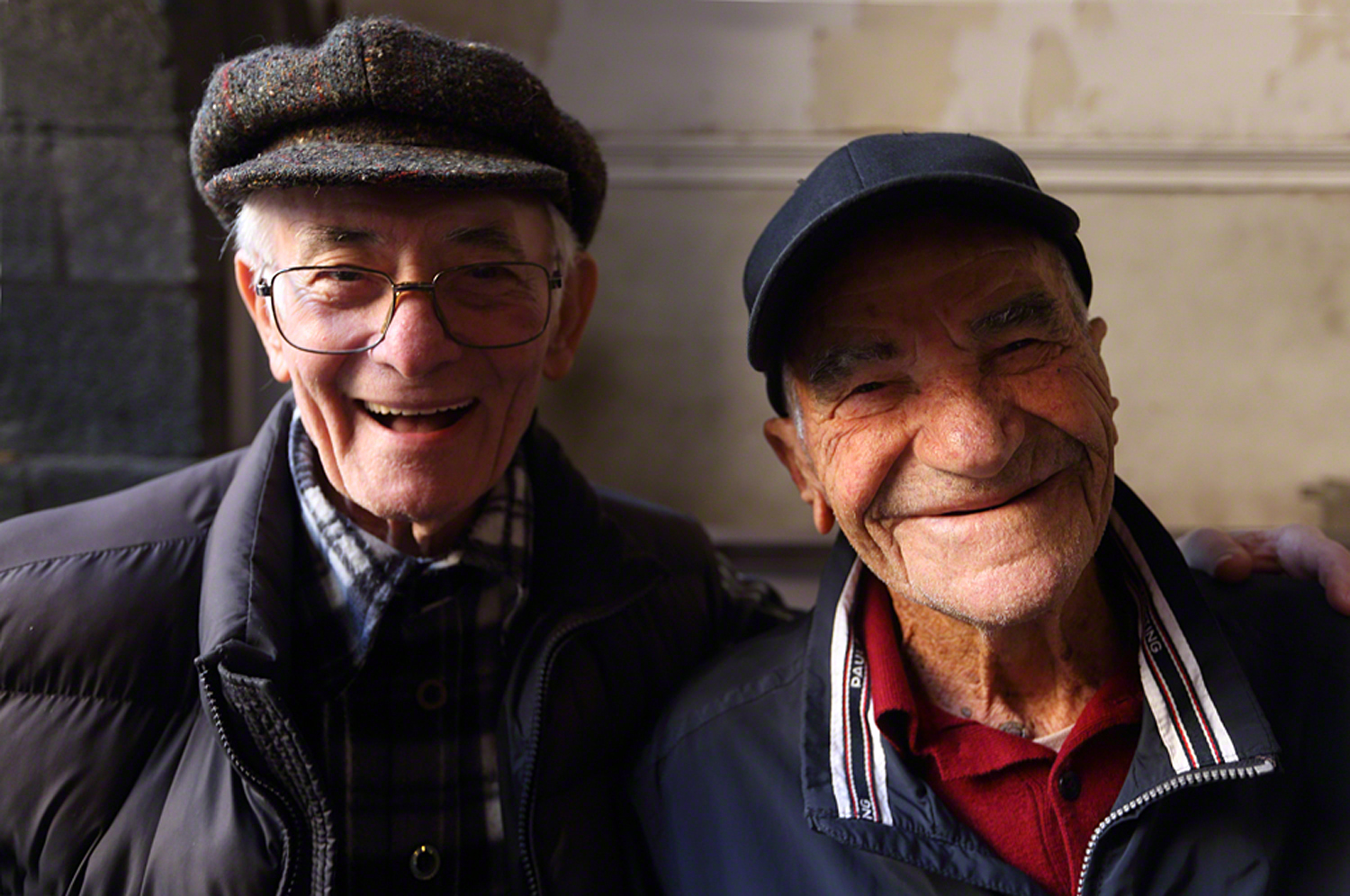
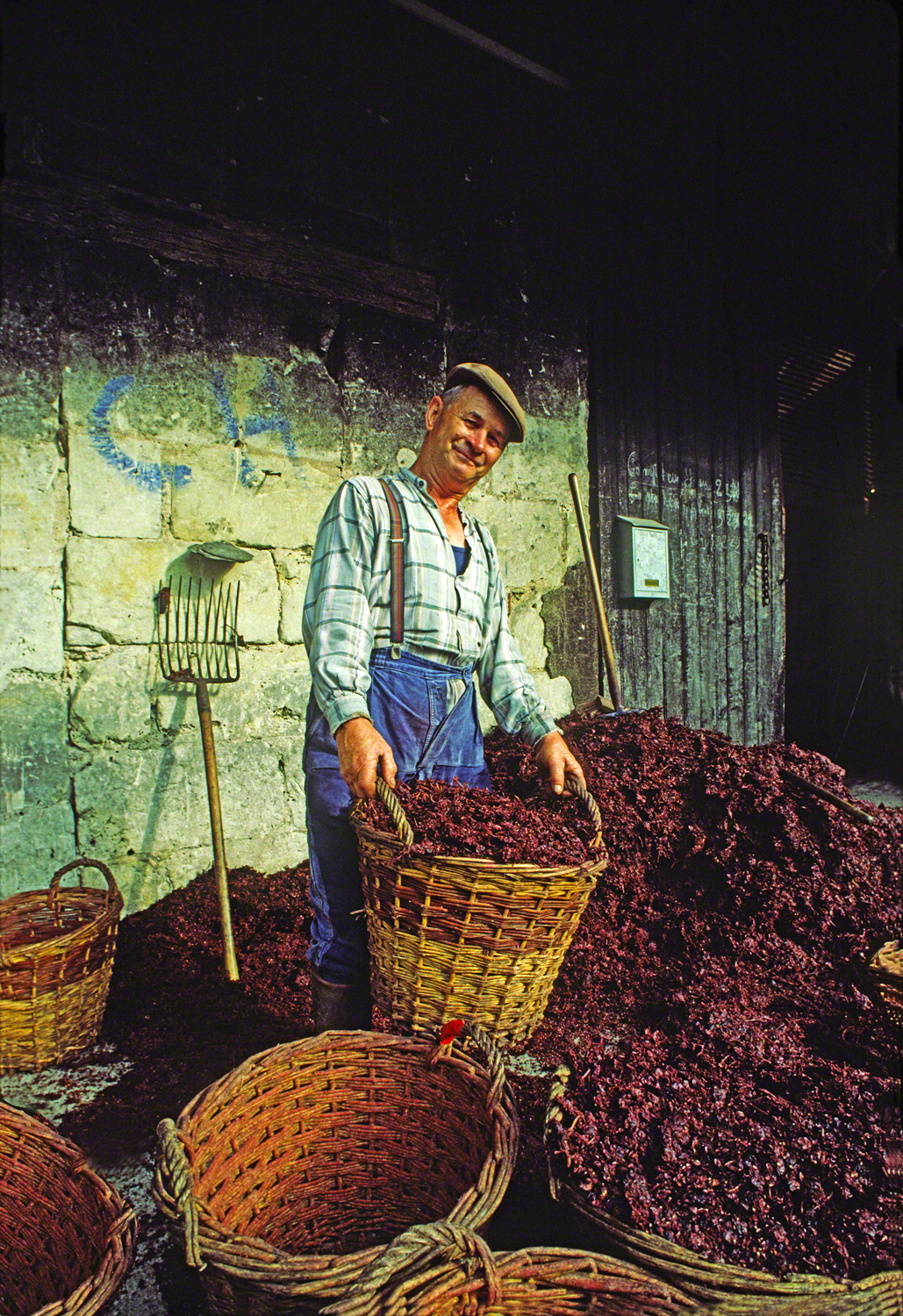
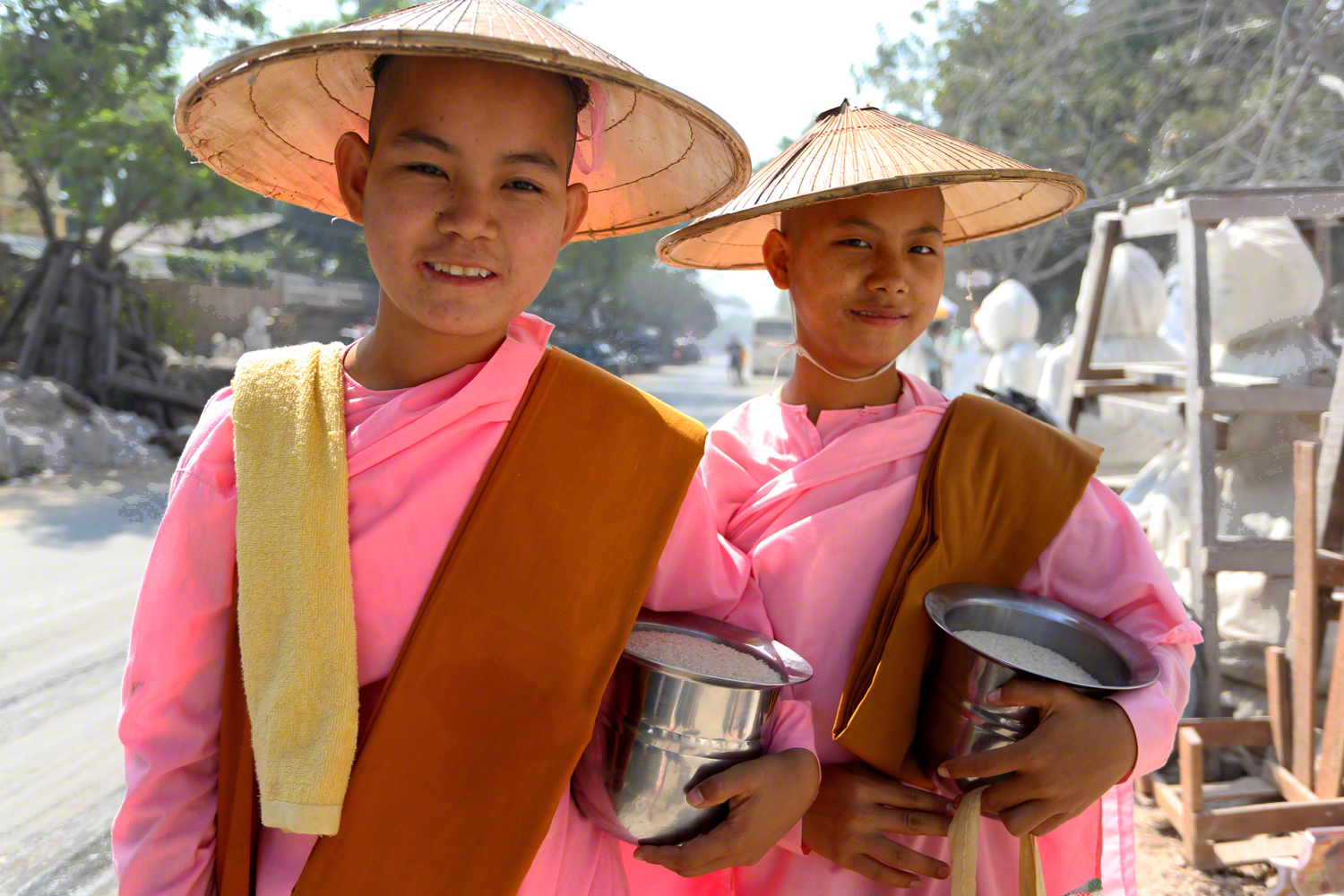
He couldn’t speak English, I can’t speak French.

I’ve been shooting closing in (fast) on fifty years, and to me being a photographer has always been sort of a calling card, a way to introduce myself and meet people all over the world. Lifting up your camera and aiming it at someone hoping to take their portrait is for me, such a small part of the total experience.

If you want to go home with more than a few photos of people you’ve taken either on your vacation, or during a workshop, then I suggest you get to know your subject before moving on. I realize that there might be time restraints especially if you’re traveling with a group of non-photographers. but if you’re on vacation you usually have the time to get to know the people whose country you’re in; isn’t that part of your trip?

Yes I know that they might not understand a word you say, but I’ve never had that problem and I’ve traveled around the world.; of course I try to seek out people that speak at least a few words of English. I have also tried to learn a few expressions in their language, and I can tell you from experience that people are more likely to open up to you if they think you’re trying to communicate with them.

Language didn’t seem to be a problem.

As I said, I’m into the total experience so I enjoy hanging around and eventually even having our photos taken together. I would be hard pressed to think of a better way to spread goodwill around the planet than with a camera. Being in the digital age enables us to share the photo with the people whose photo you just took. Just that one small act can make someone smile and perhaps leave that smile on their face for the rest of the day.

I’ve promoted that idea to everyone that takes my online class with the BPSOP, and especially when I’m traveling with people that are with me in one of my “Stretching Your Frame of Mind” workshops. It’s a lot of fun to see how my fellow photographers can get into it and having it be something we remember sitting around in the evening with a glass of wine.

Visit my workshop at: www.joebaraban.com, and check out new workshops as I add them in 2018. Come shoot with me sometime. I have two spots left in my joint workshop with William Yu to photograph the tribal villages and rice terraces in China

I have two spots left in my Springtime Workshop in Berlin starting May 23rd. My sixth workshop in conjunction with Santa Fe to Cuba is now open to register. It begins February 11th.

Send me a photo and question to: AskJoeB@gmail.com, and I’ll create a video critique for you.

JoeB