Life Before Photoshop: Toyota Trucks

Look ma, no Photoshop

I would say that the hardest assignments to shoot before the days of any form of post processing were car shoots. The cars had to look perfect or your automotive career was over. Your name would spread faster than a California fire during the Santa Ana winds.

Besides the projects I shot for most of the Fortune 500 companies, I shot a great deal of car photography; which included billboards, advertising campaigns, and full line brochures. These were incredibly lucrative with six-figure budgets, but one screw-up and you were done…making them fairly stressful.

I loved shooting cars and thinking back I really don’t remember feeling pressure to come back with “the goods”. I always felt confident that given enough pre-production time I could always make the agency and the client happy.

The trick was always knowing where the light was going to be anytime from the moment the sun came up to the last warm rays before sunset; I used a program called Sunpath and a hand bearing compass. Least I not forget the biggest part of a successful shoot, it was also incredibly important to surround yourself with a really professional crew; each one doing what they did best and then having a good producer to make it all work together.

Truth be told, I was in a very small group that paid attention to where the sun was going to be, and an even smaller group that positioned the car in such a way as to create what was called “liquid light”, the nice soft light that ran from the car lights to the taillights. It had to be smooth, soft light that highlighted the side of the car…it had to look that way before you clicked the shutter. No small feat!

AS I tell my online students with the BPSOP, and the ones that take my “Stretching Your Frame of Mind” workshops I conduct around the planet, Light is everything and the only time it isn’t is when you’re street shooting and looking for that moment in time; capturing a person’s gesture or body language that will usually reveal something about that person’s soul.

In the above photo taken for Toyota Trucks, I was to find a nursery where we could create a story based on all the different ways to use the  trucks. After having a location scout armed with the Sunpath readings and the compass find me several that would work, the Art Director and I checked out all the ones that received the early morning light I was looking for.

The location we settled on was perfect as it would back light all the flowers we put by the truck all the plants, dirt and fertilizer we put around and in the back of the trucks making them glow. I’m always telling my students and fellow photographers to try to back light anything that’s translucent; it’s my favorite way to light.

I had the car prep company put the trucks in such a way as to get the early morning light running down the side; it’s called the “Law of the Light”, and I’m always conscious of it.

When we were finished and I was satisfied as far as the way it was going to look, we waited until the sun came up. Just when I could see the full sun above the horizon and the light began to stream through my composition, I added one last touch…I had them turn on the sprinklers so they would be lit from behind creating a nice misty effect.

Everything you see here was created before the shutter was pressed and absolutely no help from Adobe; which at that time was a type of house in the SW part of the US.

Visit my website at: www.joebaraban.com, and check out my workshop schedule at the top of this blog. Come shoot with me sometime. On July 30th I begin my 29th year at the Maine Media Workshops. I’ve had the same week since the beginning. It’s the week of the Lobster Festival down the road in Rockland. It offers a completely different set of photo ops than one would expect when coming to photograph the coastline, lighthouses, and fishing villages of Maine. Come join me and spend a week completely immersed in your love for photography.

Send me a photo and question to AskJoeB@gmail.com, and I’ll create a video critique for you.

JoeB

My Favorite Quotes: Oscar Wilde

Not what I saw, but what I wanted to see.

I just love this category since it affords me time for research as well as just keeping my ear to the ground to pick up bits of valuable information.

A lot of my research comes from the fact that I read, and I read everything from fiction, non-fiction, biographies, history, and just about anything and everything that strikes my fancy.

Years ago I first got acquainted with Oscar Wilde while reading his only novel, The Picture of Dorian Gray. He once said, ” No great artist ever sees things as they really are. If he did, he would cease to be an artist”.

I teach online classes with the BPSOP, and I also conduct my “Stretching Your Frame of Mind” workshops around out planet. I tell my fellow photographers that we are all artists, and that instead of a paintbrush we use a camera to create our works of art.

A camera on a tripod is very much like a blank canvas on an easel, with one big difference. Photography is the art of subtraction, and when your camera is on a tripod you eliminate things in your composition until your satisfied enough to click the shutter. A blank canvas on an easel allows you to keep adding pigment until you’re satisfied enough to seek out a mat and frame.

In the above photo, I was sent to take a portrait of this woman who at that time was a big time player in computer software and was the go-to person for many of the Fortune 500 companies. The advertising campaign was about what several of these well-known people did in their spare time; being involved in their hobby. In her case she was a fairly well-known artist in her own right and the powers that be wanted an environmental  portrait taken in her art studio.

When I got there I discovered that she was in the middle of a major cleaning so her art and furniture were literally mixed together and piled on top of one another; pushed against the far side of her space. The only window in the studio, where I wanted to put her, was on the other end and surrounded by empty space…as in nothing there at all.

I stood there and envisioned something entirely different than what I was really seeing. I put my camera on my tripod as if it was a blank canvas on my easel and began to paint. I carefully moved pieces over and as I looked threw the camera’ viewfinder arranged them in front of the camera to the chair, s well as on the wall. The chair I put against the wall and next to the window where she was going to be seated.

I can tell you that the end results would have looked a lot different if I had seen things as they really were. I don’t take pictures of what I see, I take pictures of what I’d like to see. It’s not ‘what is’ to me, but what could be.

Visit my website at: www.joebaraban.com, and check out my workshop schedule at the top of this blog. Come shoot with me sometime. On July 30th I begin my 29th year at the Maine Media Workshops. I’ve had the same week since the beginning. It’s the week of the Lobster Festival down the road in Rockland. It offers a completely different set of photo ops than one would expect when coming to photograph the coastline, lighthouses, and fishing villages of Maine. Come join me and spend a week completely immersed in your love for photography.

Don’t forget to send me a photo and question to: AskJoeB@gmail.com, and I create a video critique for you.

JoeB

Quick Photo Tip: Get Dirt on your Shirt

Lots of dirt and mud on my knees and shirt.

In my four week online class with the BPSOP, I give a lesson each week; made up of two parts. Unlike all the other classes, I allow each participant to submit up to two photos every day, and I create a video critique for every image.

After someone starts submitting photos that represent the lesson, I begin to get an idea of whether someone is taking or making pictures…what do I mean?

If all the photos look like they were taken at the same height, that is, the distance from the individual person’s eyes to the ground after bringing the camera (usually around their neck) up to said eyes. This shows me that there’s no effort to change the point of view, which would constitute making not just taking pictures.

Btw, I don’t get this as much in my “Stretching Your Frame of Mind” workshops I conduct around our planet simply because I’m always walking around with everyone at one time or another and suggesting that they look at their subject with a different POV.

What I’m always telling my fellow Photographers is to get some dirt on their shirts!!!

Going backward in time to when you were a kid playing outside. Did you do everything while standing on both feet? Right now as I write this, flying a kite, or model airplane are the only two things that come to mind. I’m not talking about sports, ring around the Rosie, etc., I’m talking about fun things to do while playing all by yourself.

I’m talking about things that required you to get down on your knees or stomach. Things that got you in trouble for getting dirt on your knees or shirt.

Well to me, being a grown-up should not mean that you can’t have fun anymore. Taking pictures is as much fun now as playing with small plastic soldiers in a boy-made pile of mud. Walking back to your car after taking one of your best photos and smiling as you look down at the mess you made on your shirt…is priceless, and you can’t get into trouble for doing it…or at least I hope you don’t.

Visit my website at www.joebaraban.com, and check out my workshop schedule at the top of this blog. Come shoot with me sometime.

JoeB

Food for Digital Thought: The Rule of Odds

I see triangles.
I see triangles.

I know what most of you are probably thinking right about now…has Joe sold out and embraced the rules of composition? Oh no Joe, say it ain’t so!!!

Well relax my fellow photographers because I have definitely not sold out, or ever will; you’ll have to pry my dead cold fingers of the shutter release before that happens. In fact, it took  a lot just to even mention the word RULE….why? Because rules are a hindrance to creativity, the shackles of artistry,  imagination,  and inspiration…that’s why.

Having said this, there are times when certain “guidelines” are in order and when and whether to shoot odd number or even number of subjects when applicable. I will tell you this, in over fifty years of shooting I’ve never thought about it. Anyone that ever tells you to never shoot an even number of anything has no idea what he’s talking about.

The pundits that look over and down on us to make sure we don’t do anything that would result in a downright just awful looking photograph, have absolutely nothing better to do than make you feel like a stooge if you break any of their silly rules. Case in point, the Rule of Thirds, and the Leading in Rule are two that come to mind.

Ok, the Rule of Odds states that having an odd number of subjects or objects in a photo will have more visual interest. Conversely, an even number of the same subjects or objects will result in the viewer separating them into pairs; creating symmetry and dare I say it…dullness.

Even numbers, the powers that be contend, will result in our brain dividing the subjects or objects, and what happens is that the photo is no longer viewed as a whole, but separate pieces. What a bunch of drivel….it’s pure BS…these people are all immature children all dressed up in their parent’s clothes!!

Total absurdity…what I would give to meet some of these people that think they know what they’re saying. If anyone out there knows of someone, please send them to me.

Don’t you think that the arrangement of said even number subjects or objects just might have something to do with it? What about the light and the color? Aren’t they two elements that are this just about as important as it gets???? Isn’t it possible that they could be wrong? Damn right they are, and I have countless photos to prove it.

As I said, there are times and places for everything, and I for one agree with a lot of  what shooting odd subjects or objects does.

You see I teach an online class with the BPSOP, and I also conduct my “Stretching Your Frame of Mind” workshops around our planet. In these classes and workshops I show people how to incorporate the basic elements of visual design into their imagery.

Color, Light, Pattern, Texture, Balance, Form, and Shape are the elements and the one I want to talk about as far as the Rule of Odds is Shape. Although there are countless shapes, the four basic ones are: circles, squares, rectangles, and triangles; it’s the triangles that are important here…and what I want to talk about.

If I’m going to shoot an odd number, the reason will be two-fold: First, and this is about triangles, I like to arrange the subjects or objects in such a way inside my frame as to create a triangle; a visually interesting basic shape. Sometimes I try for an equilateral triangle as shown in the portrait above I took in Cuba of three waiters. Some times it’s an isosceles triangle with only two side equal…this can be implied to the point of being esoteric.

Btw, if I have to shoot an even number of four, I use a diamond as the shape; as in the photo of the four ballet dancers.

This is a good time to tell my fellow photographers why you should only crop in the camera. It’s important to use the edges of the frame as a computational tool. I have often used two of the edges to complete triangles.

When you have an odd number of images, and they are all close to being the same size and weight, the viewer will usually look at each one about the same amount of time, before going back to the one that drew the viewer in first. Btw, this will depend on things like the amount of light each will get. The above photo is a good example of always thinking of shapes.

If one gets more light than the other two, then the viewer will always travel to where the brightest light is first. Color will be another denominator.

Colors near the warm part of the spectrum will get more attention. For example red is bold and the viewer will be more aware of it in your composition.

The other reason to shoot an odd number is to create a line. Line is the most important of all the elements of visual design and without Line, none of the others would exist. You and I, planes, trains, and automobiles would cease to exist…why? Because we all have an outline.

I’ll use my subjects or objects in such a way as to move the viewer around the frame. They are no longer organic or non-organic things, but leading and/or directional lines.

So here’s some examples of odd and even photos. Let me know which of the photos that has an even number are dull and boring:

Visit my website at: www.joebaraban.com, and check out my workshop schedule at the top of this blog. Come shoot with me sometime. On July 30th I begin my 29th year at the Maine Media Workshops. I’ve had the same week since the beginning. It’s the week of the Lobster Festival down the road in Rockland. It offers a completely different set of photo ops than one would expect when coming to photograph the coastline, lighthouses, and fishing villages of Maine. Come join me and spend a week completely immersed in your love for photography.

Don’t forget to send me a photo and question to: AskJoeB@gmail.com, and I’ll create a video critique for you.

JoeB

Personal Pearls of Wisdom: Ok, What’s Your Next Shot

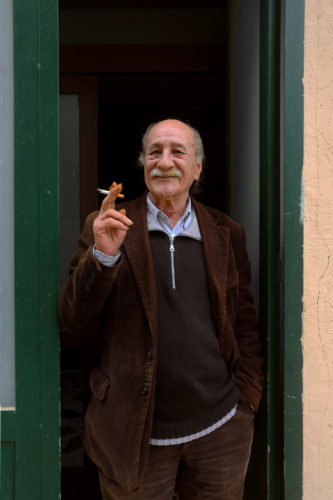
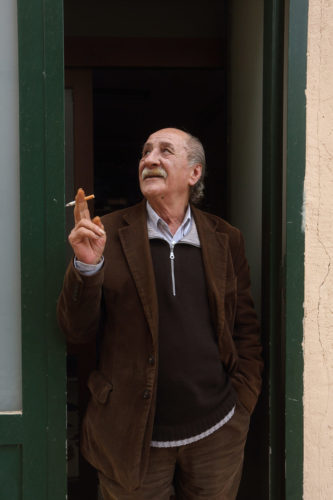
Smoke or No Smoke?

I have many pearls of wisdom as my fellow photographers that take my online classes with the BPSOP, and those that shoot with me in my “Stretching Your Frame of Mind” workshops I conduct around our planet will attest to.

The one I use the most during the daily reviews/critiques in all my workshops is, “OK, what’s your next shot”? What do I mean by that you’re asking yourself?

For the most part, when I observe a photographer shooting, I see him/her usually take one maybe two shots then move on. WOW, the odds of taking one photo and walking away with what I call a keeper is quite a bit. I wonder what odds Vegas would give it. I’m a pretty good photographer and I wouldn’t necessarily bet on me doing it with any regularity. There’s just too many factors involved and they all have to click (no pun intended) at the same time…unless you’re the type that relies on post processing to “save the day”.

🙁

First of all, before I bring the camera up to my eye, I determine where the source of the light is coming from; to me the most important part of photography. I’ll take my first photo then I’ll look for another POV, which might be getting some dirt on my shirt. I’ll walk around it and look for different ways to say the same thing.

If I’m shooting people in the street I’ll shoot then watch him or her for a different expression, or I’ll move around to change the background or if I have the time I’ll change my DOF to either make everything sharp behind the subject or I’ll quickly change the aperture so the subject is the only thing that is sharp. It’s all about giving myself choices. The more choices the lower the odds get so I can go home with one of those very illusive keepers.

The above photos were taken in about a sixty second period of time. I took the first image of the woman who wasn’t really doing anything except talking to her friends; it was more about the light and the waiter behind her carrying a tray with some backlit drinks on it. That’s what I was going after Still, I though there was something else there so I waited with my camera virtually next to my eye.

The woman lit up a cigarette and began blowing smoke out her nose (move bar under photo). Then the other woman was shielding her face from the sun…BINGO!!!!! I had my shot.

So the next time you go out shooting don’t rely on your first photo being the wall-hanger, because the odds are against you. Think about what your next shot will be and you’ll level the playing field to what Vegas calls…even money!!

Visit my website at: www.joebaraban.com, and check out my workshop schedule at the top of this blog. Come shoot with me sometime.

JoeB

Quick Photo Tip: Pay Them For Their Time

Fifty cents for Aylie, a steak bone for Lucy

I’ll bet that when you saw the title of this post you were thinking that I was going to talk about professional model fees…right? Well, you would be wrong…half wrong.

I teach an online class with the BPSOP, and I also conduct my “Stretching Your Frame of Mind” workshops around our planet. What inspired me to write this post was a photo that was submitted to me yesterday from my part II class.

This week’s lesson is about creating silhouettes and how important they can be in “making good photos”. A woman submitted a photo she took of her daughter along with a disclaimer. The disclaimer was that her daughter, who from the back looked to be about five, didn’t want to pose for her…and let her take just one shot before skipping out of sight.

Here was my reply…in so many words:

I have four children the youngest being twenty-nine, and I have photographed them since they were born. As soon as they understood the value of money (it didn’t take very long) I began paying them for their time…why not???

After all I was asking them to give up whatever they were doing to help me out. I thought it only fair to compensate them for their time; and it worked all the time.

Twenty-Five cents
Twenty-Five cents

At first, around the age of five, I would offer them twenty-five cents; back then that was a pretty good rate. As they got a little older it was fifty cents, then seventy-five, then depending on how long I was going to keep them, I would give them a dollar for thirty minutes…a long time for any kid to stay interested.

A dollar to get wet.

After a few days my online student told me that it worked perfectly, and she had never thought of that; most people don’t.

Again, let me say that I do not consider it prostituting my children, or turning them into money hungry kids, or spoiling their innocence. If anything I think it shows them the value of working for an allowance…beside cleaning their room or giving the dog a bath.

Pay them for their time…but I do suggest you pay after the photo session is completed!!!

Visit my website at: www.joebaraban.com, and check out my workshop schedule at the top of this blog. Come shoot with me sometime. On July 30th I begin my 29th year at the Maine Media Workshops. I’ve had the same week since the beginning. It’s the week of the Lobster Festival down the road in Rockland. It offers a completely different set of photo ops than one would expect when coming to photograph the coastline, lighthouses, and fishing villages of Maine. Come join me and spend a week completely immersed in your love for photography.

JoeB

Quick Photo Tip: It ain’t over til it’s over.

Despite the ominous sky, we went for it anyway.

Most of you have heard this expression that’s been around for a long time. Yogi Berra, the Hall of Fame catcher for the NY Yankees made it famous; that is if you follow baseball. Yogi said, “It ain’t over til it’s over”. I know I’ve said it myself hundreds of times during my nearly fifty year career as an advertising, editorial, and corporate photographer…Why you ask?

Well it’s all about the weather, and why it’s so important in your coming back with a good photo or not..or a photo at all. I teach an online class with the BPSOP, and I conduct my “Stretching Your Frame of Mind” workshops around our planet, and I’m constantly hearing the sad cries and complaints from my fellow photographers that say that the reason they didn’t go out shooting was because the weather was forecasted to be bad; or they went home because it got bad.

Well just think about the mailman’s motto that says, ” Neither snow nor rain nor heat nor gloom of night stays these couriers from the swift completion of their appointed rounds.” Actually, this really isn’t their real motto, it’s written on New York’s James Farley Post Office, and has no official status. What I saw when I first woke up.

If I had a nickel for every time it was raining when we were about to go out and shoot for a client and it cleared just at the right time, I would be writing this post from my private island; a blue and frothy drink with an umbrella hanging on one side in my hand…typing with the other

Don’t listen to any weather reports the night before, or even when you wake up. If you have a destination in mind don’t start worrying until you get there; don’t even look up at the sky!

It wasn’t over until it was dark.

In the above photo for Ford, when we woke up the sky was very dark and very gray. As always, I decided to go and set up anyway just in case. Sure enough just as the sun was about to set it came out behind me and created a look I couldn’t have prayed for; and this is the actual way it looked since it was shot before the days of computers.

In the photo taken by one of my online students, the weather started out gloomy and went downhill from there. Still, because she was using her “Artist Palette”, she walked away with this image; taken late in the afternoon in a snowstorm.

So remember what I say, it’s never over until it’s over…as in the dark.

Visit my website at: www.joebaraban.com, and check out my workshop schedule at the top of this blog. Come shoot with me sometime. On July 30th I begin my 29th year at the Maine Media Workshops. I’ve had the same week since the beginning. It’s the week of the Lobster Festival down the road in Rockland. It offers a completely different set of photo ops than one would expect when coming to photograph the coastline, lighthouses, and fishing villages of Maine. Come join me and spend a week completely immersed in your love for photography.

Keep sending in photos and questions to: AskJoeB@gmail.com, and I’ll create a video critique for you.

JoeB

Food for Digital Thought: Do you believe it?

Do you believe it?
Do you believe it?

Since my background is in painting and design, I still consider myself an artist. I just changed the medium from a brush to a camera and I use my camera to style my photographs; creating my art.

What I mean is I move things around in my composition, or I add things or props if I have them or they’re easy to get on really short notice. I rarely see what I want, I photograph as though my camera was a canvas on an easel, and I take pictures of what I’d like to see.

If moving a chair to the left or right…or taking it out altogether makes the composition stronger then I’m all for it. If the waiter has better light on his face if he’s looking in the other direction then I’ll ask him if he would look the other way…and offer to email him a copy.

This type of picture taking is beyond the scope of those that call themselves purists. It’s not the type of purist whose dogmatic approach to photography means absolutely no digital manipulation after the shutter is pressed; I think I could count them on one hand and still have enough fingers to hold a fork.

The kind of purist I’m talking about is the kind that walks up to a scene and shoots it the way it is and criticizes those that don’t. It would be beneath him to add or subtract something…move a chair or a trash can, etc.

I digress.

So let’s get down to the title of this post, “Do you believe it”….what do I mean?

If you’re like me and you consider yourself a painter whose medium is a camera, which you should, and you want to change something just make sure it looks like you didn’t do anything.

I teach an online class with the BPSOP, and I also conduct my “Stretching Your Frame of Mind” workshops around our planet. I always tell my fellow photographers that when they add something or move something to take a step back and ask themselves if they believe that what they did looks believable; it’s exactly what I do.

For example, you’re in your kid’s bedroom and a shaft of light is falling on the floor next to the window. You want to say to the viewer that it is indeed a child’s bedroom so you put a pair of red high-top sneakers in that shaft of light, and you put them in a perfect position side by side. This is when you take a step back and ask yourself if your kid would really put his shoes that way or would one of them be laying on its side and the other facing the other direction; this is what I mean by do you believe it.

In the above photo, do you believe it? Was it exactly like that when I walked into the kitchen or did the artist in me paint it differently than the way I was actually seeing it? How about the waiter in Venice?

Do you believe it?
Do you believe it?

Do you believe he just happened to be standing there?

One last note, The same goes for any post-processing I might do to one of my images. Before I hit save, I lean back and look at it through the eyes of the viewer…I then ask myself would he believe it.

Visit my website at www.joebaraban.com, and check out my workshop schedule at the top of this blog. Come shoot with me sometime.

JoeB

My Favorite Quotes: Helen Keller

It was 1899 and I was Edgar Degas

As the people that follow my blog know by now, not all my favorite quotes have been said by photographers. There have been several that have been said by painters, writers, and musicians, all artists in their own right.

After recently reading an article about the work Helen Keller did, I started reading some of her quotes, and one in particular stood out to me as having a profound effect on not only my photography but in my teachings as well.

First, it’s important to give you the true meaning of the word Vision since several of my online students with the BPSOP, and my “Stretching Your Frame of Mind” workshop participants can sometimes confuse a word that actually might mean something else; something I have done from time to time.

[vizhuh n]

noun

1. the act or power of sensing with the eyes; sight.

2. the act or power of anticipating that which will or may come to be.

3. an experience in which a personage, thing, or event appears vividly or credibly to the mind, although not actually present, often under the influence of a divine or other agency: a heavenly messenger appearing in a vision.

4. something seen or otherwise perceived during such an experience: The vision revealed its message.

5. a vivid, imaginative conception or anticipation.

Btw, I like number three, but so far after nearly fifty years of being a photographer, I’ve never had a heavenly messenger appear in my composition as a vision; which is unfortunate.
🙁

Helen Keller said, “The only thing worse than being blind is having sight but no vision”.

One would have to agree that vision is imperative and what fuels the engine that pushes creativity forward. The sad part is that with the coming of the digital age, some of my fellow photographers don’t rely on their personal vision, instead they count on their computer to create their imagery which over time will make them really good computer artists…and if that’s your thing, to each his own.

What the computer can do is important to this new age, and it should never be said that I don’t appreciate it, but to me it should be used to add the finishing touches, i.e., contrast, lighten or darken,  occasional sharpening, etc.. Those things that can enhance an already strong photo made before the shutter is depressed.

This is where vision comes into play, and what you can do to create strong images before the fact. This is all about definition number two, and what I want to write about: the act or power of anticipating that which will or may come to be”.

There are photographers (great photographers) out there, many of them teaching that photograph what they see and never looks for anything else. In other words what is will always be just that. To add or alter anything when composing is strictly against their beliefs, and to that they call themselves purists.

The funny part is that they have no compunction when it comes to sitting in front of their computers and altering the light, color, saturation, shadows, and some even apply some weird trick they picked up in one of the thousands of plug-ins available to them; and then there’s the crop and straightening tools!!!!!

Since I’ve never cropped one of my photos in nearly fifty years I can’t even or don’t ever want to think about that…but I digress.

Don’t photograph what is, photograph what could be, and that’s what my definition of vision is all about. I’m not talking about vision in Fine Art photography in this context, which I plan on talking about in upcoming posts. I’m talking about images that exist in nature and are readily available for all to see if you set your mind to seeing them. This is the kind of vision I’m talking about.

You can actually practice in your spare time!!! How???

Suppose you’re walking down a pier very early one sunny morning and you immediately stop to take a photo of a Vanishing Point created by the converging lines of the two sides of the railings extending out from either side of you.

Without any hesitation you quickly take the shot and now you have created a photo that via a Vanishing Point, leads the viewer down to the end where the two lines meet on the horizon exactly where the sun is coming up; a great photo by all accounts.

Now, you’re standing there and if you’re like me you wish that there had been a fisherman at the end of the pier, silhouetted against a warm, soft, and beautiful sun minutes after breaking the horizon.

Or what if you were walking in a park late one Fall afternoon and you noticed a bench next to a winding path covered with leaves painted by mother nature with every color known to happen during the peak days of Autumn. You bring your camera up to your eye and take a picture; another good photo albeit fairly predictable.

Again, if you were like me and were on your knees up close and personal to the texture and patterns of the leaves, you might have wished there was an elderly couple sitting at the other end of the bench feeding a group of pigeons that were milling around next to their feet.

These are the thoughts that are always running through my imagination when I’m out shooting. I think of various scenarios because it’s a way of exercising my mind, because you just never know when an opportunity might come up. An opportunity that will change a good photo into a special one.

In the above photo, While shooting in Cuba I saw this woman just finishing up posing for other photographers in an old house. I immediately envisioned Degas paintings of the ballerinas. At that memorable moment I led her into another room, had her sit and take off her slippers; it was 1899 and I was Edgar Degas.!!!

Give it a try sometime. Think of yourself as a painter instead of a photographer. Your camera on  tripod is a blank canvas on an easel; use it to color outside the lines.

Come join me this coming July 30th at the Maine Media Workshops; for my twenty-ninth year. It’s a great way to completely immerse yourself for a week.

Visit my website at: www.joebaraban.com and check out my 2017 workshop schedule at the top of this blog. Come paint with me sometime.

Send me a photo and question to: AskJoeB@gmail.com, and I’ll create a video critique for you.

JoeB

Anecdotes: Egypt

I finally had my few seconds.

I was sent to Egypt to photograph the country and it’s people by Oil Tools Limited, a company based in London. The company was going to partner up with the Egyptian government to begin drilling in the coming year; I had pretty much a free hand which made it all the sweeter.

Whether it was the country, the people, or the historical monuments, the company really didn’t care as long as they had enough of each to use for the next couple of years. In those days we called these kinds of assignments Plums.

Early one morning I went out with a group of Egyptians to take their portraits…my transportation? A stubborn, uncomfortable, smelly camel. It didn’t take long for my new friends to figure out that I wasn’t keen on the idea of spending several hours trekking across a very hot desert that even Moses wouldn’t have willingly done; especially when he had to do it for forty years!!!

Egypt 2 Getting to the locations wasn’t too bad, at least it was cool since the sun had not come up. I had a real band of comedians that laughed at everything, and would not give each other one second of peace as I was photographing each of them; In the photo above the model kept turning away from the camera.

Finally I told everyone that if they would give me just a few seconds with him I would jump on my camel and shoot while riding…they did so I did!!!!

FYI, the shift in color of me on the camel is what happens when the sun had been up for twenty minutes.

They did, so I did!!!

Visit my website at: www.joebaraban.com, and check out my 2017 workshop schedule at the top of this blog. Sign up for one of my “Stretching Your Frame of Mind” workshops I conduct around the planet, and come shoot with me sometime…but not on a camel.

Sign up for my online class with the BPSOP, and I’ll show you how to incorporate the elements of visual design into your imagery.

Send me your photo and question to: AskJoeB@gmail.com, and I’ll create a video critique for you.

JoeB


Personal Pearl of Wisdom: Place your subject way off center, cause its much more better.

Much more better
Much more better

I’ll use it only when I know that the people reading it will realize that I really do know that it’s incorrect to say it… grammatically illegal!!!

However one must note that one cannot place more or most before better. Why is that? Simple. Better itself means “more good”. So “more better” would be “more more good” which doesn’t sound good.

But I digress!!

Ok, you’re asking yourself how in the world can he (Joe) segue this into something that relates to photography?

When I’m talking to one of my students that take my online class with the BPSOP, or when I walk up to someone that’s in one of my “Stretching Your Frame of Mind” workshops someone on the planet, or in the daily critiques during that said workshop, I’ll say it’s “much more better” if you compose your photo so as the subject is way off center…Why?

Well, there are two answers: The answer to the first why is to get a reaction from them since what I say is not grammatically correct. I want the short discussion to be remembered, and I’ll do that any way I can; a brief chuckle before my explanation is just the ticket!

The answer to the second why is that when you place the subject close to the edge of the frame, you’re creating visual tension. Don’t ever let anyone tell you differently. Especially those old-school hardliners (usually the officers in their camera club) that live and will die by the ever so silly Rule of Thirds.

So the next time you’re out shooting and you’re in a position to have your subject either somewhere in one of those pesky (Rule of Thirds) intersections go ahead and take the shot. However, before you move on to the next photo, try placing the subject close to the edge of the frame. Realizing you’ve probably been brain-washed, take a leap of faith while getting over the hump.

When you’re sitting in front of your computer place both versions side by side and really study them. Be honest with yourself and decide which one offers the viewer not only decidedly more visual interest but visual tension as well.

Visit my website at www.joebaraban.com, and check out my workshop schedule at the top of this blog. Come shoot with me sometime.

JoeB

Food For Digital Thought: Dealing with Distortion Part II

I see three triangles with the help of the edges of my frame.

In my latest part I post, I was dealing with distortion. I talked about the difference you get when you stand off to one side or the other while photographing a building, or standing in the middle of it to achieve symmetrical distortion.

In this post I want to talk about the entire composition; thinking about everything that’s contained within the four edges of your frame. I’m talking about both the positive space (the space that has mass), and everything else that would be called the negative space. I call it,  “The whole enchilada”, and several years I wrote a post on it.

When I talk to my online students at the BPSOP, and in my daily critiques with those that take my “Stretching Your Frame of Mind” workshops I conduct around out planet, I talk about why we shouldn’t crop anywhere but in the camera.

There are several reasons, one of them is to use the edges of your frame as a compositional tool.  If you’re familiar with my teachings, that is incorporating the elements of visual design into your photography, You know that shape is one of the basic elements, and squares, circles, rectangles and triangles are the four basic shapes.

If you were to think about those four shapes when you’re composing one of your photos, it would open up a new door for you as far as creating visual interest and tension. Of course, this would take right-brained thinking to be able to see these elements.

Keeping in mind what I just talked about in my part I post on symmetrical distortion, and add to that thought this post on shapes, and using the edges of the frame as a compositional tool, you’ll come up with images as the one I submit to you now.

In composing this photo of an office building in the Galleria area of Houston for the oil company that took up several floors, I thought about shapes; specifically triangles. By using the right side of my brain, I no longer saw a building (left brain thinking), I saw a triangle. I thought about  the triangle I was creating with the building by standing (up close and personal) in the center, and the two triangles I created on either side all with the help of the edges of my frame.

So my fellow photographers, the next time you go out shooting, think about the effects of negative space that borders and defines the positive space ie., your subject, and try to create shapes wit

Visit my website at: www.joebaraban.com, and check out my 2017 workshop schedule at the top of this blog. Come shoot with me sometime.

Send me a photo and question to: AskJoeB@gmail.com, and I’ll create a video critique for you.

JoeB

Workshop Stuff: Maine 2017

I was walking around the festival when I saw this happening.

I wanted to repeat some of my earlier posts that dealt with photos taken from my Maine Media Workshops to show you some great images that are taken during the week. This coming July marks my 29th year there and I look forward to teaching there every year.

There’s several workshops going on that week so the energy level is way up there. All classes eat all three meals (great food) at the homestead so there’s constant photography chatter and you see people taking pictures all around the campus. Each year starting from the beginning I’ve picked the same week because it coincides with the Lobster Festival just down the road in Rockland; the reason is simple.

Beside what my fellow photographers have come to expect as far as small fishing villages, lighthouses, flowers in peak season, and landscapes in general, the Lobster Festival offers a completely different set of photo opportunities: color, light, design, great people watching and portraiture, and lots of movement; not counting the variety of foods including seafood and plenty of lobster.

As I do in my online classes with the BPSOP and my own personal “Stretching Your Frame of Mind” workshops I conduct around the planet, I show photographers how to incorporate the elements of visual design into their photography. I go out with the class in the mornings as well as the sunset shoots to see what people are thinking and I’ll always talk to each one individually offering advice and perhaps a different way of looking at the same subject.

Here are some classes:

2015 is not shown because of the recovery of hip replacement surgery.

Since I know that so many photographers have to plan so far ahead for vacation time, I wanted to send a link out now so people have a chance to read the description and sign up:

https://www.mainemedia.edu/workshops/photography/stretching-your-frame-mind

Visit my workshop at: www.joebaraban.com, and watch for new workshops at the top of this blog. Come shoot with me sometime.

Send me a photo and question to: AskJoeB@gmail.com, and I’ll create a video critique for you.

JoeB

Life Before Photoshop: Shell Rotella Oil Calendar

Look ma, no Photoshop!

I miss the good old days when you had to actually think before you pressed the shutter; you had just one click to do it right.

By today’s standards, it was very difficult to do it all in the camera, but since we didn’t know any better it seem the natural thing to do; it was the only thing to do!

I often think back to some of my photos and think what they would have looked like if Lightroom was around and Adobe was not just a type of house in New Mexico. Maybe I would have been dangerous, but i like the way it turned out.

Having said all this, I certainly don’t sit around every day pining for days gone by. I like to rely on Photoshop when something I want to do can’t be done at that moment…the decisive moment when I press down on the shutter and record what is.

What I don’t do and what I tell my online students with the BPSOP and my fellow photographers that sign up for my “Stretching your Frame of Mind” not to do is tell yourself that you’ll just fix it later. Instead of moving to the right to create a better balance between the negative and positive space, or to get that telephone out of someone’s head, or to fix the ridiculously overexposed  subject the meter told you was just fine by bracketing, people will sit in front of the computer and deal with it then.

I was shooting a calendar for Shell Oil, and every year owners drive their huge eighteen-wheelers to a designated city in hopes to be featured on one of the month’s pages.

In the past they simply rented a huge warehouse that had a large overhead doors at each end, put up white seamless paper and each rig drove through, stopped, had it’s picture taken and drove out; I wasn’t interested in doing that.

I presented an idea to the art director. The idea was to take portraits of all the owners and try to make it work with a particular month. I sent my producer ahead of time to find me interesting locations I might use as a backdrop. We arrived in Nashville a couple of days early to look at the locations and decide on the twelve trucks we wanted to use. I walked among a hundred rigs looking to pick out the ones that were simply the coolest!

Since I love purple and Manny and his son (who was spending the summer driving around with dad) were great guys I picked their rig to be on the July’s page. We found this great location and went for the 4th of July theme.

What you see was taken on one 35mm Kodachrome transparency, and just one click of the camera.

Visit my workshop at: www.joebaraban.com, and check out my 2016 workshop schedule at the top of this blog. Come shoot with me sometime.

Don’t forget to send me photos and questions to: AskJoeB@gmail.com, and I’ll create a video critique for you.

JoeB