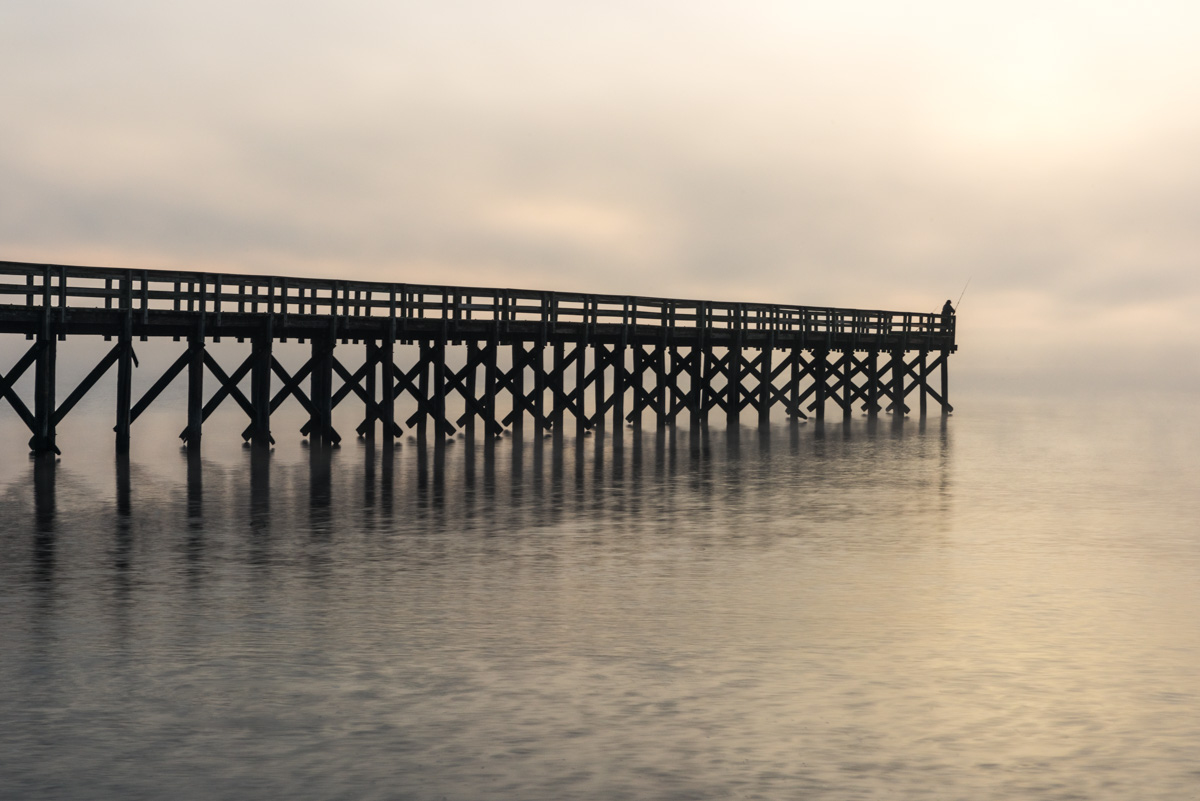
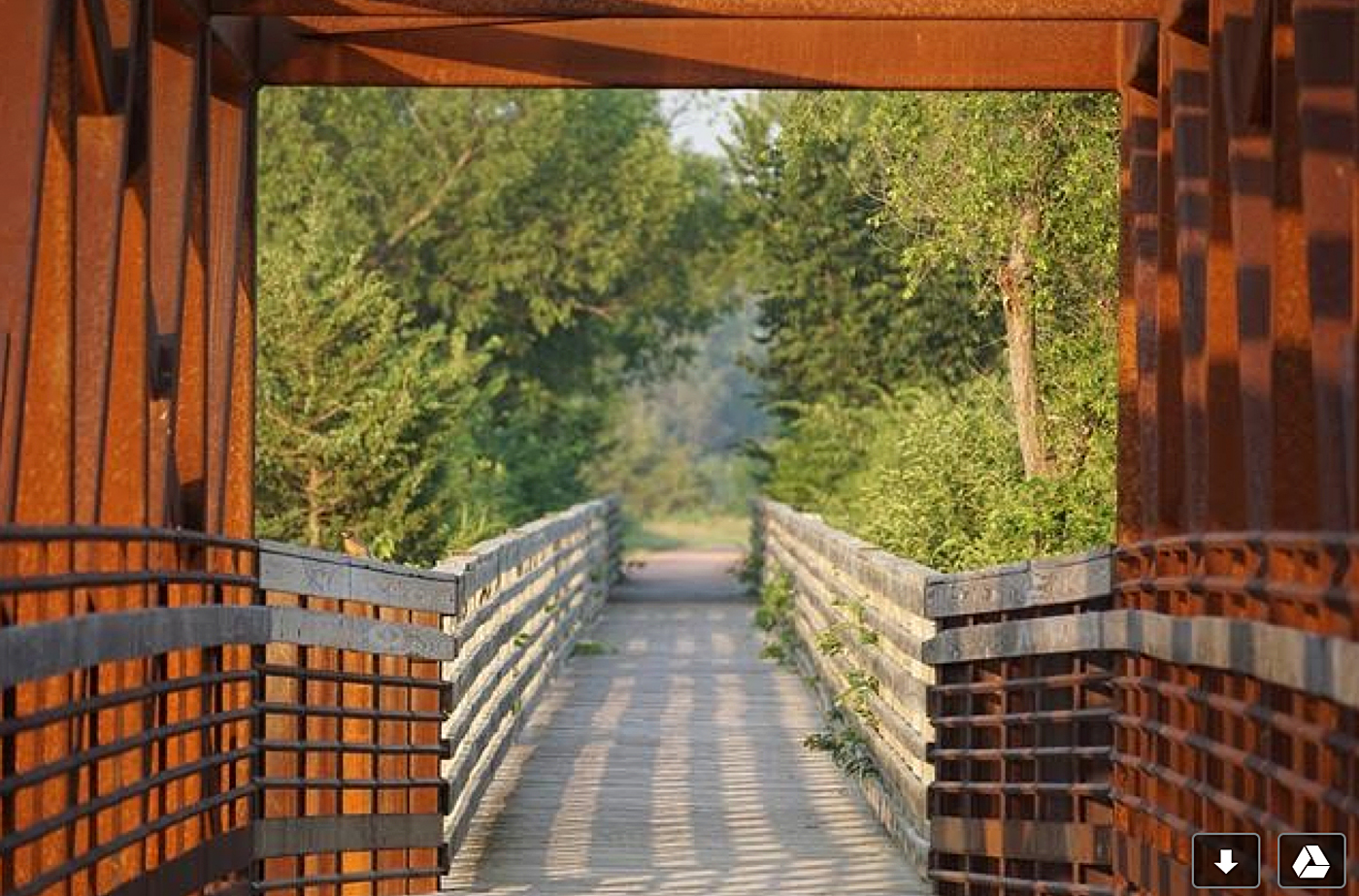
Greg, who has taken my online classes with the BPSOP, sent me this new photo to take a look at before starting. When I get a submission to AskJoeB, I like to include what he or she said about the photo, including any questions.
Here’s what Greg had to say:
Hi Joe,
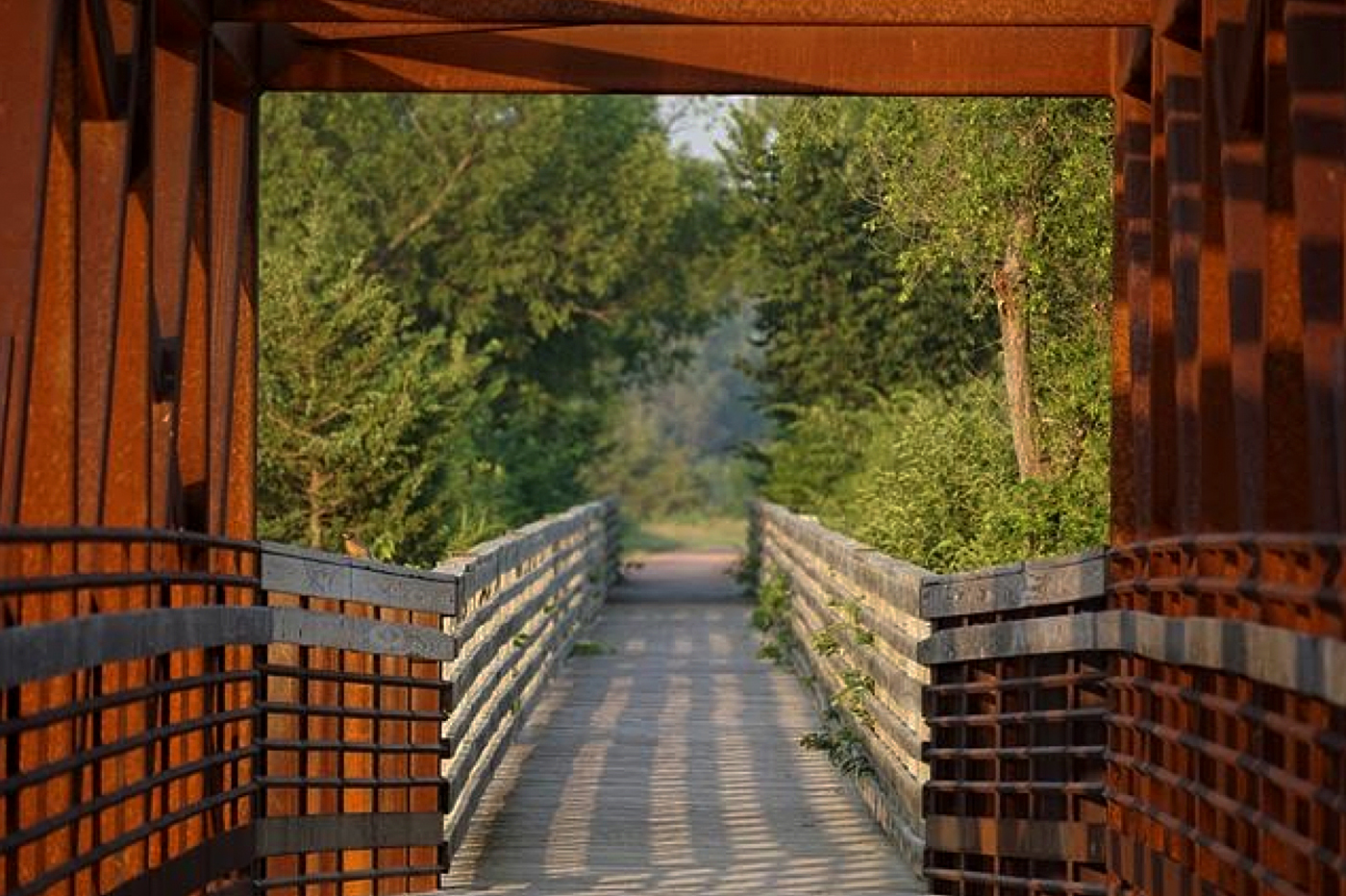
I’m signed up for your August “Stretching Your Mind” class with BPSOP, but saw the Ask Joe post on your blog, so thought I would send an image to you. My question is about focus.
I deliberately focused at the point where the handrails stretch off down the wooden walkway, about 1/3 in on each side. Do you feel that my focus point is appropriate? Where would you have placed it?
By the way, I’ll be going back soon to give some more time to the shapes on the left side framework.
Greg”
Greg,
There’s several things I like about your photo. That said, take a look:
I tell my fellow photographers in both my online class, but my “Stretching Your Frame of Mind” workshops as well…give yourself choices. Not only in the exposure, but what you want to be sharp. By only shooting one way you lower the odds in coming home with what I call a ‘keeper’. One that can stand the test of time and not be deleted when you go back later for another look,
Look at your image now that I’ve taken it down a couple of stops…especially the shadows. If it were me, I would stop taking advice from the meter in your camera. Take matters into your own hand and bracket. Put all the exposures on your screen and compare them. This is great way to become a well-rounded photography.
Thanks for your submission.
Visit my website at: www.joebaraban.com, and watch for my 2016 workshop schedule at the top of this blog. Come shoot with me sometime.
Keep sending in your photos and questions to: AskJoeB@gmail.com, and I’ll create a video critique for you.
I wanted to write this post for all of those that have had interest in my upcoming photo trip to Cuba through the Santa Fe Workshops.
Next March will be my third trip and I look forward to it as much as the first time. in 2014. Now that there are so many changes going on with the US and Cuba relations, it makes it even more of a wonderful destination.
Private restaurants have been opening up and I can tell you that the food is great, and the atmosphere in these new Paladors (trip advisor) is a photo op in of itself.
The people are very warm and friendly and open to having their portrait taken against the Havana backdrop.
Here’s a link to my last two trips where you’ll see, through the eyes of the two groups, what Cuba is like.
Enjoy and I hope these photo taken solely by the photographers that were with me:
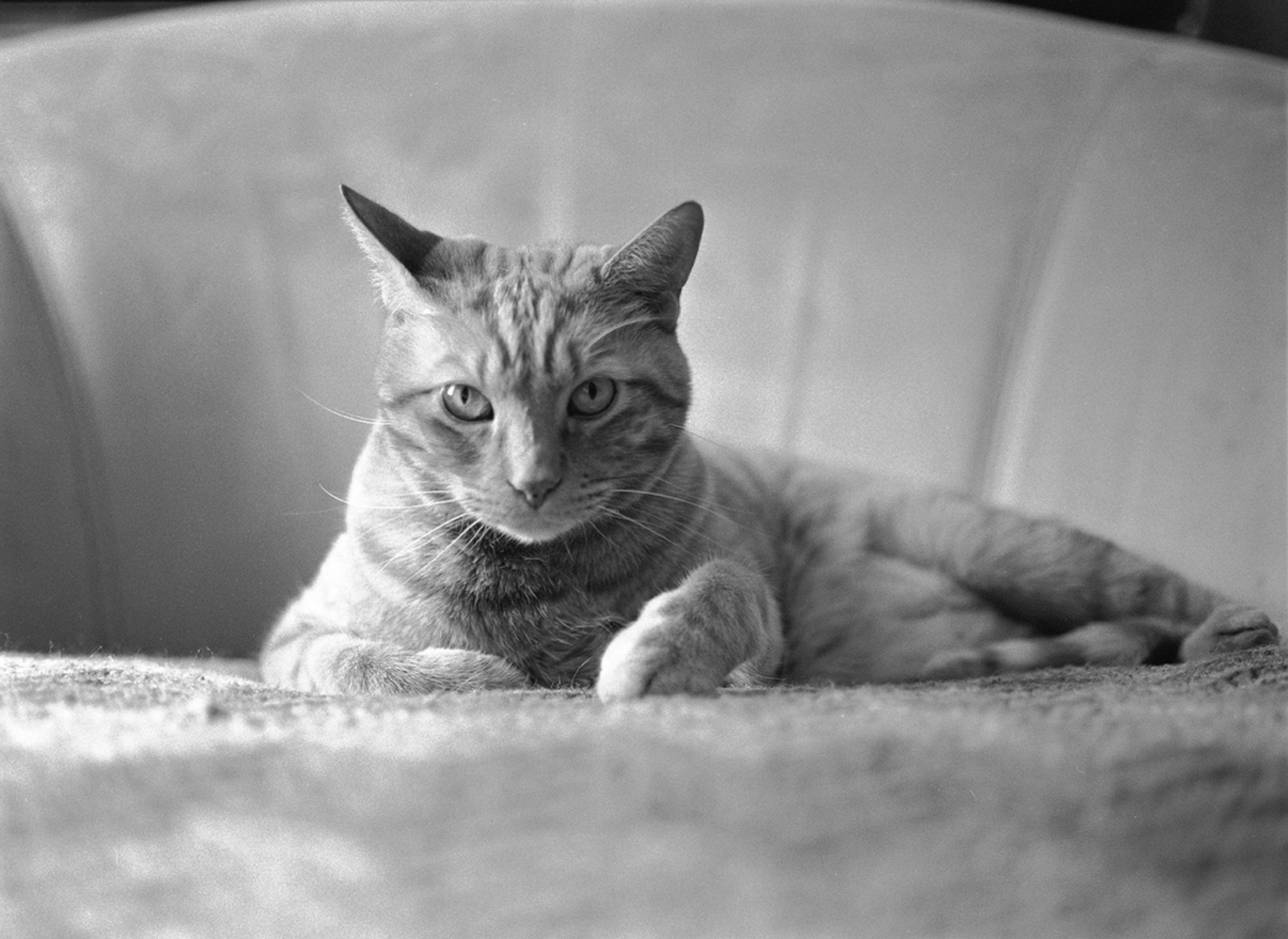
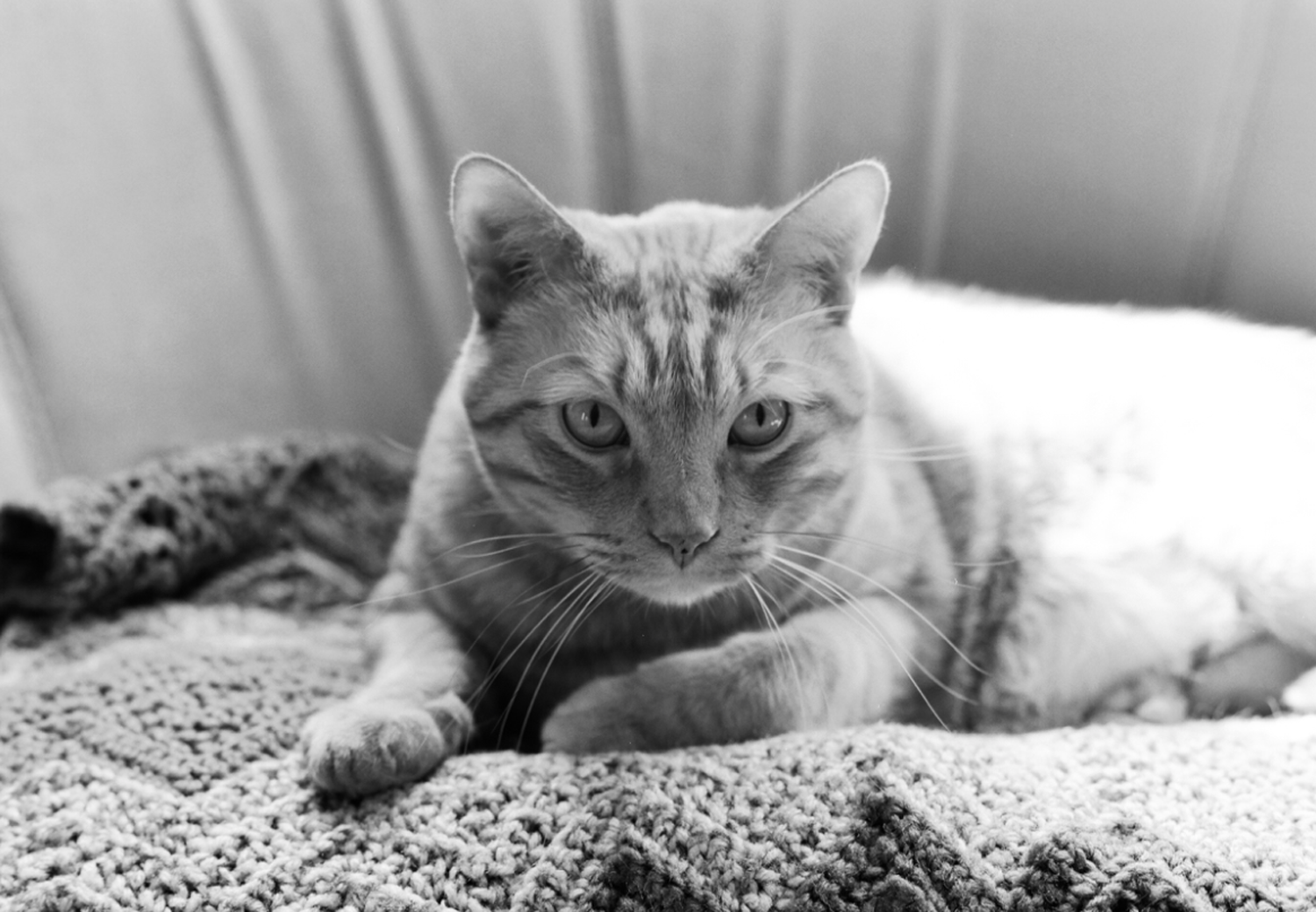
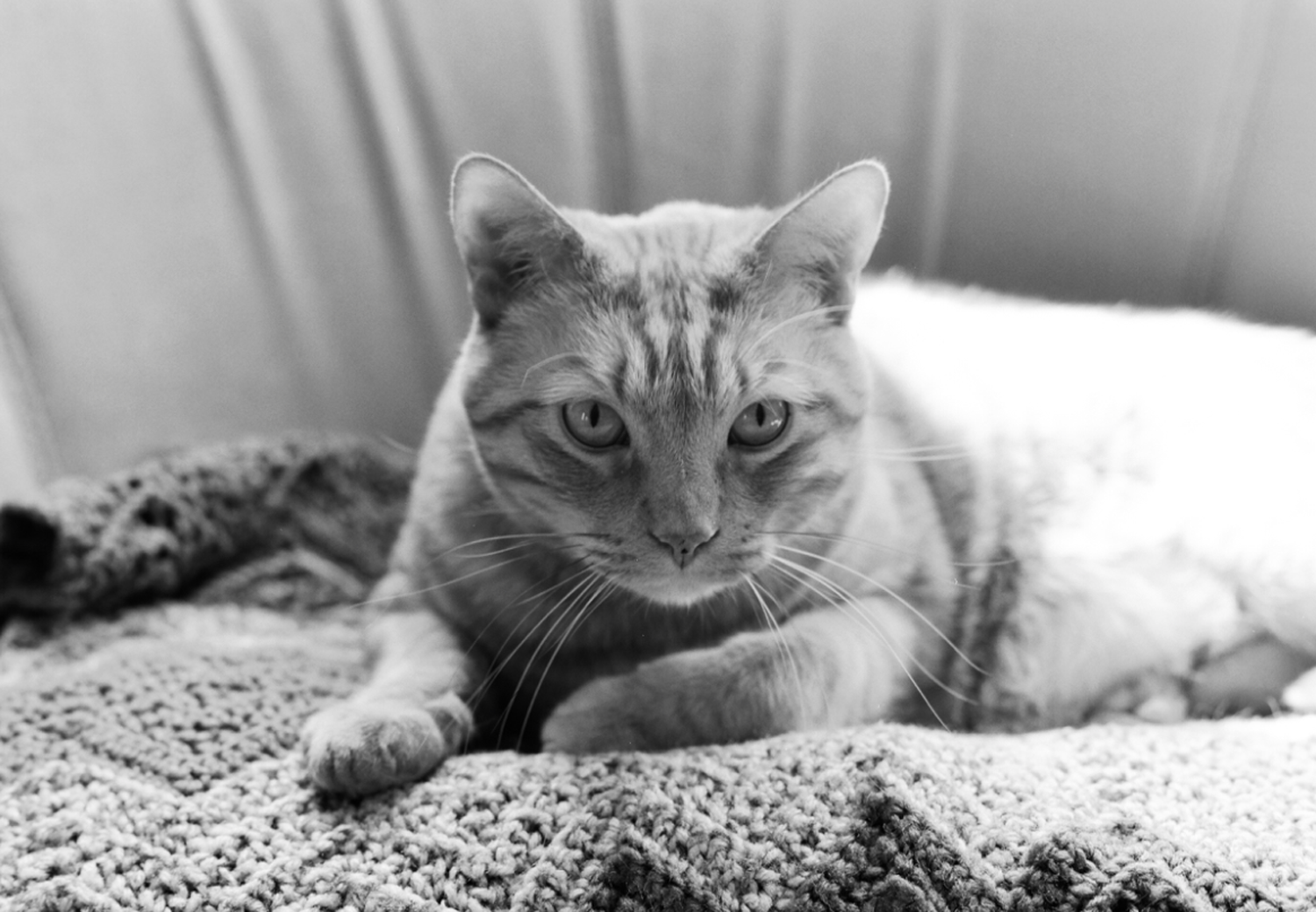
Gary had sent me an image a while back to comment on. At that time I made a video critique and told him to take more control of the light by blocking out all but a small amount; while putting in detail where it was void on the body of the cat. Then I suggested he apply my thoughts and do a re-shoot…which he did.
Here’s what he had to say in his new submission:
“Hello Joe! You asked me to try and re-shoot my favorite subject this time using your suggestions on how to control the light. I tried to block out any light coming in from the top of the frame down. I tried to use only south facing window light coming in from the left of the frame. I only wanted that light to illuminate Hurley (my kitty). Do you think I was more successful this time in controlling the light? I also tried to place his face more off to the left of the frame instead of dead center. Rechecking the focus I think may have just missed the focus on his eye.”
In my online class with the BPSOP, as well as in my “Stretching Your Frame of Mind” workshops I conduct around our planet I talk about Form being one of the basic elements of Visual Design. Form refers to the three dimensional qualities of an object; those being height, width, and depth.
Height and width are easy to obtain, even a silhouette has height and width. Depth is another story. The best way to achieve depth when you’re lighting a subject or object is to side light it. In Gary’s new image, this is what he’s done by controlling the amount of light coming in from the window.
Visit my website at: www.joebaraban.com and watch for my 2016 workshop schedule at the top of this blog. Come shoot with me sometime. My new “springtime” workshop is now posted on my blog. This time it’s in Sicily, so for those that’s always had this wonderful country on your bucket list now would be a good time to see and photograph it.
Keep those photos and questions coming it to: AskJoeB@gmail.com, and I’ll create a video critique for you.
I teach an online class with the BPSOP, and I also conduct my “Stretching Your Frame of Mind” workshops around the planet. I teach photographers how to incorporate the elements of visual design and composition into their imagery, and each week of the four week class they are given a lesson to work on for that week.
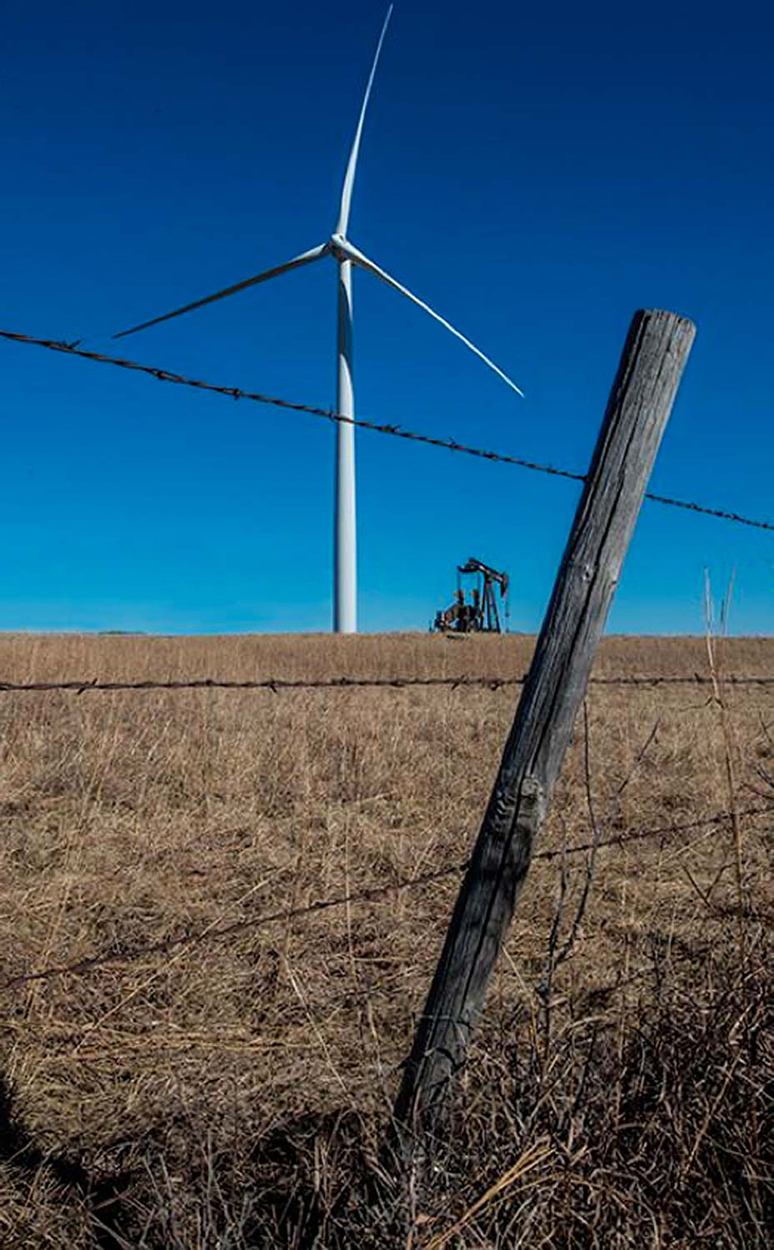
In the second week we work on ways to generate Visual Tension. I’m not talking about the tension that comes from mental or emotional stress, I’m talking about the visual tension that comes from forces acting upon one another. I recently had a student in my part I class send me a photo to be critiqued, and along with the photo, he described his thought process this way:
” While driving across Osage County in Oklahoma, I came across this wind farm being erected, and drove around until I found a single turbine and an oil well pumper side by side. I couldn’t cross the fence line, so I used the barbed wire and fence post for the foreground and to help frame the turbine and pumper. I also placed the blades of the turbine near the top wire to form a triangle. I also thought the fence post leaning toward the edge of the frame added tension”.
As always, I do a video critique of each photo that’s submitted, which is a huge help since I can explain myself while using the cursor to move around the various parts of the composition. In the videos, I point out what I like and why. I discuss the elements of design that are present in the photo.
“Thanks Joe. I have to admit that before this class, I probably would have just walked up and shot OVER the fence instead of incorporating it into the scene. Or worse, I might have crossed over the fence (illegally) to get closer for a different angle. Thanks to you, I am seeing photography in a whole new way, and enjoying it all over again! I have a whole new philosophy–“Work with what’ya got, but WORK with what’ya got”.
Visit my website at: www.joebaraban.com, and check out my 2015 workshop schedule at the top of this blog. In conjunction with the Santa Fe Workshops, I’ll be leading a group to Cuba for the third time next March. Come join me in what I’ll guarantee you to be an amazing experience, and you’ll return home with memorable photos from a wonderful country.
Keep those photos and questions coming into: AskJoeB@gmail.com, and I’ll send you a video critique of your image.
I recently had Gary, a follower of my blog, submit a photo for a critique. I always like to copy what each photographer had to say since so many people out there have had a similar experience, or have wondered about a part of photography that involves light. Here’s what Gary had to say:
Hello Joe,
I have read your blog for awhile and have been practicing the technique of using window light to create portraits. I know you say window light, specifically north or south window light, is a great way to light your subjects.
I have sent you a portrait of my cat because he is a great subject, doesn’t mind being photographed for hours nor having his picture shared online. My first question is about the light in this photo. The light is pouring down on the cat instead of coming across him. I believe window light needs to be coming from a high window coming across the frame in more of a diagonal fashion. As made famous by the painter Johannes Vermeer.
Is this still a good use of light though? My second question is the placement of the cats face and body in the frame. Taking a second look at the photo, I think I should have placed his eyes more towards the top with his left eye in the exact middle line of the frame. Lastly the image was taken on a Mamiya M645, standard 80mm lens on Fuji Across 100.”
Gary
Gary, I too am a great admirer of Vermeer. Since my background is in art rather than photography, I took several classes in Art History and Vermeer is one of the painters we studied for his use of light. It turned out to be serendipitous because my first studio was the first floor in an old house. I also had one of the bedrooms upstairs that happened to face North. At that time, very early in my career (as in the beginning), I couldn’t afford lights so I lit everything including portraits with the light coming into the window. Interestingly enough people really liked the way I was lighting them, not knowing that it was the best possible light I could have used…even if I could have paid for electronic flash.
In my online class with the BPSOP, and in my “Stretching Your Frame of Mind” workshops I conduct around our planet, We work and talk a lot about light. It plays a huge part in taking our images what I refer to as “up a level”.
Btw, when I could afford lights, I still preferred (and still do) North light.
I’ve been an advertising and corporate photographer for forty-eight years, and in that time, I’ve had my share of legal problems over the unauthorized use of my images. For some incredible reason, people think that they can just come and take my photos for their own use and not pay for them. Since I’ve spent the majority of these years in film, it was a constant issue, and one that was very hard to find out about.
I had to see my photo in a magazine, a brochure, on a billboard, or for a second on the television. The only other way was to have someone (usually another photographer) recognize my shot and call me to let me know. I once was sitting at a light and glanced over to a bench next to a bus stop and saw a photo that I knew a friend of mine had taken. I decided to call him and “lo and behold,” he knew nothing about it.
In my online class with the BPSOP, and in my “Stretching Your Frame of Mind Workshops” I conduct around the planet, I’m always telling my fellow photographers that putting a ‘C’ in a circle next to your name not fully protect it. People always think it does, but I have some bad news for you…it doesn’t. Your image has to be registered with the Library of Congress to even be able to sue for infringement. Not only does it have to be registered, but if it was not registered before the commencement of the infringement, you will be severely limited in how much you can recover from settlement or suit.
Because most infringements of photographs involve an advertising use – and it’s virtually impossible to prove the amount of profits “attributable to the (advertising) infringement” – if the image is not registered prior to the infringement, you can only recover the license fee you could have charged for the use in an “arms-length” transaction. Compare that recovery with what you can get if registered before infringement; statutory damages of up to $150,000 per work infringed plus attorneys’ fees, expert witness fees, court costs and interest.
I was teaching at the Julia Dean Workshop in Hollywood and made a comment on the size one of my students had embedded her name and copyright mark on her submission for review. It was too large and quite distracting. Another of my students asked me if I had ever heard of a company called Digimarc. I said I hadn’t so he proceeded to fill me in on what is proving to be one of the best pieces of advice ever given to me in my long career.
Digimarc offers a way to protect your image with an invisible embedded watermark;a very simple and subtle way to help identify infringers of your image. The real beauty about using Digimarc is that they will monitor your images by continuously searching the internet (worldwide} for any infringement of your copyright. For more information, you can click on the Digimarc logo seen on this blog. Btw, I receive no monetary compensation if you register. I do it as a professional courtesy to my fellow photographers.
For this post, I’ve called on my attorney to make a statement about his experience on Copyright issues. Dana LeJune is a Houston based lawyer who is one of the foremost authorities on the current issues involving copyright infringement. Here’s what he had to say:
“Copyright infringement in the areas of music, film, photography, and architecture is at an all-time high. Home builders are hiring draftsmen (usually, licensed architects won’t risk it) to redraw house plans, ad agencies are downloading images from Google, or scanning them from magazines, and teens are using file-sharing to pirate popular music every day, in every part of the country. Because litigating such a case can be very expensive for the copyright holder, the contingent fee arrangement may make prosecution affordable for the “little guy.”
Here’s what you need to understand: if the work was not registered before the infringement began, the potential recovery is often insufficient for the lawyer to pursue using the contingent fee arrangement. Without the ability to recover statutory damages and attorneys’ fees, and because of the likely inability to prove what profits were attributable to the infringement (in an advertising use), most lawyers will decline to accept the case.
The moral of the story is, REGISTER YOUR WORK REGULARLY. Photographers have a special prerogative to register their works, en masse, so there’s not a huge financial disincentive. Just make sure to list the name of each photo in the registration separately, even if on an attached list. This way the single registration for several hundred images will (probably) permit the recovery of multiple statutory damage awards for a single registration.
If you have any questions that are not answered by my website, www.copyrightsuit.net, I don’t charge for telephone consultations, so don’t hesitate to ask me a question. You may also email me at dlejune@triallawyers.net. Good luck and wealth for the rest of 2015 and 2016.”
That’s pretty sound advice, and it comes from someone that knows what he’s talking about. If you find that someone has used your photo without authorization and it was registered, calling my attorney would be an excellent idea. If it wasn’t registered, it wouldn’t be. Registering these days has been made as easy as it gets, and you can do it online with the Library of congress. There’s people that actually talk to you if need be.
Visit my website at: www.joebaraban.com and be sure tyo check out my 2016 workshop schedule at the top of this blog. come shoot with me sometime.
Keep sending in your photos and questions to: AskJoeB@gmail.com, and I’ll create a video critique for you.
Valeriano recently sent me a photo he had taken of a lifeguard tower in silhouette. Since then he’s submitted another photo of the same towers. As usual I like to print what each photographer had to say because a lot of you out there have been in a similar situation or have had similar questions running through your mind. Here’s what Valeriano had to say:
“Hi Joe,
I’m submitting this photo to have your invaluable critique.
I’d been “working” the subject (the lifeguard tower) a bit that day. Walked around a lot, shot it with different lenses, composed vertically, horizontally, from down below and looking up, etc. Out of all the different compositions I’ve found while doing this exercise, I thought this one framing the subject through the fence was the more pleasing to me. I also decided to shot it with a side-lighting (4-5 on the clock) in order to still retain some details in the fence. I could have also done it by backlighting the scene (positioning myself in a different spot) but because of this amazing late afternoon light and these little white puffy clouds in the sky I preferred this lighting choice. While shooting some photos on this setup, changing filters, exposure, etc. two guys waled through the frame along the shoreline, and I decided to include them in the photo so to also add a bit more of sense of scale.
Thanks for your critique.
Valeriano.”
Valeriano, one of the lessons I give in my online class with the BPSOP, and I also talk a lot about it in my “Stretching Your Frame of Mind” workshops I conduct around our planet, is showing people how to create visual tension. I’m not talking about the kind of tension that comes with mental or emotional strain, I’m talking about visual tension occurring when forces are acting upon one another. You have three of the ways in this photo: Contrast, the use of light, and framing a subject within a frame.
You also have an almost classic Vanishing Point created by the fence line. A great way to move the viewer around the frame.
Except for the problem with the filter, it’s a really good photo with lots of strong light and color combined with visual interest and tension.
Visit my website at: www.joebaraban.com, and check out my 2016 workshop schedule at the top of this blog. Come shoot with me sometime. I still have a couple of spots for my upcoming Maine Media Workshop this coming July 26th. It’s a great place to immerse yourself in your photography without any of your day to day distractions…like a family and work. I always pick this week (after 27 years) because it’s the week of the lobster Festival down the road in Rockland. It offers a completely different set of photo ops than what you would expect to see on the coast of Maine.
For those interested, here’s a link to a couple of posts I did on past workshops in Maine:
I’ve had Valeriano submit a photo for me to talk about. As usual, I like to let my readers see what the people say, because sometimes people have been in similar situations or have had similar questions. Here’s what he had to say:
“Hello Joe,
I’d like your critique on this photo. I think I’ve picked up the wrong subject to be rendered in silhouette. Lacking an interesting shape from any angle I was framing it against the sun setting, I’ve finally come up with this photo. It’s a lifeguard turret, and since it is in very bad conditions (lot of crap and clutter added to its stairs so people won’t climb on it) I opted for a silhouette photo.
Regards,
Valeriano.”
Ok, first of all to those that might not know what is meant by a silhouette, a silhouette is an outline of something or someone against a lighter background. Typically, you want it to be dark to begin with. I love silhouettes, they are the perfect idea to think about before the sun comes up (dawn) and after the sun goes down (dusk).<
In my online class with the BPSOP, one of the lessons in my part II class is on the silhouette. My class spends an entire week shooting them because they provide so much visual interest and tension…One of the ways to create visual tension is the use of light and another is contrast. We also work on them in my “Stretching Your Frame of Mind” workshops that I conduct around our planet.
Visit my website at: www.joebaraban.com and be sure to watch for my 2016 workshop schedule at the top of this blog. Come shoot with me sometime.
Keep sending in your photos and questions to: AskJoeB@gmail.com and I’ll create a video for you.
One of the biggest areas we work on in both my online class with the BPSOP, and in my “Stretching Your Frame of Mind” workshops I conduct around our planet, is the use of light.
To me light is everything, and the cornerstone to creating memorable photos. Unless you’re street shooting where capturing the moment is so important, and is the only thing that can trump light, light (as I just said) is everything.
The word Photography comes from the Greek roots that means “drawing with light”. Although this can mean different things in different applications, I want to center my attention to one area that really is about drawing with light; the use of a flashlight before the sun comes up and after it’s gone down; “Light Painting” is what it’s referred to.
I don’t mean any old flashlight, I mean one that’s powerful enough to throw a beam (in spotlight mode) up to 200 yards. The flashlight I use is made by Red Line and is about six inches long and has an output of 300 lumens. It also works on regular batteries.
A great example of how you draw with light can be seen in the above and below photos.It was taken by a student of mine that was taking my Maine Media Workshop. Every year I take the class to Pemaquid Point Lighthouse, and it’s become a tradition. We arrive there an hour before the sun comes up so we can get a nice glow behind the lighthouse but not any direct sun.
Everyone sets up where they wanted, and opened their shutters. While their shutters were opened, I walked around with the flashlight and literally painted the building for them. When the sun comes up, the class starts shooting in the early morning light.
Painting with light.
Afterwards, we all go to Moody’s Diner, and breakfast is on me.
My Maine Media Workshop is coming up on July 26th, and it will be my 27th year there. I’ve always picked this week as it’s the week of the Lobster Festival down the road in Rockland. It offers a completely set of photo ops than the beautiful coast of Maine, the fishing towns, and lighthouses: light, design, color, motion, energy, people watching and portraits. Here’s a couple of links to past Maine workshops to show what my fellow photographers shot during the week:
Molly sent this photo to me to take a look at. As usual, I like to show the actual text that was sent to me. I do this because so many of you out there have had similar questions or have had similar situations.
Here’s what Molly had to say:
“Hello Joe:
Please take a look at my pic. I did crop the image.
While on vacation taking a walk in the cool, misty morning I turned a
corner and found myself in front of the iconic Seattle Farmers Market
sign, then this fellow crossed my path. Immediately it came to mind
that, to me, he was an iconic example of how most guys in Seattle
dressed. I grabbed two or three shots.
I look forward to you giving it a critique in your blog. Thanks,
Molly in
Dallas”
Hello Molly, let’s take a look at your photo. The first thing that comes to my mind is what I’m always telling the students that take my online class with the BPSOP, and also in my “Stretching Your Frame of Mind” workshops I conduct around our planet.
I tell them that they won’t always be around to explain their photo to the viewers. If it’s an abstract they’re going for them it’s fine to have everyone to walk away with a different take on your photo.
If they’re trying to tell a story, or just presenting a well compose picture that they want the same viewers to enjoy, then it’s important to make their image a “quick read”. That is making sure that the message is understood without any text accompanying the photograph.
Having said that, you said that the man that crossed your path was “an iconic example” of how most guys in Seattle dressed.
BTW, when you crop in front of a computer, you’ll never know where the edges of your frame are, nor will you ever be able to use the edges as a compositional tool.
Since I’ve had great success in creating an actual video, click on this link:
Thanks for your submission, and I hope it answered your question.
Visit mt workshop at: www.joebaraban.com, and check out my upcoming workshops. I have one spot for my “Springtime in Portugal” coming up this May 21st. Next July 26th I’ll be back at the Maine Media Workshop for my 27th year. a fantastic place full of energy and lot of photographers on the campus to share your experience with. I always pick this same week as it’s the week of the Lobster Festival down the road in Rockland. A different set of photo opts: people watching and portraiture, color, light, and design.
Keep those photos and questions coming into: AskJoeB@gmail.com, and I’ll create a video for you.
I teach my fellow photographers how to incorporate the Elements of Visual Design into their photography. I also show how to use specific devices to gain visual interest, i.e., Visual Tension,Shadows, Vanishing Points, Negative Space, and Silhouettes. I teach online with the BPSOP, and I conduct my “Stretching Your Frame of Mind” workshops around the planet, and the knowledge of these elements is what they will walk away with.
Form, Pattern, Texture, Shape, Balance and most important Line are the basic elements, and over the four week online class, we work on putting these elements on what I call the Artist Palette. By the end of the class, these photographers are now armed with the ingredients to “make” strong photos. These photographers are painters who have chosen the camera as their medium.
As I’m constantly reminding my students, a camera on a tripod is just like a blank canvas on an easel. Since my background is not in photography but in painting and design, I show them the way I use to use these elements when I had a paintbrush I my hand, and how to make the transition to the camera.
I love to show what my classes did during the four weeks and I hope you will be as impressed as I am with the fruits of their labor.
Visit my website at: www.joebaraban, and check out my upcoming workshops at the top of this blog. Come shoot with me some time. Keep those photos and questions coming to: AskJoeB@gmail.com, and I’ll create a video critique of you image.
I received this photo and question and I always like to share what my fellow photographers had to say. So many of you have either experienced a similar situation or have had similar questions. Here’s what Terry had to say:
“Joe,
I was primarily shooting the butterfly’s shadow. How much does the actual butterfly being out of focus matter? I got what I intended but am not sure what others might think about it.
Terry”
Hello Terry,
It’s a rather interesting photo and a very good question.
First, in my online class with the BPSOP, and in my “Stretching Your Frame of Mind” workshops I conduct around the planet, one of the first things and one I continue to talk about is the aspect ratio.
I see that you decided to shoot in a square. The problem with that is we don’t perceive in a square, we perceive in a rectangle. It’s almost impossible to generate Visual Tension in a square. I’m not saying impossible because a few have done it. Diane Arbus was one and she took her own life. I’m certainly not implying that anyone that shoots in a square would do the same. If you look at her work you can see how a lot of it is disturbing.
One can only imagine what was going through her mind. Her subject matter would have Tension if the format was a trapezoid. Strong documentary photos have a better chance of getting away with it. but in my opinion, that’s a limited genre in the entire field of Photography.
I’m going to assume two things: Either you had your aspect ratio set on a square, or you cropped this photo. If you crop your photos you’ll never know where the edges and corners of your frame are. You’ll only know when you’re sitting in front of your computer, and by then it’s too late. If photographers want to be better shooters, then I suggest they use the edges of their frame as a compositional tool. If the composition wasn’t strong enough right before you clicked the shutter, then why click the shutter?
Henri Cartier-Bresson said that when you crop, you destroy the initial integrity of you composition, and if it wasn’t good enough then cropping won’t make it better.
If you had your aspect ratio set to shoot a square, then I would consider changing it to a 3:2 ratio since that’s the way we perceive.
Ok, I’ve digressed enough Terry, take a look at this video:
http://www.screencast.com/t/WSdg7465
Visit my website at: www.joebaraban.com, and check out my 2015 workshop schedule at the top of this blog. I have two openings left in my next “springtime” workshop in Portugal. In April of 2016, in conjunction with Epic Photo Tours, I’ll be leading a group to the coastal cities of North and Central Viet Nam. You’ll see and take pictures of subject matter you would only see in magazines like National Geographic.
Keep those photos and questions coming to: AskJoeB@gmail.com, and I’ll send you a video critique.
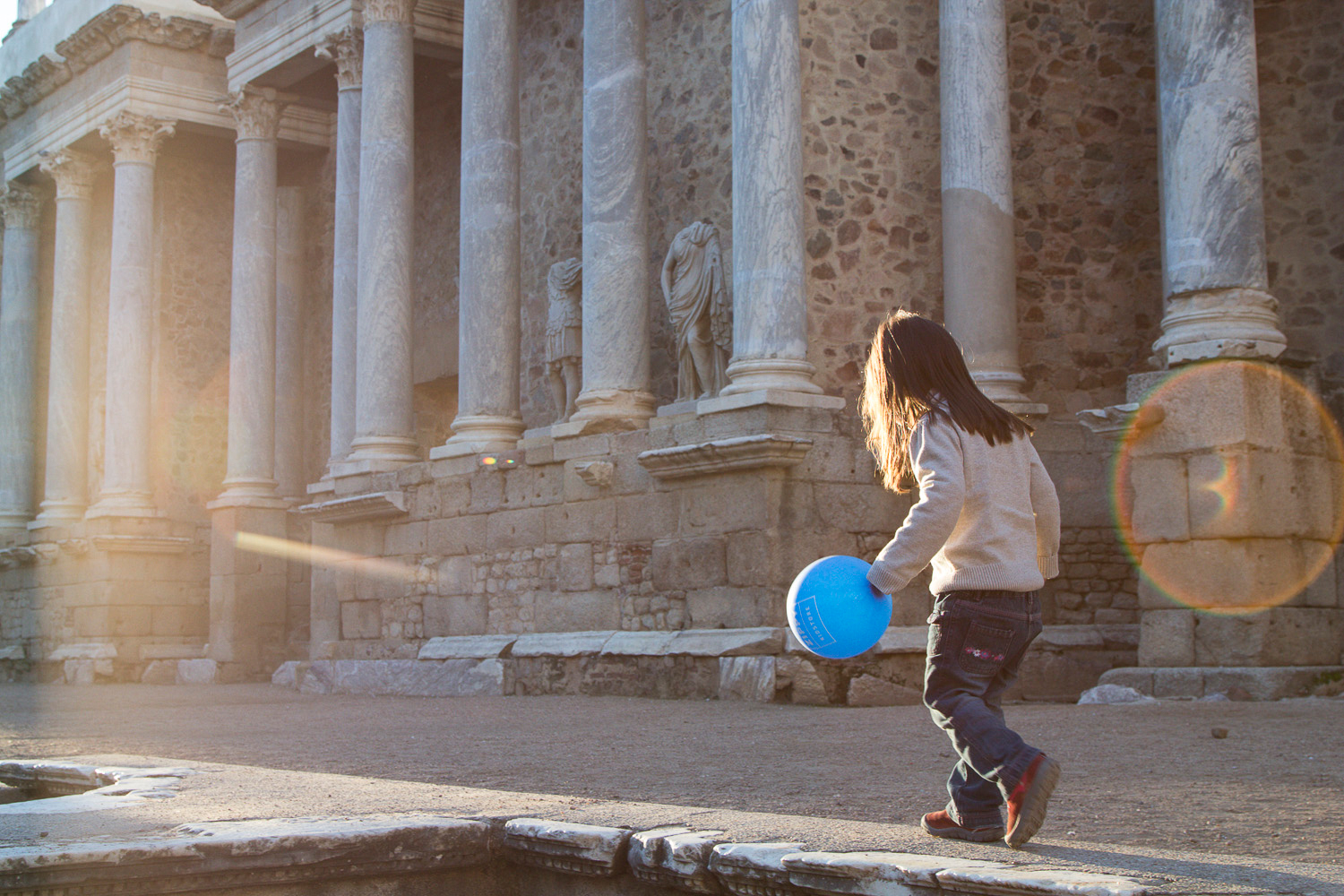
I received this photo from a past student, and I always like to include what that person had said. The reason why is because a lot of you out there has had similar questions, or has come up against similar issues or ideas. Here’s what Anna Maria had to say:
“Dear Joe:
I took a class with you at the BPSOP a couple of years ago.
After reading your post “My Favorite Quotes: Hank Williams” I was interested in having a critique of this picture I took last week at the roman theater of Mérida (Spain). As I read in your post, I was trying to chase the light taking pictures of my daughter.
I wanted to know your critique since I am not sure if the rays of light causing that chromatic aberration are very distracting or is the opposite and they make the picture more interesting.
Thanks in advance,”
Anna Maria
These are “rays of light”
This comes up quite frequently in my online classes with the BPSOP, and in my “Stretching Your Frame of Mind” workshops I conduct around the planet. In this photo Anna called them “rays of light”. It’s not rays of light, but flare as a result from the light source close to the edge of the frame.
It’s a nice photo Anna, thanks for submitting it. I would have composed it so the child was leaving the frame to imply content outside of the frame and generate more Visual Tension.
Visit my website at: www.joebaraban.com, and check out my 2015 workshop schedule at the top of this blog. At the end of this month, July 26th, for those that find themselves with time on their hands I’ll be at the Maine Media Workshop for my 27th year. A great place filled with energy and photographers talking about photography at the Homestead. It’s also the week of the Lobster Festival down the road in Rockland. it offers a completely different set of photo opts, as in design ,people watching (portraiture), movement, lights, and color.
I have teo spots open for my next “Springtime” workshop to be in Portugal next May 21st. A beautiful city with lots of history and photo opts.
I have one spot left in my “Autumn in Provence” workshop starting October 21st. seeing and shooting in Provence is fantastic, but being there during the Fall Foliage is just downright magical.
April 27rth, 2016 in conjunction with Epic Photo Tours, I’ll be leading a workshop to the coastal cities of North and Central Viet Nam. I’ll put you in locations to shoot photos you would only see in magazines like National Geographic.
Keep those photos and question coming into: AskJoeB@gmail.com, and I’ll create a video critique for you.
Valeriano, a past online student of mine with the BPSOP sent me this image to talk about. I always like to include what each photographer has to say, because so many of you out there have had similar problems or thoughts about one of your photos. Here’s what Valeriano had to say:
Hello Joe,
I’d like your critique about this photo. In particular I’m concerned about the slight motion in the clouds. When I shot this I was not thinking about getting a motion filled shot.
Though I just went with using a small aperture (f/16 or f/22 can’t remember precisely for this particular shot) in order to get everything in focus from foreground to infinity.
I was using a polarizing filter, which obviously cut the exposure of -2 stops, though slower shutter speed.
So what do you think about it? The main subject here is the sky, and the cloud placed on top-left third which is slightly blurred by motion. Is that something which can work for this kind of landscape photography or not?
Thanks for your critique.
Valeriano.”
In both my online class and my “Stretching Your Frame of Mind” workshop I conduct around the planet, we work on how to incorporate the Elements of Visual Design into your photography. We also talk a lot about matching the light to the shutter speed and aperture combinations so you get the maximum depth of field or the fastest shutter you’re after.
One thing I forgot to mention in the video is the placement of the horizon line. Since you wanted to emphasize the sky, you were correct in placing the horizon line in the bottom thirds. when you want to emphasize the foreground, you place the horizon line at the top. If you have a mirror image, you place the horizon line in the middle. Of course I don’t adhere to any rules so forget what I just said and do what you think feels right. Ansel Adams once said, “There are no rules for good pictures, there’s just good pictures.”
Visit my website at: www.joebaraban.com, and check out my workshop schedule at the top of this blog. I still have two spots left on my next “Springtime” workshop to be in Portugal next May 21st. My workshops in Myanmar and Provence are full at the moment, but if you’d like to be placed on my waiting list please let me know. My 27th year at the Maine Media Workshop will be next July 26th, and in April of 2016, in conjunction with Epic Photo Tours, I’m leading a workshop to the coastal cities of North and Central Viet Nam. What an incredible photographic experience. Photos that you would see in National Geographic are yours for the taking.
Come shoot with me sometime.
Don’t forget to keep those photos and questions coming to: AskJoeB@gmail.com and receive a video critique.