When I’m working with my online students at the BPSOP, or at one of the “Stretching Your Frame of Mind” workshops I conduct around the planet, there seems to be a recurring theme. Photographers will invariably shut their minds out to anything except the immediate subject at hand, which includes telling whatever story they’re trying to sell to the viewer.
Most of the time, they’re not even aware they’re doing it because they’re usually shooting too fast to begin with. They run around with their heads cut off and shooting anything that comes into their periphery; sometimes regardless of the subject matter.
At best, when there is a subject worth shooting, they’re so focused on placing the subject in the best light and the best positioning in the frame, that they forget about the rest of the environment. That is, the balance between the Negative or Positive Space that’s surrounding the subject/main center of interest, the contrast between the light and dark areas, or whether the colors compliment one another. Way too much time might be spent on coming up with some esoteric title.
It could be as simple as making sure a telephone pole or tree isn’t growing out of someone’s head. What about DOF? Don’t you want to know what’s going to be in focus from the front to the back? You don’t want to find out in front of a computer.
It’s “The Whole Enchilada”, that’s going to take your photograph what I call “up a notch”. It’s not just the pretty girlfriend, wife, lover, or grandson, granddaughter, mom, dad, brother, sister, aunt, uncle, etc, or your dog, horse, parrot, turtle, or cat. Nor is it any inanimate object. It’s the relationship between these subjects/objects and the environmental reality they happen to be in, or that you put them in.
One of the best ways to check on these relationships is what I talked about in an earlier post. I use what I refer to as my “Fifteen Point Protection Plan”. Or the Border Patrol, or checking the four corners.
Right before I click the shutter, I look around each and every IMAGINARY black dot that’s covering my focusing screen. You should try it sometime, I’ve been using it for fifty-three years, and it really helps!!!
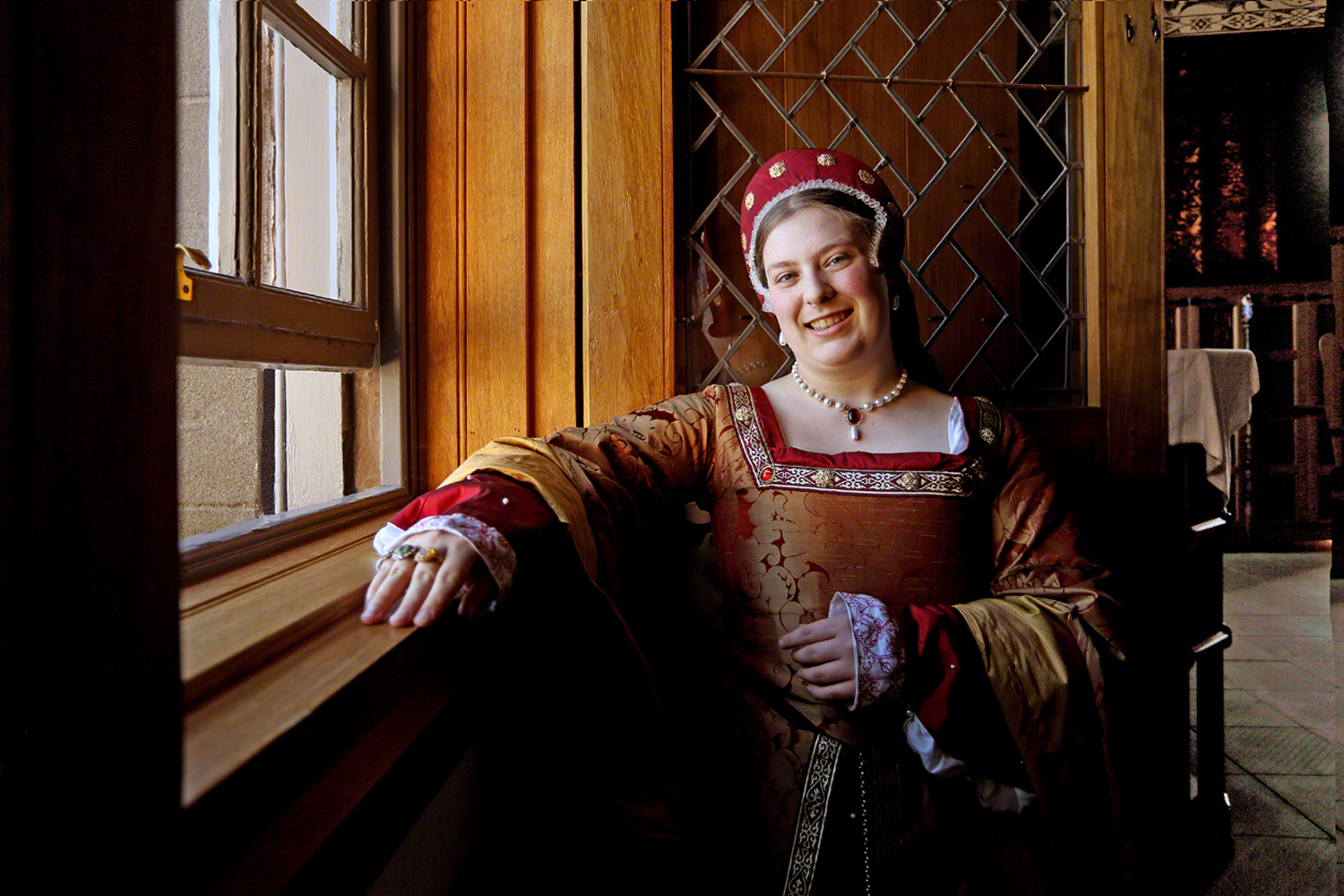
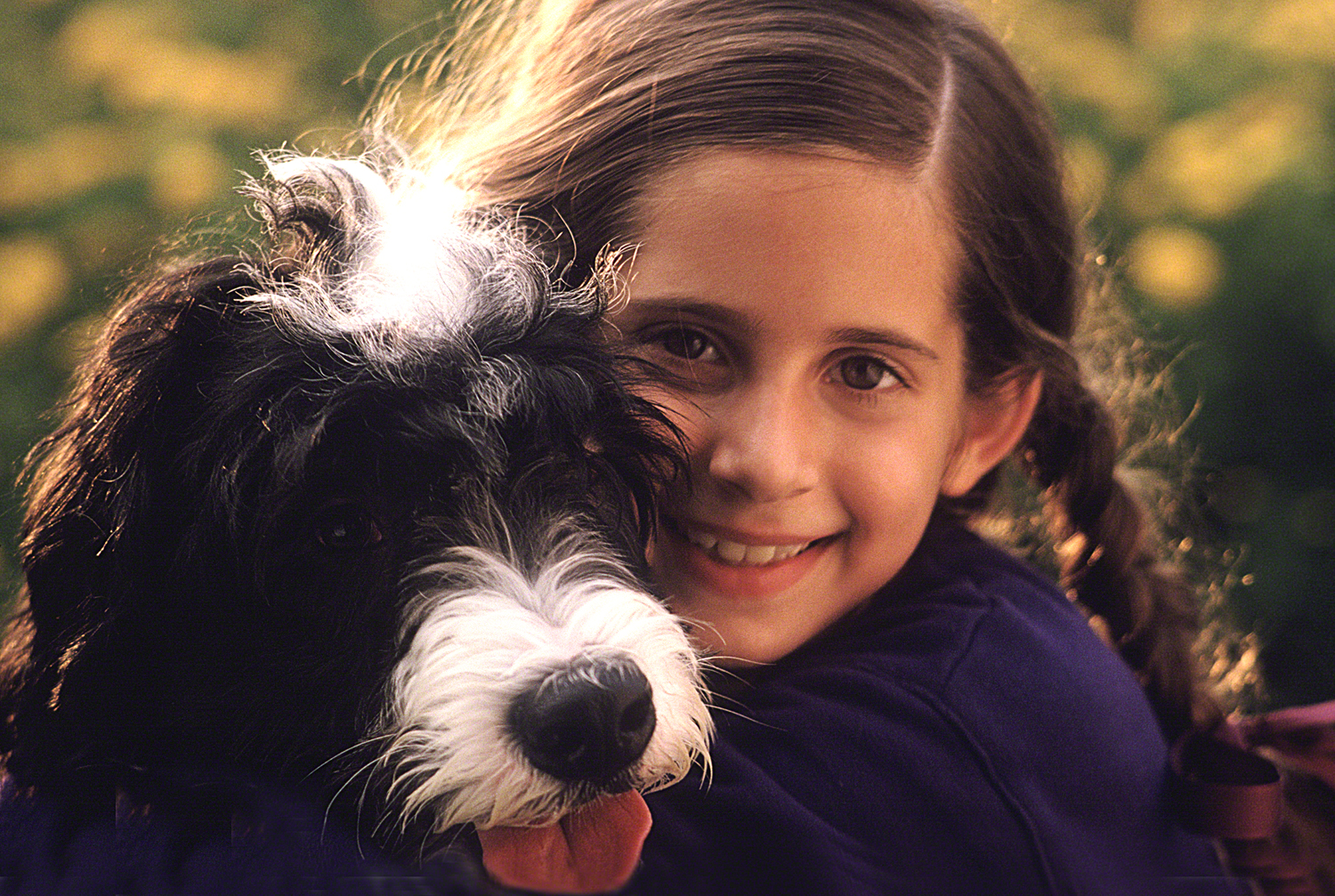
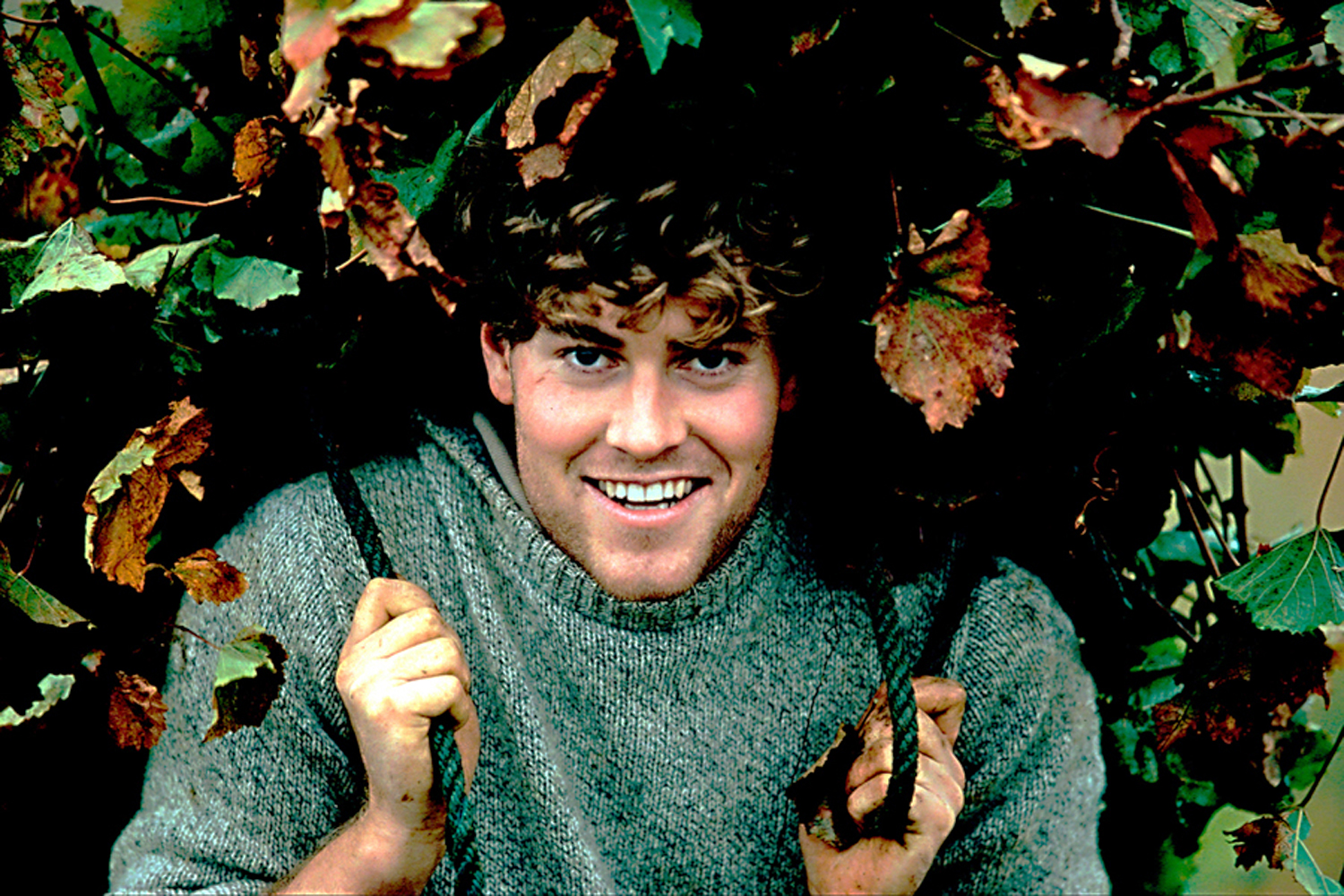
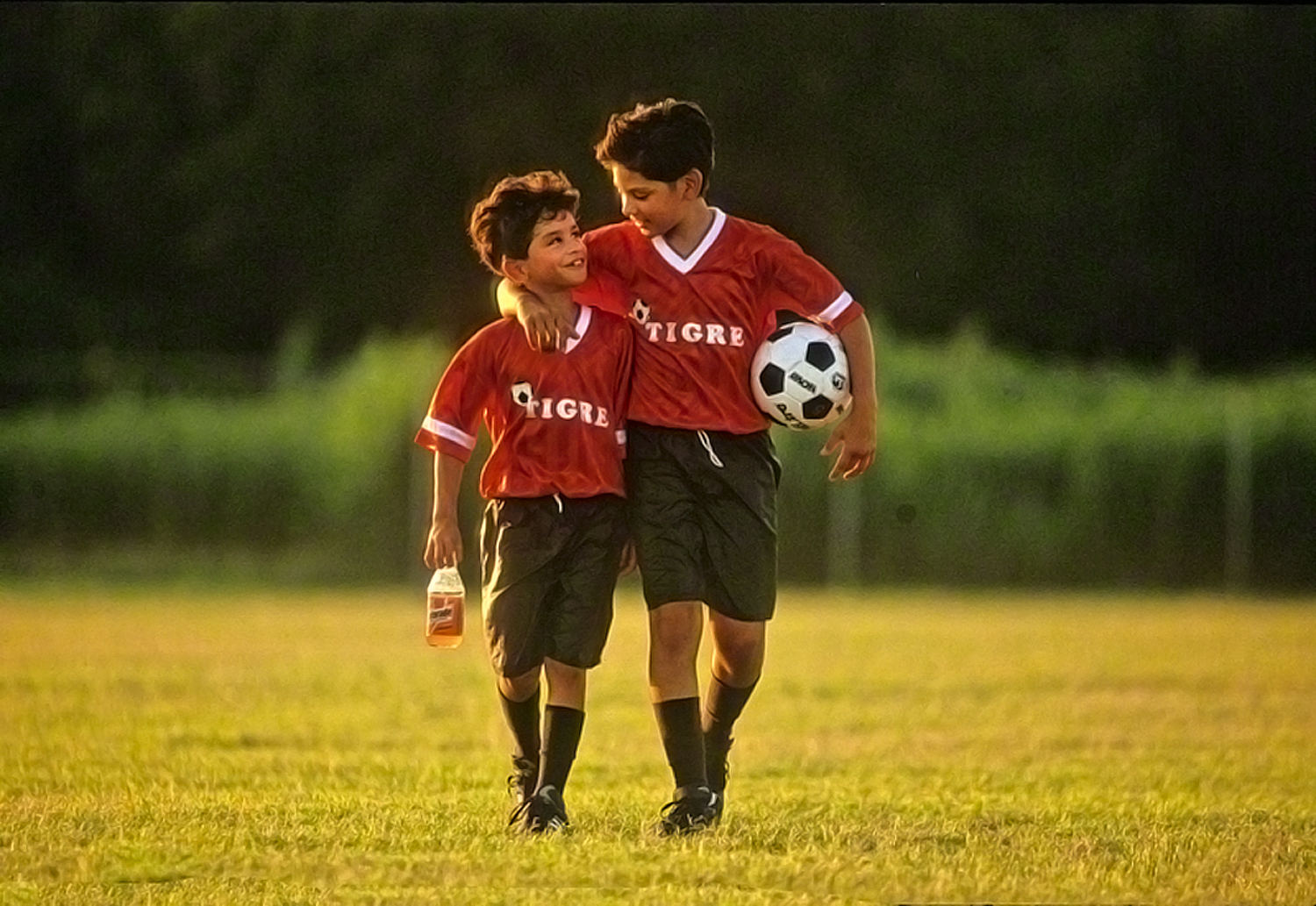
In the above photo, it may look like a photo that didn’t take me very long to shoot, quite the contrary. I placed her in different places in this environment and settled for this one that because of the Figure-Ground concept in Gestalt, I had her head in front of the black area.
I purposely chose the shallow DOF to make her stand out; also part of Figure-Ground. I also placed her at the edge of the frame to generate Visual Tension. There’s nothing brighter than her face so the viewer will go straight to it. The light is coming from ten on the invisible clock…my favorite. She’s looking out which implies “content outside the frame”.
Visit my website at: www.joebaraban.com, check out my 2018 workshop schedule at the top of this blog. Come shoot with me sometime. You’ll love my Protection Plan!!!
This coming July 29th will be my 30th anniversary teaching at the Maine Media Workshop. I’ve always picked this time as it’s the week of the Lobster Festival down the road in Rockland. This offers a unique set of photo ops, different from the Maine Coast, fishing villages, and lighthouses. The Lobster Festival is all about color, design, light, energy, people watching, and environmental portraits everywhere you look; some people are there in costumes and love to be photographed.
In conjunction with The Santa Fe Workshops, on October 2nd I’ll be leading a group in San Miguel de Allende. A beautiful oasis and artist colony and the entire city is a UNESCO site.
Come join me for a week of fun and photography…what could be better?
Minor White was an American photographer whose work I have followed since the beginning of my career. Most of his images are not my style or ways I look at subjects, but enough were to keep me interested.
In any event, he did say something that I do agree with and have “spread the word” to all of my students that have signed on for my online classes with the BPSOP, and those photographers that have joined me in one of my “Stretching Your Frame of Mind” workshops I conduct around our planet. Minor White once said, “One does not photograph something simply for what it is, but for what else it is.”
Think about that for a moment. What does that mean to each of you? What do you think about when composing your subjects or centers of interest? I would love to hear from you. If it’s simply a tree you’re about to take a picture of, do you merely look at it with the left side of your brain (the analytical side) or do you use the right side of the brain…the creative side?
The analytical side will see a tree of some species. Perhaps it’s an Aspen and you love the fact that the bark is white, and a reminder of the days of skiing through a stand of them. Maybe it’s a willow tree and when you were young you use to take the branches and make whips to beat your brother or sister with.
What if it’s a Sycamore and the huge leaves and fruit hanging down remind you of the well spent days of your youth when during the Autumn you use to throw the small round round fruit at your other brothers and sisters.
These are all good reasons to take pictures but I doubt they will stand the test of time as far as a photograph worthy of matting, framing, and hanging on a wall; unless you’re always going to be around to explain to people just why you took the photo in the first place.
When I look at a tree I’m about to photograph I look at it with the right side of my brain…the creative side. This is the side that will see patterns and texture in the bark and leaves. The shape of the leaves and the side that will notice anything that might be a little peculier, as in the direction of the light, i.e. front, side, or back, and the color of the tree. I will also notice how it works in the surrounding environment as far as how well it’s balanced between the negative and positive space in the composition; and the visual weight it projects.
To me these are the most important things I look for, and they all happen to be the elements of visual design that I show my fellow photographers how to incorporate them into their imagery.
Visit my website at: www.joebaraban.com, and check out my 2018 workshop schedueat the top of this post. Come shoot with me sometime.
This coming July 29th will be my 30th anniversary teaching at the Maine Media Workshop. I’ve always picked this time as it’s the week of the Lobster Festival down the road in Rockland. This ofers a unique set of photo ops, different from the Maine Coast, fishing villages and lighthouses. The Lobster Festival is all about color, design, light, energy, people watchng and environmental portraits everywhere you look; some people are there in costumes and loved to be photographed.
In conjunction with The Santa Fe Workshops, on October 2nd I’ll be leading a group in San Miguel de Allende. A beautiful oasis and artist colony, and the entire city is a UNESCO site.
Come join me for a week of fun and photography…what could be better?
The above photograph was shot for Acura, as a two-page consumer spread ad.
I had hired a location scout on the West and East coast to find a pier that would not be too high over the water. The West coast wouldn’t work, but I found a set of piers in Sarasota that would work perfectly. As usual, the location scout would send me their picks to my studio ahead of time and I would go through them to decide which ones I wanted to see when I arrived a couple of days before the agency people and client. When my team arrived, the location scout took me and my producer to look at the ones I had selected. We settled on the one in the photograph because according to my Sunpath and compass readings it was perfect for the light I was after. Plus, I could shoot off the pier right next to it.
I thought it was going to be a no brainer, but I also knew from a lot of experience that in this business, never think anything was going to be easy; I proved myself right.
The next day, the Art Director and the agency entourage arrived with the two clients in tow. I took the Art Director to the pier I thought would work the best. We scouted the location in the morning to make sure everything was cool with him and he loved it. That afternoon we went for the shoot, but no one had thought about the tide!!!
When we got there that afternoon to shoot the sunset, the tide had come in (right on schedule I might add) and when we positioned the boat it was now covering the car (the hero!) While the two clients weren’t looking, the art director non-nonchalantly sashayed up to me and asked me with trepidation in his now pallor face if I had a plan ‘B’?????
I thought for a moment then an idea hit me in the head like a big Pepperoni Pizza Pie . I sent my producer back to the beginning of the pier where there was a tavern favored by the locals. I had her go in and offer a twenty dollar bill to anyone that would come out, get inside the boat and lie down.
So what you see in this photo, or actually you don’t see, is fifteen really large inebriated locals that are lying down inside the boat. Because of all the additional weight, we were able to lower it just enough for me to get the shot.
Remember that it was in the days before Photoshop, so whatever I had to come up with had to be done “in the camera”. So having said this, there’s absolutely no post-processing done to this photograph.
This is all about “Stretching Your Frame of Mind“, which happens to be the title of my workshop. Check it out and come shoot with me sometime.
This coming July 29th will be my 30th anniversary teaching at the Maine Media Workshop. I’ve always picked this time as it’s the week of the Lobster Festival down the road in Rockland. This ofers a unique set of photo ops, different from the Maine Coast, fishing villages and lighthouses. The Lobster Festival is all about color, design, light, energy, people watchng and environmental portraits everywhere you look; some people are there in costumes and loved to be photographed.
In conjunction with The Santa Fe Workshops, on October 2nd I’ll be leading a group in San Miguel de Allende. A beautiful oasis and artist colony, and the entire city is a UNESCO site.
Come join me for a week of fun and photography…what could be better?
Closing in on fifty years of being a advertising and corporate photographer, one of my favorite assignments is to shoot a portrait in an environment; the main reason is that I’m a location photographer.
Fire Chief in Portland
First of all, let’s define the environmental portrait: It’s a portrait of someone in a situation that they either work, live, or it could be a place where they spend a lot of comfortable time, as on a boat or in a park, etc. In any event, it’s a location that says who they are, and the finished photo should be able to tell a story.
In my online class with the BPSOP, and in my “Stretching Your Frame of Mind” workshops I conduct around the planet, I’m always telling my fellow photographers to “get up close and personal”. That could be anything from an object to a person. In this context, I’m referring to people. When you’re up close to your subject there’s more of a connection between the two of you and as a result your image will be stronger; besides the fact that it will be easier to direct them.
Pemaquid Lighthouse
An environmental portrait can be very important in explaining where your subject is, and that usually means to think about and show as much of the background as you can; I wrote a post on this idea that I call the “Whole Enchilada”. The key here is to be up close and personal, but at the same time show the environment the subject is in.
Of course the best way to achieve this is to shoot with a wide angle lens. Remember that this is not a regular portrait where you’ll often shoot with a shallow depth of field. You want to show as much as you can, and get it all sharp. Again, that can easily be handled with a wide angle.
Flamenco instructor in Cuba
Ok, so why do I like shooting environmental portraits? For one, it shows the subject in relation to the world around him, and can make him relax. I also like it because it gives the viewer something else to look at.
Make your viewer want to stick around longer by giving him more things to look at and discover. Personally, I’m really not interested in looking at someone I don’t know, bur I might be interested in what’s around him.
Lineman supervisor
If at all possible choose the location ahead of time; yes, that would take some pre-production. When I’m scouting a location, I take the readings from my Sunpath program, and my Morin2000 hand bearing compass. I want to know exactly where the sun is going to be so I can place him according to the way I want the light to fall.
Since I usually don’t have more than a few minutes either because that’s all the person gave me, or because of the loss of light, I want to be prepared with a shot list. If I have five minutes, that’s usually enough to get several poses in various places within the location.
Visit my website at: www.joebaraban.com, and check out my 2018 workshop schedule at the top of this blog. Come shoot with me sometime.
This coming July 29th will be my 30th anniversary teaching at the Maine Media Workshop. I’ve always picked this time as it’s the week of the Lobster Festival down the road in Rockland. This ofers a unique set of photo ops, different from the Maine Coast, fishing villages and lighthouses. The Lobster Festival is all about color, design, light, energy, people watchng and environmental portraits everywhere you look; some people are there in costumes and loved to be photographed.
In conjunction with The Santa Fe Workshops, on October 2nd I’ll be leading a group in San Miguel de Allende. A beautiful oasis and artist colony, and the entire city is a UNESCO site.
Come join me for a week of fun and photography…what could be better?
We were walking next to the Ionian sea on Ortygia, an Island in the historic section of Syracusa and I was talking about one of my personal pearls of wisdom that I also discuss in my online classes with the BPSOP….”Seeing past first impressions”.
I stopped in front of this boat that was moored and asked her what she saw…besides a boat waiting to be chartered by tourists; at first all she could see was a “cute) red striped boat.
I said yes it was that, but it was so much more. I saw several elements of visual design, namely shapes, patterns, color, and balance. Upon seeing past her first impression, she also saw the same things and also the fact that these elements seemed to her to be in three dimensions.
We talked about composition and the fact that it was partially cloudy so we couldn’t include a lot of environment (at least with this subject) because of the flat light. Showing a gray sky would not benefit this subject.
I suggested to use the edges of her frame to help create visual tension (by placing the subject close to the edges of the frame) and to put all the emphasis on this beautifully designed and painted boat….making it a study of someone’s three dimensional work of art.
So the next time you’re out and about shooting don’t view things as they are and what you first see, look past those initial reactions to things so you can see what else they represent. It will open so many other photo possibilities.
Visit my website at: www.joebaraban.com, and check out my 2018 workshop schedule at the top of this blog. Come shoot with me sometime.
This coming July 29th will be my 30th anniversary teaching at the Maine Media Workshop. I’ve always picked this time as it’s the week of the Lobster Festival down the road in Rockland. This ofers a unique set of photo ops, different from the Maine Coast, fishing villages and lighthouses. The Lobster Festival is all about color, design, light, energy, people watchng and environmental portraits everywhere you look; some people are there in costumes and loved to be photographed.
In conjunction with The Santa Fe Workshops, on October 2nd I’ll be leading a group in San Miguel de Allende. A beautiful oasis and artist colony, and the entire city is a UNESCO site.
Come join me for a week of fun and photography…what could be better?
Vincent Van Gogh is one of my favorite painters and I’ve studied and seen his work throughout my career, including during a workshop I conducted in Provence a few years ago; we actually shot at the asylum where he committed himself in Saint-R’emy de Provence.
Van Gogh one said, “I dream my painting then I paint my dream”.
For me this is all about pre-visualization. Having said this, I realize that a painter can paint anywhere so this (dreaming) comes naturally to the medium. The photographer must be in the presence of his subject, but pre-visualization is still possible and actually very important as far as making pictures is concerned.
I teach two classes with the BPSOP, and I conduct my “Stretching Your Frame of Mind” workshops all around our planet. In my online class I send to my students what I call my Did It Do It list for making strong photos; if you have the time to check out that category on my blog you’ll be that much ahead of the game.
One of them and perhaps the most important is “did you pre-visualize”. This is about seeing the image framed in your mind before bringing the camera up to your eye. Clicking the shutter is the easiest part of photography when you know ahead of time what it’s going to look like. For me this will often include moving things around, add or take away objects that either fit or don’t fit, or ask people to be in my shot. Bottom line is that I’m an artist whose medium is a camera instead of a paintbrush…I paint pictures with my camera.
As an advertising and corporate photographer for forty year the term pre-visualize referred to commercial photography. I would be given a rough layout by an art director or graphic designer and my assignment was to create the layout in either a natural outdoor environment or in my studio. After a brief discussion I would begin to visually assimilate some ideas in my mind and I always knew that if I could picture it in my mind I could replicate it on a piece of film.
In the above photo, I was shooting a brochure for a barge company on the Mississippi River. While sitting in this large office I saw the yellow slickers, the template, and several cans of spray paint. I immediately began conjuring up images in my mind and had this photo laid out in my imagination within a minute. After asking the powers that be if my idea was something that could happen, and getting a ‘yes’, I proceeded to transfer my idea to reality.
I found three men to wear the slickers, and spray painted them and the wall while having my camera on a tripod; it was just like painting my dream.
The term pre-visualization dates back to the photographer Edward Weston who first coined the phrase in 1921. He thought why limit yourself to what your eyes see when you have such an opportunity to extend your vision?” Weston spent a great deal of time in Mexico along with his son Brett who he took along to keep him out of trouble.
In Mexico he strengthen his practices and in so doing helped Brett become a great photographer in his own right. Weston believed very strongly in the process of pre-visualization and by the way thought that cropping an image was tantamount to failure.
Another photographer in that era who became quite popular was Ansel Adams who had his own take, “The visualization of a photograph involves the intuitive search for meaning, shape, form, texture, and the projection of the image-format on the subject.”
This notion is exactly what I teach in my classes and workshops, that is, using the elements of visual design; Shape Form, and Texture mentioned by Adams are three of them along with Line, Balance, Pattern and Color.
Alfred Steiglitz, the most important photographer of his time also believed in the concept of pre-visualization. “ I see the photograph in my mind’s eye and I compose and expose the negative. I give you the print as the equivalent of what I saw and felt.”
So, my fellow photographers, pre-visualization has long been the cornerstone of creative thinking and there’s no question that it will absolutely enhance your images. The next time you go out shooting take some time to see the image in your mind before bringing the camera up to your eye.
Decide on what’s your message, and what reaction you want the viewer to feel. Then get the lighting and exposure correct and do as much as possible before the easy part comes…clicking the shutter.
Visit my website at: www.joebaraban.com, and check out my 2018 workshop schedule at the top of this blog. Come shoot with me sometime.
This coming July 29th will be my 30th anniversary teaching at the Maine Media Workshop. I’ve always picked this time as it’s the week of the Lobster Festival down the road in Rockland. This ofers a unique set of photo ops, different from the Maine Coast, fishing villages and lighthouses. The Lobster Festival is all about color, design, light, energy, people watchng and environmental portraits everywhere you look; some people are there in costumes and loved to be photographed.
In conjunction with The Santa Fe Workshops, on October 2nd I’ll be leading a group in San Miguel de Allende. A beautiful oasis and artist colony, and the entire city is a UNESCO site.
Come join me for a week of fun and photography…what could be better?
Last Fall I spent some time in State College, PA visiting my daughter and two grandsons. Halloween was just around the corner so we went to a well known park to see the winners of the pumpkin carving contest put on by Penn State University.
After walking around checking out all the fabulous pumpkins I turned around and saw my daughter checking out something on her phone with Benny. I immediately went for my little Panasonic Lumix and grabbed the shot.
I’m not a believer in using my talking device to take pictures other than to quickly send one to other family members, but at that moment I saw a much better use for the iPhone.
While composing the shot, a post I wrote some time ago instantly came to mind. Something that was said by one of my all time favorite photographers. W. Eugene Smith once said that available light was any damn light that’s available.
Since that evening I have talked about the post and my reaction to what I was seeing both my online classes I teach with the BPSOP, and also in my “Stretching Your Frame of Mind” workshops I conduct around our planet.
So my fellow photographers, open your mind up to the fact that if there’s a will, there’s a way. Be observant to what’s going on around you, and always remember that if you find the light, you’ll find the shot.
Visit my website at: www.joebaraban.com, and check out my 2018 workshop schedule at the top of this blog. Come shoot with me and we’ll chase the light together.
This coming July 29th will be my 30th anniversary teaching at the Maine Media Workshop. I’ve always picked this time as it’s the week of the Lobster Festival down the road in Rockland. This ofers a unique set of photo ops, different from the Maine Coast, fishing villages and lighthouses. The Lobster Festival is all about color, design, light, energy, people watchng and environmental portraits everywhere you look; some people are there in costumes and loved to be photographed.
In conjunction with The Santa Fe Workshops, on October 2nd I’ll be leading a group in San Miguel de Allende. A beautiful oasis and artist colony, and the entire city is a UNESCO site.
Come join me for a week of fun and photography…what could be better?
One of the basic elements of visual design is color, and spanning a fifty year career as an advertising, corporate, and editorial photographer I have put great emphasis on making it a big part of my photos. I have over the years trained my eye to look for color being that it’s a stimulant for our eyes and can often tie the elements of a photograph together.
A heliport in Los Angeles
Color affects every moment of our lives, and has an enormous impact on our photography. Knowing color is one of the first steps in taking consistently good photographs. Color can give you a sense of mood as well as a sense of place, and time. It can also be used to move the viewer’s eye around your composition.
I have often pointed out to my online students with the BPSOP and my fellow photographers that have taken one of my “Stretching Your Frame of Mind” workshops I conduct around our planet that different cultures and societies react to color in contrasting ways. For example in western societies black is the color of mourning but in Japan it’s a symbol of honor.
The color red (the longest wavelength) can be associated with danger, love, purity, good luck, and in parts of Africa it’s the color that represents mourning. Blue is intellectual and calming, but can also be cold, distant, and lack emotion.
Sewing for the tourist trade.
Yellow is generally positive, emotional and creative, green stands for balance and peace. Purple is majestic, orange is associated with warmth and passion, and gray is…well we all know what a gray sky means when we’re out chasing the light!!!
Although I think it’s important to know as much about the different colors as possible, it’s not always possible to consciously use these to your advantage while out and about taking photos; certainly something to recognize and act accordingly to improve visual interest.
Same train line in Europe.
Having said this, what you can control to some degree is the story-telling aspect of colors in general, and using it to communicate ideas and therefore keeping the viewer around longer by making him an active participant in your thought process…how you might ask?
By controlling what the viewer perceives and then tries to process will do that for you. For example, showing a group of people all dressed the same will have the viewer asking himself what club, organization, team, etc., they represent; asking questions is a good thing and in your best interest. Remember that similar colors in inanimate objects will also provide much the same info for the viewer to assimilate.
So the next time your out shooting look for color that is communicating an idea to you because if it makes you ask a question, the viewer just might ask a similar one.
Visit my website at: www.joebaraban.com, and check out my 2018 workshop schedule at the top of this blog. Come shoot with me sometime. For those new to my blog I still have two openings for my Springtime in Berlin workshop; a beautiful and vibrant city.
In conjunction with The Santa Fe Workshops, October 2nd I’ll be leading a group in San Miguel de Allende. A beautiful oasis and artist colony, and the entire city is a UNESCO site.
Come join me for a week of fun and photography…what could be better?
I will often tell my students that take my online classes with the BPSOP and also my fellow photographers that join me in one of my “Stretching Your Frame of Mind” workshops I conduct all over the place of the many stories (funny and not so funny) that have happened to me over a span of fifty years of being a professional photographer. It’s always great to dabble in my photographic past and remember all the shoots from so long ago.
Way back when, there were projects and advertising campaigns, then there were what we called “Plums”. These were the projects that most of, if not all the photographers I use to compete against would kill/die for…with very big budgets!!!
I was fortunate to be awarded many of these types of projects, but one of the all time greatest was a coop campaign I did for United Airlines, and the Hawaii and Hotel Tourism Board. A coop campaign was one where different clients that shared the same needs would split the cost to create a certain amount of print ads that would be spaced throughout the coming year.
After sending my producer/location scout for a week to shoot several locations we had talked about in a production meeting, my two assistants and I flew out for the start of a five week shoot that covered four Islands: Oahu, Kauai, Maui, and the big Island, Hawaii.
I had told my producer to check out all the traditional tourist spots as well as others she heard about while there. The reason being that we would be out there before sunrise when the tourists were still asleep, and at sunset when those tourists were at a restaurant having dinner.
One of the locations was a well know lighthouse on Maui, and after a preliminary scout from a well known tourist car pull out, I had an idea. After bouncing it off the art director from the agency from Chicago and received a smiling approval, we proceeded to make it happen.
We chartered a large sailboat and I placed one of my assistants on it with a walki-talki and the rest of us went up to the tourist lookout and set up; a body on a tripod with a 600mm Nikor F/4 lens.
The plan was for the captain to come around the point and tack back and forth next to the lighthouse. I was able to communicate (keeping both my hands free) what I wanted on the walki-talki by talking through a set of headphones with a voice activated mike connected to it.
On this particular afternoon there were several tourists standing there and when the sailboat came around they all started yelling to one another while grabbing their little point and shoots. When the sailboat turned and went the other way they went “nuts”! Adults jumping up and down.
After seeing this sailboat continue to stick around, one of them came up to me and asked if I were getting the shot with my long telephoto lens…and how lucky I was to be there to capture it.
As I nodded and started talking to my assistant this man realized that it wasn’t luck at all and began telling everyone there that I was the one directing the sailboat to go back and forth. It didn’t take long before I was surrounded and might I add mobbed… asking me if they could all talk to the people on board….while having their picture taken.
Visit my website at: www.joebaraban.com, and check out my 2018 workshop schedule at the top of this blog. Come shoot with me sometime.
This coming July 29th will be my 30th anniversary teaching at the Maine Media Workshop. I’ve always picked this time as it’s the week of the Lobster Festival down the road in Rockland. This ofers a unique set of photo ops, different from the Maine Coast, fishing villages and lighthouses. The Lobster Festival is all about color, design, light, energy, people watchng and environmental portraits everywhere you look; some people are there in costumes and loved to be photographed.
In conjunction with The Santa Fe Workshops, October 2nd I’ll be leading a group in San Miguel de Allende. A beautiful oasis and artist colony, and the entire city is a UNESCO site.
Come join me for a week of fun and photography…what could be better?
I enjoying this category and I especially love to hear the comments from those that take my online class with the BPSOP when I explain that there was a time when not only did we have to focus our own cameras, but Adobe was a type of house in the SW corner of the USA.
I also love to actually see the expressions of those that take one of my “Stretching Your Frame of Mind” workshops I conduct around the planet if I show my PowerPoint presentation entitled, “Life before Photoshop”.
Unfortunately, the large majority of my students started in the digital era, and can’t fathom not being able to enhance their photos after the shutter has been clicked. It’s almost scary, as in freaks them out, when I tell them that they’re not allowed to use Photoshop in my class, and that I want to see their UN-CROPPED images right out of the camera. You see in my class it’s about becoming better photographers, not better photo-technicians.
Don’t get me wrong, I love CS5, and I use it all the time. But when I use it it’s because I didn’t have the control I needed to create my image in the camera. WOW, how about that content-aware tool…it’s crazy!!!!!! Don’t you just love it???
I digress once again.
In the above photo, I was hired by the advertising agency that handled a company who insured boats and yachts of all sizes and shapes. The Art Director didn’t have much of a layout to follow, but what he wanted was to show a giant lobster attacking both a motor-yacht and a sailboat. I hired a good friend that’s a terrific model builder, and after we had a preliminary conversation over the size he carved my claw out of hard foam. He also devised a way to keep it standing up in very shallow water (as seen in the photo) while I had a sailboat and a large motor-yacht follow each other around me in a circle at sunset.
Remember that in those days everything had to be in perfect scale since it was to be created in the camera. Now, the claw would be a foot tall, shot in a controlled studio and Photo shopped into the image with just the boats.
What’s the fun doing that??? For me, there’s a sense of accomplishment in knowing that I could do this in the camera. I could never feel that sitting in front of a computer.
But that’s just me!!!
Here’s how we did it. The first photo shows Danny getting it ready, and the second shows me in a Zodiac shooting it.
Btw, the first day as we were getting ready to shot, the device Danny built did not cooperate and wouldn’t stay up. We had to scrub it for the day and let the kinks be workd out. Fortunately for yours truly, the next day was as clear as the day before…so no harm done.
Visit my website at:www.joebaraban.com, check out my 2018 workshop schedule, and come shoot with me sometime.
This coming July 29th will be my 30th anniversary teaching at the Maine Media Workshop. I’ve always picked this time as it’s the week of the Lobster Festival down the road in Rockland. This ofers a unique set of photo ops, different from the Maine Coast, fishing villages and lighthouses. The Lobster Festival is all about color, design, light, energy, people watchng and environmental portraits everywhere you look; some people are there in costumes and loved to be photographed.
In conjunction with The Santa Fe Workshops, October 2nd I’ll be leading a group in San Miguel de Allende. A beautiful oasis and artist colony, and the entire city is a UNESCO site.
Come join me for a week of fun and photography…what could be better
In lesson one Part I of my four week online classes with the BPSOP, we work on the negative and positive space aspects of a composition. From this online class many of my fellow photographers have signed up for one of my “Stretching Your Frame of Mind” workshops I conduct around our planet.
As part of the daily reviews I will invariably talk about achieving the balance between both the negative and positive space and continuing to plant this concept in their minds; because it’s that important.
There are two kinds of space, positive space and negative space. Positive space has mass and is usually the main subject or object, and negative space is everything else…specifically the area bordering the positive space defining it but not a part of it. Since negative space carries its own visual weight, we must be careful not to let it distract in any way from the main subject, although there’s one exception: when the negative space is the subject.
By the way, negative space is not negative. A good photograph will have a good balance (one of the basic elements of visual design) between the positive and negative space. As photographers (artists), it’s easy to think only of the positive space. So easy, we sometimes forget about the part that’s just as important…the negative space in our composition. Training your ‘eye’ to see around the subject will make the practice a powerful compositional tool that can, and will strengthen your photographs.
To some, this concept can be difficult to understand, yet it is one of the easiest once you can overcome the need to only focus on the positive space (your subject). One way is to concentrate on the space between the subjects and around them. This will put the impetus on giving the viewer a place to rest his eyes; as well as seeing the shapes that are caused by the negative space.
In the above photo, I was sent to D.C. to take environmental portraits of all the partners in a law firm. They wanted these partners in close proximity to one of the monuments. I positioned this man with a keen eye as to keeping some negative space between the Washington monument and the cherry blossoms; while being cognizant of the balance between the three subjects.
In the photo of the church dome in France, once again I moved around until I could get some negative space between the leaves and the top of the dome….so the viewer could rest his eyes.
In the photo of the couple standing on a small hill in Hawaii, I was hovering in a helicopter and was communicating with them by way of a walki-talki in the chopper and one on the man’s belt on the right. The object was to create negative space so all of their arms and legs would be well defined; by directing them with the walki-talkis.
So the next time you’re out shooting pay as much attention to the negative space as you do with the positive space; usually the subject.
Visit my website at: www.joebaraban.com, and check out my 2018 workshop schedule at the top of this blog. Come shoot with me sometime.
This coming July 29th will be my 30th anniversary teaching at the Maine Media Workshop. I’ve always picked this time as it’s the week of the Lobster Festival down the road in Rockland. This ofers a unique set of photo ops, different from the Maine Coast, fishing villages and lighthouses. The Lobster Festival is all about color, design, light, energy, people watchng and environmental portraits everywhere you look; some people are there in costumes and loved to be photographed.
In conjunction with The Santa Fe Workshops, October 2nd I’ll be leading a group in San Miguel de Allende. A beautiful oasis and artist colony, and the entire city is a UNESCO site.
Come join me for a week of fun and photography…what could be better?
I recently had a blog follower ask me to post one of his all time favorite posts that I wrote almost eight years ago. WOW! That’s a long time to remember something, especially when I can’t remember what I was doing last week.
It was on the 101 things I think all photographers should know about photography and the art of taking pictures.
I was “surfing the world wide web”, and I came across an interesting post on things to know about photography. It listed things I’ve been teaching, thinking and talking about for over twenty-five years in my “Stretching Your Frame of Mind” workshops I conduct around the planet, and in the past two years with my online class with the BPSOP.
While a few were on my list, there were several I didn’t agree with or were left out. In any event, it inspired me to share not only the link to the post, but to reveal my own personal 101 list as well.
Here’s my list, enjoy:
101 things to know about photography:
1. It’s not the camera; it’s the ten inches behind it that’s important.
2. Never photograph a child without asking permission from a parent first.
3. “When you get lucky, be ready”…Eddie Adams.
4. Be sure to always have a tripod with you.
5. Light is everything.
6. Remove the Histogram from your camera; it’s not what you want to be looking at when you have seconds of light left.
7. Get up close and personal to your subject.
8. Always have a roll of duct tape and WD-40 with you.
9. Crop in the camera so you’ll know where the edges of your frame and the four corners are.
10. Shadows are your best friend.
11. Clip the highlights.
12. See past first impressions.
13. Always consider the scene and its outcome.
14. It’s not what you put into a picture that counts, it’s what you don’t put in that matters.
15. Always carry a camera with you.
16. Marry someone whose father owns a big camera store.
17. Bracketing in the camera will make you a better photographer.
18. It’s ok to get dirt on the front of your shirt when you’re composing a photo.
19. Always shoot in RAW.
20. Lens shades help.
21. Pick up the trash in your composition before shooting.
22. Sometimes a pretty sunset to you is just another pretty sunset to someone else.
23. Challenge yourself. Try shooting with your least favorite lens.
24. Only show your best photographs.
25. Study the ‘Masters’, they were here before you.
26. Pre-visualize. Try to see it in your mind first.
27. Use the elements of visual design and composition when taking pictures.
28. Shoot on manual, don’t ever let the camera tell you what to do.
29. Take an online class or a workshop to hone your skills.
30. Break all the rules you can, but first I suggest you find out what they are.
31. Have your camera body facing down when changing lens to keep the dust out.
32. In photography, bigger (cameras) is not better.
33. Take along a big golf umbrella and shoot in the rain.
34. Pictures make great Christmas gifts.
35. Golden light is the prettiest light.
36. Don’t let your camera fall into a Lava Pool.
37. Manufacturing excuses for your photos is not in your best interest.
38. Underexposing looks better than overexposing.
39. Make pictures, don’t take them.
40. Martinis and photography don’t mix very well.
41. Taking art classes will improve your photography.
42. The Rule of Thirds is boring.
43. The Horizon Line is the most important line.
44. You need not go any farther than your bathroom to take good photos.
45. Sometimes asking forgiveness is better than asking permission.
46. A copyright stamp won’t protect you unless your photo is registered with the library of Congress.
47. Taking a great photograph is a lot like scoring a touchdown. Never tell anyone it was your first one.
48. A camera on a tripod is like a canvas on an easel.
49. Make the viewer an active participant in your imagery so he’ll stick around longer.
50. Let someone that knows what they’re doing clean your sensor.
51. “ You can’t depend on your eyes if your imagination is out of focus”…Mark Twain.
52. You find the Light, and you’ll find the shot.
53. When you buy a new camera, read the manual.
54. Good pictures are like good jokes. If you have to explain them, they’re not so good.
55. Shoot to live, live to shoot.
56. Stick with one ISO, and you’ll never have to worry about switching back and forth.
57. Back up all your images all the time.
58. Controlled distortion can work.
59. Always brake for photographs.
60. “The voyage of discovery is not in seeking new landscapes, but having new eyes”…Marcel Proust.
61. We perceive in a 2X3 ratio (a rectangle).
62. An active imagination is the Fountain of Youth.
63. See, feel and sense the ever-changing Light.
64. The background is just as important.
65. Have your subject walking or looking out of the frame.
66. Don’t show the sky in bad light.
67. Vertical formats have more energy than horizontals.
68. Make sure that when you format your card, you really wanted to.
69. Sometimes when more’s better, too much is just right.
70. Always know the direction of the light.
71. Make your life simpler. Set your camera on AWB and ‘Fuhgetaboutit’.
72. Never leave any of your equipment in your photographs.
73. Including Patterns in our photos is a good thing; breaking the rhythm of the pattern is even better.
74. Shooting in the Blue Hour is a lot of fun.
75. A triple colored mat won’t make a bad photograph look better.
76. A glass of wine after a great sunset shoot is intoxicating.
77. Balance the Negative Space and Positive Space.
78. “Been there shot that” is not a good thing to say.
79. Create ‘energy’ in your photographs.
80. Try to lead the viewer around your composition.
81. Photoshop is a good thing, used sparingly.
82. If you really want to be a better photographer, shoot on manual.
83. Buy your kid a toy camera on his first birthday, then start upgrading.
84. Be objective not subjective when editing your pictures.
85. There’s nothing like seeing the world through a viewfinder.
86. 1/60th of a second at F/8 is the same exposure as 1/125th of a second at F/5.6.
87. Color communicates ideas.
88. If you had to choose between Lightroom and Photoshop, pick Lightroom.
89. Follow Photography Blogs.
90. Don’t loan equipment to friends without including the phrase, “you break it, and it’s yours.”
91. Take portraits with wide-angle lens.
92. Learn “The Decisive Moment” by studying Henri Cartier-Bresson.
93. Give the viewer several ways to enter and leave the frame.
94. Don’t forget about silhouettes.
95. Setting your WB to cloudy on an overcast day won’t necessarily make your picture look better.
96. More shots per hour.
97. HDR prints sell like hotcakes on the sale table in the decorative center of your local Wal-Mart.
98. The early bird always catches the best light as well as the worm.
99. Use gesture to communicate an emotional response.
100. When you have a gray day, be funny. Humor conquers all.
101. Never come home with an empty flash card.
Visit my website at: www.joebaraban.com and check out my 2018 workshop schedule at the top of this blog. Come shoot with me sometime. I’ve a couple of openings in my Springtime in Berlin workshop next May 23rd. A fantastic city with so many great locations we’re going to be shooting.
This coming July 29th will be my 30th anniversary teaching at the Maine Media Workshop. I’ve always picked this time as it’s the week of the Lobster Festival down the road in Rockland. This ofers a unique set of photo ops, different from the Maine Coast, fishing villages and lighthouses. The Lobster Festival is all about color, design, light, energy, people watchng and environmental portraits everywhere you look; some people are there in costumes and loved to be photographed.
In conjunction with The Santa Fe Workshops, October 2nd I’ll be leading a group in San Miguel de Allende. A beautiful oasis and artist colony, and the entire city is a UNESCO site.
Come join me for a week of fun and photography…what could be better?
I don’t know about you but I like to have people stick around spending time looking at my photos. Now, I suppose there are photographers out there that shoot solely for their own gratification and never share their images for whatever reason. However, if we go on the assumption that photographers are artists that have chosen the camera as the medium, then it stands to reason that said photographers like to have people admire their work; I for one as an example.
Having said that, we can’t expect the viewer to spend very much time looking (unless they are wives, mothers, aunts, and sometimes even siblings) unless we give him something that makes it worthwhile; people just don’t have the time anymore.
One of the best ways is to add an editorial slant to your composition, and I talk about this a lot both in my online class with the BPSOP and in my “Stretching Your Frame of Mind” workshops I conduct all over the place.
Ok, so what do I mean by editorial? The word editorialize means to express or form an opinion; to ask the viewer to pose a question.
In the photos above I have added a slide bar so you can go from one photographic thought to another. I shot the swing first by itself, then added one of my grandkid’s shoes. This concept is predicated on the idea of making the viewer an active participant. In other words, keeping him involved will keep him around longer. This is about taking control of how the viewer perceives and processes information we give to him in the form of a photograph.
When you look at the swing by itself, you’re looking at a fairly interesting image mostly as a result of the dramatic way it’s backlit, the texture of the grass, the leaves, and the shadow.
When you use your cursor to move the slide from left to right, it reveals an entirely different photograph. Simply by adding a red sneaker, I ask the viewer to raise a question. What question do you think it conjures up?
To me, it asks: Why is that one shoe there? Why just one? Who does it belong to? What happened to make him forget or lose one shoe? Was he hurt? Is he going to get into trouble? Etc., etc. It’s the Who What Where When, and Why” of photography.
So next time you’re out shooting take some props with you and try to add an editorial element. Remember that you’re an artist whose camera on a tripod is not unlike a blank canvas on an easel; you’re a painter, so paint.
Visit my website at www.joebaraban.com, and check out my 2018 workshop schedule at the top of this blog. Come shoot with me some time and we’ll editorialize together.
In conjunction with The Santa Fe Workshops, October 2nd I’ll be leading a group in San Miguel de Allende. A beautiful oasis and artist colony and the entire city is a UNESCO site.
Come join me for a week of fun and photography…what could be better?
A very long time ago I was actually young, and I still remember my mother singing along to a 1927 hit song called called, “Me and my shadow”, and it actually continued with…”walking down the avenue”.
Although not actually a quote on its own it’s part of a song that I occasionally think of as I watch people and their shadows strolling down a street, avenue, or as in the photo above which I took from a balcony in the Piazza San Marco square in Venice.
I watched several people walk underneath the balcony and I waited until I could one of them cutting a diagonal from one corner to another. Finally, I saw a woman come walking towards me cutting the exact diagonal I was hoping for. I waited because I wanted her to be leaving the frame as to generate visual tension, as well as implying content outside of it.
Yes, I know some of you have been told to always have someone walking into the frame (the leading in rule) , but where’s the mystery if you know where they are walking? I want the viewer to wonder where they’re going by saying that there’s something more that can’t be seen.
I digress.
I love shadows and make no mistake, they are your best friend. I hear all the time both in my online class with the BPSOP, and in my “Stretching Your Frame of Mind” workshops I teach around our planet that my fellow photographers fear shadows, find them intimidating, and go out of their way to avoid them; when in fact they should embrace them.
What’s important is the interrelationship between the light, the subject, and the shadow, and when that happens it gives a dramatic edge to your photos; and will often create an abstraction.
Look for shadows and try to incorporate them into your imagery, and when you do you’ll find that your photo has taken on a layers of interest that will propel it to another level. When that happens, and you’ll know it, pay tribute to whatever shadow you’ve included.
Visit my website at: www.joebaraban.com and check out my 2018 workshop schedule at the top of this blog. Come shoot with me sometime. I’ve a couple of openings in my Springtime in Berlin workshop next May 23rd. A fantastic city with so many great locations we’re going to be shooting.
This coming July 29th will be my 30th anniversary teaching at the Maine Media Workshop. I’ve always picked this time as it’s the week of the Lobster Festival down the road in Rockland. This ofers a unique set of photo ops, different from the Maine Coast, fishing villages and lighthouses. The Lobster Festival is all about color, design, light, energy, people watchng and environmental portraits everywhere you look; some people are there in costumes and loved to be photographed.
In conjunction with The Santa Fe Workshops, October 2nd I’ll be leading a group in San Miguel de Allende. A beautiful oasis and artist colony, and the entire city is a UNESCO site.
Come join me for a week of fun and photography…what could be better?