Food for Digital Thought: Editing

My final pick

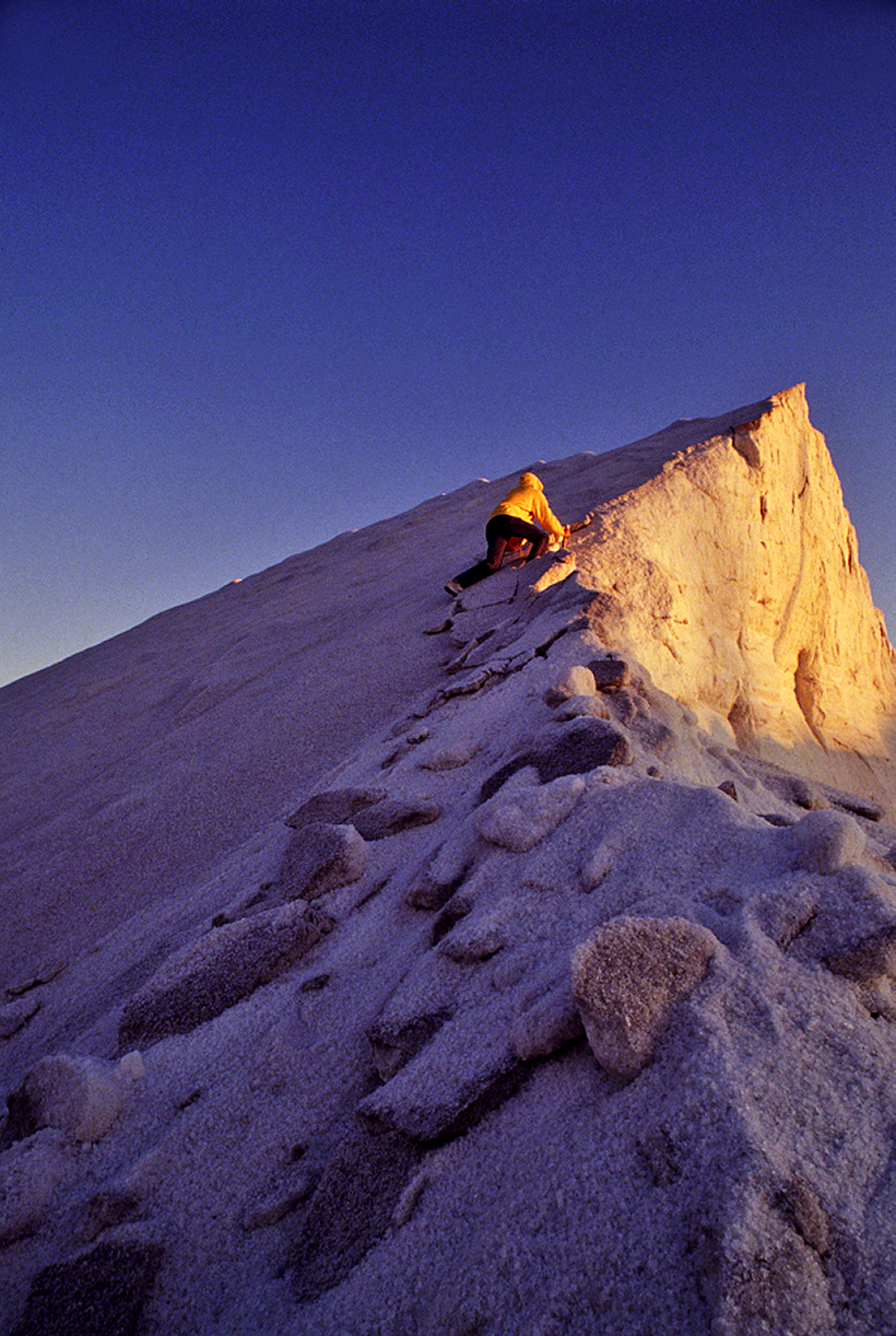
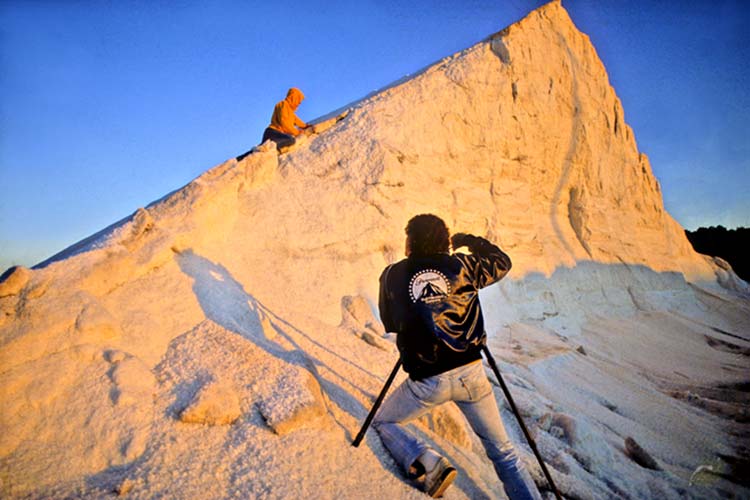
One of the more common conversations I have with either the people that sign up for my online classes with the BPSOP, or the ones that take one of my “Stretching Your Frame of Mind”  workshops I conduct around the planet, is the art of editing; and take my word for it, it is an art.

These photographers when submitting an image for me to critique, will invariably choose the wrong one…that is if they shot more than one variation…which they should have!!!

It all goes back to keeping the viewer around as long as possible, and that is all about two important factors: The psychology of Gestalt, and my ‘Artist Palette’ that has all the elements of visual design and composition on it.

I recently was asked to help edit three-hundred and eighty images down to sixty for his second book. When we were discussing an image, his reasons for keeping it in were sometimes to subjective. In other words it was a location that held certain emotions and memories to him.

Well, that’s all well and good, but the viewer won’t have those feelings. To him it’s an objective visual reaction, and the photo will have to stand on its own merit…unless he always around to explain his thought process or adds some text under the photo. Here’s a great post that will help. One of the lines in it goes like this:

“REMEMBER THAT BELOVED SUNSET OR SUNRISE YOU HAVE–SO EXCELLENTLY CAPTURED, SO EXPERTLY PRINTED AND FRAMED–MAY BE JUST ANOTHER SUNSET TO SOMEONE ELSE”.

Trust me I know how difficult it is to delete one of your very favorite ‘children’…after all, isn’t that what they are?

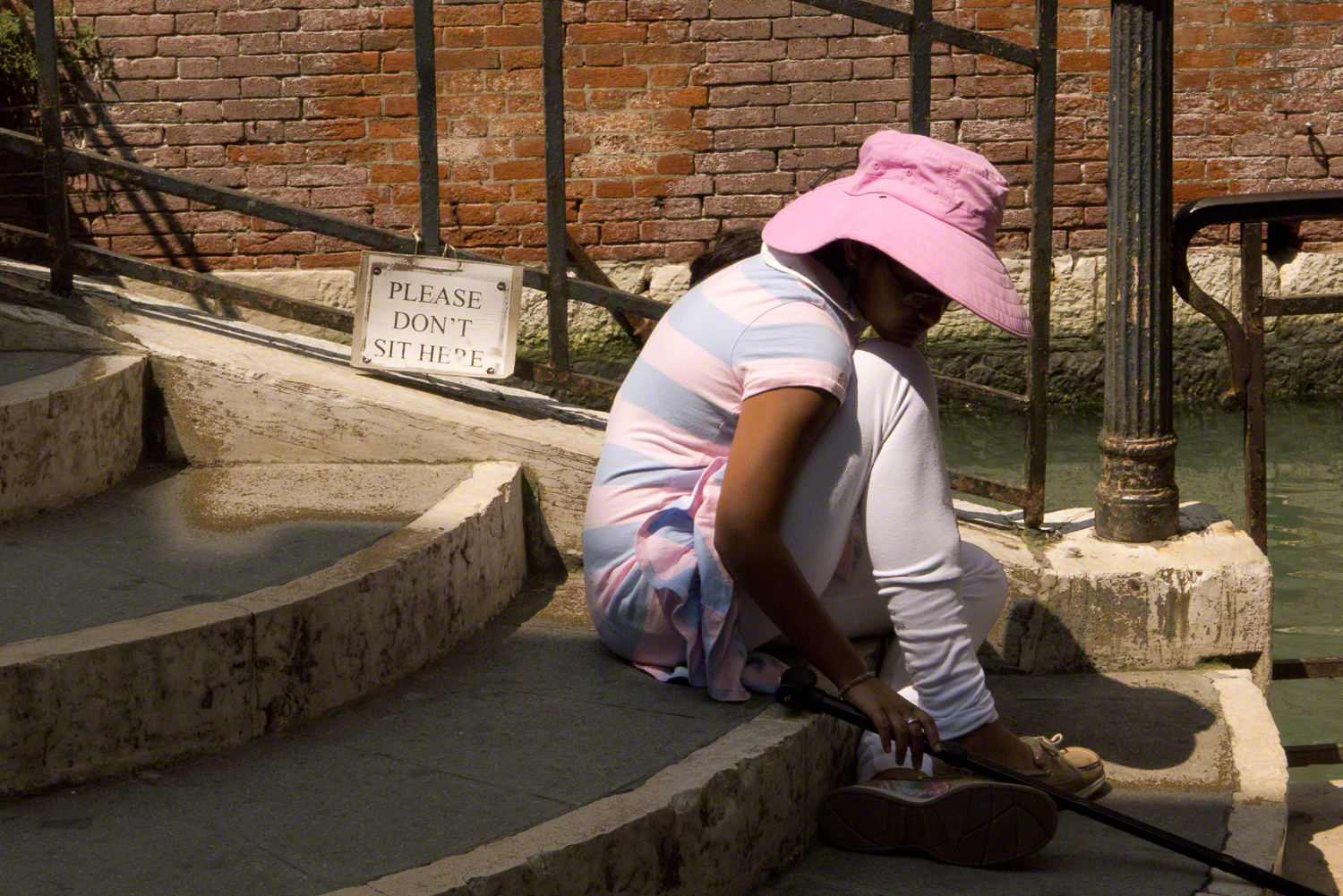
My second choice

When I edit, almost all the time I have several different photos of the same subject. I will usually put them up on my monitor and comapre them side by side. I’m looking for various things: Things that should have been in the composition, but weren’t. Things that were in my composition, but shouldn’t have been; I always use my fifteen point protection plan before clicking the shutter, but I will sometimes miss something. Did I remember my border patrol? Checking my four corners?

When looking at each image, was I successful in keeping the viewer interested for six to eight seconds? Did I move him successfully around the frame? Was my photo balanced as far as the negative and positive space?

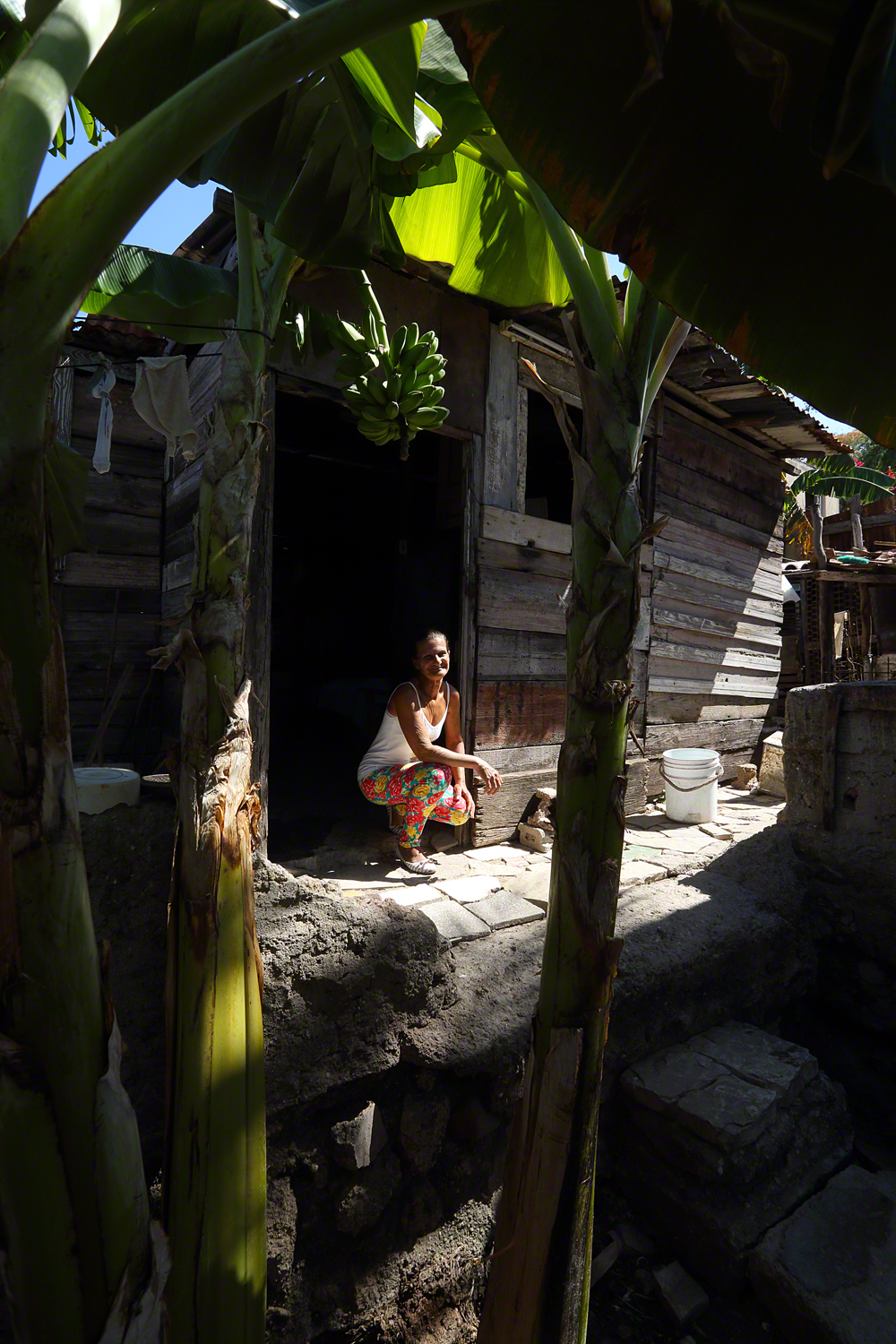
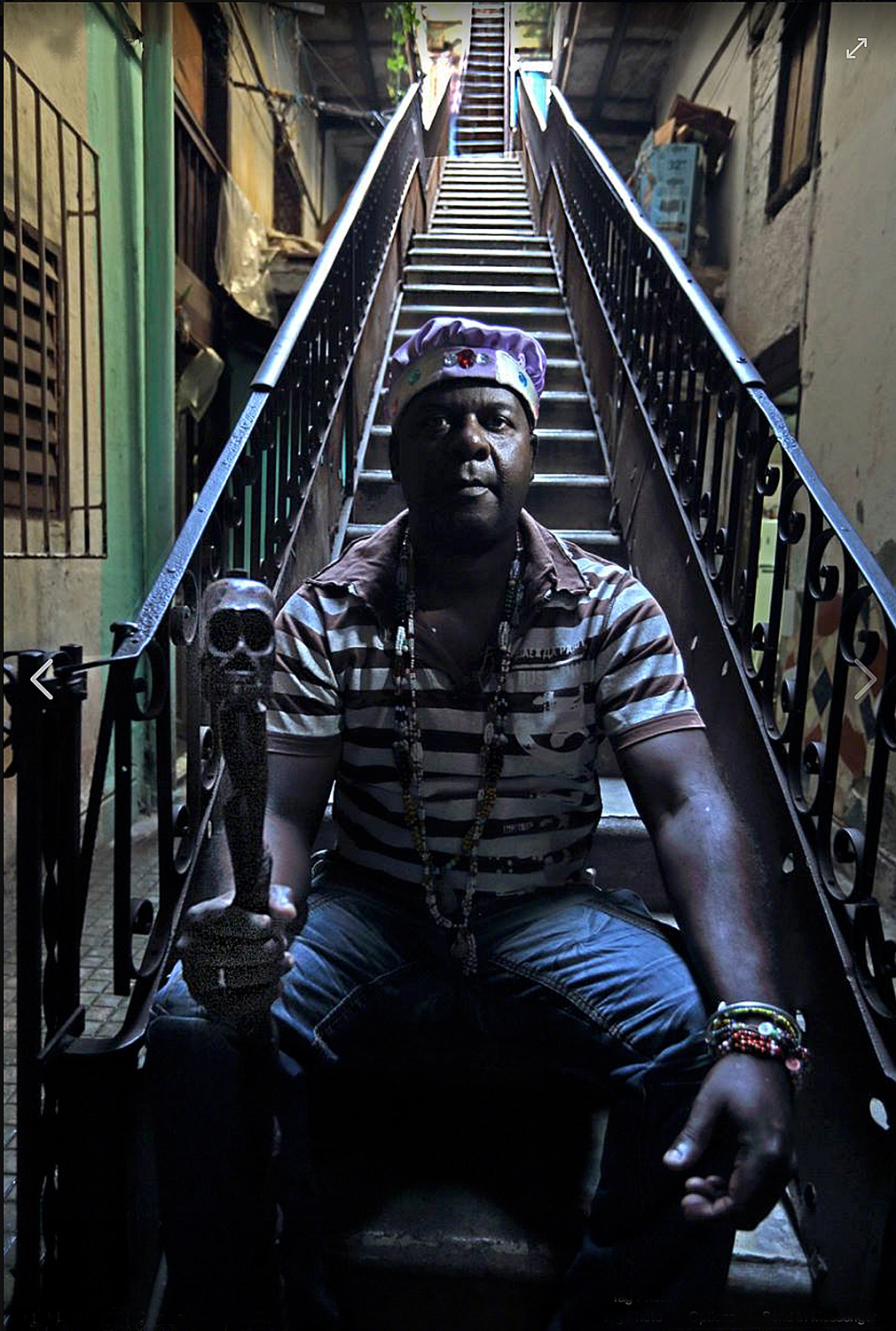
The two photos you see were part of several I shot of the woman during my workshop in Cuba. I narrowed it down to these and finally decided on the one at the top. I’d love to have your comments.

So my fellow photographers as you can see there’s a lot of variables when trying to pick the right photo. Whether it be to print, a webside, or whatever suits your fancy, editing is not for the faint of heart!!!

Visit my website at: www.joebaraban.com, and check out my workshop schedule at the top of this blog. Come shoot with me sometime. I just announced my New York, New York Workshop beginning September 17th ,2019 and ending at noon on the 23rd. This will be my second workshop there and this time we’ll be shooting in all the five boroughs.

JoeB

Food For Digital Thought: Incident vs Reflected Light

I was recently mentoring a student that was just beginning to take the plunge into being a full time professional photographer. He was setting up a portrait shoot in his semi-new studio and showed me his lighting setup; using his son as a stand in. He ws having trouble getting the background to show up…even a little.

I finally spotted the incident meter and new immediately why he was having trouble getting the light balanced on the son’s face and a much darker background.

It’s one of the very important pieces of information on light I always share with my online class with the BPSOP, and my “Stretching Your Frame of Mind” workshop I conduct around the planet.

Okay, there are two different ways to read the light. There is incident light, and there’s reflected light.

Incident light is the light falling on a subject, and reflected light is the light reflecting (bouncing) off a subject. For the past forty years, when I take a reading, I take a one degree spot reading of a scene or subject (reflected) because it will be  more accurate. BTW, it’s a hand held meter made by Minolta; they aren’t made anymore but you can find them on Ebay. Incidentally, I’ve been reading that the hand held meter is gaining popularity.

I’m sure you have all seen a photo that has both white and black people in it. In almost all examples, the black person looks darker that the white person…Why?

Because the black person absorbs more light than he reflects; much less than the white person. If you were to take an incident reading of both people standing right next to one another, you would get the same reading…you’re measuring the light falling on them. It’s the same falling light, and it doesn’t know where or what it’s landing on.

If you were to take a reflected reading of both their faces, there would be a big difference between the two people. When I’m shooting both people in one shot, I always have the black man stand next to the edge of the frame, so I can bounce some extra light on him to bring him up to the same exposure as the others. Yes, I know you can do all this in Photoshop To a point), but like myself, there’s a lot of photographer’s still out there that like doing things in the camera. For me, not only does it make you a better shooter, but it’s a lot more challenging…and I love a challenge!!!

The same goes with other subjects and scenes. Take a look at the above photo of the Lobster fisherman holding the trap. First of all, I knew to the degree where the sun was going to come up by using my Sunpath software and my Morin 2000 hand bearing compass.

I read the early morning sky somewhere between the brightest and darkest part, then the light on his face. When both readings were the same (reflective light), I knew it was time to shoot. As the ambient light got brighter, in order to keep the exposures the same, I had him move the lantern closer to his face until I had lost all the colors of dawn  in the sky behind him.

If I had used an incident meter, I would not have been able to get as close a reading as I did…why? Because the sky was reflecting (reflected light) a completely different exposure than the one falling (incident light) on hs face.

I’m all into having complete control which is why I like to read one degree of reflected light at a time, and shooting photos “in the camera”, because I like the process and the challenge.

So, getting back to my mentoring student problem: The light falling on the dark background and the light falling on the subject were being read exactly the same. If he had been reading the reflected light off the background and the reflected light reflcting off the subject’s face, he could have easily adjusted for it…which he finally did!!!

Visit my website at: www.joebaraban.com, and check out my workshop schedule at the top of this blog. Come shoot with me sometime. I just announced my New York, New York Workshop beginning September 17th ,2019 and ending at noon on the 23rd. This will be my second workshop there and this time we’ll be shooting in all the five boroughs.

JoeB

Food For Digital Thought: Shooting in the Blue Hour

After a beautiful sunset

I have always been surprised when someone in either my online class with the BPSOP, or in my “Stretching Your Frame of Mind” workshops I conduct all over our planet asks me what I mean when I say not to forget to shoot in the Blue Hour.

As a result these same photographers will get to a location maybe a few minites before the sun comes up or will pack up when the sun sets (or even sooner) and head for home. All I can tell you out there that you’re missing out on some quality time.

OK, maybe for some of you out there I need to explain exactly what I mean by the Blue Hour, and let’s get the technical stuff out of the way first:

Depending on where you are on our planet and the time of year, the blue hour occurs when the sun  is between -6 to -8 degrees below the horizon. During the blue hour the sun is so far below the horizon that only the blue and violet wavelengths are  scattered and visible in our sky; while the red and yellow wavelengths pass through into the rest of the universe.

As the sun comes up (golden hour) the blue and violet wavelengths diminish leaving the red yellow and orange to start taking over; this is what’s referred to as dawn. Dawn lasts until the sun breaks the horizon, and at that point it’s sunrise.

After a gray overcast sunset

Conversely, Sunset (golden hour) is when the sun is nearing or on the horizon, and it’s followed by dusk when there’s no direct sunlight anymore. The red, yellow, and orange wavelengths are fading and the blue and violet are becoming dominant; this is the blue hour…then only darkness.

Btw, blue hour happens even when it’s overcast so don’t pack it in and go home. The length and strength depends on how much cloud cover there is.

I love shooting in the blue hour. It’s moody and magical and can often make up for not so good photos you’ve taken during the day; especially if for some reason you were late for the golden hour.

Since it requires longer exposures and slower shutter speeds, unless you’re using ancillary lighting, you best finish up any portraits before the sun is too far off the horizon.

I like shooting landscapes scenes with structures in them, cityscapes, silhouettes, and anything that has water as one of the main subjects or dominates the foreground. Red and white car lights are great subjects, filled with visual interest and tension.

So, my fellow photographers, next time you go out either go out earlier for the morning blue hour or stay late after the sunset. You’ll thank me for it!!!

Visit my website at: www.joebaraban.com, and check out my workshop schedule at the top of this blog. Come shoot with me sometime. I just announced my New York, New York Workshop beginning September 17th ,2019 and ending at noon on the 23rd. This will be my second workshop there and this time we’ll be shooting in all the five boroughs.

JoeB

Personal Pearls of Wisdom: Get Up Close And Personal

I got up close and pesonal

I’m quite sure a lot of you have heard this at one time or another by lots of different people in lots of different situations. It’s an important expression that’s been around for a long time, and I personally have been using it since the middle eighties in my “Stretching Your Frame of mind” workshops, and in the my online class I teach with the BPSOP. I don’t claim to be the author of it, but I figure after teaching this concept for thirty-five years, whose to say I didn’t??? At least, I can say that it’s one of my favorite Personal Pearls of Wisdom.

It’s a phrase I’ve been using for a while and one that occasionally appears in Cyberspace… ” Get up close and personal”. I’ve  added… “get so close it hurts, then get closer”.  I often quote a very famous photographer named Robert Capa who once said, ” If your pictures aren’t good enough, you’re not close enough”. For those that know who Robert Capa was you know he was a war photographer that was always close to the fighting.

Relax, I’m not suggesting you go out and get close to that kind of action, but I am suggesting you get close to your subject, be it a person, place, or thing. Sometimes it’s even a good thing to be so close that you don’t show all of it. This falls under one of the concepts of Gestalt called ‘Closure‘.

One reason I like to get close is to achieve depth. Since the camera has but one eye (the lens) it can only see in two dimensions, height and width. You can trick the lens and create the third dimension…depth, by getting up close and personal.

By getting close to your subject  you’ll be anchoring it in the foreground, (and the best way to do this is with a wide-angle lens), you’ll create what I call layers of interest. This will keep the viewer around longer as he goes from your anchored subject in the foreground to the background. If you can place enough elements in-between, then he have more to discover on his or her way to the horizon…or implied horizon.

In the Psychology of Gestalt, we want to take control of what the viewer sees in our composition. It’s all about visual perception, and how the viewer will react to our photos. I like a strong reaction so in the photo of the Egyptian, I wanted to really get a reaction, so I got about as close as you could get without having to follow up with any ‘marriage vows’!!!

Take a look at some more examples of getting “up close and personal”:

Visit my website at: www.joebaraban.com, and check out my 2019 workshop schedule at the top of this blog. Come shoot with me sometime. I just announced my New York, New York Workshop beginning September 17th ,2019 and ending at noon on the 23rd. This will be my second workshop there and this time we’ll be shooting in all the five boroughs.

JoeB

Food For Digital Thought: The Bigger Picture

Paying attention to the big picture.

I’m writing this post after a Skype conversation and photo review from a photographer that’s taking my mentoring program. Like others, she took my online classes with the BPSOP, and to date, has joined me on two of my personal workshops I conduct all over the place.

Our conversation was based on my 15 Point Protection Plan, and how valuable it is as far as taking her level of photography what I refer to as…Up a Notch.

What it eluded to was her focusing in on small parts of the composition, the subject, and highlights that were so blown out as to distract. Now, ordinarily, I love to blow out the highlights, when in doing so I make them the subject or at least a secondary subject.

Btw, don’ t ever let anyone tell you to never do that (clip the highlights) because all they’re really trying to do is to take you down a one-way path to mediocrity.

I digress.

It’s not just about a subject or mulitple subjects and/or centers of interest.  It’s important to pay attention to the Bigger Picture as well.

It’s like a recipe. Ok, you’re having a dinner party, and you spend the morning shopping. You finally begin to cook, and your’re reading down the list of ingredients and one of them isn’t measured right or left out entirely; that will impact the finished meal.

My guess is that you were having a glass of wine and excited that good friends were coming over, and weren’t paying close enough attention. You won’t realize it until you sit down and start eating. By then it’s too late.

The analogy I’m drawing is similar: You get up all excited, because you have the day to go out and shoot. You gather all your gear, and head to that location you’ve been dying to photograph.

You’re so excited because the light is great that you have forgotten to use your  15 Point Protection Plan, your Border Patrol, and the four corner check.

Yes, I realize that you can fix things in post-processing…but NOT all the time. Don’t count on it, especially when you try to darken a really distracting blown out highlight…that ain’t happening.

So, my fellow photographers, when you go out next time think about The Big Picture and not just your subjects (s).

Visit my website at: www.joebaraban.com, and check out my workshop schedule at the top of this blog. Come shoot with me sometime. I just announced my New York, New York Workshop beginning September 17th ,2019 and ending at noon on the 23rd. This will be my second workshop there and this time we’ll be shooting in all the five boroughs.

JoeB

Quick Photo Tip; Auto-Focus

Manually focused

First of all, Auto-Focus is a luxury not a necessity. Back in the old days, I mean the days right after the dinosaurs disappeared, I had to focus my own camera; oh the horror!!

Imagine working for Associated Press and United Press International (like I did) and covering sports; the  NFL for example. A pass play is called and the receiver and the guy covering him ( a combined weight between five and six hundred pounds) heading your way…in a big hurry. You have a 200mm lens on and it’s the days before auto-focus so you have to follow them coming at you while continuously trying to keep them sharp; by manually focusing. It’s extremely difficult.

Nowadays, all those SI photographers standing on the sidelines have cameras that focus automatically; as well as doing everything else for them. Hell, who can miss?

I digress

Have you ever tried to focus on something in front of a wall and your auto-focus sensor goes nuts? Well, this could be caused by a lack of subject contrast, or the auto-focus system is not able to detect an edge in order where to focus. Well, what do you do? You set your camera to manually focus and…no problem!

I will often have a student that has taken my online class with the BPSOP, or in one of my “Stretching Your Fame of Mind” workshops tell me that in a similar situation they will auto focus on the subject and then refocus on the background.

Manually focused

Well, that’s all well and good if you have all day. What if you have just seconds of beautiful late light? Those additional steps can make the difference in losing the shot altogether.

For me, I manually focus all the time when I’m shooting environmental portraits. I will often put my subject close to the edge of the frame (mostly looking out of the frame). The reason I like to do this is to generate Visual Tension. I will compose my shot and since I have my subject close to the edge, I manually focus on the person and then determine what DOF I want.

From almost fifty years of shooting, I know that light is so fleeting and if I take just another second, I’ve missed the shot.

Visit my website at: www.joebaraban.com, and check out my workshop schedule at the top of this blog. Come shoot with me sometime. I just announced my New York, New York Workshop beginning September 17th ,2019 and ending at noon on the 23rd. This will be my second workshop there and this time we’ll be shooting in all the five boroughs.

JoeB

New York, New York: The Five Boroughs

NEW YORK: THE FIVE BOROUGHS

Several years ago, I conducted a very successful workshop in New York, which was focused on one borough…Manhattan.

Since then, I’ve talked to several of the people that were in that workshop, as well as others that wanted to attend but for one reason or another couldn’t make the time to join me.

I’ve had enough interest to do another one, but this time I’ve decided to shoot in all five boroughs: Brooklyn, which has the greatest number of occupants, followed by Queens, Manhattan, The Bronx, and Staten Island.

The dates of the workshop will be the Meet and Greet the evening of the 17th. of September. A five full day workshop ending at noon on the 23rd.

In my fifty-year career as an advertising/corporate/and editorial photographer I’ve shot many assignments in Manhattan, but in all those years I never photographed in any of the other boroughs. Having said that, I, for one, am really looking forward to spending time seeing and photographing the other four.

The following are some of the locations we’ll be concentrating on, starting again with MANHATTAN:

Last time we went on a special ninety-minute hard hat tour of Ellis Island, and it was in a word…AWESOME!

This time we’ll be returning, but the tour will be different. Unlike the last tour, this tour will be approx. 2 1/2 hours, and we’ll be taken to places that were not included in the last tour.

In addition, this time we will be allowed to bring tripods which will give us so much more latitude in extremely low light areas.

Lastly, while we’ll be accompanied by a SEI guide, the events are structured without interpretation, so the entire time can be devoted to photography. For those non-shooters, the guide will be available to answer questions and talk about the history of the hospital.

ROOSEVELT ISLAND: Roosevelt Island is considered pat of Manhattan, and there are several locations that I will be scouting ahead of time to give photographers the best possible locations during the best possible times of the day: https://duckduckgo.com/?q=roosevelt+island&t=h_&ia=images&iax=images

During the first workshop, we spent a morning on the Brooklyn Bridge, and people really enjoyed the shoot. Depending on other venues and logistics, this would possibly be a “command performance” for incredible views of the Manhattan skyline and the East River.

BROOKLYN:

Bushwick Street Art and industrial buildings: https://duckduckgo.com/?q=bushwick+street+art&t=h_&ia=images&iax=images&iai=http%3A%2F%2Fstephenesherman.com%2Fwp-content%2Fuploads%2F2016%2F09%2Fbushwick-street-art-donrimx.jpg

DUMBO PARK/WAREHOUSE DISTRICT:

https://duckduckgo.com/?q=washington+street+in+dumbo&t=h_&iar=images&iax=images&ia=images

CONEY ISLAND: I can’t think of a better location to wind up a day of shooting. To be there in the late afternoon to people watch, photograph color, and the rest of the elements of visual design; as well as the gesture of light is something I have not done before and I’m so looking forward to it (not to mention having a Coney island hot dog):

https://duckduckgo.com/?q=CONEY+ISLAND&t=h_&iar=images&iax=images&ia=images

QUEENS:

FLUSHING MEADOWS STATE PARK: In 1939, this was the location of the World’s Fair, and people from all over the world came here to experience the Unisphere, Pavilions, food, and entertainment.

The park currently serves the people as a recreational center. The park has become, “a symbol of unity among every race that attends it”.

https://duckduckgo.com/?q=flushing+meadows+state+park&t=h_&iar=images&iax=images&ia=images

GANTRY PLAZA STATE PARK: From the images I’ve provided, this looks like a marvelous place to be in the late afternoon into the Blue Hour to end the day;

https://duckduckgo.com/?q=gantry+plaza+state+park&t=h_&iar=images&iax=images&ia=images

THE BRONX:

One couldn’t consider visiting this borough without spending some time at probably the most famous zoo in the country…THE BRONX ZOO:

https://duckduckgo.com/?q=bronx+zoo&t=h_&iar=images&iax=images&ia=images

I would suggest your longest lens (maybe even a doubler) to photograph the animals so they will appear in a natural environment. I have done this at the Houston Zoo and it works great!!!

LITTLE ITALY AND ARTHUR AVENUE: A wonderful location to just walk doing some street shooting and stopping for a late lunch:

https://duckduckgo.com/?q=little+italy+and+arthur+avenue&t=h_&iar=images&iax=images&ia=images

CITY ISLAND: Another great place to end the day:

https://duckduckgo.com/?q=city+island&t=h_&iar=images&iax=images&ia=images

STATEN ISLAND:

SNUG HARBOR: This is a collection of 19th century buildings set in an eighty-three-acre park; home to aged sailors. Considered the “Crown Jewel” of Staten Island, it’s an unrivaled reminder of 19th century sailing: https://duckduckgo.com/?q=snug+harbor&t=h_&iar=images&iax=images&ia=images

RICHMOND TOWN: The town of Richmond has been here since the 17th century and is an extraordinary living history village and museum complex.

It will be taking us back in time while offering a great photographic escape from the other locations we’ll be visiting throughout the boroughs of New York:

https://duckduckgo.com/?q=richmond+town+staten+island&t=h_&iar=images&iax=images&ia=images

As has been the case in all my other workshops, a daily schedule has always been put forward in the initial description I send out.  For this workshop logistics are very different, if for no other reason than its New York; need I say more??

Having said that, the final daily schedule will be based on me personally scouting each one of these sites several days in advance. The daily schedule will be handed out the evening of the meet and greet. The one thing that will remain the same will be the daily morning critiques that are conducted right after breakfast.

The locations in each one of the boroughs will be the ones listed above, but the specific days and times won’t be assigned until I’ve scouted all the sites. It is all-important that in each location we have enough time to spend while making sure that people are not tripping over one another; as well as a smooth transition from one location to another…so we’re not, as they say, “burning daylight”!!

For those that have taken anywhere from three to ten workshops with me, you know your experience is my number one priority.

Like all the others to date, this will be no exception. It will be one you’ll always remember; especially for those that have never shot with me or have never been to this incredible city.

Because of the distances we’ll be traveling to the other boroughs, I’ll have a private van/bus to move us around and make us more comfortable. This way you’ll be able to bring all the equipment you want.

The cost of the workshop will be $1750.00 and that will include the meet and greet, van/bus transportation, and my famous final dinner.

This special Ellis Island tour is $200.00 per person plus the ferry and is included. If you decide not to take the tour, the price remains the same…no refunds.

For all non-shooters, the fee will be $750.00 which will include everything but the daily reviews; which are for the shooting photographers. All other expenses will be up to the photographers and or non-shooters.

A non-shooter would be a spouse (many of them come), partner, friend, mother-in law, or relative.

As in previous workshops, I’m now in the process of talking to several hotels to stay at for the workshop, including having the meeting room there. We will try to get a workshop rate as we have done in the past.

Past participants know, it will be a reasonably priced four-star hotel (for the area) located in the Seaport area of New York. For those that prefer to stay someplace else, you’re more than welcomed to do so.

Once we decide on a hotel, I’ll let everyone know so you can book your reservations yourself. It’s a lot easier to do it this way, as people are looking for different size and priced rooms and it will eliminate mistakes by the “middle man” …that would be me!!

My workshops are limited to ten photographers, not counting the non-shooters. I can tell you several people have already asked me to hold a spot, so if New York has been on your bucket list, I suggest you give it serious thought to signing up sooner rather than later.

I hope to see some old friends there, meet new ones, take great photographs, share an occasionally martini, dine on great food, come back with wonderful images, and have a wonderful time in the process.

As ‘old blue eyes’ would say:

“Start spreading the news,

I am leaving today.

I want to be a part of it

New York, New York”

Joe

Here’s just a few testimonials from past workshop attendees:

I just finished taking Joe’s workshop. I simply cannot recommend it highly enough.  I cannot adequately express my gratitude to Joe for his approach to teaching and his willingness to share his tremendous wealth of knowledge. Learning about critical elements of design and the discovery of the artist’s palette has changed the way I make pictures, and the way I look at the world. This has been a truly outstanding experience with an outstanding teacher. Thank you, Joe!

Alain

I recently completed my third workshop with Joe Baraban, and all I can say is that I will be coming back for more. All aspects of the workshop were fantastic. Joe’s approach to teaching, the shooting locations, the daily reviews, the accommodations, the planning and organization, and the communications were all at the highest level.

From the “meet and greet” reception the first night, to the final dinner, Joe paid strict attention to every detail to make sure we were well taken care of…all the time. Joe’s selection of locations are always diverse and challenging and present many, many opportunities for great shots and learning.

The daily reviews are a wonderful educational experience as you discuss your own work as well as the work of the other photographers. Joe teaches how to “make pictures”, not just take them. The quality and creativity in my images continue to ratchet up a notch with every workshop as I continue to learn from Joe.

I highly recommend Joe’s workshops and online classes.

Nick

I just finished taking Joe’s workshop and again it was nothing short of extraordinary. Because of Joe and the ideas and concepts he teaches, I see everything differently now. Whether I’m driving along a country road or watching TV, I now see negative space, vanishing points, color, light, texture, pattern, line, angle of reflection, tension, perspective – everywhere.

Knowing these critical elements of design have truly not only changed how and what I photograph but have changed the way I look at the world in a very real way.

I cannot adequately express my gratitude to Joe for his caring and expertise and if you are considering taking a class or workshop with Joe think no more as I cannot recommend him highly enough. Just DO IT!!!

Shauna

Joe Baraban’s workshop is first rate and pitched at a level that in my opinion would provide a strong learning experience for any photographer, no matter their level or their primary area of photographic interest.

Joe is attentive, and his workshops are well prepared and illustrative of the concepts being put forward. Better yet, supplementary tips and advice were passed along to participants in neat little packages with titles like “The fifteen-point inspection plan”. His photo critiques are honest and very helpful. A number of us would definitely take a second, third, and fourth workshop offered by Joe.

Murray

I attended Joe’s Paris workshop and received a lot of valuable information in less than a week.

Joe’s workshops begin with an informal meet and greet where all the participants and spouses are able to meet each other with food and wine.

Usually, each day start before dawn with an air-conditioned private bus trip to a pre-scouted shooting location. Joe gives suggestions for shooting before and during each shoot. He moves around to each photographer during the shoots and gives “hands-on tips” and suggestions that are wonderful and instructive.

Each day there is a very constructive critique of the work that was shot the day before. Joe has everyone involved and he asks people their opinions.

I have not attended many formal workshops and I was happy that the comments of the other shooters and those from Joe were very helpful and allowed everyone to get real feedback so soon after shooting.

I can truly say that the workshop immediately helped me, and I believe that my photos have much improved. It was a wonderful experience and made me a better photographer. It also gave me a chance to make friends with the other photographers.

John B


I wanted to learn more about Joe’s approach to visual design and making great photos after taking one of his online courses.  As a former painter, I really relate to his focus on visual design elements as his artist’s palate and it all came to life in this workshop.


He is an excellent teacher and it was wonderful to experience this with a group of very talented photographers who supported each other and did some great work.


The format of learning the design principles and discussing them in relation to Joe’s images and the work from the class was a great way to learn – I look forward to future workshops.


Cynthia


My Favorite Quotes: Sir Winston Churchill

This is what they missed.

This is a category that I usually reserve for artists, whether they be photographers, painters, writers, or musicians…until now.

Although I teach an online class with the BPSOP, I’m actually writing about my recent workshop in Berlin. We were heading to a village near Potsdam to shoot in the late afternoon light, a location I had scouted several days ahead of time.

FYI, I always go a few day ahead of time to check out all the locations, so there’s no surprises when I take my fellow photographers to shoot there; therefore I know the best areas.

I don’t have mention the old adage that Time is of the Essence, but in case you’ve never heard it before, I’m saying it now….Time is of the Essence, especially when it comes to photography.

Ok, here’s a good time to interject the quote: Sir Winston Churchill once said, ” You’ll never reach your destination if you stop and throw rocks at every dog that barks.” So, how does this have anything to do with Potsdam and the location we were going to…you might ask?

As we were walking down the sidewalk on our way to the area that was going to get the best late light, several people were stopping to take pictures of anything they saw, whether it was worth the effort or not.

Now I realize that these people had never seen this village and wanted to record it for posterity, but the pictures they were taking could have been taken just about anywhere in cities in the USA.

I’m talking about window dressings made up of jewelry, clothing, shoes, etc., all of which you could see when you visit Amazon.com; merchandise not even indigenous  to Germany…past or present.

It got to the point where I just marked the area on a local tourist map and told those photogrphers to meet the rest of us there.

Sure enough, there were some stragglers that showed up too late to really have the time to spend on a truly fabulous location…straight out of a movie set.

If you’re heading to a location that you either know to be worthwild, or you’ve seen it in pictures, or a friend that has been there and highly recommended it, don’t stop and shoot just to be shooting…don’t throw rocks at every dog that barks.

Visit my website at: www.joebaraban.com, and check out my workshop schedule at the top of this blog. Come shoot with me sometime. I just announced my New York, New York Workshop beginning September 17th ,2019 and ending at noon on the 23rd. This will be my second workshop there and this time we’ll be shooting in all the five boroughs.

JoeB

Food for digital Thought: Your Most Important Piece of Equipment

It took the ten inches behind the camera to think of it, then lots of work to make it happen.

: The 10 Inches Behind The Camera

Definition of non sequitur 

1 : an inference (see inference sense 2) that does not follow from the premises (see premise entry 1 sense 1) specifically : a fallacy resulting from a simple conversion of a universal affirmative (see affirmative entry 1 sense 3) proposition or from the transposition of a condition and its consequent (see consequent entry 1 sense 1)

2. a statement (such as a response) that does not follow logically from or is not clearly related to anything previously said.

The online students I teach with the BPSOP, and the ones that attend the “Stretching Your Frame of Mind” workshops I conduct around the planet, are always asking me what camera they should get that will take better photos than the one they have. I also hear people saying that some lens take better pictures than others.

That’s like saying that because you have a great typewriter you must be a great writer.

WHAT???

Since I shoot with Canon, here’s what I tell them: If you go out and buy a new Canon 5D Mark II from B/H photo (what I shoot with and where I buy them), it’s not going to make you a better photographer. What it will do is make you the very proud owner of a Canon 5D Mark II. Camera stores are filled with top of the line cameras, because the people that buy them find out that it takes more than a great camera to take good photographs.

It’s a labor of love that takes:

  • Work
  • Diligence
  • Work
  • Perseverance
  • Did I mention work?
  • Tenacity
  • Patience
  • And above all…Work

The most important part of your camera is the ten inches behind it.  Ernst Haas, one of my all time favorite photographers whose work hangs in my house said , “The camera doesn’t make a bit of difference. All of them can record what you’re seeing…but, you have to see.”

As for lenses and zoom lenses, Haas also said, “The most important zoom lens you have are your legs”.

JoeB

Anecdotes: Renaissance Hotels

Writing these brings back fond memories to when I was working full time as an advertising, corporate, and editorial photographer. After fifty years, I’m now semi-retired teaching classes with the BPSOP, and conducting my workshops all over the planet.

Some of the stories were funny then and still funny, and some were not so funny then but funny now. This is one that was more of a pain in the butt, than not so funny; but really funny now!

I was shooting a series of ads for the Renaissance Hotel chain, and the one pictured above we shot in Houston. The client was from England, and I had worked for here a couple of years back; I knew she could be a major pain.

Before she came over she instructed my studio manager to order her a case of some special mineral water that was only available where she lived in London; and it was all she would drink. She was adamant that it be there before she arrived, and couldn’t care less on how much it would cost. She said to bill it to the job!!

Well, as was our custom to make all our cliens happy, we  ordered it and had Federal Express send it to the studio. It was expensive water to begin with, but figuring in all the costs each (small) bottle was about five dollars…back in the eighties!!!

This woman was in Houston for several days, and in that time she drank only one bottle (out of the case) of her precious water; leaving it for us. She was such a pain in the butt that we weren’t interested in drinking the water so what did we do?

I gave it to my dog to drink!!!

Visit my website at: www.joebaraban.com, and check out my workshop schedule at the top of this blog. Come shoot with me sometime.

JoeB

Quick Photo Tip: Light, A Little Dab Will Do Ya.

A little dab will do ya.

I get the ideas for my posts in the strangest/weirdest places. In this case, you have to be my age to remember this commercial It has always reminded me of the way I go after light:  https://www.youtube.com/watch?v=yxBNW5XJI1o

I love the light, plain and simple, and I’m a firm believer in one of my favorite phrases, “You find the light and you’ll find the shot”. I’ve been following this self-appointed rule for as long as I can remember and it has served me well.

One of my favorite ways to shoot is to find a little dab of sunlight somewhere, usually hidden between larger areas of shadow and or color, and place or see an object or subject in it. When I expose for only the area in light, I can make the shadow area ever more dramatic and interesting…and colorful.

In my online class with the BPSOP, and in my “Stretching Your Frame of Mind” workshops I conduct around the planet, I’m always telling my fellow photographers that one of the best ways to take their photography what I refer to as “up a notch”, is to “see past first impressions”. I usually follow this with a quote by Henry David Thoreau who once said, “It’s not what you look at, it’s what you see”.

What I mean in this context is when you find yourself at some location, look for areas that have a small amount of light hitting somewhere. This is easier to find when the light is dappled, but harder to find when the majority of the scene is in shadow. When you see it, think of ways to utilize it. I can promise you there’s a chance to walk away with one of those illusive “Keepers” we all strive for but sometimes have a hard time creating.

There are people out there that think this is not a good idea and will tell you that you need more light to take good photos. All I can tell you is to run away as fast as you can because they will only beat you up with bad advice and drag you down to their level…Don’t follow the road well traveled, follow your own road and have people follow you.

In the above photo taken during my Springtime in Berlin workshop, I was walking down the street and saw a crowd of people standing in line. I’m always attracted to this because of the possibility that something going on.

What the people were doing is waiting for this restaurant to open, so I walked up to the front to see what it looked like. I’m really curious about everything, especially when I have a camera in my hand…which is most of the time.

There, right in front of my eyes was this chair being lit by the sun coming through a small hole in the red fabric. Needless to say, I was all over it like a tight fitting Lassie costume.!!!

Visit my website at: www.joebaraban.com, and check out my 2019 workshop schedule at the top of this blog. Come look for the light with me sometime.

JoeB

Food For digital Thought: Know Thy Subject

I knew my subject, did you?

So I was reading the other day and came upon this proverb that I’m pretty sure a lot of people out there has heard…”Know thyself”.

As is usually the case, I get my ideas for all these posts I write from all kinds of sources and from these sources, mixed with personal experiences, I wind up with what you’re reading now.

That said, within a couple of days of reading the proverb, I had a student taking my online class with the BPSOP submit a photo for my daily video critiques.

This person had submitted a portrait (for one of my assignments) of a woman sitting on a large rock, and right next to her on the exact same plane was another rock…the same size as her subject was.

This immediately brought to mind the proverb I had read, only it wasn’t about “knowing thyself” but knowing thy subject.

In the photo, the photographer had positioned the large rock right next to the woman whose portrait she was taking.  The problem was that to the viewer there might have actually been two subjects: the woman and the rock.

It’s important to keep things as easy to understand as humanly possible, and that means making sure the viewer understands your thought process.

Both in my online classes and in my “Stretching Your Frame of Mind” workshops I conduct around our planet, I will often refer to the basic elements in the psychology of Gestalt, and how they apply to photography.

I write:

“The methods we use to gain attention to our photography will vary, but what’s important is how we manage what the viewer perceives and processes when looking at the visual information we lay out to him in the form of a photograph.

Humans rely on perception of the environment that surrounds them. Visual input is a part of our everyday life, and as photographers it’s our prime objective to present this visual information in a way that takes control of what the viewer sees when looking at our imagery.”

If I’m photographing something or someone, I want to make sure that it’s the main subject and for the viewer to not to be confused with a potential second subject; that will compete or distract from what I’m really trying to say.

I will use other means to help me establish the main subject, and that is everything else that’s important in the environment…including other centers of interest.

Visit my website at: www.joebaraban.com, and check out my upcoming workshops. Come shoot with me sometime.

JoeB

My Favorite Quotes: Seneca the Younger

I already had my exposure set.

Since I’m a reader and always looking at stuff on the internet, I’m invariably finding quotes that were said by all types of artists from photographers to musicians to painters, to writers. I use the ones that fit into the way I approach teaching to those that take my online class with the BPSOP, and in my “Stretching Your Frame of Mind” workshops I conduct around our planet.

I recently found one first through a friend, then checked the author out. His name was Seneca, and he was a Roman statesman, philosopher, dramatist and satirist, who died in AD65.

A tutor and later advisor to Nero, he was accused of being complicit in the attempted assassination and forced to commit suicide; I read that he was probably innocent.

Seneca once said, ” Luck is when preparation meets opportunity”. I can’t tell you how much that hits home with me and the way I’ve been doing things for most of my fifty year career as a professional photographer.

I realize that for most of my fellow photographers time is not their friend. In other words they have jobs and families and can’t always devote as much to the process of taking pictures; fortunately, I can…I’m semi-retired and my kids are grown and gone!!!!

Here’s the best case scenario to comprehend just what this quote is all about…just in case you want to find some additional time to go after that illusive “keeper”.

Instead of just deciding to go to a location based on friendly advice or perhaps something you might have seen or read about, do some preliminary preparation.

Preparation done ahead of time.

In other words go to the location ahead of time to see what’s it all about, instead of just showing up only to find that it’s closed on Mondays, or for remodling, or it doesn’t open until nine…and you’re there at seven. If you’re one of those that love the early and late light, find out if sunrise or sunset is a better choice.

That said, there is another way to be prepared in case the best photo you might ever take is right in front of you (or will be momentarily) and this one might be a little easier for you.

I’ve had dozens of my fellow photographers ask me how I can capture some of my photos that are exposed perfectly, especially since I take most of my pictures in the camera with little or no post processing.

I tell them that when I’m just walking down the street with a camera over my shoulder I always take a few generic photos just to get the exposure down.

I’ll take several different exposures, usually based on a fast shutter speed and pick the right combination of shadows and highlights. This is when the action is happening to fast to let the camera decide what the best exposure is going to be. Now I’m prepared if the opportunity reveals itself….and I get lucky!!!

Visit my website at: www.joebaraban.com, and check out my 2019 workshop schedule at the top of this post. Come get lucky with me sometime.

JoeB

Quick Photo Tip: Knowing What To Shoot When You Get There.

Have you ever arrived at your vacation destination (after planning and looking forward to it for a year), and you were possibly overwhelmed because you didn’t know where, what, and when to shoot. It can be difficult, ever for some professionals. Here’s what to do to simplify your “once in a lifetime vacation” and make it a memorable experience.

In the old days, the days before the internet, we would call or write (depending on the time we had) the Tourism Department of every country, state, and city I was going to be in and would ask for information as to what to see; we would also contact the Film Commission for similar information.

Now, with the inception of the internet, it has become so easy to obtain the same results. These sites are meant to attract photographers to come photograph their city, state, or country. To them it’s free publicity, and photographs are a quick way to spread the word around.

I know what you’re thinking, why go to the places that all the tourists go to and photograph the same things? For me, the reason is simple. Tourists will go to these places after breakfast when the quality light is gone. Or, they’ll go right before or right after lunch, when the light is the hottest. They will usually be through well before dinner so they don’t have to worry about it while sipping their glass of wine.

I go out well before breakfast (sunrise) when the light is the best. Then I have breakfast. Since I’ve been up a the proverbial “crack of dawn”, I’ll go back to my room and rest up (if I can). During the lunch hour, I’m sitting at an outdoor cafe, eating the local fare while sipping a glass of wine figuring out what I want to shoot at sunset during the golden then blue hour. Then I go to dinner and enjoy my dinner while thinking back to what I’ve shot that day.

These are the photographs that I’m looking to have prints made with. These are the important photos because I’ve spent the most time in the pre-planning stage and are taken in the best light.

The above photo represents a lot of time surfing the web looking for places to shoot in Provence in the Fall.

These are areas I cover with my online class with the BPSOP, and locations I’ve scouted out for my “Stretching Your Frame of Mind” workshops I conduct around the planet.

Check out my website at: www.joebaraban.com, and my 2019 workshop schedule you’ll find t the top of this blog. Come shoot with me sometime.

JoeB