Food for Digital Thought: A Dichotomy

Dichotomy

When you’re walking the streets somewhere in the world looking for photo opportunities, My suggestion is to be on the lookout for what I call the ‘photo dichotomy’.

First, in case you’ve heard the word used but might not know exactly what a dichotomy is, let me give you the definition.

Dichotomy: something with seemingly contradictory qualities. mutually exclusive or contradictory.

Perhaps you’re still a little confused as to how this relates to photography. So, having said that let me show you in the photo seen above.

I was walking around the canals in Venice, looking in all four directions to make sure I didn’t miss anything when I saw this young woman sitting on the steps.

Ordinarily, I might pass on it since the visual interest is limiting. But what really sparked my interest was the small sign right behind her…a dichotomy!!

In my online classes with the BPSOP, I often talk about keeping your eyes and ears open all the time. You just never know when a photo op will rear its head, and when it does it will usually be for just a moment.

When I’m walking with my fellow photographers that are participating in one of my “Stretching Your Frame of Mind” workshops, I always point out things that in of themselves have visual interest.

Another dichotomy

Another example of a dichotomy is in the other photo pictured here of a man walking in the opposite direction of the arrow signifying a one-way street.

If you click on this link, it will take you to a post on paying attention to what you hear.

Visit my website at www.joebaraban.com, and check out upcoming workshops at the top of this blog. Come shoot with me sometime.

JoeB

Food For Digital Thought: Imagination

People like to see people in pictures

In my online classes with the BPSOP, I’ve been finding that so many photographers are always playing it safe. Either from always shooting at the same height, the height of the eye to the ground, zooming in with their lens instead of using their feet, or looking for a different POV.

When I’m walking around shooting with the photographers that are taking my “Stretching Your Frame of Mind”, I see it up close and personal all the time. It’s one and done, and it really doesn’t matter what the subject is.

Now I’m all in favor of my mantra…” more shots per hour”, but that’s after shooting lots of variations. I can tell you from fifty-three years of experience that taking one shot of anything and going home with a ‘wall hanger’ is slim to none. Vegas would probably put it at 50-1.

Life is too short to always be safe. Always ‘coloring inside the lines’ keeps you on the road to mediocrity. Sure, it just might get you that third place ribbon at your camera club’s competition, winning you a 16GB compact card…if that’s what you want. Hell, by triple mounting your photo with color mats that are in harmony, you might even move up to a second-place ribbon…that would be special and now a 32GB compact card.

I say ‘color outside the lines’, and take the path less traveled. Imagination keeps us young, it’s the gas and oil that keeps our mind running. Shoot with a lens you would never think of, get some dirt on your shirt by laying on your stomach, add some props, and editorialize your photo. People like to see people in photos, so think about putting them in your pictures. Don’t photograph what you see, photograph what you would like to see.

Think of yourself as an artist that has chosen the camera as your medium. To my way of thinking, a camera on a tripod is just like a blank canvas on an easel.

Visit my website at www.joebaraban.com, and check out my workshops schedule at the top of this blog. Come shoot with me sometime.

JoeB

My Favorite Quotes: For a Few Good Men

Pretty clear what he’s doing

I know some of you are asking yourself what in the world could a quote from this movie have anything to do with photography.

Well, I’m always on the lookout for anything that might make an interesting quote, especially if it’s based on something from my online classes with the BPSOP, or in my “Stretching Your Frame of Mind” workshops I conduct around our (more than likely) round planet.

I recently had a student enrolled in my part II class submit a photo that represented the current lesson Silhouettes. She submitted a shot of someone taking a picture that was in silhouette; actually one version and another almost identical.

As I always do, I put them up side by side so I could make a comparison and talk about it in a video that I create for every submission, and there was one small detail that was in one photo but not the other.

In one of the photos where the man had his camera up to his eye, there was a small area of negative space that was separating his arm from his body. It was clear that he was taking a picture.

In the other photo, there wasn’t any separation because that small area of negative space wasn’t there. As a result, the viewer would not be able to tell what the man was doing; it just wasn’t clear.

So my fellow photographers, whatever you’re trying to say in your photography no matter what the subject is, remember that you’re not going to be around to explain your thought process so it’s going to need to be…crystal clear!!

Visit my website at www.joebaraban.com, and check out my workshop schedule at the top of this blog. Come shoot with me sometime.

JoeB
BTW, here’s where I got the quote, in case you don’t remember the scene: here it is: https://www.youtube.com/watch?v=wYqgHXFBWbg

Life Before Photoshop: Mazda Shoot

Look ma, no Photoshop!

In the continuation of my series I call “Life Before Photoshop“, I present to you a tw0-page center spread taken for the Mazda car account.

In my online class with the BPSOP, and in my “Stretching Your Frame of Mind” workshops I conduct around the planet, the majority of my students began shooting in the digital era. Along with digital cameras came post processing, and for some weird reason, new-age photographers think that they go together; as in you can’t have one without the other.

Don’t get me wrong, I use Cs5 all the time but sparingly. The challenge for me (since I’m old and a product of the film era) is to create as much in the camera as I can. I love to see something in my imagination and be able to create it without any help. So many students of mine absolutely panic at the thought of not using post-processing, and I only have to show them my film work to convince them that they too can create good photos all by themselves.

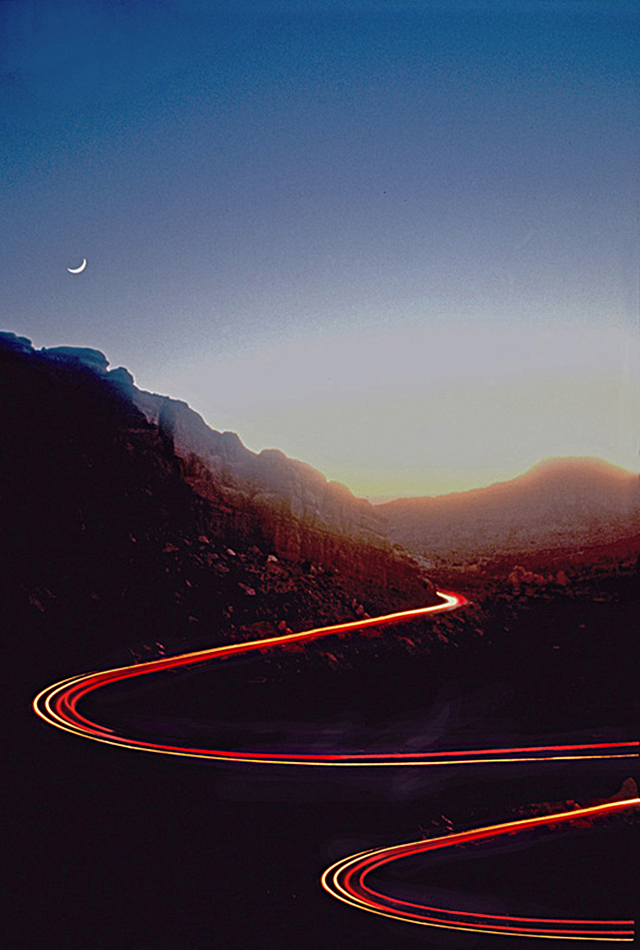
In the above photo, the Art Director wanted me to find a gas station close to the side of the road in the desert. As usual in those days Art Director’s had no idea what they were asking for, and most of the time what they wanted couldn’t be done; no matter how big the budget was.

After a location scout looking for a week came up empty-handed…there aren’t any gas stations next to the road in the desert because there weren’t any gas stations at all.  I ask the Art Director if I could have one built there in Hollywood, dismantled and put back together in the Mojave Desert which was fairly close. He went back to the client and explained that we could either keep spending $750.00 a day on a location scout or we could have complete control and build one. The client agreed on the price and we set off to shoot the ad…without the help of post-processing!

If we were to shoot this ad now, the car would have been shot in a studio and the gas station would have been a very small model. Together with the help of CGI (computer-generated imagery), they would have had a digital artist put the two together.

How much fun would that be????? BORING!!!

Here’s a couple of production photos showing the set up.

I had the gas station built after I took readings with my Sunpath software and used my Morin 2000 hand bearing compass to find where the sun would set on the horizon. I wanted to get a glow on the side of the car by placing it with the grill facing the last moments of sunset.

Visit my website at www.joebaraban.com., and check out my workshop schedule. Come shoot with me sometime.

JoeB

Food for Digital Thought: Creating a Mood.

Creating a mood

Photography is most definitely the love of my life, but right under it is fishing and then cooking. I love to look through cookbooks, especially ones with great food photography and find interesting things to serve when entertaining…which we love to do. Having said this, I’m really into recipes, and I’m always using some kind of recipe when talking with my online students with the BBSOP, and my fellow photographers that take my “Stretching Your Frame of Mind” workshops I conduct around the hopefully round planet.

I often like to create an atmosphere where the viewer is drawn into my photo whether he wants to or not. I want to induce a feeling in his psyche.

Creating a mood is a good way to not only deliver your message visually but editorially as well. What do I mean by editorially? By using a certain mood to tell a story, which incidentally doesn’t have to be controlled by light.

According to the dictionary, the definition of mood is: “A temporary state of mind or feeling”. It also means “The atmosphere or pervading tone of something, especially a work of art”. This is where photography comes it since we’re all artists, our medium is a camera instead of a paintbrush.

So how do we achieve this atmosphere, this state of mind?  Well, first you have to determine what kind of mood you’re after. Do you want your photo to ooze with a bright and happy feeling of tenderness and warmth…or a dark, melancholy and introspective mood? Do you want the viewer’s eyes to well up with sadness or the proverbial grin from ear to ear?

If this is the way you’re after, then it’s all about how you manipulate the light and color. Darker colors for somber pensive moods or rich, bold, and vibrant colors for a more cheery look. Although color is a big factor, the use of light transcends everything.

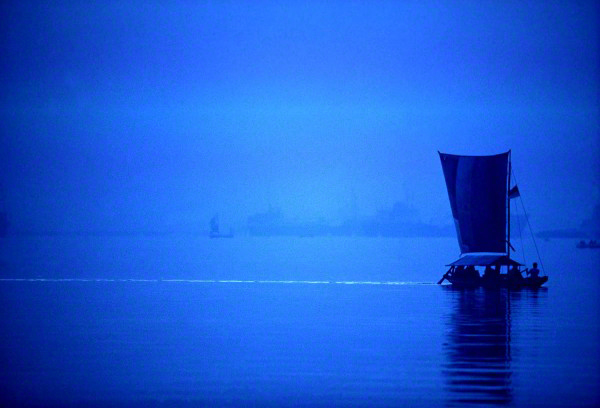
As I said, the use of light doesn’t always factor in. If you look at the above photo, light isn’t that important; it’s all about the story I was telling.

It’s hard to create a somber mood on a bright sunny day. It’s all about the emotional environment. Since I shoot early in the morning and late in the afternoon, the light is going to be softer and the shadows longer. An overcast, gloomy day is a good way to create a type of mood, as well as the placement of your subject.

Visit my website at www.joebaraban.com and check out my workshop schedule at the top of this blog. Come shoot with me some time and I’ll get you in the mood.

Food For Digital Thought: The Presumption of Humanity

Who are these people?

Since my background comes from a degree in Journalism, I’ve always liked to tell stories. Whether it be in my writing or my photography I like to entertain people, and I’ve been known to spew a few yarns here and there. I especially like to create a visual mood where I allow the viewer to take an active part in my photos.

That will certainly keep them around a little longer.

I’ve written about this in previous posts, and it’s all about the effects the Psychology of Gestalt has in taking our imagery what I refer to as “up a notch“. I want the viewer to stick around, and one way to do that is to imply the presence of people nearby, or maybe just barely out of the frame so they wonder who they are, what they look like, why they left, and when are they coming back?

In my online class with the BPSOP, and in my “Stretching Your Frame of Mind” workshop I conduct around the planet, we work on the elements of visual design and composition and how to incorporate these elements into our photography; storytelling is also an integral part in taking our pictures to a better place.

When creating these kinds of compositions, they’re like a still life, only it’s not always in the studio, or on a table in your house. Think about these types of images as icons that are a representational symbol of mankind. A time capsule for people of the future to ponder and possibly wonder what on Earth they were ever for!!!

Take a look at some examples of just what I mean:

Visit my website at www.joebaraban.com, and check out my workshop schedule. Come share some stories with me sometime.

JoeB

Food for Digital Thought: See, Think, Compose, Shoot

See, Think, Compose, shoot

If you really think about it, there are four steps one needs to go through to ‘make’ good pictures: See, Think, Compose, and Shoot; the last step is obviously the easiest…why? Because clicking the shutter is the easiest part of photography, and it doesn’t take a lot of artistry or talent to do it.

So, let’s take it step by step:

See: I’ve talked about this maybe a million times to both my online classes with the BPSOP and during the daily critiques in my “Stretching Your Frame of Mind” workshops I conduct all over the probably round planet.

When you’re walking around, whether it be street shooting or whatever else you like to shoot, don’t just look straight ahead; I witness people doing it all the time. When you do that you’re only seeing 25% of the possible photo ops. Each couple of steps look to the right, then the left, then look behind you as well. This will cover 100% of the playing field that will greatly increase your chances of going home with the ‘good stuff’. I call it 25X4=100.

Think: When you do see something interesting, try to pre-visualize the composition as far back as you can so that when you get to what you were thinking about, there won’t be any time wasted. Light and those ‘moments’ are so fleeting that you can miss either or both in the blink of an eye.

Make sure of your message, and be ‘crystal clear’ as to how you want the viewer to perceive and process the information you’ll be giving him/her in the form of a photograph. Remember that you won’t be around to explain what you were thinking so unless you’re going for an abstract, letting people decide for themselves what it is, make it a ‘quick read’.

Compose: There are three things that I tell my students to remember if nothing else they get from me when they are in my classes or workshops. The first one I call my “Fifteen Point Protection Plan”…click on the link.

The second is called my “Border Patrol”...see the link. The third is what I call the 4 corner checkoff.

If you are diligent about using these tools for stronger photos, I can guarantee you that your photography will go up to what I refer to as ‘up a notch’.

Shoot: Once you’ve clicked the shutter your not done yet. If you take just one photo, one POV, the odds are against you to go back home with a ‘wall worthy’ image. Unless you’re street shooting and that one moment in time allows you to get off one shot, shoot as many variations as you can, with slight adjustments for each one.

I rarely shoot just one idea, It’s a series of shots from different angles, different light, and shutter speed exposure combinations that segue to what I consider the last shot that I’m comfortable with.

So, my fellow photographers, there are a lot of things you need to be thinking about before you click the shutter. Remember what I said about clicking the shutter is the easiest part of picture-making…even a caveman can do it.

Visit my website at www.joebaraban.com, and check out my workshop schedule at the top of this blog. Come shoot with me sometime.

JoeB
Quick Photo Tip: Shadows as the Center of Interest

Shadows as part of the subject.

In the past year, I’ve written a couple of posts on the importance of using shadows to create drama in our imagery, and as a result, leave the viewer with a memorable experience.

In my online class with the BPSOP, and in my “Stretching Your Frame of mind” workshops I conduct around the planet, I’m always stressing the use of shadows in their photos. Shadows are our best friend, and the sooner my fellow photographers embrace them the sooner their photos will go what I always refer to as “up a notch”. I’ll occasionally be writing some additional posts about the use of different kinds of shadows, starting with this one.

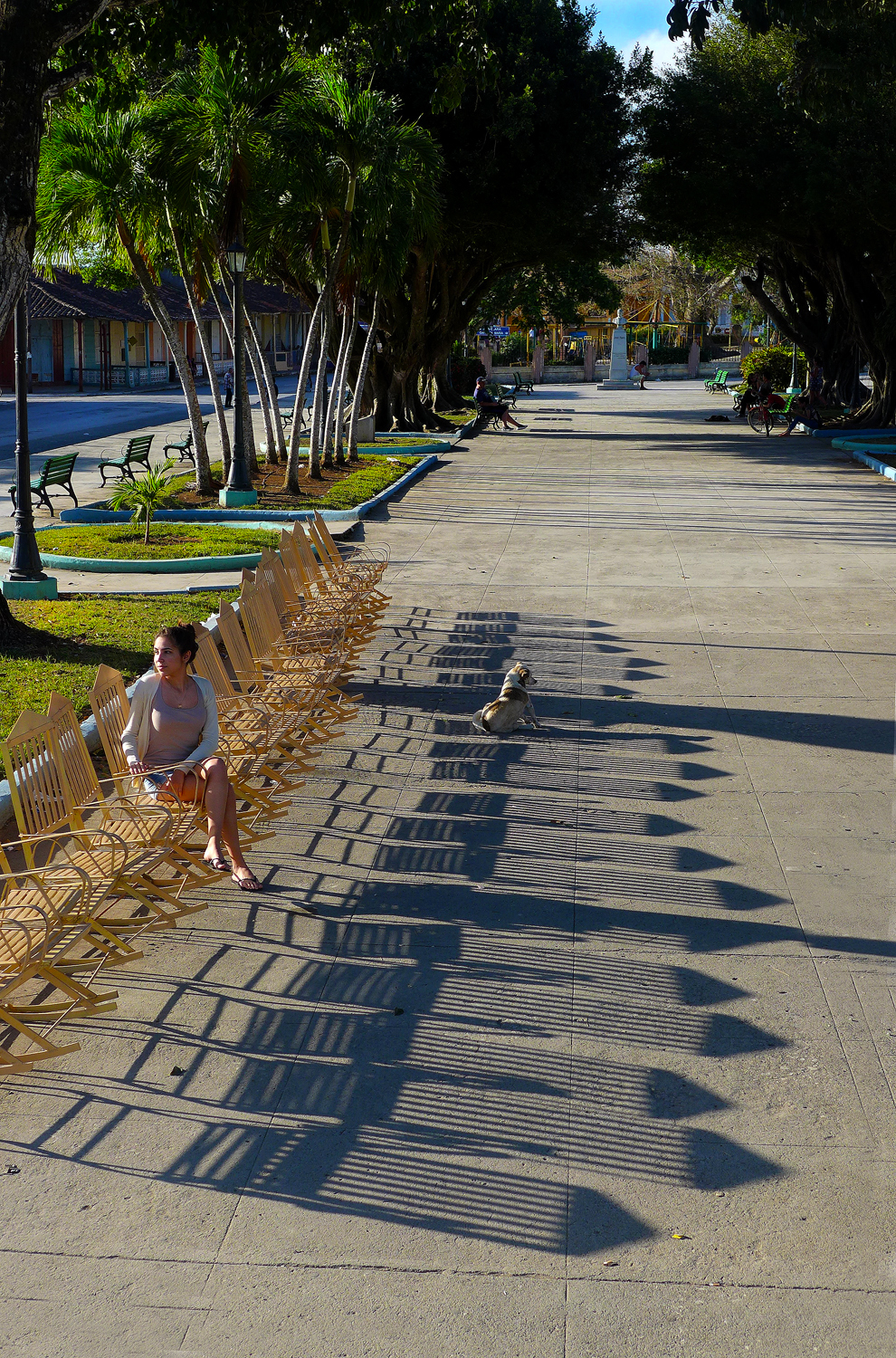
This first post has to do with the type of shadow that’s the center of interest and it can often tell a story on its own. In the above photo, the shadows are from a group of photographers that were taking one of my workshops. We were down next to the Charles River at sunset and there were several young kids that were climbing up the wall of rocks. As I walked up to them, I immediately noticed their shadows on the ground and the fact that they led my eye to the kid climbing on the wall.

To me, the story is obvious as it clearly shows the shadows as the center of interest, and they also become directional lines leading the viewer to the kid.

Visit my website at www.joebaraban.com and check my workshop schedule at the top of this blog. Come shoots some shadows with me sometime.

JoeB

My Favorite Quotes: Henri Cartier-Bresson

Real, or artificially contrived?

Cartier-Bresson is one of my most favorite photographers. I think I’ve talked about and quoted him the most in my online classes with the BPSOP and in my “Stretching Your Frame of Mind” workshops I conduct all over the place. I guess one of the reasons is that he has been quoted so often and his quotes can be found in so many places.

For me, it’s because so much of what he said, and the way he composed his images hit home more than most other photographers I’ve studied throughout my career.

I’ve said on many occasions that I don’t often photograph what I see because I don’t often see what I want (being somewhat impatient by nature), so I photograph what I’d like to see. Which takes me to the reason for writing this post.

Cartier-Bresson once said, ” The greatest thing to fear is the artificially contrived”.

When I’m talking to a student, I encourage them to move something out of the frame if they don’t like it and can’t compose differently. Conversely, I also say to move something into the frame if it will add visual input and a layer of interest.

It’s important to remember that we, as photographers, are artists who have chosen the camera instead of a paintbrush.

The difference between a painter with a blank canvas on an easel and a photographer with a camera on a tripod is in the fact that as a painter you fill in the canvas until you finish with a ‘work of art’. Photography is the art of subtraction whereas you remove objects until you achieve a ‘work of art’.

Here’s where the quote comes in.  If you do decide to add a prop, or some element, or even a person, make sure you believe it. Make sure the viewer will believe it instead of thinking that you put it there yourself.

When I’m composing (painting), right before I click the shutter, I always ask myself do I believe it. Case in point, I recently had a student take a closeup of a hubcap and decided to put a flower into of the holes. Well, it just would never happen that way and looked completely contrived. A similar occurrence was a rose on a manhole cover…what is it with flowers?????

There’s another way a photo can and usually will appear contrived, is when photographers shoot through something. Again, I encourage that because “framing a subject with a frame” is one of the ways to create Visual Tension.

Having said that, if you intentionally put your subject in let’s say between two spokes on a bicycle, or two trees close to one another, or posts on a pier, etc., there’s a good chance that it’s going to look weird…especially if the POV is too difficult for the viewer to have seen for himself.

Have fun out there and always try to “color outside the lines”, but be sure that people believe it.

BTW, the photo at the top was shot just the way I saw it….maybe?

Visit my website at www.joebaraban, and check out my workshop schedule at the top of this blog. Come shoot with me sometime.

JoeB

Food For Digital Thought: The Camera is your Brush

The camera is my paintbrush

Every once in a while I like to introduce myself to those that just started reading my blog. Whether you accidentally discovered it online, read about it somewhere, or it was suggested reading from a friend, My name is Joe Baraban and I ‘ve been a professional photographer for fifty-three years. Before that, I studied painting and design and especially loved Art History.

For a large part of that time, I was an advertising, corporate, and editorial photographer based in Houston, Texas. Now I teach online classes with the BPSOP, and I conduct “Stretching Your Frame of Mind” workshops around out perfectly round planet.

I show my fellow photographers how to incorporate the elements of visual design into their imagery, as well as several elements of composition. I also show people how to use Light as well as color to create strong, memorable photographs.

For me, a camera on a tripod is just like a blank canvass on an easel. If you ever studied the old masters, you can easily see how they used the light in their paintings. For example Johannes Vermeer and Rembrandt.

They painted with Light back then, and today’s photographers are still artists, the camera is now our paintbrush. The poetic way Vermeer used light for his subjects using window light, is akin to the way we love a North Light Studio or at least a window that faces North.

One of the things I stress, and actually have as a lesson in my part II online class is the fact that shadows are your best friend. This also goes way back to the Old Masters.

There was a technique called Chiaroscuro, (from Italian chiaro, “light,” and scuro, “dark”), that was used in paintings to represent light and shadow as they defined three-dimensional objects.

In today’s digital world, I use this technique to illustrate one of the basic elements of Visual Design…Form. Form refers to the three-dimensional qualities of an object.

Getting back to Vermeer, in Amsterdam it was written that Vermeer would have met Rembrandt, whose forceful chiaroscuro effects complemented the intensity of his paintings.  To this day Rembrandt Lighting is very dramatic and one of the most iconic setups. This way to light is known for the triangular spot of light under the subject’s eye on the opposite of the face that the light is coming from.

As you can see, Light is probably the most important part of Photography, and to me, it should always be considered first. Before I bring my camera up to my eye, I look to see where the light is coming from, and how can I best use it to create my “works of art”.

Visit my website at www.joebaraban.com, and check out mt workshop schedule at the top of this blog. Come shoot with me sometime.

JoeB

Food For Digital Thought: When Preparation Meets Opportunity

When preparation meets opportunity

Although I was never a Boy Scout, I’ve always been a firm believer in being prepared. When I was actively ( until the last dinosaur disappeared) shooting advertising campaigns, corporate annual reports, brochures, or magazine assignments I made sure I had everything with me; I called it my Bag of Solutions.

Besides scouting every photo ahead of time, or at least most of the time and certainly whenever possible, I knew that during the actual shoot some extracurricular event, or in other words outside the normal routine, could possibly come up. When this opportunity crossed my path, I wanted to be prepared for it…on many levels.

This would usually be some small window when time was of the essence, whether it be a sudden change in the light, something new either entering or leaving the frame, or even needed to be added at the last minute…when I had the wrong piece of equipment on or not on and missed it by seconds, that really sucked!!!

When I’m talking to a student in my online classes with the BPSOP, I will often be asked what they should be taking when they go out to shoot for one of the lessons they’re assigned each of the four weeks. For them it’s easy, I tell then to put as much gear in the trunk of their car as they can. That way they will have a fighting chance to change something when the time is right.

When I conducting my “Stretching Your Frame of Mind” workshops around the planet, I’m asked the day before what lens should they be taking. Being prepared is problematic at that point because so much of the time we’re walking around.

And so my fellow photographers that are reading this blog, when in doubt take as much as you can. To win the argument you have with yourselves, I would, as my go-to lens, start out with a medium zoom that might address a lot of the things that will be coming your way. I keep a 17-40mm lens on most of the time, and I have quick access to equipment when the time is right.

Keep your equipment clean, make sure you have a fresh card in your camera (never delete images off your camera, it could corrupt the card), and take an extra one just in case. for those of you that have a second body, be sure to bring it. Putting a tripod in your trunk couldn’t hurt in case you wind up shooting during the Blue Hour.

As Eddie Adams once said, When you get lucky, be ready.

Visit my website as www.joebaraban.com, and check out my workshop schedule at the top of this blog. Come shoot with me sometime.

JoeB
My Favorite Quotes: When you get lucky, be ready

I was lucky and I was ready.

Over the years, I’ve managed to mentally acquire several quotes made by famous people in the arts that apply to my approach in teaching with the BPSOP, an online school I’ve been with several years and my “Stretching Your Frame of Mind” workshops I conduct around the planet.

These are quotes that really hit home for me, and as a result, have made me a better photographer for the past now closing in on fifty-four years, and a better teacher for the last thirty-three of those years. This is one of my favorite quotes and the first of many posts in this category that will cause you to “stop, listen, and learn”. The first quote I want to talk about was said by Eddie Adams, a Pulitzer Prize-winning photographer. He once said, “When you get lucky, be ready”.

For years, that has been one of my many Mantras, and it couldn’t be truer. Over those same years, I’ve had dozens of my fellow photographers ask me how I can capture some of my photos that are exposed perfectly, especially since I take most of my pictures in the camera with little or no post-processing. I tell them that when I’m just walking down the street with a camera over my shoulder I always take a few generic photos just to get the exposure down. I’ll take several different exposures, usually based on a fast shutter speed, and pick the right combination of shadows and highlights. This is when the action is happening to fast to bracket. Now I’m ready and waiting to get lucky.

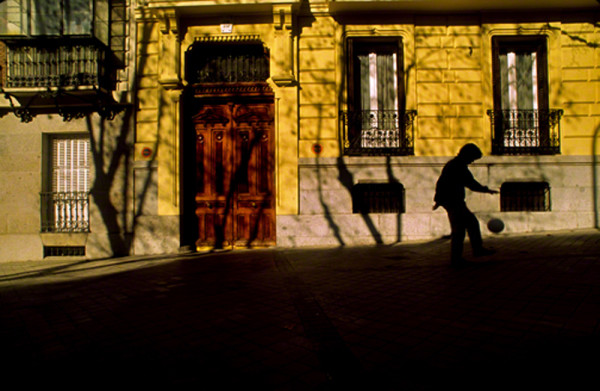
The above photo was taken in the Guggenheim Museum in New York. I was coming back down after seeing the Kandinsky exhibit ( my very favorite abstract artist) when I stopped to look at this work of art. While I was wondering what the artist’s message was, this man walked up and started reading about the painting.

I always have my little Lumix DMC-LX-7 with me and since photos are frowned upon above the lobby I had it in my pocket with my finger on the trigger (Texas talk) just in case something was to happen, and for a moment it did.

Since this guy couldn’t figure out what the artist was saying, he read for a couple of seconds and was gone…but not before I got off one shot.

Although there are many interpretations of this quote that apply to my style of shooting, this one sticks out the most as it seems to happen all the time to me.

Visit my website at www.joebaraban.com, and check out my workshop schedule at the top of this post. Come get lucky with me sometime.

JoeB

Quick Photo Tip: Take a Step Back

One step back

Besides teaching an online class with the BPSOP, and conducting my “Stretching Your Frame of Mind” workshops I conduct around the planet, I also do a six-month mentoring program where I work one-on-one with photographers.

Recently, I have the same issue come a couple of times which has led me to write a post on it. It’s when I’m talking about one of their photos, and there’s something that has been cut off on one of the edges of the frame.

There are several reasons why this happens. Either they’re in too much of a hurry to get to the next shot, or lunch, or that glass of wine, etc., they’re so focused on the subject that they miss everything else going on.

At best, when there is a subject worth shooting, they’re so focused on placing the subject in the best light and the best positioning in the frame, that they forget about the rest of the environment. That is, the balance between the Negative or Positive Space that’s surrounding the subject/main center of interest, or the contrast between the light and dark areas, or whether the colors complement one another…and so on.

I see it so often that if I had a dollar for every time I talk about it, I would be writing this post next to a pool at some villa I’ve rented for the year…with a blue and frothy drink (with an umbrella in it) next to me.

There’s a very easy and quick solution (although I dare tell the world as to perhaps lose my villa), and that is to just take a step back and make an adjustment. Sometimes it’s just one step that will do the trick, but you have to be paying attention.

In the above photo, I had a 17mm lens on and it just took one step back to include all the wonderful black and white tiled floor that I had cut off in my first shot.

Visit my website at www.joebaraban.com, and check out my workshop schedule at the top of this blog. Come shoot with me sometime.

JoeB

Quick Photo Tip: Keep Your Equipment Out of Your Composition.

Can you see the photo stand?

I’ve seen it happen all the time, and once upon a time long, long ago I was even guilty of it; as in the above photo. It’s why I tell my online class with the BPSOP and in my “Stretching Your Frame of Mind” to check your frame for any of your equipment right before you click the shutter.

Sometimes we get so wrapped up in composing our photos that we forget to take out a camera bag, a photo stand, reflector, or even the tripod that might be lurking somewhere in plain sight. It may be hard to believe, but for those of you that have never been guilty of this I can assure you that it’s not as hard to do as one might think.

Going hand in hand with this is the fact that if you’re not paying attention to said equipment, it can disappear in less time it takes to blink an eye.  I’ve seen so many of my students walk away from their camera bags to look at something from a different point of view, start shooting and forget to go back to it. Strange as it may sound, I’ve had students discover their camera bag some distance away when looking at the LED display of photos they just took with a telephoto lens.

YIKES!!!

Want a good piece of advice? When you’re shooting on a tripod keep your bag on the ground right in the middle of the tripod. That way it keeps it out of your photo and keeps it from becoming the proud possession of someone who has just stolen it. Try a photo backpack or a vest. If you’re walking around handholding your camera, keep your gear between your legs; unless it’s in a bag you have over your shoulder.

I tell my fellow photographers to buy the best equipment they can since it’s a lifetime investment. If you buy the best you can in the beginning, you’ll only have to cry once. This same philosophy holds true with having to replace a piece of equipment that vanished while you weren’t watching…that is by not having to cry when you have to buy it again.

visit my website at www.joebaraban.com, and check out my workshop schedule at the top of this blog. Come shoot with me sometime.

JoeB