Personal Pearls Of Wisdom: Make It A Quick Read
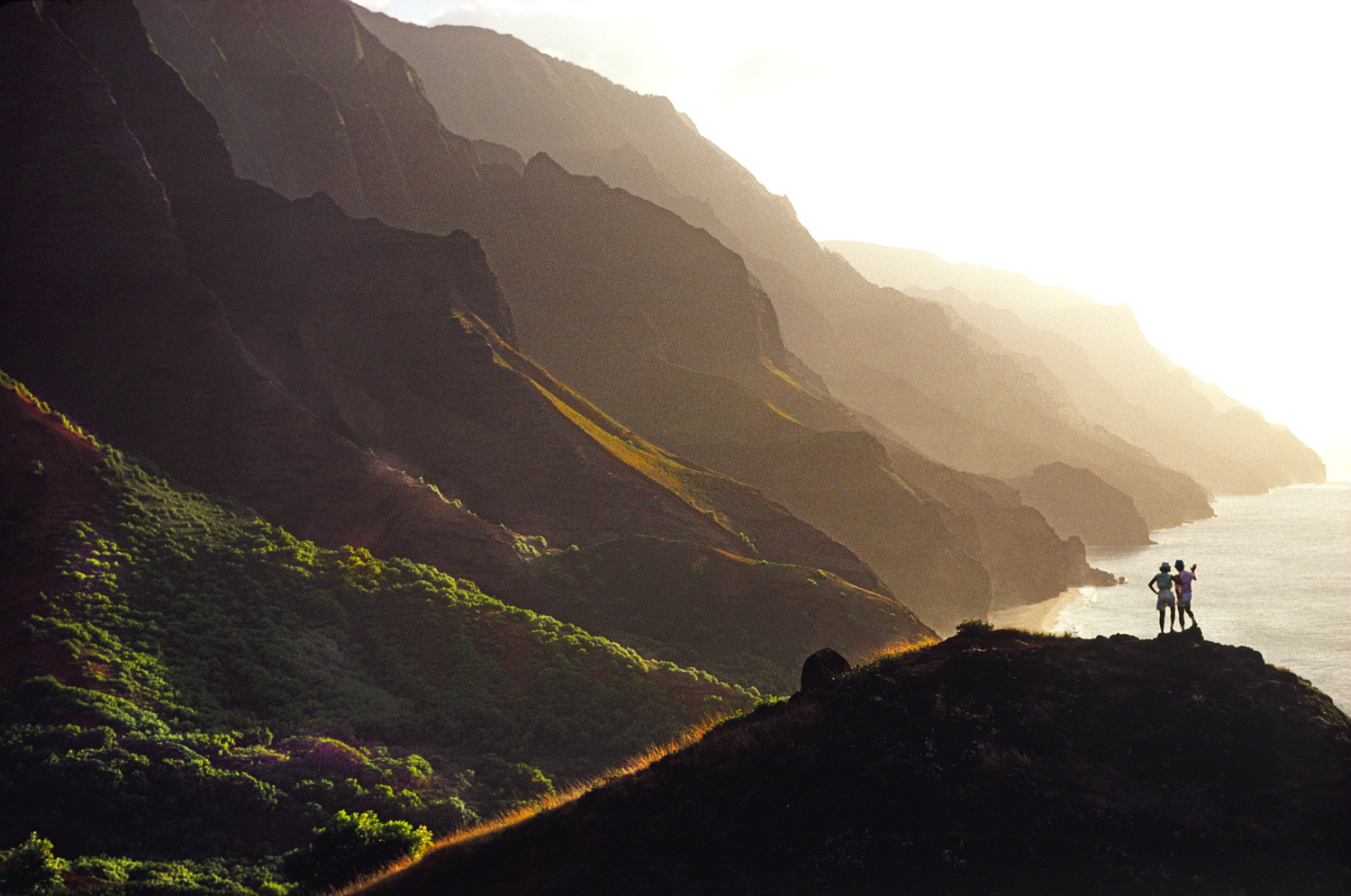
A quick read.
A quick read.

I’ve been conducting workshops since the early eighties, and over the years I’ve been known to occasionally spout out something fairly intelligent. These quips have morphed into what I now affectionately refer to as my “Personal Pearls of Wisdom“. One of my favorites that I’m always using in my online class with the BPSOP, and in my “Stretching Your Frame of Mind” workshops I conduct around the planet is “make it a quick read”.

If there are those out there that shoot primarily for themselves, then you need not worry about whether or not the viewer gets what you’re trying to say-since no one will ever look at your photos. If you like shooting for the enjoyment of others, then you need to make sure that the message you’re trying to get across, is indeed getting across. In the first of my series on this Pearl of Wisdom, I want to address the importance of the use of negative space to help make your photos a quick read.

Everything that’s not positive space (areas that have mass) is considered negative space, but the area that I’m referring to is that area of negative space that borders the positive space, defines it and gives it meaning. What do I mean by that?  I mean that the area immediately surrounding the two people in the above photo is the negative space that defines the arms, legs, and bodies. Without that very important area, you wouldn’t be able to tell where one person ends and the other begins. Therefore, the negative space has defined the positive space (the two people} and has given them meaning-it has made the two people…two distinct people.

Remember that when you’re shooting, whether you’re going after negative space to define the positive space or simply trying to get your thought process across to the viewer, you won’t be around to explain yourself. Unless you’re going for an abstraction in which you want different people to get different messages, make it a quick read. Just imagine yourself in the mind of the viewer so you can see what he does.

Btw, the negative space is no accident. I have a walki-talki on the belt of the man on the right telling them what to do so I can make the two people a “quick read”. They’re about forty dollars for the pair, a handy addition to your bag of solutions.

Once again, the next time you’re out shooting, be sure to notice and use to your benefit the area that borders all the positive space in your composition.

Visit my website at www.joebaraban.com, and check out my workshop schedule at the top of this blog. Come shoot with me sometime.

JoeB
Pearls of Wisdom: What You’d Like to See, Not What You See

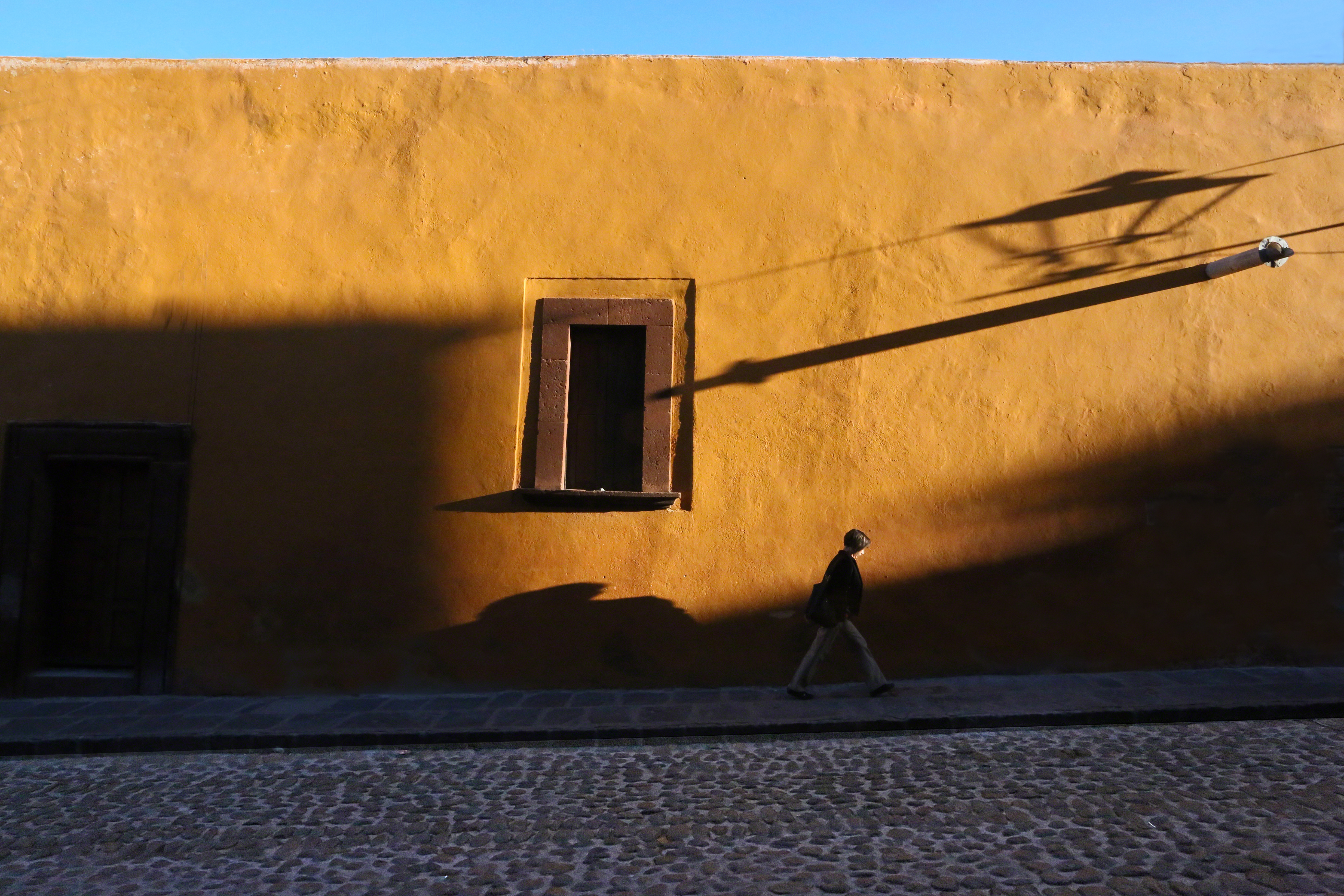
What I saw, or what I wanted to see?

One of the most important Pearls of Wisdom I share with my online class with the BPSOP, and with my “Stretching Your Frame Of Mind” workshops I conduct around the planet is, “I don’t photograph what I see, I photograph what I’d like to see”.

Don’t get me wrong, I do photograph what I see all the time. I’m perfectly happy to walk around using my Artist Palette which has all the basic elements of visual design on it. I’m able to use the right side of my brain (the creative side) to see what’s all around me.

However, I don’t know about you but for me, it’s not often that I can just come upon a location, situation, or subject where all I have to do is bring the camera up to my eye and click the shutter; and walk away with a great photo.

So not being a patient person, I’m just not going to wait for that to happen. I’m going to make it happen!!! I’m going to take the old proverbial bull by the horns.

I graduated college with a BA in Journalism and a minor in art, and starting back in middle school through high school and ending in my senior year I was very involved in painting and design. In virtually all those years the medium was painting, pencil drawing, watercolor, pastels,  and printmaking; I even stretched my own canvas.

My tools were: brushes, colored pencils, pastel sticks, and an occasional printing press.  I would start out with a blank piece of paper on a drawing table or a canvas on an easel. I added subject matter and a background of some sort until I thought I had a finished “work of art”.

Fifty-three years ago I switched the medium to a camera (it was instant gratification), and I still consider myself a painter/artist. Now, instead of a canvas on an easel, I have a camera on a tripod. I’m still painting, and that’s where the “photographing what I’d like to see” comes in.

Now, I know that there are photographers out there that would never alter anything in a scene/location they come upon because they call themselves purists; they always photograph what they see.

Well, that’s all well and good, but what happens if they never come across anything they like? Do they just settle for whatever is there? To me, reality is not like Willie Wonka’s Chocolate Factory where everything you see looks great and good enough to eat…not so far it isn’t.

Since I usually don’t see what I want, for me photography is about making pictures not taking them; if I were ever to have a creed/motto I would print on a t-shirt, that would be it.

I add, subtract, or just move things around within my frame for a variety of reasons, and whatever I do comes from using the elements of design that appear on my ‘Artist Palette’.

I’m also cognizant of the six principles of Gestalt and how to use them to create stronger more memorable photographs. I’ve written about them in an article for Adorama (Here’s the link: http://www.adorama.com/alc/0013706/article/6-Principles-of-Gestalt-Psychology-That-Can-Improve-Your-Photography ).

For example, I use negative space to define the positive space and I usually strive for a balance between them. Sometimes that means moving an object to the right or left. I’ll get up close and personal so I can anchor the subject in the foreground using Perspective to create layers of interest.

I’ll generate Visual Tension by placing or moving the subject close to the edge of the frame, or any of the other methods to create Tension that I teach. I’ll wet things down to create reflections. Line, Shape, Texture, Pattern, and Form are always at the back of my mind. I’m also a big believer in creating directional lines or Vanishing Points to lead the viewer through my frame.

Sometimes I travel with colorful props in the event I need something to communicate an idea or to provide more visual interest to my photo; or I’ll just move something colorful into my frame. Since I’m always saying that “Light is everything”, I’ll move things around alter the direction of the existing light to create a mood or add depth.

I know that a lot of photographers either don’t think about moving something (after asking permission, if need be), or they might be afraid to, or perhaps there’s a touch of the “lazy” in them.

These are just a few of the things I’m constantly thinking about when I start composing.

All I can say is to give it a try. Imagine your self a painter and you’re putting the finishing touches on your masterpiece. If it’s a matter of  getting over the hump then just do it!!! You’ll be sooooo glad you did; I promise you won’t go to hell.

Here are a few more completely random examples of making pictures. In each case, I either saw it the way it was or the way I wanted it to be. You decide!!

Visit my website at www.joebaraban.com, and watch for my workshop schedule at the top of this blog. Come make some pictures with me sometime.

JoeB

Personal Pearls of Wisdom: Color Outside the Lines.

Coloring outside the lines

This is a category that I enjoy writing in. Although most of my pearls of wisdom are created by yours truly, there are some that I have read and remembered over the years. To be perfectly honest, I’m not sure if somewhere in my teaching past starting in 1983, I didn’t come up with a lot of them myself…not that it really matters!

🙂

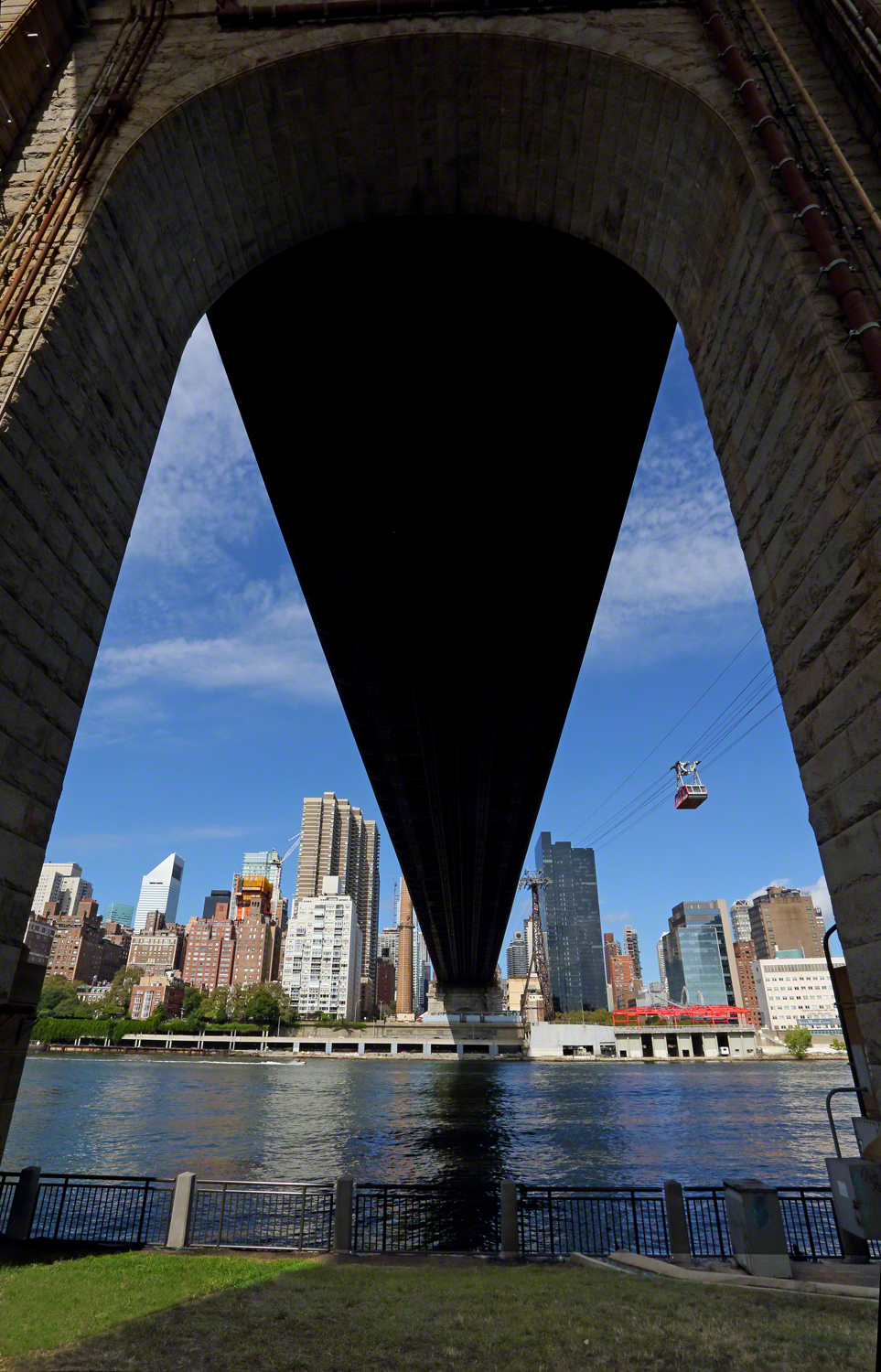
What matters here is the meaning of the phrase. I teach an online class with the BPSOP, and I also conduct my “Stretching Your Frame of Mind” workshops all over the world. I recently did a workshop in New York shooting in all five boroughs. We had taken the tram from Manhattan over to Roosevelt Island to shoot and as soon as we got off we went under the Roosevelt Bridge that connects the two boroughs.

Part of the class that was in the vicinity began shooting the skyline as the tram was coming from Manhattan. As I watched them I immediately saw that they were taking the predictable shot. The shot that I would refer to them as coloring inside the lines.

What I mean is that a couple of them walked to the right of the bridge, avoiding it, and started shooting the skyline. One walked to the left of the bridge and two more walked under the bridge to the edge and started shooting.

I moved to a position where I was directly under the bridge and waited for the next tram to come over.

My point here is to never take the road well-traveled. Always look for ways to color outside the lines and take the path less traveled. Look for different points of view, aka getting on your stomach. put on a lens you would never think of, etc..etc.

Visit my new website at www.joebaraban.com, and check out my upcoming workshops at the top of this blog. Come shoot with me sometime.

JoeB

Personal Pearls Of Wisdom: In A Perfect World, What If?

What if?
What if?

One of my favorite Pearls I’m always asking my online students with the BPSOP, and my “Stretching Your Frame of Mind” workshops is, “In a perfect world, what if?”.

What I mean is that if they could go back and re-take a photo they submitted and they were able to do anything different that they wanted, what would they do. If time and money were not an issue, what would they add or take away from their composition?

I’ll usually ask a student this question if I see something that might be distracting, perhaps an imbalance between the Negative and Positive space, or something they didn’t notice when they were composing by not using their “Fifteen Point Protection Plan”I gave them at the beginning of the online class or workshop.

I might mention it even if the photo doesn’t have any issues at all and was a well done image. The reason is simple, it’s an exercise of the mind. There’s several analogies I can offer up to you to explain just what I mean. Do you stretch before jogging? Do you hit a bucket of golf balls at the range before actually playing eighteen holes? What about ‘batting practice’?

These are all things people do before beginning whatever it is that they do to loosen up, getting the tempo in their swing at the right pace, or get their eye-hand coordination finely tuned before that ninety miles per hour fastball comes hurtling towards them.

The same thing can apply to photography. By imagining “what if”, you’re exercising your imagination. Perhaps it’s adding some red tail lights in a street scene at dusk, or a couple at the end of the pier, or someone doing something to add an editorial (storytelling) element. That extra something to move their photo “up a notch”.

Whether you could actually add or change something doesn’t really matter. The point is to practice using your imagination every chance you get. It’s going to keep your thought process sharpened just in case you might be able to make it happen sometime.

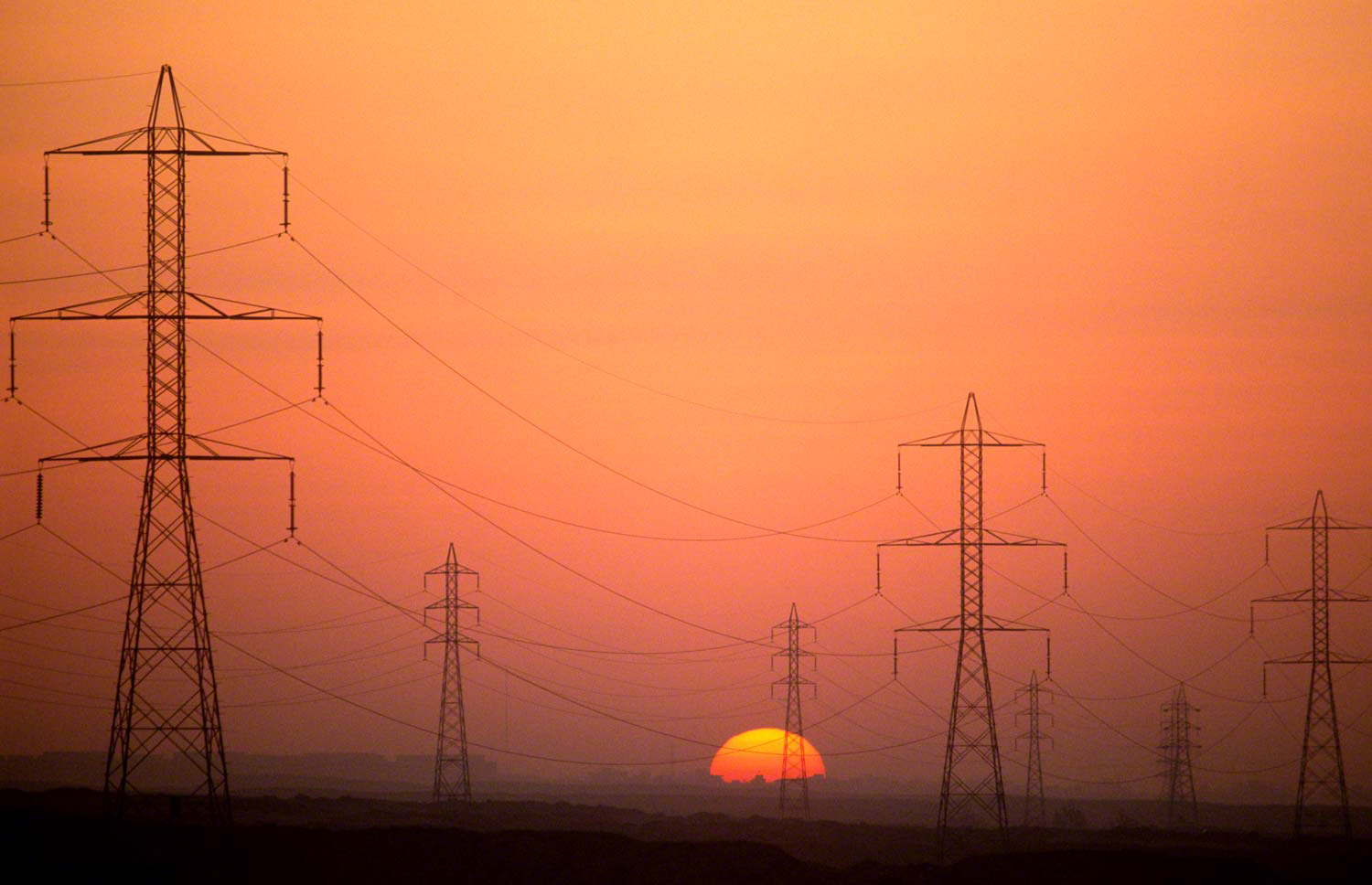
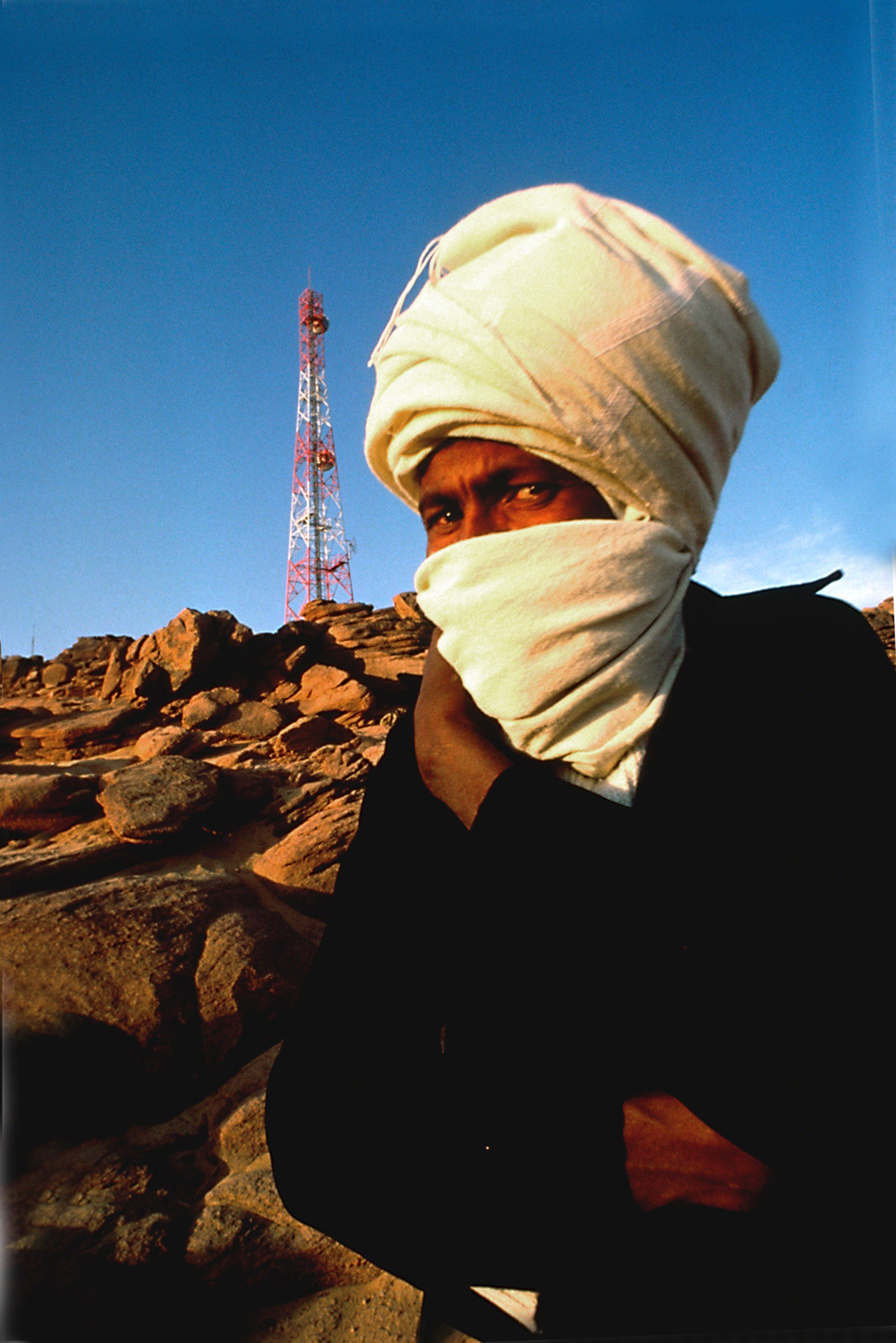
In the photo shown above, I was shooting for Apache Oil and Gas in Egypt, and was coming back from the Suez Canal when I saw this scene. I jumped out of the car and quickly set up my camera and tripod. As I was shooting I was also thinking (as I have done for over forty years) “what if”.

In that instance, I thought “what if” there was a telephone truck facing the camera with its headlights on parked right next to the tower in the foreground. There were two men on a Cherry Picker ( a device to lift people into the air) working on the transformer and silhouetted against the sky and the setting sun.

Now that would have been a picture that would be remembered!!!

Visit my new website at: www.joebaraban.com, and check out my new workshop schedule at the top of this blog. Come shoot with me sometime.

JoeB
Pearls of Wisdom: Idealism or Realism, that is the Question

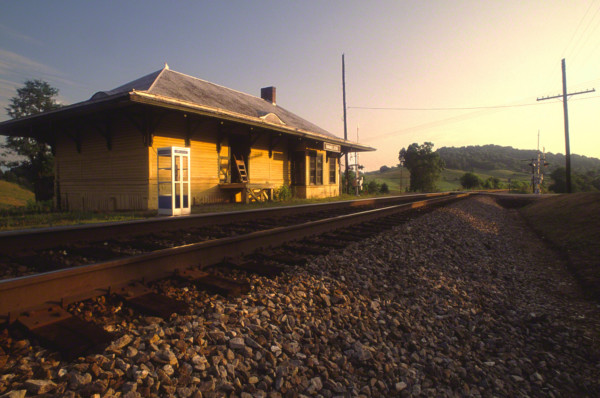
I moved them into the early morning light.

One of my favorite Pearls of Wisdom that I often say to my online class with the BPSOP and in my “Stretching Your Frame of Mind Workshops” I conduct around the planet, is “in a perfect world, what if”. I’ll bring this up when I’m discussing one of my students photos and ask them if they could go back and re-take the photo, and could add, change, or do anything they wanted, what would they do.

I do this then explain that whether or not they could change anything isn’t the issue. It’s just an exercise to sharpen their mind and have it always thinking about improving their photos so that one day when they could actually add, change, or do anything, they will be ready for it.

The Realism comes from the photo as they first saw it. If I had a quarter for every time a fellow photographer or student told me that they never thought about adding, changing, or doing anything they wanted, to create a stronger image, I would be writing this post on my island with a blue and frothy cocktail resting comfortably on my stomach…with an umbrella perilously hanging from one side. They just figured that if it was the way it was, then that’s the way they should shoot it.

Now, I know that there are photographers out there that believe you should never alter anything before you click the shutter. If that was the way it was before they got there, then come hell or high water that’s the way they were going to photograph it. Well, that’s all well and good, and I hope all their photographic dreams and endeavors comes to fruition. My problem is that most of the time, I never like things the way they are.

The Idealism part of this post is when that same fellow photographer or student tells me things he would have liked to have added or changed. That’s the ideal world, not the real world talking, and that’s the world I live in…photographically speaking that is!!!

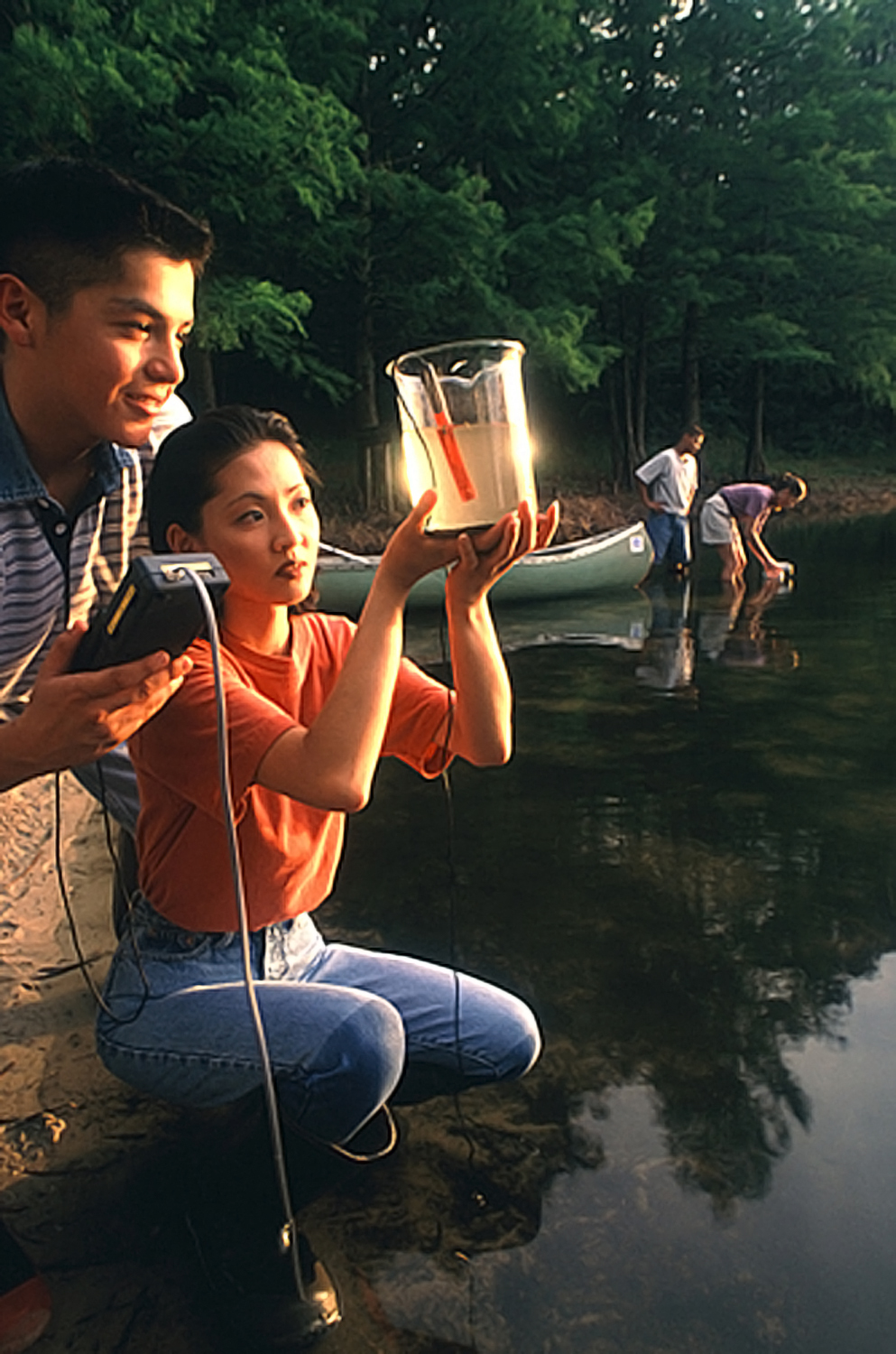
In the above photo, I was shooting an annual report for a Chemical company. Although this kind of activity was actually going on (Realism), I didn’t like where they were and how they were doing what they were doing. So, this photo was a part of my imagination (Idealism). In other words, I put all the elements together and then staged it.

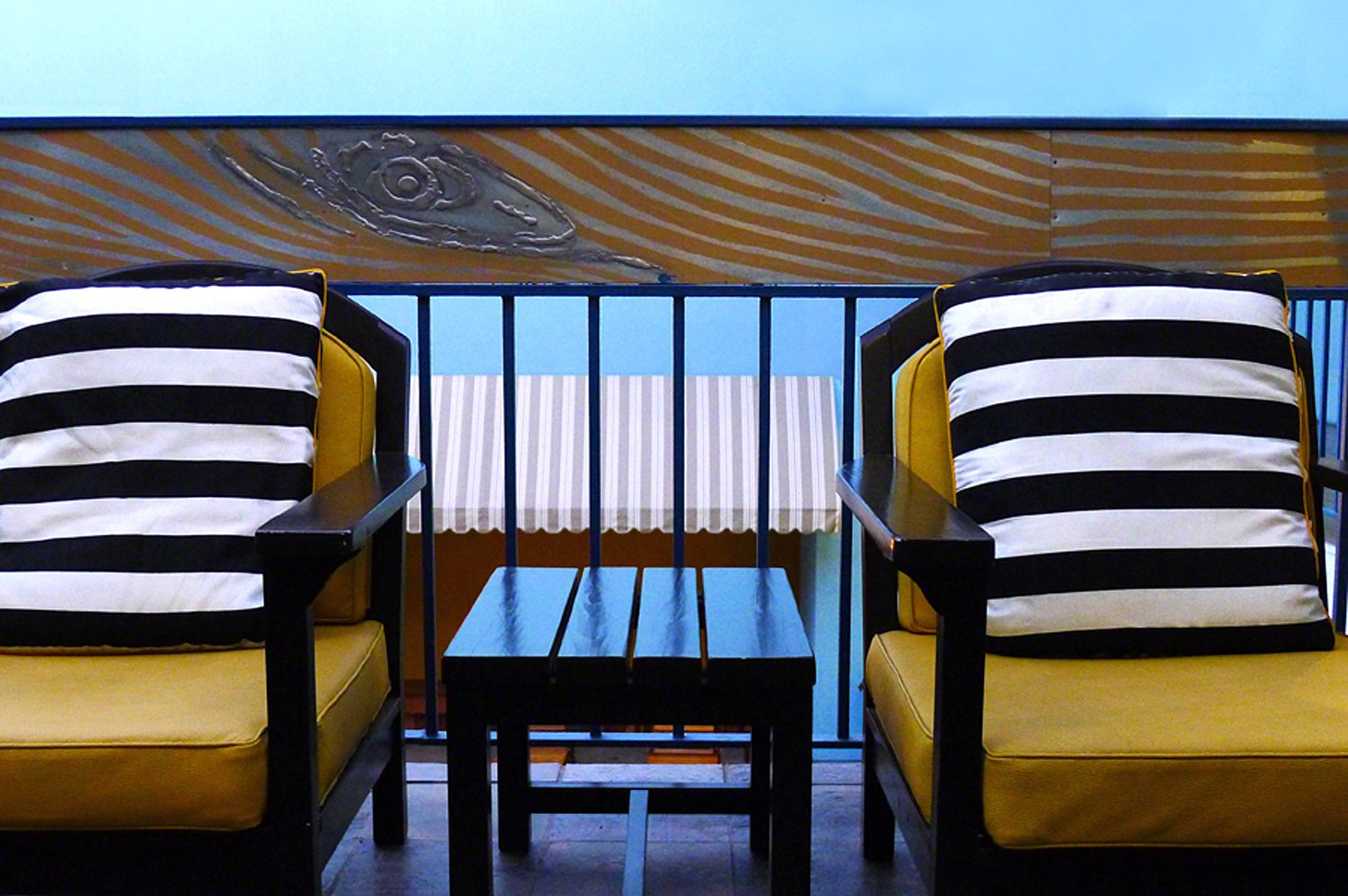
The striped pillows were on other chairs.

If you want to “take pictures”, then by all means live in the real world where Realism is the common denominator. On the other hand, if you want to “make pictures”, then it’s the ideal world for you. Don’t look at what’s there, look at what you’d like to be there.

As for me, my mother always said I was a dreamer!!!

Visit my website at: www.joebaraban.com and check out my workshop schedule at the top of this blog. Come and dream with me sometime.

JoeB

Personal Pearls of Wisdom: It’s not always what it seems

  One of the many ways to create visual interest and tension is to get the viewer to  believe what he’s seeing is actually what he thinks he’s seeing (make any sense?), and one of the ways to do that is to trick the camera (which has one eye…the lens) into creating a sense of perspective, or depth, or height (that requires two eyes), or all three at the same time. Sound complicated? Well, in actuality, it’s fairly easy and straightforward.

It starts with an idea you have that’s implanted into the viewer’s imagination. It needs to be something he’s familiar with whether it be from watching TV, reading a book, or perhaps something that he’s actually experienced in the past.

Then you need just one thing…a wide angle lens, a great sunrise, and the perfect environment.

An entire lesson is what my online class with the BPSOP works on, and when the occasion arises in my “Stretching Your Frame of Mind” workshops I conduct around the planet, I can physically show my fellow photographers exactly what I mean and how to achieve it…in the camera.

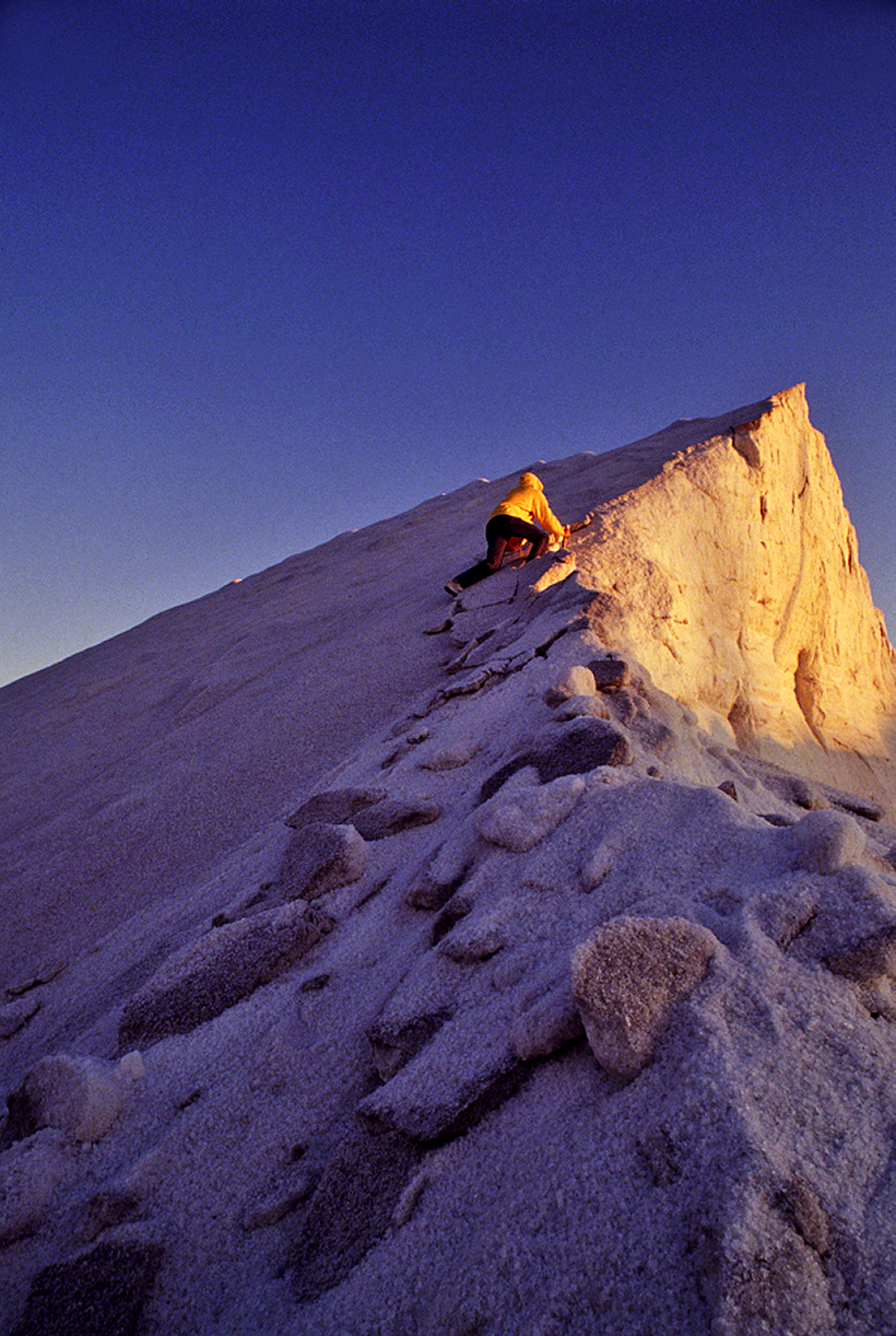
The above photo was taken during one of my Workshops. I was looking for just the right location to show the class how to use a wide angle lens to create the feeling of height, visual interest and tension. It was about thirty minutes before the sun came up and I desperately wanted to find something that had potential. It’s important here to tell you that the workshop was during the last week of July and the first week in August, and although it was chilly that morning the high that day was going to be close to 85 degrees.

Having said that, We passed by a huge lot filled with rock salt used to spread on the highways during the upcoming winter months; an idea immediately began forming in my mind. I had my assistant put on a yellow hooded sweatshirt I just happen to have in my assortment of props and wardrobe I always carry around…just for this moment.

I put on my “go to” lens which was my 20-35m, and I set the focal length at 20mm and got down close to the ground. I positioned the lens right behind a big chunk of salt so I could “anchor it in the foreground, creating layers of interest” and depth by getting “up close and personal” to it; while providing texture to the salt. I waited for the sun to just come up enough to light the top of the pile, keeping everything else in shadow.

It worked like a charm, creating the feeling that the man was considerably higher that the fifteen feet he actually was, and the rock salt created the snow, and the look/idea I was hoping for.

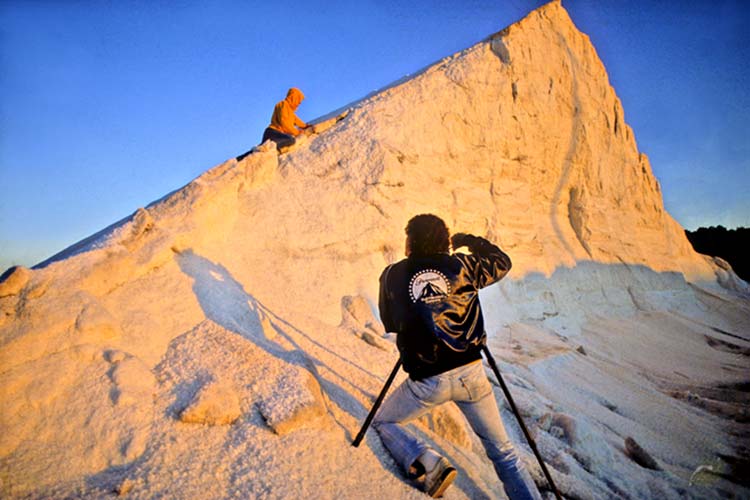
The production shot was taken after my shot and from a different position; when the sun was up much higher and the sky much bluer. It’s merely to show you how high my assistant actually was, and how I could trick the camera…and the viewer.

Taken 30 minutes after sunrise.

Visit my brand new website at: www.joebaraban.com, and check out my workshop schedule at the top of this blog. I still have two spots open for my upcoming workshop in New York beginning September 17th. Come shoot the five boriughs with me.


Personal Pearl of Wisdom: Ok, So What’s Your Point?

Did I get my point across?

I get a lot of my ideas for these posts from either looking at photographs in various places, reading something that has a direct corelation to photography, or from student’s submissions in my BPSOP online classes. It’s not just about the submissions, but I’m also curious as what their thought process was right before they clicked the shutter….otherwise I can’t be of much help.

Btw, I also get ideas from my “Stretching Your Frame of Mind” workshops I conduct all over the place. Since these photographers for the most part, have taken my online classes, they don’t seem to have the same thinking as the ones that haven’t…as of yet!

I show people how to see differently by using the right side of their brain when searching for that illusive ‘keeper’…aka, wall hanger. By incorporating the elements of visual design they can begin the process of “seeing past first impressions”.

Having said that, in the first week or so they will invariably see things that aren’t really there. They’re there because they want them to be there; after all it’s a huge learning curve and people are excited about it.

This brings me to the consideration of this post.

Since my fellow photographers won’t always be around to explain their thought process to the viewer, it will need to be what I refer to as a “quick read”. That is unless they going for an abstract in which case I, for one, would want everyone to see something different when looking at one of my images.

I have been to countless photography openings and have seen all the pretty, arty, people milling around drinking cheap chardonnay out of plastic glasses. I have seen these same people walk up to a photo, look at it for a moment then shrug their shoulders; while making an un-flattering face to indicate that they have no idea what the photo is about…then walk away.

When composing your ‘work of art’ be objective and not be too involved with the main subject. Doing so just might make you forget about what I refer to as…”the whole enchilada”.

It’s ok to have more than one center of interest providing they don’t take away from the main subject; your thought process in creating composition can become confusing.

One way to make sure you’re getting your point across is to self-initiate an out of body experience…You’re asking yourself…Huh?

What I mean is what I’ve been doing for a hell of a long time. I will place my body (and mind) into that of the viewer and then from his point of view I’ll know if I’m getting what I want across. It’s amazing how well this works.

One last thought: Ansel Adams once said, “There is nothing worse than a sharp image of a fuzzy concept”.

Visit my website at: www.joebaraban.com, and check out my workshop schedule at the top of this blog. Come shoot with me sometime. I just announced my New York, New York Workshop beginning September 17th, 2019 and ending at noon on the 23rd. This will be my second workshop there and this time we’ll be shooting in all the five boroughs.

JoeB

Personal Pearl of Wisdom: You Find the Light, You’ll Find the Shot.

And that was that!

As most of you know, one of my favorite topics to discuss with my fellow photographers is “The Light” . You also have heard me say that the only thing that would upstage great light is in street shooting where capturing a moment in time or stopping an action is more important.

In my online class with the BPSOP, and in my “Stretching Your Frame of Mind” workshops I conduct around our planet I have what I call my “Personal Pearls of Wisdom”. These are thoughts and ideas I’ve accumulated over the course of my forty-eight years as a professional photographer and my thirty-two years as a workshop instructor and teacher.

One of these Pearls that I’ve been mentioning for a very long time is, You find the light and you’ll find the shot. Time and time again when I’ve been out shooting the light has saved the day for me. I’ve also found that after all these years, the light can make just about anything look good.

Sometimes I find the subject first with light already working to my advantage, and sometimes I find the light first and place a subject in it. Since I’m not one of those so called purist that refuse to change anything in their composition ( but have no problem altering said composition in post-production), I have no problem…why you ask?

I guess it’s because of my background being in painting and not in photography. I still consider myself an artist/painter, I’ve just changed the medium from a paintbrush to a camera. To me, a camera on a tripod is just like a blank canvas on an easel…I paint…I make pictures the same way I use to paint.

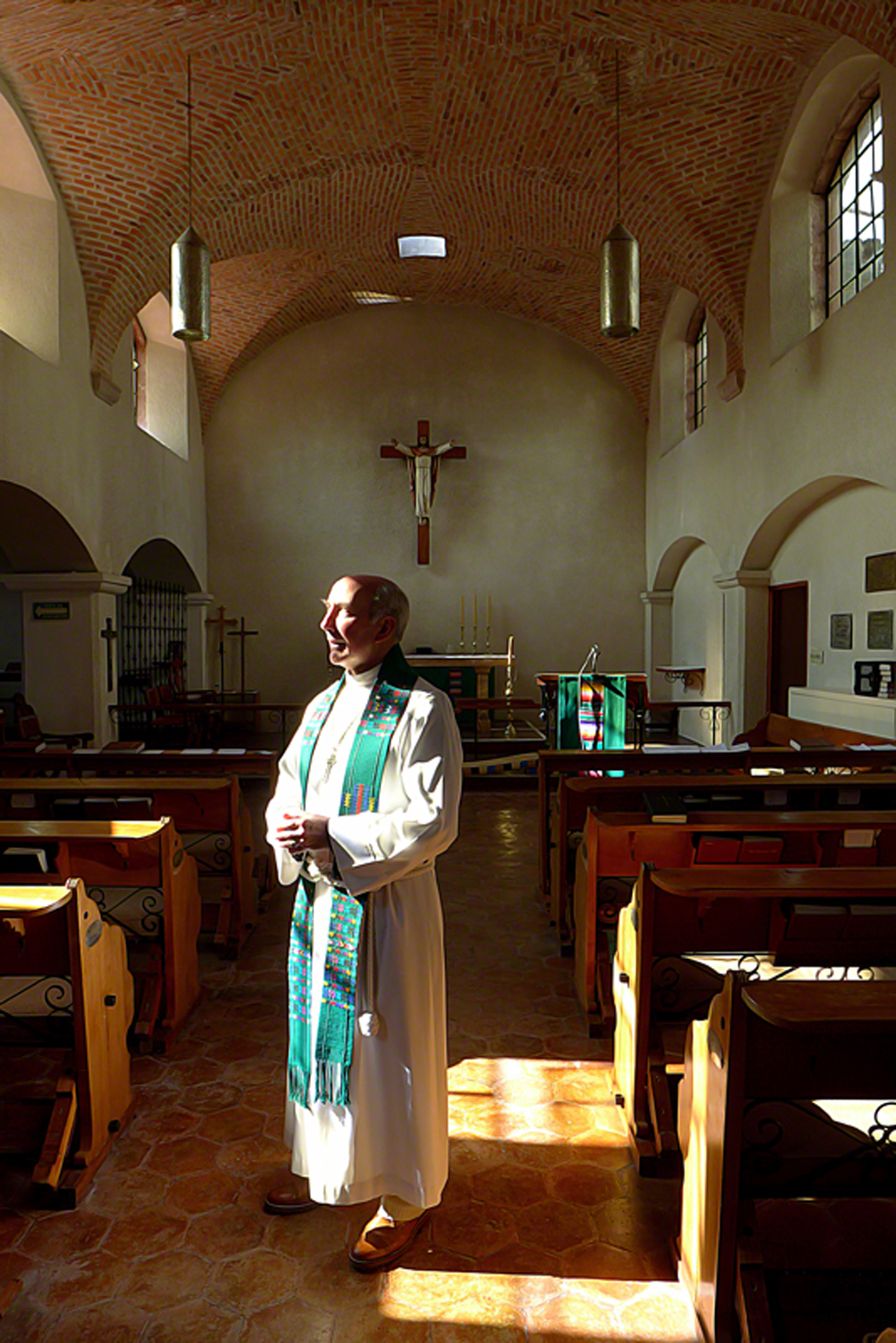
In the above photo I wandered into a small church because I just happened to notice that the sun was coming up and striking the large windows on the east side of the building.

Well to remind my fellow photographers of a quote said by a famous photographer named Eddie Adams, as I was contemplating what I was going to do with this great light streaming through the windows the priest came through the door and began smiling and welcoming me.

“OMG” I thought to myself (no pun intended), I couldn’t believe my good fortune. I immediately asked him if I could take his portrait and he said he would love it; because he needed a new picture of himself.

I placed him in the light and that was that…end of story!!!!

So the next time you go out shooting look for the light all around you, and more than likely there will be a photo there just for the taking!!!

Visit my website at: www.joebaraban.com, and check out my workshop schedule at the top of this blog. Come shoot with me sometime. I just announced my New York, New York Workshop beginning September 17th ,2019 and ending at noon on the 23rd. This will be my second workshop there and this time we’ll be shooting in all the five boroughs.

JoeB

Personal Pearls of Wisdom: Get Up Close And Personal

I got up close and pesonal

I’m quite sure a lot of you have heard this at one time or another by lots of different people in lots of different situations. It’s an important expression that’s been around for a long time, and I personally have been using it since the middle eighties in my “Stretching Your Frame of mind” workshops, and in the my online class I teach with the BPSOP. I don’t claim to be the author of it, but I figure after teaching this concept for thirty-five years, whose to say I didn’t??? At least, I can say that it’s one of my favorite Personal Pearls of Wisdom.

It’s a phrase I’ve been using for a while and one that occasionally appears in Cyberspace… ” Get up close and personal”. I’ve  added… “get so close it hurts, then get closer”.  I often quote a very famous photographer named Robert Capa who once said, ” If your pictures aren’t good enough, you’re not close enough”. For those that know who Robert Capa was you know he was a war photographer that was always close to the fighting.

Relax, I’m not suggesting you go out and get close to that kind of action, but I am suggesting you get close to your subject, be it a person, place, or thing. Sometimes it’s even a good thing to be so close that you don’t show all of it. This falls under one of the concepts of Gestalt called ‘Closure‘.

One reason I like to get close is to achieve depth. Since the camera has but one eye (the lens) it can only see in two dimensions, height and width. You can trick the lens and create the third dimension…depth, by getting up close and personal.

By getting close to your subject  you’ll be anchoring it in the foreground, (and the best way to do this is with a wide-angle lens), you’ll create what I call layers of interest. This will keep the viewer around longer as he goes from your anchored subject in the foreground to the background. If you can place enough elements in-between, then he have more to discover on his or her way to the horizon…or implied horizon.

In the Psychology of Gestalt, we want to take control of what the viewer sees in our composition. It’s all about visual perception, and how the viewer will react to our photos. I like a strong reaction so in the photo of the Egyptian, I wanted to really get a reaction, so I got about as close as you could get without having to follow up with any ‘marriage vows’!!!

Take a look at some more examples of getting “up close and personal”:

Visit my website at: www.joebaraban.com, and check out my 2019 workshop schedule at the top of this blog. Come shoot with me sometime. I just announced my New York, New York Workshop beginning September 17th ,2019 and ending at noon on the 23rd. This will be my second workshop there and this time we’ll be shooting in all the five boroughs.

JoeB

Personal Pearl of Wisdom: Shoot to Live, Live to Shoot

When I talk to my students in my online class with the BPSOP and in my “Stretching Your Frame of Mind” workshops I conduct around the planet, I’m reminded as to how short a time they’ve been photographers; certainly not all, but quite a few.

Most of these people have jobs and can’t devote as much time as they would like. However, there are those that do have the time but find themselves procrastinating when it comes to going out and taking pictures…making art; I have been guilty at times myself.

That said, I’ve been extremely fortunate as to have had photography my career as well as my passion going on fifty years; traveling on assignments two hundred and fifty days out of the year before retiring.

Even after all these years, I still get all warm and fuzzy when I have taken a photo that I knew even before clicking the shutter that I had one of those illusive ‘Keepers’.

The analogy I can draw is through the game of golf. I’m not very good and I never know who’s going to address the ball on the tee. The Tiger Woods that can hit the ball three hundred yards straight down the middle, or the duffer that hits the ball to the ladies tee; I’ve done both.

My point here is that if I can hit the ball once in a blue moon like Tiger, it’s what keeps me going even after hitting fifty in a row into the woods, people’s back yard…or lake!!

Taking a great shot, an illusive keeper, every once in a while is what I live to shoot for. For me, it’s the elixir that keeps me going; it keeps me living for the next one. It keeps me setting the alarm clock to be somewhere at least an hour before the sun comes up…whether I get something or not really doesn’t matter; perhaps it’s just the thrill of the hunt.

So, my fellow photographers, I’m here to help motivate you to go out whenever you can and enjoy the gift you have given yourself. Remember that a camera on a tripod is just like a blank canvas on an easle.

You and I are artists who have chosen a different medium other that a paintbrush. Go out and paint and if you’re lucky you can come home with a work of art, if not, then maybe next time.

Visit my website at: www.joebaraban.com and check out my workshop schedule at the top of this blog. Come paint with me sometime.

JoeB

Personal Pearls of Wisdom: “Pulling Out My Bag of Solutions”

Using my Bag of Solutions

When I’m online with my class with the BPSOP, or traveling with my Stretching Your Frame of Mind workshop, I often refer to my “Pearls of Wisdom”. One of them is,  “My bag of solutions”.

What I mean is how do I solve a problem that’s come up unexpectedly? If I could only get a couple of feet higher, or have to stand out in the water, or pick up any trash, or how about fixing something that might be broken or needing a piece of tape to hold something while I shoot. Here’s what I often carry in my car when I’m going out. You just never know when you’ll need something!!!I don’t necessarily carry everything all at once, but I have before on personal long road trips and assignments. Although I consider this list equipment, I call this my “bag of solutions”:

  • Tripod
  • Bean bag
  • Small table tripod
  • Six foot ladder
  • Spray bottle with water/glycerin mixture
  • Photo stand with a sand bag to keep it steady
  • A-clamps (to secure the reflector and umbrella to the stand).
  • White reflector or white piece of foamboard.
  • Duct tape (very important)
  • Fifty feet of garden hose (for ‘wet downs’)
  • Mikita (or another brand) 14 or 18 volt rechargeable screw gun
  • Rubber boots
  • Chest waders
  • Knee pads
  • Blanket
  • Walki-Talki’s
  • Plastic tarp
  • Broom
  • Rake
  • Garbage bag
  • Golf Umbrella
  • Change of clothes
  • Small Red line tactical flashlight for light painting
  • https://www.google.com/?gws_rd=ssl#q=redline+flashlight&tbm=shop&spd=4139016517009177550
  • Model/minor/property releases (important if you plan to sell the photos)
  • Ice chest with water, soft drinks, beer, and Martini fixers’ (after the wonderful sunset)

Did I leave out anything?

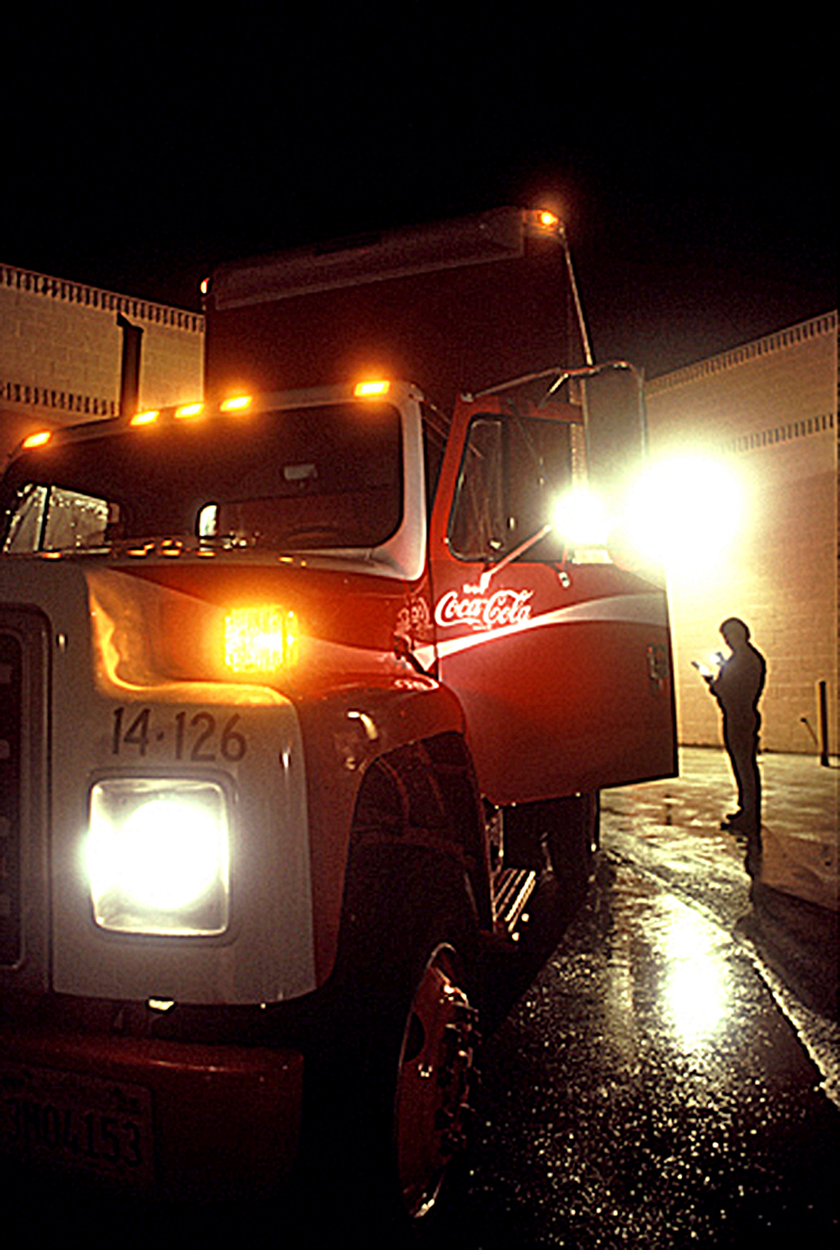
In the photo above that I shot for the Coca Cola Bottling Annual Report, I used the broom and rake to clean up the area, the fifty feet of hose (every bit of it) to wet down the pavement,  the small mag light to light up the lettering on the truck’s door, the duct tape to secure the flashlight to the six foot ladder, and the garbage bag to clean up whatever trash I created.

Check out my website at: www.joebaraban.com and come shoot with me sometime.

JoeB

Personal Pearls Of Wisdom: Go With The Flow.

As the followers of my blog, my online students with the BPSOP, and the photographers who have attended my “Stretching your Frame of mind” workshop all know, I have a plethora of random thoughts gathered throughout my photographic and teaching career. I call these thoughts my “Personal Pearls of Wisdom“.

Dating back to the early eighties when I first started teaching, I’ve conjured up these expressions as situations called for them, either from my own experiences or those of my students. Although I love all my Pearls for one reason or another, there is none that brings a laugh to me faster than “Go With The Flow“.

If you’ve been shooting long enough, I’m sure at one time or another you’ve been faced with a situation that you either didn’t expect or didn’t want. You probably had a certain idea in your mind, or a pose, or a composition that come hell or high water you were going to shoot…no matter what!!!

If you were anything like I was in the old days, those days before Medicare, Social Security, and mellowing out, you got flustered or probably a little pissy because it wasn’t going your way. For me, it was usually the subject that wouldn’t cooperate or a lot of the times it had to do with animals.

I don’t remember exactly when it was, but at some point I decided to stop fighting it and joining it. I began to “go with the flow“. If someone wasn’t taking my direction, or for some reason really didn’t want to be photographed the way I envisioned, I would just let them do what they wanted and when I discovered that it usually resulted in a better photo, I started waiting and hoping it would happen again. It’s not something you can create yourself, it has to be spontaneous and coming from the subject. It’s also very important to anticipate the possibility because if something does happen, it’s a good chance that it won’t happen for long and won’t ever happen again.

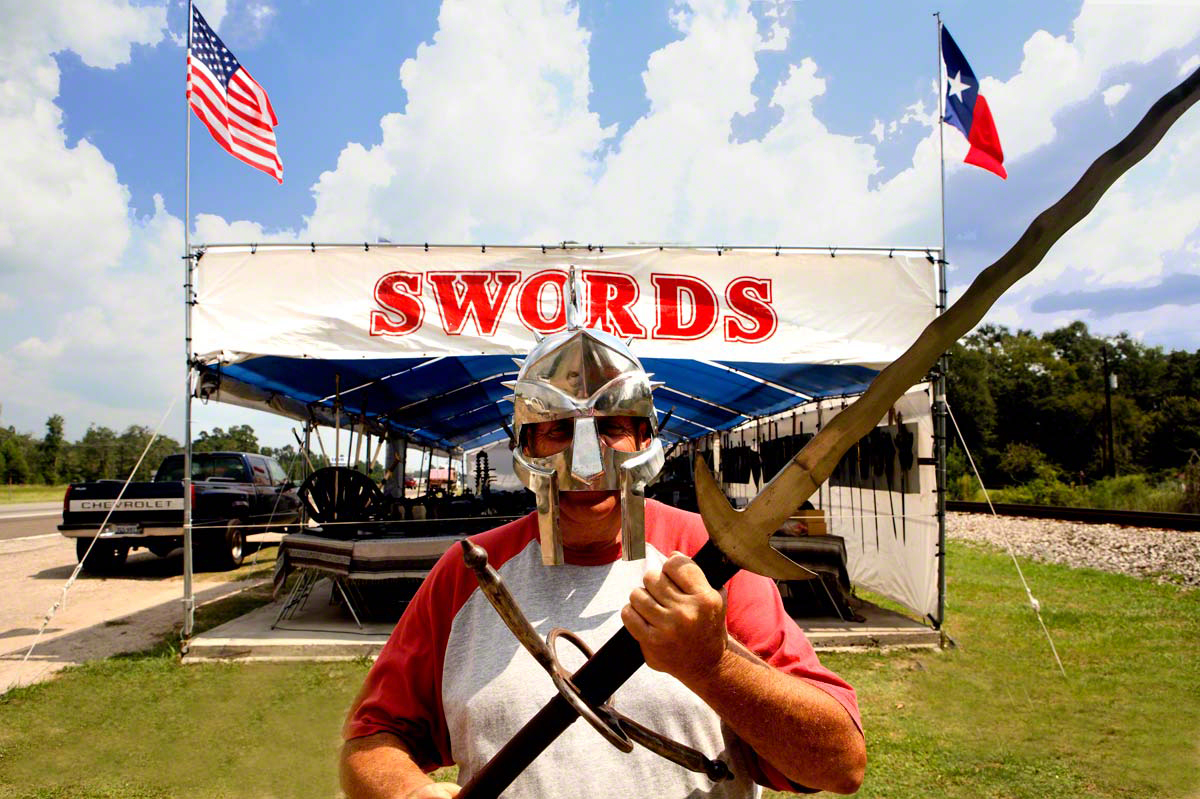
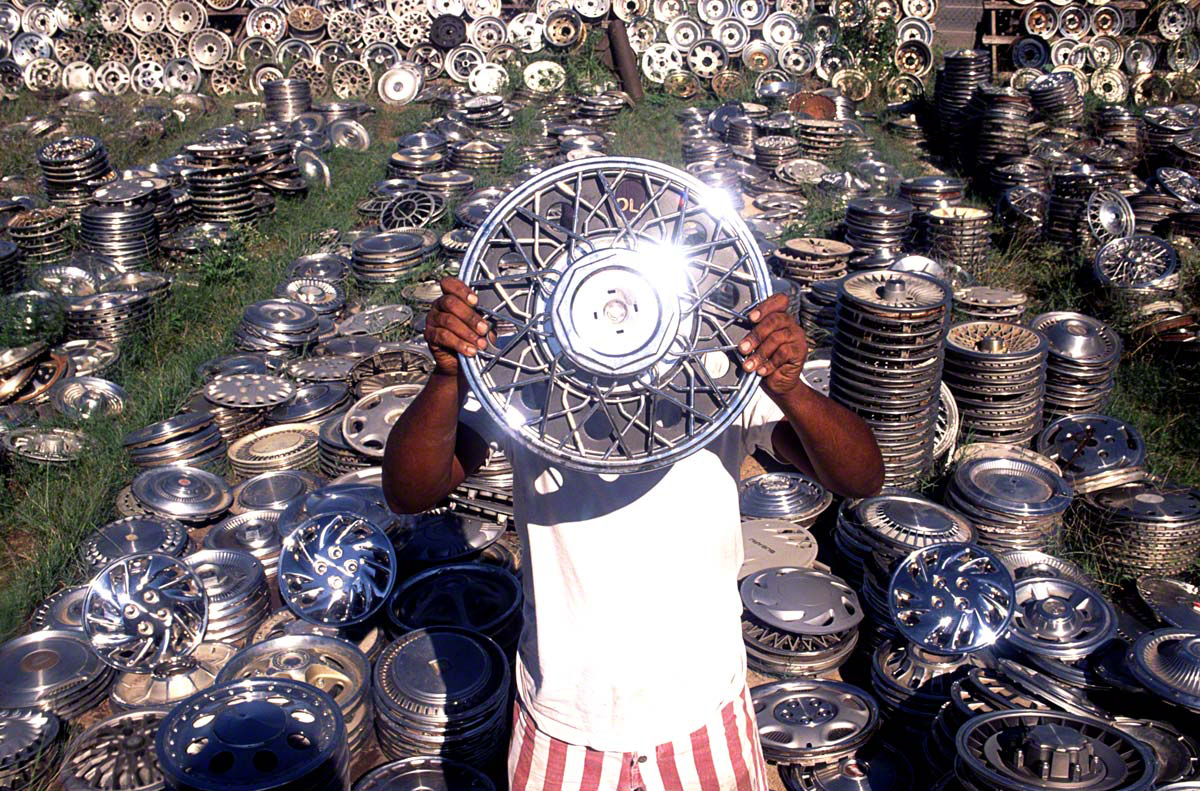
The two photos you see above and below are perfect examples of “Going With the Flow“. I was working on a photo essay called “Back-road Businesses where I traveled the smaller roads throughout Texas looking for the entrepreneurs of these  weekend businesses. These are businesses that spring up all over Texas on the weekends, opening on Fridays and closing Sunday afternoons after all the travelers were back home.

In the photos taken of the owners of the sword and knife business, and the hubcaps, they didn’t want to show their faces. No matter how much I was willing to pay for a hubcap or a sword, they were just not interested. The sword man said that I could take his picture but it had to be his way. He told me to go out and get setup and he would think about what he was going to do (after buying a knife). When he finally came out wearing the helmet, I thought I would start crying in utter happiness!!! How could I have ever planned that?

When I asked the guy with the hubcap to take a picture of him in front of all his hubcaps, he said fine, but I couldn’t show his face (maybe something to do with his britches?). He leaned over and grabbed a hubcap and put it in front of him. He said that if I still wanted to take his picture it was OK.

OK!!!!!!!! Someone please pinch me, because I knew I had to be dreaming!!!! I shot as fast as I could before he could change his mind.

hubcap-man1_DM

So my friends, be prepared to forgo your initial idea and be ready to “Go With the Flow”. Just let it happen because it just might prove to be a better idea.

Visit my website at: www.joebaraban.com, check out my 2018-19 workshop schedule and come shoot with me sometime. Hear my “Pearls in Person”!!!

JoeB

Personal Pearls of Wisdom: Just say NO to the “Leading In Rule”

Wonder what she’s looking at?

I’ve been an advertising, corporate, and editorial for fifty-three years, and in that time I’ve enjoyed teaching and showing photographers how to use their eye in a different way than they have been.

This is my ninth year teaching an online class with the BPSOP, and my first workshop, “Stretching Your Frame of Mind”,  was in 1983. I have been told by students way too many times that they, in return, have been told to always have their subject walking, running, or facing into the frame.”Always leave more room in front of your subject than in the back”, is a direct quote (and one of their rules) from a site on the internet; whose name I will leave out. This is referred to as “leading in”.

It’s a ‘mind-bender’ for me! Why on earth would anyone tell you that?  I suppose the reason is that they want you to become good little photographers, and whoever keeps saying this is indeed a good photographer. If being a good photographer is your goal, then that’s great, and follow the path most traveled.

If you want your photos to consistently be “up a notch”, you might consider coloring outside of the lines. If you want to be more than just a good ‘shooter’, you might want to consider other points of view…like mine for one example.

If I put someone looking into the frame, then the viewer will know what that person is looking at. If I have someone walking or running into the frame (giving the subject room to run as they say), the viewer will know where they’re going. Where’s the mystery and drama in that? Sounds pretty boring to me. I want the viewer to wonder what the subject is looking at, and where he’s going NEXT. By placing the subject close to the edge of the frame facing out, two things will happen:

Placing the subject close to the edge of the frame, and minimizing the ‘Negative Space’ between the subject and the edge, you’ll generate Tension. The Tension comes from the anticipation of the subject leaving the frame. Second, you’ll imply content outside the frame.

All this is a big part of the Psychology of Gestalt I teach in my workshop. In short, we want the viewer to take an active part in our pictures.  The viewer will always react to that which is most different. In our reality, making the mind work harder is not necessarily a good thing, but in photography it is.  By leading the viewer’s eye in and out and around our composition, or having them complete an image, or have them consider the scene, they are taking an active role, and when we can accomplish that our images will definitely be stronger.`

Here are some examples of just what I mean:

JoeB

Check out my website at www.joebaraban.com and my 2012 workshop schedule then come shoot with me sometime.

Personal Pearl of Wisdom?

I just love diamonds, don’t you?

Ok, I’m not sure what category this fits into so I’m thinking three of them: My Favorite Quote since there’s a little of that, Food for Digital Thought since there’s some of that, and a Personal Pearl of Wisdom since there’s also a touch of that.

What am I getting at? Well I was talking to a friend that has a kid whose age is just right to let her watch The Wizard of Oz. He said that they were singing some of the songs together and reciting some of the dialogue.

As soon as they said, “lions and tigers and bears! Oh my!” a thought hit my eye like a big Pizza Pie! “squares and circles and triangles! Oh my! Btw, I left out rectangles since it just didn’t have the same flow.

Where in the world am I going with this you ask? Well, I show people how to use the elements of visual design in their photography. I do this in my online class with the BPSOP, and I often remind people during my daily critiques in my “Stretching Your Frame of Mind” workshops I conduct all over the place.

Shape is one of these elements and if used to enhance your composition, you will definitely be on your way to creating stronger photos.

There are four basic shapes, hence the inclusion of three of them in my adjusted quote for any upcoming remake of the iconic movie. Although shapes are all around us there are four basic ones: circles, squares, triangles, and rectangles.

Whether the viewer knows it or not, he’ll see them and react. When you begin to see with the right side of your brain, the creative side, you’ll be able to use shapes in your imagery. They will provide a sense of structure and unity to your composition, and will be perceived by the viewer as systematic, stable, and symmetrical.

The shapes that are similar but are more irregular such as an isosceles triangle or a trapezoid have more energy. Besides those that are more prevalent in our world, the diamond is a great shape, filled with a great deal of energy and evokes a sense of motion; not to be overlooked.

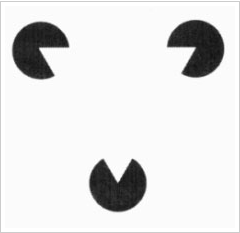
There are even implied shapes that one can perceive through the use of Closure; one of the six concepts in the Psychology of Gestalt; For example, in this diagram the viewer will fill in the triangle:

I saw a triangle

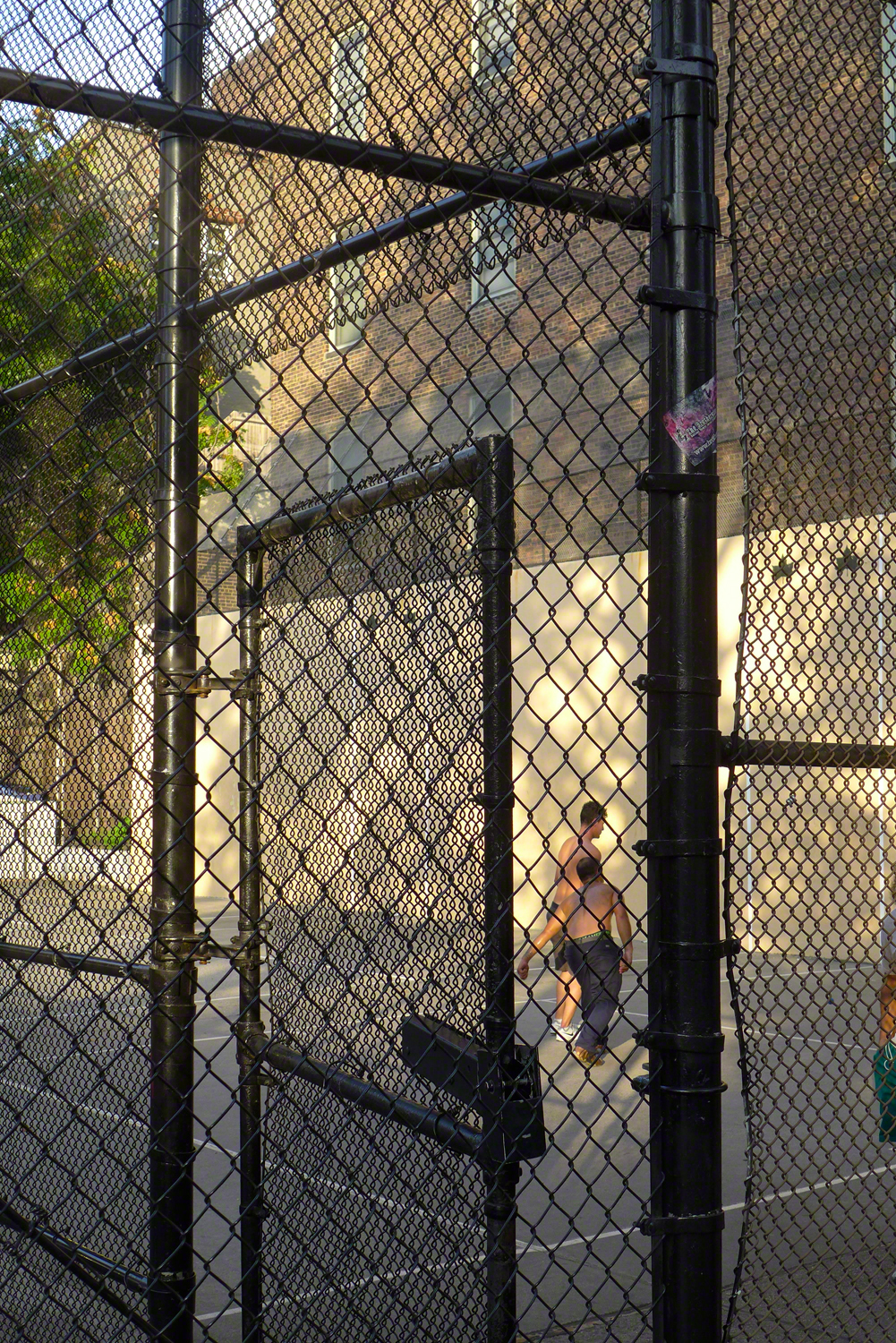
Shapes live among us and once you begin seeing past first impressions you’ll be able to not only see the positive shapes, the implied shapes, but the negative shapes as well. When we think of shapes, we think of the kind that has mass and therefore considered as positive space.

However, a shape can be the negative variety that’s created by the positive space that surrounds it. Imagine an ornate fence that has a row of wrought iron circles at the top and running the length of the fence. The circles are positives shapes and have mass, but what about the area inside the round wrought iron? Those are also circles, but they have been created by the positive shape and have no mass. They are the negative shapes.

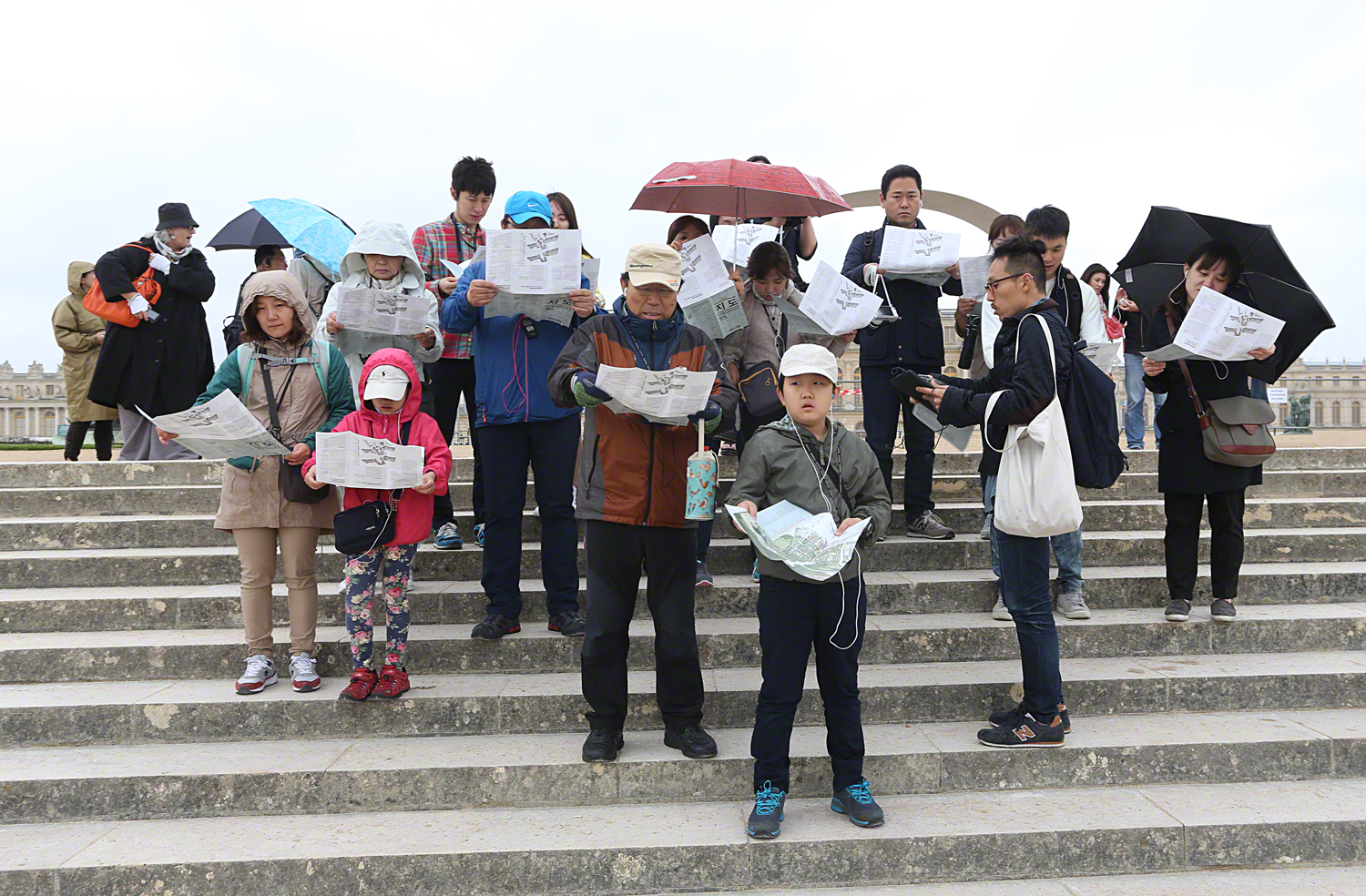
As I was talking about seeing past first impressions and using the right side of your brain, this certainly came in handy during my springtime in Paris workshop. The group went to the Palace of Versaille one cold and gray day so I was walking around looking for something else to shoot.

I noticed a group of Asians standing on the steps, all of them looking at the map of the entire grounds. What I saw was not a group of Asians all looking at maps, what I saw was a triangle made up of Asians all looking at their maps. I laughed and quickly took their picture, and as I always say, humor is the one thing that can work even with bad light.

Visit my workshop at: www. joebaraban.com and check out my workshop schedule at the top of this blog. Come shoot with me sometime.

JoeB