My Favorite Quotes: Henry David Thoreau


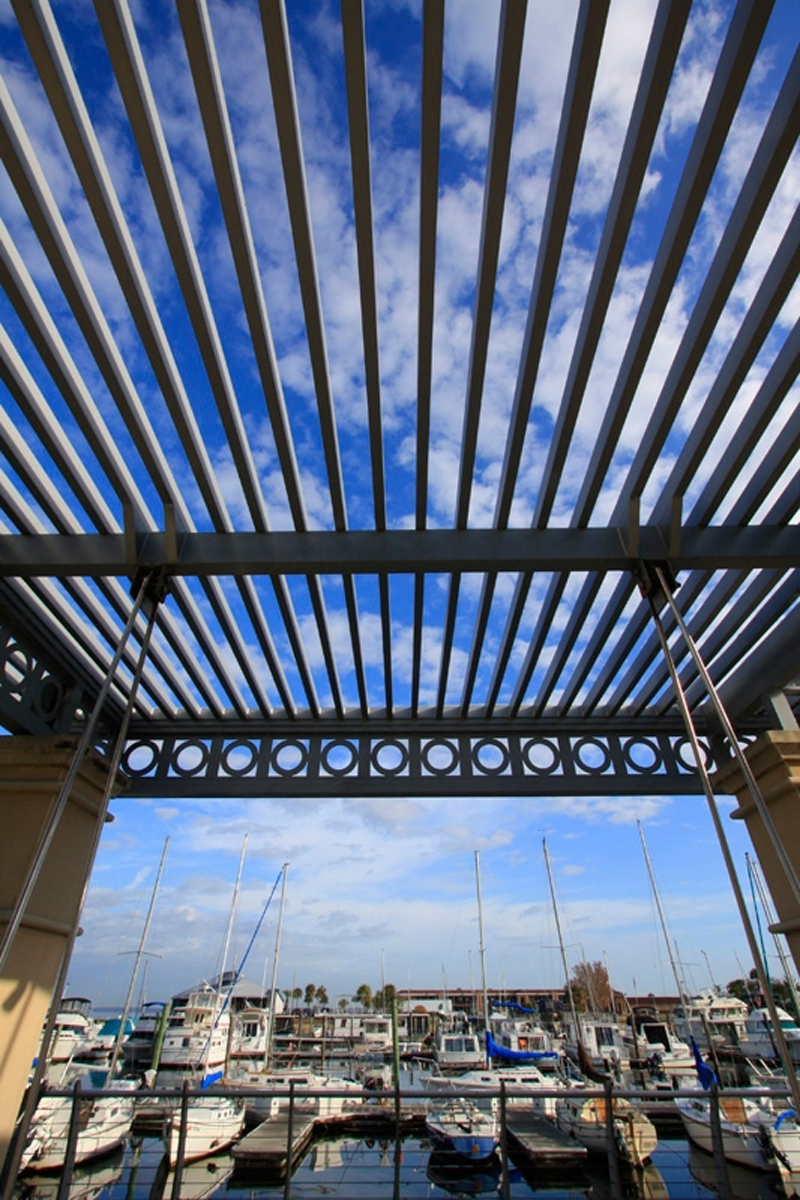
What else do you see besides clouds?

“It’s not what you look at, it’s what you see” This quote, written by nineteenth century author, poet, and philosopher Henry David Thoreau (you might remember him from your American Literature class as the author of Civil Disobedience) is probably one of my all time favorites and one that I’m always sharing with my online class at the BPSOP, my six-month private mentoring program, and in my “Stretching Your Frame of Mind” workshop I conduct around the planet.

My workshop and classes are all about using the six principles of Gestalt and the elements of Visual Design and composition to aid you in taking your photos what I refer to as “up a notch”. Line, Form, Shape, Texture, Pattern, Perspective, Tension, Light, Color and Negative Space are the elements we work on every day and there out there all around you. you just have to see them.

You walk up to a tree and you see a tree. But what else is it? It’s the whole made up of several parts. It’s made up of Lines, Patterns, Texture, and various Shapes. How does it relate to the environment around it? How is the Light affecting it? Does it tell a story? Does Color factor in?

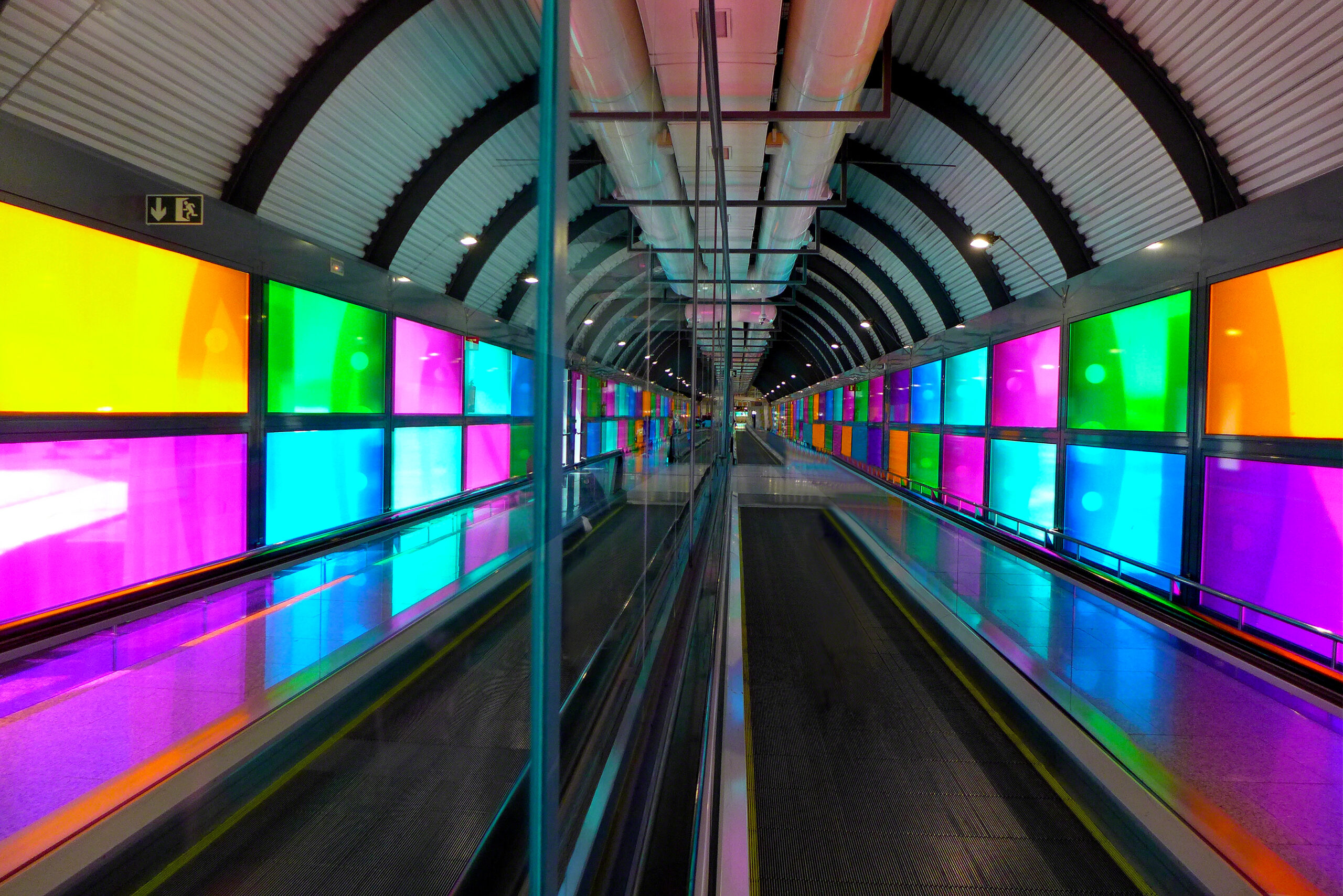
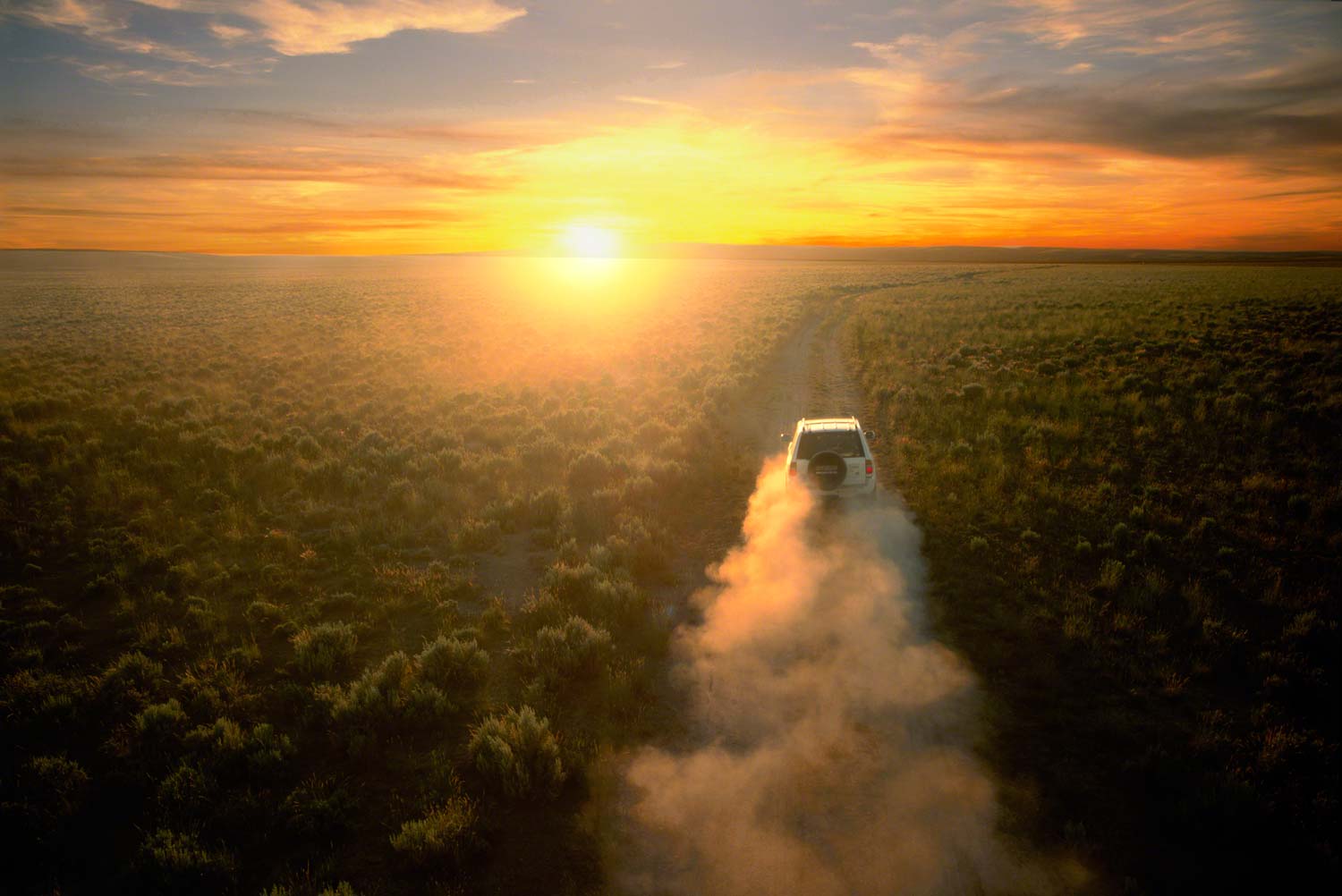
What about golf cart tracks or a stream? Does the golf cart tracks converge at a point on the horizon creating a Vanishing Point, leading the viewer around the frame to that point? Does the river sparkle or glow because the light is coming from behind it? Does it lead the viewer in and out of the composition suggesting more content outside of the frame? How could power lines running along a small highway be of any interest?

 Do you ever look at an old decayed window and see the beauty in it? Can you envision how father time has transformed it into a cacophony of colors, shapes, textures, and patterns.

What about something as simple as clouds in the above photo? Do they create a design? Shapes? Do they suggest some type of colored line that divides the frame from white to gray?

The next time you go out shooting, don’t look at things the way they are, look at them the way they could be.

Visit my website at: www.joebaraban.com, and follow me on Instagram www.instagram.com/barabanjoe. check out my workshop schedule at the top of this blog. Come shoot with me sometime.

JoeB


Workshop Stuff: You Gotta Do What You Gotta Do.

Light rain falling.
Light rain falling.

I teach an online class with the BPSOP, and I also conduct my “Stretching Your Frame of Mind” workshops around the planet. One of my Springtime Workshops, I conducted was in Tuscany. We were based in Sienna, and each morning and afternoon we set out for various locations that I had scouted before the start of the workshop.

For most of the week we had great weather, but one morning we set out to capture the beautiful rolling hills and rows of Cedar trees indigenous to the Tuscany landscape. As we drove farther away from Sienna, on a very narrow two-lane highway, the skies became darker and darker, and rain was imminent. Katka, the woman that produced the workshop for me knew of a small pull out where we could park the van and cars. The morning light wasn’t going to happen, and then the rain came. Not a downpour, but even the light rain falling was enough to totally bum out my group.

Raining harder now.
Raining harder now.

We had parked  about fifty feet from a major curve that had arrows pointing around it, so I immediately began thinking of a way to turn the overcast, gloomy, rainy day into something positive and fun for the workshop. That is the ones that wanted to get out into the rain, which by the end of the shoot included almost everyone.

I had Petr, the co-producer get in one of our cars with one of my walki-talkis. I had him drive slowly around the curve, directing him via the walki-talkis to keep his foot on the brakes so we could introduce some color; while the workshop shot long exposures.

After a while we hardly noticed the rain and my fellow photographers were able to create several pretty damn good photos… I’m proud to say.

A rainy critique for one of mt hearty students.

So, as I’m often heard saying, “You gotta do what you gotta do”.

Visit my website at: www.joebaraban.com, follow me on Instagram www.instagram.com/barabanjoe and check out my workshop schedule at the top of this blog

JoeB

Personal Pearls of Wisdom: Steady As She Goes

Steady as she goes.
Steady as she goes.

The first workshop I was ever asked to conduct was for the then Maine Workshop (changed to the Maine Media Workshop}. The year was 1983, and I was right in the middle of my career as an advertising, corporate, and editorial photographer when I started accumulating what I began referring to as my “Personal Pearls of Wisdom”.

Since then, I have amassed a plethora of these Pearls, and always share them with my online class and in the workshops I conduct around the planet; my private workshops and those I’m asked to teach with various organizations and schools.

“Steady as she goes” is a term I often say to a fellow photographer when I see them about to take a photo too soon. Over the years I’ve noticed that a student of mine will start shooting some kind of action before it’s ready to be taken. They don’t anticipate the action as far as when the subject is in just the right space to provide either balance, or one of the important ways to generate Visual Tension…the peak of action.

I would imagine it’s all tied into this digital age where everything needs to be done in a hurry. When you can go from the freezer, to the microwave, to the dinner table just three minutes.. That’s good if you’re late to work or wanting to see your favorite TV show. It’s not necessarily a good approach to capturing that moment in time when everything is in it’s place or that captured moment that leaves the action un-completed. That’s going to take a little more time, but it’s usually well worth it.

I was shooting for Alabama Tourism, and one sunrise we were walking along a boardwalk looking for photos that reflect the Alabama coast, tourism, and water activities. I came upon these benches shown in the above photo and thought they might make a good picture if given something else I could add…another “Layer of Interest”.

As I was standing there, out of the corner of my eye I saw an object coming into my frame. It was a small sailboat, and it was right on the horizon. I set my camera on a tripod, composed the benches the way I wanted, and waited….and waited. I knew what I wanted and hoped that the person sailing would accommodate me and my idea.

As it turned out, and following Eddie Adams famous quote that said, “When you get lucky, be ready”, I was ready and got the shot.

So, the next time you’re out shooting remember to wait for the right moment. Don’t be in such a hurry to start shooting, and maybe you too will get lucky…chill out as my kids use to say!!!

Visit my website at: www.joebaraban.com, and follow me on Instagram www.Instagram.com/barabanjoe. Be sure to check out  my workshop schedule at the top of this blog.

JoeB

Personal Pearls of Wisdom: It Ain’t Over Til It’s Over

It ain’t over til it’s over.

While shooting an assignment for United Airlines I had gone to Ho’okipa Beach on the north shore of Maui to photograph windsurfers. Ho’okipa is regarded as the best place in the world for this sport. The international championship was just a couple of weeks away, so all the best windsurfers were there practicing.

It was late in the afternoon and incredibly overcast; about as gray a day as it gets in Hawaii. As a result, all my fellow photographers standing all around me had decided to leave. Since one of my long time favorite Personal Pearls of Wisdom is, “It ain’t over til it’s over”, and one I’m always sharing both with my online classes with the BPSOP, and in my “Stretching Your Frame of Mind” workshops I conduct around the planet, I followed my own advice and stayed.

I had My 600mm F/4 Nikor lens and body mounted on my tripod and I was watching these three windsurfers go through their trial run. I was basically watching them as though I had a pair of binoculars; purely for interest.

As I was following them, the sun poked it’s face out for just a couple of minutes, and during that time the windsurfers moved around to create a triangle, while being backlit. Since I teach my fellow photographers how to incorporate the basic elements of visual design into their imagery, and Shape is one of them, I’m always on the lookout. FYI, the four basic shapes are: squares, circles, triangles, and rectangles.

I was very lucky to get this shot, and as Eddie Adams ( a Pulitzer prize winning photographer) once said, “When you get lucky, be ready”. So, the next time you’re out shooting and the weather isn’t cooperating,   stick around and see what happens because you just never know. Always remember that “it ain’t over til it’s over”.

Visit my website at: www.joebaraban.com, and follow me on Instagram www.instagram.com/barabanjoe. Check out my workshop schedule at the top of this blog.

JoeB

Quick Photo Tip: Photographing Children

Let kids be kids.
Let kids be kids.

Fortunately, I’ve never had to photograph kids to make a living, but over the course of my almost fifty years as a professional photographer, I’ve had my share of  advertising and corporate assignments where children of all ages were the end users for the company that made the products that fed them, clothes them, protected them, fixed them, and played with them; as a result I took the little darling’s  pictures.

My approach was always to lower my thought process to their level and photograph them the way they wanted to be photograph. Whatever pose they had in mind is the pose I almost always went with. As I tell my online students with the BPSOP, and in my “Stretching Your Frame of Mind” workshops I conduct around our planet go with the flow. Don’t try to force an idea on them, because I can bear witness to the fact that it’s a good way to get them NOT to do what you want…just to spite you!!!

I’ve had many kids that wanted to be photographed with their pet. YIKES!!! I can tell you from many years of experience, as far as subject matter goes kids and animals are the two hardest  to photograph…especially at the same time!! Forget about anything predictable (not a bad idea anyway) and again, let them dictate how they want to be photographed with their pet.

Alex and her dog Lucy.
Eye to eye
Eye to eye

Another tip is to get down on their level. I’ve seen way too many photos where the photographer bent over and took the picture from their height.If you’re down where they are, it’s a lot more engaging and whatever direction you’re able to give them will work better “eye to eye”.

I’ve even gone to the extent of having them look in the viewfinder and let them take my picture first. You would be surprised on how often this works. Last but certainly not least, is to pay them. You would really be surprised with how often this works!

Finally, if you’re good enough you can direct them to do something that might look natural, but in reality the idea was conceived by you, the photographer.

😉

Visit my website at: www.joebaraban.com, and follow me on Instagram. https://www.instagram.com/barabanjoe Check out my workshop schedule at the top of this blog. It will be Autumn in France and it’s next October of 2023. Come shoot with me sometime.

JoeB

Unscripted Verses Scripted

Scripted

In my online classes with the BPSOP, I give out assignments each Friday. These are specific ideas that I want each of my students to look for (with the right side of their brain) and shoot.

These assignments have been scripted as far as what I’ve been teaching for the past forty plus years. That’s not to say that they have complete freedom to shoot whatever they want as long as the theme of the photos follows my lesson for the week. In other words, they have a plan to follow.

What I hope these lessons will do is to help them to see instead of look at subject matter, so that when they’re out on their own they will recognize certain elements that will help to create memorable images that will stand the test of time.

You might also have a particular place to go with a particular subject to photograph. For example, the new interior of the  United Terminal in Houston, or the newly opened botanical gardens in your city.

Unscripted

In the workshops I conduct all over the world, we will spend time just walking around a medieval street in Europe, or walking over a famous bridge…like the Brooklyn Bridge for example.

These are unscripted ‘photo walks’ where you’re not looking for anything special, just whatever you see. I love these because I never know what I’m going to see and, I have no plan.

Whether it’s scripted or un-scripted, remember that you’re an artist that has chosen a camera as the medium instead of a paintbrush. A camera on a tripod is just like a blank canvas on an easel.

Visit my website at www.joebaraban.com, and follow me on instagram. check out my next 2023 workshop at the top of this blog. It will be “Autumn in France” and will be October 2nd 2023. Come shoot with me sometime.

JoeB

Quick Photo Tip: Using Body Language

His body language tells it all

Check out my “Autumn in France workshop” under workshops at the top of this blog.

14One of the ways to bring visual interest and tension into your imagery is the use of body language. It’s a way to communicate without the talking, and can disclose a person’s character or attitude without a word being said. this is very important in still photography for obvious reasons.

I teach an online class with the BPSOP, and I conduct my “Stretching Your Frame of Mind” workshops around the planet. One of the areas we work on is ways to create Visual Tension,  and the use of body language is one of them.  I shoot a lot of environmental portraits, so for me body language is an important part of the overall composition. Body language is one of the pieces that make up a good photo, and other pieces of the same puzzle will influence how we interpret non-verbal information by the subject.

The use of hands is so important in expressing thought and conveying the feeling of warmth or strength. If the way people use their hands wasn’t significant, and you doubt that it can help you take your imagery what I refer to as “up a level”, then one only needs to think about sign language and the way the hands are used in a way to send a message to others.

What about the face? A simple expression can send so many different meanings and can portray the range of emotions we all have; don’t we all occasionally carry our disposition, mood, and temperament on our faces.

When taking photos of just one person, the body language can be both compelling and enchanting, but when there’s two or more people, then the outcome can be extremely entertaining and thought-provoking when put in the right situation; especially when light plays a big part…as it always should.

The next time you’re taking pictures of people, try to incorporate some body language and see how much it helps in generating visual tension and interest.

Here’s are a few examples of both one and more than one subject. Can you tell by their body language what’s happening?


.

Visit my website at: www.joebaraban.com, and follow me on Instagram. Check out my 2023 workshop schedule at the top of this blog. Come shoot with me sometime. My next one will be “Autumn in France” and you can read the description at the top of this blog.

JoeB

Anecdotes: Gotta get my girls

Gotta get my girls
Gotta get my girls

I want to announce my next workshop “Autumn in France” to be next October 2nd. It will be in Bordeaux, Dordogne, and Toulouse. If you go to the top of my blog and click on the link, you can read the description. Join me for a great visual experience, seeing places that few people won’t ever be able to.

After fifty-three years of shooting editorial, corporate, and advertising photography, one acquires stories and anecdotes along the way. Some funny, some not so funny, and some you wish didn’t happen quite the way it did. That said, I always told my four kids (the youngest being twenty-seven) that bad decisions usually make the best stories.

However, one of the funnier moments happened years ago while shooting an annual report for an agricultural company. We had gone to a farm to take a portrait of the owner, reported to be one of the largest landowners in the county. After meeting him, you could have knocked me over with a feather when we were told that he held an MBA from the University of Wisconsin.

He was a very slow talking quiet man who was not accustomed to having his picture taken. He was shy and had to be talked into it. I told him that I wanted to shoot him out in one of his fields, and he said that was fine, but he didn’t want to be photographed by himself.

He took us out to a field, dropped us off and said he would be back in fifteen minutes with his girls. I though he wanted to have his picture taken with his wife and daughters. Since the light was bad and the skies were gray, I figured the more the merrier, and what difference could it make…especially if that was the only way he would have his picture taken.

After nearly thirty minutes, he should up with his girls…two of them. He said that they were his favorites and they followed him everywhere he went on his farm. I could hardly show my excitement, and as I tell my online students with the BPSOP, and also my “Stretching Your Frame of Mind” workshops I conduct around the planet, the one thing that can replace good light is humor.

Visit my website at: www.joebaraban.com, and follow me on Instagram. Be sure to check out my workshop schedule at the top of this blog. Come shoot with me sometime.

JoeB

The Recipe

I want to announce my next workshop “Autumn in France” to be next October 2nd. It will be in Bordeaux, Dordogne, and Toulouse. If you go to the top of my blog and click on the link, you can read the description. Join me for a great visual experience, seeing places that few people won’t ever be able to.

I have a six month mentoring program, and I recently finished one with a woman living in Spain.

First of all, over the course of the six-months she has become an excellent photographer. Not only can she “make pictures” but she can now see with the right side of her brain, the creative side.

The last area we worked on and had just finished was portraits…environmental portraiture to be exact.

The one area where she was having the biggest difficulty was in making sure the background matched the exposure with the person. She just didn’t remember to do it.

To digress a moment, I have similar issues with photographers that not only take my online classes with the BPSOP , but also in my workshops I conduct all over our round planet.

Ok, here’s the analogy I will share with all my fellow photographers. Imagine you’re in the kitchen about to begin a new recipe that you’ve been dying to try. To make the dish, the directions call for several ingredients from different herbs, fresh and dried, spices, kosher salt, ground pepper, flour, eggs, etc., etc.

Now it’s probably ok to leave out maybe one if the store’s don’t carry it…or you have to buy a pound for 1/2 of a teaspoon. But, that said, if you want to taste it the way it’s suppose to taste, then it’s important to follow the recipe.

When taking pictures of people, there’s also a recipe to follow. I don’t mean there’s a certain way to photograph people, not at all. In fact, Ansel Adams once said,” There are no rules for good photographs, there’s just good photographs.

What I do mean is that there’s a checklist (recipe) that I follow and when everything is checked off in my mind (which takes less than a second)I click the shutter.

One of the main ingredients is exposure. On a late afternoon day when the sun has reached the time when I like to shoot, the Golden Hour, it’s important to pay attention to the exposure on the face as well  as the background. If your subject is in shadow and everything else is in sunlight, your not going to get them both lit the same.

If they are indoors and you’re showing part of the outdoors, remember the importance of knowing about the  Dynamic Range.

Another important ingredient is to check to see if there’s anything growing out of their head. Forget about that silly ‘Rule of Thirds’, unless you’re going for a mediocre less remembered photo. Try placing them close to the edge of the frame to create visual tension.

Keep some contrast between what they’re wearing and what’s behind them.

These are some of the most important things to remember. Create your own recipe that fits your comfort level and your approach to portraiture.

Visit my website at www.joebaraban.com, and follow me on Instagram. Come shoot with me sometime.

JoeB

Quick Photo Tip: Checking The Four Corners

I'm always checking my four corners, even when I'm out street shooting.
I’m always checking my four corners, even when I’m out street shooting.

I want to announce my next workshop “Autumn in France” to be next October 2nd. It will be in Bordeaux, Dordogne, and Toulouse. If you go to the top of my blog and click on the link, you can read the description. Join me for a great visual experience, seeing places that few people won’t ever be able to.

I’ve been shooting professionally for almost fifty-five years, and to this day I still go through my three checklist exercises to make sure what I want in my composition is there, and what I don’t want in my composition isn’t. These three practices are what I teach and preach to all my fellow photographers that either take my online classes with the BPSOP or attend one of my “Stretching Your Frame of Mind” workshops I conduct around the planet.

I have written posts on two of them that hopefully, you might have read: My Fifteen Point Protection Plan, and my Border Patrol. My third exercise is called my Four Corner Checkoff, and it’s very simple to use, and worth a couple of seconds it takes to complete….that is if you remember.

Right before I pull the trigger ( that’s Texas talk for clicking the shutter), I glance at all the four corners to make sure all is as expected. Among other things, I’ll look to see if there’s any vignetting from a poorly attached lens shade, or the wrong lens shade on the right lens. Until I bought an ultra-thin Polarizing filter, I would occasionally get dark areas in the corners from combining a lens shade and a filter.

Then, there’s just the common variety of mistakes like including tree branches, parts of un-wanted buildings, fingers and hands being cut off, etc.

I realize that all three of these exercises are tantamount to redundancy, but as far as I’m concerned, being redundant is a good thing; it’s saved me on many an occasion.

Visit my website at www.joebaraban.com, and follow me on instagram. check out my workshop schedule at the top of this blog. Come shoot with me sometime.

JoeB

Anecdotes: The Blarney Stone

Kissing the Blarney Stone

I want to announce my next workshop “Autumn in France” to be next October 2nd. It will be in Bordeaux, Dordogne, and Toulouse. If you go to the top of my blog and click on the link, you can read the description. Join me for a great visual experience, seeing places that few people won’t ever be able to.

This is my first post under a new category I call Anecdotes. In my online class with the BPSOP and in my “Stretching Your Frame of Mind” workshops, I’m always telling fellow photographers stories of events or just funny things that have happened to me in my fifty-three year career as an advertising and corporate photographer. It’s time to start sharing these same stories with all the people that have been following my blog.

These are all factual incidents, and only the names have been changed to either protect the innocent or the people you can only look at and shake your head and wonder????????????

I was shooting a project in Ireland with my team that consisted of the Art director, my producer, and my first and second assistant. We had some time to kill and were in Cork. I had heard that the Blarney Stone was right outside the city so we decided to go and kiss it. At that time we really didn’t know what to expect, and truth be told we didn’t know that there was a Blarney Castle.

When we arrived at the castle we went looking for the Blarney Stone, thinking it was some rock nearby and all you had to do was walk up, bend down and kiss it. As the story and ritual goes, kissing the Blarney Stone gives you the gift of eloquence;or gab as some people call it. The kiss, turned out to be much harder than any of us thought. To kiss the stone we had to climb the stairs to the castle’s peak, then lean over backwards on the parapet’s edge. Although the parapet is now fitted with protective crossbars, it’s still very scary!!! Too scary for anyone else to do it but me and one of my assistants.

FYI, before the safeguards were installed, the kiss was performed with real risk to life and limb, as participants were held by the ankles and dangled bodily from the top of the castle.

Later that afternoon we were enjoying some libation at a tavern in downtown Cork. Across the room and in the corner were four really drunk locals that were boasting/laughing about all the times that after a day of consuming several pints of strong beer, they would sneak up to the Blarney Stone and take turns urinating on it. Needless to say that I immediately conjured up a mental picture and I’m here to tell you it was rather disgusting. It took two more pints to wash the taste away. The good news is that I was indeed given the gift of gab, so it’s been worth it…sort of!!!

Visit my website at: www.joebaraban.com and follow me on Instagram. Check out my workshop schedule at the top of this blog. Come shoot with me sometime. I got a million stories to tell you.

JoeB

Quick Photo Tip: Wait For It

I waited for it.

I want to announce my next workshop “Autumn in France” to be next October 2nd. It will be in Bordeaux, Dordogne, and Toulouse. If you go to the top of my blog and click on the link, you can read the description. Join me for a great visual experience, seeing places that few people won’t ever be able to.

Of all the genres in photography, I personally think that street shooting offers the hardest challenge, kids and animals run  a very close second…..why? Because “like a box of chocolates you never know what you’re going to get”….while shooting any of the above.

Landscape, portraiture, food, are three areas that immediately come to mind that gives you time to think ahead of time about your photo. You have the luxury of finding the location, looking for the best light, and as far as food photography you have total control in the studio.

When I’m walking the streets with any of my fellow photographers that are taking my “Stretching Your Frame of Mind” workshops, I’m basically looking for light. If I can find the light, chances are pretty good that I will find a shot somewhere in it.

I have had other photographers that take my online class with the BPSOP submit photos that lack visual interest and can’t stand the test of time. For example, a photo that’s showing someone talking on a phone leaning against a corner with a cigarette hanging out one side of the mouth is not going to stand the test of time; unless something extraordinary is happening. How about all those photos that show homeless people eating, begging, or sleeping on the sidewalk?

Having said that, when you do find some light…light that’s worthy of spending some time with, it’s important to find a comfortable spot and wait for some action; just the way Henri Cartier-Bresson did.

When you do see something or someone approaching the light you have settled in on, don’t be in a hurry to bring the camera up to your eye. Too many times I have seen a photographer do just that only to have the subject veer off. Sometimes it’s either because they’re polite and  don’t want to “photobomb” your shot, or they just don’t want to be photographed.

It’s important (and hard to do) to wait for it...wait until the very last minute to bring up your camera.

In the above image I fired off several exposures of the spot I wanted the horse and trainer to be in to get the exposure down, knowing I would probably get off one shot if something happened.

Well, the waiting paid off. Not only did I get the horse in the light, but I was lucky enough to have her rearing up on her hind legs….right in the middle of the fences.

Visit my website at: www.joebaraban.com, and check out my workshop schedule at the top of this blog. Come shoot with me sometime.

JoeB

The Use of Gestalt in Photography

 Getting the viewer to look into the mirror.
Getting the viewer to look into the mirror.

I want to announce my next workshop “Autumn in France” to be next October 2nd. It will be in Bordeaux, Dordogne, and Toulouse. If you go to the top of my blog and click on the link, you can read the description. Join me for a great visual experience, seeing places that few people won’t ever be able to.

Gestalt comes from the German/Austrian word meaning shape, form, or the whole by some definitions. It is also stated that Gestalt is the theory that the whole is greater than the sum of its parts. When you use the ‘elements’ of visual design in your imagery, you’re basically working with and structuring these ‘parts’ that will eventually make up the whole.

How we perceive and process visual input is a part of our everyday life, and as photographers, it’s our prime objective to present this visual information in a way that takes control of what the viewer sees when they look at our photography. In my online class with the BPSOP, and also my “Stretching Your Frame of Mind” workshop I conduct around the globe, I discuss and demonstrate how the different ‘concepts’ in the theory of Gestalt can help take our imagery “up a notch”.

One of my favorite topics is this famous diagram that shows how we can get the viewer to look where we want him to. When you look at this drawing, where does your eye go? Where do you look first? The large circle or the smaller one that the finger is  pointing to?  Most people will look at the small circle because that’s what we’re conditioned to do.

We look where we’re told to look, and imagine how powerful this ‘concept’ can be when used in our photography. It will definitely help take it “Up a level”.

In our reality, making the mind work harder is not necessarily a good thing, but in photography it is.  By leading the viewer’s eye around our composition they are taking an active role, and when we can accomplish that our images will definitely be stronger. Over the next couple of months, I’ll be discussing the different concepts with you, so stay tuned.

If you’re interested in shooting with me with these concepts in mind, go to my website look at the work at www.joebaraban.com then click on workshop overview. Follow me on Instagram:https://www.instagram.com/barabanjoe/

JoeB


“The Law of Common Fate”. A Concept in the Psychology of Gestalt

In my online class I teach with the BPSOP, and with my “Stretching Your Frame of Mind” workshop I take around the globe, I demonstrate the importance of using the concepts of Gestalt in taking our photography “Up a Notch”, and one of the concepts is called the “Law of Common Fate”.

This is a fairly simple concept, which basically refers to “visual direction” within a photograph.

For example, if you have two or people moving in the same direction, you’ve created a directional line, and this line is known as the “Law of Common Fate”. Together they have a common destiny, and they become the dominant theme in a photograph; they’re also perceived as one unit.

You’re making the viewer become an active participant in your photography because you’re leading his eyes around the frame, having him follow the path of the two people.

It’s a good idea (but not necessary) to put a message at the point of their final destination. If you place these two people in such a way that they’re leaving the frame, you’re generating Tension. You’re implying “content outside of the frame”, and now you’re making the viewer wonder where they are going.

For another example of this, see my post about shooting at the Getty Center.

You can also have similar shapes moving in one direction, and these directional Lines also become dominant in your composition.

Again, the importance here is to take control of what the viewer sees and perceives when looking at our photos. It’s especially important if you have these lines leaving and entering the frame. The more ways you can get the viewer to enter and leave the frame the more time he’ll spend looking at your picture.

Isn’t that a very good thing?

JoeB

Here’s a few examples: