Until the passing of the founder ?Bryan Peterson, I taught a four week online course with the BPSOP, and I also conduct my “Stretching Your Frame of Mind” workshops around the planet. I teach people how to incorporate the elements of Visual Design into their imagery.
I will often my fellow photographers an assignments to work on for a number of reasons. One of the areas we cover is to “see past first impressions”. To see more than meets their eye, and to focus their attention on finding certain elements that are readily available and all around them. This exercise will help them down the road to either see things occurring naturally in nature, or to use their imagination in creating photos that represent ideas.
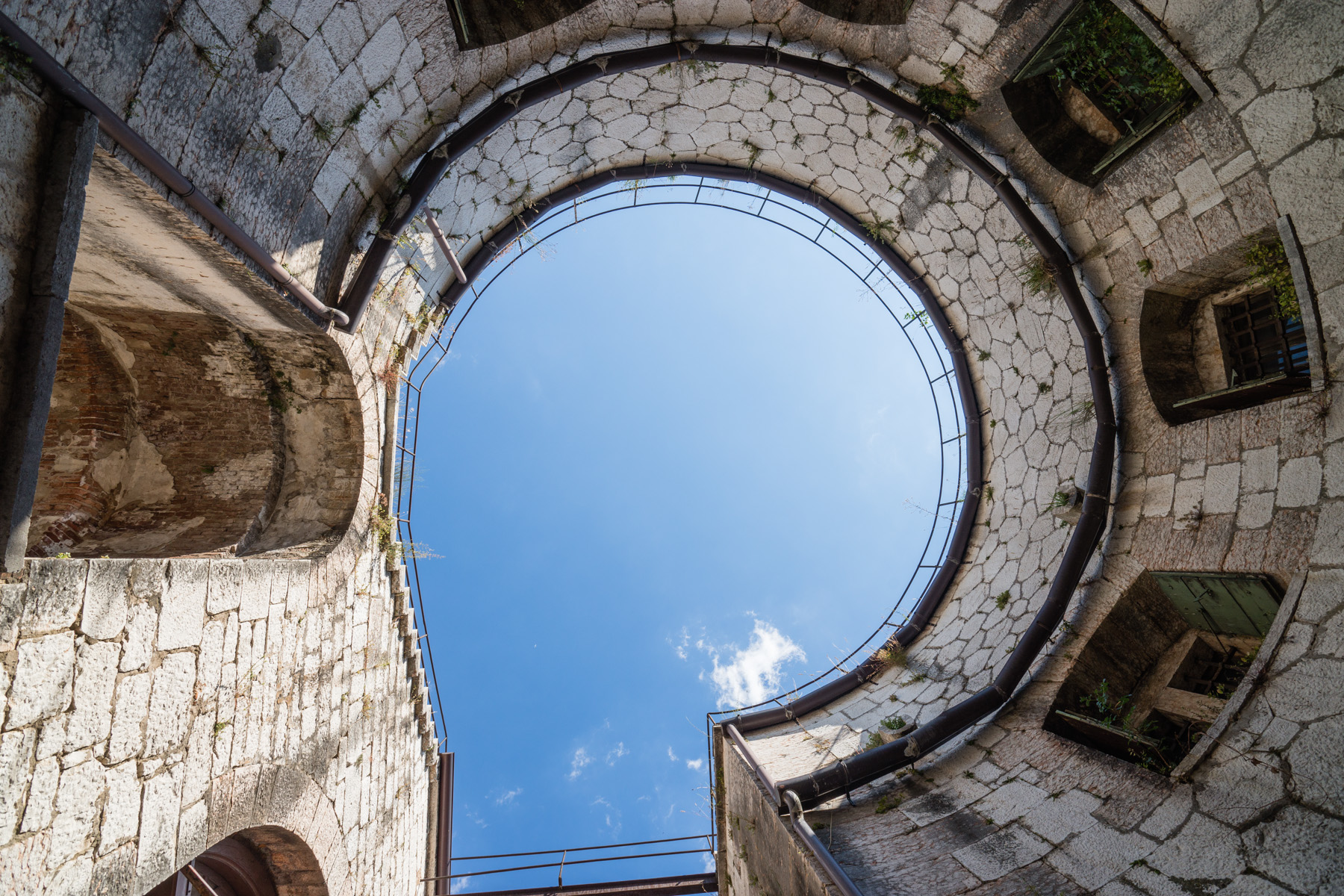
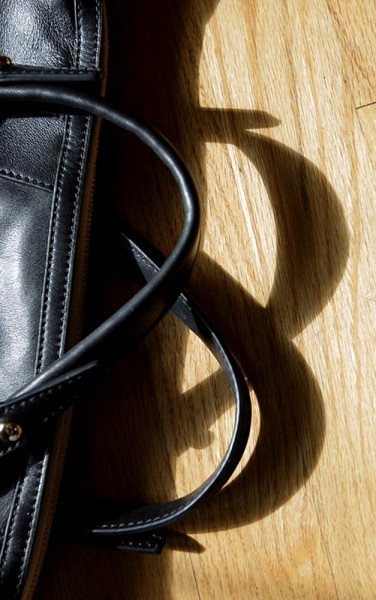
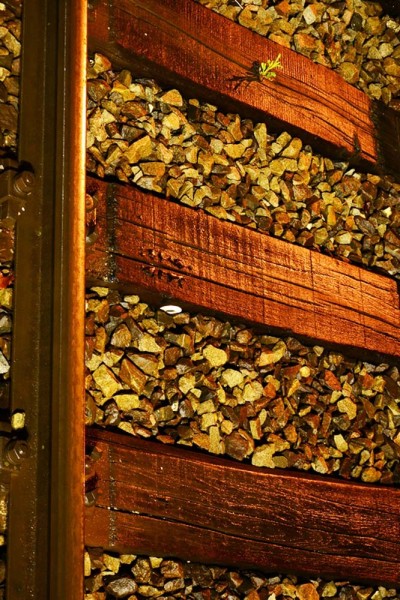
What I assign to each of my students is a color and letter to either find or to create. The color and letter should be one in the same, and should be what I always refer to as “A quick read”. In other words, they won’t be around to explain what their color and letter were so the viewer needs to pick up on it right away. They could either find it happening in nature, or create it using their imagination to “Stretch Your Frame of Mind”.
I want my students to realize that there’s two ways to look at everything. The left brain sees things as they are. A tree is just a tree, a bridge is just a bridge. In the above photo, the photographer’s left brain ( the analytical side) saw it as an opening to the sky in the middle of an old building in Europe. She was able to click off the left side and click on the right side of her brain…the creative side. Then, she was able to see her color and letter…a blue ‘P’.
Pretty impressive!!!
Here’s some of the ones that made it to my “Hall of Fame”.
Visit my website at: www.joebaraban.com and follow me on Instagram: www.instagram.com/barabanjoe. Check out my workshop schedule at the top of this blog. Don’t forget to send me a photo and question to: AskJoeB@gmail.com for a video critique.
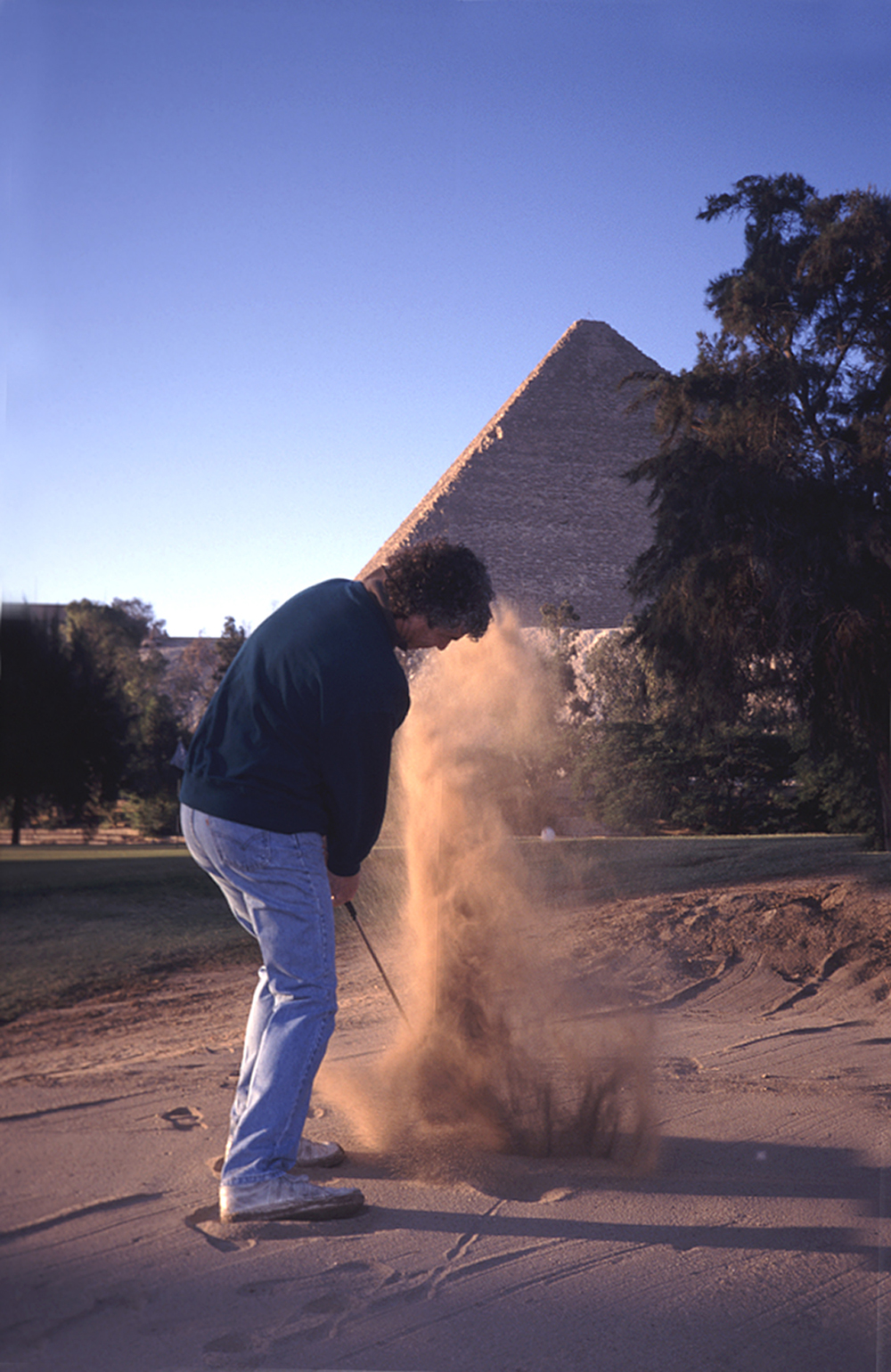
I was shooting the Annual Report for Apache Oil and Gas. They were about to start drilling in Egypt so they sent me there to basically shoot what ever I wanted that would capture the flavor of the country.
I was more than a little surprised when I found out that the hotel I was staying in was right across the road from the famous Pyramids of Giza. Not only did my room look out to the pyramids, but there was a casino in the hotel.
The biggest sand trap I had ever seen.
For some reason most people think more on the romantic side about the pyramids, and a lot of that is owed to Cecil B DeMille for his portrayal in his iconic movies. In actuality, the pyramids are not even outside of Cairo and besides the hotel, there’s a shopping center where tourists can buy everything imaginable that has to do with the pyramids or the Sphinx. Oh, did I forget to mention the eighteen hole golf course next to them????
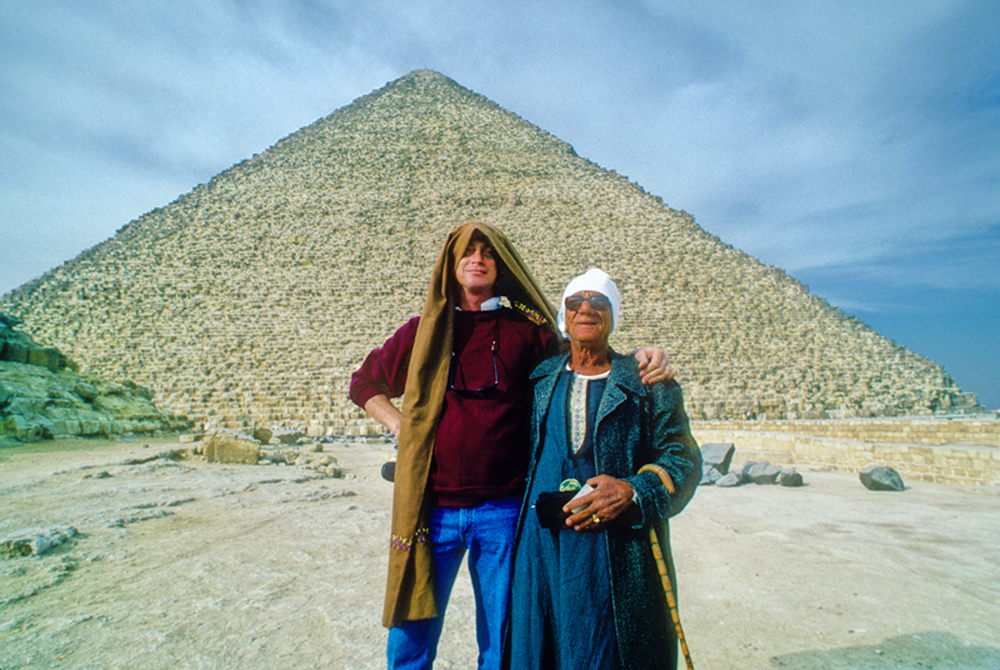
Upon arriving at the pyramids, you’re swarmed/accosted by guides that promise you secret ways to enter the pyramids, and know one else knows these passages. One such man would not leave us alone, and kept showing us all his badges he had concealed under his coat. He said that he had all the necessary permits to allow us to take photographs, and was not to be denied…I liked him right away!
As it turned out several more of these guides kept bothering us about our cameras, but Mohammad was always right there to protect and defend.
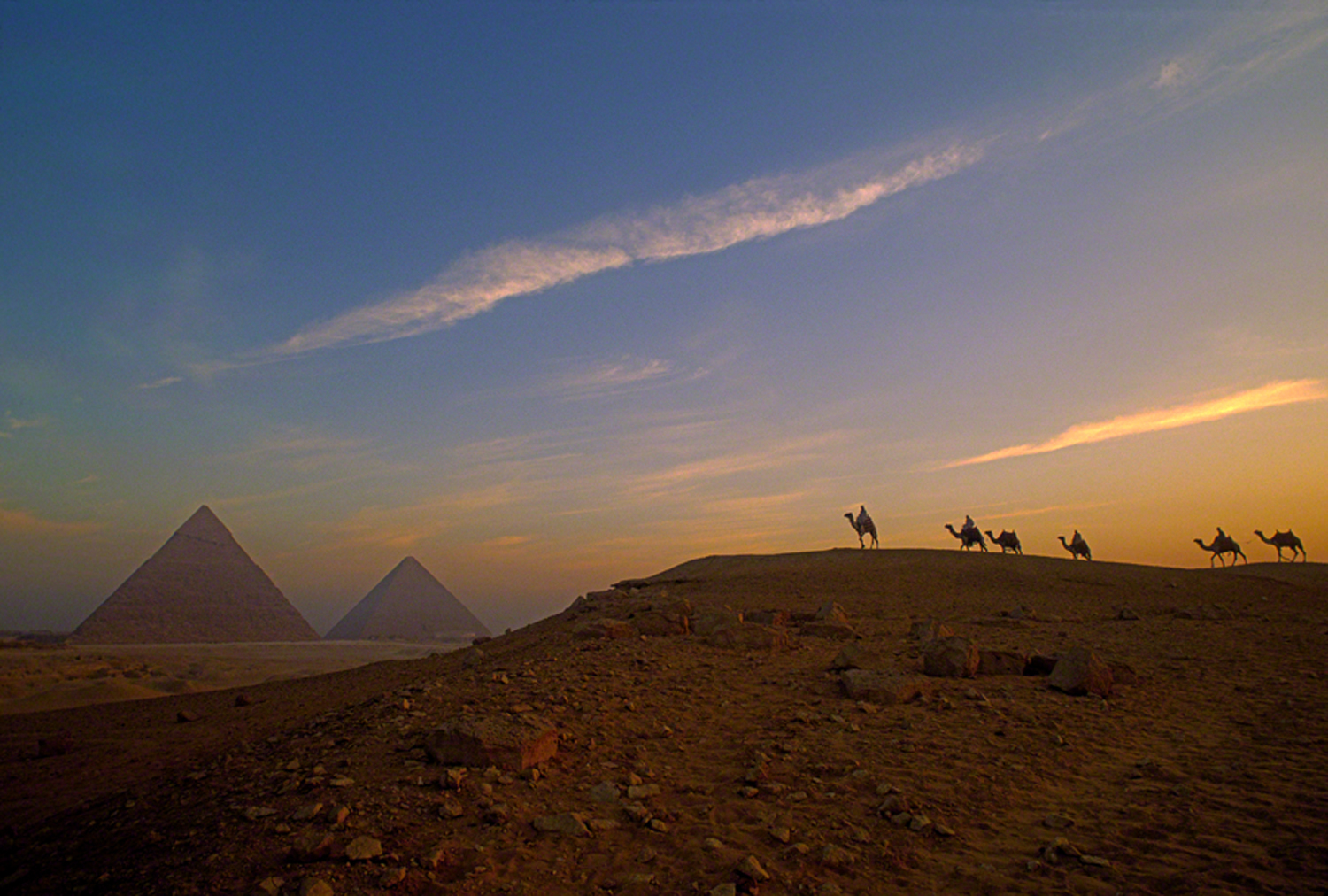
One of the photos I took at the pyramids.
Check out my website at: www.joebaraban.com, , and my “Stretching Your Frame of Mind” workshops I conduct around our planet. Follow me on Instagram: www.instagram.com/barabanjoe. Come shoot with me sometime. I will occasionally put up and coming workshops at the top of this blog, so look out for them. They fill rather quick and then I take them off.
In my “Stretching Your Frame of Mind” workshops I conduct around the planet, I teach fellow photographers how to incorporate the elements of Visual Design and composition into their imagery. Negative Space, Vanishing Point, Perspective, Tension, form, Shape, Pattern, Texture, Light, and Color are all permanently affixed to their new ‘Artist Palette’ I use to teach in my online classes. Unfortunately, the founder passe away and the school closed.
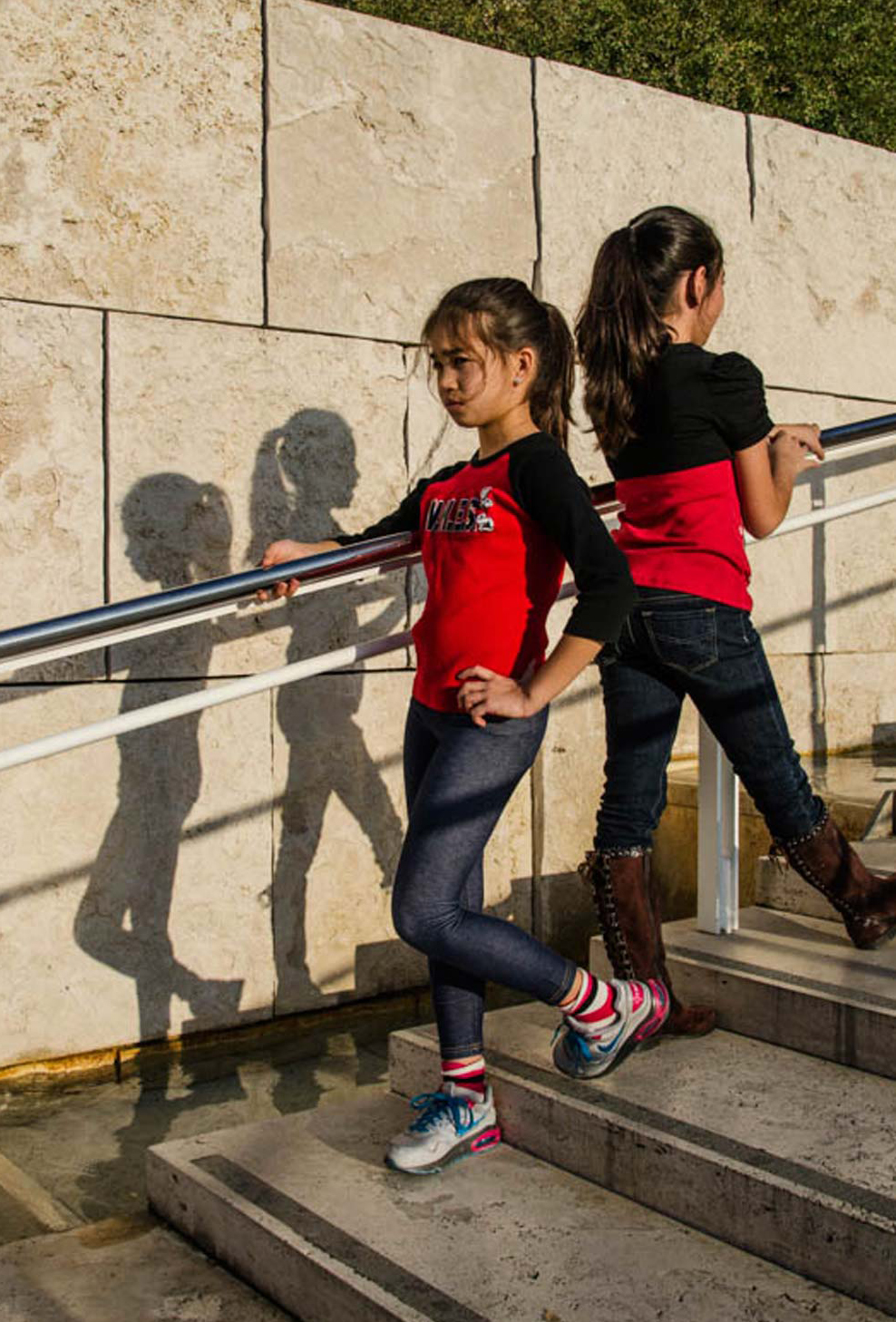
The color red, the word “indifference, and the use of shadows.
I spend extra time on LINE, since it’s the most important of all the basic elements of Visual Design. You see, nothing would exist without Line, planes, trains, automobiles and even people all have an “outLine”.
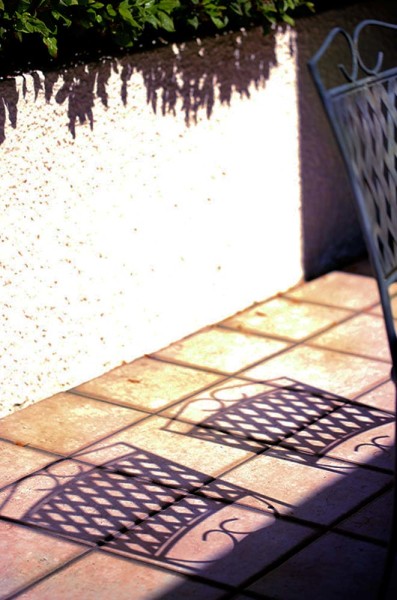
In my workshops. we also spend time on Silhouettes, and Shadows (Shadows are your best friend). In the photo of the two young girls, Stephanie was given the color red and the word “indifference” to use in a single photo. It’s a wonderful example of what the title is all about. Not only does this photo contain several elements from her ‘Artist Palette’, it’s also a perfect example of how shadows can make a huge difference in our photography. it’s certainly a benchmark for workshops to come!!!
The following is a slideshow from one of my workshops. A first class collection of Lines, Silhouettes, Shadows, and all the elements tof visual Design they all brought with them.
I have found that in my past online classes and also in my “Stretching Your Frame of Mind” workshops I conduct around our planet, so many people think that to create a mood, especially one that pulls at the proverbial “heart strings”, while drawing out an emotional response, you have to underexpose your photos. I mean underexpose to the extent that the viewer has no idea what he’s looking at. My fellow photographers also will try to underexpose a scene that was taken at a time of day where there is no possibility of created the kind of mood they want…as in high noon!!!!!
My answer is always the same, and fairly simple. If you’re trying to take a picture and your message to the viewer is dark and moody, then start out with something that’s already dark and moody and occurring naturally in nature. Or, at least a good start and adding ancillary lighting to finish the job.
OK, you can’t expect to find this happening outdoors naturally if you go out after breakfast…say mid-morning. You also can’t expect to see this if you go out after an afternoon nap and before dinner. If those are the only times you can shoot, for one reason or another, then go indoors where it will be easier to create a mood. This is also a good idea if it’s overcast outdoors…I don’t mean stormy, stormy is good. I mean a midday gray overcast sky.
If you can go out early or late, then it’s going to be a lot easier to pull on those heartstrings and create a photo that’s moody. Look for areas in shadow with little or no ambient light coming in. Or better yet, look for those dark areas that has a little natural light coming in from somewhere out of the frame and hitting your subject.
If you expose for the brightest part of the composition, as in the light falling on your subject, then everything else will be darker and the mood will be forthcoming.
Having said this, if you want a piece of advice don’t rely on the meter in your camera to help; because it won’t. Shoot on manual because the meter doesn’t know that you’re going for a mood. It will read the area in shadow and try to give you some detail in said shadows. If and when that happens, you can kiss the mood goodbye.
Shoot on manual (which is what I’m always preaching to the choir), take control and put your camera on spot metering, and expose for just the highlights. Do that, and you’ll achieve the mood you were after.
Visit my website at: www.joebaraban.com and follow me on Instagram: www.instagram.com/barabanjoe. Watch for my workshop schedule at the top of this blog. Come shoot with me sometime, and we’ll be moody together.
In sales jargon we’re use to hearing, the expression two-fer means “an item or offer that comprises two items but is sold for the price of one.” So what in the world does that mean to photography and to all my fellow photographers that love to make photos as I have which is closing in on fifty years.
It means (to the photographers that have heard me talking about it in my “Stretching Your Frame of Mind” workshops) don’t just settle for one variation of a final composition when you can easily walk away with a two-fer and not spend that much more time doing it.
When I’m out shooting, and when I’m composing, I’m already thinking about the second variation, and a lot of the time the third. In doing that, it gives me a much better chance to come home with a Keeper. It might be something as simple as shooting both horizontally and vertically. I will often change my POV from eye level to climbing up on a ladder to look down on the subject. I can tell you one thing I always do and that is to change the direction of the light. I’ll move around or have the subject move around so they are both side and back lit.
I’ll usually go out with just one or two lens that will cover anything I want from 17 to 70mm. I don’t mean just standing there and zooming in and out. I mean having the ability in shooting with a wide angle lens, a fairly normal focal length, and a medium telephoto.
Light is so fleeting that I seldom have time to try different filtration such as a ND or a polarizing filter, but if the timing is right they can offer me other different looks. The Polarizing filter can get rid of unwanted reflections (although I love reflections since they can add visual interest and tension). It can also darken the sky and make clouds stand out.
You have to remember that this will only work if the sun is at ninety degrees to where your lens is pointing to. You’ll also have problems trying to use a wide angle lens with it. A Neutral Density filter, especially one that’s at least two stops can make running water look smooth and also make the clouds appear to be moving.
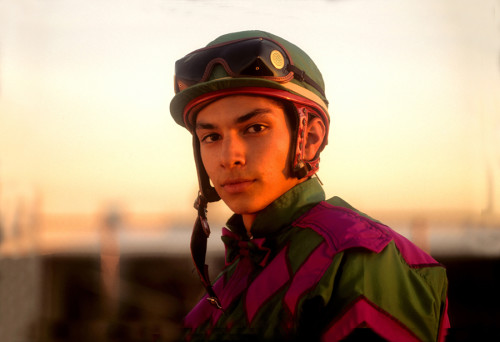
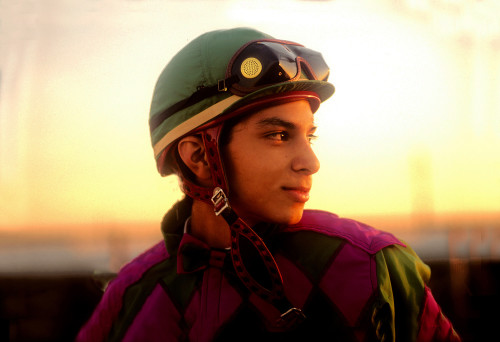
In the above portrait, having the jockey looking into the lens gives off a completely different feeling as when he’s looking out of the frame. It took several seconds and a slight shift of my POV since the horse was moving around to leave with two versions of an environmental portrait. Of course shooting at sunrise didn’t hurt as far as the quality of the light is concerned.
So there’s many ways to make your image look different and it can be done in less than a minute; as long as you’re thinking about it in the first place. Next time you go out think about that two-fer…two keepers for the price of one!!
Visit my website at: www.joebaraban.com, and follow me on Instagram: www.instagram.com/barabanjoe. Check out my workshop schedule at the top of this blog. Come shoot with me sometime.FYI, my workshops fill in a few days, and when they do I take it off.
Jean was one of my students that had taken my online class with the BPSOP before it shut own due to the passing of the founder Bryan Peterson.
She sent me this photo to talk about. As usual, i like to copy what every photographer had to say since so many have experienced the same situation or problem at one time or another. Here’s what Jean had to say:
Hi Joe!
I don’t think I will ever take a serious image again without hearing your words in my head about vanishing points, line, color, tension, etc.
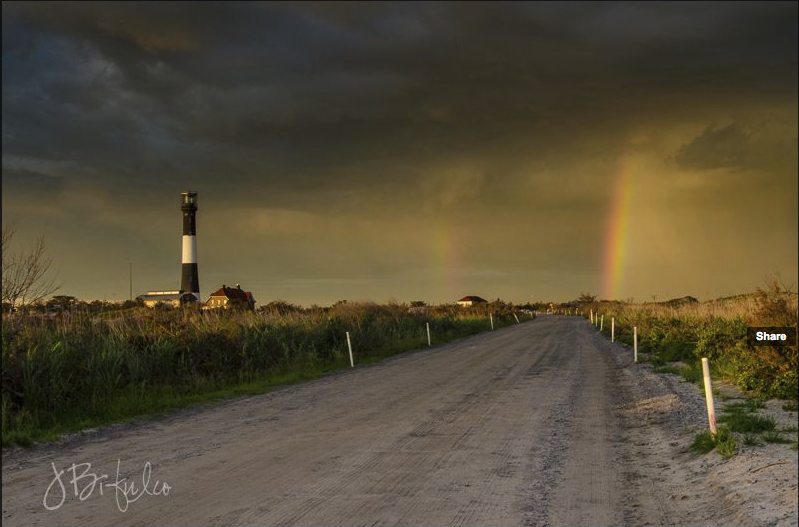
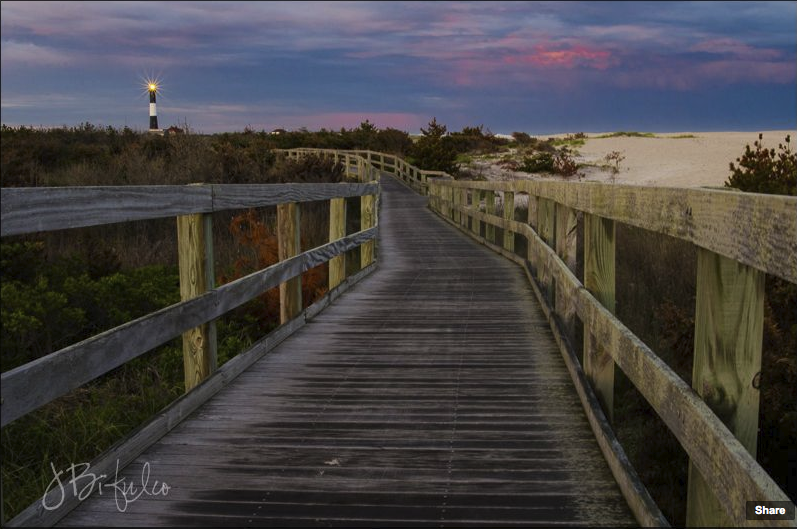
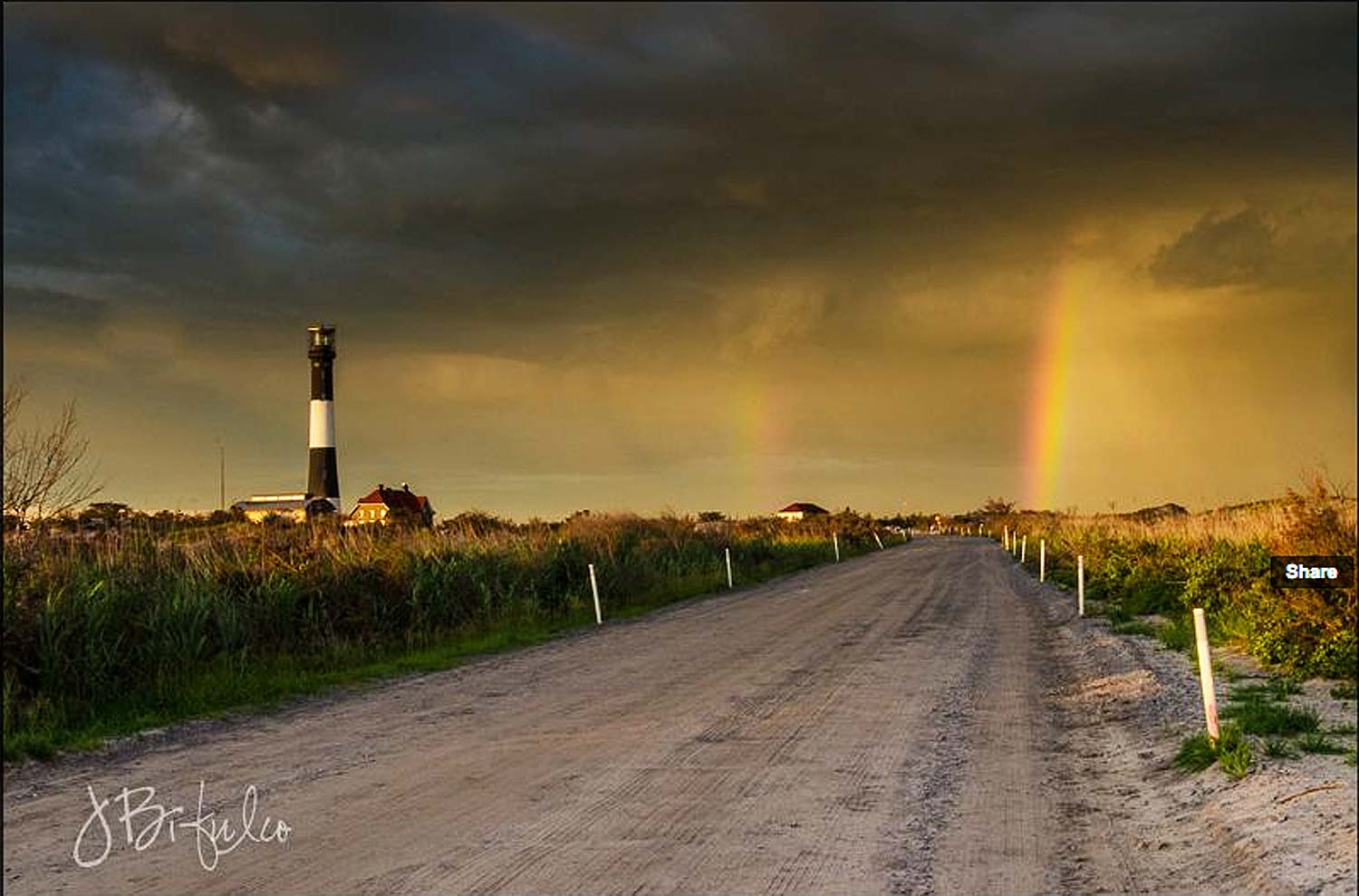
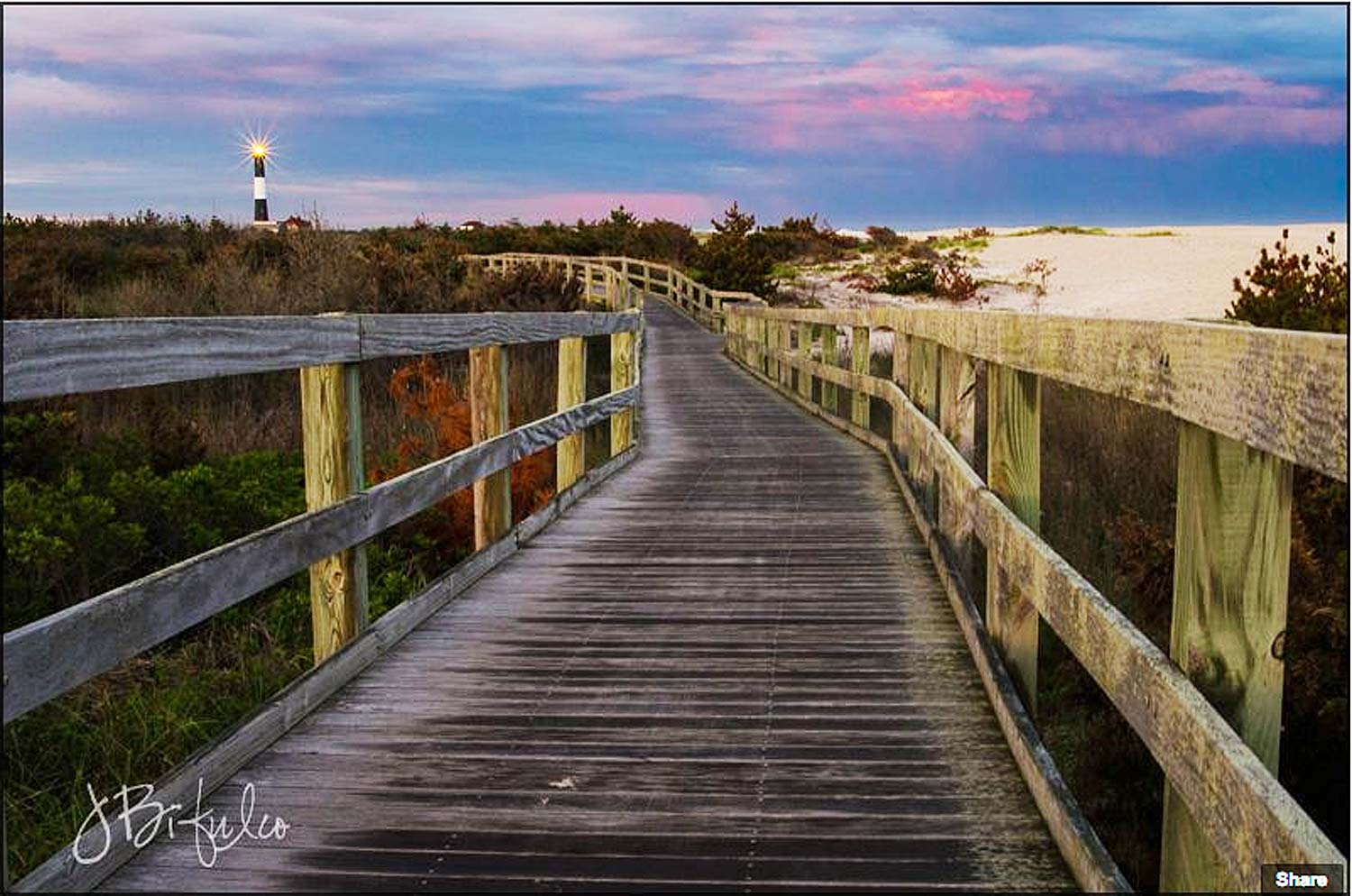
I took a ride out to Robert Moses Park and Lighthouse in between rainstorms and had the good fortune to be there as a vivid rainbow appeared as the sun was beginning to set. I am pretty happy with these two photos, but I really want to know what YOU think.
Thanks, Joe!”
Sincerely,
Jeanne
Hello Jeanne, ok, let’s talk about them:
First let’s talk about exposure and how important it is to bracket. In my “Stretching Your Frame of Mind” workshop I conduct around the planet, I’m always talking about how important it is to bracket, and bracket manually; in the camera…Why is it important when you can lighten or darken things later in front of a computer?
Because it will make you a more rounded and stronger photographer, not a better computer artist. By bracketing yourself, you’ll gain knowledge in shutter speed/aperture relationships and learn to see, sense, and feel the light around you…especially when it changes. One day you’ll be able to stand there and know by instinct what exposure is going to be the best, whether it be under or over exposing what the camera has told you what was the on reading. To me, being in control and doing things myself is a lot more gratifying than having some software do it for me.
I say all this because both of your photos are underexposed and to me hides how well done they are.
Take a look at them now:
Better exposure?Better to see the Vanishing Point?
The photo with the rainbow is one of those times that doesn’t come very often, so when it does, be ready to act fast. As Eddie Adams said, “When you get lucky, be ready”.
It’s a great photo, but to me there is too much road and not enough of that tension filled wonderful ominous sky. The road is just a road, with little redeeming qualities about it except of course the obvious one…it creates a Vanishing Point that leads the viewer to the point on the horizon and the remarkable payoff.
Having said that, you would still have the Vanishing Point if you raised your camera up to get more sky and less of the road.
In the second photo, you have also created a Vanishing Point that takes the viewer on a ride to the horizon and lighthouse. As you remember in my classes, the more ways we can lead the viewer around our frame the better. By doing this we make him an active participant and make him work a little…exactly what we want him to do.
You have also designed the composition as to include a couple more elements from your ‘Artist Palette’: The use of Negative space to define the railing and all the rectangular shapes created when the Negative Space defines the different parts.
I usually read or hear something first that get my attention and gives me some of my ideas, then I apply it to conversations I have with my fellow photographers that sign up for my “Stretching Your Frame of Mind” workshops I conduct around the planet. In this case I had the idea/feeling before hearing or reading it somewhere, and followed it up by searching the web to see if others experienced similar ideas or feelings.
The feeling I had was when I remembered my mother always telling me that I had a huge imagination and it was always running away with me.
im·ag·i·na·tion
iˌmajəˈnāSH(ə)n/
noun
noun: imagination; plural noun: imaginations
“The faculty or action of forming new ideas, or images or concepts of external objects not present to the senses. The ability of the mind to be creative or resourceful”.
Here’s what made me remember that:
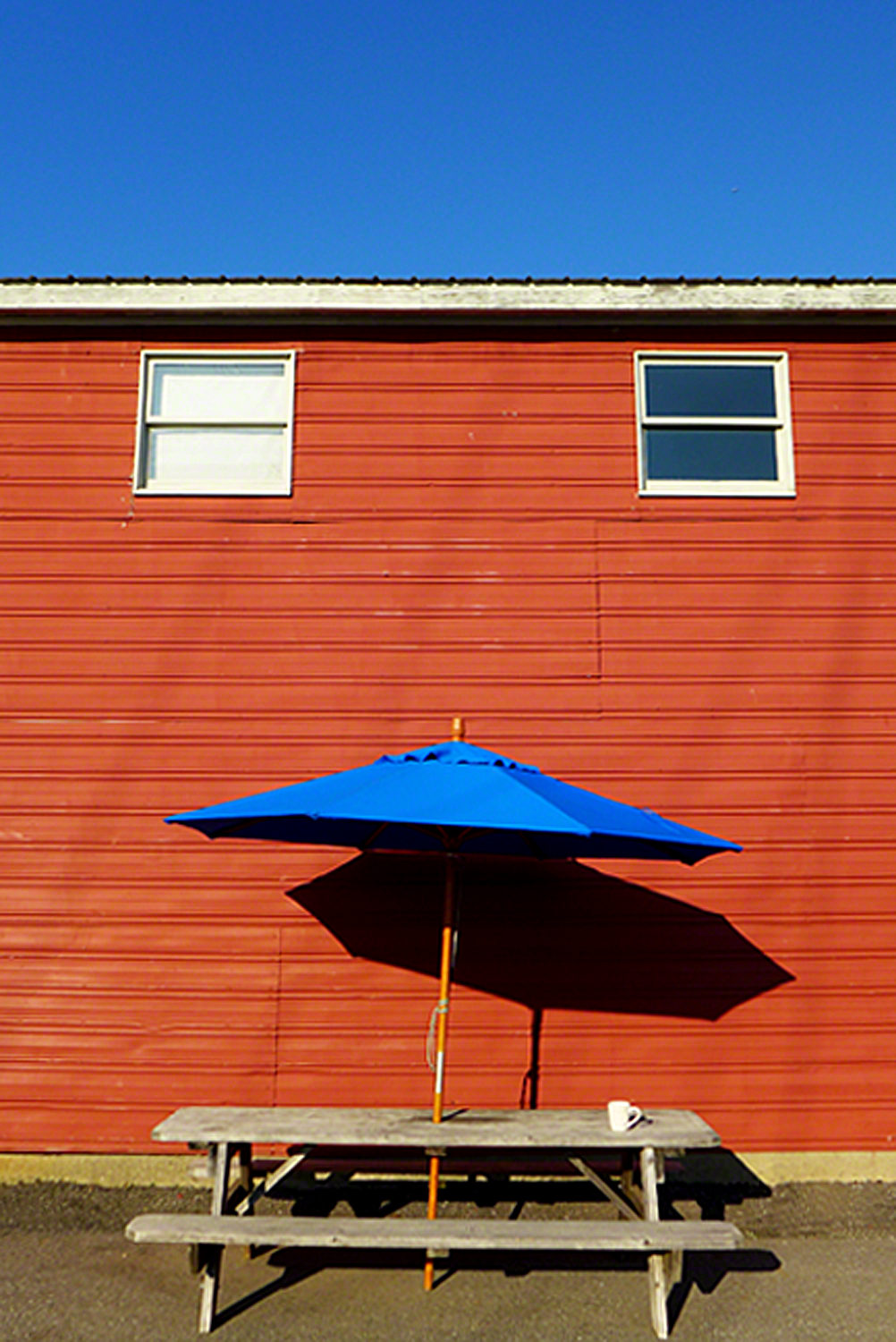
I was in Rockport, Maine conducting a workshop and while shooting down the road in Camden, I saw a table with an umbrella and a coffee cup against a wall. I moved the table over to the right to avoid a broken window to keep it clean and to have balance and negative space surrounding and defining it.
When I stepped back to take the photo, I didn’t see what I thought I was going to see, instead I saw a smiley face winking at me!!
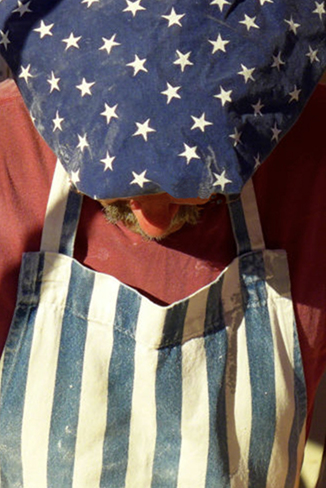
The next day I took my class to the Lobster Festival down the road in Rockland (which is the reason I have picked this same week to teach there for thirty-six years) and while walking around I stopped suddenly to take a photo of a man putting batter on fish. All of a sudden I was no longer looking at a man, but instead a living American flag…Old Glory. It was my imagination running away with me once again.
So my fellow photographers, the next time you go out shooting open up your mind and let it wander around. Give it a try, follow it because it just might lead you to a place you’ve never been before.
Use that imagination of yours and you’ll see that it’s a very powerful tool.
Btw, one of the first things that popped up while searching the web (and what this post is named after and for) was this song, and one of my favorites by the Temptations…how serendipitous was that????????????
Peter shot this all in the camera on a rainy night.
I’m especially proud and impressed by the number of really good photos from this class. It was a great four weeks, and every day I saw in all my fellow photographer’s work how much their thought process, their approach to “making not taking pictures”, and how their eye was progressing.
Before Byron Peterson, the founder of the school…the BPSOP passed away this last year and still in my “Stretching Your Frame of Mind” workshops I conduct around the planet, I taught and still teach people how to incorporate the Elements of Visual Design into their photography. I also show them how to use other important elements such as the silhouette and shadows as two examples. Each week I give out a lesson with two of the elements as their assignment, and I give out a video critique for each one photo submitted to me.
I call it my Artist Palette, and after the end of both my part I and part II, their Artist Palette is filled with: Line, Texture, Pattern, Form, Shape, Negative Space, Perspective, Visual Tension, the silhouette, and your best friend the shadow.
When you look at the April slideshow, keep in mind that my class is not allowed to use any post processing during the four weeks, so what you see is straight out of the camera.
Visit my website at: www.joebaraban.com, and follow me on Instagram: www.instagram.com/barabanjoe. Watch for my workshop schedule at the top of this blog. Come shoot with me. I
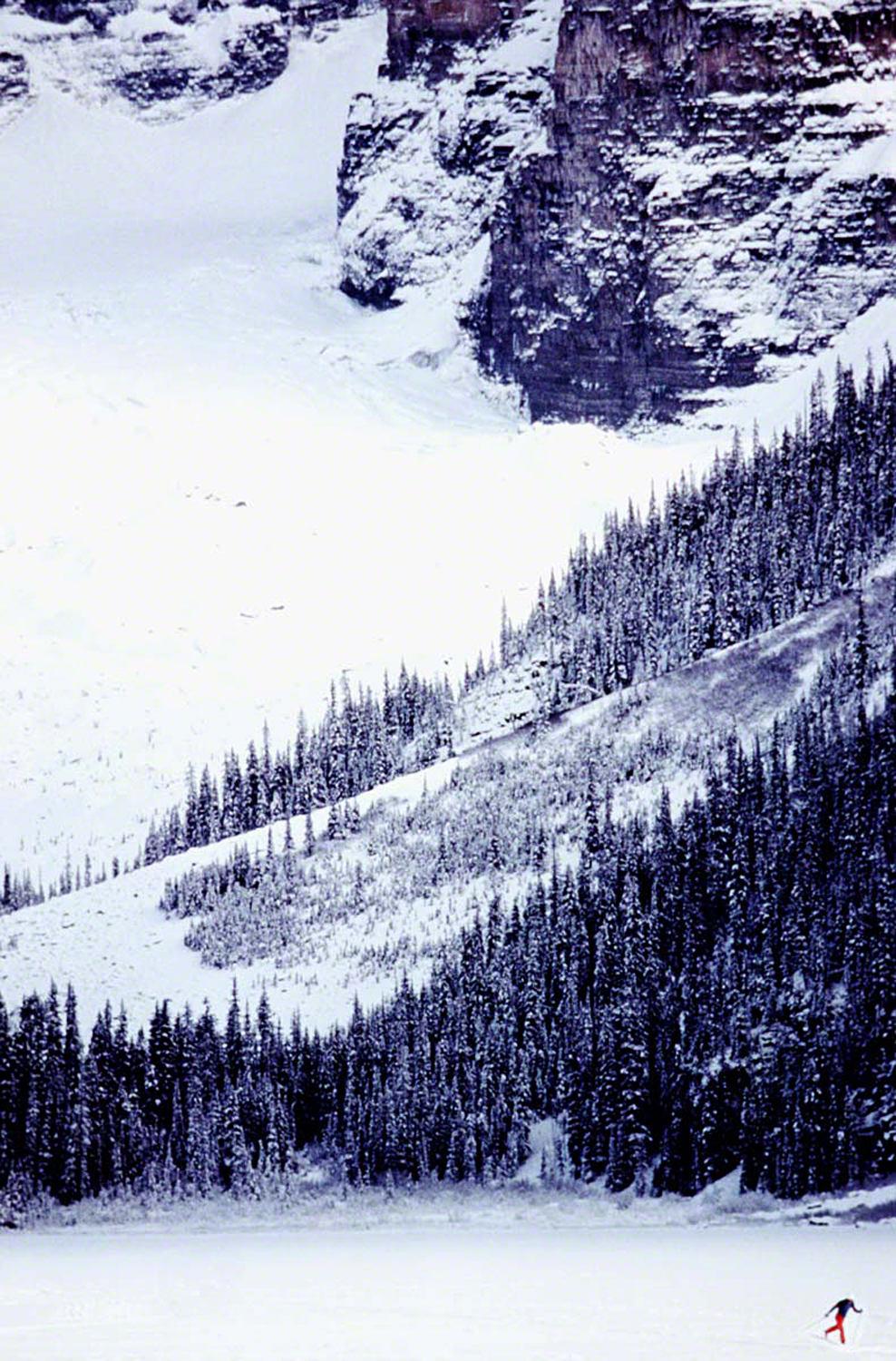
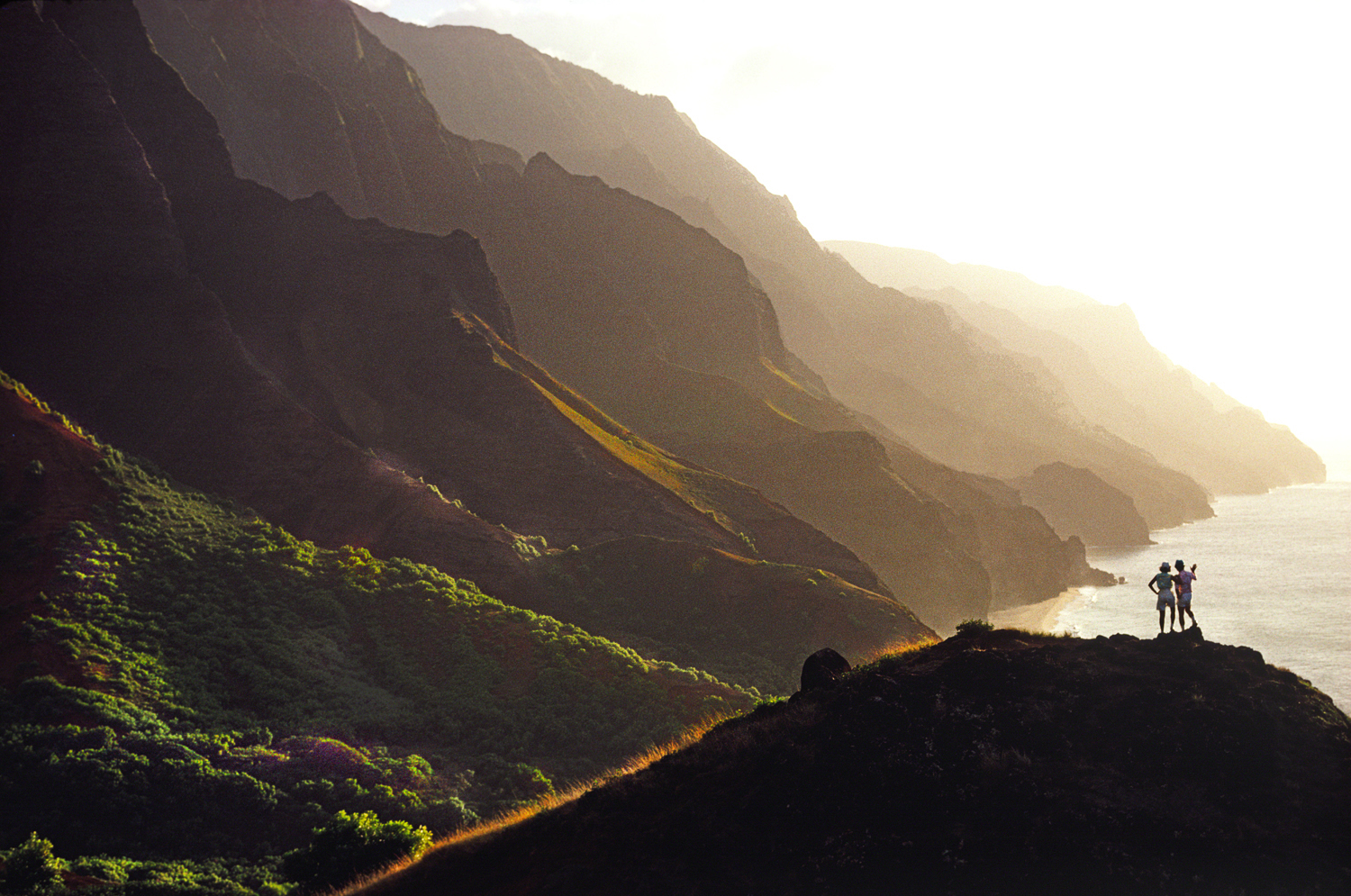
This is a continuation of a previous post when I talked about showing scale in a landscape photograph. Since I’m not a Purist when it comes to taking landscape photos, I like to give the viewer a sense of how vast an area is when I look through the viewfinder. For me, it puts things into perspective. It also gives the viewer a chance to discover new elements in my images. For example, a person or object somewhere in the frame that’s not immediately seen. Since I’m a follower of the psychology of Gestalt, I want the viewer to become an active participant in my thought process, and by having him discover new things when looking at my work, he’ll do just that.
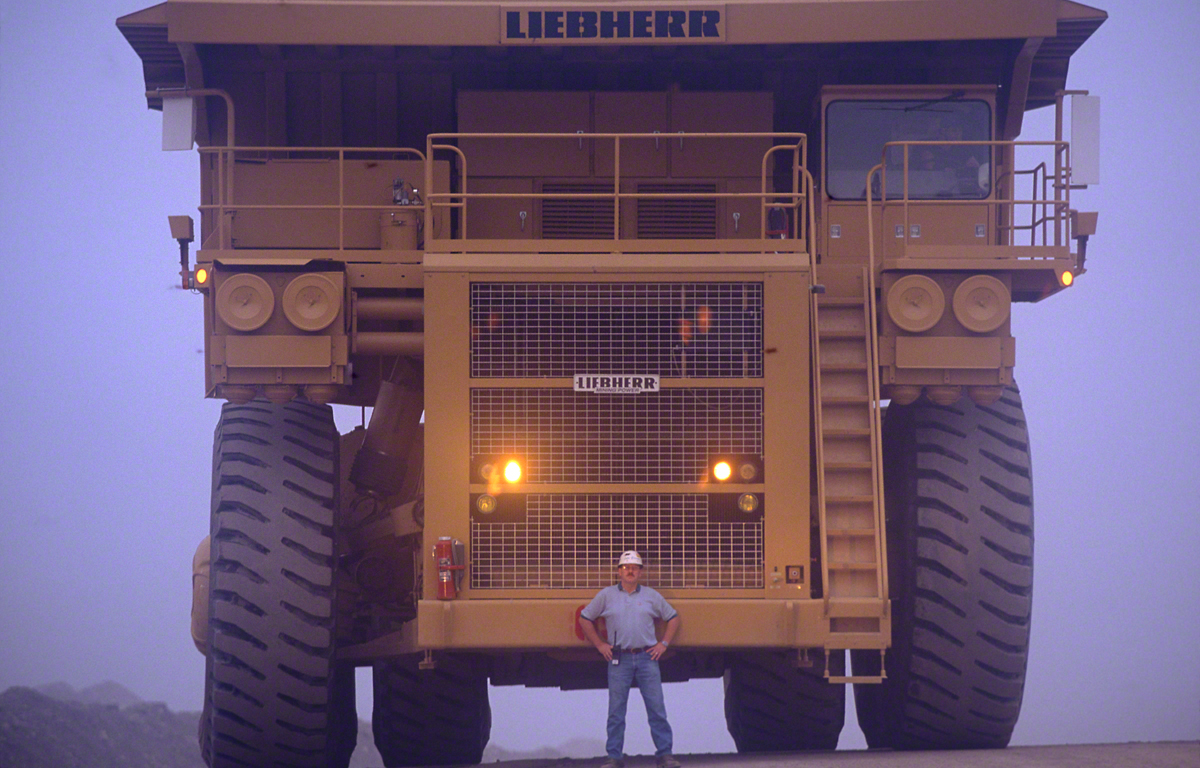
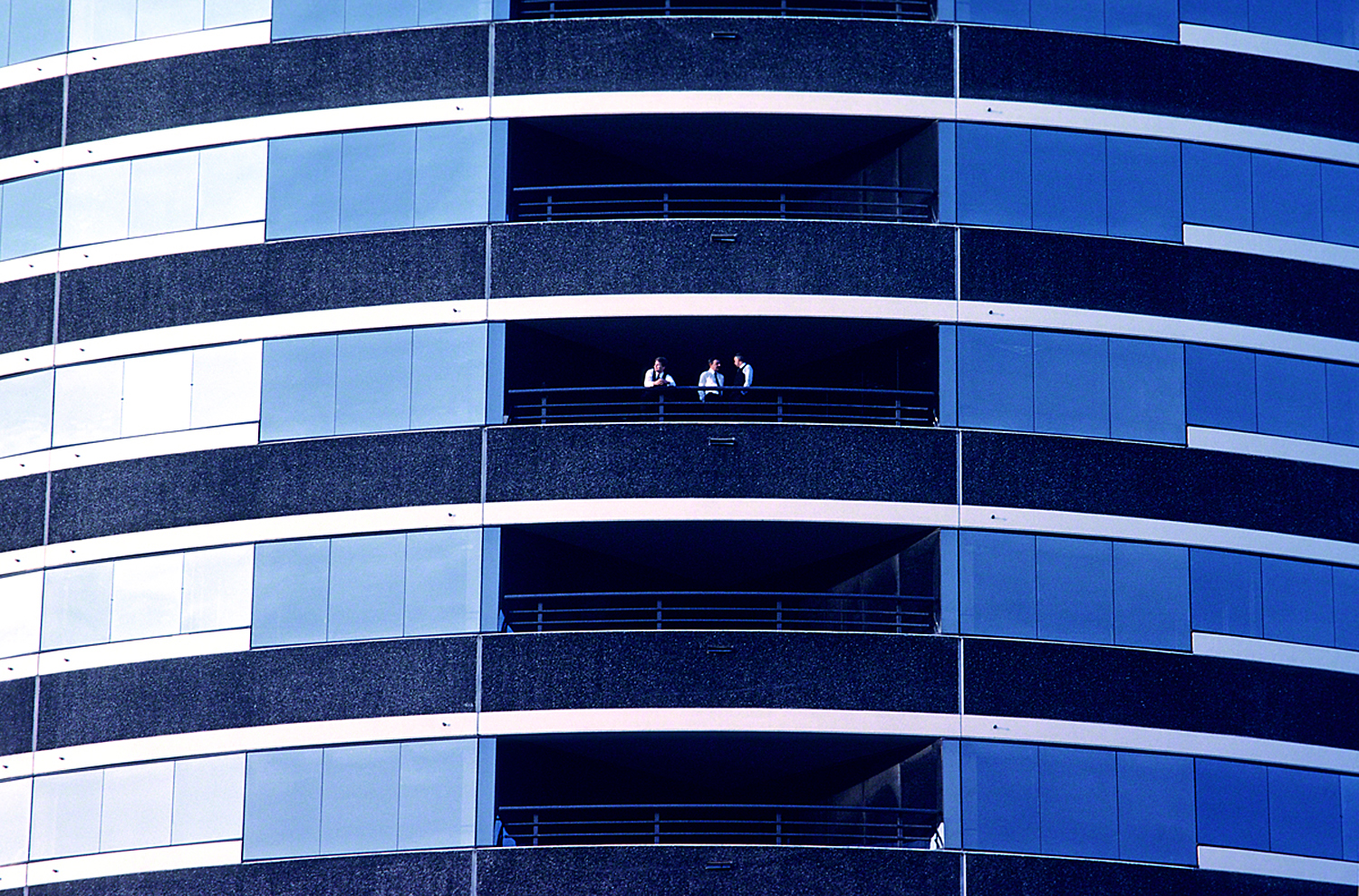
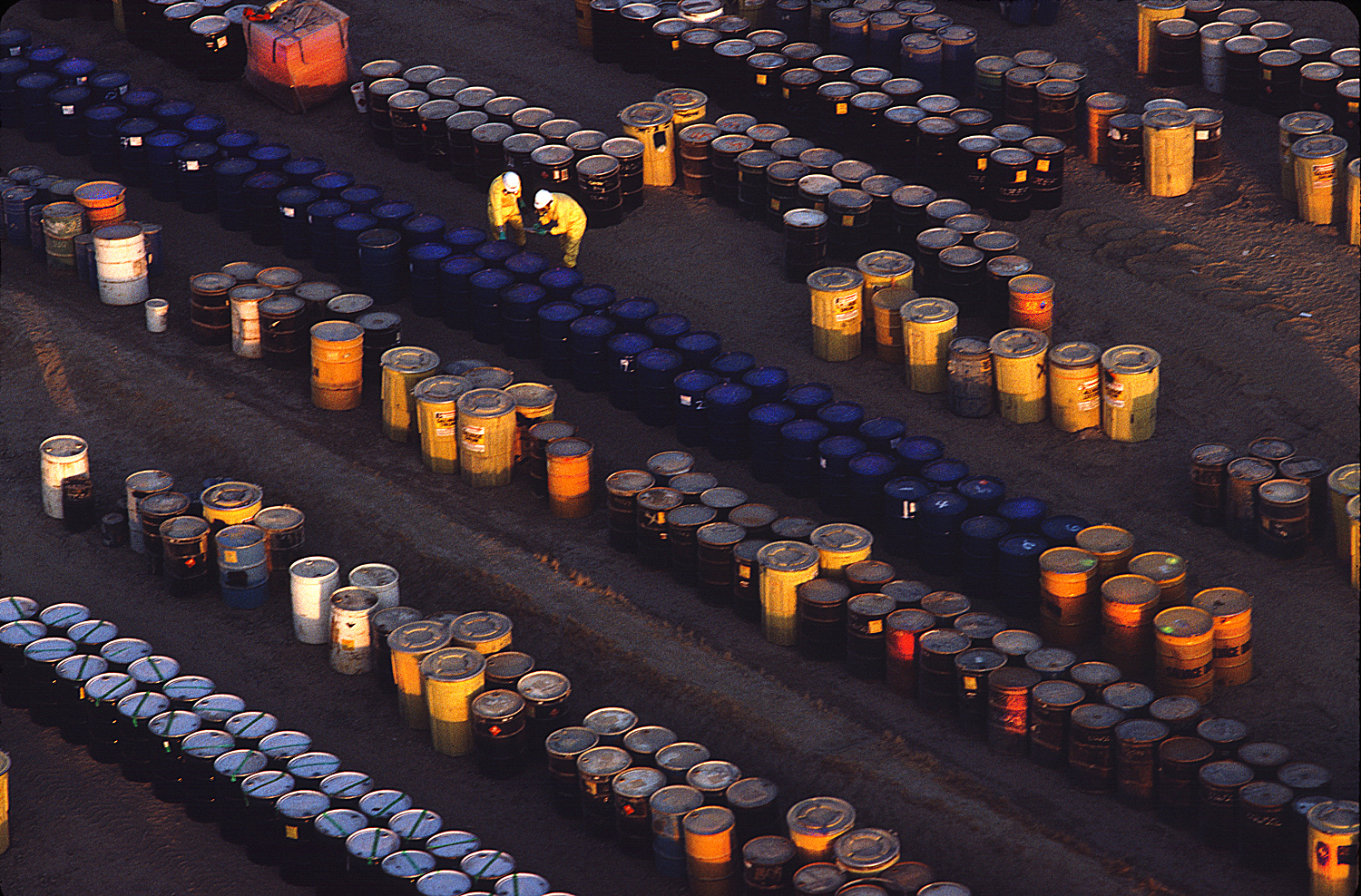
There is another way that I like to show scale in my photos, and that is to show a person or object in relation to something much larger and man made. There’s a dichotomy created when I put a person in opposition to something that’s larger and/or more powerful. Animate verses inanimate. One of the ways to create Visual Tension is to have opposites sharing the same composition, thus competing with one another. The contrast creates energy, and the formula I’ve always given both in my online classes and in the “Stretching Your Frame of Mind” workshop I conduct around the planet is: Tension=Energy.
Besides the visual tension that’s created, the photo takes on an editorial feel by communicating some sort of story. Why is that person doing whatever it is that he’s doing. Why are they there? Where is he exactly, etc.
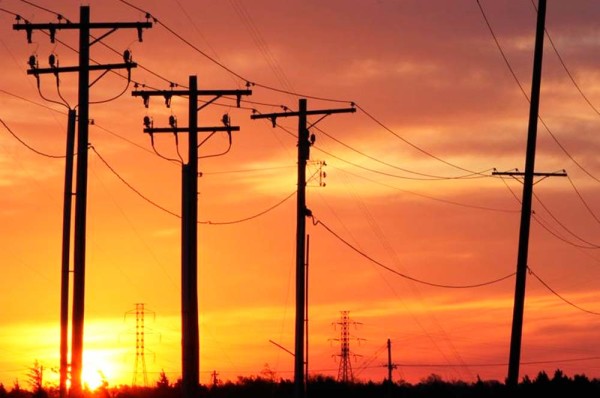
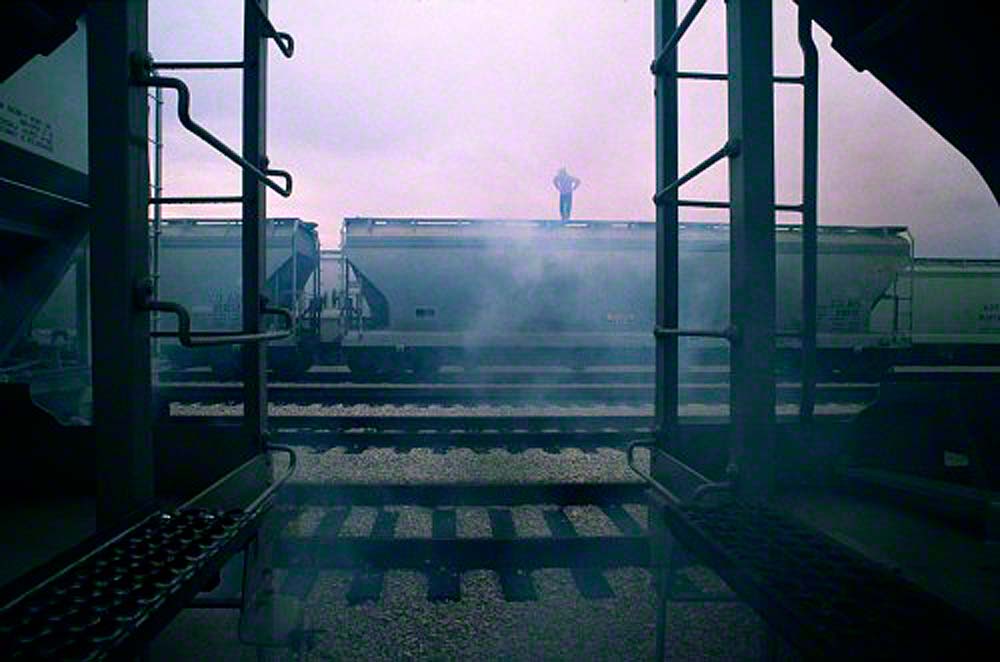
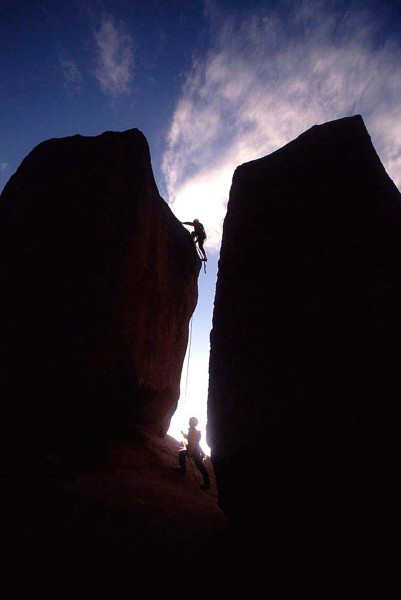
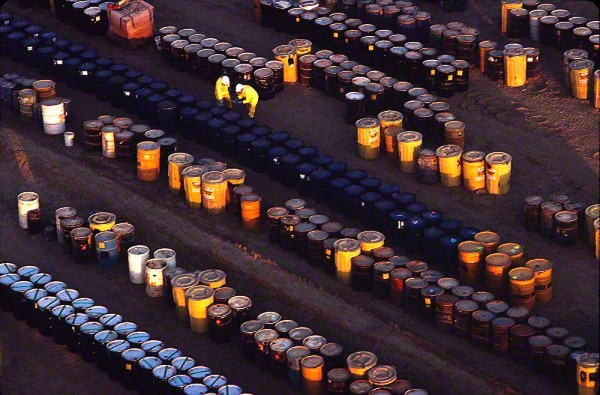
Here are a few examples of showing scale in a non-landscape environment.
Visit my website at: www.joebaraban.com, and follow me on Instagram: www.instagram.com/barabanjoe. Check out my workshop schedule at the top of this blog. Although I put them up, they fill rather quickly and then I take them down.Come shoot with me sometime.
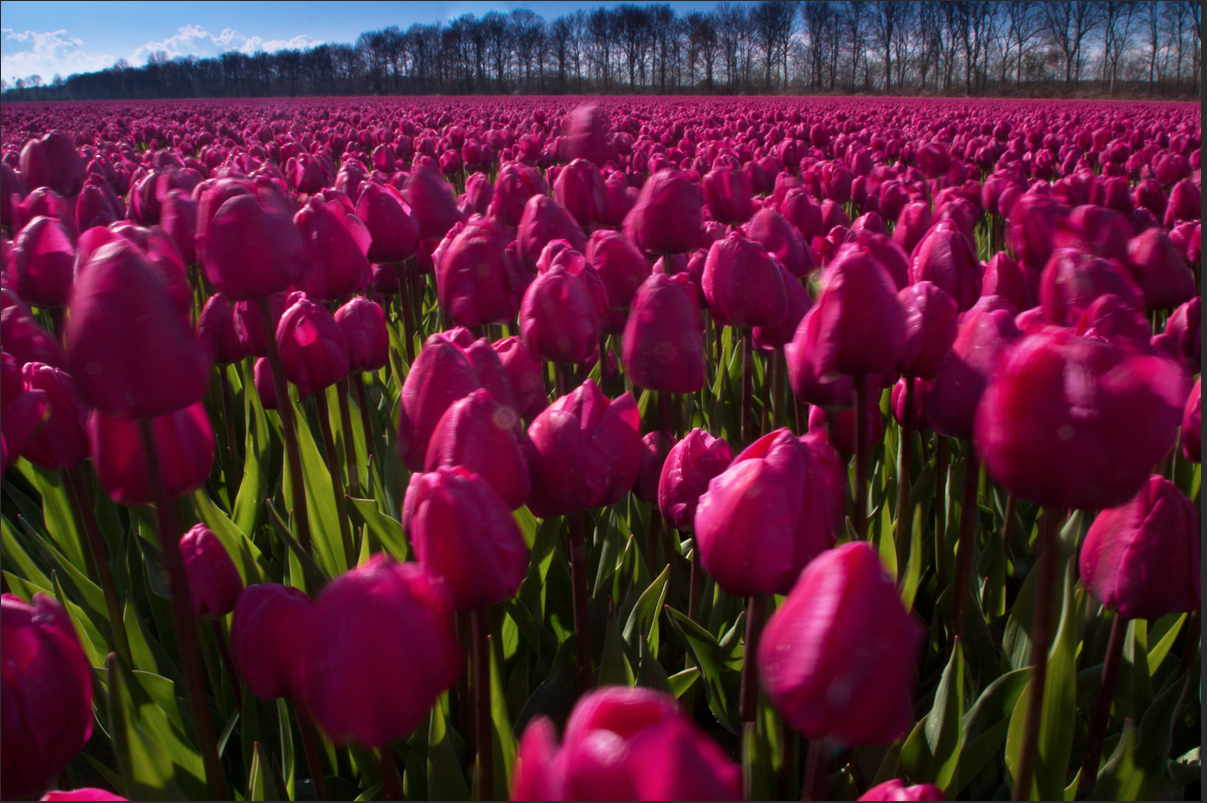
A fellow photographer and student sent this photo of a field of Tulips for discussion. Here’s what he had to say:
“Joe, here is a photo I’ve taken recently. My question to you is simple: How do you “read” it? (On purpose, I am not saying anything by words; I’d like to let the photo speak to you…)
Ok, let’s talk about your tulip photo. You asked how your picture of these tulips spoke to me, and how I read it.
First of all, it probably speaks to me differently than anyone else you might ask for the simple reason that I love tulips. I plant them every year, and when I buy cut flowers, which I usually do, I’ll buy tulips and when I can, I’ll buy French Tulips. So, you already have a score of ten. Now, lets see if you can keep it!!!
As you’ll notice, I lightened it a couple of stops so it’s a lot brighter, and now the color isn’t quite so heavy…which by the way is not the same as if it were over saturated. The main reason why the tulips appear dark and the sky looks ok, is that if you were to take a reflected reading just of the sky and then the tulips, you would find a big difference in the exposure. You wouldn’t be able to get both the flowers and the sky exposed properly without the help of post processing. It’s all about Dynamic Range, and if you click on this link, I can go into more detail.
Not that it’s a bad idea, but I like creating my pictures in the camera first without any help. I’ll resort to any post work when I absolutely have to. For me, I like creating my images before I click the shutter simply for the challenge…plus it has made me a better shooter in the process.
But I digress!
Ok, lets talk about how you used the elements of visual design you learned from taking my online classes and that you have on your Artist Palette. These are shown in bold:
First of all, I like the contrast between the Texture of the trees in the background and the tulips. As you know, contrast is one of the ways to create visual tension. The tension that occurs when forces as in the trees and the tulips act in opposition to one another. Very different from the Tension that comes with emotional or mental strain.
I like the blue triangle you created in the top left corner. Since Shape is an element of visual design, I’m always looking to include one of the four basic shapes, that being a square, circle, rectangle or a triangle.
As I’ve said a million times, Light is everything. Wherever I am , the first thing I do, before I raise the viewfinder to my eye is to determine the direction of the light. I’m always looking to back or sidelight anything that’s translucent, like the stems and leaves in your photo. I love the way they glow!
I might have come around more to the right to get the tulips more backlit so they would glow as well. Right now, the shadows on the tulips take up most of the surface area…that’s not necessarily bad, as I like to side light as well.
The last thing I want to mention is to always be sure what’s going to be in focus, from the front to the back. In my opinion, the tulips in the foreground are large and out of focus which is somewhat distracting.
I’m going to assume that you were hand holding your camera so you might not have been able to stop all the way down without adjusting your ISO; in which case you weren’t in control…that’s why I use a tripod.
By the way, since Color is a great communicator of ideas, the field of red makes up a Pattern ( another element of visual design) that tells the viewer that the bulbs you buy here will all be the same color…red. Pattern is a good thing to include in our imagery, and breaking the rhythm of patterns is even better.
Overall, I would say that it’s a good shot, nicely composed and lit…but then I love tulips!!!
Thanks again for your submission.
Visit my website at: www.joebaraban.com, and follow me on Instagram: www.instagram.com/barabanjoe. Check out my workshop schedule at the top of this page. They don’t stay up very long. so you have to catch them at the right time. Come shoot with me sometime.
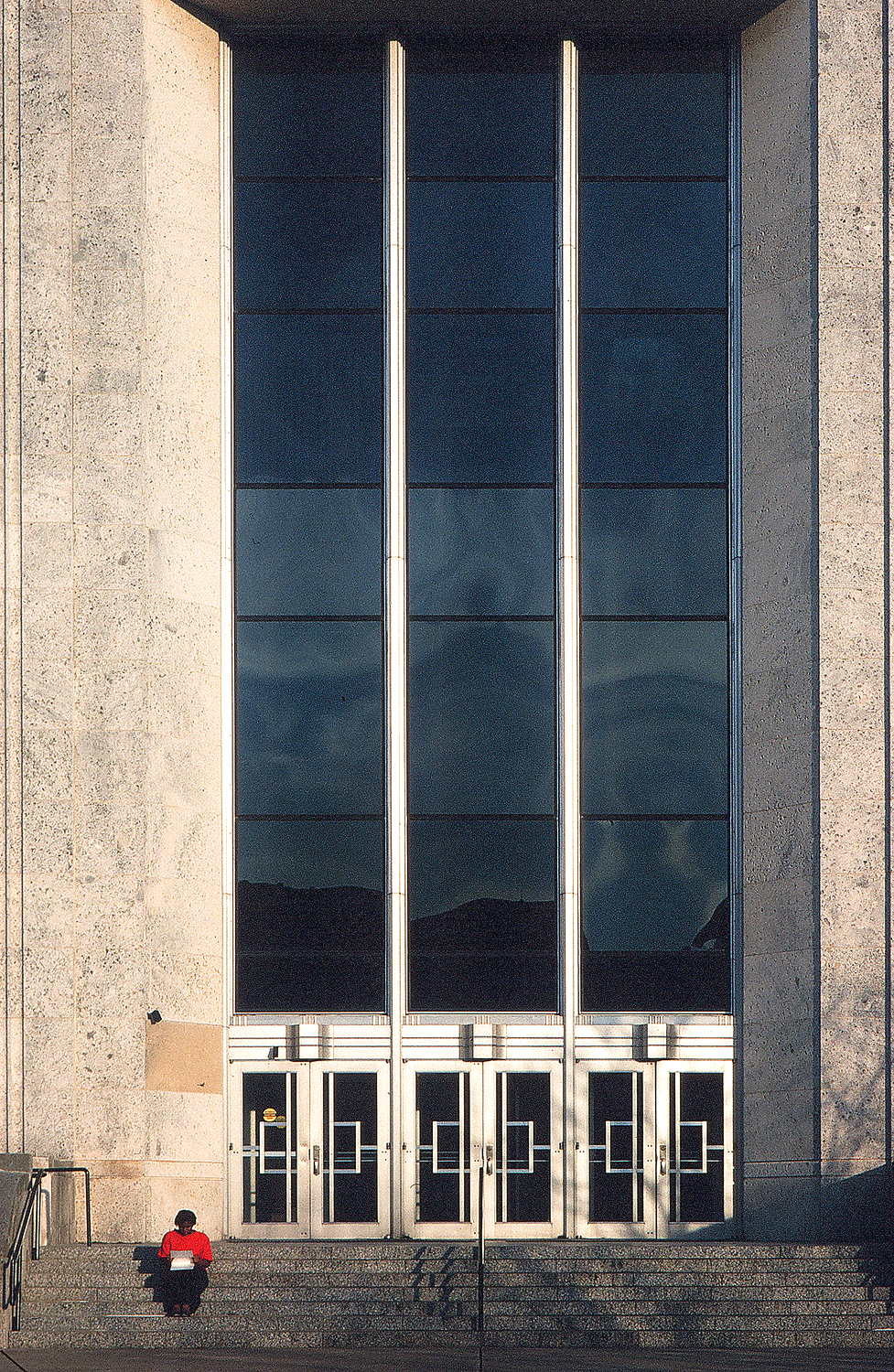
Besides the fact that people like to see people in photos, I like to have people in my shots to bring a sense of scale to them; not all the time, just some of the time.
Not only will adding a person show scale, but it will also change the genre of the photograph. In other words, adding people will editorialize the original idea. for example, taking a picture of a building with no people in it makes it lean towards the architectural side of photography.
When you add a person, not only will it reveal the actual size of the building, but it will ask the viewer why the person is there. When you do that it you’re creating a story for the viewer to read visually; it asks the viewer to express an opinion making it editorial instead of architectural.
The same thing happens with a landscape. Simply stated, a landscape represents all the visible features of a countryside that the viewer can see all at one time from a single viewpoint.
Before the passing of the school’s founder Bryan Peterson, I’ve had ‘landscape photographers’ take my online class with the BPSOP and I’ve also had them sign up for my “Stretching Your Frame of Mind” workshops I conduct around our planet, and I can tell you that they can be a stubborn lot; not all of them but a lot. What I’m getting at is that they can be adamant that a landscape cannot be a landscape if there buildings in the composition, and certainly not a person.
These people call themselves purists, but they have no compunction to do a little work on them in Lightroom or Photoshop; it makes me wonder just when you can begin or stop being a purist?????
I digress again.
I’m not going to get into that, but I will say that when you add a person it gives scale to the image. The viewer doesn’t know the actual size of a building nor does he have any idea of the vastness of the landscape he’s looking at. What he does know is the average size of a person, and that will help him identify the size of a building or the scope of a landscape.
BTW it also, like an architectural photo, makes the viewer wonder who that person is, where did he come from, and why is he there. These are questions that will keep the viewer around, and unless you’re shooting photos strictly for yourself and if you’re at all like me, you like people to look at your pictures.
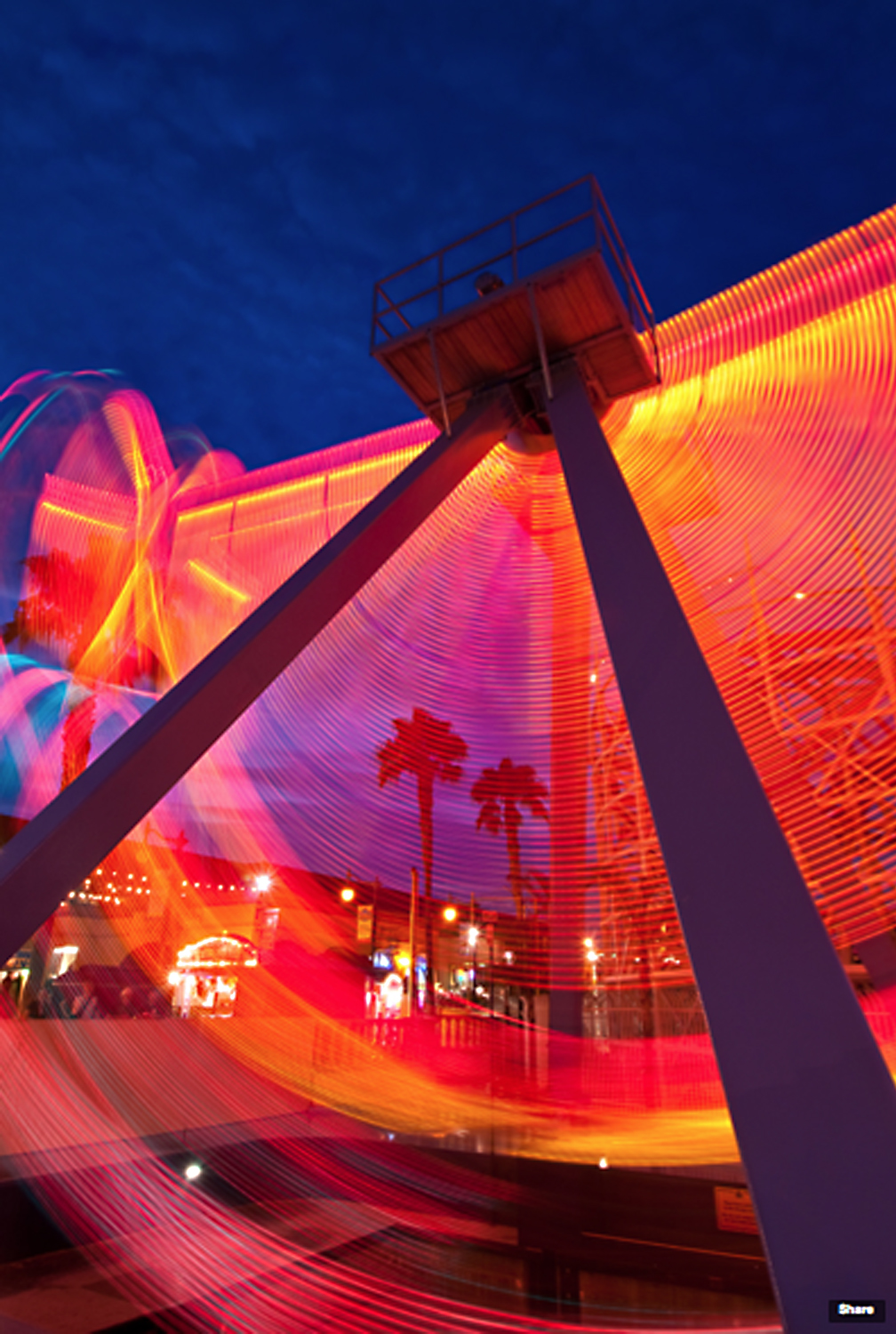
A skilled student of mine sent me this photo to comment on. Here’s what he had to say:
“Hi Joe,
What do you think about this photo? I took it in San Diego at the amusement park in Mission BLVD.
It was my attempt to play a bit with movement and lights at twilight, and I’ve tried different exposures, in order to get the shutter speed that would have been creatively right for the effect I wanted to achieve.
Color communicating ideas
Ok, first of all, I love the colors. There’s a lot to be said for the study of color theory, and how the different colors have a psychological effect on the viewer. For example, The blue background is calming, while orange is considered an attention grabber. yellow is cheerful, and red (the most powerful color of all) is stimulating, and at the same time is sexy, occasionally angry, and can sometimes imply risk-taking.
Sad to say, the founder of the school, Bryan Peterson passed away, and the school permanently closed. Before it closed, I always said to my online class with the BPSOP, and in my “Stretching Your Frame of Mind” workshops I conduct around the planet, Color communicates ideas!!!
When you put these colors together in the form of lines (the most important of all the elements of visual design) and then make them move, the results can be memorable.
Ok, let’s talk about the idea itself:
One of my Personal Pearls of Wisdom is “In a perfect world, what if?” In other words, if you could go back and re-shoot this photo, what would you do different; providing you could do anything you wanted? What would any of you do different? Send me a mssage and tell me.
If I was to go back there with you, I would either create more of the buildings and lights, or lose them entirely. Right now they’re a touch distracting, mainly because the viewer might not draw a conclusion as to why they’re there and what he or she is looking at.. If you hadn’t said that you were at an amusement park, the ride in the foreground might not have been interpreted as part of the park. There’s lots of things I could conjure up that might create the same kind of effect.
If you were trying to say Amusement Park, then I might try to show more of the area. More visual interest and Tension by incorporating more lights in the background. Remember that you won’t be around to explain your photo, unless you title it as a ride in an Amusement Park..not the best idea!!! I might show a little more of the environment to make it what I call a “quick read”. If your intent was just to show the ride in motion, I might pull back to see more of it and perhaps one or two shutter speeds faster as well as different exposures. Maybe a little brighter sky.
Overall, I would say that it’s an interesting image to look at, and because of all the things going on, the viewer will stick around longer…exactly what we want!!!!
Thanks for sending it.
Visit my website at: www.joebaraban.com and follow me on Instagram: www.instagram.com/baraban/joe. Check out my workshop schedule at the top of this blog and come shoot color with me sometime.
To many of my fellow photographers, distortion is very bad and would rather not take the shot than to have it look distorted; I agree, in part. Having said that, there are times when distortion is not a problem and can actually help you take your image what I refer to as “up a notch”.
There’s two aspects to distortion that I want to talk about in my part one and two posts on the subject, and that has to do within the architectural genre, and both come up in my “Stretching Your Frame of Mind” workshops I conduct all over our planet.
I often get submissions from photographers that have buildings in them, and the majority of the time they are falling/leaning over to one side or another. The most common reason for that is where the photographer decides to take the picture from. Where you stand is very important in keeping the building straight.
If you’re standing off to the right or left of the middle of the building and aim your camera back placing the building in where you think the center of the frame is you’re going to get some form of distortion; and to me it’s not the good kind.
You’re not going to be able to straighten both the vertical and horizontal lines at the same time, you’ll only be able to straighten one of them and there lies the problem. You’re going to have distortion if you tilt your camera up to get the entire building in no matter what; it’s called Parallax Distortion.
What you can do to make it look better is to make the distortion symmetrical by standing right in the middle of the building, as seen in my photo of the First International Building in downtown Houston.
My next post will deal with the second aspect of distortion, so stay tuned.
During my Maine Media Workshop, I was working with a fellow photographer and the moment before she clicked the shutter, her LCD screen exploded with blinking black areas going on in the highlighted areas. This meant that those areas were being overexposed or “clipped” as what’s said by those that don’t know what they’re talking about.
I think “visually undesirable” is what I’ve been told by students (who were told this) that tøok my online class with the BPSOP. Since then the school has closed due to the passing of its founder Bryan Peterson. I’ve also had similar conversations in my own “Stretching Your Frame of Mind” workshops I conduct around the planet.
I digress.
“Egads”, I yelled to no one in particular, “make it stop blinking, I’ll tell you anything you want to know!!” The student relayed to me that she had been told that whenever she encountered the blinking, to immediately stop what she was doing because she was about to overexpose an area. It also annoyed her (not knowing what it meant) and how did she take it off.
Seriously? The only reason anyone (not in their right mind) would want to do that is if they wanted to be led (blindfolded) down that one way path to mediocrity. Or maybe they wanted to have the slightest chance in winning a blue ribbon at their camera club’s annual competition.
Here’s what I think…Get that blinking stuff off you camera. Go to settings on your camera and where it says “highlight alert” disable it. Believe me it’s a better thing you do than you’ve ever done before…why?
Because one of the ways to generate visual tension is contrast and another is the use of light. Those blown out (clipped) areas brings energy to your images. I don’t always blow out the highlights because there’s a time and place for everything. That said, whenever there are bright highlights in my composition I’m always looking to blow them out.
It’s easier said than done because if you use the meter in your camera, more than likely it’s going to give you an average exposure of the highlighted and shadow areas; based on what the meter is set on. For best results, set your meter on spot and try exposing just for the areas in shadow; this will blow out the highlights.
For most of my fifty-three year career, I’ve used a Minolta One-Degree Spot Meter. It’s an external hand held meter (you can find them on e-Bay) that can read just one degree of reflected light, which gives me total control to do as I please to my photo.
I prefer the energy, so next time blow out the highlights my fellow photographers and you won’t spend eternity in photographic purgatory.
Visit my website at: www.joebaraban.com, and follow me on Instagram: www.instagram.com/barabanjoe. Check out my workshop schedule at the top of this blog. They don’t stay up very long since they fill so fast. Come shoot with me sometime