Life Before Photoshop: Apache Oil Annual Report.
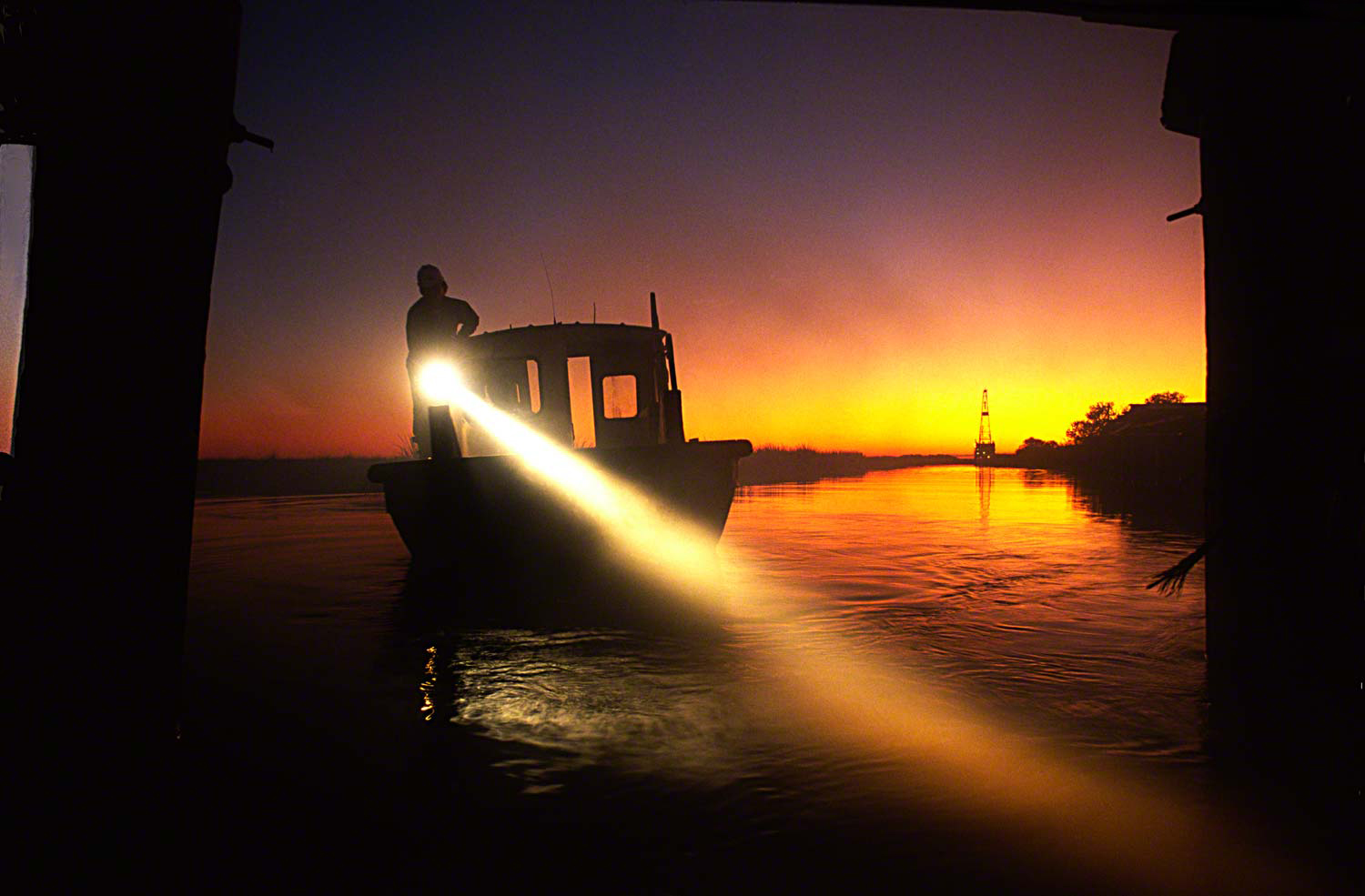
Look ma, no Photoshop

In the first part of my career, I shot a lot of oil and gas-related photos, and the one that always made me shudder was the oil rig. If I had a dollar for every rig I’ve shot over the course of my fifty-three career, yours truly would be writing this while looking out at the incredible view from my house on my private island somewhere in the Caribbean.

The only thing that kept me sane was the challenge of always shooting a particular subject that I hadn’t shot before.  As I tell my online students with the PPSOP, and in my “Stretching Your Frame of Mind” workshops I conduct around the planet is what Marcel Proust once said, “The only true voyage of discovery is not in seeking new landscapes, but in having new eyes”. This has always been one of my mantras, and I adhere to it every time I go out shooting.

I was asked by the design firm working on Apache’s Annual Report to go to Louisiana and take a picture of an oil rig that was sitting in one of the bayous that inundate the state. My assistant and I packed up the gear, and everything else I could imagine that might be of some creative value: A xenon light and fog machine were put in the back of the Suburban along with various power packs, umbrellas, and softboxes that I hoped and prayed I wouldn’t have to use.

As we approached the company office, we went over a small bridge and I immediately stopped, for there rising out of the swamp was an oil rig sitting on the horizon. Could that possibly be the one, I hoped.

We followed our directions ( way before Google Maps) and pulled up to their office. I went in and was taken back to the small conference room that looked out to a small boat that was moored next to a dock. After meeting our contact, I asked what the boat was for. He said that they used it as a shortcut to go to one of their rigs. I asked him if it could be the one we saw coming over the bridge a couple of miles away. He said let’s find out and we jumped in the boat and headed to the rig.

Sure enough, it was the same rig. We stopped so I could take a reading. I pulled out my Sunpath chart as well as my Morin 2000 Hand Bearing Compass. As luck would have it, the sun would come up directly behind the rig the next morning. I arrange for two boats to head to the small bridge prior to sunrise. One for the worker, and one for me to be in. Right before the sun came up we laid down some fog and waited for it to settle. I had the man take my Zenon light and act like he was looking for something. I wanted to create some visual interest while the subject was actually the oil rig off in the distance, and I knew that the fog would make the beam stand out.

As it turns out, it’s one of my favorite industrial shots, and it was completely done in the camera with absolutely no post-processing done to it.

Visit my website at www.joebaraban.com, and check out my workshop schedule at the top of this blog.

JoeB
My Favorite Quote: Edward Steichen

Don’t be a button pusher.

One of the great photographers who was a pioneer in photography was Edward Steichen. Besides knowing his early work, I read a lot about him in one of the best books that I always recommend to anyone to read…Group F/64

I’ve mentioned this book both in my online class with the BPSOP, and in my “Stretching Your Frame of Mind” workshops I conduct all over the place.

He once said, “A button-pusher shoots only at things he’s seen other take”. If there was ever a quote that rang true to all my students past and present, this is it.

My name is Joe Baraban for anyone out there that’s new to this blog. I have seen firsthand a student walk up behind another student and shoot an identical photo. Oh, sure there might be some nuances,  but for the most part it’s the same shot.

They’re just not comfortable in their own skin…so to speak. They need to rely on someone else’s idea instead of venturing out on their own in search of their own unique way of looking at things.

There’s an inherent problem with that. What if the person they are trying to look like is not who they should be looking like…if you know what I mean!!!

In other words, what if you’re a stronger photographer but lack the confidence to travel down the road less traveled? What if it’s actually you that should be leading the way? Relying on the person next to you to come up with a visually interesting photo is not going to be in your best interest.

Take matters into your own hands, and don’t be a button-pusher.

Visit my website at www.joebaraban.com, and check out my workshop schedule at the top of this blog. Come shoot with me sometime.

JoeB


Food For Digital Thought: Kodak’s Slogan

In 1888, George Eastman coined the slogan, “You press the button, we do the rest.” Up until then, picture-taking was a laborious undertaking where one had to be able to process and develop their film.

BTW, this slogan made Eastman a wealthy man with the advent of what was basically point-and-shoot cameras; in other words no controls. You didn’t have to set the shutter speed and aperture, or even be aware of the speed of the film…didn’t even have to focus!!

Sound familiar? It’s 2021, and that slogan is still an effective catchphrase with the emergence of the digital era. You still don’t have to do anything except push the button.

In my online class with the BPSOP, I would guess that eighty percent of the students have no idea what shooting in the manual mode is all about. In fact, it scares the pea-waddens (a term my wife says) out of them at the mere mention of doing things for themselves. During my “Stretching Your Frame of Mind” workshops, I encourage everyone for the week to shoot on manual…I have also told them that autofocus is a luxury, not a necessity…oh the horror!!

I come from the age of film and manual focus, where the word Adobe was a type of house in the Southwest part of the country. The new generation of cameras has so many buttons and programs that my poor little (old) brain would shut down trying to figure them out. When I’m shooting I carry a Canon 5D Mark 3 with a 17-40 lens and a very small Panasonic Lumix DMC-LX7 with an electronic viewfinder and a 24-90 lens. That affords me everything from 17-90mm, and my photos come out pretty good.

Last, in the fifty-three years I’ve been shooting advertising, corporate, and editorial photography, I have never cropped one of my photos. Although I do work somewhat on my images in post, my goal is to get whatever I want to say before I click the shutter. To each his own, but I would rather spend my time being a good photographer, than a proficient computer artist.

So, my fellow photographers, the next time you go out, try shooting on manual and do your cropping in the camera. It will make you a stronger shooter.

Visit my website at www.joebaraban.com, and check out my workshop schedule at the top of this blog. Come shoot with me sometime.

JoeB
Quick Photo Tip: Kids and Dogs

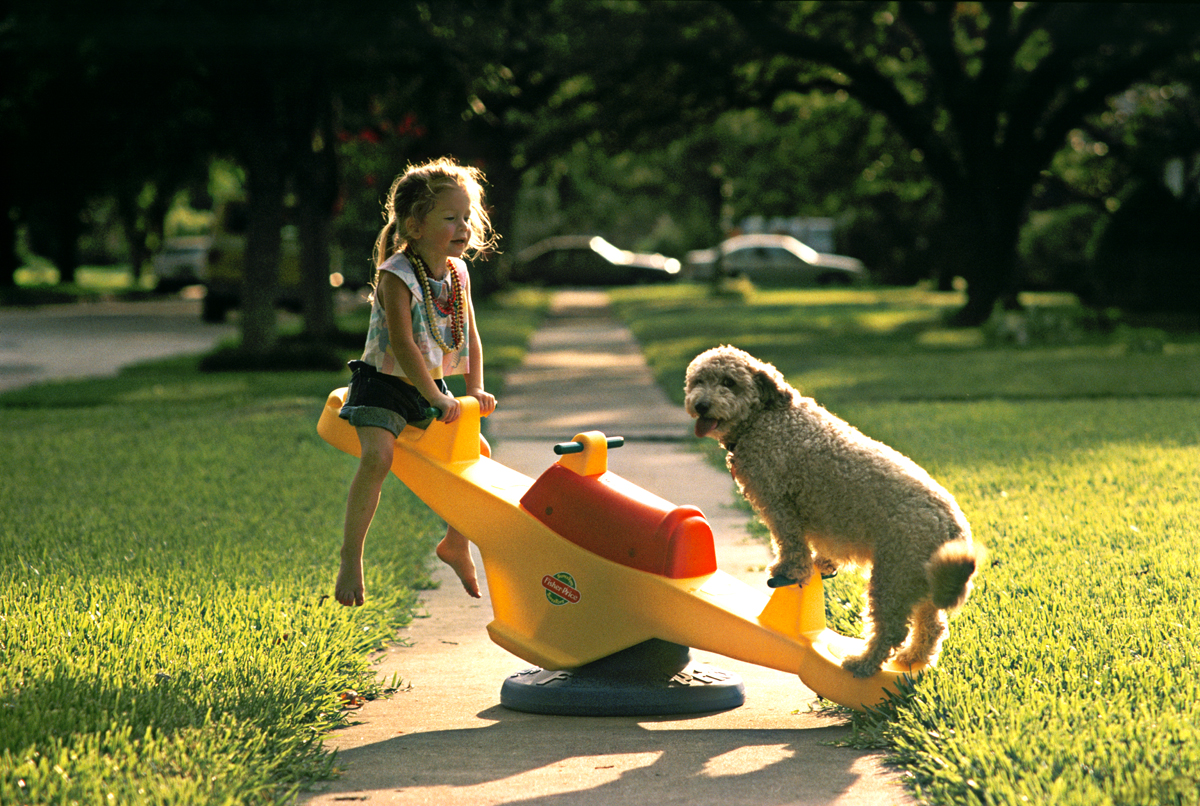
Shot for the Quaker Oats Annual Report,  one of my three daughters and Lucy, shot in my front yard.

I don’t know about you, but the two hardest things I’ve ever had to photograph are kids and dogs.

It’s stressful enough when you’re shooting for a client who’s paying you a lot of money to deliver the goods, but when you’re shooting just for the family album, the level of anxiety goes way over the top!!! Self-medicating is one way to overcome the angst, and especially any misgivings as to why you accepted the challenge in the first place; even a self-imposed challenge can occasionally strain the nervous system.

 Sure, any fast-acting Benzodiazepines such as Valium, Xanax, Klonopin, or Ativan would probably do the trick, but for those photographers that would rather take a healthier more organic approach, I’ve got just the thing for you. It’s very simple and over the counter.

In my online classes with the BBSOP and in my “Stretching Your Frame of Mind” I talk about this a lot: First, I figure out where I want to shoot. Not just the location, but where I want to stand in relation to the sun to get the right light; whether it’s side or backlight. Then I shoot several frames without anyone in it to get the proper exposure.  The odds are that I probably won’t get more than one shot, or be able to bracket before whatever it is that happens doesn’t ever happen again.

Once I’m satisfied with the exposure, I place the kids and dogs exactly where I took the readings, and let them do whatever it is that kids and dogs do without direction from me. I’ve found that over the years, trying to give any direction is very close to being a pure waste of time. The best I would be able to do is have their attention for a couple of minutes before they’re done with me.

What I’m basically doing is to set it up as best I can and then shoot more of a reportage style and creating the illusion that I just got lucky.

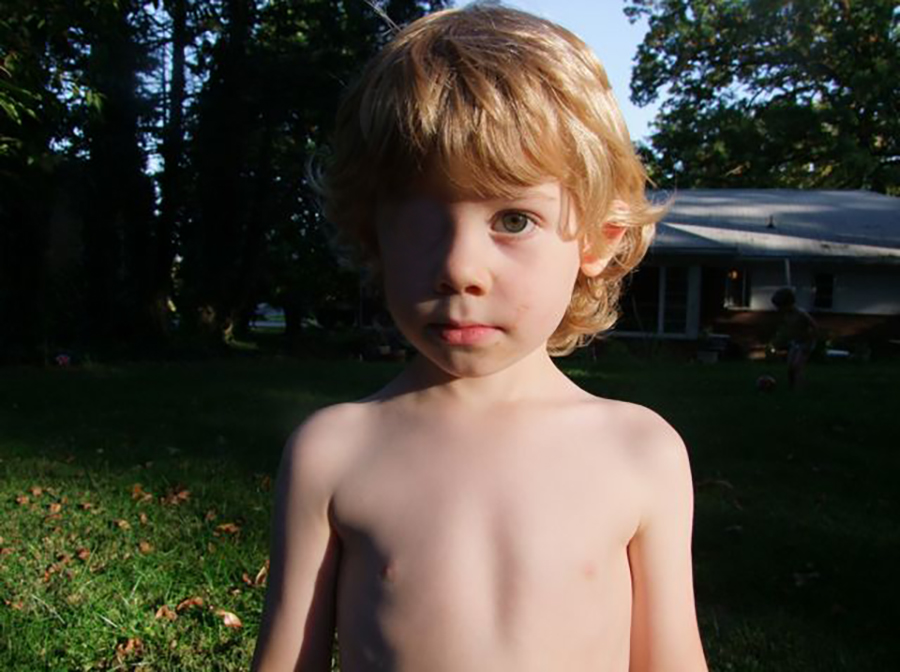
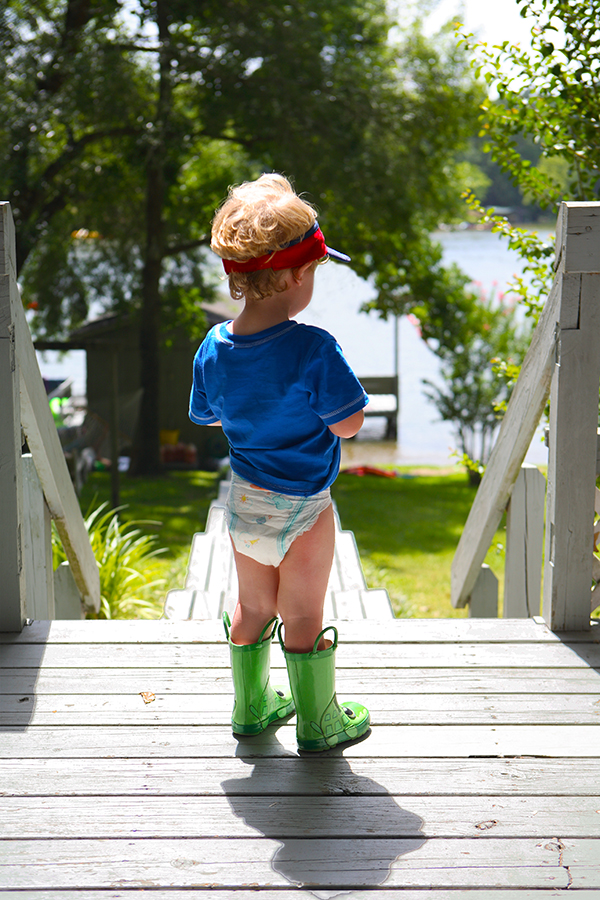
Here are two examples of shooting grandchildren for the family album without worrying about “missing the shot”.

These are some of the ideas I cover both in my online class I teach with the BPSOP, and the “stretching Your Frame of Mind” workshops I conduct around the planet.

Visit my website at: www.joebaraban.com and check out my 2012 workshop schedule found at the top of this blog and come shoot with me sometime.

JoeB
Quick Photo Tip: Keeping an eye out for those Elements of Visual Design

I teach an online class with the BPSOP, and I conduct my “Stretching Your Frame of Mine” workshops all over the place. My approach to creating stronger photos is knowing and teaching all the Elements of Visual Design, and being able to see them occurring naturally in the environment that surrounds us; using the right side of the brain to do it.

  Texture, Pattern, Form. Balance, Shape, Color, and the most important element of all…Line. There are those out there that consider Space as one. Space refers to Negative and Positive space.

If I’m out walking the streets with someone in my workshop, I’m constantly looking for these elements and if I can create a visually interesting photo with one or more elements in it, I’ve got a good chance in taking my image what I refer to as “up a notch”.

Sometimes I see the design element first and wait for something interesting to happen, and sometimes I see the background first and wait for something interesting to happen.

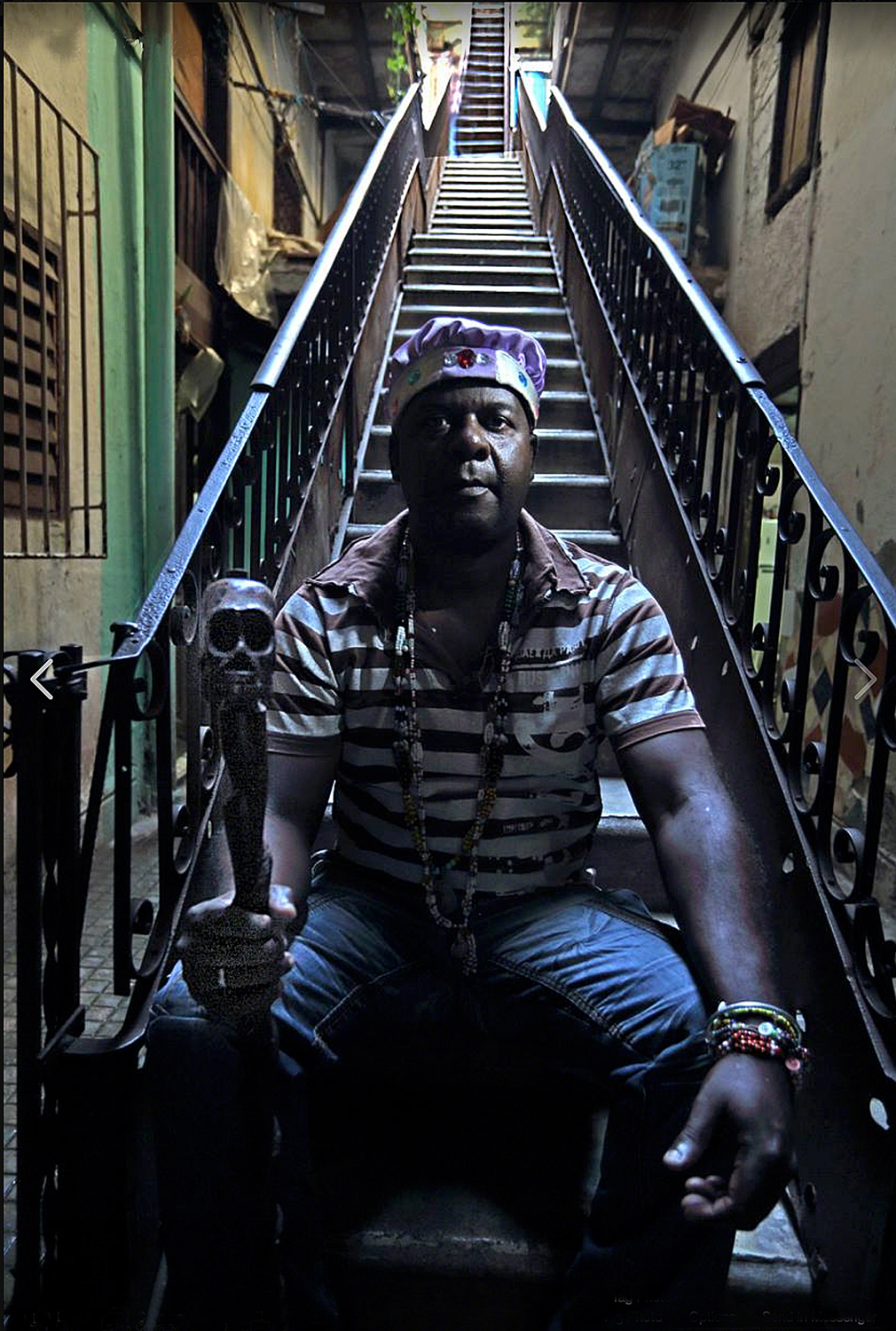
In the above photo, using the right side of my brain the creative side, I saw the triangles and the perfect diamond. It was too good to pass up so I decided to wait to see if I was going to get lucky.

I was ready when I got lucky

BTW, Eddie Adams, a famous Pulitzer Prize winner once said, “When you get lucky, be ready”. Sure enough, I was set up and waiting, and waiting, and waiting and got tired of waiting so I saw a manfriend and had him walk through my frame. If I don’t see what I want, I photograph what I’d like to see???

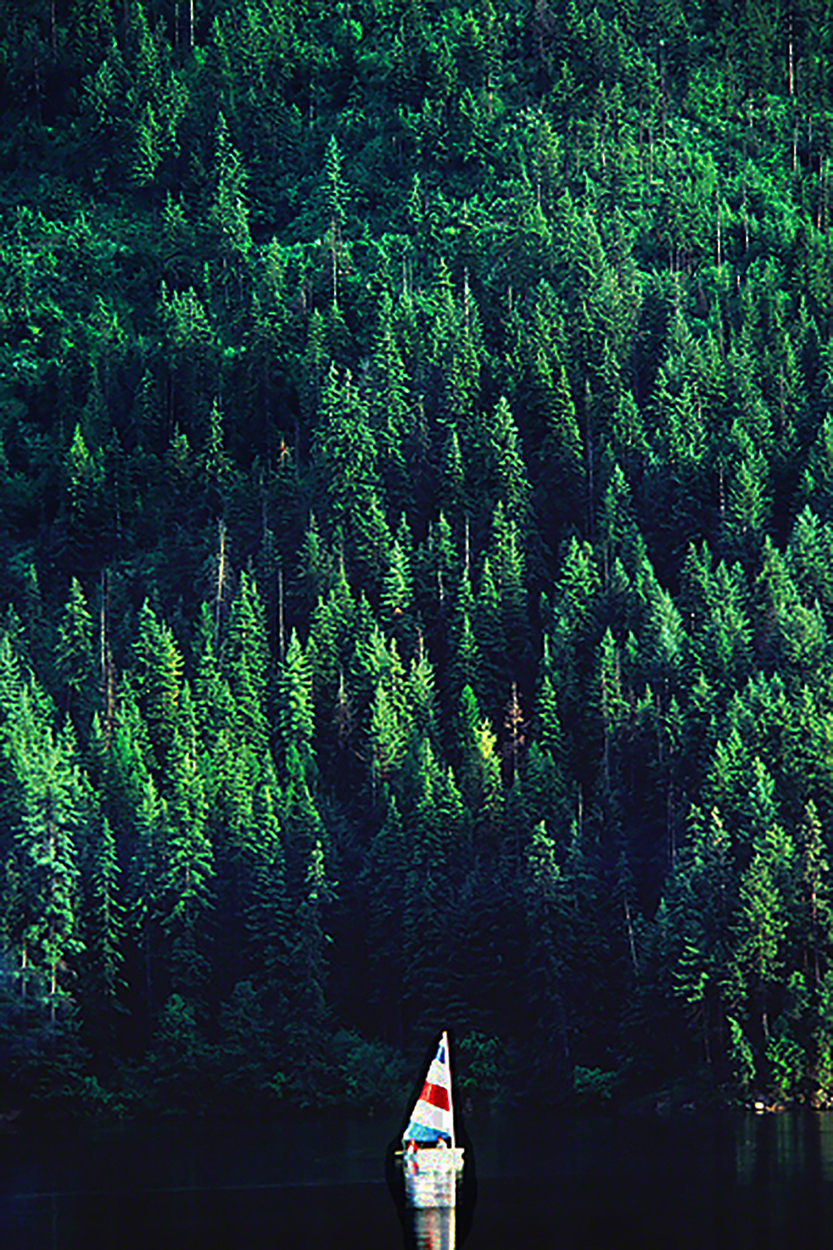
In the bottom photo, I saw the pattern of the trees, and fifteen minutes later this sailboat a.k.a. triangle came into my frame…BINGO!!!

Visit my website at www.joebaraban.com, and check out my workshop schedule at the top of this blog. Come shoot with me sometime and we’ll use the right side of our brain.

JoeB
Quick Photo Tip: Humor

A perfect Vanishing Point

I teach people how to use the elements of visual design and composition to create stronger and more memorable images. Images that people won’t forget in the moments just after looking at your photo. Images that are compelling and will leave an impression days, weeks, and yes, even months afterward.

In my online class with the BPSOP, and in my “Stretching Your Frame of Mind” workshops I conduct around the planet, I stress the fact that “light is everything”, and should be considered first when composing your photo. One of my Personal Pearls of Wisdom is, “You find the light and you’ll find the shot”.

Now I’m not referring to the shooters that like to prowl the city streets looking to capture an emotional photo that has some kind of consequence, or as followers of Henri Cartier-Bresson’s work would say, “The Decisive Moment”. These are the type of photos that rely more on a quick finger hitting the shutter release and timing than on light. Instead, I’m talking about the type of photographers that likes to create beautiful photographs in any other genre that are timeless representations of reality. To me, these are the type of photos that require great light. Landscapes, Architecture, environmental portraits, to name a few.

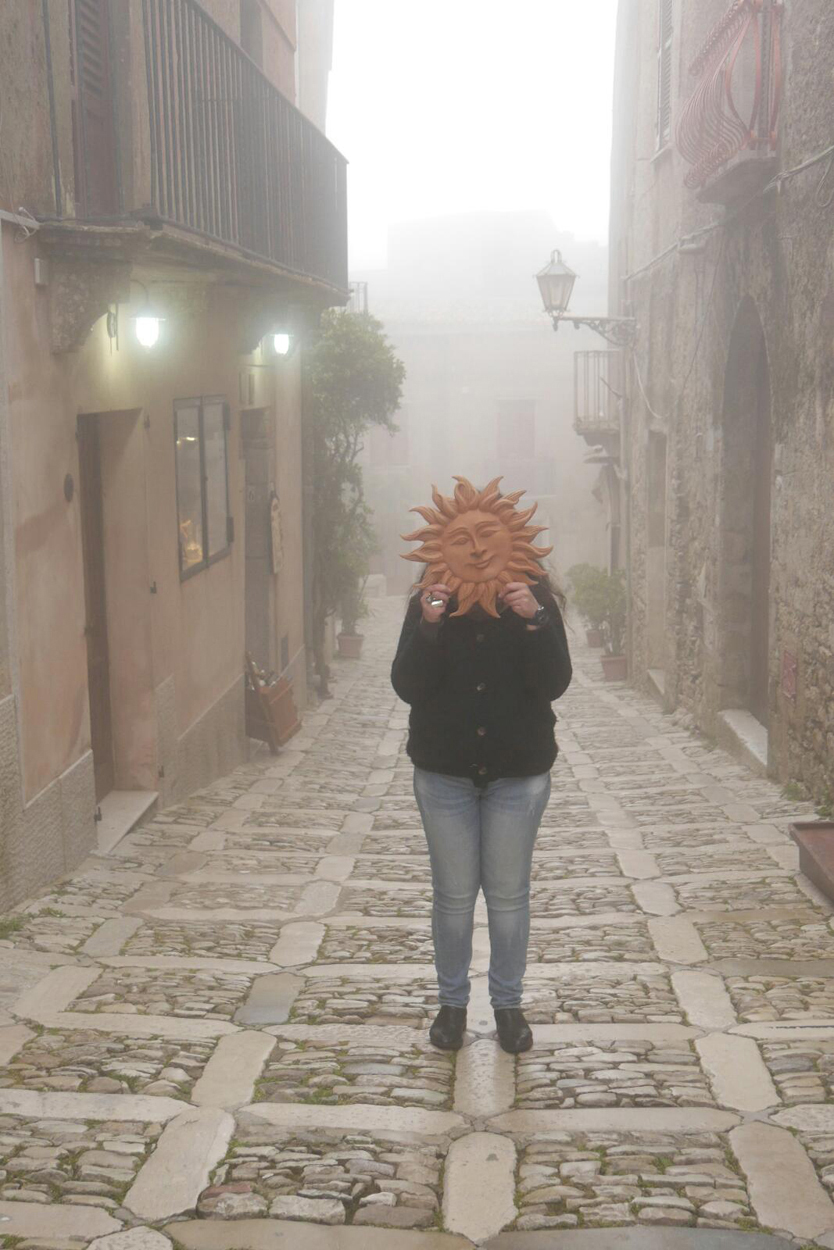
Foggy day in Sicily

OK, here’s where the Quick Photo Tip comes in. As I tell my students and fellow photographers, there is one genre that doesn’t need quality light to be memorable and that’s Humor. Humor is the one concept that can replace a day of flat, gray, and un-inspiring light. Whether it be a funny situation, an awkward expression on a loved one’s face, or perhaps something as simple as a misspelled word on a sign, if it’s funny that’s all you might need.!!!

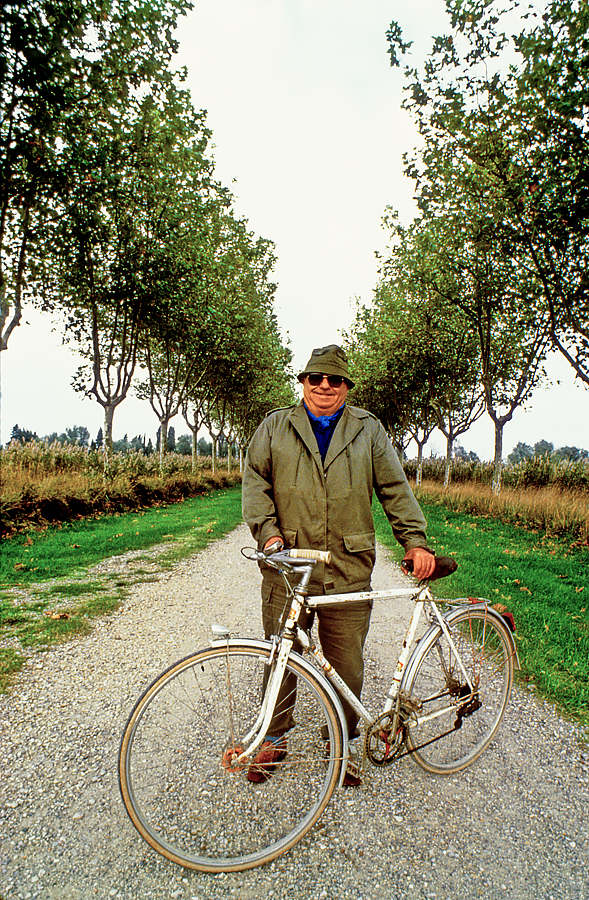
In the above photo of the man and bicycle, I took advantage of a natural Vanishing Point happening on an overcast day. During a workshop in Sicily, one of my students added some humor in a heavy fog.

Visit my website at www.joebaraban.com and check out my workshop schedule at the top of this blog. Come shoot with me sometime and we’ll have a few laughs.

JoeB
My Favorite Quotes: Yul Brynner

  I get my ideas for all my posts from the strangest places, and I never know what is going to spark an idea. They can be from listening to a description of a photo submitted by one of my online students with the BPSOP, or from those that are taking one of my “Stretching Your Frame of Mind workshops during one of my daily critiques, while sleeping, or even watching an old movie.

This idea came from a conversation with some friends during the week of Passover when for the one-millionth time I watched The Ten Commandments. I’m not sure how many of you ever watched it, but it has been one of my all-time classics starring Yul Brynner and  Charlton Heston. I’ve seen it so many times that I know most of the dialogue and say it simultaneously with the characters; much to the chagrin of my wife.

The quote was said by Brynner playing Pharoah, aka Ramseys II. He said, ” So let it be written, so let it be done.”

What in the world does that have to do with photography, you’re asking yourself as you scratch your head!!!!

Okay, here you go…it’s amazing how many times one of my students tells me that he or she did something (in creating a photo) because they had read it in a book…so it had to be true. When possible I will ask them to take a screenshot of exactly what they read, and in what book they read it.

Here are just a couple of instances of what they showed me: They actually read it wrong, they took it completely out of context, it referring to a completely different genre so as not to compare apples to apples, it was written so long ago that the way it was then is no longer the way it is now, or last but not least…the writer didn’t know what he was talking about. This last part reminds me of an old saying, “You have a great typewriter so you must be a great writer.

I digress.

Don’t get me wrong, I read a lot on the ‘information highway’ for ideas and to do research of what I heard and didn’t know, so as to answer my student but I never trust just one person, and neither should you. There’s so much misinformation out there mainly because everyone thinks they are an expert in the field. Generally, with little or no experience in the area that they’re writing about.

There are some great articles on the internet written by some of the top photographers, but I always, and let me repeat, I always seek out affirmation; by reading as much as I can on a subject and making sure everyone is on the same page…so to speak!!!

BTW, I’ve been shooting, writing, and conducting workshops since 1983, and I know a little bit about it.

Visit my website at www.joebaraban.com, and check out my workshop schedule at the top of this blog, Shoot with me sometime.

If you’re still reading this and are interested, here’s the line:

https://www.youtube.com/watch?v=h4emcNAf5lY

JoeB

My Favorite Quotes: Henri Cartier-Bresson

The moment it was caught in the camera.

One of my all-time favorite photographers was Henri Cartier-Bresson who by the way, said that when you crop a picture you destroy the original integrity. He also said, “The picture is good or not from the moment it was caught in the camera”.

This quote has been my mantra since I started shooting fifty-three years ago, and during these years I have never cropped one of my photos…not once! I suppose it’s because my background is not in photography but in art. Having said that, I still consider myself an artist who has changed the medium from a paintbrush to a camera; when I painted a picture, it wouldn’t make a lot of sense to crop it later…would you?

I teach online classes with the BPSOP and I also conduct my “Stretching Your Frame of Mind” workshops all over the place. In both venues, I ask photographers not to crop in front of a computer but in the camera. I once read that when you crop in front of a computer it’s a sign of a lack of discipline and sloppy technique.

One thing I have found is that when you take your time composing, you have a much better chance of getting it right the first time…as in the moment you clicked the shutter. I have seen it over and over when I’m walking along shooting with one of my fellow photographers and they bring their camera up to their eye. There’s absolutely no time spent on any thought process, they just shoot and move on; “I came, I shot, I left” will forever be your mantra.

I’m here to tell you that I’m a damn good photographer and I wouldn’t do that, so you would have to be one hell of a shooter to rely on just one shot being a ‘wall hanger’…unless, of course, you need a computer to help out. I say to each his own, and if that’s your thing then one day you’ll become a master computer artist…and not someone that can decide if a picture is bad or good from the moment it was caught in the camera.

Visit my website at www.joebaraban.com, and check out my workshop schedule at the top of this blog. Come shoot with me sometime.

JoeB

Life Before Photoshop: BJ Services

  One of my favorite posts to write is for my “Life Before Photoshop” category. So many of my students with the BPSOP, an online school I teach with, and in my “Stretching Your Frame of Mind” workshops I conduct around the planet fell in love with Photography after the digital age had eliminated virtually all film cameras.

These same photographers think that Photoshop and Lightroom are just another part of taking pictures with their new digital cameras. Sitting in front of the computer is merely an extension of the process. I’ll admit that Photoshop has come to my rescue on more than one occasion, but it was part of my thought process before I click the shutter”) not in front of the computer. For example, if I couldn’t take a step one way or another to keep something from growing out of my subject’s head.

In my classes I try to get across an important point, that is to become good photographers, not good computer artists and digital technicians.  For me, the challenge is to get it right “in the camera” and not have to rely on any post-processing to make good photos. I also crop in the camera, because when you use the computer to do your cropping, you’ll never know where the edges of your frame are. Next time, try using the edges as a compositional tool…it will make you a more rounded photographer.

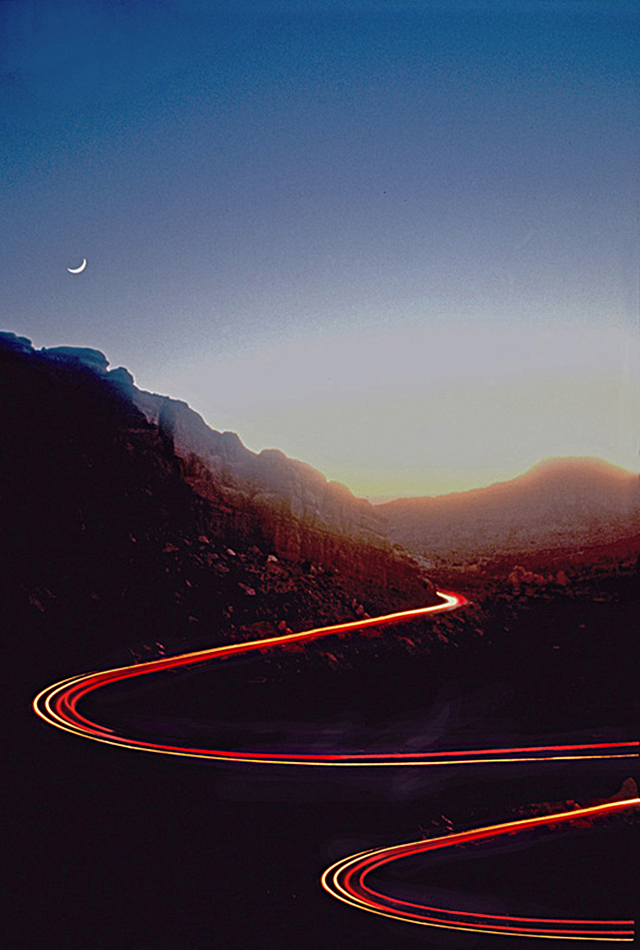
In this photo, I was sent to Grand Junction Colorado to shot for BJ Services Annual Report. BJ Services supplies various materials to oil companies that are drilling for either Natural Gas or oil. We shot the day-to-day photos at a drilling site, but they also wanted a photo to use on the cover that portrayed the ideas that they delivered 24 hours a day, 365 days a year.

I had an idea in my mind that would not only make them happy but myself as well. I scouted various locations with my Sunpath readings and my Morin 2000 hand bearing compass. As a result, I knew exactly where the sun would come up and choose this small part of the two-lane road that led to an oil rig.

I positioned one of my assistants with a walki-talki in a car going in one direction (with his foot on the brake), and the Designer with a walki-talki in another car heading in the opposite direction. I took a reading on the sky to judge how long I had to make the two cars travel to get the blurred lights across the frame. Based on a thirty-second exposure, that’s how long the cars had to complete the distance.

Btw, as the light got brighter, the cars had to cover the distance traveling faster until it became too dangerous. That’s when I knew the shoot was over!!!

Visit my website at www.joebaraban.com and check out my workshop schedule. Come shoot with me sometime.

JoeB

Food For Digital Thought: Seeing What You Saw

I get a lot of my ideas while laying in bed late at night trying to go to sleep, watching late-night TV, or I occasionally wake up with an idea. While some people may count sheep, I think of ideas to share with my online classes with the BPSOP, and also with my “Stretching Your Frame of Mind” workshops I conduct all over the place; as well as all my fellow photographers that have been following my blog since its inception in 2011.

This time I was watching a show and they started playing one of the most popular Christmas Carols Do you see what I see? While some people might get a touch nostalgic this time of year, I get inspired, and what a perfect time for this post!!!

I don’t know about you, but I not only shoot for myself, but I like to share my images with as many people that will take the time to look. Having said that, if you’re of the same mind make sure that right before you click the shutter the viewer will see what you saw.

Ok, so let me offer you at least one way to pull that off, and it’s what I do and have been doing for a very long time; started right after the Paleolithic Period!!!!

🙂

Before I click the shutter, I do a sort of body experience where I send my imagination to that of the viewer…sort of a ‘Spock’ thing!!! When I’m in their mind I’m now seeing what they’re seeing and if there’s the slightest doubt as to understanding what I’m seeing, I don’t take the shot.

Probably, photographically speaking, one of the last things I would want to happen is for anyone to ever say to me, “I don’t get it”.

Visit my website at www.joebaraban.com, and check out my workshop schedule at the top of this blog. Come shoot with me sometime.

BTW, here’s the carol: https://www.youtube.com/watch?v=ADj-Ru3JQp0

All the best to you and all of yours, stay safe and hope for a better 2021.

JoeB

Quick Photo Tip

 Anticipating the action
Anticipating the action

Eddie Adams was a Pulitzer Prize winning photojournalist that was known for his photo essays while being a combat photographer during the Viet Nam war.

One of my all time favorite quotes was said by Eddie, and while it refers to all the combat photographers who risked their lives, I’ve always applied it to my photography. I’ve also included it in my teachings with the BPSOP,  my online students, as well as my “Stretching Your Frame of Mind” workshops I conduct around the planet.

Eddie Adams said, “When you get lucky, be ready”. It’s easy to see how this quote can relate to war photographers, but how does it relate to civilians…like most of us for example?

I shoot predominately early in the morning and late in the evening when the light is the most dramatic and the shadows are long. As a result, it comes and goes very quickly; sometimes you have seconds to see/think/compose/shoot.

After forty-two years of shooting, I’ve learned that you just never know when that extremely elusive “OMG” photo is going to materialize. It can come at any time and when it does, you better know (literally) where you stand.

So having said that, the first thing I do when I arrive at a location is to find out the direction of the sun. Since my favorite way to shoot is to side and backlight, I look for subject matter that will get that kind of light.

The next thing I do is to shoot some random exposures with nothing more in mind except to get the proper camera settings…just in case. If I have just one shot at it, I want it to be very close; close enough to work on it in post if need be. I will tell you that the challenge and sense of achievement in nailing the exposure in the camera beats sitting in front of a computer any day. To me, that’s what being a really good shooter is all about!!!

OK, there’s another part of the “OMG “ photo equation and that’s being able to anticipate the action; a good street shooter will know what I mean. I spent the early part of my career as a stringer for Blackstar, UPI then AP, so I did a lot of street shooting. By anticipating a person’s next move, whether it be as a gesture or a change in their body language, a plane, train, or automobile coming or going, or an action solely created by Mother Nature, I can now be ready for that split second I have to click the shutter. With my camera settings already in place, I stand a good chance of coming home with the bacon!!!

Here are some examples of being ready when I got lucky

Visit my website at www.joebaraban.com, and check out my 2012 workshop schedule. Come shoot with me sometime.

JoeB

Food for Digital Thought: A Dichotomy

Dichotomy

When you’re walking the streets somewhere in the world looking for photo opportunities, My suggestion is to be on the lookout for what I call the ‘photo dichotomy’.

First, in case you’ve heard the word used but might not know exactly what a dichotomy is, let me give you the definition.

Dichotomy: something with seemingly contradictory qualities. mutually exclusive or contradictory.

Perhaps you’re still a little confused as to how this relates to photography. So, having said that let me show you in the photo seen above.

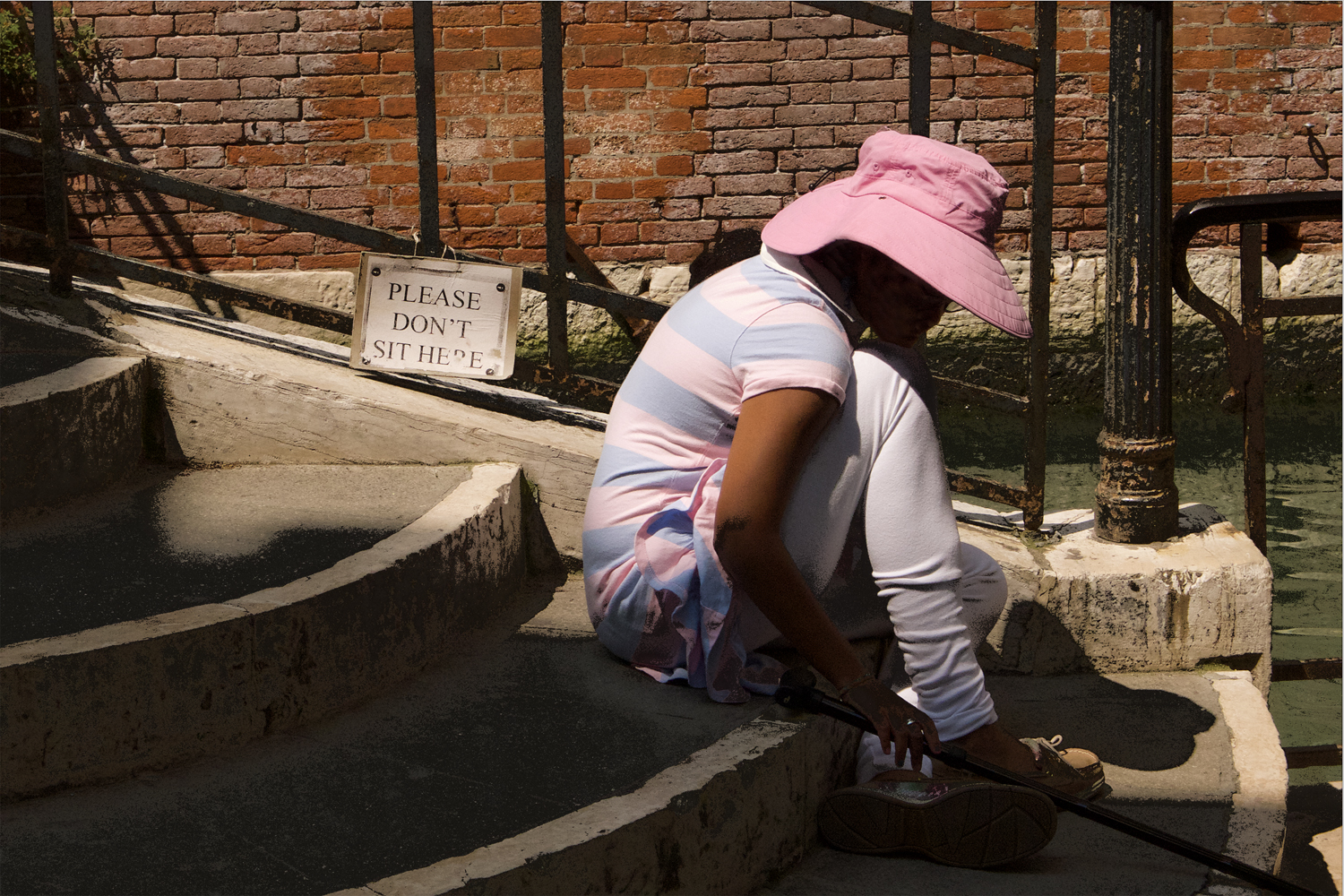
I was walking around the canals in Venice, looking in all four directions to make sure I didn’t miss anything when I saw this young woman sitting on the steps.

Ordinarily, I might pass on it since the visual interest is limiting. But what really sparked my interest was the small sign right behind her…a dichotomy!!

In my online classes with the BPSOP, I often talk about keeping your eyes and ears open all the time. You just never know when a photo op will rear its head, and when it does it will usually be for just a moment.

When I’m walking with my fellow photographers that are participating in one of my “Stretching Your Frame of Mind” workshops, I always point out things that in of themselves have visual interest.

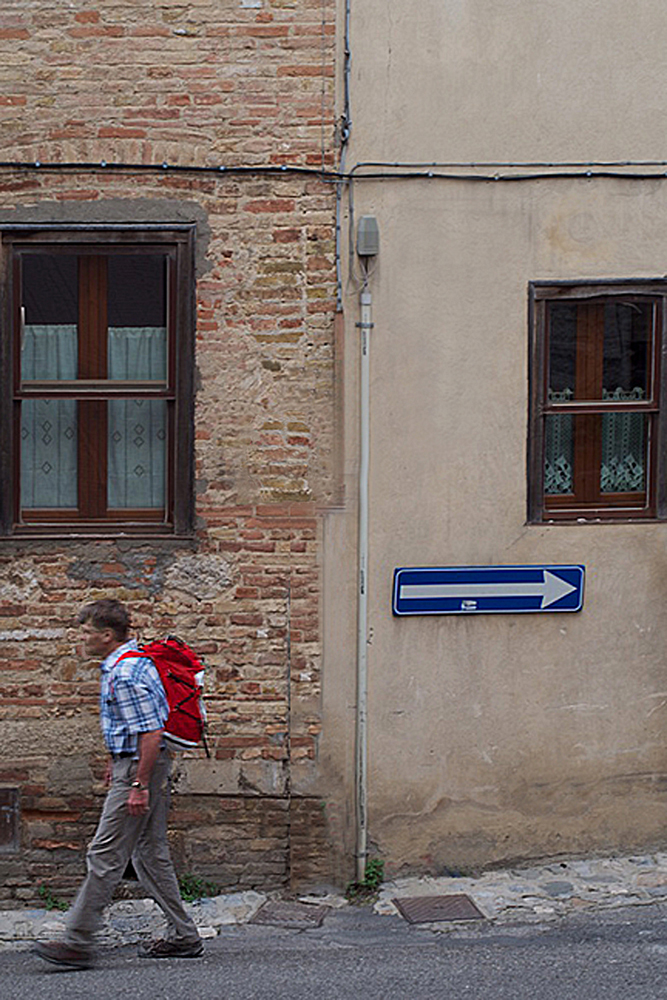
Another dichotomy

Another example of a dichotomy is in the other photo pictured here of a man walking in the opposite direction of the arrow signifying a one-way street.

If you click on this link, it will take you to a post on paying attention to what you hear.

Visit my website at www.joebaraban.com, and check out upcoming workshops at the top of this blog. Come shoot with me sometime.

JoeB

Food for Digital Thought: Creating a Mood.

Creating a mood

Photography is most definitely the love of my life, but right under it is fishing and then cooking. I love to look through cookbooks, especially ones with great food photography and find interesting things to serve when entertaining…which we love to do. Having said this, I’m really into recipes, and I’m always using some kind of recipe when talking with my online students with the BBSOP, and my fellow photographers that take my “Stretching Your Frame of Mind” workshops I conduct around the hopefully round planet.

I often like to create an atmosphere where the viewer is drawn into my photo whether he wants to or not. I want to induce a feeling in his psyche.

Creating a mood is a good way to not only deliver your message visually but editorially as well. What do I mean by editorially? By using a certain mood to tell a story, which incidentally doesn’t have to be controlled by light.

According to the dictionary, the definition of mood is: “A temporary state of mind or feeling”. It also means “The atmosphere or pervading tone of something, especially a work of art”. This is where photography comes it since we’re all artists, our medium is a camera instead of a paintbrush.

So how do we achieve this atmosphere, this state of mind?  Well, first you have to determine what kind of mood you’re after. Do you want your photo to ooze with a bright and happy feeling of tenderness and warmth…or a dark, melancholy and introspective mood? Do you want the viewer’s eyes to well up with sadness or the proverbial grin from ear to ear?

If this is the way you’re after, then it’s all about how you manipulate the light and color. Darker colors for somber pensive moods or rich, bold, and vibrant colors for a more cheery look. Although color is a big factor, the use of light transcends everything.

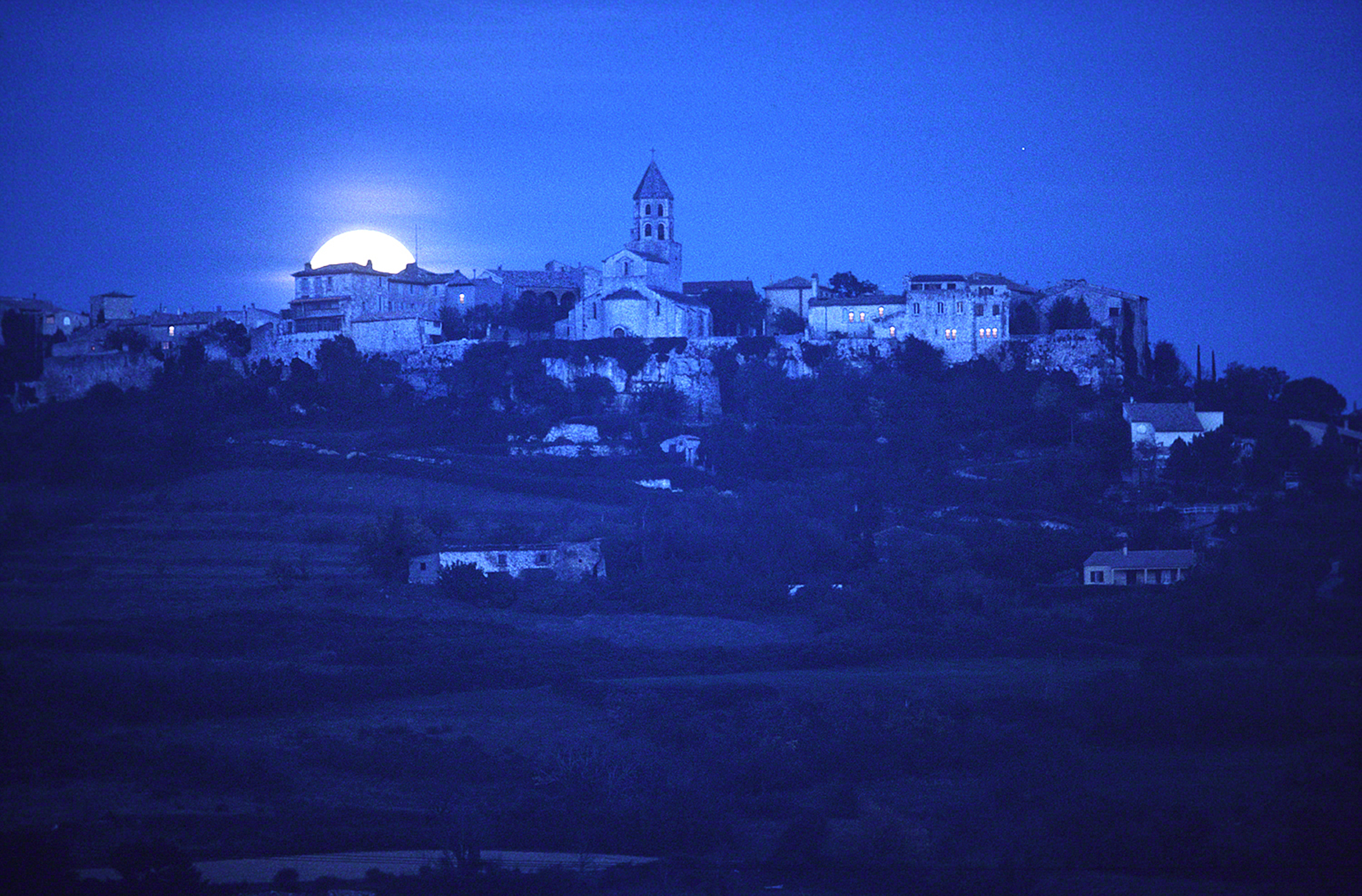
As I said, the use of light doesn’t always factor in. If you look at the above photo, light isn’t that important; it’s all about the story I was telling.

It’s hard to create a somber mood on a bright sunny day. It’s all about the emotional environment. Since I shoot early in the morning and late in the afternoon, the light is going to be softer and the shadows longer. An overcast, gloomy day is a good way to create a type of mood, as well as the placement of your subject.

Visit my website at www.joebaraban.com and check out my workshop schedule at the top of this blog. Come shoot with me some time and I’ll get you in the mood.

My Favorite Quotes: Henri Cartier-Bresson

Real, or artificially contrived?

Cartier-Bresson is one of my most favorite photographers. I think I’ve talked about and quoted him the most in my online classes with the BPSOP and in my “Stretching Your Frame of Mind” workshops I conduct all over the place. I guess one of the reasons is that he has been quoted so often and his quotes can be found in so many places.

For me, it’s because so much of what he said, and the way he composed his images hit home more than most other photographers I’ve studied throughout my career.

I’ve said on many occasions that I don’t often photograph what I see because I don’t often see what I want (being somewhat impatient by nature), so I photograph what I’d like to see. Which takes me to the reason for writing this post.

Cartier-Bresson once said, ” The greatest thing to fear is the artificially contrived”.

When I’m talking to a student, I encourage them to move something out of the frame if they don’t like it and can’t compose differently. Conversely, I also say to move something into the frame if it will add visual input and a layer of interest.

It’s important to remember that we, as photographers, are artists who have chosen the camera instead of a paintbrush.

The difference between a painter with a blank canvas on an easel and a photographer with a camera on a tripod is in the fact that as a painter you fill in the canvas until you finish with a ‘work of art’. Photography is the art of subtraction whereas you remove objects until you achieve a ‘work of art’.

Here’s where the quote comes in.  If you do decide to add a prop, or some element, or even a person, make sure you believe it. Make sure the viewer will believe it instead of thinking that you put it there yourself.

When I’m composing (painting), right before I click the shutter, I always ask myself do I believe it. Case in point, I recently had a student take a closeup of a hubcap and decided to put a flower into of the holes. Well, it just would never happen that way and looked completely contrived. A similar occurrence was a rose on a manhole cover…what is it with flowers?????

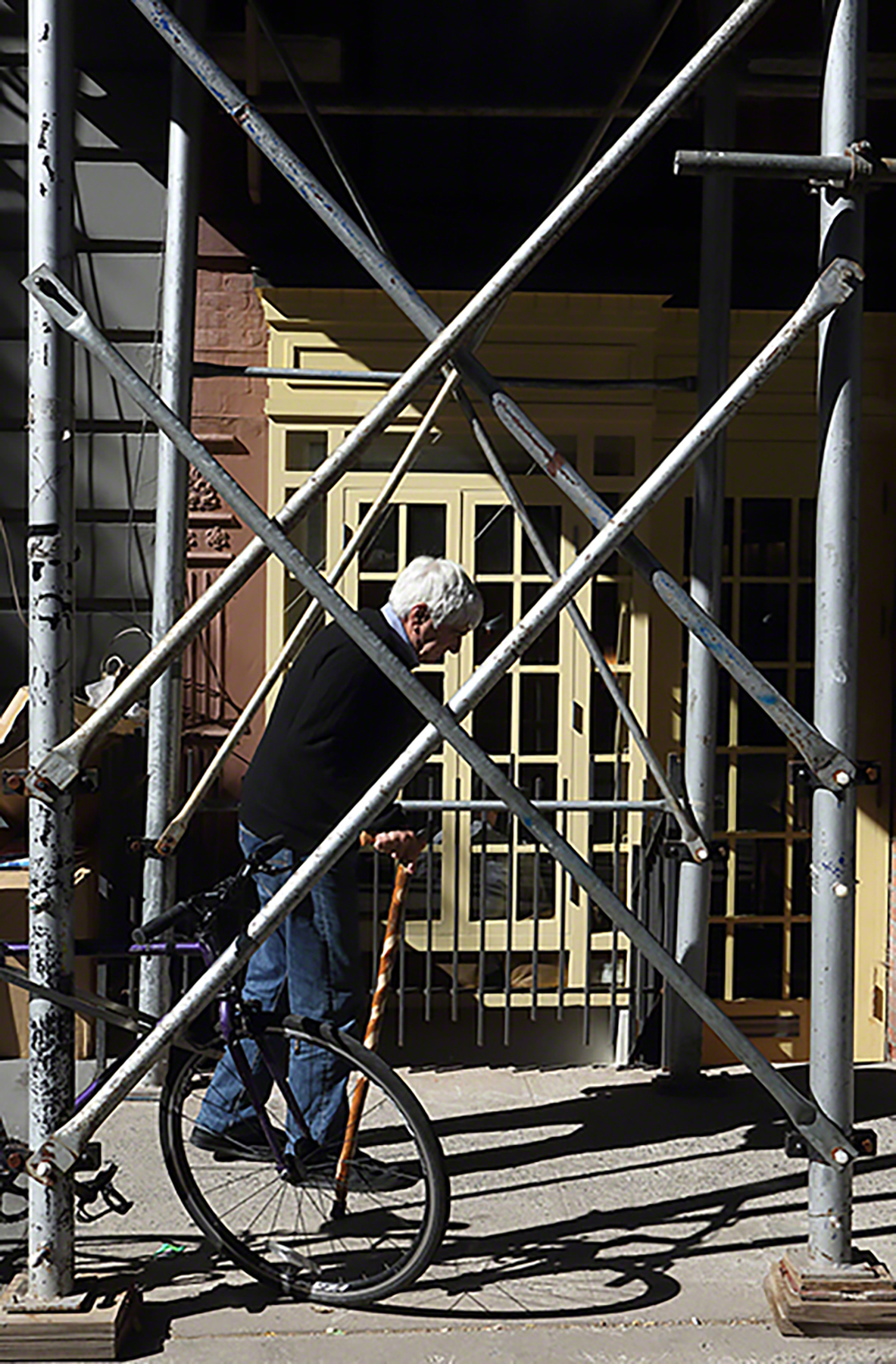
There’s another way a photo can and usually will appear contrived, is when photographers shoot through something. Again, I encourage that because “framing a subject with a frame” is one of the ways to create Visual Tension.

Having said that, if you intentionally put your subject in let’s say between two spokes on a bicycle, or two trees close to one another, or posts on a pier, etc., there’s a good chance that it’s going to look weird…especially if the POV is too difficult for the viewer to have seen for himself.

Have fun out there and always try to “color outside the lines”, but be sure that people believe it.

BTW, the photo at the top was shot just the way I saw it….maybe?

Visit my website at www.joebaraban, and check out my workshop schedule at the top of this blog. Come shoot with me sometime.

JoeB