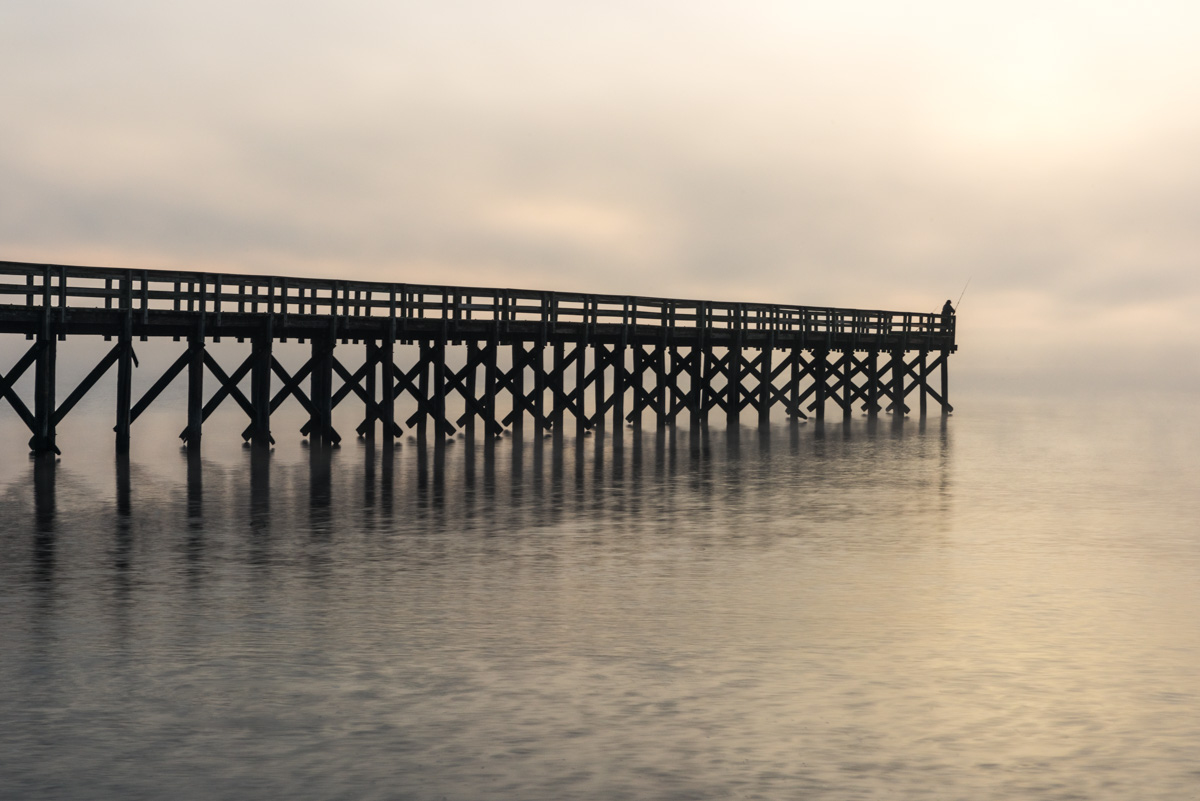
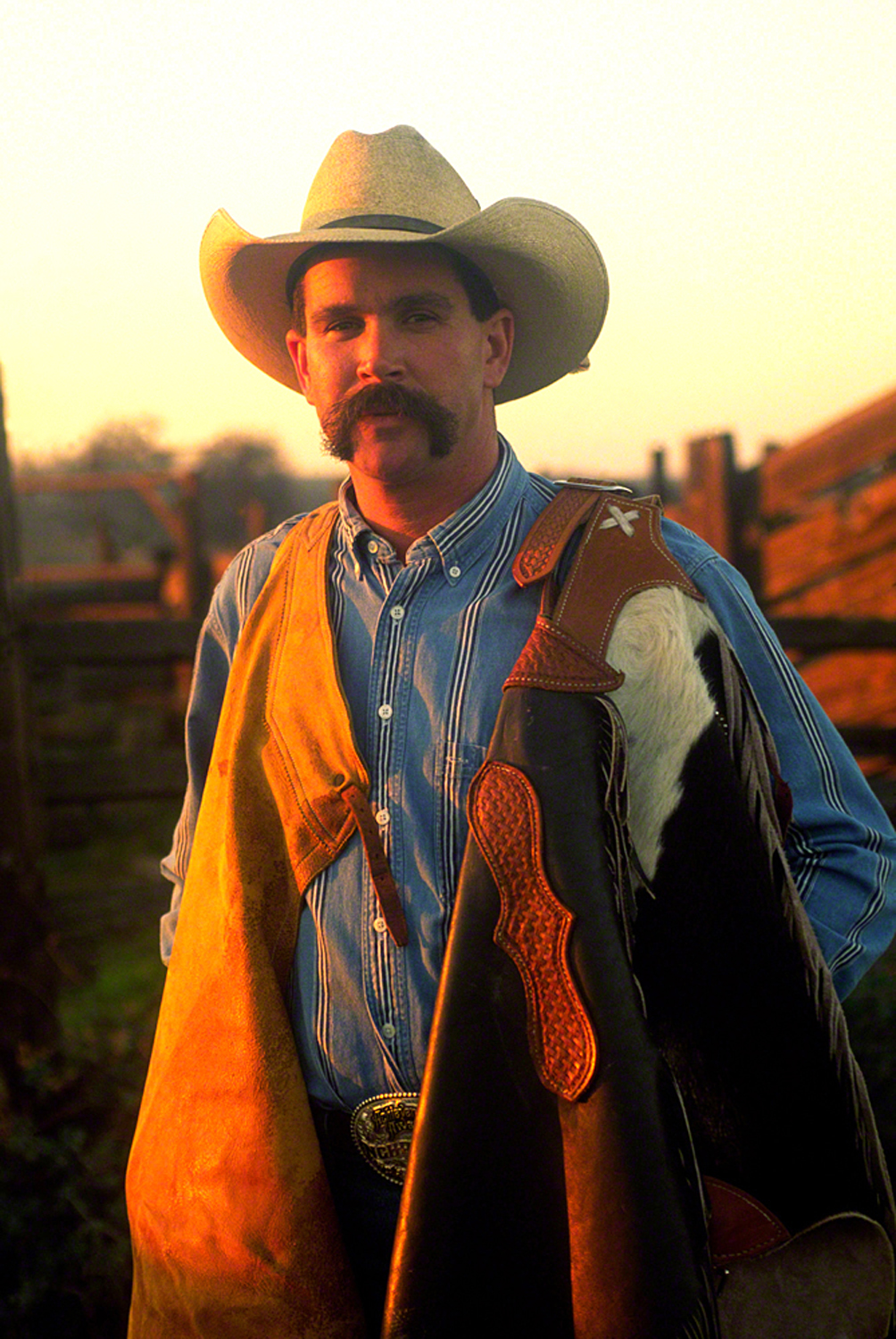
Valeriano sent me these two photos to comment on. I usually like to copy the question the photographers that submit photos write and some explanation of why they took it, but this time he choose not to say anything and only wanted my opinion of the photographs.
Well, in that case let’s just get to the video critique of both images:
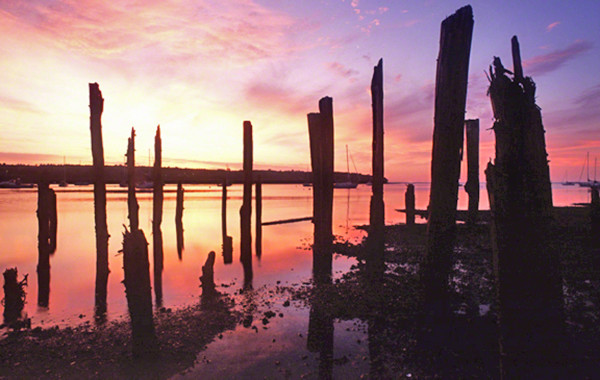
As I tell people that take my online class with the BPSOP, and also in my “Stretching Your Frame of Mind” workshops I conduct around the planet, before you raise your camera up to your eye determine where the sun is in relation to your subject. If your subject is anything translucent, try to backlight it as it will appear to be glowing…as it does in Valeriano’s two images.
Really nice photos!!
Visit my website at: www.joebaraban.com, and check out my upcoming workshop description at the top of this blog. Come shoot with me sometime. I have recently written the description for my next “springtime” workshop to be next May 17th, 2017. We will be spending three days in Vienna, and three days in Budapest. I hope you can join me for a wonderful week in two of Europe’s most beautiful cities…during festival time.
Keep sending in photos and questions to:AskJoeB@gmail.com and I’ll create a video critique for you.
My background is not in Photography, rather in Art. Up until I was twenty-0ne I had either a colored pencil, brush, or a piece of charcoal in my hand.
I studied just about everything there was to study as far as courses in art were concerned. Throughout my years of study, I was always interested in the elements of visual design, and how they made a drawing or painting stronger.
When I changed the medium to a camera, those elements came with me, and now as I help students in my online class with the BPSOP, and in my “Stretching Your Frame of Mind” workshops I conduct around the planet become stronger photographers, these same elements play a key role in developing their eye.
One of the elements of visual design that I talk about is Form. To many of my fellow photographers, Form can be taxing and difficult for photographers to capture, although if you pay attention to where the source of the light is, it’s really quit simple.
Form simply refers to the three dimensional qualities of an object. Since the camera has just one eye, it can only see in two dimensions…height and width. Where the light is coming from is critical in creating the third dimension, depth.
Light from 3:00 o’clock
To best create the illusion of depth, the light should be coming in from the side. On my imaginary clock, for straight sidelight the light needs to coming from either 9:00 o’clock or 3:00 o’clock.
Value refers to the lightness and darkness of an object, and it defines Form. I talk mostly about the sidelight on a subject or even a landscape, but what you also have to consider in sidelight is the shadows that will be created. The soft to strong contrast within a composition will also define the limits where the highlights and shadows edges are placed.
It’s the shadows that give the illusion of depth, and as I always tell my students, shadows are your best friend.
Visit my website at: www.joebaraban.com, and check out my 2016 workshop schedule at the top of this blog. Come shoot with me sometime. The end of July marks my twenty-eight year at the Maine Media workshops. It’s a wonderful way to immerse yourself for a week and think about nothing but photography. It’s the same week as the Lobster Festival down the road in Rockland, and offers a completely different set of photo ops than the beautiful Maine coastline, amazing lighthouses, and quaint fishing villages. The full description is at the top of this blog.
The Los Angeles Center for photography has invited me to come out and conduct a three day intensive workshop over the July 15th weekend. I’ll be making a presentation of my work on Thursday July 14th and the public is invited. The full description can be see at the top of this blog, with a link to the site. I hope to spend the weekend with all of you.
I have added a new workshop to my 2016 schedule. On September 21st, ten photographers will get together with me at my evening “meet and greet” to begin a fantastic five-day workshop in New York, New York. Check out my description at the top of this blog. Come shoot with me.
Send me a photo and question to: AskJoeB@gmail.com, and I’ll create a video critique for you.
The psychology of Gestalt has been around since the 1920’s and was founded by a group of German psychologists. I started reading about it several years ago and began applying these six different concepts to the way I was approaching the way I took photos.
It’s all about managing what the viewer perceives and processes when looking at the visual information we lay out to him in the form of a photograph. Visual input is a part of our everyday lives, and it’s our objective to present this information in a way that will keep the viewer around longer…looking at our photos. I don’t know about the rest of you, but I like it when people look at my images for a long time.
Besides the part I and II classes I teach online with the BPSOP, relating to the elements of visual design, I now teach my fellow photographers how to incorporate these six concepts in a class strictly on gestalt. These are also areas I talk about in my “Stretching Your Frame of mind” workshops I conduct around our planet.
One of these concepts is called Similarity.
Similarity is perhaps the easiest of all the concepts to recognize and therefore explaining it without going into too much detail.
Similarity occurs when forms, colors, sizes, and objects look enough alike to be perceived as a group or pattern in the viewer’s mind. All these different elements, when occurring in your photos, give a sense of rhythm and will connote harmony.
The viewer loves to see photos that are designed with a variety of colors, shapes, and forms, and when the viewer sees these similar characteristics, he’ll perceive the elements as being related due to the shared characteristics.
Visit my website at: www.joebaraban.com, and check out my 2016 workshop schedule at the top of this blog. Come shoot with me sometime. The end of July marks my twenty-eight year at the Maine Media workshops. It’s a wonderful way to immerse yourself for a week and think about nothing but photography. It’s the same week as the Lobster Festival down the road in Rockland, and offers a completely different set of photo ops than the beautiful Maine coastline, amazing lighthouses, and quaint fishing villages. The full description is at the top of this blog.
I have added a new workshop to my 2016 schedule. On September 21st, ten photographers will get together with me at my evening “meet and greet” to begin a fantastic five-day workshop in New York, New York. Check out my description at the top of this blog. Come shoot with me.
The Los Angeles Center for photography has invited me to come out and conduct a three day intensive workshop over the July 15th weekend. I’ll be making a presentation of my work on Thursday July 14th and the public is invited. The full description can be see at the top of this blog, with a link to the site. I hope to spend the weekend with all of you.
Keep sending in photos and questions to: AskJoeB@gmail.com, and I’ll create video critique for you.
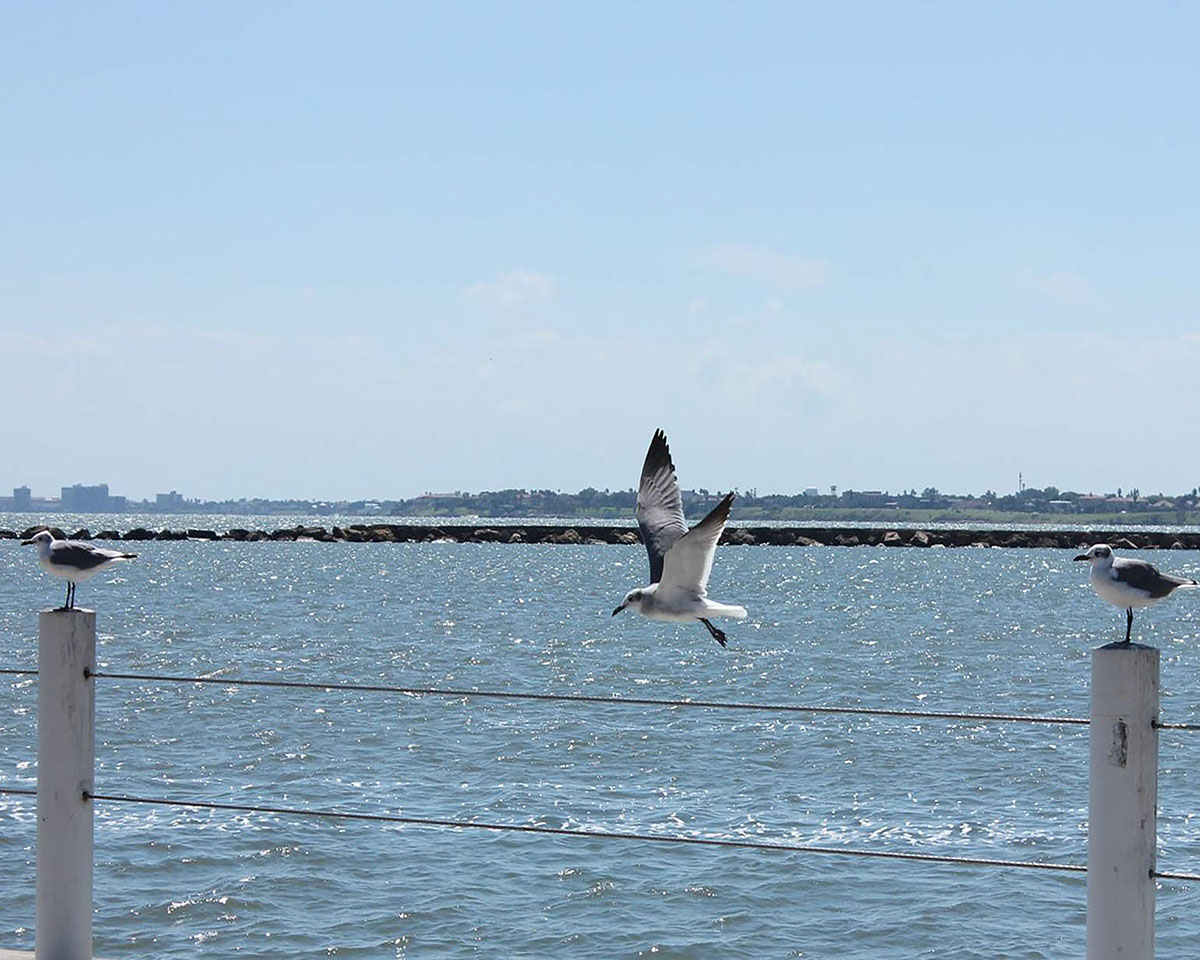
Karen submitted this photo of three seagulls. She asked me what I thought about the photo, and I like to share what each of my fellow photographers had to say. In this case, all Karen said was ” Joe, what do you think about this photo”.
The first thing I immediately felt was how closed in the photo seemed…Why you ask? Because of the square format.
As I’m always reminding my students that take my online class with the BPSOP, and in my own “Stretching Your Frame of Mind” workshops I conduct around our planet, we don’t perceive in a square, we perceive in a rectangle; which is why I always use a 3:2 aspect ratio. In my opinion it’s very difficult to achieve visual tension in a square, especially in a landscape.
I’m not saying you can never achieve tension, because it depends on the subject matter. Diane Arbus comes to mind as someone that could generate tension in a square, and if you know her photos, you’ll know why I’m saying it. Sh also committed suicide.
As I said Karen, cropping is not necessarily a cure-all for creating strong photos. There’s so much more involved as far as deciding on what’s important in your composition. I would suggest you try getting it in the camera and not cropping it later in front of a computer. It’s just one opinion, but if you strive to being a better shooter, then design your shot before you click the shutter.
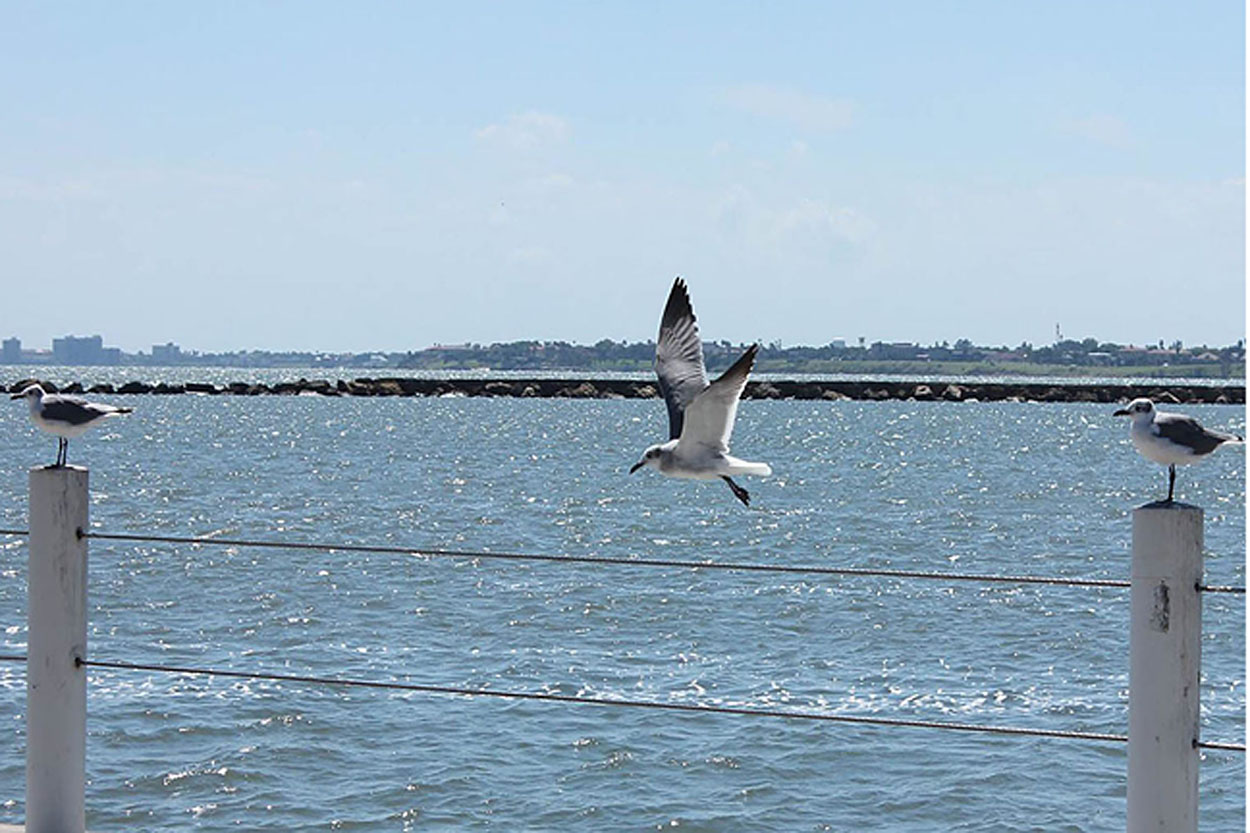
Here’s what it would look like if it was in a 3:2 aspect ratio. Which one do you like?
A rectangle
Thanks for the submission, and I hope my critiqued helped.
I want to announe my new upcoming three day intensive workshop at the Los Angeles Center for Photography this coming July 15th with my presentation on the evening of the 14th. I hope to see some new fces out there and say hello to some old ones: https://lacphoto.org/events/stretching-your-frame-of-mind-with-joe-baraban/
Visit my website at: www.joebaraban.com, and check out my workshop schedule at the top of this blog. July 31st starts my Maine Media Workshop. It will be my 28th year, and it’s a great way to immerse yourself in taking pictures for a week. Come shoot with me.
Keep sending in photos and questions to: AskJoeB@gmail.com, and I’ll create a video critique for you.
While the experience and images of Cuba are still so fresh in my mind, I wanted to share this wonderful country with you in a visual presentation.
For the third time, the Santa Fe Workshops asked me to lead a group to Cuba, and for the third time I was as exited as I was the first time I was asked. Together with their point man Kip Brundage, a top photographer in his own right, one couldn’t ask for a more professional experience.
These photos were all taken by my fellow photographers that had signed up for me to shoot with them through the streets of Havana, as well as smaller towns that were withing an hour’s ride from our hotel.
Many of them had taken my online class with the BPSOP, or had been with me in one of my own “Stretching Your Frame of Mind” workshops. For three, it had been their second time in Cuba with me.
To be sure, things in Cuba are rapidly changing and just within a couple of years, the differences for me were very apparent. From the new Paladares (privately owned restaurants) offering cuisine for even the discerning foodie, to the increase in tourism shown by the endless line of huge tour buses.
For the first time I saw cranes rising above the narrow streets, jutting into the blue skies over Havana, and of course the beginning of traffic jams. I walked by huge cruise ships that were either docked in the harbor or on the horizon waiting to come in.
What hasn’t changed is the people. They are still warm and friendly and anxious to invite you into their small humble homes for coffee and conversation. For the most part, they are willing to be photographed and only once in a while ask for something in return.
I had many people refuse money (a CUC…about a dollar) but would smile when you offered them, a pack of gum or a candy bar. There’s nothing like the feeling you get when you see the joy of a child you just gave a small toy to.
I can tell you that they absolutely love people from the United States, and eager to talk and spend time with you. Havana is still well worth the visit, but if I were you I would go sooner rather than later.
Btw, I happened to be there at the same time as President Obama, and watched his motorcade drive by hundreds of cheering Cubans. It was very cool and definitely part of history.
Visit my website at: www.joebaraban.com, and check out my 2016 workshop schedule at the top of this blog. Come shoot with me sometime. The end of July marks my twenty-eight year at the Maine Media Workshops. It’s a wonderful way to immerse yourself for a week and think about nothing but photography.
It’s the same week as the Lobster Festival down the road in Rockland, and offers a completely different set of photo ops than the beautiful Maine coastline, amazing lighthouses, and quaint fishing villages. The full description is at the top of this blog.
I have added a new workshop to my 2016 schedule. On September 21st, ten photographers will get together with me at my evening “meet and greet” to begin a fantastic five-day workshop in New York, New York. Check out my description at the top of this blog. Come shoot with me.
Don’t forget to send me a photo and question to: AskJoeB@gmail.com and I’ll create a video critique for you.
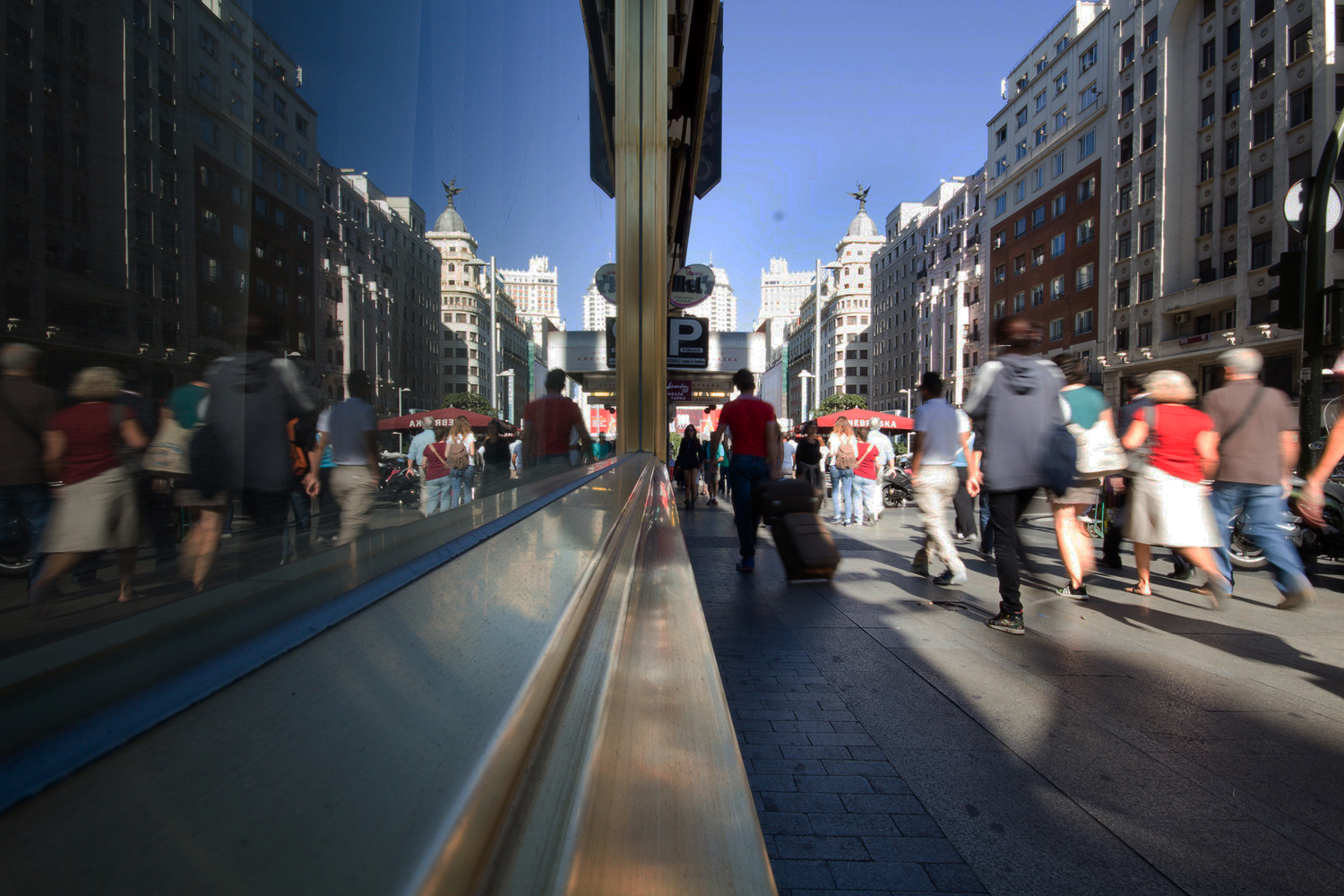
Ana Maria is a past student living in Madrid, Spain that has taken all three of my classes with the BPSOP. Hopefully her next class will be at one of my “Stretching Your Frame of Mind” workshops I conduct around our planet.
I have looked at a lot of her images over the course of the three months of online classes, and I’ve seen so much improvement in the way she now sees, her new approach to her passion, and her ability to “make” instead of take photos.
The above photo is an example of the photos that she’s now taking, and it’s a really good shot that not only draws the viewer into the frame, but moves him around as well.
As usual, I show people what the photographer had to say, but in this submission all she said was:
“Hello Joe,
I’d would like to know what you think about this picture”.
It’s a strong photo and it’s all about making pictures. Thanks for submitting it.
Here’s the difference in the exposure the camera told you to take, and the exposure I’m suggesting. If you prefer the exposure from the meter in your camera, then you should continue to listen to it. If you prefer my exposure, I suggest you stop listening to the meter in your camera, take matters into your own hands and learn about the light.
My suggested exposure.
Visit my website at: www.joebaraban.com, and check out my 2016 workshop schedule at the top of this blog. come shoot with me sometime. The end of July marks my twenty-eight year at the Maine Media workshops. It’s a wonderful way to immerse yourself for a week and think about nothing but photography. It’s the same week as the Lobster Festival down the road in Rockland, and offers a completely different set of photo ops than the beautiful Maine coastline, amazing lighthouses, and quaint fishing villages. The full description is at the top of this blog.
I have added a new workshop to my 2016 schedule. On September 21st, ten photographers will get together with me at my evening “meet and greet” to begin a fantastic five-day workshop in New York, New York. Check out my description at the top of this blog. Come shoot with me.
Keep those photos and question coming into: AskJoeB@gmail.com, and I’ll create a video critique for you.
Ana Marie has taken my online classes with the BPSOP, where my fellow photographers learn how to incorporate the elements of visual design into their imagery. We also discuss these elements in my “Stretching Your Frame of Mind” workshops I conduct around our planet.
She recently send me this photo after reading a post in My Favorite Quotes category; one that was once said by Hank Williams. As I like to do, I forward what she had to say since so many has had a similar question at one time or another.
“Dear Joe:
I took a class with you at the PBSOP a couple of years ago.
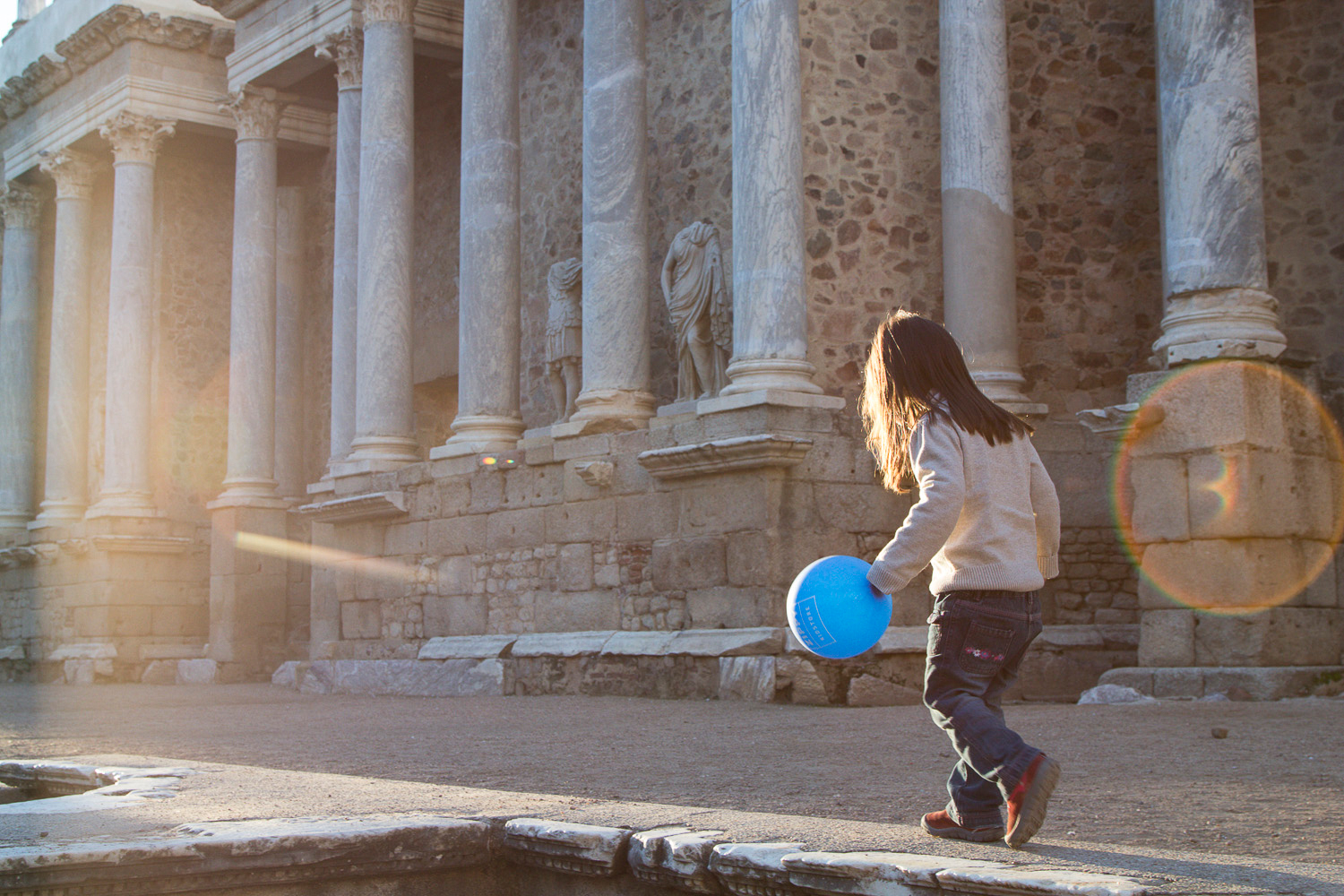
After reading your post “My Favorite Quotes: Hank Williams” I was interested in having a critique of this picture I took last week at the roman theater of Mérida (Spain).< As I read in your post, I was trying to chase the light taking pictures of my daughter. I wanted to know your critique since I am not sure if the rays of light causing that chromatic aberration are very distracting or is the opposite and they make the picture more interesting.
Thank you in advance, Ana Marie”
Ana, take a look at this video which should answer your question:
Thanks for your submission, and I hope to work with you on one of my “Springtime” workshops in your fabulous city of Madrid.
Visit my website at: www.joebaraban.com, and check out my workshop schedule at the top of this blog. Come shoot with me sometime. The end of July marks my twenty-eight year at the Maine Media workshops. It’s a wonderful way to immerse yourself for a week and think about nothing but photography. It’s the same week as the Lobster Festival down the road in Rockland, and offers a completely different set of photo ops than the beautiful Maine coastline, amazing lighthouses, and quaint fishing villages. The full description is at the top of this blog.
Keep sending me your photos and questions to: AskJoeB@gmail.com, and I’ll create a video critique for you.
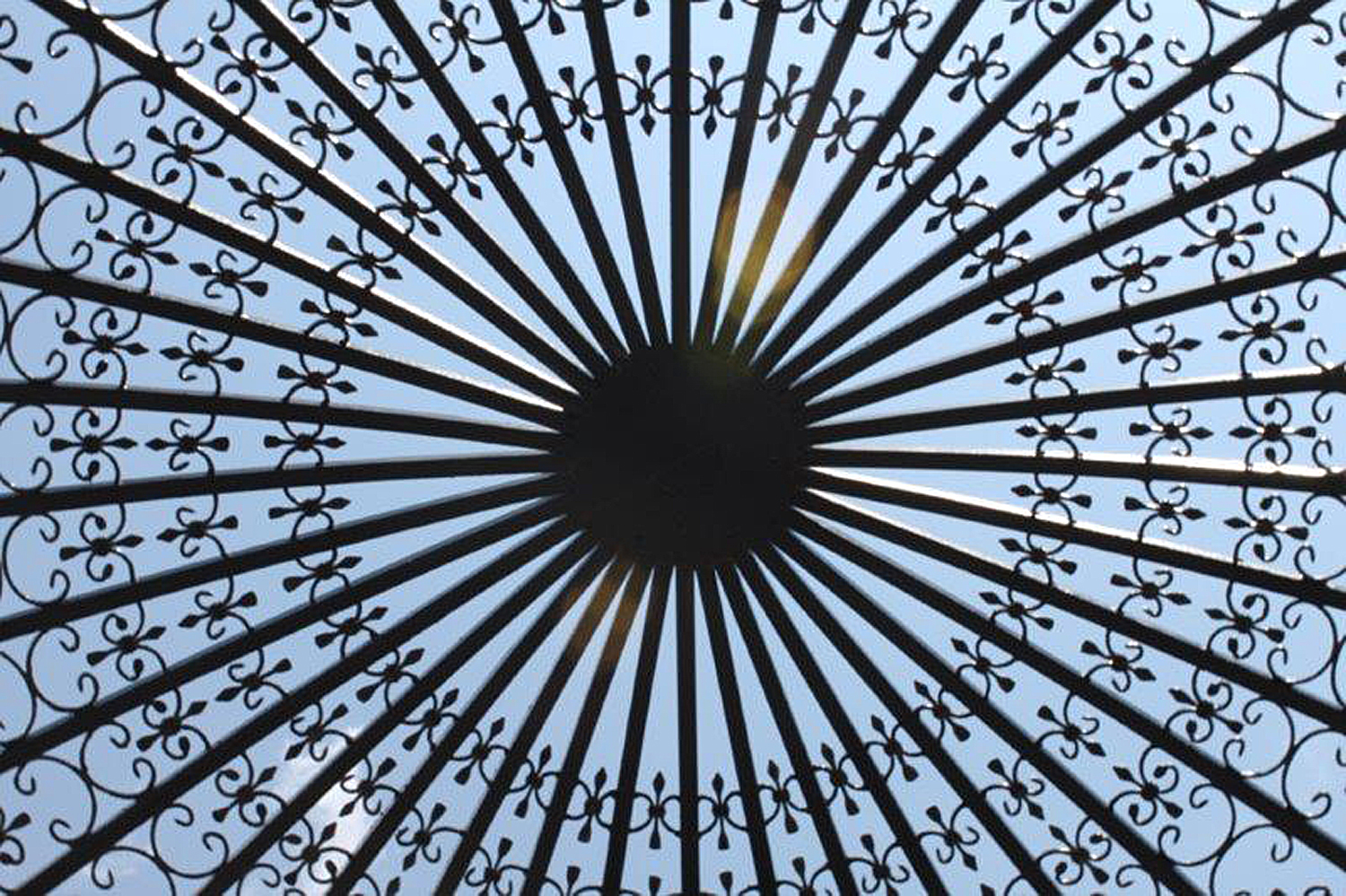
Lonnie sent me this image to critique and as I always like to do, I let you read what he had to say to me:
“Joe,
Here is a “pattern,” if you will, that I found appealing…actually shooting upwards while lying on my back under a dome in a park. Please critique. Thanks!
Cheers,
Lonnie”
I teach online classes with the BPSOP, and I conduct my “Stretching Your Frame of Mind” workshops all around our planet. In both my online part I and II classes, I show my fellow photographers how to incorporate the basic elements of visual design into their photography. One of the basic elements is Pattern, and for those that haven’t had a chance to read my post on it, click on the link .
I hope my critique and link has helped, and thanks for sending it in to me. I know that there are so many others out there that like to photograph with an abstract point of view, so making them stand the test of time is not often easy.
Visit my website at: joebaraban.com, and check out my workshop schedule at the top of this blog. Come shoot with me sometime. This March in conjunction with the Santa Fe Workshops I’ll be leading a group to Cuba.
The end of July marks my twenty-eight year at the Maine Media workshops. It’s a wonderful way to immerse yourself for a week and think about nothing but photography. It’s the same week as the Lobster Festival down the road in Rockland, and offers a completely different set of photo ops than the beautiful Maine coastline, amazing lighthouses, and quaint fishing villages. The full description is at the top of this blog.
This is a follow-up to my first post on one of the concepts of Gestalt I teach in one of my three online classes with the BPSOP, as well as in my “Stretching Your Frame of Mind” workshops I conduct around the planet This concept is called Proximity and if used in your thought process, it will help you make stronger more memorable photos.
Besides what I talked about in my first post, another way Proximity can make your images stronger is by grouping your subjects together so that a relationship or common bond is created. Research suggests that the viewer prefers to see similar objects grouped together, and by placing objects close together you will be offering the viewer an explanation of the message you’re trying to get across.
One example is when you purposely arrange the elements of your composition so that they relate to one another and becomes a visual unit.
We all love repeating forms, shapes and colors, and if you can include these in your grouping, it will create a pleasing rhythm and a sense of unity that will keep the viewer around longer. Another good example is watching a flock of Geese fly overhead. I, for one, find it visually interesting and will usually watch them until they become dots on the distant horizon.
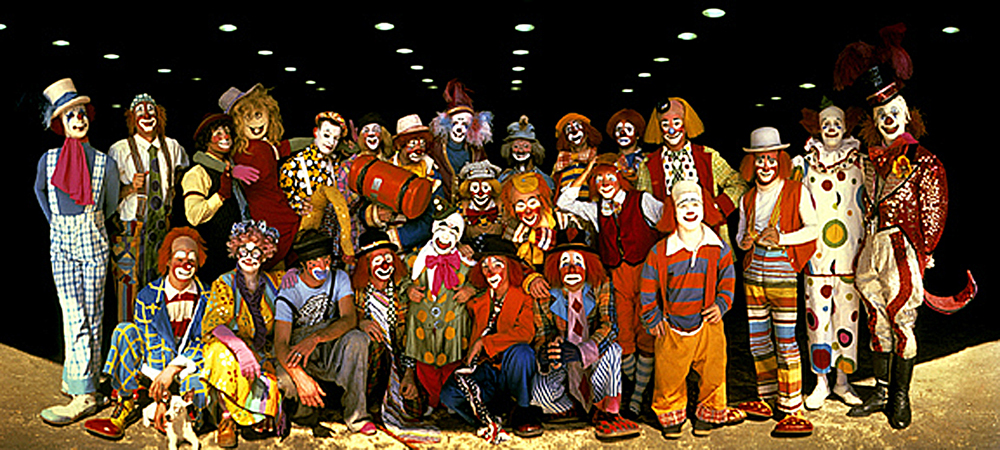
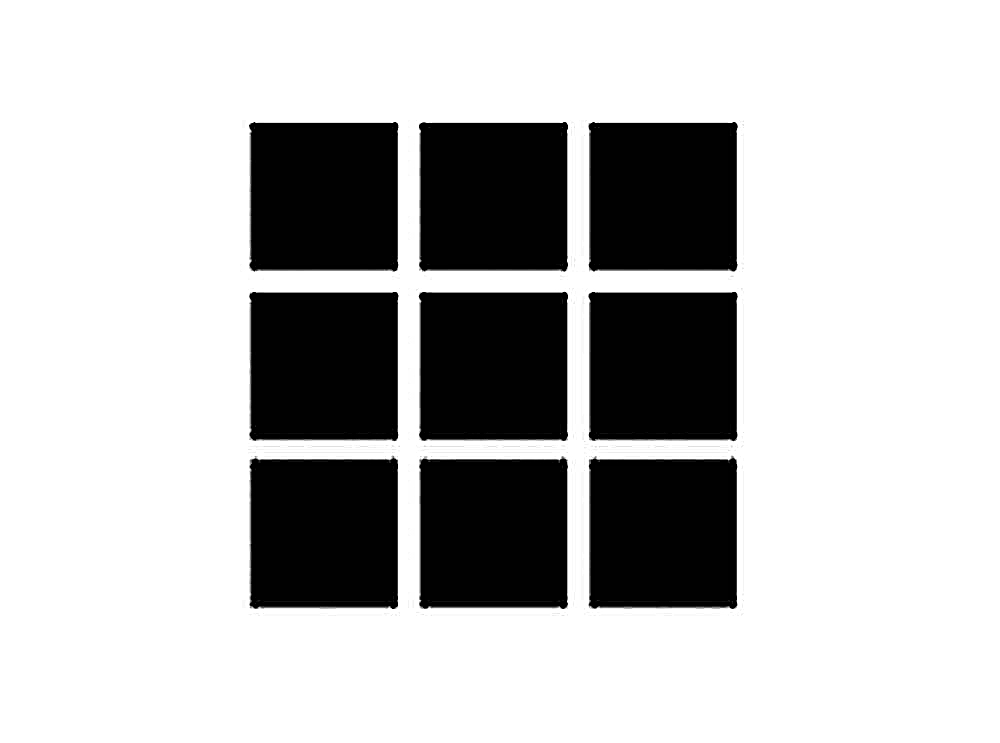
A well known set of diagrams will show you how it can work in your favor. In diagram (1), you see the nine elements scattered around and although they all look alike there’s not a visual bond between them and they are perceived as nine similar squares. In diagram (2) by placing the nine elements together, they form one big square and are perceived as one unit.
Diagram (2)
In the above photo, my goal was to have the viewer perceive this group portrait of all the clowns of Ringling Brothers & Barnum& Baily Circus as one unit. I also shot them with a 35mm Widelux panoramic camera so I could get close while getting them all in.
So, the next time your out and about, consider this concept in your composition. I think you’ll find it a big help in taking your photos what I always call “up a level”.
Visit my website at: www.joebaraban.com, and check out my 2016 workshop schedule at the top of this blog. come shoot with me sometime. In conjunction with the Santa Fe Workshops, I’ll be leading a group to Cuba for the third time next March. Come join me in what I’ll guarantee you to be an amazing experience, and you’ll return home with memorable photos from a wonderful country.
Don’t forget to send me a photo and question to: AskJoeB@gmail.com, and I’ll create a video critique for you.
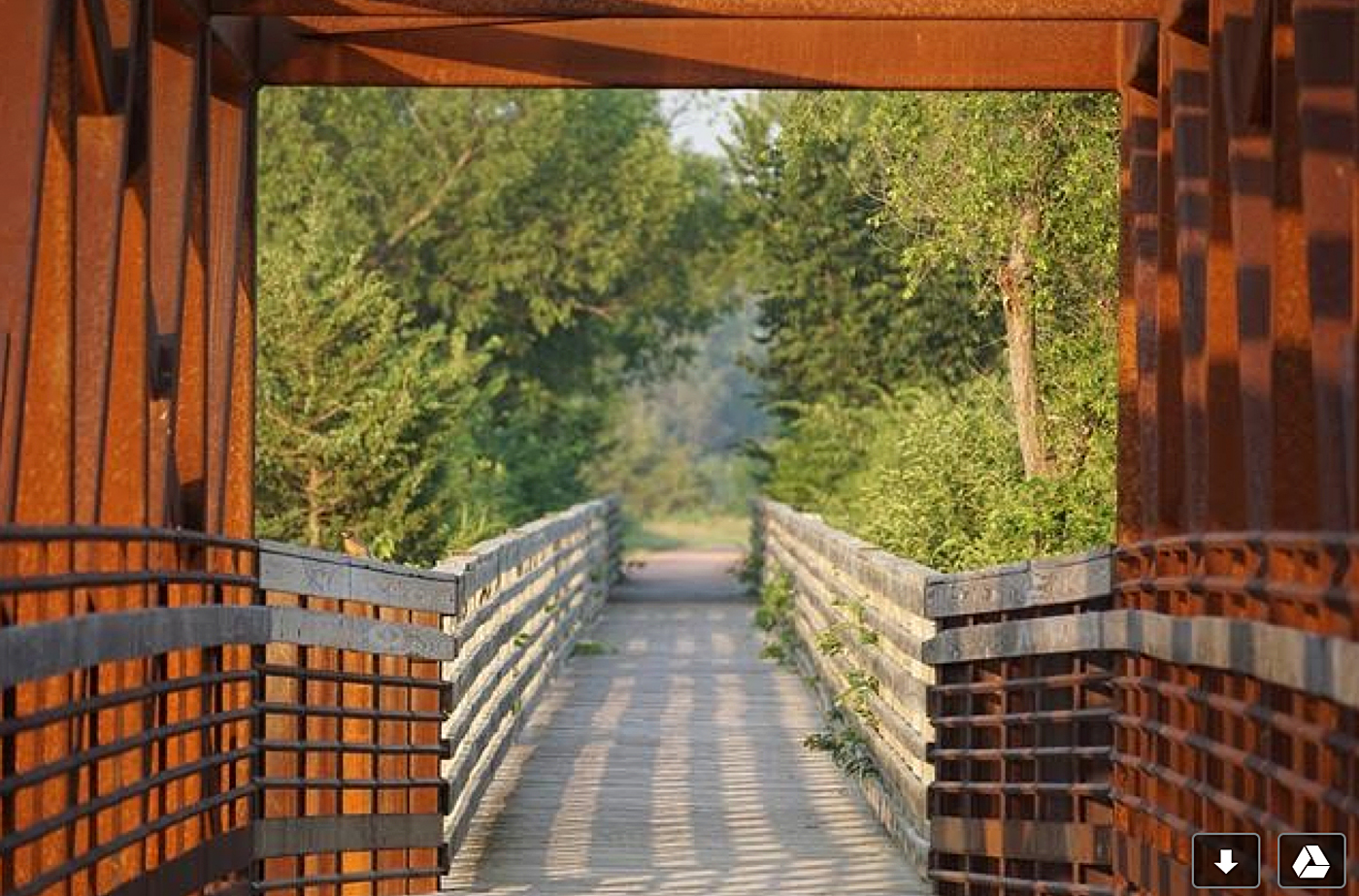
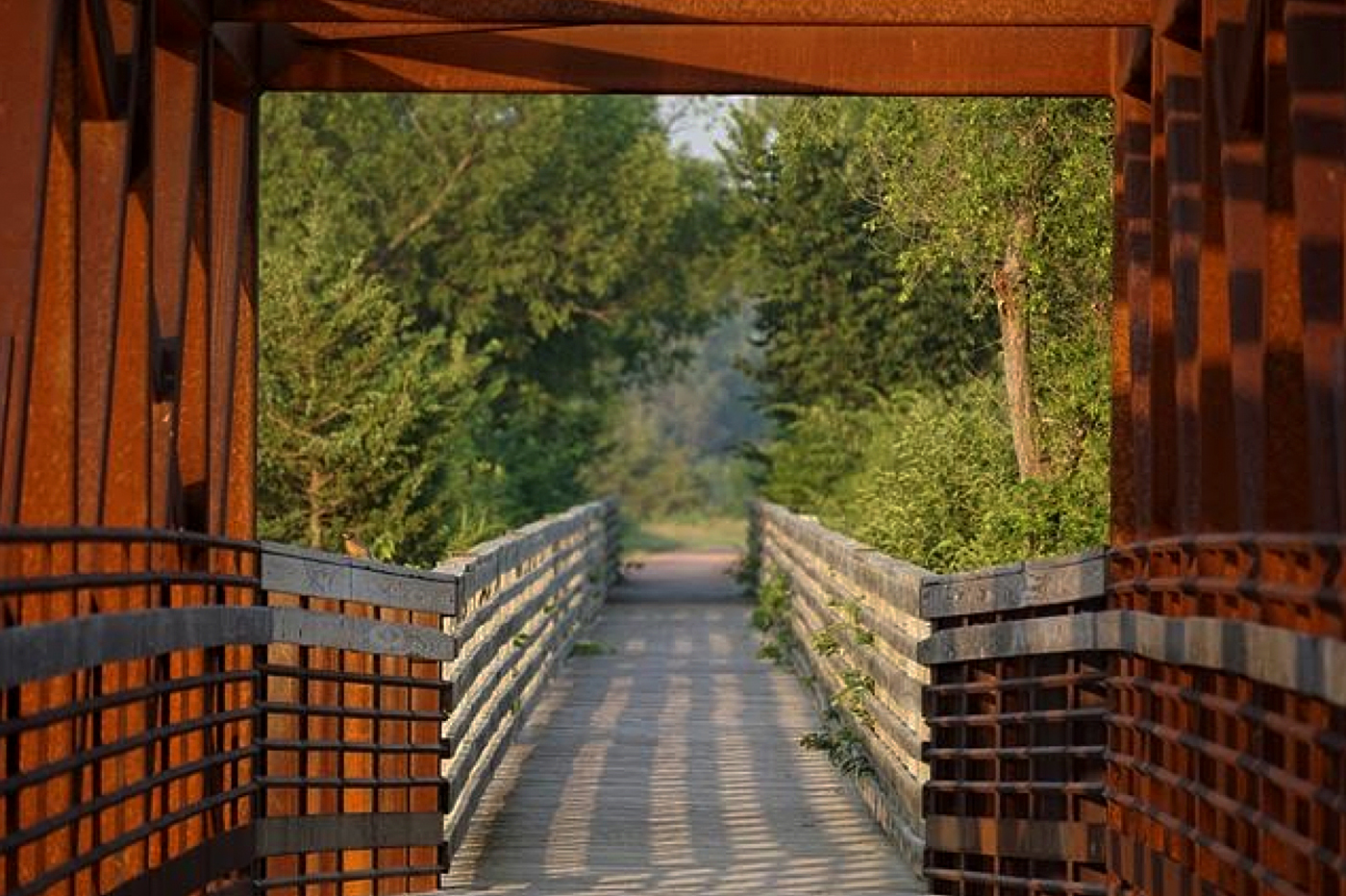
Greg, who has taken my online classes with the BPSOP, sent me this new photo to take a look at before starting. When I get a submission to AskJoeB, I like to include what he or she said about the photo, including any questions.
Here’s what Greg had to say:
Hi Joe,
I’m signed up for your August “Stretching Your Mind” class with BPSOP, but saw the Ask Joe post on your blog, so thought I would send an image to you. My question is about focus.
I deliberately focused at the point where the handrails stretch off down the wooden walkway, about 1/3 in on each side. Do you feel that my focus point is appropriate? Where would you have placed it?
By the way, I’ll be going back soon to give some more time to the shapes on the left side framework.
Greg”
Greg,
There’s several things I like about your photo. That said, take a look:
I tell my fellow photographers in both my online class, but my “Stretching Your Frame of Mind” workshops as well…give yourself choices. Not only in the exposure, but what you want to be sharp. By only shooting one way you lower the odds in coming home with what I call a ‘keeper’. One that can stand the test of time and not be deleted when you go back later for another look,
Look at your image now that I’ve taken it down a couple of stops…especially the shadows. If it were me, I would stop taking advice from the meter in your camera. Take matters into your own hand and bracket. Put all the exposures on your screen and compare them. This is great way to become a well-rounded photography.
Thanks for your submission.
Visit my website at: www.joebaraban.com, and watch for my 2016 workshop schedule at the top of this blog. Come shoot with me sometime.
Keep sending in your photos and questions to: AskJoeB@gmail.com, and I’ll create a video critique for you.
I wanted to write this post for all of those that have had interest in my upcoming photo trip to Cuba through the Santa Fe Workshops.
Next March will be my third trip and I look forward to it as much as the first time. in 2014. Now that there are so many changes going on with the US and Cuba relations, it makes it even more of a wonderful destination.
Private restaurants have been opening up and I can tell you that the food is great, and the atmosphere in these new Paladors (trip advisor) is a photo op in of itself.
The people are very warm and friendly and open to having their portrait taken against the Havana backdrop.
Here’s a link to my last two trips where you’ll see, through the eyes of the two groups, what Cuba is like.
Enjoy and I hope these photo taken solely by the photographers that were with me:
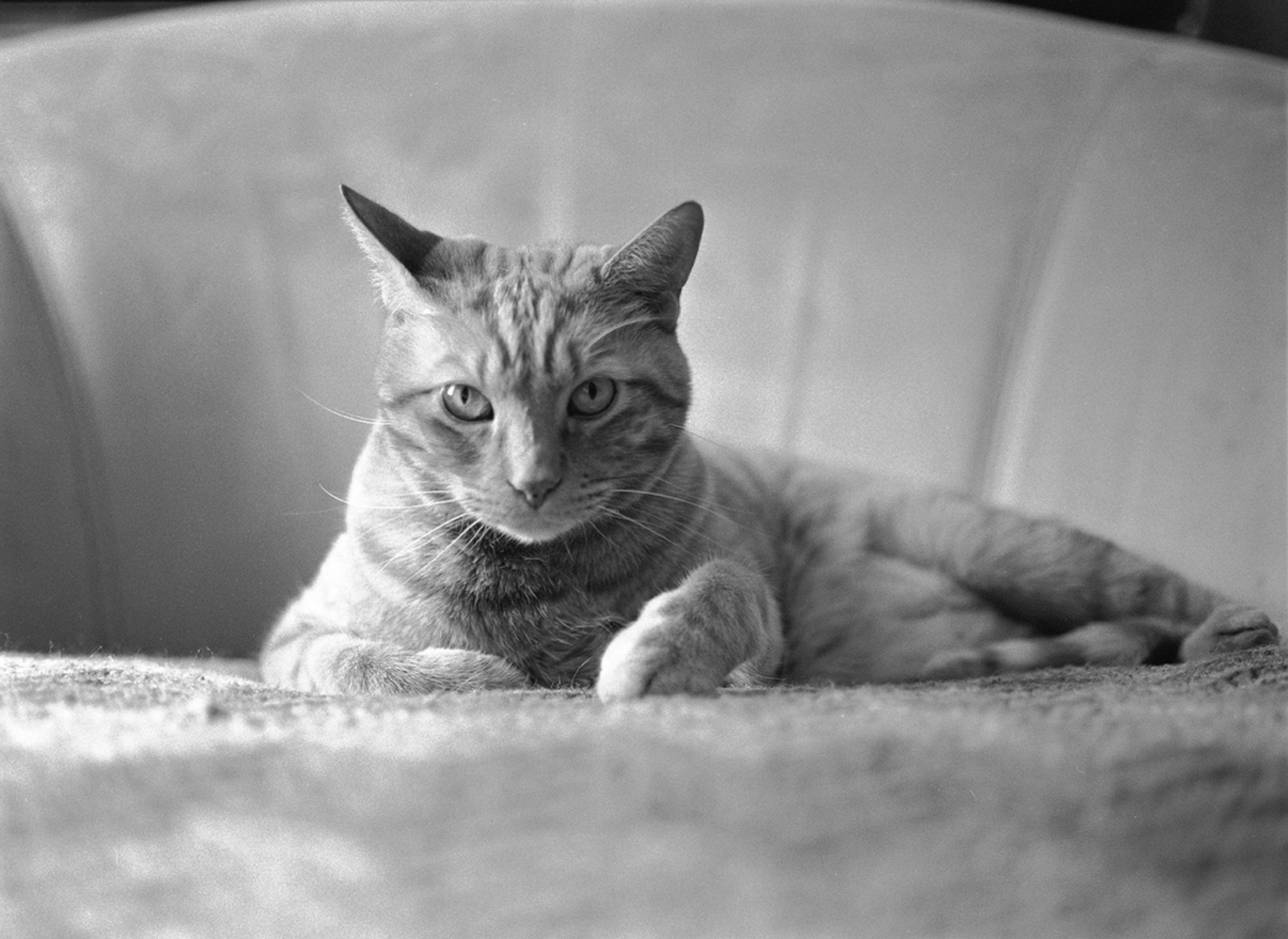
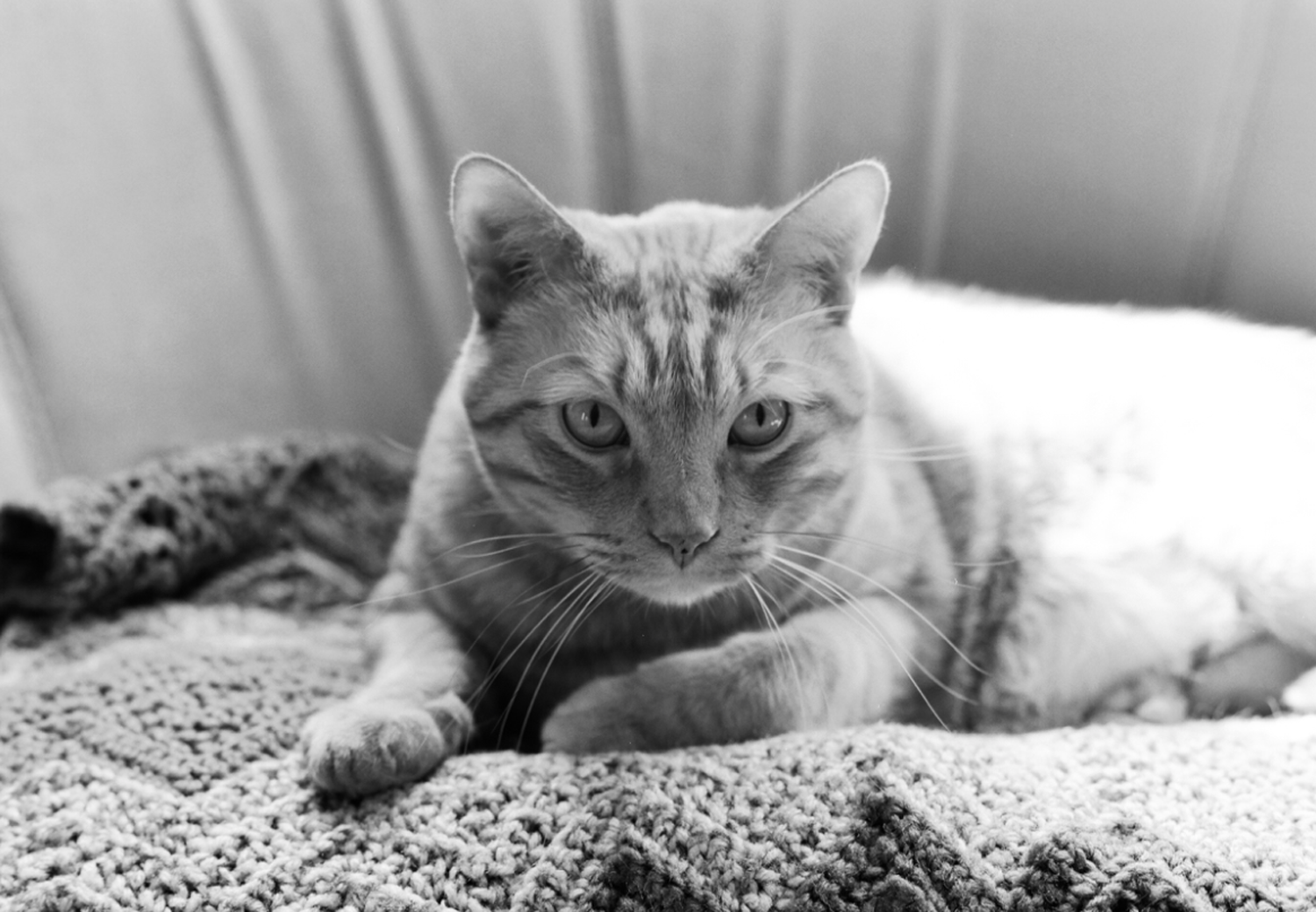
Gary had sent me an image a while back to comment on. At that time I made a video critique and told him to take more control of the light by blocking out all but a small amount; while putting in detail where it was void on the body of the cat. Then I suggested he apply my thoughts and do a re-shoot…which he did.
Here’s what he had to say in his new submission:
“Hello Joe! You asked me to try and re-shoot my favorite subject this time using your suggestions on how to control the light. I tried to block out any light coming in from the top of the frame down. I tried to use only south facing window light coming in from the left of the frame. I only wanted that light to illuminate Hurley (my kitty). Do you think I was more successful this time in controlling the light? I also tried to place his face more off to the left of the frame instead of dead center. Rechecking the focus I think may have just missed the focus on his eye.”
In my online class with the BPSOP, as well as in my “Stretching Your Frame of Mind” workshops I conduct around our planet I talk about Form being one of the basic elements of Visual Design. Form refers to the three dimensional qualities of an object; those being height, width, and depth.
Height and width are easy to obtain, even a silhouette has height and width. Depth is another story. The best way to achieve depth when you’re lighting a subject or object is to side light it. In Gary’s new image, this is what he’s done by controlling the amount of light coming in from the window.
Visit my website at: www.joebaraban.com and watch for my 2016 workshop schedule at the top of this blog. Come shoot with me sometime. My new “springtime” workshop is now posted on my blog. This time it’s in Sicily, so for those that’s always had this wonderful country on your bucket list now would be a good time to see and photograph it.
Keep those photos and questions coming it to: AskJoeB@gmail.com, and I’ll create a video critique for you.
I teach an online class with the BPSOP, and I also conduct my “Stretching Your Frame of Mind” workshops around the planet. I teach photographers how to incorporate the elements of visual design and composition into their imagery, and each week of the four week class they are given a lesson to work on for that week.
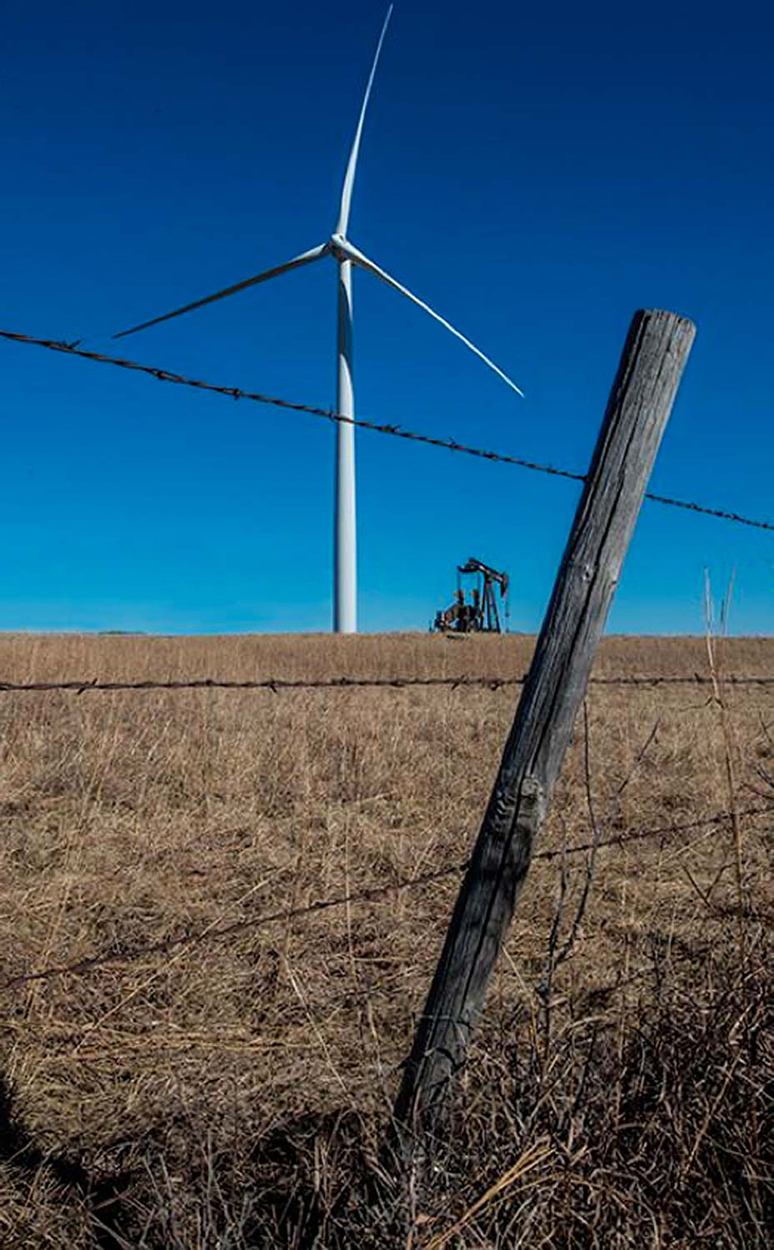
In the second week we work on ways to generate Visual Tension. I’m not talking about the tension that comes from mental or emotional stress, I’m talking about the visual tension that comes from forces acting upon one another. I recently had a student in my part I class send me a photo to be critiqued, and along with the photo, he described his thought process this way:
” While driving across Osage County in Oklahoma, I came across this wind farm being erected, and drove around until I found a single turbine and an oil well pumper side by side. I couldn’t cross the fence line, so I used the barbed wire and fence post for the foreground and to help frame the turbine and pumper. I also placed the blades of the turbine near the top wire to form a triangle. I also thought the fence post leaning toward the edge of the frame added tension”.
As always, I do a video critique of each photo that’s submitted, which is a huge help since I can explain myself while using the cursor to move around the various parts of the composition. In the videos, I point out what I like and why. I discuss the elements of design that are present in the photo.
“Thanks Joe. I have to admit that before this class, I probably would have just walked up and shot OVER the fence instead of incorporating it into the scene. Or worse, I might have crossed over the fence (illegally) to get closer for a different angle. Thanks to you, I am seeing photography in a whole new way, and enjoying it all over again! I have a whole new philosophy–“Work with what’ya got, but WORK with what’ya got”.
Visit my website at: www.joebaraban.com, and check out my 2015 workshop schedule at the top of this blog. In conjunction with the Santa Fe Workshops, I’ll be leading a group to Cuba for the third time next March. Come join me in what I’ll guarantee you to be an amazing experience, and you’ll return home with memorable photos from a wonderful country.
Keep those photos and questions coming into: AskJoeB@gmail.com, and I’ll send you a video critique of your image.
I recently had Gary, a follower of my blog, submit a photo for a critique. I always like to copy what each photographer had to say since so many people out there have had a similar experience, or have wondered about a part of photography that involves light. Here’s what Gary had to say:
Hello Joe,
I have read your blog for awhile and have been practicing the technique of using window light to create portraits. I know you say window light, specifically north or south window light, is a great way to light your subjects.
I have sent you a portrait of my cat because he is a great subject, doesn’t mind being photographed for hours nor having his picture shared online. My first question is about the light in this photo. The light is pouring down on the cat instead of coming across him. I believe window light needs to be coming from a high window coming across the frame in more of a diagonal fashion. As made famous by the painter Johannes Vermeer.
Is this still a good use of light though? My second question is the placement of the cats face and body in the frame. Taking a second look at the photo, I think I should have placed his eyes more towards the top with his left eye in the exact middle line of the frame. Lastly the image was taken on a Mamiya M645, standard 80mm lens on Fuji Across 100.”
Gary
Gary, I too am a great admirer of Vermeer. Since my background is in art rather than photography, I took several classes in Art History and Vermeer is one of the painters we studied for his use of light. It turned out to be serendipitous because my first studio was the first floor in an old house. I also had one of the bedrooms upstairs that happened to face North. At that time, very early in my career (as in the beginning), I couldn’t afford lights so I lit everything including portraits with the light coming into the window. Interestingly enough people really liked the way I was lighting them, not knowing that it was the best possible light I could have used…even if I could have paid for electronic flash.
In my online class with the BPSOP, and in my “Stretching Your Frame of Mind” workshops I conduct around our planet, We work and talk a lot about light. It plays a huge part in taking our images what I refer to as “up a level”.
Btw, when I could afford lights, I still preferred (and still do) North light.