My Favorite Quotes: Ernst Haas

Ernst Haas is one of my all time favorite photographers, and I’m lucky enough to have one of his images on my wall. One of his quotes has stuck with me for a whole lot of years. He once said, “The best zoom lens is your feet”.

I have used that quote (always crediting him with saying it) for years, both in my online class with the BPSOP and in my “Stretching Your Frame of Mind” workshops I conduct all over this planet.

If I had a nickel for everytime I walked up to someone who was shooting multiple photos merely buy zooming in and out with the same subject in the viewfinder, I would be writing this post from a chaise lounge by some pool with a blue and frothy drink; an umbrella hanging over one side of the tall glass.

It makes me think of a post I wrote crediting another artist with his quote…Bob Marley. It doesn’t say the exact same thing, but the idea fits this post; he said, “Some people feel the rain while others just get wet.”

The reason why it applies to Ernst Haas’s quote is because when you just stand there zooming in and out, you’re just getting wet. In order to feel the rain you should use your feet and not your lens when shooting.

Use your feet to move aound your subject, whether it be to change the way the light affects it or to merely change your POV. If you want less information around your subject then move closer. Converesly, if you want to include more of the environment back away.

Of course this is all predicated on the assumption that you only brought one lens with you. If you’re like me, you have several options (lens) to choose from.

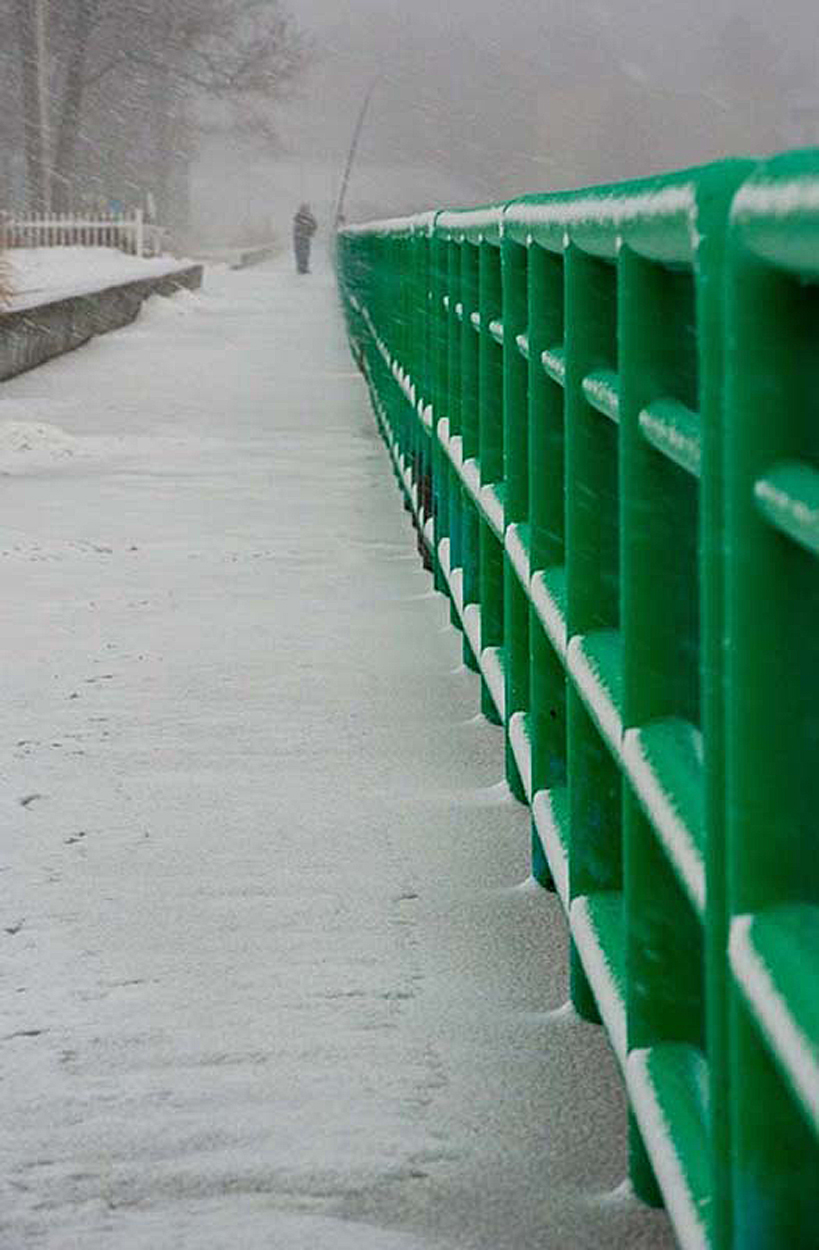
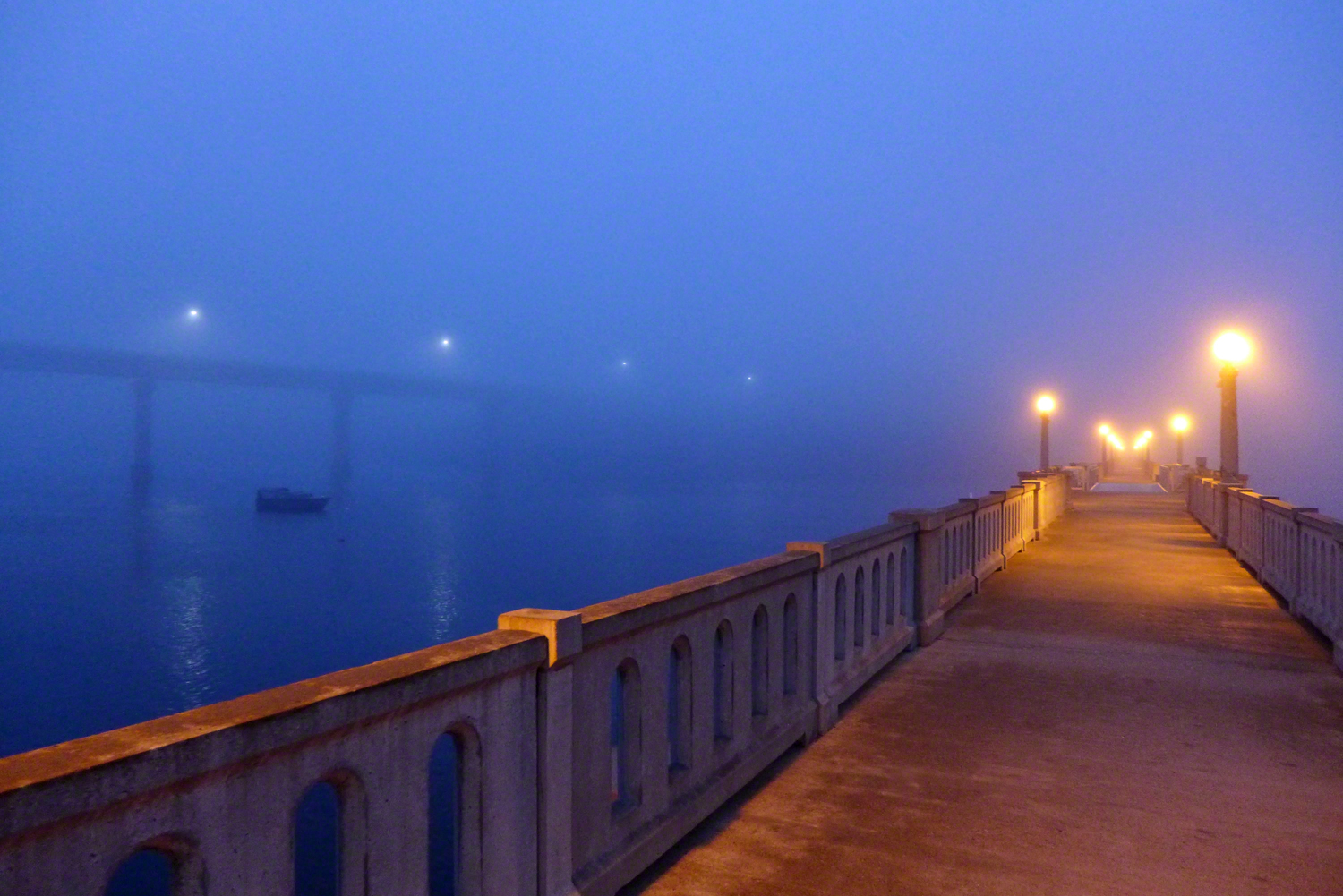
In the above photo taken during my Maine Media Workshop I first shot this pedestrian bridge by walking up to this position and shooting what you see now. If I han’t I might not have gotten everything sharp from fron to back; and the feeling of compression. So many people make the mistake of just zooming in on something like this without thinking of any possible side effects.

I love zoom lens, having three of them myself. When necessay they’re great to have aound. When I say ‘necessaryy’ I’m talking about times when using your feet are impossible. For example if there’s a fence in front of me which by the way I might just scale depending if the shot would possibly be worth it verses the amount of probable stiches; remember that begging for forgiveness could be a lot better than asking permission. What about a giant pool of quicksand, a den of rattlesnakes (I hate snakes), or  a starving school of Piranha??

That would do it for me!!

I think you get the point. For me, It would take things like the before mentioned problems for me not to walk to find another POV; besides, I need the extra steps!!!

Visit my website at: www.joebaraban.com, and check out my 2018 worksho schedule at the top of this blog. Come shoot with me sometime.

In conjunction with The Santa Fe Workshops, on October 2nd I’ll be leading a group in San Miguel de Allende. A beautiful oasis and artist colony, and the entire city is a UNESCO site.

Come join me for a week of fun and photography…what could be better?

JoeB

My Favorite Quotes: Alfred Steiglitz

ISO 25

I’m currently reading a book called Group F/64, and I can’t recommend it enough to all my fellow photographers out there. Some of the book talks about the relationship between Edward Weston living on the west coast in San Francisco and Alfred Steiglitz living in NY.

I had been familiar with Steiglitz and know that he was considered the man that everyone looked up to and so much wanted his respect…especially Edward Weston.

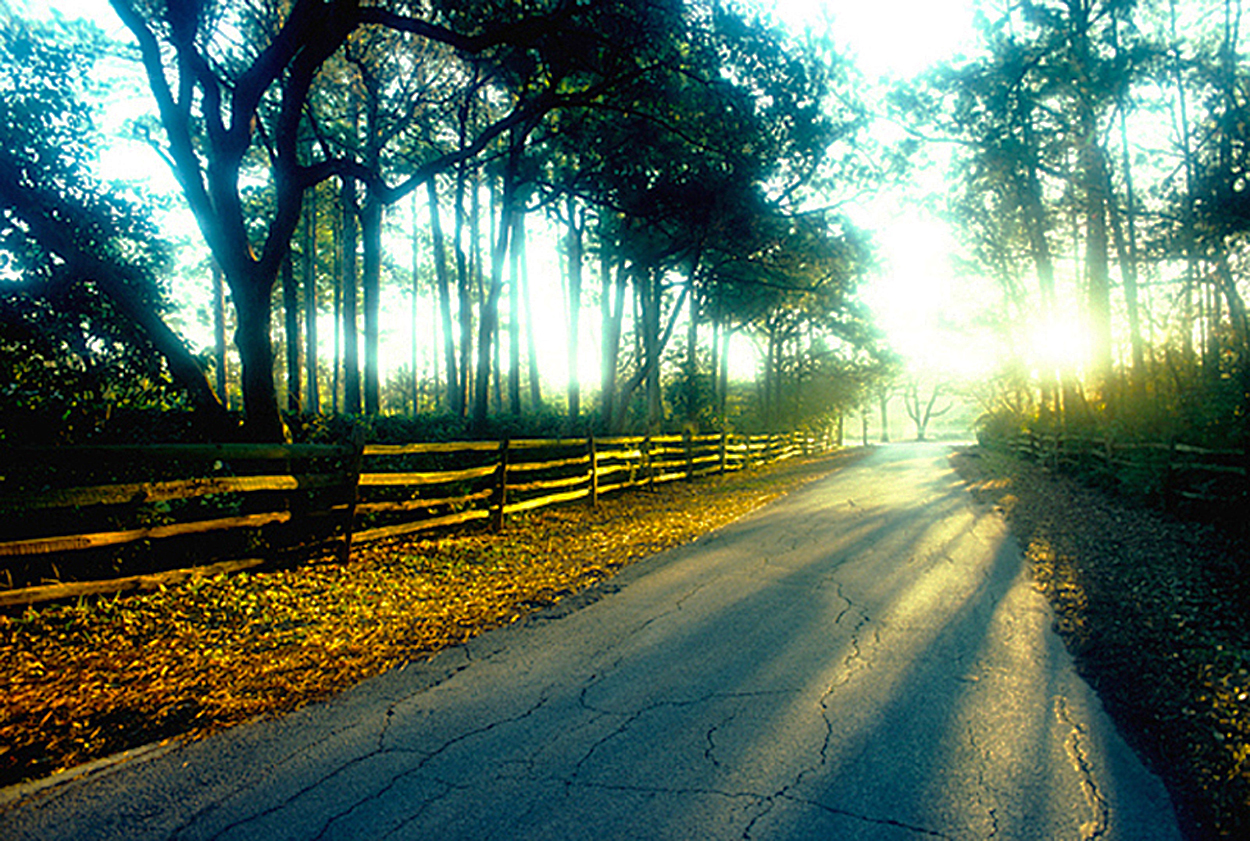
Steiglitz once said, ” Wherever there is light, one can photograph”.

You find the light, you find the shot.

If I had to say which subject I’ve written the most posts on it would have to be the Light. I’ve said to my online class with the BPSOP, and to the photographers that sign up for my “Stretching Your Frame of Mind” workshops countless times that Light is everything; the only possible exception is capturing a moment in time while street shooting.

Since I can remember, and that would be going on fifty years, if I can see it, I can take a picture of it….and that was in the film days; days when the ASA was twenty-five. Now with the digital age that has become even easier; it’s called jacking up your ISO…way up!! Of course the only problem is forgetting to jack it back down…way down…which everyone does at one time or another…except for me. Truth be told, I’m not sure where that little button is on my camera!!!

ISO 200

It takes such a small amount of light to create long lasting images, and you can also do it like I do which is with a tripod and an ISO of two hundred. Or if you left your tripod in the car, and you’re walking around looking for interesting subject matter, be sure to have a fast lens on and shoot wide open. I’ve even found places to rest my camera on for additional support.

FYI, your wife’s shoulder makes a great tripod!!!

So next time you go out, think of what Alfred Steiglitz said. You don’t need to look for areas in bright sun, bright rooms, or thinking you have to shoot midday…because you don’t. You find the light and you’ll find  the shot.

Visit my website at: www.joebaraban.com and check out my 2018 workshop schedule at the top of this blog. Come shoot with me sometime.

This coming July 29th will be my 30th anniversary teaching at the Maine Media Workshop. I’ve always picked this time as it’s the week of the Lobster Festival down the road in Rockland. This ofers a unique set of photo ops, different from the Maine Coast, fishing villages and lighthouses. The Lobster Festival is all about color, design, light, energy, people watchng and environmental portraits everywhere you look; some people are there in costumes and loved to be photographed.

In conjunction with The Santa Fe Workshops, on October 2nd I’ll be leading a group in San Miguel de Allende. A beautiful oasis and artist colony, and the entire city is a UNESCO site.

Come join me for a week of fun and photography…what could be better?

JoeB

JoeB

*Springtime in Berlin 2018

Springtime in Berlin 2018

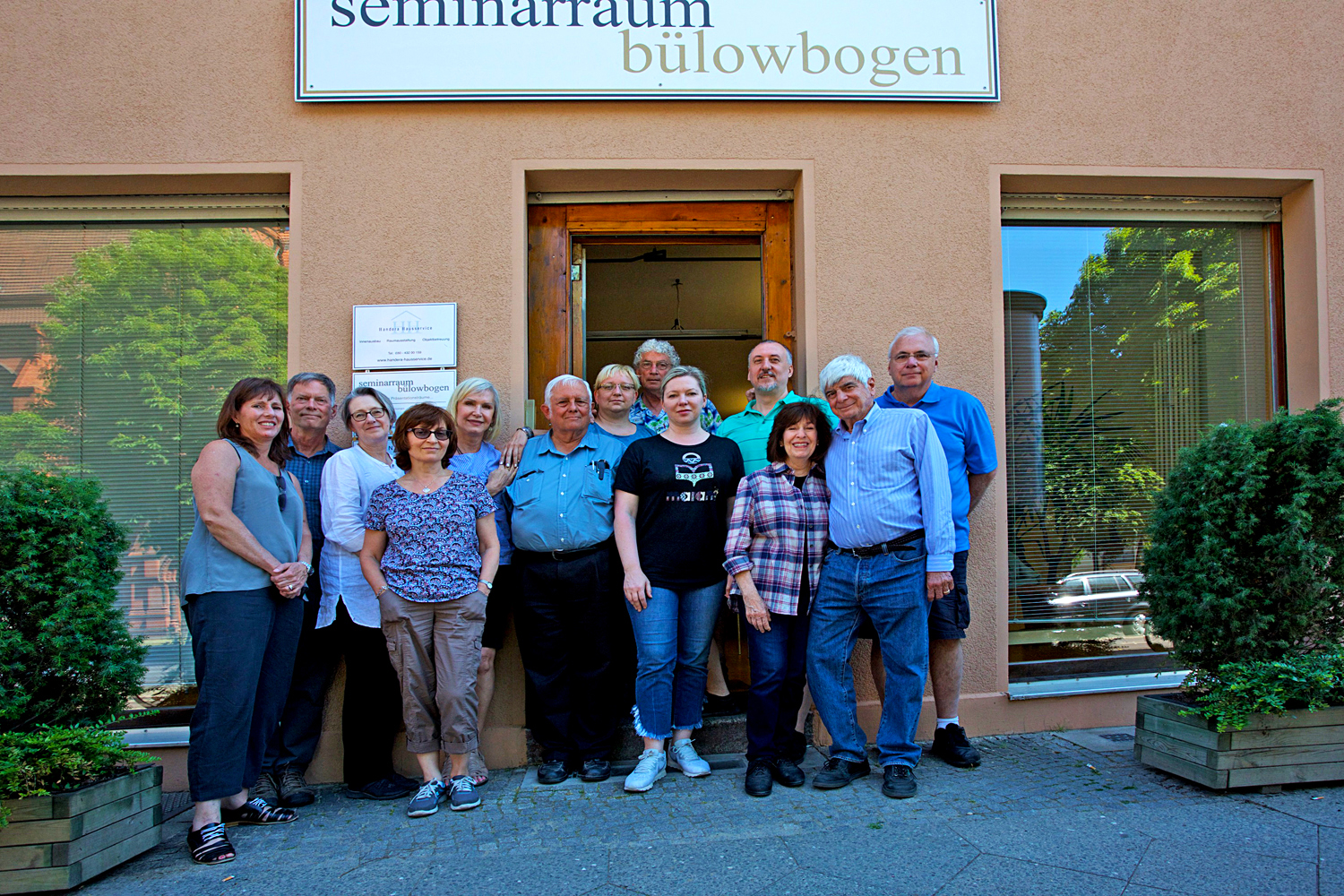
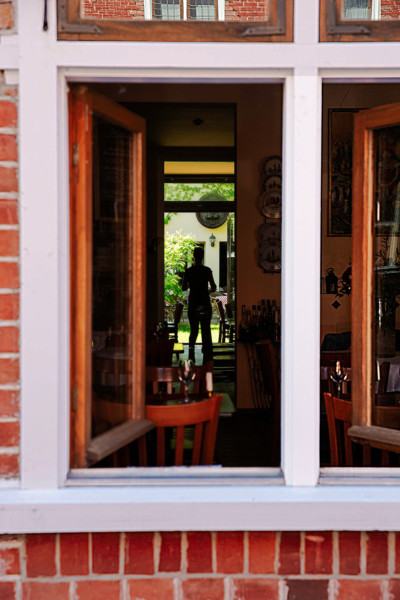
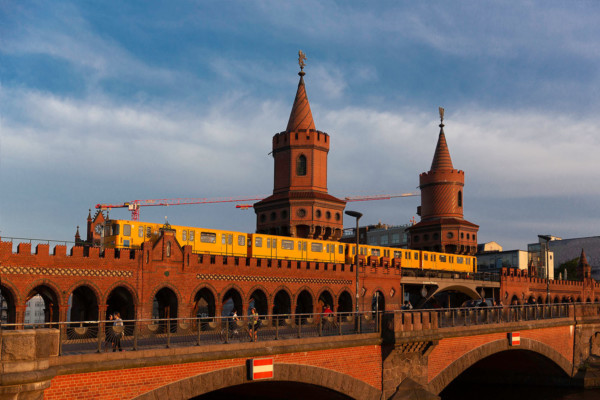
A few weeks ago I conducted my yearly ‘Springtime’ workshop and this time it was in Berlin. It was a great group, and many of them had taken several workshops with me before (some as many as nine, and also have taken my online classes with the BPSOP.

It’s become a tradition to showcase their images in one of my posts. I usually don’t have this many photos but this time there were so many great shots that after deleting and deleting and deleting, there were still a whole lot!!!

Having said this, you can just hold down the arrow and let them cruise by at a speed that will still give you an idea not only of the beautiful city but of the talent that I was lucky enough to have join me this time.

In fact, I couldn’t really pick one to have at the top of this post so I decided to show the group photo taken in front of our meeting room we used for several hours each morning for the daily reviews and critiques.

Enjoy and let me know what you think:

Visit my website at: www.joebaraban.com, and check out my workshop schedule at the top of this blog. Come shoot with me sometime. In conjunction with the Santa Fe Workshops I still have a couple of spots in my upcoming trip to San Miguel.

JoeB

Food For Digital Thought: Seeing Past First Impressions

What’s your first impression?

A couple of years ago I conducted a workshop in Sicily and was walking next with a fellow photographer who signed up for one of my “Stretching Your Frame of Mind” workshops I conduct around the planet.

We were walking next to the Ionian sea on Ortygia, an Island in the historic section of Syracusa and I was talking about one of my personal pearls of wisdom that I also discuss in my online classes with the BPSOP….”Seeing past first impressions”.

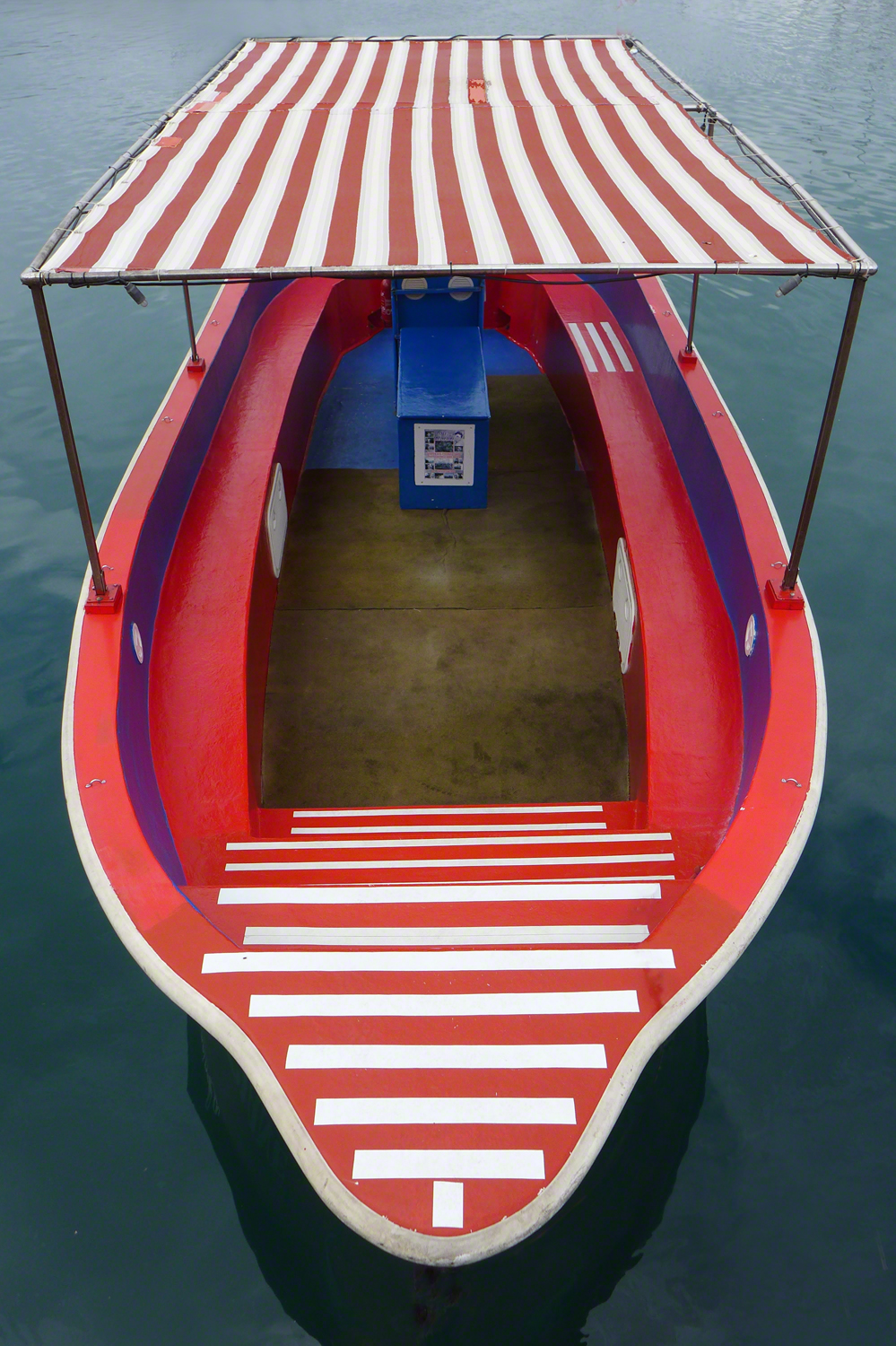
I stopped in front of this boat that was moored and asked her what she saw…besides a boat waiting to be chartered by tourists; at first all she could see was a “cute) red striped boat.

I said yes it was that, but it was so much more. I saw several elements of visual design, namely shapes, patterns, color, and balance. Upon seeing past her first impression, she also saw the same things and also the fact that these elements seemed to her to be in three dimensions.

We talked about composition and the fact that it was partially cloudy so we couldn’t include a lot of environment (at least with this subject) because of the flat light. Showing a gray sky would not benefit this subject.

I suggested to use the edges of her frame to help create visual tension (by placing the subject close to the edges of the frame) and to put all the emphasis on this beautifully designed and painted boat….making it a study of someone’s three dimensional work of art.

So the next time you’re out and about shooting don’t view things as they are and what you first see, look past those initial reactions to things so you can see what else they represent. It will open so many other photo possibilities.

Visit my website at: www.joebaraban.com, and check out my 2018 workshop schedule at the top of this blog. Come shoot with me sometime.

This coming July 29th will be my 30th anniversary teaching at the Maine Media Workshop. I’ve always picked this time as it’s the week of the Lobster Festival down the road in Rockland. This ofers a unique set of photo ops, different from the Maine Coast, fishing villages and lighthouses. The Lobster Festival is all about color, design, light, energy, people watchng and environmental portraits everywhere you look; some people are there in costumes and loved to be photographed.

In conjunction with The Santa Fe Workshops, on October 2nd I’ll be leading a group in San Miguel de Allende. A beautiful oasis and artist colony, and the entire city is a UNESCO site.

Come join me for a week of fun and photography…what could be better?

JoeB

JoeB

My Favorite Quotes: Me And My Shadow

“Me and my shadow”

A very long time ago I was actually young, and I still remember my mother singing along to a 1927 hit song called called, “Me and my shadow”, and it actually continued with…”walking down the avenue”.

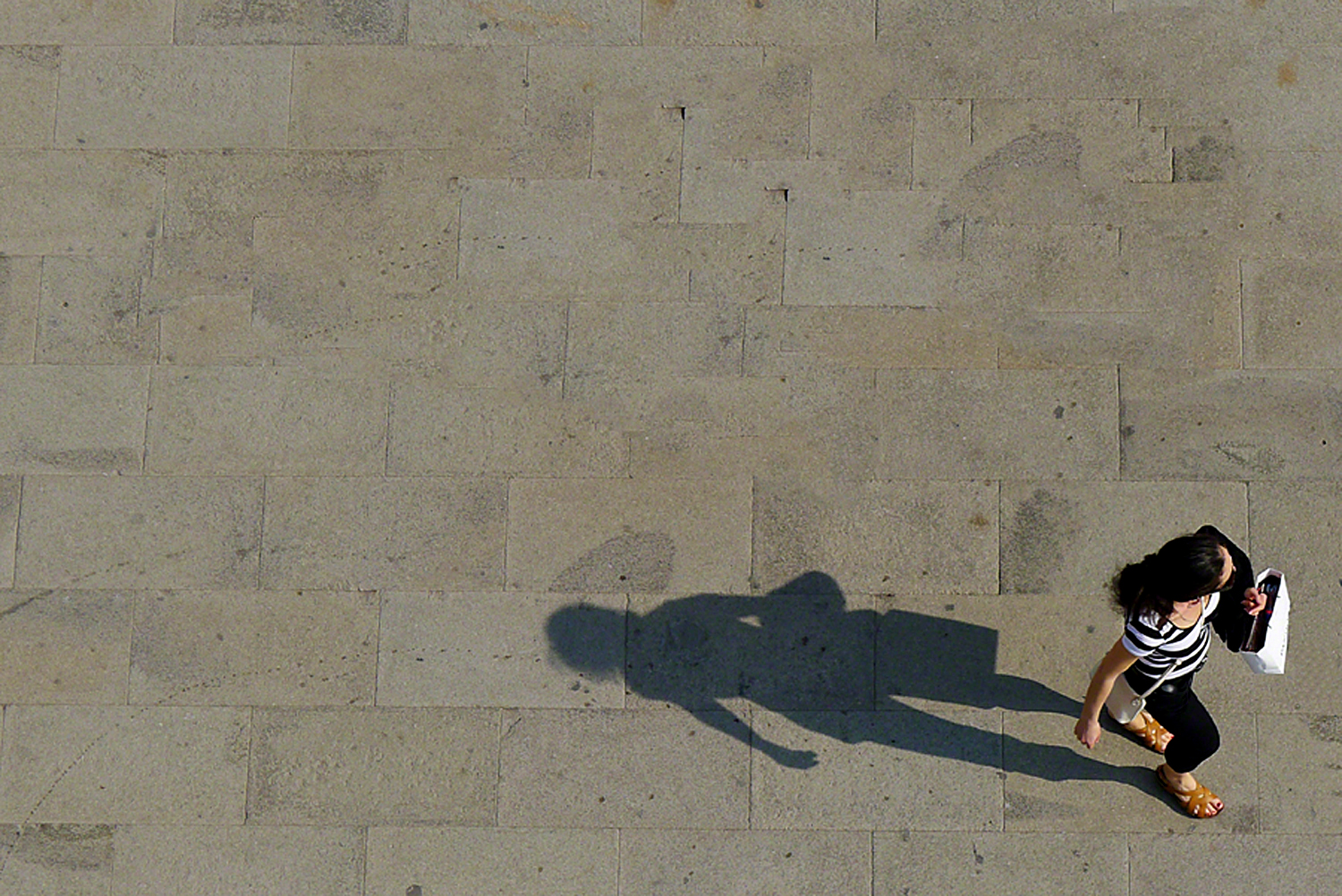
Although not actually a quote on its own it’s part of a song that I occasionally  think of as I watch people and their shadows strolling down a street, avenue, or as in the photo above which I took from a balcony in the Piazza San Marco square in Venice.

I watched several people walk underneath the balcony and I waited until I could one of them cutting a diagonal from one corner to another. Finally, I saw a woman come walking towards me cutting the exact diagonal I was hoping for. I waited because I wanted her to be leaving the frame as to generate visual tension, as well as implying content outside of it.

Yes, I know some of you have been told to always have someone walking into the frame (the leading in rule) , but where’s the mystery if you know where they are walking? I want the viewer to wonder where they’re going by saying that there’s something more that can’t be seen.

I digress.

I love shadows and make no mistake, they are your best friend. I hear all the time both in my online class with the BPSOP, and in my “Stretching Your Frame of Mind” workshops I teach around our planet that my fellow photographers fear shadows, find them intimidating, and go out of their way to avoid them; when in fact they should embrace them.

What’s important is the interrelationship between the light, the subject, and the shadow, and when that happens it gives a dramatic edge to your photos; and will often create an abstraction.

Look for shadows and try to incorporate them into your imagery, and when you do you’ll find that your photo has taken on a layers of interest that will propel it to another level. When that happens, and you’ll know it, pay tribute to whatever shadow you’ve included.

For those that are my age or just nostalgia buffs in general, here’s Frank Sinatra and Sammy Davis Jr. singing it: https://www.youtube.com/watch?v=i-4uKgXRnpI

Visit my website at: www.joebaraban.com and check out my 2018 workshop schedule at the top of this blog. Come shoot with me sometime. I’ve a couple of openings in my Springtime in Berlin workshop next May 23rd. A fantastic city with so many great locations we’re going to be shooting.

This coming July 29th will be my 30th anniversary teaching at the Maine Media Workshop. I’ve always picked this time as it’s the week of the Lobster Festival down the road in Rockland. This ofers a unique set of photo ops, different from the Maine Coast, fishing villages and lighthouses. The Lobster Festival is all about color, design, light, energy, people watchng and environmental portraits everywhere you look; some people are there in costumes and loved to be photographed.

In conjunction with The Santa Fe Workshops, October 2nd I’ll be leading a group in San Miguel de Allende. A beautiful oasis and artist colony, and the entire city is a UNESCO site.

Come join me for a week of fun and photography…what could be better?

JoeB

Food For Digital Thought: Clipping The Highlights

I blow out highlights.

First of all, let me explain what is meant by “clipping the highlights”:

According to several definitions I’ve read over the information highway, clipping occurs when there is an incorrect exposure. When an exposure is increased so is the amount of light, and increasing the exposure too far will cause the lightest areas in your photograph to ‘clip’ or appear ‘blown out’.

Here’s one of those definitions, and would I love to meet the person that wrote it!!!!!

“The clipped area of the image will typically appear as a uniform area of the minimum or maximum brightness, losing any image detail. The amount by which values were clipped, and the extent of the clipped area, affect the degree to which the clipping is visually noticeable or undesirable in the resulting image.”

UNDESIRABLE??? SERIOUSLY???? If you’re the one that wrote this please contact me so I can try to get your head screwed back on so you’ll see where you’re going instead of always looking behind you and in the past.

It’s always amazing to me when a student tells me that he had a  photography instructor or a fellow member of the camera club, tell him or her to never clip the highlights.  It’s also amazing when I’m looking at the back of a student’s digital camera and there’s a bunch of “blinking stuff” on it.

This conversation comes up a lot in my online class with the BPSOP  and in my  “Stretching Your Frame of Mind”, workshop I conduct all around the planet.

The first thing I tell my fellow photographers is to get that stuff off of their display. You know, the areas that blink when they’re being clipped.

It would drive me crazy!!! In fifty-three years of shooting professionally I’ve NEVER, and I do mean NOT ONCE ever worried or even thought about whether my  highlights were clipped; I want that energy…that visual tension!!

Always remember this: “The viewer will always react to that which is most different.” It’s what I teach/preach when I talk about the Psychology of Gestalt and how the different concepts within it can help us make stronger images.

Here’s some examples of when I clip the highlights:
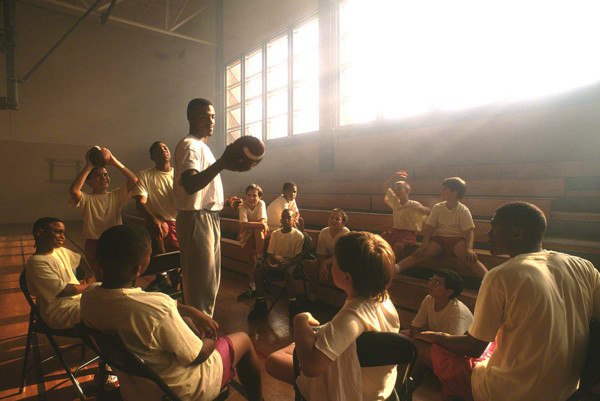
My last thought on this is when those same fellow photographers tell me that during their camera clubs yearly competition, if they were to submit an image where areas are blown out they’re either disqualified or told to go sit in a corner; can you just image the degradation one would encounter?

The answer I usually give is for them to start their own camera club that encourages photographers to color outside the lines.

Blow out those highlights, and be damn proud of it.

Visit my website at: www.joebaraban.com and check out my 2018 workshop schedule at the top of this blog. Come shoot with me sometime. I’ve a couple of openings in my Springtime in Berlin workshop next May 23rd. A fantastic city with so many great locations we’re going to be shooting.

In conjunction with The Santa Fe Workshops, October 2nd I’ll be leading a group in San Miguel de Allende. A beautiful oasis and artist colony, and the entire city is a UNESCO site.

Come join me for a week of fun and photography…what could be better?

JoeB
Food For Digital Thought: Tripods, What Are They Good For?

Only with a tripod.

I would safely say that the biggest hurdle I have in my online class with the BPSOP, and in my “Stretching Your Frame of Mind” workshops I conduct around the planet, is to get my students to use a tripod. The digital era has brought with it a new class of photographers that think the only way to take a photo is to always hand hold their camera; and that’s fine a lot of the time. When I’m walking around, either when I’m traveling or just taking snapshots around my hometown, I’ll carry my camera over my shoulder. That’s when the photos are for a record  of where I’ve been, or possibly for planning out my next shoot, or for showing a family member something or someone I might have seen, or perhaps for a teaching aid.

However, when I’m going out to take serious photos, I always use a tripod…why you ask?

Because I’ll never let my camera tell me when and where I can take a photo. I’m going to be the only one that decides if I can shoot something or not…certainly not a machine. Ok, I know you can jack up the ISO to a million (give or take a few hundred thousand), but I wish I had a dollar for every time a student explained that the reason the photo they submitted looked weird is because they forgot to change the ISO back to the normal range. I’ve also been told that they don’t shoot when the light is toooooooooo low because they can’t hand hold their camera during that time…YIKES!!!!! Tell me it ain’t so!!!!!!

All this is predicated on the idea that early in the morning or late in the evening is going to be the best light, and therefore that’s when I’m going to shoot; it’s the only time I shoot when I’m serious. I want to be able to shoot at any shutter speed I want, and with any aperture setting…and any combination of the two. This is how I maintain control of my photographs.

If you like shooting after breakfast right after lunch, and before dinner and your goal is to take “half way decent pictures” and be a fairly good photographer, then by all means hand hold your camera. If you want something more, then get a tripod. The key is to get a tripod that’s simple to use and lightweight. So many students of mine have inexpensive tripods that are only good for putting hanging plants on. It’s a life time investment and one of the best you’ll ever make. Buying one and occasionally using it won’t do you any good. It takes practice…a lot of practice. When you get use to it you’ll find that it’s going to open up soooooooo many creative doors for you. It’s going to free up your hands…why is that important you ask?

To me, I think of a camera on a tripod like a canvas on an easel. When I’m on a tripod, I can leave the camera and adjust something in my composition and know that when I take a look at whatever changes I’ve done, the camera will be in the exact same position. If you’re hand holding your camera and you make a change, you’ll never be able to go back to the same position. When I’m designing the Negative and Positive space for example, or moving something into or out of my frame, I want to be able to see the exact change in my viewfinder

BTW, buy the best tripod you can, that way you’ll only cry once!!

Visit my website at: www.joebaraban.com, and follow me on Instagram: www.instagram.com/barabanjoe. Check out my 2018 workshop schedule at the top of this blog. Come shoot the sunrise and sunsets with me. You might want to bring along a tripod!! I’ve a couple of openings in my Springtime in Berlin workshop next May 23rd. A fantastic city with so many great locations we’re going to be shooting.

🙂

JoeB

Personal Pearls of Wisdom: Don’t shoot because it makes you feel good, shoot because it looks good.

Feels good, looks good, and has meaning.

OK, I hope this doesn’t draw angry letters or bomb threats since at first this “Pearl of Wisdom” might seem a little harsh and insensitive but there’s a reason for my madness.

When I get a submission in my online class with the BPSOP, or a photo presented to me during one of the daily reviews in  my “Stretching Your Frame of Mind” workshops I conduct all over the place, there is usually feedback in the form of an explanation as to why the photo was shot in the first place.

I will often say to the photographer, “Ok, tell me about this shot. Why did you decide to click the shutter?” If I had a dollar for every time I’ve  heard someone say…”besides it was just so cute I couldn’t help myself”, I would be writing this posts from my own island after one of my staff brought me a blue and frothy drink with an umbrella hanging perilously down from one side.

That’s all well and good and I love having my fellow photographers feeling terrific about the world and the environment that surrounds them; but if the photo doesn’t have some meaning to others, it won’t stand the test of time.

I’m as sentimental as the next guy and I like feeling good about things that I see on a daily basis, but I’m also out there trying to take photos that look good…and if they make me feel good doing it so much the better; usually it’s one in the same since I love taking pictures.

For example, I’m walking down the street and I see a child getting licked in the face by a puppy I will probably say to myself, “oh how cute”, but that doesn’t mean I’m going to take a picture of it…unless maybe it’s my kid and puppy, and it’s going into a time capsule to be opened with they get engaged or married and I show all the guests how cute they were when they were little.

I digress.

Now, if that same child and puppy is not the entire puzzle but a piece of it, then I’m going to take a closer look. In other words if there’s something else going on around them, something that tells or completes a story, then I will stop…providing I obtain permission from the parent beforehand.

What if the kid being licked is a freckled-face darling little girl, wearing a white lace dress with bows tied around her pigtails while behind or next to them is a bunch of dirty, huge, hard hat wearing constructions workers sitting around having lunch? Then you have a dichotomy, and that would give the photo a different meaning…why you ask?

Because you would be combining opposites in the same composition and in so doing you’re creating visual tension.

See what I mean?

Visit my website at: www.joebaraban.com and check out my 2018 workshop schedule at the top of this blog. Come shoot with me sometime. I’ve a couple of openings in my Springtime in Berlin workshop next May 23rd. A fantastic city with so many great locations we’re going to be shooting.

Send me a photo and question to: AskJoeB@gmail.com, and I’ll create a video review for you.

JoeB

Food for Digital Thought: Crossover Photography

Crossover photography

When I think back to younger days I think about the expression Crossover Photography. I remember reading about the differences between fine art, representational, and abstract photography, and how one can comfortably crossover to another.

Now, years later, this topic occasionally comes up in my online classes with the BPSOP, and in my “Stretching Your Frame of Mind” workshops I conduct around the planet. With several points of views, I can relate my feelings and the consensus of my fellow photographers.

The crossover comes when fine art photography merges with more of a representational approach. Photographs that are considered fine art are about vision to be sure, and they convey to the viewer an impression of the reality we live in; just not what we might consider the real world.

A photograph that would be thought of as fine art will offer to the viewer a feeling of a scene, a general impression, or suggestion of a scene.  Lacking in straightforward visual information, these images might emphasize color, shape over line and other elements such as linear perspective (Vanishing Point) . They can be more impressionistic and are often pensive, painterly, and even vague; giving just the essence of the subject with no real substance.

Abstract?

Fine art photography can be more representational. Rather than an impression, it’s more about the way we perceive then process information in the form of a photograph; in an orderly and rational  fashion. Both fine art and representational photography will dictate a reaction and response, and can capture a feeling or mood. This is where they can most likely crossover.

True representative photography is a more traditional style that depicts literal representations of a scene; by showing how it actually appears to the viewer. It’s a form of photography that aspires to show an environment exactly as it appears in reality. Editorial, photojournalism, portraiture, and travel are some of the genres associated with representational photography.

FYI, the photographer should have a vision of what they think their final image will look like when shooting literal images.

Representational photography is a thriving market as far as the photos that can hang on a wall. It’s a lot more user-friendly, and the viewer is more comfortable when he knows what he’s looking at. He’s more likely to buy a photo if he can look at it on a daily basis without scratching his head wondering why he let his friends talk him into going to that gallery opening in the first place.

Abstract photography would certainly fall into this category. If the image has a specific center of interest or subject, more than likely it’s an abstract. They don’t rely on anything recognizable, and consists of the basic elements of visual design in their purist form: texture, pattern, shape, colors, tones, and light; again without a center of interest or definable subject.

I would think that in order to admire abstract photography, one would need to understand design. I’ve seen people milling around a gallery opening of some unknown photographer that don’t fall under these guidelines. They ask questions not even the artist himself can answer. They are usually unenlightened and are there for the cheap (free) chardonnay that’s handed to them in plastic wine glasses.

Representational?

It doesn’t register with them that they might be coming across as obtuse. In their defense, sometimes it’s difficult to read the photographer’s mind and will feel compelled to ask silly questions.

Don’t get me wrong, abstract photography in of itself can be beautiful with grace and elegance. It stands out from the other genres simply because each and every individual admiring a particular photograph will walk away with a different meaning and feeling.

I actually have my favorites, one that actually founded abstract photography…Man Ray. Then there’s Ernst Haas, Arron Siskind just to name some legends.

Understanding abstract photography might not be for everyone; however, pushing yourselves to understand in different ways will increase your vision into levels of creativity you’ve never imagined.

My point in this post is to enjoy and work on understanding all genres, and everyone should have photographs they like looking at every day.


Visit my website at: www.joebaraban.com, and check out my workshop schedule at the top of this blog. Come shoot with me some time. This coming January Along with William Yu, I’ll be taking a group to China to photograph the flooded rice terraces and also the tribal villages. Next February in conjunction with the Santa Fe Workshops, I’ll be returning to Cuba for the fourth time. My next springtime workshop will Berlin next May; an incredibly beautiful city.

If you send me a photo and question to: AskJoeB@gmail.com, I’ll create a video critique for you.
JoeB

Life Before Photoshop: Russell Athletics

Look ma, no Photoshop!

Every time I post an image in this category it takes me back to a time when life was so much simpler: no computers, no internet, no texting from your kids and we actually wrote letters and called one another on a princess phone.

One of many things that wasn’t simpler was creating photos in the camera; one click, one exposure. I will invariably have this conversation with students that take my online class with the BPSOP and the ones that take my “Stretching Your Frame of Mind” workshops I conduct around the planet.

These fellow photographers grew up in the digital era where everything is fixable and can be created just by sitting down in front of a computer. They are dumbstruck when I show them my “Life Before Photoshop” PowerPoint presentation, and can’t believe that at one time Adobe was known only as a type of house in the Southwest.

I’m not crying and saying that we had it much tougher without the help of Lightroom and Photoshop, although we did. I have no problem with either software because I use them everyday to some extent. I’m saying that in those days you had to do your own thinking and not let a camera and a computer do it for you.

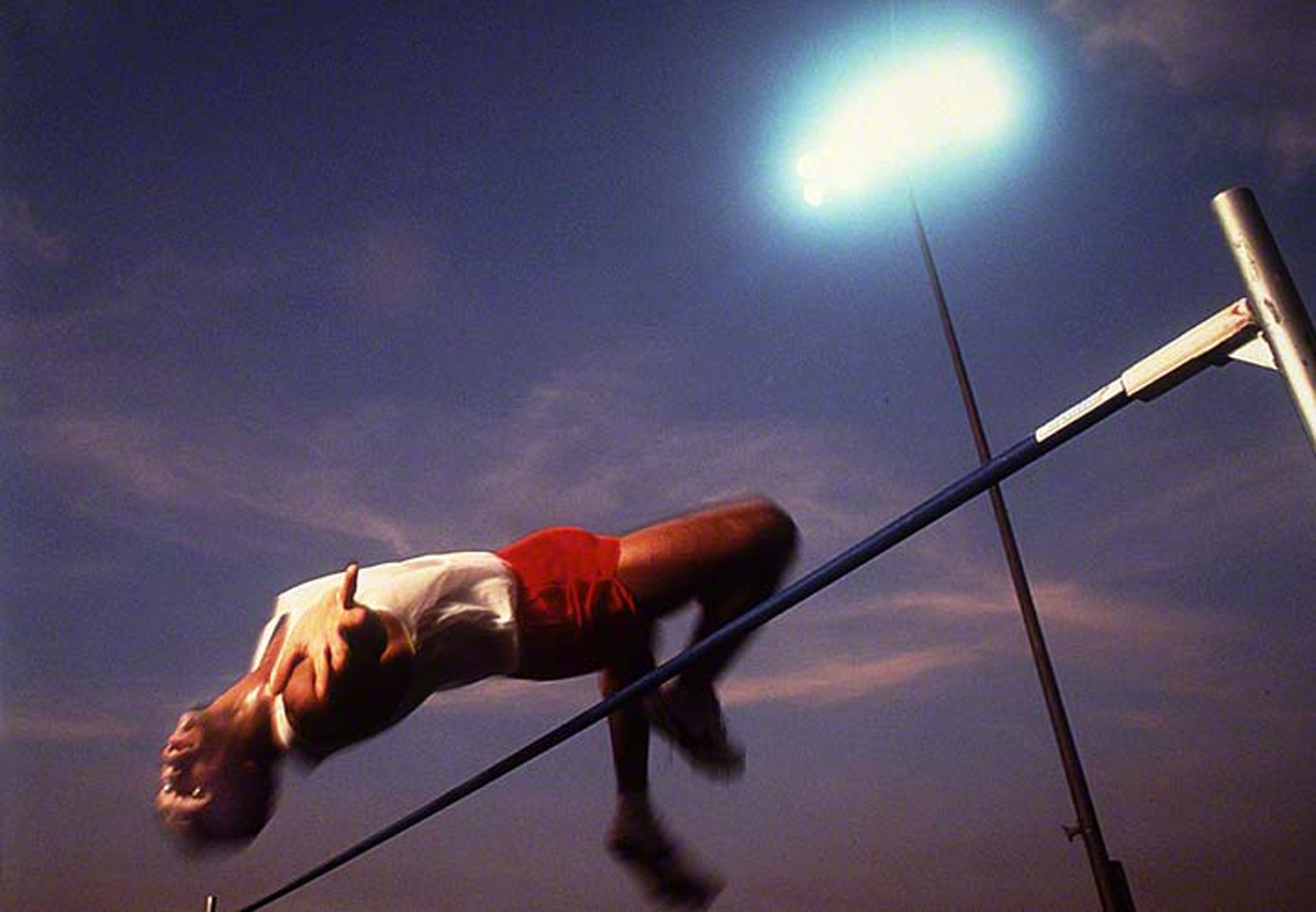
I shot a campaign for Russel Athletics, and among several other photos taken in that campaign, the idea was to capture the athlete during the sport he or she was involved in.

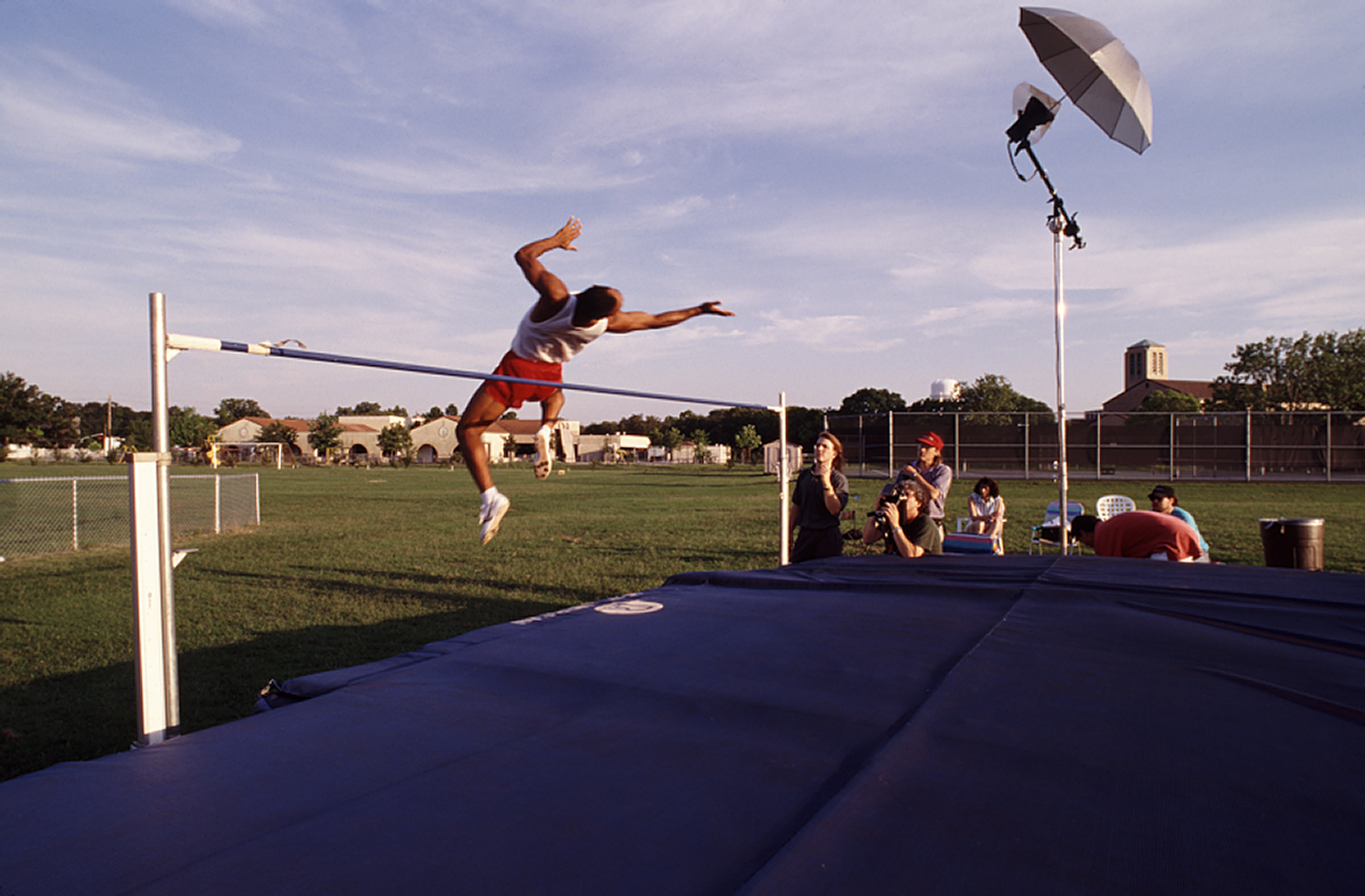
In the above photo I wanted to show motion while at the same time freeze it; easier said than done in those days. I used one 2400WS electronic strobe with the head bouncing off a white umbrella.

In those days I used a Minolta One-Degree spot meter and took a reflected reading off his face.  I then took another reflected reading off the sky behind him.

Since I couldn’t control the exposure of the sky (other than wait until it got darker), I could control the exposure on the athlete. I dialed down the exposure of the flash on his face until it matched the exposure reflecting off the sky. At that point I knew what I was going to get…how you ask?

The setup

Because I had a man in NY designed a Polaroid that fit on the back of my Nikon motor drive. I could pull a 35mm”roid” and check it out before going to film…which was, btw, Kodachrome 25…as in an ISO of 25.

To get the slight blur, I used what was called back then a “sync delay”…let me explain further:

If I were to use a regular flash the flash would have gone off at the beginning of the shutter opening. By using a delay the flash fired at the end of the exposure, and if my shutter speed was slow enough it would record the feeling of motion while freezing the action a the same time with the flash.

This could be achieved so much easier while sitting in front of a computer, but not nearly as fun and challenging.


Visit my website at: www.joebaraban.com, and check out my workshop schedule at the top of this blog. Come shoot with me some time. This coming January Along with William Yu, I’ll be taking a group to China to photograph the flooded rice terraces and also the tribal villages. Next February in conjunction with the Santa Fe Workshops, I’ll be returning to Cuba for the fourth time. My next springtime workshop will Berlin next May; an incredibly beautiful city.

Send me a photo and question to:AskJoeB@gmail.com, and I’ll create a video critique for you.

JoeB


Photo Opportunities: A little research goes a long way

Found him on the internet.

In the old days, and when I say old days, I’m referring to the days before the internet. The days when you had to send away for information or go to the Library, and maybe it would come when you needed it and before it was too late, or maybe it wouldn’t.

Every time I was awarded a project in another state or country it was important to find out as much as I could about the place or places I was going to be shooting in. It was especially important if I was looking for possible photo ops to either send a location scout to or check out myself; advance preparation was and still is the key to a successful shoot. This is important not only for the professional photographer, but serious amateur shooters as well that want to come back home with interesting photos created in interesting locations.

Every state and  city in the US, as well as every other country has a Department of Tourism and also a Film Commission. The best way to find out information as to the best places to shoot is to contact them, and now it’s so easy to do through the World Wide Web.

Before you travel, whether it be on vacation or for work, and you want to shoot as much as you can in the little amount of time most people have, instead of looking for places when you get there spend a little time researching ahead of time.

I would find (and still do) where the traditional tourists places are…the ones that are crowded with them and make sure I go to those first…why would I do that you ask?

Because I’m there for sunrise and late in the afternoon right before the sun sets. That’s when the light is the best. When I’m coming back to the hotel for breakfast, the tourists are just leaving to go to these places to shoot. When I’m shooting the last light of the day at sunset, the tourists have already left to go eat.

No matter what country you’re going to be in, the Film Commission and the Tourist Bureau want to help you in any way they can. They want and encourage photographers to come photograph their country and cities.

I teach an online class with the BPSOP, and I have students from all over the world signing up. I always suggest that they look up these sites to check out possible photo ops. You would be surprised to learn that a lot of homegrown people as well as xpats are not familiar with everything in their city, state, or country.

I also teach my “Stretching Your Frame of Mind” workshops around the planet, and looking up these sites is one of the first things I do. The above photo was taken during my workshop in Sicily. I had found this fish market in Palermo on the internet.

Here’s a couple of examples if you were going to Italy and Rome:

http://www.filminginitaly.com/home

http://www.turismoroma.it/?lang=en

Here’s a link if you were coming to New York to shoot for the first time:

https://www.viator.com/New-York-City-tours/d687-ttd?pref=02

Good luck and safe travels.

Visit my website at: www.joebaraban.com, and watch for upcoming workshops in 2017. Come shoot with me sometime.

Don’t forget to send me a photo and question to: AskJoeB@gmail.com, and I’ll create a video critique for you.

JoeB

Quick Photo Tip: It ain’t over til it’s over.

Despite the ominous sky, we went for it anyway.

Most of you have heard this expression that’s been around for a long time. Yogi Berra, the Hall of Fame catcher for the NY Yankees made it famous; that is if you follow baseball. Yogi said, “It ain’t over til it’s over”. I know I’ve said it myself hundreds of times during my nearly fifty year career as an advertising, editorial, and corporate photographer…Why you ask?

Well it’s all about the weather, and why it’s so important in your coming back with a good photo or not..or a photo at all. I teach an online class with the BPSOP, and I conduct my “Stretching Your Frame of Mind” workshops around our planet, and I’m constantly hearing the sad cries and complaints from my fellow photographers that say that the reason they didn’t go out shooting was because the weather was forecasted to be bad; or they went home because it got bad.

Well just think about the mailman’s motto that says, ” Neither snow nor rain nor heat nor gloom of night stays these couriers from the swift completion of their appointed rounds.” Actually, this really isn’t their real motto, it’s written on New York’s James Farley Post Office, and has no official status. What I saw when I first woke up.

If I had a nickel for every time it was raining when we were about to go out and shoot for a client and it cleared just at the right time, I would be writing this post from my private island; a blue and frothy drink with an umbrella hanging on one side in my hand…typing with the other

Don’t listen to any weather reports the night before, or even when you wake up. If you have a destination in mind don’t start worrying until you get there; don’t even look up at the sky!

It wasn’t over until it was dark.

In the above photo for Ford, when we woke up the sky was very dark and very gray. As always, I decided to go and set up anyway just in case. Sure enough just as the sun was about to set it came out behind me and created a look I couldn’t have prayed for; and this is the actual way it looked since it was shot before the days of computers.

In the photo taken by one of my online students, the weather started out gloomy and went downhill from there. Still, because she was using her “Artist Palette”, she walked away with this image; taken late in the afternoon in a snowstorm.

So remember what I say, it’s never over until it’s over…as in the dark.

Visit my website at: www.joebaraban.com, and check out my workshop schedule at the top of this blog. Come shoot with me sometime. On July 30th I begin my 29th year at the Maine Media Workshops. I’ve had the same week since the beginning. It’s the week of the Lobster Festival down the road in Rockland. It offers a completely different set of photo ops than one would expect when coming to photograph the coastline, lighthouses, and fishing villages of Maine. Come join me and spend a week completely immersed in your love for photography.

Keep sending in photos and questions to: AskJoeB@gmail.com, and I’ll create a video critique for you.

JoeB

Food for digital Thought: It’s not what you put in a picture that counts, it’s what you don’t put in that matters.

What else did I need to say pharmaceuticals lab?
What else did I need to say to represent a pharmaceutical lab in a photo?

Photography is the “art of subtraction”. Unlike painting where you start out with a blank canvas on an easel and fill it in until you have a finished work of art, the camera on a tripod starts out with everything the lens can see, and you take things out until you have a finished photo.

The key to finishing up with a finished photograph, worthy of being on a wall is, in knowing what to take out and what to leave in. To me, this is one of the most difficult parts of the process; from the first idea/composition to the final act of clicking the shutter.

I’ve been teaching an online class with the BPSOP for five years, and conducting my personal “Stretching Your Frame of Mind” workshops for over forty years, and one thing that hasn’t changes is that my fellow photographers don’t know when to quit. When to say ok I’m comfortable with what I have so it’s time to let go and click the shutter.

I’ve found that people have a tendency to not trust their judgment and with that comes an insecurity in what they’re doing, and while they’re doing it..therefore their thought process centers around more is better.

Years ago, perhaps a million of them, I was represented by The Stock Market”, one of the first, largest, and most popular stock photography agency in the world. The co-owner and photo editor told me that what she liked about my pictures was that I knew what not to to put into a photograph.

For the most part, I’ve always tried to “keep it clean”. If something in your composition isn’t helping it then more than likely it’s probably hurting it…or at the least taking up unnecessary space. Sometimes you don’t even realize it until you’re sitting in front of a computer, and maybe you can fix it then; which doesn’t make you a good photographer.

I do suggest three ways to help you out on that: My fifteen point protection plan, the border patrol, and the four corner checkoff. At least it might get you to see those pesky UFO’s…those parts of things that invade the edges of your frame – i.e., a part of someone’s hand or foot, the last three letters of a sign, half a light post, etc.

The viewer will fill in the rest of the plant.

Sometimes you don’t need the entire horse running through the field, maybe it’s just the neck and head. What if it’s just the grill of a 57′ Chevy? Try it sometime, and let the viewer work at filling in the missing pieces to the puzzle you left him.

Visit my website at: www.joebaraban.com, and check out the workshops I offer at the top of this blog. Come shoot with me sometime.

Keep those photos and questions coming to: AskJoeB@gmail.com, and I’ll create a video critique of your photo.

JoeB

Quick Photo Tip: Making one person stand out

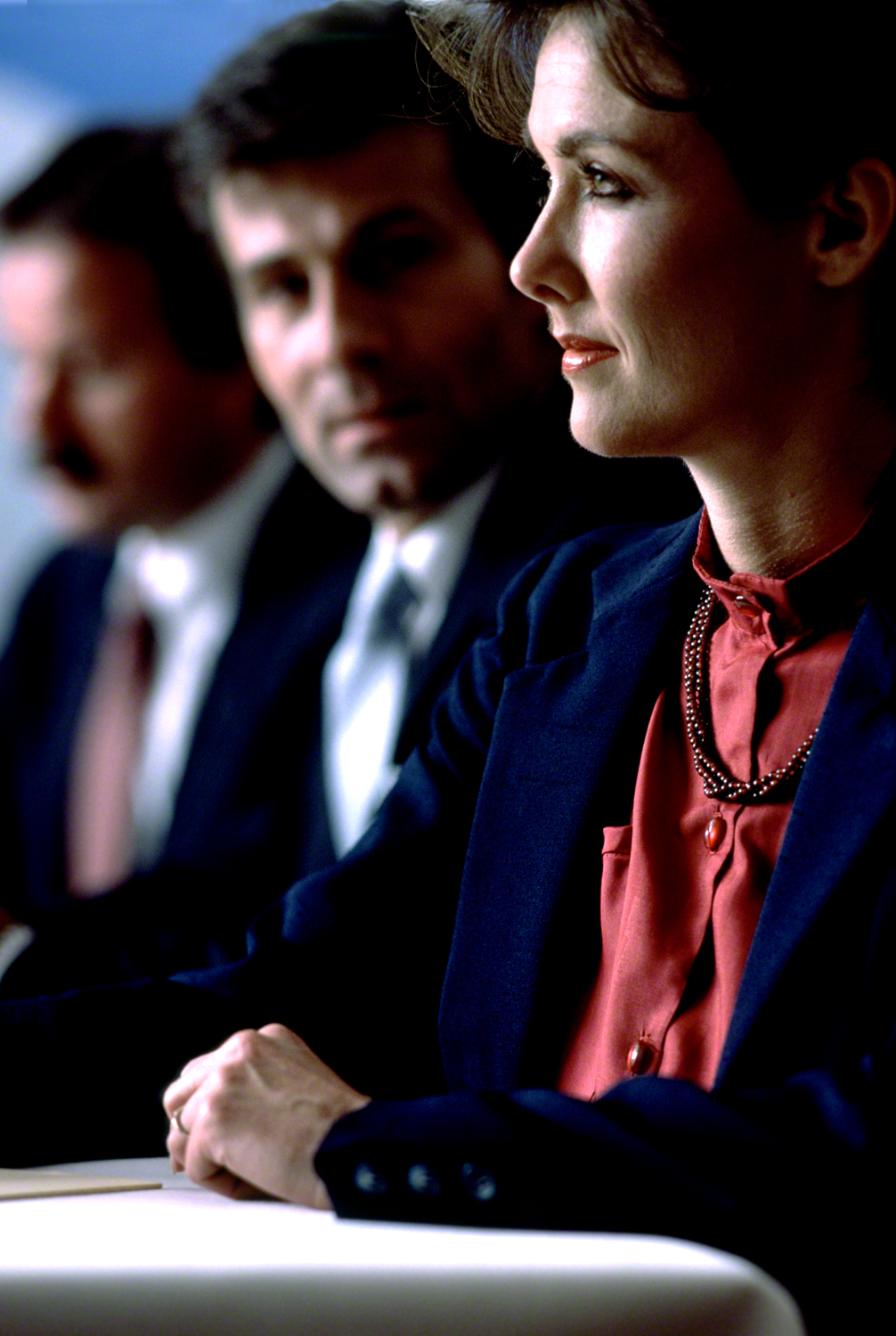
Isolating just the woman executive takes time.

I’m not sure how many of my fellow photographers out there ever have the need to light and shoot a group of people and make just one of them stand out without the others knowing; and still make the lighting even on everyone. As they now say, “Being politically correct”.

Having complete control of both your exposure and shutter speed is essential, to pull it off. In this executive portrait, I set up in an empty room in the company’s offices. By using  black board in between the lights that are on each of the temporary stand in models (we used so we wouldn’t take up too much of the real executives time), I was able to control the reflected light hitting each one separately. Using my Minolta One Degree Spot Meter model ‘F’ for both ambient and electronic flash readings I matched the light on all three executives.

Now having the light readings the same, I then could control my DOF. I could have all three in focus, just the man in the middle, or the man on the left end. In this situation, the woman was the key executive, and the one the company wanted to feature in their annual report to the stockholders.

By using a 300mm telephoto lens, I could isolate the woman at F/2.8 even though the next man was sitting close to her. I did this by getting as close to her as the lens would focus, approx. twelve feet.

Then it was time for the real executives to come in and make it look as though they were in a real meeting; instead of looking at a whole lot of diffusion material. I tried countless variations where I had each executive doing something different; as though it was an actual working meeting.

Remember that lighting takes a lot of time to make your photos look good. So many of my online students with the BPSOP, and in my “Stretching Your Frame of Mind” workshops I conduct around our planet just don’t take the time necessary when you’re using flash; either inside or outside. They tend to only think about the main subject and let everything else fall where it may…not a very good idea.

Visit my website at: www.joebaraban.com, and check out my 2016-17 workshop schedule at the top of this blog. Come shoot with me sometime.

Keep sending in your photos and questions to: AskJoeB@gmail.com, and I’ll create a video critique for you.

JoeB