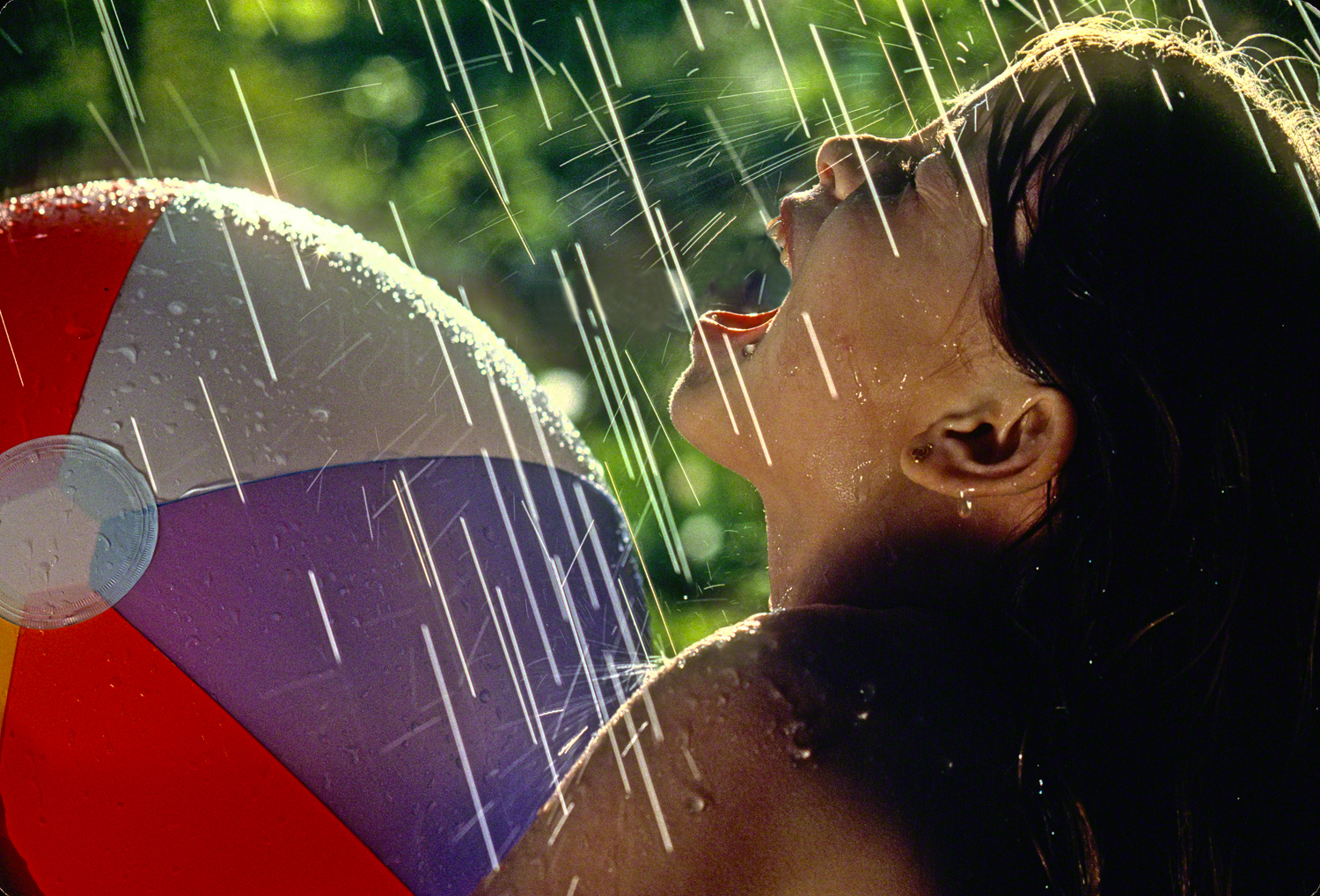
Food For Digital Thought: When Preparation Meets Opportunity
When preparation meets opportunity

Although I was never a Boy Scout, I’ve always been a firm believer in being prepared. When I was actively ( until the last dinosaur disappeared) shooting advertising campaigns, corporate annual reports, brochures, or magazine assignments I made sure I had everything with me; I called it my Bag of Solutions.

Besides scouting every photo ahead of time, or at least most of the time and certainly whenever possible, I knew that during the actual shoot some extracurricular event, or in other words outside the normal routine, could possibly come up. When this opportunity crossed my path, I wanted to be prepared for it…on many levels.

This would usually be some small window when time was of the essence, whether it be a sudden change in the light, something new either entering or leaving the frame, or even needed to be added at the last minute…when I had the wrong piece of equipment on or not on and missed it by seconds, that really sucked!!!

When I’m talking to a student in my online classes with the BPSOP, I will often be asked what they should be taking when they go out to shoot for one of the lessons they’re assigned each of the four weeks. For them it’s easy, I tell then to put as much gear in the trunk of their car as they can. That way they will have a fighting chance to change something when the time is right.

When I conducting my “Stretching Your Frame of Mind” workshops around the planet, I’m asked the day before what lens should they be taking. Being prepared is problematic at that point because so much of the time we’re walking around.

And so my fellow photographers that are reading this blog, when in doubt take as much as you can. To win the argument you have with yourselves, I would, as my go-to lens, start out with a medium zoom that might address a lot of the things that will be coming your way. I keep a 17-40mm lens on most of the time, and I have quick access to equipment when the time is right.

Keep your equipment clean, make sure you have a fresh card in your camera (never delete images off your camera, it could corrupt the card), and take an extra one just in case. for those of you that have a second body, be sure to bring it. Putting a tripod in your trunk couldn’t hurt in case you wind up shooting during the Blue Hour.

As Eddie Adams once said, When you get lucky, be ready.

Visit my website as www.joebaraban.com, and check out my workshop schedule at the top of this blog. Come shoot with me sometime.

JoeB
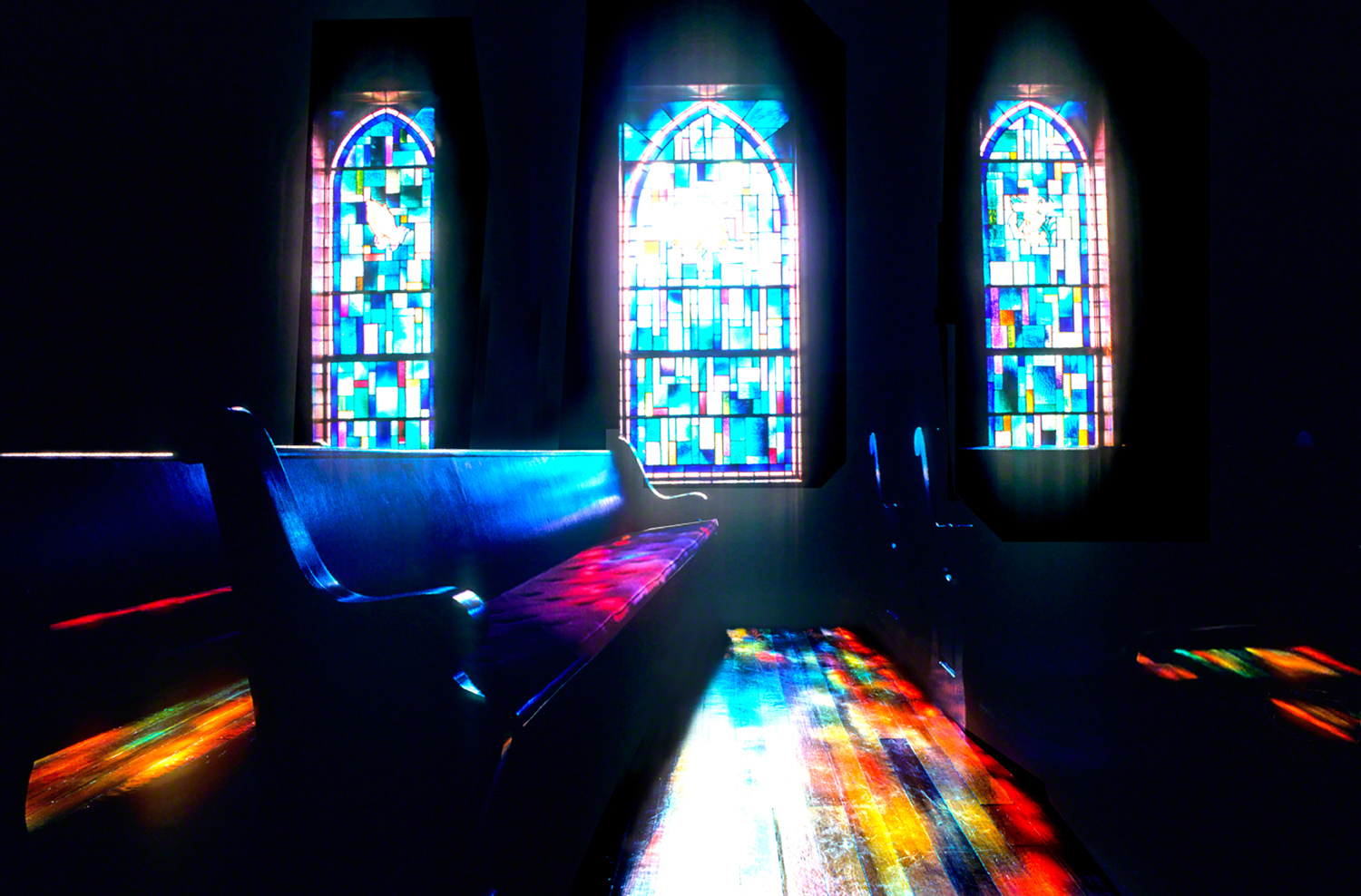
Food For Digital Thought: One and Done

Lots of adjustments and variations

I was just listening to the radio where they had a program that was all about bands in the fifties and sixties that came out with a hit record, then disappeared from the charts into oblivion without leaving a trace. They called the program “One and Done”.

As I was listening to the disc jockey talking about some of the bands, I couldn’t help thinking about all the times I critique photos submitted from my online class with the BPSOP, and in the daily discussions during my “Stretching Your Frame of Mind” workshops I conduct.

It seems to be a common thread that ties all my fellow photographers together. What I’m driving at is when I’m walking down the street either next to or behind one of my students and see them raise their camera up to take a photo, it’s one and done.

In other words, they take one shot then move on. Maybe it’s just me but I find it to be mindboggling to think that someone can take that quick a photo and expect it to be something worthwhile; something that can stand the test of time.

I can tell you that Vegas would give it at least twenty to one that it would be. For me, that’s just not good enough odds…why? Because I rarely like the first photo I take. It’s a series of adjustments and variations before I’m satisfied and would be proud to show it.

I also see these same people raise their camera up without considering where the sun is and how their subject will react to it; it’s still the mindset of one and done.

The first shot should be the one that gets the creative juices going. It should segue into a stronger image by looking at from a different POV, perhaps a lens change, including or eliminating people, increasing or decreasing your aperture., etc., etc.

This is how you come back with a photo that you’ll keep, instead of scratching your head while looking at your monitor wondering why in the hell you shot it in the first place.

FYI, I spent a lot of time working on the photo above. I would say maybe a dozen different variations.

Visit my website at www.joebaraban.com, and check out my workshop schedule at the top of this blog. Come shoot with me some time.

JoeB

Food For Digital Thought: Atmospheric Perspective

Atmospheric Perspective

There are two important types of Perspective that I teach in my “Stretching Your Frame of Mind” workshops and in my online classes with the BPSOP. The most common one is Linear Perspective.

This deals with parallel lines that converge at a point on the horizon. As the lines move farther and farther away from the eyes, they appear to converge at a point just before, on, or just past the horizon line. This is better known as a Vanishing Point; a very powerful way to move the viewer around the composition.

The other type and not thought of as much as the first-mentioned is Atmospheric Perspective. This way of seeing (as does Linear) helps the viewer perceive the depth of your composition. Btw, both of these are ways to show in a two-dimensional representation (the photo) three-dimensional reality.

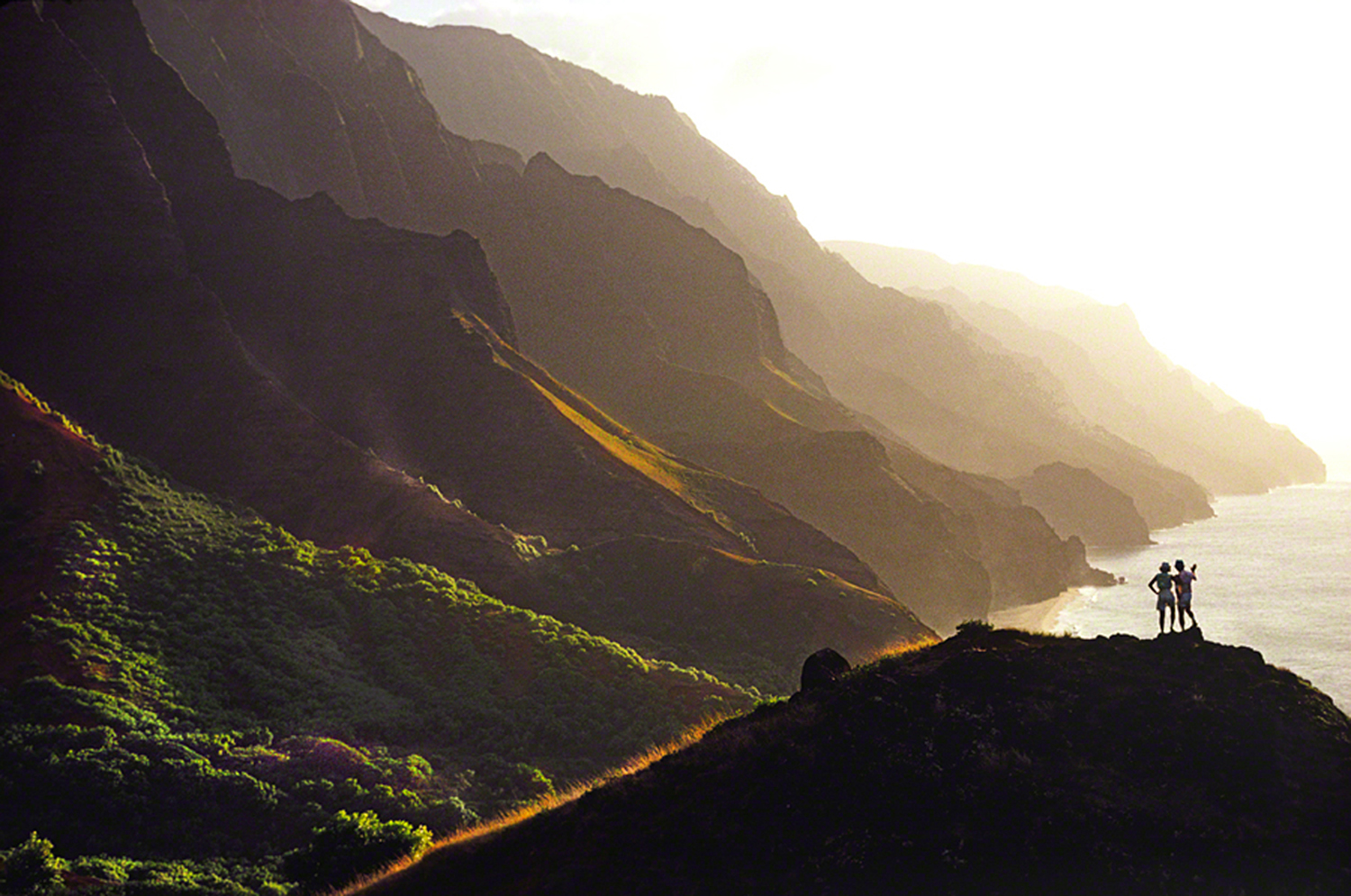
Atmospheric Perspective consists of a gradual decrease in clarity and color, as the area recedes into the distance; which implies a sense of depth. Our air is filled with water vapor containing billions of tiny molecules of water, as well as minute particles of dust, which scatter light waves as they pass through. Shapes appear slightly blurred and a lot less contrast; colors become almost monochromatic.

The above photograph is a perfect example of Atmospheric Perspective.  As you can see, the farther away the mountains get the less intense they become; this is what creates the depth.

So, my fellow photographers, next time you’re outside and in a position to look at things across a distance, check out how they appear in your viewfinder. Try to incorporate this concept in your imagery, and see what happens…you’ll be glad you did!

Visit my new website at www.joebaraban.com, and check out my workshop schedule a the top of this blog. Come shoot with me sometime.

JoeB

Food For Digital Thought: Getting Over the Hump

Worked like a charm

I would say that the most common phrase for getting over the hump is that past the midpoint of the week, Wednesdays, are considered the Hump; as in halfway to the weekend.

I don’t know about you, but to me, there’s a lot of other kinds of humps one has to get over in life. For example, that first piece of sushi that actually has fish in it. Your first attempt at riding a bicycle, or the first time you try to parallel park.

Ok, now getting over the hump in photography. In both my online classes with the BPSOP and in my “Stretching Your Frame of Mind” workshop I conduct around the planet, I often talk to my students about getting over the hump. This means different things to different people. For example, one student keeps forgetting to straighten the horizon (the epitome of distraction), while another might not understand the concept of balancing the Negative and Positive Space until he does it for the first time; figuring out that it makes his photos stronger. All photographers have some sort of hump to transcend.

I will tell you this, all my students forget to incorporate my “fifteen Point Protection Plan”, checking the four corners, and the Border Patrol until they use it for the first time and understands how important it is. Btw, that doesn’t mean they won’t forget it the next time…because more than likely they will!!

One of my all-time favorite expressions is, ” I don’t photograph what I see because I never see what I want, so I photograph what I’d like to see. If I’m composing a photo, and I need to change something or ask someone (usually a stranger) to move over a step so a pole isn’t growing out of their head, I have no problem asking…not if it will make for a better photograph.

If I had to list one hump that the majority of my students have a very hard time getting over, it’s approaching a stranger to ask them something that would improve their photo; or to even take their picture.

Another one that might rival it is using a tripod. What I often see is someone carrying the tripod in one hand and the camera in the other. It’s a pain to stop, put the tripod in place, take the camera and attach it, compose your shot and then take the camera off the tripod, put it back in your hand and the camera over your shoulder or in your hand.

No wonder people don’t take a tripod when they need to, and when it comes to being freaked out because everyone is watching you, it’s still another hurdle to get over.

When I use a tripod, it’s usually during the Blue Hour, sunrise and sunset, when you’re shooting with a slow shutter speed. I keep the camera on the tripod and then put it over my shoulder. It becomes one piece of equipment and thus much easier and faster to use.

I guess I’ve been doing it for so long it has become second nature to me. I figure that all they can say is no. The key is to not walk up to someone with the camera in your hand, which is sure to intimidate…especially nowadays when everyone’s personal space is up for grabs.

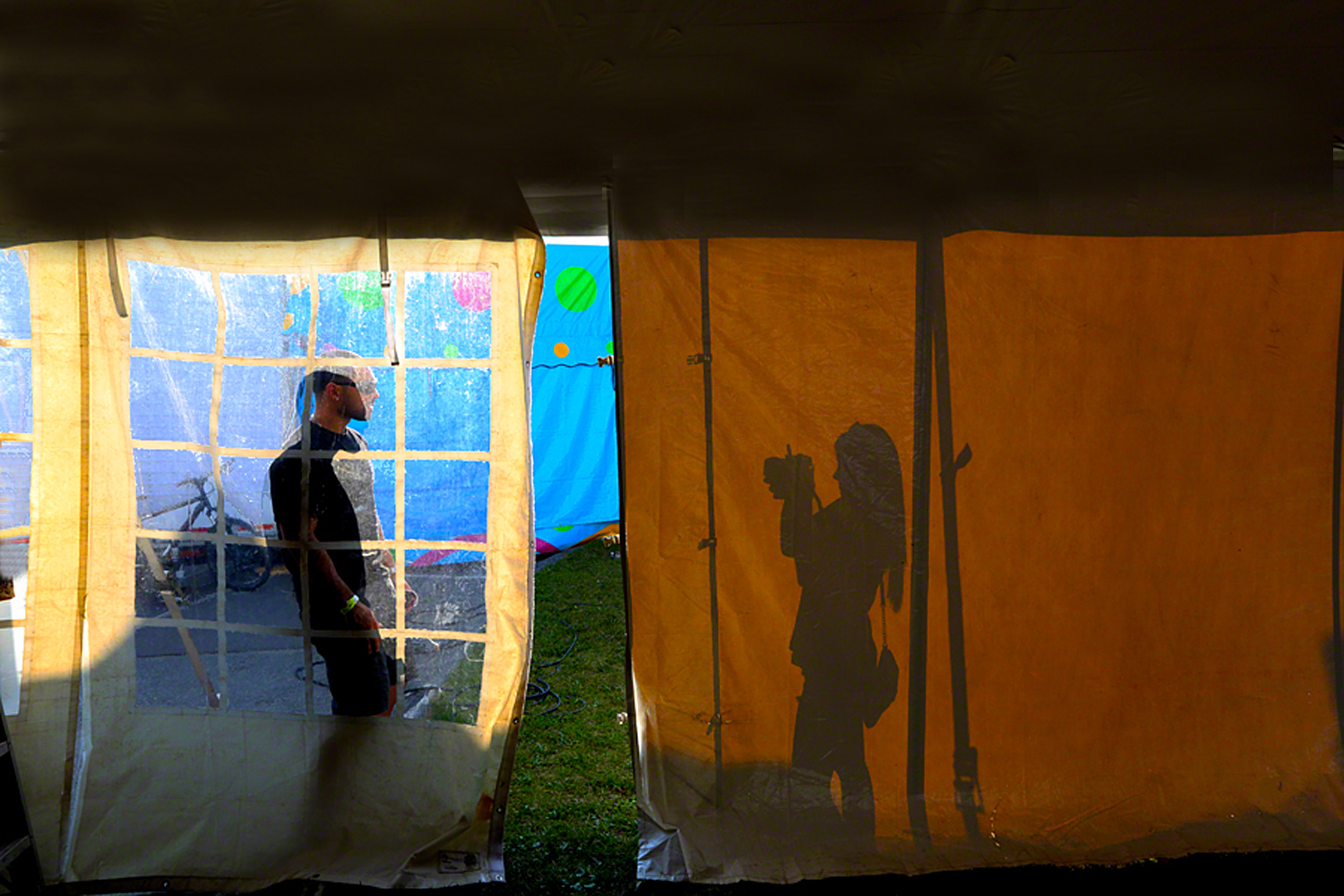
In the above photo, I was walking inside this tent at a festival and saw these two people right outside it. I was an interesting shot, filled with visual interest., The guy was moving around for her and for the most part, the lines forming the windows were always going right through his eyes.

I told them what I was trying to do and if he would listen to me directing him so that I could get his head unobstructed in the window..worked like a charm!!

Visit my website at www.joebaraban.com, and check out my workshop schedule at the top of this blog. Come shoot with me sometime.

JoeB
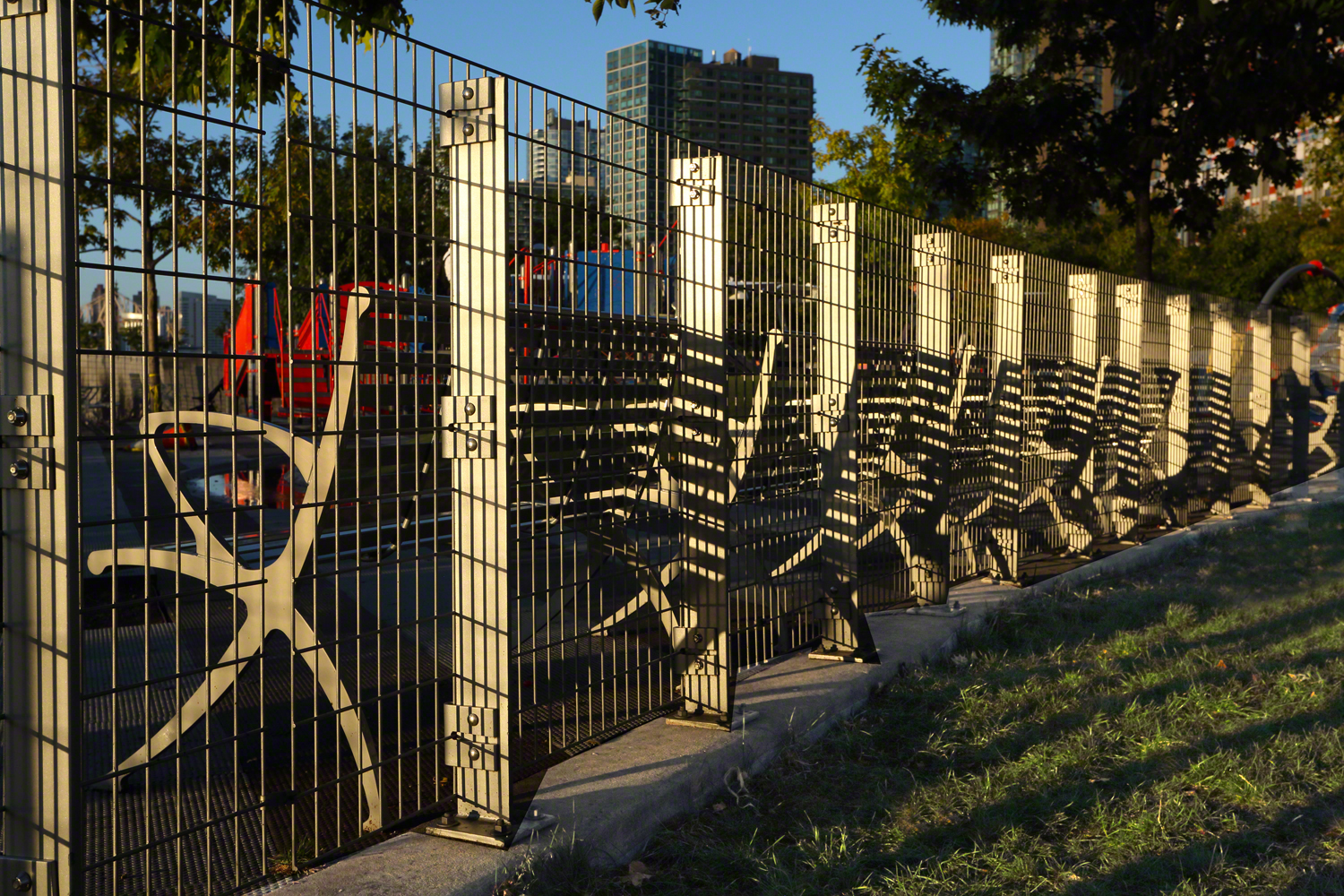
Quick Photo Tip: Using Humor in Your Photos

Humor and color on a gray day

I teach people how to use the elements of visual design and composition to create stronger and more memorable images. Images that people won’t forget in the moments just after looking at your photo. Images that are compelling and will leave impression days, weeks and yes, even months afterward.

In my online class with the BPSOP, and in my “Stretching Your Frame of Mind” workshops I conduct around the (round) planet, I stress the fact that “light is everything”, and should be considered first when composing your photo. One of my Personal Pearls of Wisdom is, “You find the light and you’ll find the shot”.

Now I’m not referring to the shooters that like to prowl the city streets looking to capture an emotional photo that has some kind of consequence, a moment in someone’s life or as followers of Henri Cartier-Bresson work would say, “The Decisive Moment”. These are the type of photos that rely more on a quick finger hitting the shutter release and timing than of light. Instead, I’m talking about the type of photographers that likes to create beautiful photographs in any other genre that are timeless representations of reality. To me, these are the type of photos that require great light. Landscapes, Architecture, environmental portraits, to name a few.

OK, here’s where the Quick Photo Tip comes in. As I tell my students and fellow photographers, there is one genre that doesn’t need quality light to be memorable and that’s Humor. Humor is the one concept that can replace a day of flat, gray, and un-inspiring light. Whether it be a funny situation, an awkward expression on a loved one’s face, or perhaps something as simple as a misspelled word on a sign, if it’s funny that’s all you might need.!!!

One more thing I always tell my fellow photographers and is to look to include color on an equally bad day, and when you can achieve both, you just might have something.

Visit my website at www.joebaraban.com and check out my workshop schedule at the top of this blog. Come shoot with me some time and we’ll have a few laughs.

JoeB

Life Before photoshop: VW Car Campaign

Look ma, no Photoshop!

Well, I’m back again with yet another example of what it was like when Adobe was a type of house in the Southwest part of the US. In this Life Before Photoshop post, we’ll look at how we made things look as if they were screaming down the road back before we could just do it on the computer; before there were personal computers.

In my online class with the BPSOP, and in my “Stretching Your Frame of Mind” workshops I conduct around the planet, I want my students and fellow photographers to work on getting as much in the camera as they can…why? Because it will make them a more rounded photographer. One that depends on his or her skill with the camera, their ability to use the right side (the creative side) of their brain. Someone that cares more about “making pictures” than being a good computer artist. For me that’s the fun, to challenge myself every time I go out shooting knowing that I can come back with the illusive “OMG” photo that everyone hopes for each and every time they go out…without any help!!!

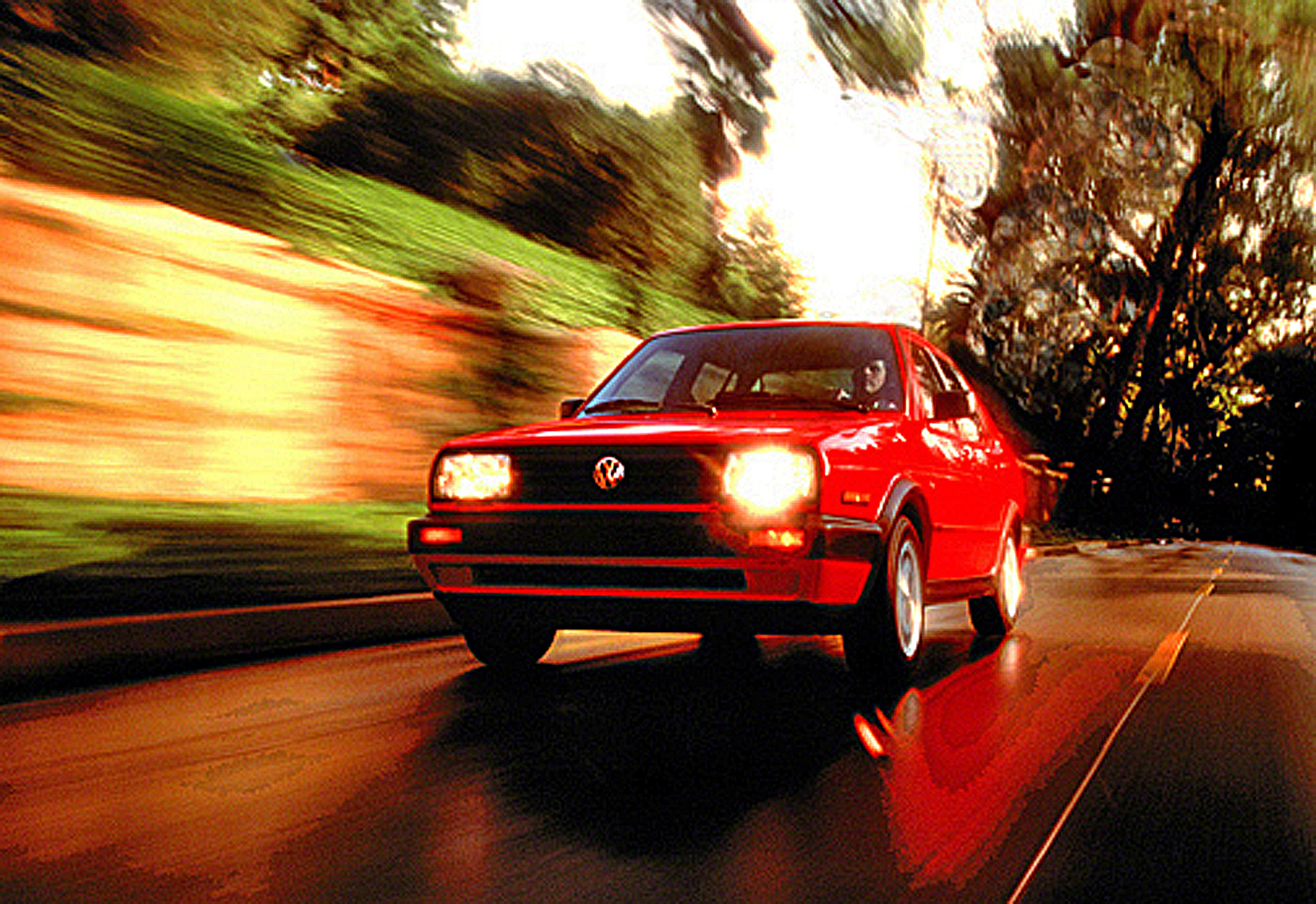
Ok, let’s talk about the above photo and how we use to make things appear to be moving fast all on one frame of film; and just one exposure.

If there was a decent budget, I would rent a camera car that had all the bells and whistles, and cranes to position yourself in the front, the side, or the rear of the vehicle you were shooting. If there wasn’t a budget, perhaps because it was for a regional and not a national market, we renting what use to be called “The poor man’s camera car”.

That was a Lincoln Town Car, and it worked like a charm, especially if you were doing a 2/3’s frontal view and the client wanted to have the car coming at you down the road. The best part about the Lincoln was that it had an extremely smooth ride and a unique stabilization system. You could be in the trunk of the car and it would be as smooth as a camera car at five times cheaper. Did I say trunk??? Yes, that’s where my assistant and I shot from.

In the above photo, we had wet down the road, then I got in the trunk. We moved at the exact same speed so I could make the car sharp while blurring the rest of the scene. We didn’t have to go very fast. In fact, in the above photo, we were moving together at approx. 10 to 15 miles per hour. The blur and movement come to play from the slow shutter speed. I would vary that to create different looks, and the shutter speeds ranged from 1/4 of a second to 1/30th; depending on the speed of the two moving cars.

FYI, if you’re wondering why the emblem and the rest of the front of the VW are bright, there is a small convertible to the left of the Town car and in front of the VW. In that convertible are a couple of my assistants holding a large silver reflector bouncing light into it.

It was great fun, and one hell of a challenge!!! Now, the car is shot in a studio on a blue screen, made to look like it was moving and the background is usually put in after the fact. How sad…how very sad.

🙁

Visit my website at: www.joebaraban.com, and www.instagram.com/barabanjoe. Check out my workshop schedule at the top of this blog.

JoeB

Adjustments vs Variations

Several adjustments and a couple of variations later

I’ve been a photographer for fifty-three years and in all those years I can count on my hand the number of times I took just one shot…of anything. The times that I did were when I was street shooting and I had one chance to get it before whatever I was going for had either changed or was gone altogether.

I virtually never take just one shot, it’s always a series of either adjustments or variations. It’s what I ‘Preach’ during my online classes with the BPSOP, or when I’m standing next to someone in one of my “Stretching Your Frame of Mind” workshops I conduct just about everywhere on Earth.

As I’m shooting, I look all around the frame. I’m doing my Fifteen Point Protection Plan, my Border Patrol, and the Four Corner Checkoff. Each time the shutter opens and closes I’m making adjustments, Shoot adjust, shoot adjust, shoot adjust, etc., etc., etc.

An adjustment can be nothing more than taking a step back to include all of the subject’s hand or foot, the rest of a tree, sign or car. It can also be moving in a step to exclude an unwanted hand or face coming into the frame, getting rid of a sign that has letters missing or some of the letters burned out on a sign; what about a streetlamp that should be on but isn’t?

The digital age has had a profound effect on photography. some good and so many not so good. One good thing that has come about is the ability to shoot a photo and immediately look at the back of your camera to check it out

The reason for adjustments? To achieve what I want in the camera, and not have to rely on a computer to fix the problems I could/should have done prior to clicking the shutter.

A variation is a different animal. The reason for a variation is to increase your chances of going home with one of those elusive ‘wall hangers’, and variations come in all types of reasons.

For example, If you’re into getting the right light, then you’re shooting from different points of view and thinking about my clock. Shoot then moving around to see how your subject looks lit from the side perhaps to bring out the texture, then decide on another variation by placing the sun behind your subject to backlight it.

I’ll occasionally (depending on how much time I have) completely change my position and lens. I’ll add or subtract people or objects, get on my knees or stomach, and anything else that comes to mind at that moment. Btw, at my age, it has to be a really good idea for me to get on my knees or stomach!!

Visit my website at www.joebaraban.com, and check out my workshop schedule at the top of this blog. Come shoot some variations with me sometime.

JoeB

Food For Digital Thought: Giving Meaning to Photographs

Just another sunrise?

In my online class with the BPSOP, and also in my “Stretching Your Frame of Mind” workshops I will send out this article for all my fellow photographers to read. In my recent workshop to Boston, I had people read it and one woman said I should post it on my blog.

I told her that I actually did about ten years ago but now that she mentioned it I would post it again. I had found on the internet years ago so I thought I would share with all of you again.

Unfortunately, I failed to write down the name of the woman or man who wrote it, and now I can’t locate the article again. I would have loved to credit it to her/him as I find it a great read. If you are the author or know who she is, please let me know so I can credit it properly.

Here’s the article just the way I found it:

“Unless you take photographs strictly for yourself, you probably like to share your images with others. What makes that dreaded slide show your uncle pulls out every time you visit so boring is that while it has tons of associations for him and your aunt, it has none for you. After all, it was their trip to Borneo, not yours. You didn’t share the experience of buying food from a street vendor or smell the smells of the urban neighborhoods. So, pictures of them don’t mean much to you.

You should keep this exclusivity in mind when editing your own pictures. Ask yourself, “Do I like my images because they have a certain emotional appeal to me alone?” A special vacation shot or a picture of your grand kids, might be an example. Or, do your images convey a more universal meaning that will inspire emotional response in others? It helps to gather feedback from a trusted friend.

REMEMBER THAT BELOVED SUNSET OR SUNRISE YOU HAVE–SO EXCELLENTLY CAPTURED, SO EXPERTLY PRINTED AND FRAMED–MAY BE JUST ANOTHER SUNSET TO SOMEONE ELSE.

Learn how composition can affect meaning. Placement of the subject within the viewfinder can have profound effects on the meaning. Placing the subject low and surrounded by a large amount of negative space sends a different message than cropping it close. The former may send the message of hopelessness or depression, the latter a message of intimacy or friendship.

It’s a challenge to create images with meaning. It’s what separates a good photographer from a mediocre one. In judging contests and exhibits, I’ve seen many prints that are technically well done, but lack depth of meaning. These may be processed to resist aging in preparation for archival preservation, but they won’t stand the test of time on anyone’s wall–except, perhaps, the photographer’s own.

For, without an emotional connection to the image, we’ll grow weary of it. It’ll remain on exhibition for a few months and then be taken down or simply ignored as part of the background blur of our lives.

Our ability to connect with an image emotionally entices us to keep coming back to an image over and over again in order to repeat the emotion. Or, what’s even more exciting, we may find new meaning in the image as we grow emotionally and experience it in a fresh, new way.

A part of the issue surrounding meaning is the controversy over whether an image should be titled. Many contests require that the photographer name her image as part of the process of entering. And I know of several professional competitions in which the title of the print is actually part of the judging process.

I can’t tell you how strongly I object. A strong print needs no title. If I have to be told what the meaning of a print is via a title, I wonder if the photographer is certain of his message.

Titles also serve to direct and/or mislead. A title given by a photographer may direct his viewer in a particular direction, but without the limitations of a title, a viewer may discover meaning which was only subliminally apparent to the photographer. We have all taken a picture and thought it meant one thing, only to find that everyone else was seeing something else– something that emerged from our subconscious.

A title, in this instance, would have served to confuse the real meaning.

And, of course, there is the issue of language and culture itself. If a title is important, what if it’s in a language the viewer doesn’t understand? Does the image cease to have meaning? Of course, not. Art, in general, and photography specifically, are universal languages. They speak to us all–regardless of our native tongues or cultures.”

Visit my website at www.joebaraban.com, and check out my workshop schedule at the top of this blog. Come shoot with me sometime.

JoeB
My Favorite Quotes: Yul Brenner

Break all the rules

Yul Brenner, a.k.a. Ramses II (Pharoah) in the movie The Ten Commandments said to Moses, a.k.a. Charlton Heston, “So let it be written, so let it be done”.

I know all my fellow photographers out there are wondering how in the hell can I draw the slightest analogy/conclusion as to how this quote affects photography.

For new people to my blog, I’ve been shooting professionally for fifty years, and I have been teaching since 1983.

My background is not in photography, it’s actually in painting and design. When I picked up a camera and looked through the viewfinder, it was instant love. I still consider a painter, but I now use a camera as my medium.

What I carried over from painting, design, etc. is the basic elements of visual design, and now I show photographers how to inorporatethese elements into their images.

I’ve decided to write this post now after a student in my online class with the BPSOP, and another in my recent “Stretching Your Frame of Mind” workhop I conducted in New York and Boston told me that they gets a lot of good information from the officers in their camera clubs….especially from the president!

Now can you begin to understand the analogy I’m writing????

There was a time in Houston where I was asked to give a talk and show my photos to the members of the various clubs….a very long time ago, and no more!!! Why you ask?

Because most of the “officers”/members are retired (a whole lot of left-brained engineers of various kinds), old, set in their ways, and always go down the road well traveled.

What they say is the creative whole truth as only they know it, and are just not opened to “coloring outside the lines”.

Let me digress for a moment. There are a lot of good things about being a member of a camera club.

I’ve been to the meetings so I’m not spewing a lot of fake information.  They live by rules, and that’s a deal breaker for me. Ansel Adams once said, “There are no rules for good pictures, there’s just good pictures”.

Just because someone says something concerning obeying any or all rules as they apply to photography, doesn’t mean they’re true and need to be followed.

Whatever you do, don’t take the road well traveled, go a different route and walk, skip, or jump down the road less traveled.

Visit my new website at: www.joebaraban.com, and watch for new workshops at the top of this blog. Come shoot with me sometime.

JoeB

My Favorite Quotes: Virgil

Looking with the left side of my brain.

“Qui potuit rerum cognoscere causas” by the Latin poet Virgil, is literally translated as:”Fortunate who was able to know the causes of things“.

Ok, so what in the world does this have to do with the price of coffee? Or better yet, photography?

For those of you that are new to my blog, my name is Joe Baraban and I’ve been making pictures for fifty years. Forty of them were for advertising, cororate, and editorial clients. Now I teach an online class with the BPSOP, and I conduct my“Stretching Your Frame of Mind” workshops all over our (hopefully very round) planet.

Showing my fellow photographers how to ‘make ‘ stronger photos is one thing, having them understand why they’re stronger images in equally important; and seldom talked about.

The how comes from teaching people how to incorporate the elements of visual design into their imagery: Line, Pattern, Form, Texture, Balance, Color, and Shape are the elements that my students will eventually wind up putting on their new Artist Palette. With this palette (that also has shadows, silhouettes, light, and vanishing points on it) they can start using the right side of their brain (the creative side) instead of the left side (the analytical side).

For example, a photographer looking at a tree with the left side sees only a tree. That same photographer looking at the same tree with the right side sees patterns made by the bark, the texture of the bark, negative space separating and defining the leaves and branches, the lines that make up the trunk and branches, the way the light falls on the tree (side, back, or front lighting), and the color of the leaves.

The whythe cause of things, is all about perception. The goal is to present your photo in such a way as to take control of how the viewer perceives and processes the information we lay out to him in the form of a photograph. If that same tree is presented in such a way as to keep the viewer around longer by looking at the warm late afternoon side light emphasizing the patterns and texture of the bark, then you’ve done your job.

If that same light is coming from behind the tree, it passes through the negative space that was created to define the leaves. It will turn the tree into a two-dimensional silhouette but because of those green, yellow, red, and orange leaves being translucent, they will glow; and don’t forget about that wonderful shadow (your best friend) that lies on the ground stretching out to the camera…again you’ve done your job, and a job well done.

Why is it a stronger photo? Because you have made the viewer an active participant and in doing so you have also made him want to stick around and look at you images.

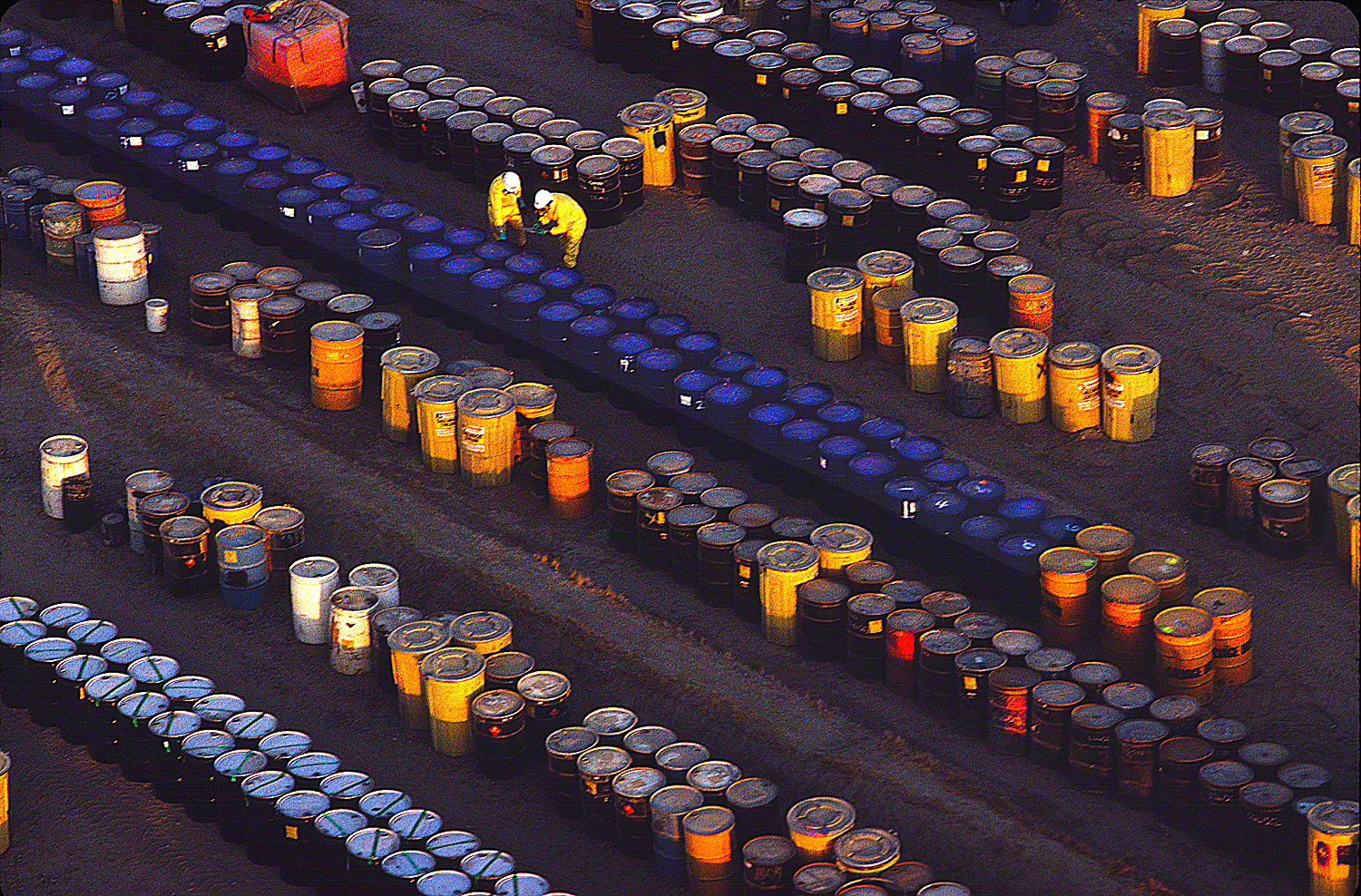
In the above photo, I was coming back from a helicoptor shoot and looked down and with my left brain I saw two men working in some kind of oil related industrial yard. With the right side of my brain I saw Pattern, Shape (lots of circles),

Form (depth)…created by the low sun side-lighting everything, and Line (implied) created by all the barrels cuting diagonally through the frame.

Visit my brand new website at: www.joebaraban.com, and check out my workshop schedule at the top of this blog. Come shoot with me sometime.

JoeB
Photo Ops: Recognizing The Moment.

Recognizing the moment paid off

I’d like to think that there’s two photographers bottled up in this mind that’s been covered over with curly whitish gray hair. One that is calculating, and always wanting to “make pictures” by scouting ahead of time to know exactly where the sun is going to come up and go down. One that wants to know where the shadows will fall, how long they will be and when they’ll disappear. Someone that rarely photograph what he sees and as a result photographs what he’d like to see; in other words a story-teller.

The other person in me loves to throw a camera over his shoulder and just head out to the great beyond, not knowing if he’ll come back with anything or not. Truth be told, after forty-four years of shooting, I feel pretty good in the fact that I’ll see something worth raising a camera up to my eye for. I was a street shooting long before I started working in advertising and corporate design. Shooting for AP, UPI, and  Black Star tends to leave an indelible mark on you, and you really never shake it. Being chased down the street during the race riots in the sixties will do it to you. When you mix that with an art background and an eye for graphic design, to me the results can be wonderful.

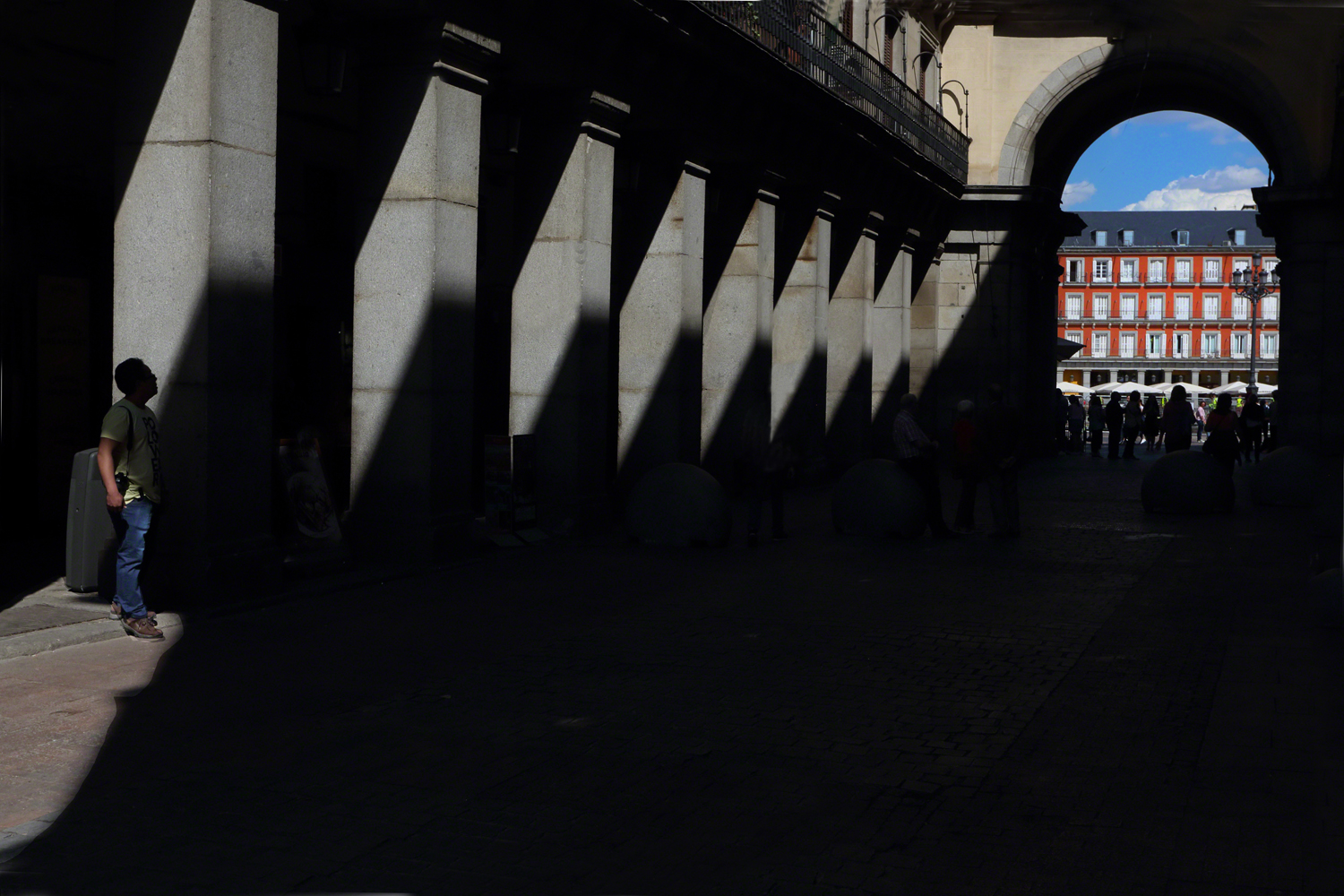
One of the ways to do this is one that I always talk about to my online class with the BPSOP, and with my “Stretching Your Frame of Mind” workshops I conduct around the planet…Recognizing the moment.  What I mean is to be out and about with your camera at the ready, and recognize the makings of a good photo. In the above photo, I was recently standing in the main plaza during my Spain workshop and saw this amazing row of triangle shaped shadows. It was a strong enough graphic to have just shot it and walked away happy.

Recognizing in that moment that if I could add a layer of interest, something besides the light, color, and design of the situation, I could make it even more interesting. It would change it from a purely graphic representation to a more editorialized one…why you ask? Because by adding a human element, it tells a story. And by waiting, it paid off when a man on the far left bottom corner walked in and stopped. And as Eddie Adams once said, “when you get lucky, be ready”.

Remember the next time you go out that it’s a well-known fact that people like to see people in photographs. Learn to recognize the moment, and your imagery will most definitely move what I refer to as “Up a notch”.

Visit my brand new website at: www.joebaraban.com, and be sure to check out my upcoming workshops at the top of this blog. Come shoot with me sometime.

JoeB

Photo Ops: The Elements of Visual Design as Your Subject

I saw triangles

In my online class with the BPSOP, we work on the basic elements of visual design and how to incorporate them into our imagery. When I’m walking around with my fellow photographers that have signed up for one of my “Stretching Your Frame of Mind” workshops I’m also pointing out these same elements, and showing ways to make them the subject. I have even gone so far as to make this concept part of the online class lesson.

In the following posts I will share with you each one of these elements and examples of photos that  represent said lessons.

Ok, so let’s start with SHAPE: Shapes are all around us and whether the viewer knows it or not, he’ll react when he sees them. Used in our imagery, shapes will provide a sense of structure to your composition. The four basic shapes are: circles, squares, triangles, and rectangles.

FYI, the shapes that are similar but are more irregular such as an isosceles triangle or a trapezoid have more energy. Besides those that are more prevalent in our world, the diamond is a great shape, filled with a great deal of energy and evokes a sense of motion; not to be overlooked. Repeating these shapes will provide a sense of unity, and can be perceived by the viewer as one group.

Btw, a great example of diamonds can be found on most chain link fences.

The ability to “see past first impressions” is the key in providing the various shapes to create stronger images. One may look at a series of beautiful sailboat silhouetted against a dramatic sunset racing towards the finish line and just see the sailboats. That’s the left side of your brain at work, the analytical side.

However, if you were to switch that side off, and look at the same group of sailboats with the right side of your brain, the creative side, you will see the beautiful backlit row of triangles glowing from the warm, late afternoon sky.

Look for shapes, and introduce them into your photography. Try making these four basic shapes the actual subject. Once you train yourself to see with that side of your brain and forget about the labels we put on things, your photographs will take on a new meaning and have a much better chance of being remembered.

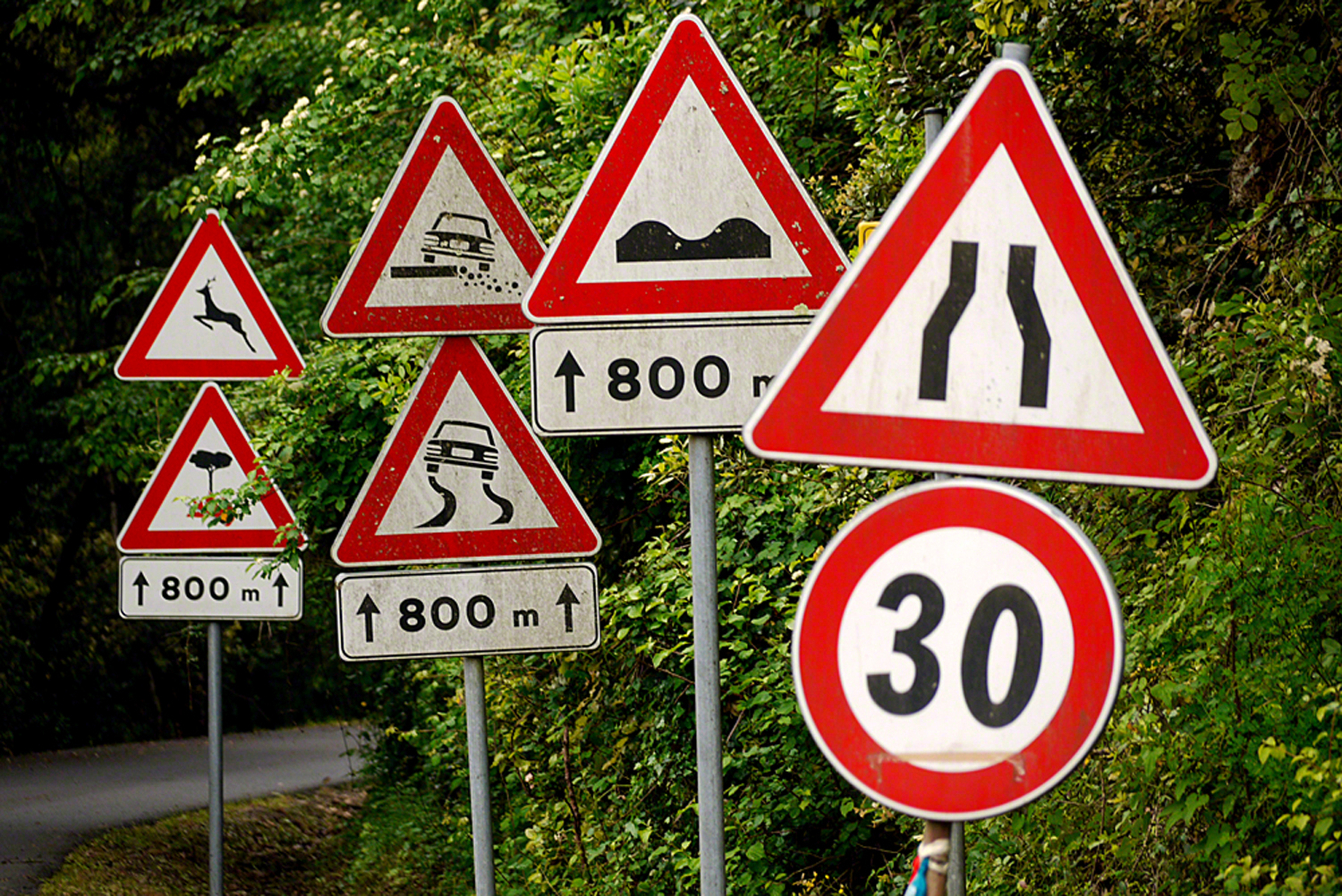
In the above photo, the left side of the brain sees caution, directional, and warning signs. The right side, the creative side, sees a series of triangles.

So, the next time you go out shooting, think about this post and try to make Shape the subject.

Visit my brand new website at: www.joebaraban.com, and check out my workshop schedule at the top of this blog. Come shoot with me sometime.

JoeB
Food for Digital Thought: Leading the viewer around your composition

Leading lines to a payoff.

In my online class with the BPSOP, and in my “Stretching your Frame of Mind” workshops I conduct around the planet, we work on ways to use the elements of visual design to help take our imagery what I always refer to as “Up a notch”. In my part II class, we spend a lot of time on Line.

When thinking about the effects the psychology of Gestalt has on our imagery, one has to consider the facts about visual perception, and the methods we use to gain attention to our photography. What’s important is how we manage what the viewer perceives and processes when looking at the visual information we lay out to him in the form of a photograph. Humans rely on perception of the environment that surrounds them. Visual input is a part of our everyday life, and as photographers it’s our prime objective to present this visual information in a way that takes control of what the viewer sees when looking at our imagery.

The more ways we can have the viewer move around our composition, while at the same time leaving and entering it through the use of these concepts, the longer they will stick around. The more things we can get the viewer to discover while moving him around the frame will also keep them around longer. Isn’t that what we want?

Now let’s talk about Line. It’s the most important of all the elements. Without Line, none of the other elements would exist. You and I would cease to exist, as well as planes, trains, car, etc…why? Because we all have an outLINE. Line is a great vehicle in moving our viewer around the frame. I use it all the time in my imagery. The ultimate composition is where I’ve been able to lead the viewer around my frame to some kind of payoff at the end. Although that’s not a major criteria, it does add another layer of interest.

I don’t know about the rest of my fellow photographers, but for me, I want the viewer to look at a photo for as long as possible; at least six to eight seconds. You might not think that’s a long time but try looking at  someone’s photo somtime and you’ll see that it really is.

If it doesn’t pull at some inner feeling right away, then there’s little chance that the viewer will want to spend any time on it. Using leading and directional lines is one of the quickest ways to get their attention; especilly in the form of a Vanishing Point.

Take a look at these images where I’ve taken control of what the viewer does and then I’ll often lead him to a payoff by using Line.

Visit my new website at: www.joebaraban.com, and check out my workshop schedule at the top of this blog. Come shoot with me sometime.

JoeB
Food For Digital Thought: Tighten Up

Tightened up by moving closer

After getting out of college, in the early part of 1970 I moved to Houston. My second job after graduating was with a newly formed advertising agency working as an art director.

One of our clients was Archie Bell and the Drells, and in 1968 they recorded a song called Tighten Up. It was our job to do any graphics and public relationss for them.

I got to know Archie and every once in a while on Siriusxm they play his big hit; which always maks me smile.

Just recently, I was talking to one of my online students with the BPSOP about one of his images he submitted for a critique. Since I had just heard the song, the title of Archie’s song immediately popped into my head; Tighten Up.

What I was talking to the student about was his  constant desire to crop his photos, dealing with any problems later sitting in front of a computer.

Let me digress for a moment to say that in my classes there’s no cropping allowed…I want to see their thought process right out of the camera. I tell them that in fifty years of shooting I’ve never, not ever, cropped one of my photos.

Tightened up by changing lens

Btw, I’ve had similar conversations with photographers that join me in one of my “Stretching Your Frame of Mind” workshops I conduct aound our planet.

If there’s things in your composition you don’t like, deal with them then not later. Having said this, cropping in front of a computer will hone your skills as a digital artist; if that’s your preference. What it won’t do is make you a better photogrpher.

What will make you a stronger photographer is to keep changing your initial composition by making adjustments. Adjustments come in all varieties, but the one that usually offeres the most benefits is to tighten up said composition.

Tighten it up by simply moving in closer, or perhaps changing lens to get rid of superfluous objects or unnecessary people. Using your 15PPP, your Border Patrol, and checking the four corners is the best way to do that.

Remember my fellow photographers, it’s not what you put into your photo that counts, it’s what you don’t put in that matters.

If you’ve never heard the song click on this link. If you do remember and want to remember the good old days click on the link!!

The Tighten Up

Visit my new website at: www.joebaraban.com, and check out my workshop schedule at the top of this blog. Come shoot with me sometime. I have a spot open for my New York Workshop this Septmber 17th if you want to photograph all five borougs.

JoeB