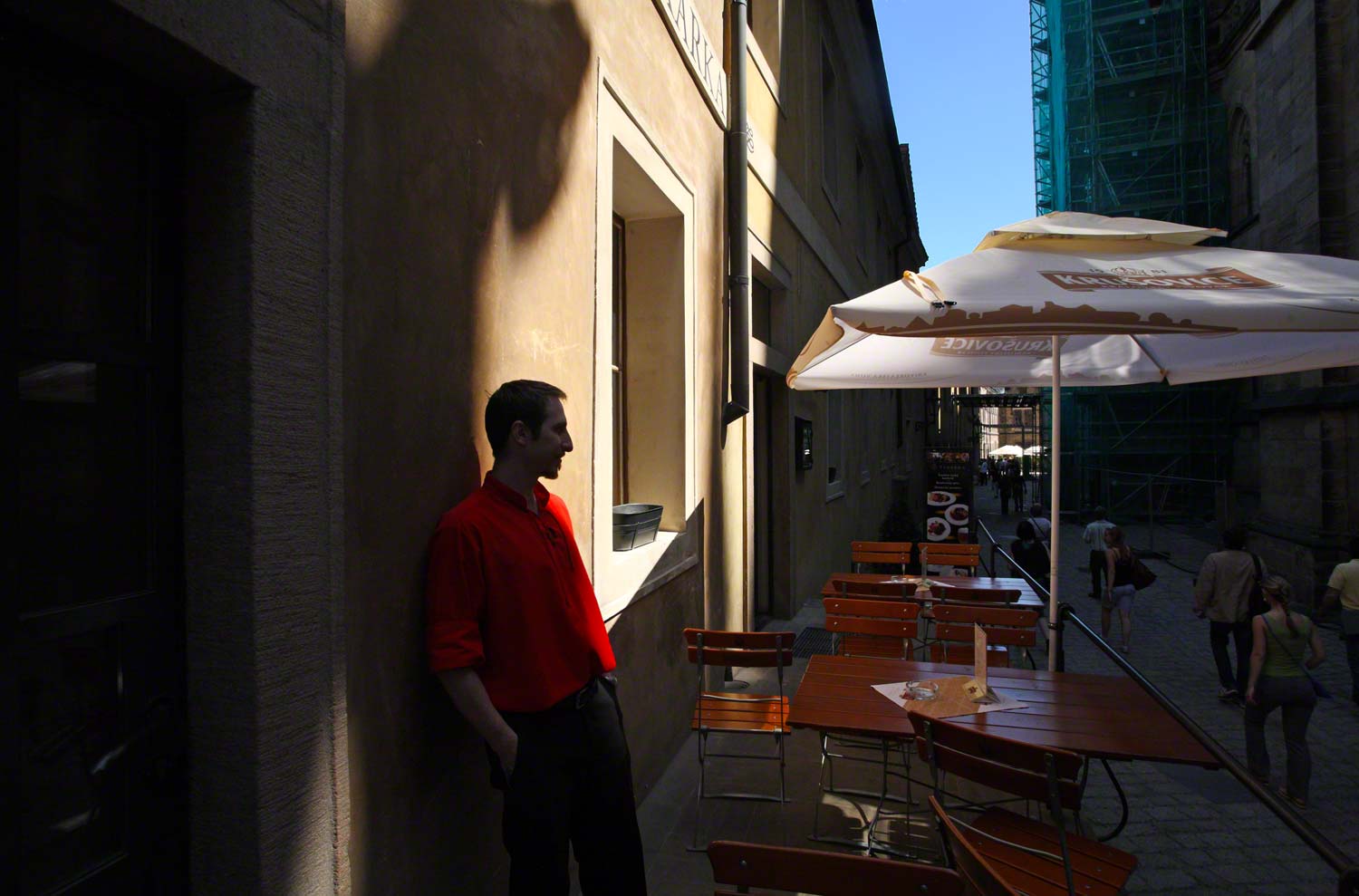
My Favorite quote: The Buck Stops Here.
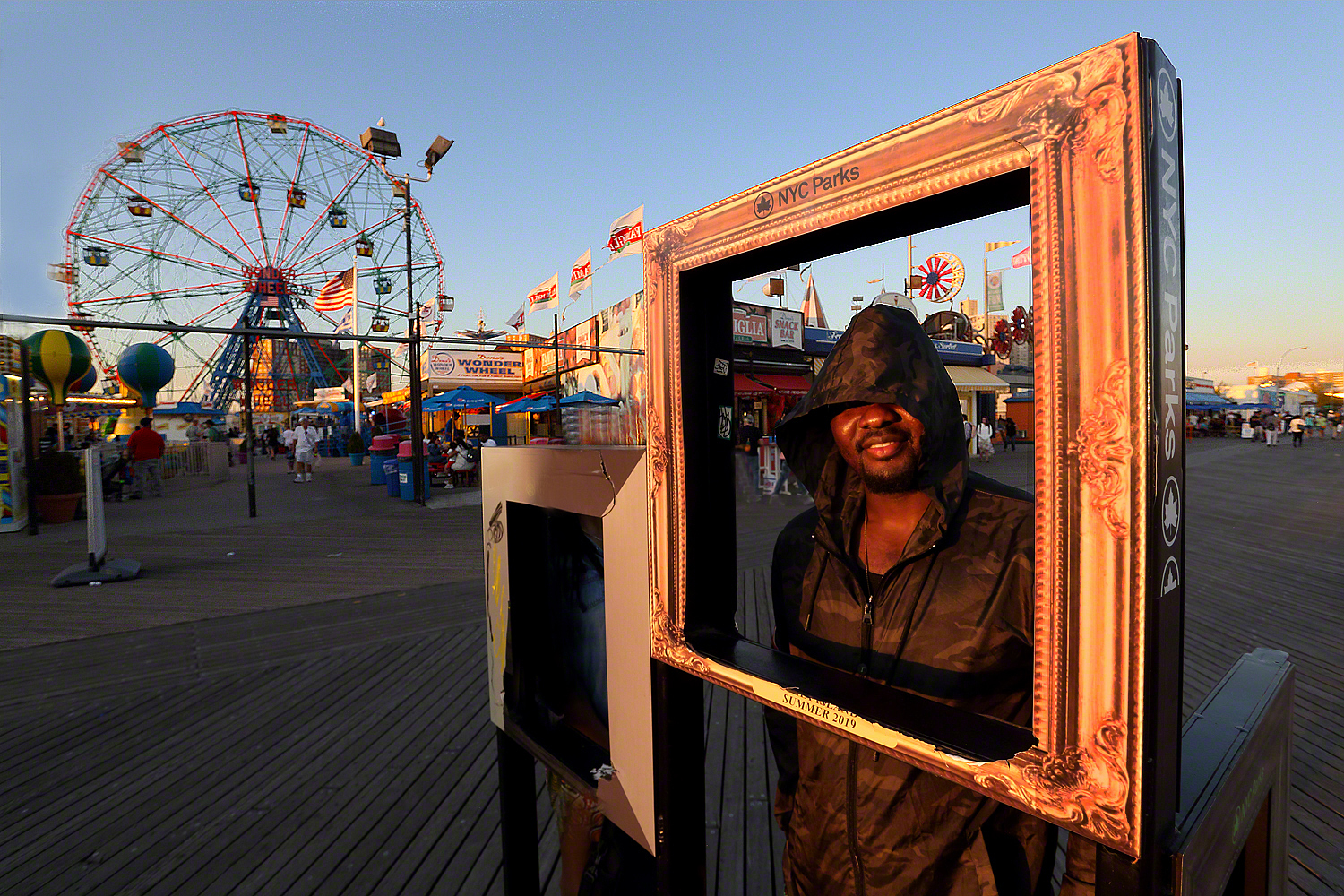
The buck always stops with me

When Harry S. Truman was president, he had a sign on his desk that said, “The buck stops here”. The phrase refers to the notion that the President has to make the decisions and accept the ultimate responsibility for those decisions. Truman received the sign as a gift from a prison warden who was also an avid poker player.

To digress for a moment, I grew up in KC Missouri, and one day our elementary class took a field trip to his library that’s in Independence, Missouri. He happened to be there and I actually shook hands with him.

So, what in the world does that have to do with photography???

For those new to my blog, I teach an online class with the BPSOP and I also conduct my “Stretching Your Frame of Mind” workshops around the planet. I work closely with photographers to get them to perceive and processes with the right side of their brain. I also show people to take matters into their own hands by using the elements of visual design and composition that they put on their Artist Palettes. 

Besides mastering all the elements on your palette, the three most important ways to take your level of photography “up a notch”, is to use your 15 Point Protection Plan, pay attention to the Border Patrol, and check those four corners.  If you’re diligent and make those a part of your thought process, you’ll be far better off. Conversely, if you go about your business that way you always have, you’ll have no one to blame but yourself.

I’ve heard it all after teaching since 1983, including these remarks:

  • I didn’t read that far into the manual
  • I didn’t bring the right lens
  • It’s not what the president of my camera club said to do
  • I left my filter case at home
  • I only brought one card, and it’s full
  • I didn’t charge all my batteries before I left
  • I trusted my camera to make the right exposure decision for me
  • I didn’t know it was going to be out of focus
  • I guess I should have used a tripod
  • I forgot to set my alarm
  • I was hungry so I ate first
  • I’ll just fix it later

And last but certainly not least…it wasn’t my fault!!!!

We are just like television commercial or feature film directors. The difference is that we direct still photographs. We are all responsible for the content of our images. Only we can make ourselves look good or bad. Don’t rely on excuses to make your way through the art of photography. If you just study all the things I’ve laid out to you in this post, that even means clicking on all the links, you’ll become a stronger photographer.

So, my fellow photographers, remember that ‘The buck stops with you’.

Visit my website at www.joebaraban.com, and check out my workshop schedule at the top of this blog. come shoot with me sometime.

JoeB
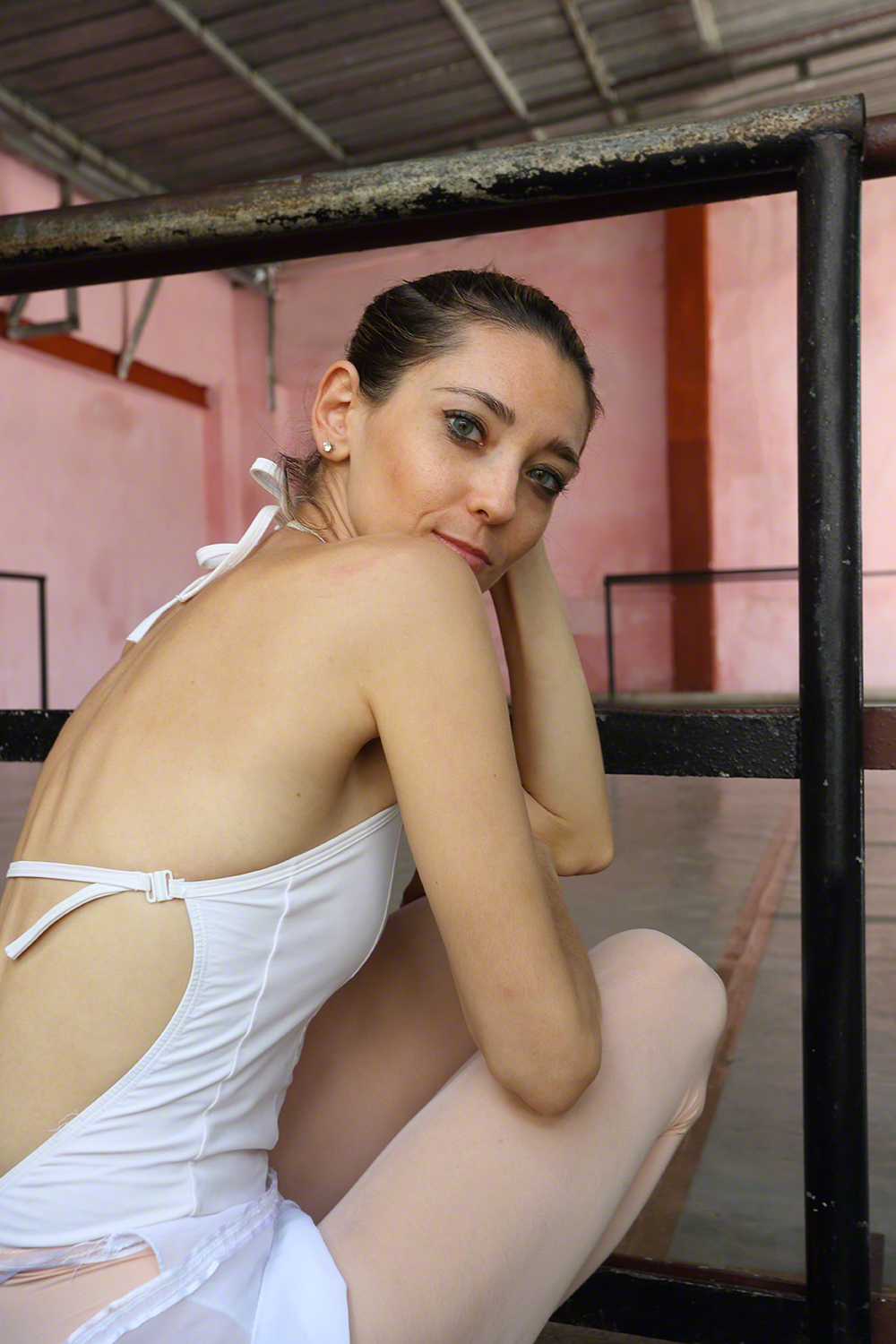
Food For Digital Thought: The Eyes Have It

Into her soul

I teach fellow photographers how to incorporate the elements of visual design and composition into their imagery.

In my part I and part II online class with the PPSOP, and in my “Stretching Your Frame of Mind” workshops I conduct around the planet, one of the basic elements and probably the most important of them all is LINE. Without line, the other elements of visual design wouldn’t be elements, and worse, the world as we know it wouldn’t exist…why you ask????

For the simple reason that Pattern, Texture, Vanishing Points, Shape, Form, and Perspective are made up of Line. The world wouldn’t exist because everything around us from buildings to forms of locomotion to flowers to humans, etc. all have an implied outLINE.

When I’m photographing people, I almost always have my subject looking into the lens.  One of the most important implied lines is the imaginary line that runs from the subject’s eyes to the center of the lens. Not only does it suggest a certain intimacy and private bond between the subject and the photographer, but it also creates visual tension and intellectual energy.

As I always say, “Tension=Energy”.

I don’t mean the Tension that comes from mental or emotional strain, but the Tension that comes from forces acting in opposition to one another…as in the subject and the camera looking at each other.

At one time taking pictures of people use to be thought of as “robbing oneself of their soul”. Having said that, I’m not looking to steal someone’s soul (what would I do with it once I had it? Craig’s List or eBay?), however, I like the old adage that suggests the eyes are the doorway to one’s soul, and I do like the idea of looking into one’s inner spirit.

Visit my website at www.joebaraban.com and check out my workshop schedule at the top of this blog. Come shoot with me sometimes and maybe we’ll go steal some ‘souls’ together!!!

🙂

JoeB

Giving Meaning to Photographs

sunsetovertheocean_DM2

Here’s an interesting article I found on the ‘information highway” I thought I would share with all of you. Unfortunately, I failed to write down the name of the woman or man who wrote it, and now I can’t locate the article again. I would have loved to credit it to her/him as I find it a great read. If you are the author or know who she is, please let me know so I can credit it properly.

Here’s the article just the way I found it:

“Unless you take photographs strictly for yourself, you probably like to share your images with others. What makes that dreaded slide show your uncle pulls out every time you visit so boring is that while it has tons of associations for him and your aunt, it has none for you. After all, it was their trip to Borneo, not yours. You didn’t share the experience of buying food from a street vendor or smell the smells of the urban neighborhoods. So, pictures of them don’t mean much to you.

You should keep this exclusivity in mind when editing your own pictures. Ask yourself, “Do I like my images because they have a certain emotional appeal to me alone?” A special vacation shot or a picture of your grand kids, might be an example. Or, do your images convey a more universal meaning that will inspire emotional response in others? It helps to gather feedback from a trusted friend.

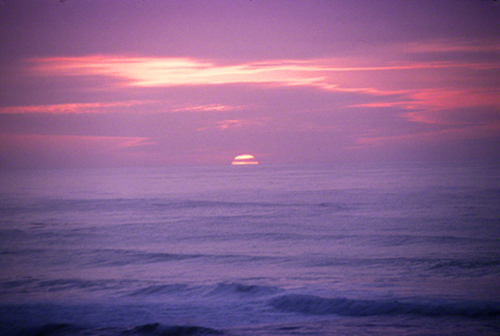
REMEMBER THAT BELOVED SUNSET OR SUNRISE YOU HAVE–SO EXCELLENTLY CAPTURED, SO EXPERTLY PRINTED AND FRAMED–MAY BE JUST ANOTHER SUNSET TO SOMEONE ELSE.

Learn how composition can affect meaning. Placement of the subject within the viewfinder can have profound effects on the meaning. Placing the subject low and surrounded by a large amount of negative space sends a different message than cropping it close. The former may send the message of hopelessness or depression, the latter a message of intimacy or friendship.

It’s a challenge to create images with meaning. It’s what separates a good photographer from a mediocre one. In judging contests and exhibits, I’ve seen many prints that are technically well done, but lack depth of meaning. These may be processed to resist aging in preparation for archival preservation, but they won’t stand the test of time on anyone’s wall–except, perhaps, the photographer’s own.

For, without an emotional connection to the image, we’ll grow weary of it. It’ll remain on exhibition for a few months and then be taken down or simply ignored as part of the background blur of our lives.

Our ability to connect with an image emotionally entices us to keep coming back to an image over and over again in order to repeat the emotion. Or, what’s even more exciting, we may find new meaning in the image as we grow emotionally and experience it in a fresh, new way.

A part of the issue surrounding meaning is the controversy over whether an image should be titled. Many contests require that the photographer name her image as part of the process of entering. And I know of several professional competitions in which the title of the print is actually part of the judging process.

I can’t tell you how strongly I object. A strong print needs no title. If I have to be told what the meaning of a print is via a title, I wonder if the photographer is certain of his message.

Titles also serve to direct and/or mislead. A title given by a photographer may direct his viewer in a particular direction, but without the limitations of a title, a viewer may discover meaning which was only subliminally apparent to the photographer. We have all taken a picture and thought it meant one thing, only to find that everyone else was seeing something else– something that emerged from our subconscious.

A title, in this instance, would have served to confuse the real meaning.

And, of course, there is the issue of language and culture itself. If a title is important, what if it’s in a language the viewer doesn’t understand? Does the image cease to have meaning? Of course, not. Art, in general, and photography specifically, are universal languages. They speak to us all–regardless of our native tongues or cultures.”

Any Thoughts?

           JoeB

Food For Digital Thought: Using Gesture In Your Photography

Gesture

The psychological use of Gesture in Photography can take our imagery what I often refer to as “Up a notch”.

A gesture is a human nonverbal movement by the hand, the face or head, or the feet to express an idea. It’s an action that conveys a person’s feelings or a deliberate act to get across a point. This point can be full of emotional implications.

Capturing this in your photography can be a powerful tool while showing a person’s personality in the process. A gesture may only comprise a very small part of your composition, but its effect can contribute more than half of the overall photograph. This is an important area we work on in my online class with the BPSOP, and in my “Stretching Your Frame of Mind” workshop I conduct around the planet.

The way a person smiles, holds their head, or hands, or even the way he or she crosses their legs can be a declaration of their persona. Having a man slump says something different than having him stand straight. Placing a person in the middle of the frame says something entirely different than placing him/her close to the edge of the frame. Gesture is a language unto itself, and can often be translated universally. Gesture is also a great way to tell a story without the words.

The most important thing to remember is that a gesture is a fleeting single motion and being able to freeze it in time is critical. If you want your photo to be authentic, it takes practice to capture the gesture at the peak of its action.

I use gesture all the time, but I don’t always wait for it. I like to create a scenario and stage the gesture then make it look like I caught it and then shot it more in a reportage reporting style. By the way, be sure to watch for my upcoming post on non-human gestures.

Here’s a few examples of actually capturing the gesture the moment it happened, and creating it to make it look real. Can you tell which is which?

Visit my website at www.joebaraban.com, and check out my workshop schedule at the top of this blog. Come shoot with me sometime.

JoeB

Food For Digital Thought: Imagination

People like to see people in pictures

In my online classes with the BPSOP, I’ve been finding that so many photographers are always playing it safe. Either from always shooting at the same height, the height of the eye to the ground, zooming in with their lens instead of using their feet, or looking for a different POV.

When I’m walking around shooting with the photographers that are taking my “Stretching Your Frame of Mind”, I see it up close and personal all the time. It’s one and done, and it really doesn’t matter what the subject is.

Now I’m all in favor of my mantra…” more shots per hour”, but that’s after shooting lots of variations. I can tell you from fifty-three years of experience that taking one shot of anything and going home with a ‘wall hanger’ is slim to none. Vegas would probably put it at 50-1.

Life is too short to always be safe. Always ‘coloring inside the lines’ keeps you on the road to mediocrity. Sure, it just might get you that third place ribbon at your camera club’s competition, winning you a 16GB compact card…if that’s what you want. Hell, by triple mounting your photo with color mats that are in harmony, you might even move up to a second-place ribbon…that would be special and now a 32GB compact card.

I say ‘color outside the lines’, and take the path less traveled. Imagination keeps us young, it’s the gas and oil that keeps our mind running. Shoot with a lens you would never think of, get some dirt on your shirt by laying on your stomach, add some props, and editorialize your photo. People like to see people in photos, so think about putting them in your pictures. Don’t photograph what you see, photograph what you would like to see.

Think of yourself as an artist that has chosen the camera as your medium. To my way of thinking, a camera on a tripod is just like a blank canvas on an easel.

Visit my website at www.joebaraban.com, and check out my workshops schedule at the top of this blog. Come shoot with me sometime.

JoeB

Food For Digital Thought: The Presumption of Humanity

Who are these people?

Since my background comes from a degree in Journalism, I’ve always liked to tell stories. Whether it be in my writing or my photography I like to entertain people, and I’ve been known to spew a few yarns here and there. I especially like to create a visual mood where I allow the viewer to take an active part in my photos.

That will certainly keep them around a little longer.

I’ve written about this in previous posts, and it’s all about the effects the Psychology of Gestalt has in taking our imagery what I refer to as “up a notch“. I want the viewer to stick around, and one way to do that is to imply the presence of people nearby, or maybe just barely out of the frame so they wonder who they are, what they look like, why they left, and when are they coming back?

In my online class with the BPSOP, and in my “Stretching Your Frame of Mind” workshop I conduct around the planet, we work on the elements of visual design and composition and how to incorporate these elements into our photography; storytelling is also an integral part in taking our pictures to a better place.

When creating these kinds of compositions, they’re like a still life, only it’s not always in the studio, or on a table in your house. Think about these types of images as icons that are a representational symbol of mankind. A time capsule for people of the future to ponder and possibly wonder what on Earth they were ever for!!!

Take a look at some examples of just what I mean:

Visit my website at www.joebaraban.com, and check out my workshop schedule. Come share some stories with me sometime.

JoeB

Food for Digital Thought: See, Think, Compose, Shoot

See, Think, Compose, shoot

If you really think about it, there are four steps one needs to go through to ‘make’ good pictures: See, Think, Compose, and Shoot; the last step is obviously the easiest…why? Because clicking the shutter is the easiest part of photography, and it doesn’t take a lot of artistry or talent to do it.

So, let’s take it step by step:

See: I’ve talked about this maybe a million times to both my online classes with the BPSOP and during the daily critiques in my “Stretching Your Frame of Mind” workshops I conduct all over the probably round planet.

When you’re walking around, whether it be street shooting or whatever else you like to shoot, don’t just look straight ahead; I witness people doing it all the time. When you do that you’re only seeing 25% of the possible photo ops. Each couple of steps look to the right, then the left, then look behind you as well. This will cover 100% of the playing field that will greatly increase your chances of going home with the ‘good stuff’. I call it 25X4=100.

Think: When you do see something interesting, try to pre-visualize the composition as far back as you can so that when you get to what you were thinking about, there won’t be any time wasted. Light and those ‘moments’ are so fleeting that you can miss either or both in the blink of an eye.

Make sure of your message, and be ‘crystal clear’ as to how you want the viewer to perceive and process the information you’ll be giving him/her in the form of a photograph. Remember that you won’t be around to explain what you were thinking so unless you’re going for an abstract, letting people decide for themselves what it is, make it a ‘quick read’.

Compose: There are three things that I tell my students to remember if nothing else they get from me when they are in my classes or workshops. The first one I call my “Fifteen Point Protection Plan”…click on the link.

The second is called my “Border Patrol”...see the link. The third is what I call the 4 corner checkoff.

If you are diligent about using these tools for stronger photos, I can guarantee you that your photography will go up to what I refer to as ‘up a notch’.

Shoot: Once you’ve clicked the shutter your not done yet. If you take just one photo, one POV, the odds are against you to go back home with a ‘wall worthy’ image. Unless you’re street shooting and that one moment in time allows you to get off one shot, shoot as many variations as you can, with slight adjustments for each one.

I rarely shoot just one idea, It’s a series of shots from different angles, different light, and shutter speed exposure combinations that segue to what I consider the last shot that I’m comfortable with.

So, my fellow photographers, there are a lot of things you need to be thinking about before you click the shutter. Remember what I said about clicking the shutter is the easiest part of picture-making…even a caveman can do it.

Visit my website at www.joebaraban.com, and check out my workshop schedule at the top of this blog. Come shoot with me sometime.

JoeB

Food For Digital Thought: The Camera is your Brush

The camera is my paintbrush

Every once in a while I like to introduce myself to those that just started reading my blog. Whether you accidentally discovered it online, read about it somewhere, or it was suggested reading from a friend, My name is Joe Baraban and I ‘ve been a professional photographer for fifty-three years. Before that, I studied painting and design and especially loved Art History.

For a large part of that time, I was an advertising, corporate, and editorial photographer based in Houston, Texas. Now I teach online classes with the BPSOP, and I conduct “Stretching Your Frame of Mind” workshops around out perfectly round planet.

I show my fellow photographers how to incorporate the elements of visual design into their imagery, as well as several elements of composition. I also show people how to use Light as well as color to create strong, memorable photographs.

For me, a camera on a tripod is just like a blank canvass on an easel. If you ever studied the old masters, you can easily see how they used the light in their paintings. For example Johannes Vermeer and Rembrandt.

They painted with Light back then, and today’s photographers are still artists, the camera is now our paintbrush. The poetic way Vermeer used light for his subjects using window light, is akin to the way we love a North Light Studio or at least a window that faces North.

One of the things I stress, and actually have as a lesson in my part II online class is the fact that shadows are your best friend. This also goes way back to the Old Masters.

There was a technique called Chiaroscuro, (from Italian chiaro, “light,” and scuro, “dark”), that was used in paintings to represent light and shadow as they defined three-dimensional objects.

In today’s digital world, I use this technique to illustrate one of the basic elements of Visual Design…Form. Form refers to the three-dimensional qualities of an object.

Getting back to Vermeer, in Amsterdam it was written that Vermeer would have met Rembrandt, whose forceful chiaroscuro effects complemented the intensity of his paintings.  To this day Rembrandt Lighting is very dramatic and one of the most iconic setups. This way to light is known for the triangular spot of light under the subject’s eye on the opposite of the face that the light is coming from.

As you can see, Light is probably the most important part of Photography, and to me, it should always be considered first. Before I bring my camera up to my eye, I look to see where the light is coming from, and how can I best use it to create my “works of art”.

Visit my website at www.joebaraban.com, and check out mt workshop schedule at the top of this blog. Come shoot with me sometime.

JoeB

Food For Digital Thought: Breaking The Rhythm Of A Pattern

Breaking the rhythm of a pattern.

In my online class with the BPSOP, and in my “Stretching Your Frame of Mind” workshops I conduct around the planet, we work on using the Elements of Visual Design and composition to take our photos what I always refer to as “up a notch”. One of the basic elements of Visual Design is Pattern.

Patterns are repeating elements of line, shape, and color that appear in ordinary ways. The four basic shapes are triangles, squares, rectangles, and circles. When lines, shapes, and colors within a picture occur in an orderly way, they create patterns that often enhance the attractiveness of photographs.  Creating your pictures around repeating elements or patterns provides picture unity and structure. Pattern repetition creates a rhythm that the eyes enjoy following.

When used as a subordinate element, they can greatly enhance your composition. They should only be used to strengthen or add to your photographs. Patterns can provide unity to your composition. They create a sense of visual rhythm that the eye can easily follow. Life is filled with patterns and once you get an eye for spotting them you’ll be amazed by what you see and you’ll wonder why you didn’t incorporate them into your photography before.

Broken patterns break the rhythm and are often more compelling than unbroken patterns. Think of a close-up of hundreds of M&M’s on a table. They are all red except for one green one. I’m always looking for patterns as well as all the elements on my Artist Palette. Whenever possible I try to find ways to break the patterns by incorporating some object or person…Why?

Because it will give the viewer one more thing to discover and think about, which will keep him/her around longer. Isn’t that just what we want?

Visit my new website at: www.joebaraban.com and check out my workshop schedule at the top of this blog. Come shoot with me sometime.

JoeB

Food For Digital Thought: Color Outside The Lines

coloring outside the lines

I’ve been a grandpa for a long time, but I still think back to the days when all of my four grown kids were young; young enough to be coloring in a coloring book. Well, as it turned out, none of them ever had a coloring book…why, you ask? Because I never wanted them to worry about having to color inside the lines!!!

How stifling can that be? At least that’s my opinion, and I can now back it up by saying that my kids are very creative in all of their endeavors, and for the most part have always danced to a different drummer. A definite “chip off the old block”. So what did I do for their art time?

Instead of a coloring book, I took them to the Texas Art Supply where we bought plain white drawing paper, and the biggest box of Crayons they made at that time. I can’t remember how many were in the box, but there were a lot. The only thing I would tell them was to use all the colors and to try filling in the entire piece of paper.

In my online class with the BPSOP, and in my “Stretching Your Frame of Mind” I basically tell my fellow photographers to color outside the lines which is basically what the eighties expression “Think outside the box” was all about.

I can always tell when one of my students simply brings the camera up to his/her eyes and takes a picture. It really became obvious when all the photos that are submitted for review were all taken at the same height. When they go out with me, chances are that their clothes will come back with either dirt, grass, water, leaves, or an occasional critter that was inadvertently stuck to the front or even clinging to the back of their shirt…or all of the above.

🙂

Next time you go out, take a lens you seldom shoot with, some props, and remember that you’re an artist. The only difference is that your medium is a camera and not a paintbrush, colored pencil, or pastels.. That said, look at things from a point of view you never thought of before.

Let everyone else be predictable and always come back with the same old…same old. Never walk down the already beaten down path to follow and retrieve an idea. Take the road less traveled, and I can guarantee you that it will make you a stronger photographer with images that people will spend time looking at.

Think about coloring outside the lines!!!!!!!!

Visit my website at www.joebaraban.com, and check out my workshop schedule at the top of this blog. Come shoot with me sometime.

JoeB

Food For Digital Thought: When is a Landscape not a Landscape?

Tells a story

I often find myself in a situation where I’m standing or looking out at an incredible landscape. The word incredible not just comes with the territory, but because I’m usually shooting at sunrise or sunset when the sun is lower on the horizon, and the light is much softer, warmer, and with longer shadows…your best friend.

Over the years I will also find myself in a situation where I’m able to shoot a landscape for the sheer reason of showing a beautiful vast area; a true landscape.

So, what do I mean by a pure landscape? According to the dictionary, the definition of a landscape is: “All the visible features of an area, or countryside, or land, often considered in terms of their aesthetic appeal.”

Further, Wikipedia states that ” Many landscape photographers show little or no human activity in their photos, striving to attain pure, unsullied landscapes that are devoid of human influence, using instead subjects such as strongly defined landforms, weather, and ambient light.”

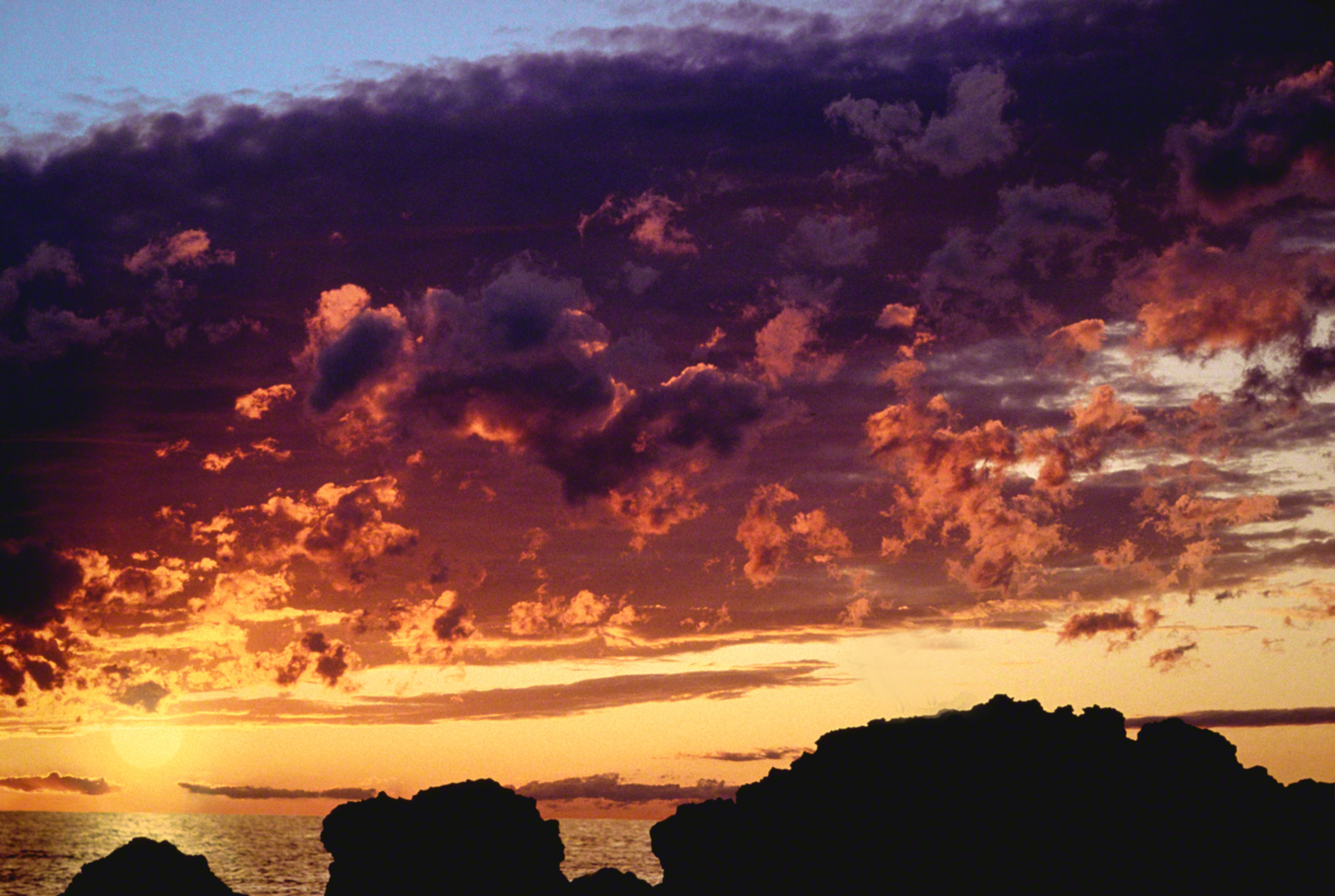
Just a landscape

I don’t always fall under that variety of photographers. My background is in painting and design, with a BA in the field of Journalism; I’m a storyteller. So, while following the purist ways, which is one genre, I’m also looking for a way to editorialize, which is another genre.

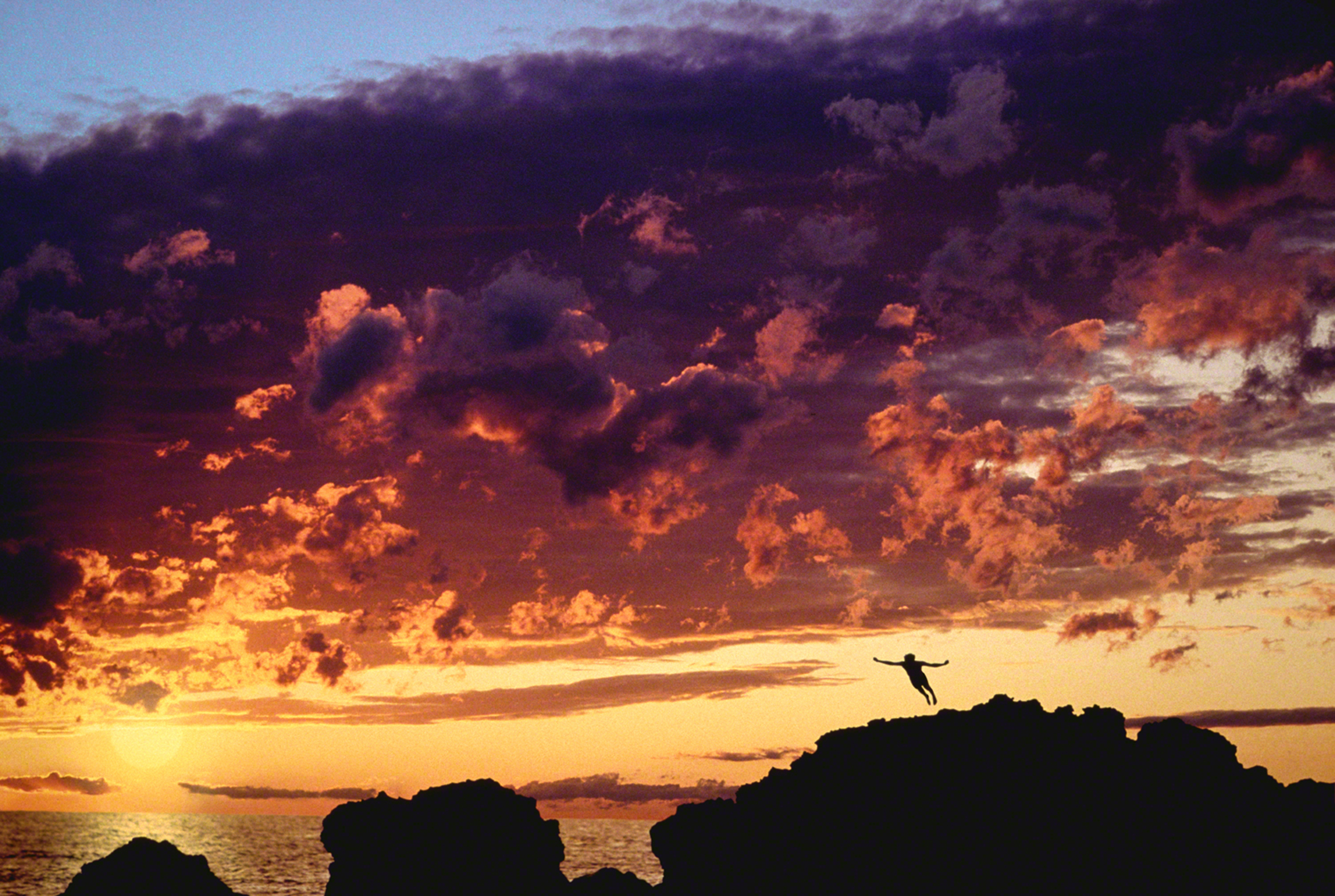
By adding a person, my landscape becomes more of a story. The viewer will ask why is that person there, what’s he doing there, etc., and when the viewer discovers my person or object, I’ve included a touch of Gestalt. Simply said, the more things the viewer discovers in our photography, the more he or she will stick around. Isn’t that just what we want him to do?

In the two photos, I took out the man diving so you’ll see a landscape. In the other photo, I left him in so now it’s more editorial. Still a landscape in my opinion, but now there’s a story to it.

Now, I realize that the ‘purist’, the photographer that shoots landscapes for the sake of landscapes, would have a big problem with adding a story to his/her photo, and that’s perfectly OK with me; a true landscape is just that.

Hopefully, there’s room for both images in the scheme of things.

In my online classes with the BPSOP, and in my personal “Stretching Your Frame of Mind” workshops I conduct around our planet My fellow photographers are always saying that they just couldn’t do anything about that person that shows up in their photo; they’ll just take him/her out later.

What I usually say is that by adding that person or old beat-up car, or sailboat, you’re not hurting the photo…you just might be saving it. It may be what you’ve always thought, but try looking at things a little differently.

Visit my website at www.joebaraban.com, and check out my workshop schedule at the top of this blog. Come shoot some scale with me.

JoeB

Food For Digital Thought: Non Human Gesture

non-human gesture

I talk to my online classes with the BPSOP, and in my “Stretching Your Frame of Mind” workshops I conduct throughout the world about the importance of a gesture in your imagery; it’s one of the ways to create Visual Tension.

The actual definition of a gesture is “a movement of a part of the body, especially a hand or the head, to express an idea. It’s an action performed to convey one’s feelings.”

Visual Tension is generated when you stop an action, as in a gesture, and leave it uncompleted. I’m always on the lookout for someone using a gesture either while talking or even pointing. That said, I don’t like to take photos of people pointing unless I have positioned them close to the edge of the frame so they’re pointing out. Tha way the viewer doesn’t know what they’re pointing out.

There is another type of gesture that I also like to talk about and especially in a photograph, and that’s a non-human gesture. Non-human gestures can also portray an emotion or communicate an idea.

A list of non-human gestures would include contrast, a recurrence of objects, color, depth, shadows, light, and the element of surprise. Trees, waves in the ocean, flowers, and even rock formations can portray a sense of Gesture. The one idea that connects these objects and is usually necessary to show them in their reality is the use of elegance or grace.

The use of color or light to create a non-human expression is an unwritten language different than the intentional movement created by man or other living creatures. This demonstration of visual expression can be a complex form of communicating ideas and emotions to the viewer. The use of Light to create a non-human gesture can be more difficult since Light is so fleeting that it can come and go in a blink of the eye. When you can anticipate this moment, or quick enough to react, it can imply a sense of movement that will embody the essence of an object.

When you can combine these non-human gestures, with any of the elements of visual design and composition on my Artist Palette I refer to it’s a great way to find that elusive “OMG” photo we all strive to take.

Here are a few examples of non-human gesture:

Visit my website at www.joebaraban.com, and check out my workshop schedule at the top of this blog. Come shoot with me sometime.

JoeB

Food For Digital Thought: Observation vs Imagination

Waiting for breakfast early one morning in San Remo, Italy.

Before reading this post, for all of you that have taken my part I and II classes, the school is bringing back my Gestalt class for a month, starting the first week in May. Here’s the link: https://bpsop.com/courses-1/

When I critique one of my student’s photos in my online class with the BPSOP, and also in my “Stretching Your Frame of Mind” workshops I conduct around the planet, I’ll talk about what they saw versus what they would have like to have seen.

Most photographers that I see (close-up) in action walk up to something, some person, or someplace, and bring up their camera to their eye and “take’ a picture. In other words, they take a picture of what they see. What I want my online students that take my classes is to ‘make’ a picture not of what they see, but what they would like to see.

In the fifty years I’ve been shooting I have rarely seen what I want. I guess I’m just too impatient to wait around for something I want to shoot. What I’m getting at is that I shoot what I’d like to see.

In other words, If I see a group of chairs lined up against a wall and one or two of them are making the overall composition un-balanced, I have no problem going up to them and arranging them the way I’d like to photograph them.

Now, there are those out there that call themselves”purists”, and would never think about moving something. On the other hand, those same purists have no problem going back to their computers and adding a lot of post-processing, aka HDR for one.

I can’t think of anything as “un-pure” as taking three exposures and combining them into one photo..but that’s just me. In all these years I’ve never had to do that and my photos come out pretty damn good. Btw, I know people that do this.

If I see some ordinary items one would see while being served breakfast, I’ll fool around with them until I see something worthy of shooting as in the photo above. To me, that’s being an artist, and make no mistake my fellow photographers we are all artists that have chosen a camera as our medium of choice.

And so I leave you with this, a camera on a tripod is just the same as a blank canvas on an easel.

Visit my new website at www.joebaraban.com, and check out my workshop schedule at the top of this blog. Come paint with me sometime.

JoeB


Food For Digital Thought: The Shadow Knows

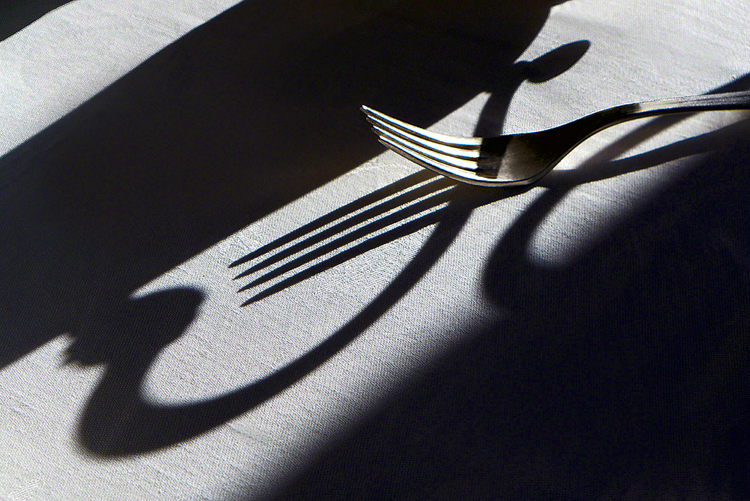
I love large areas in shadow to add a dramatic edge.

Before reading this post, for all of you that have taken my part I and II classes, the school is bringing back my Gestalt class for a month, starting the first week in May. Here’s the link: https://bpsop.com/courses-1/

When I was a young kid, the family got our first television. We would all gather around it mesmerized and completely taken in by this new form of entertainment. One of the shows we use to watch on Saturday nights was a show called The Shadow.