Food For Digital Thought: Making a New Friend.
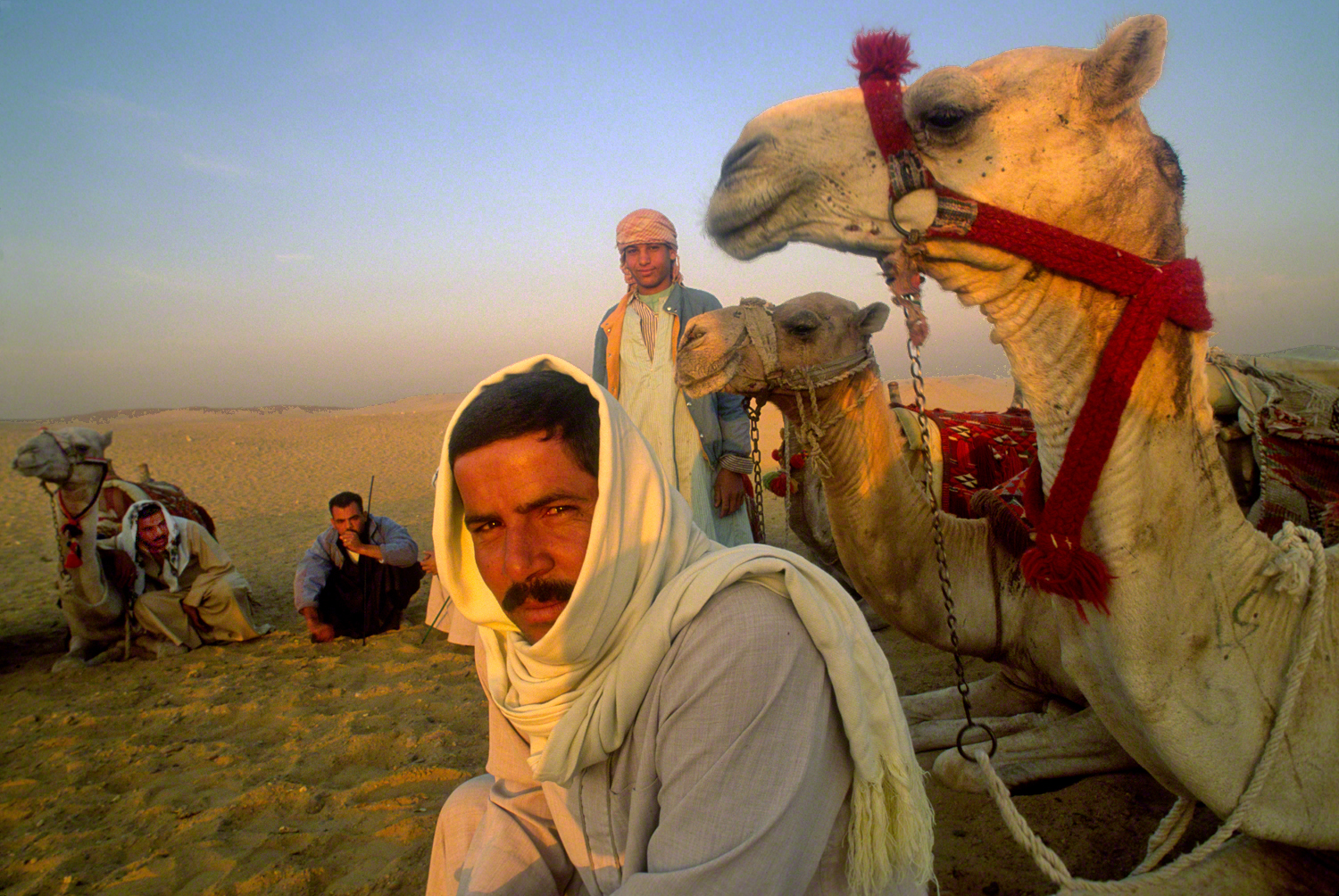
The final portrait

I love all aspects of photography, from landscapes to macro, and from street shooting to portraiture. Whether my subject are mountains, running streams, rivers, forests, architecture, anything with wheels on it, people, kids, dogs  and bugs; bugs not so much.

My favorite is environmental portraits, and I’ve shot them from Timbuktu to Kalamazoo. For me, this is just about the most fun someone can have, and I’m going to milk it for all it’s worth…what do I mean?

What I mean is that when I look at submitted photos from my online classes with the BPSOP, I always know when someone has done the least required effort when taking portraits of people; usually because they take them from too far away. When I’m watching someone in my “Stretching Your Frame of Mind” workshops I also see my fellow photographers doing little else than walking up to someone and asking permission to photograph them; they’re leaving out so much.

When I see someone I want to photograph, first of all I don’t ever run up and stick a camera in his or her face; that’s a great way to get a hand up and aimed at you shaking vigorously in a ‘no’ kind of international way,  A little discretion will go a long way so keep the camera over your shoulder but behind you so as not to be intimidating; if the hand doesn’t immediately come up you’re at least in the door.
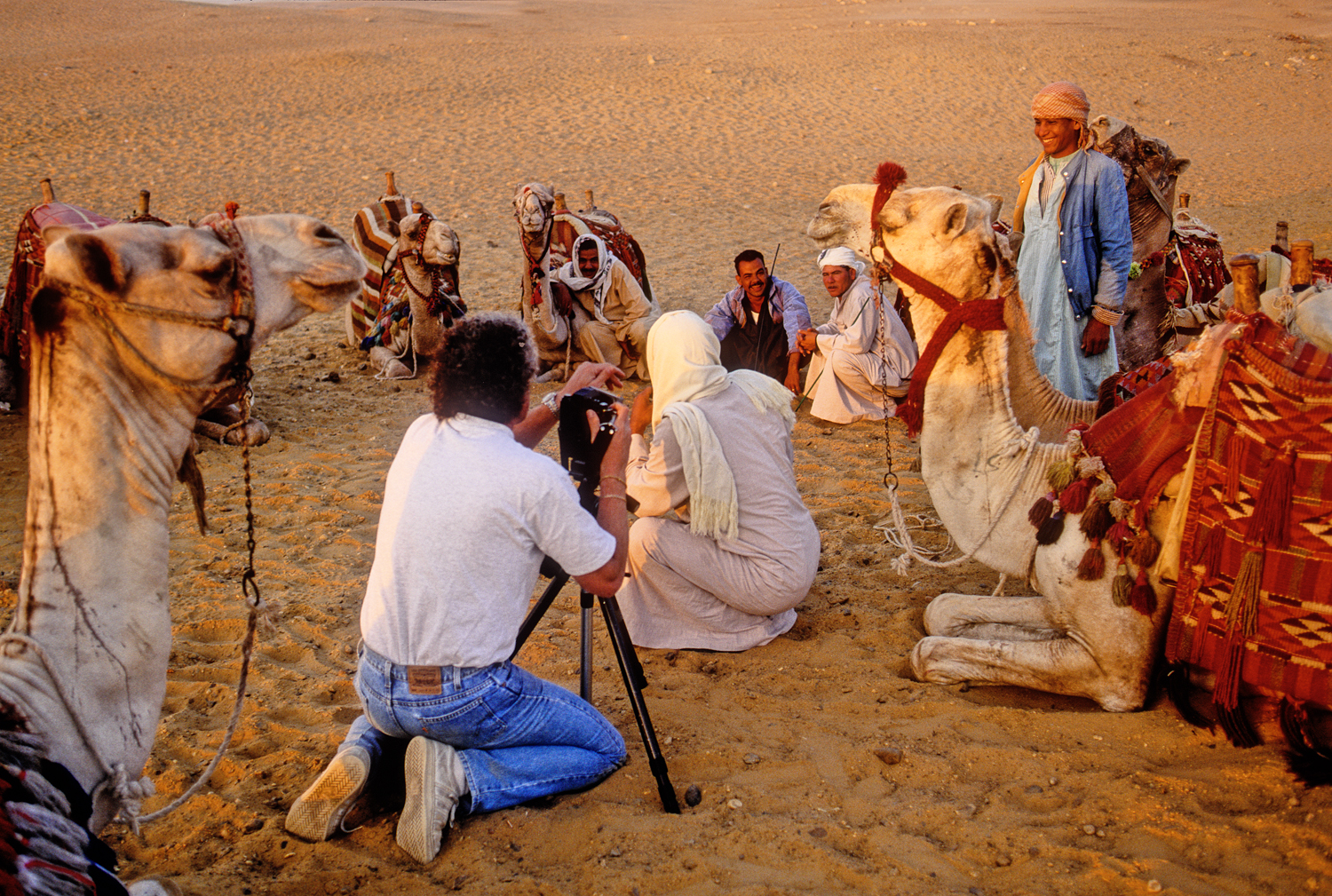
Conversations during the shoot keeps things loose.

I personally love to talk to people before, during, and especially after taking their pictures. Milk it, you bet. I will often have my photo taken with them so when I get back home I can relive that brief encounter. It will always remain a wonderful memory no matter how much time goes by. I need only to bring them up on my computer from time to time and it’s just like D’eja vu all over again. It’s a feeling one should not miss out on.

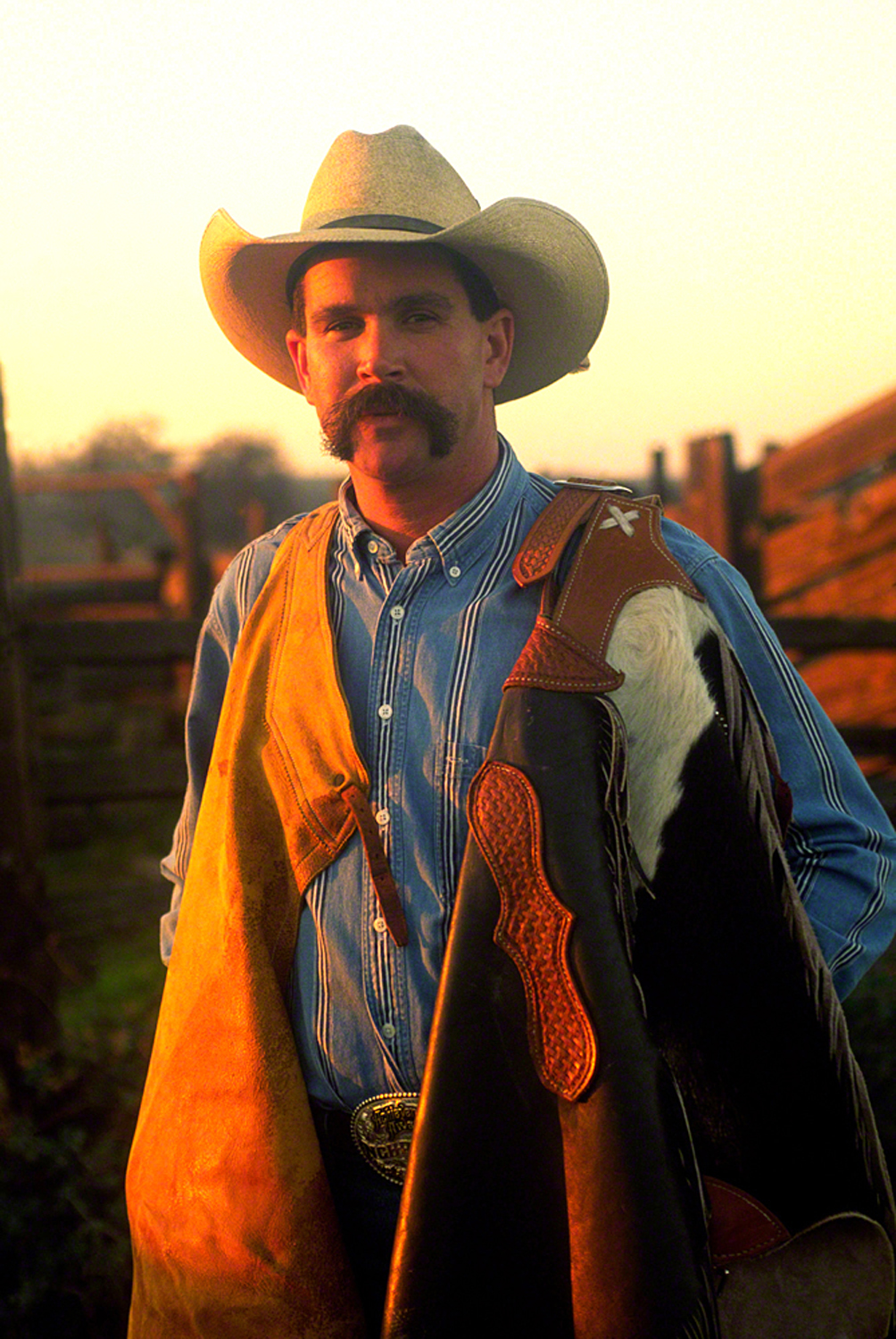
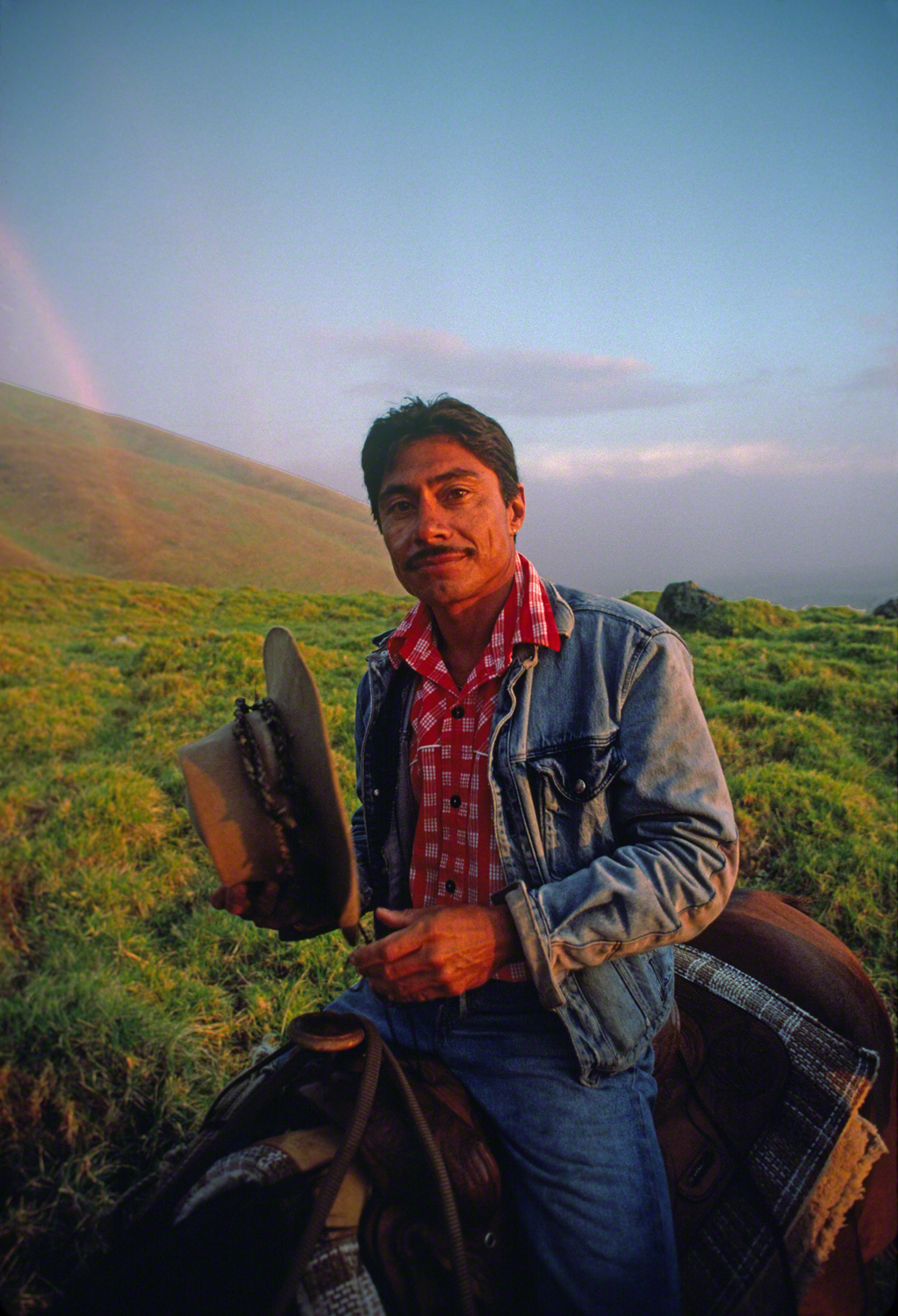
I’ve selected these three photos taken a very long time ago as good examples of the fact that there’s no time limit on the feelings you get when looking back.
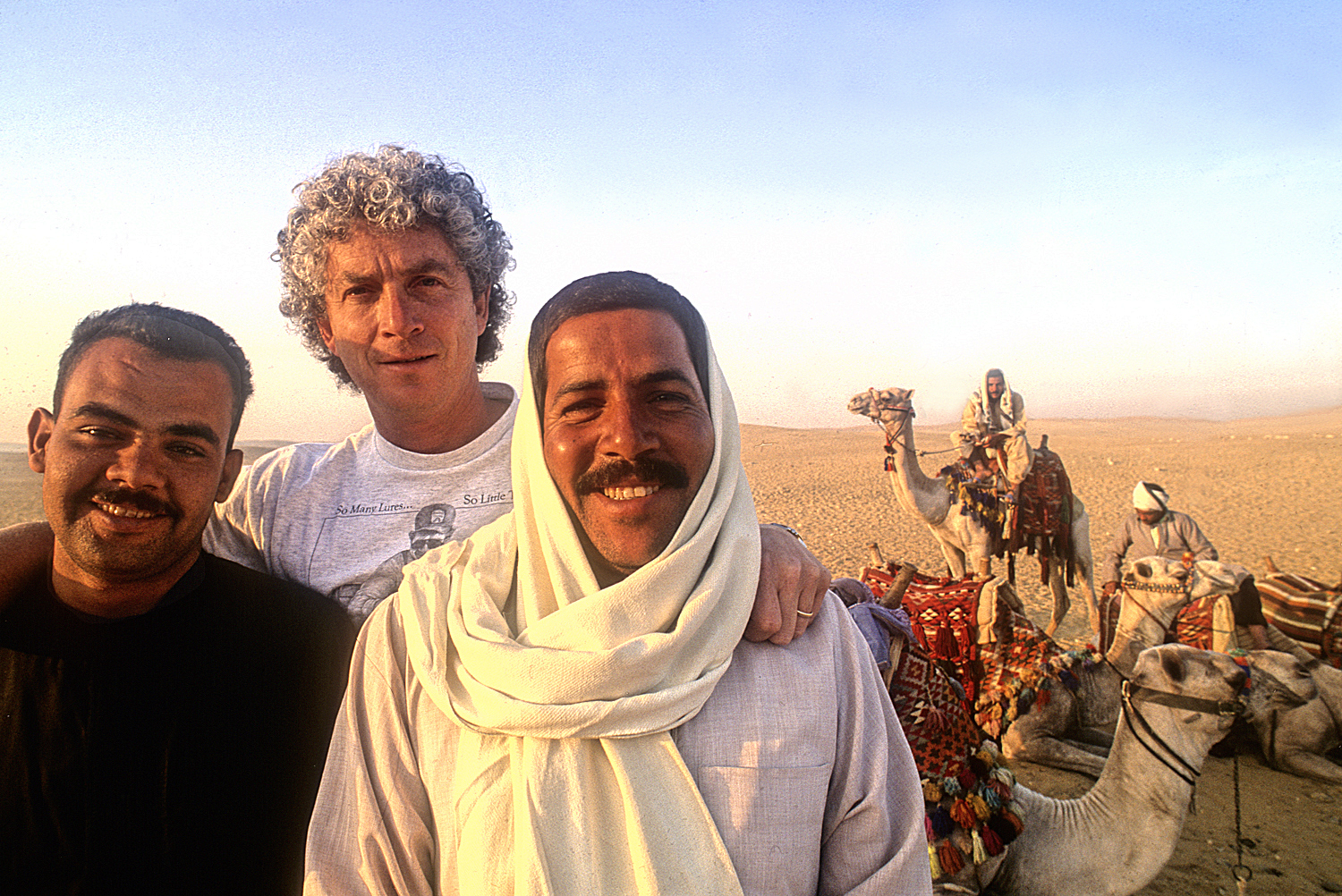
Looking back in time are great memories

Having said all this, it’s a great way to not only promote photography, while spreading good-will around the world, but to leave a smile on the face and a long lasting experience as to have just had their picture taken; let them know that photographers are really good people…most of them!

Visit my website at: www.joebaraban.com, and check out my workshop schedule at the top of this blog. Come shoot with me sometime. On July 30th I begin my 29th year at the Maine Media Workshops. I’ve had the same week since the beginning. It’s the week of the Lobster Festival down the road in Rockland. It offers a completely different set of photo ops than one would expect when coming to photograph the coastline, lighthouses, and fishing villages of Maine. Come join me and spend a week completely immersed in your love for photography.

Send me a photo and question to: AskJoeB@ gmail.com, and I’ll create a video critique for you.

JoeB
Food For Digital Thought: Compression is cool!

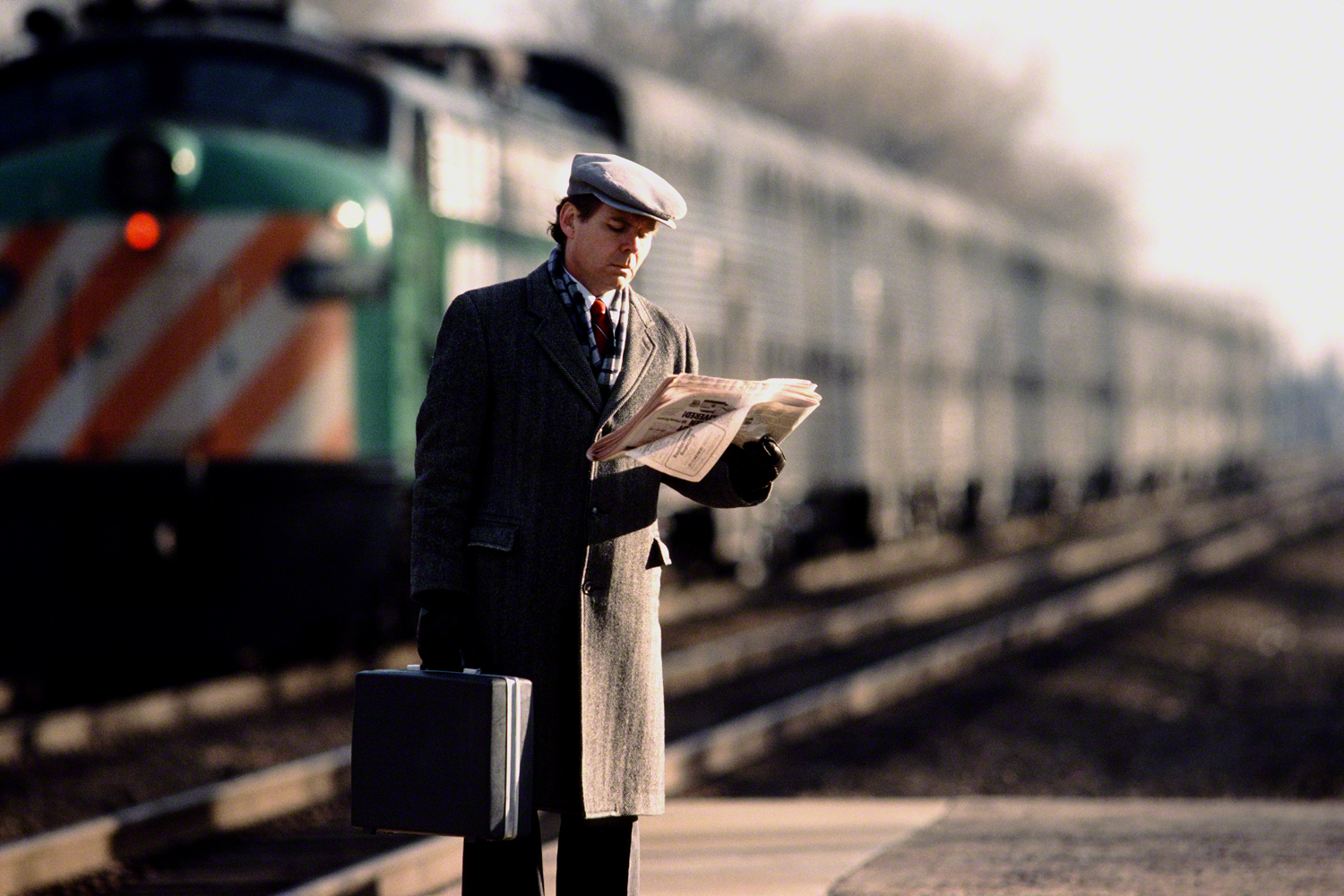
Nikon 300mm F/2.8 lens shot at F/2.8

I’ll often have people taking my online classes with the BPSOP submit a photo and then talk about how they should have used a telephoto lens to compress the elements in the composition.

It also happens during my “Stretching Your Frame of Mind” workshops when right before we go out shooting I’ll be asked by one of my fellow photographers if we’re going to be somewhere where they could use a telephoto to compress everything.

Ok, let’s get to the crux of the conversation: Lens compression will occur when you use a telephoto lens, but the compression is not a result of the lens or its focal length.

So then what exactly is meant by lens compression? Why don’t we call it lens compression for the sake of the article even if we know that it doesn’t have anything to do with the lens.

When we decide to use a long lens for whatever reason, we need to stand back from our subject to do so. It’s the camera to subject distance that will give the viewer the feeling of compression..why you ask?

Because the camera to subject ratio will give the impression that distant objects are larger than they actually are; giving the appearance that the background has pulled in closer to the subject.

In the photo above, I was shooting for the Sears Annual Report and I wanted to focus on just the commuter. I shot with a 300mmF/2.8 lens at it widest aperture. In doing so it pulled the train in closer making it appear as if the train is huge behind him.

Conversely, a wide angle lens has a much wider field of vision so the opposite will occur. In other words, to keep the subject the same size as you do with the telephoto you’ll have to get much closer. Because we’re so close, objects near to us will correspond in size making the background elements smaller and seem farther away.

So if we’re looking  at a small historical church in the viewfinder and visually it looks closer to the parishioners whose portrait you’re taking, it’s not because perspective has gotten compressed but simply because in the viewfinder we see a smaller portion of it.

Visit my website at: www.joebaraban.com, and check out my workshop schedule at the top of this blog. Come shoot with me sometime. On July 30th I begin my 29th year at the Maine Media Workshops. I’ve had the same week since the beginning. It’s the week of the Lobster Festival down the road in Rockland. It offers a completely different set of photo ops than one would expect when coming to photograph the coastline, lighthouses, and fishing villages of Maine. Come join me and spend a week completely immersed in your love for photography.

JoeB

Food For Digital Thought: Light at the Edge of Darkness

Just on the edge of darkness
Front light right on the edge of darkness.

Light is one of my favorite subjects to talk about…why? Because light is everything to me, and that’s why over the past five years of writing these posts I have written several on the subject; my mantra is you find the light, you’ll find the shot.

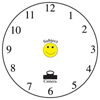
In one of my online lessons with the BPSOP, I talk about my clock, and always knowing where the sun is on it. In other words, Printif you look at my clock you’ll see where the camera is in relation to the subject. From there you can determine if your subject is going to be side lit, back lit, or front lit.

For example, if the source of the light is coming from behind the 8,9 or 3, or 4 then you’re subject will be side lit. If the light is coming in from the 10 or 2, I call that the “law of the light where the angle of incidence equals the angle of reflection; my favorite way to light people.

If the light is coming from behind the 11,12,or 1, then it will backlight the subject. Last, if the light is coming from behind the 5,6,or 7, then your subject will be front lit.

By the way, I avoid front light like the plague, and when I’m shooting with my fellow photographers that sign up for my “Stretching Your Frame of Mind” workshops I conduct around our planet, it’s easier to physically show them the difference between all the different ways just my merely turning the subject or have them move around the same subject.

Light right on the edge at 10 o'clock
Light right on the edge at 10 o’clock

The reason I avoid front light is because you won’t be able to achieve depth, you’ll only be able to show height and width. You can show the third dimension by having the sun behind the 9 or 3…which is true sidelight.

Now I’ve talked about the clock before but what I want to add to the mix is placing your subject just at the edge of darkness. what I mean is placing your subject right where the light ends and the dark background begins. I like to do this for a couple of reasons:

The first reason is that it will create visual tension.  Two of the ways to create visual tension is through contrast and the use of light. The second reason I like to do this is because of the Figure-Ground concept in the psychology of Gestalt; putting a light object or subject against a dark background.

I said that I don’t like to front light, but the one exception is when I have my subject in the light but right on the edge of darkness so that I’m taking advantage of Figure-Ground; as I’ve done in the photo above.

Visit my website at: www.joebaraban.com, and check out my workshop schedule at the top of this blog. Come shoot with me sometime. On July 30th I begin my 29th year at the Maine Media Workshops. I’ve had the same week since the beginning. It’s the week of the Lobster Festival down the road in Rockland. It offers a completely different set of photo ops than one would expect when coming to photograph the coastline, lighthouses, and fishing villages of Maine. Come join me and spend a week completely immersed in your love for photography.

After trying to work out the schedules for the past couple of years, next January I’ll be doing a workshop with William Yu in China:

Yunnan China with William Yu

Although the workshop/photo tour has filled, we’re putting people on a wait list, so be sure to check out the description.

Send me a photo and question to: AskJoeB@gmail.com, and I’ll create a video critique for you.

JoeB
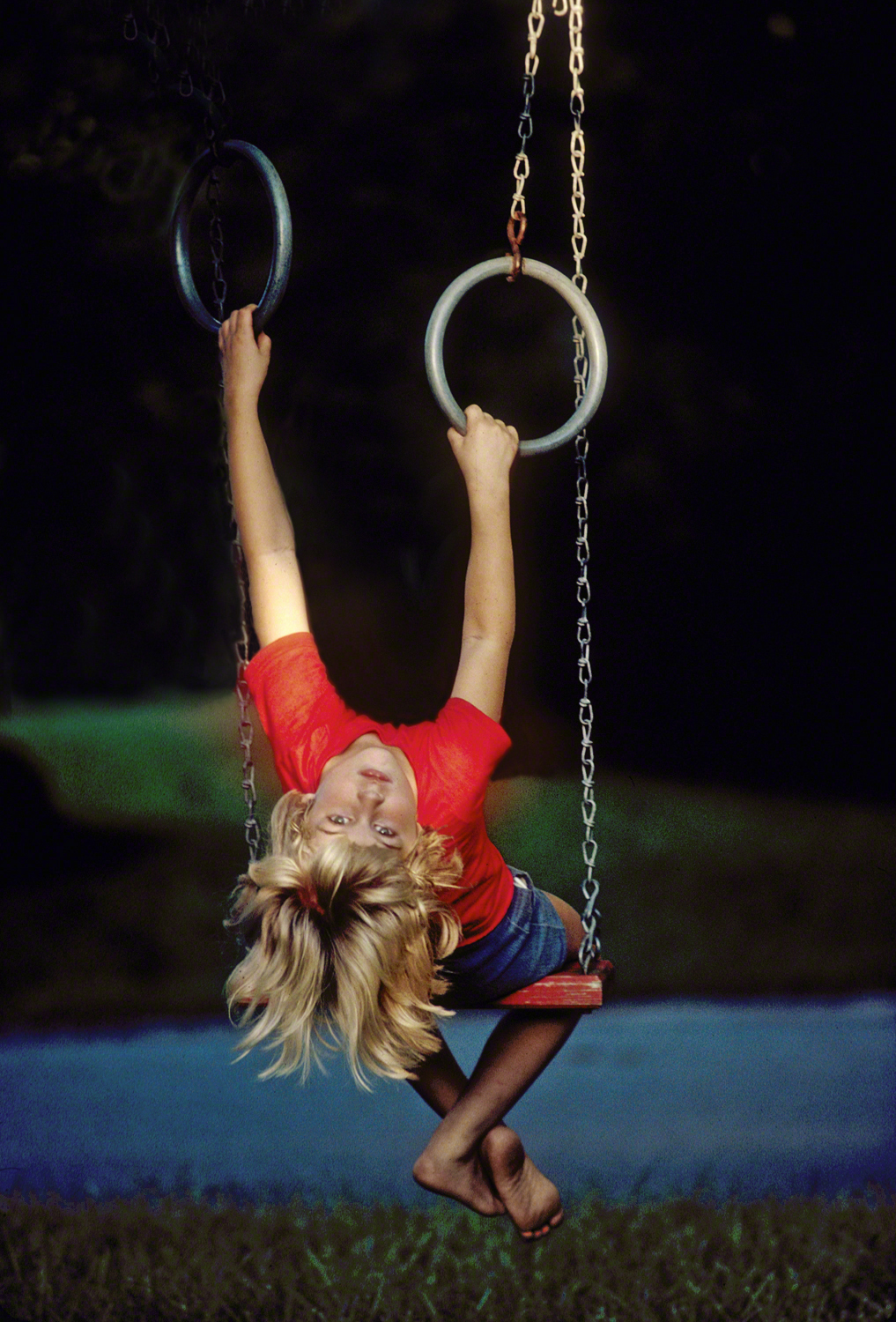
Food for Digital Thought: The Rule of Odds

I see triangles.
I see triangles.

I know what most of you are probably thinking right about now…has Joe sold out and embraced the rules of composition? Oh no Joe, say it ain’t so!!!

Well relax my fellow photographers because I have definitely not sold out, or ever will; you’ll have to pry my dead cold fingers of the shutter release before that happens. In fact, it took  a lot just to even mention the word RULE….why? Because rules are a hindrance to creativity, the shackles of artistry,  imagination,  and inspiration…that’s why.

Having said this, there are times when certain “guidelines” are in order and when and whether to shoot odd number or even number of subjects when applicable. I will tell you this, in over fifty years of shooting I’ve never thought about it. Anyone that ever tells you to never shoot an even number of anything has no idea what he’s talking about.

The pundits that look over and down on us to make sure we don’t do anything that would result in a downright just awful looking photograph, have absolutely nothing better to do than make you feel like a stooge if you break any of their silly rules. Case in point, the Rule of Thirds, and the Leading in Rule are two that come to mind.

Ok, the Rule of Odds states that having an odd number of subjects or objects in a photo will have more visual interest. Conversely, an even number of the same subjects or objects will result in the viewer separating them into pairs; creating symmetry and dare I say it…dullness.

Even numbers, the powers that be contend, will result in our brain dividing the subjects or objects, and what happens is that the photo is no longer viewed as a whole, but separate pieces. What a bunch of drivel….it’s pure BS…these people are all immature children all dressed up in their parent’s clothes!!

Total absurdity…what I would give to meet some of these people that think they know what they’re saying. If anyone out there knows of someone, please send them to me.

Don’t you think that the arrangement of said even number subjects or objects just might have something to do with it? What about the light and the color? Aren’t they two elements that are this just about as important as it gets???? Isn’t it possible that they could be wrong? Damn right they are, and I have countless photos to prove it.

As I said, there are times and places for everything, and I for one agree with a lot of  what shooting odd subjects or objects does.

You see I teach an online class with the BPSOP, and I also conduct my “Stretching Your Frame of Mind” workshops around our planet. In these classes and workshops I show people how to incorporate the basic elements of visual design into their imagery.

Color, Light, Pattern, Texture, Balance, Form, and Shape are the elements and the one I want to talk about as far as the Rule of Odds is Shape. Although there are countless shapes, the four basic ones are: circles, squares, rectangles, and triangles; it’s the triangles that are important here…and what I want to talk about.

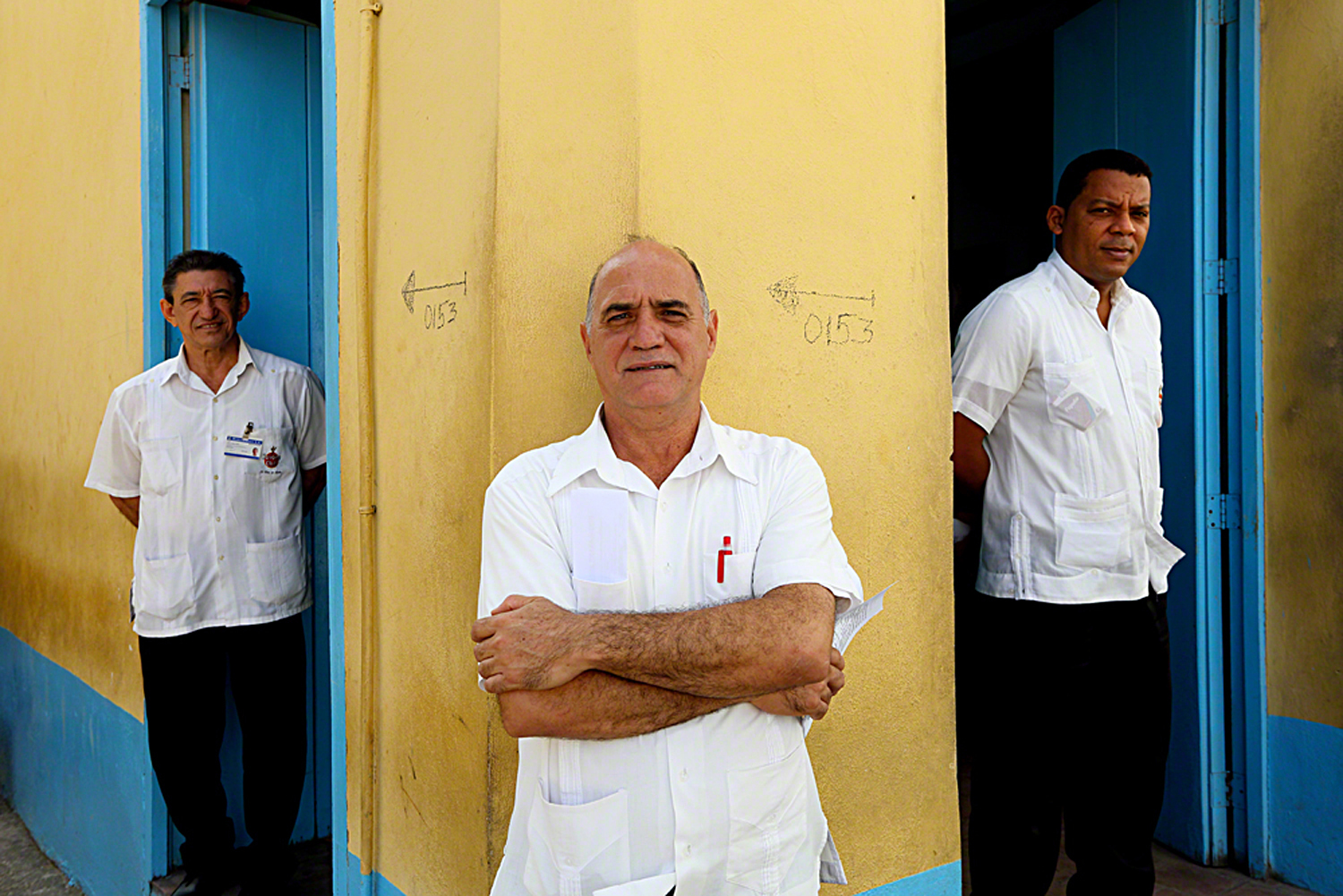
If I’m going to shoot an odd number, the reason will be two-fold: First, and this is about triangles, I like to arrange the subjects or objects in such a way inside my frame as to create a triangle; a visually interesting basic shape. Sometimes I try for an equilateral triangle as shown in the portrait above I took in Cuba of three waiters. Some times it’s an isosceles triangle with only two side equal…this can be implied to the point of being esoteric.

Btw, if I have to shoot an even number of four, I use a diamond as the shape; as in the photo of the four ballet dancers.

This is a good time to tell my fellow photographers why you should only crop in the camera. It’s important to use the edges of the frame as a computational tool. I have often used two of the edges to complete triangles.

When you have an odd number of images, and they are all close to being the same size and weight, the viewer will usually look at each one about the same amount of time, before going back to the one that drew the viewer in first. Btw, this will depend on things like the amount of light each will get. The above photo is a good example of always thinking of shapes.

If one gets more light than the other two, then the viewer will always travel to where the brightest light is first. Color will be another denominator.

Colors near the warm part of the spectrum will get more attention. For example red is bold and the viewer will be more aware of it in your composition.

The other reason to shoot an odd number is to create a line. Line is the most important of all the elements of visual design and without Line, none of the others would exist. You and I, planes, trains, and automobiles would cease to exist…why? Because we all have an outline.

I’ll use my subjects or objects in such a way as to move the viewer around the frame. They are no longer organic or non-organic things, but leading and/or directional lines.

So here’s some examples of odd and even photos. Let me know which of the photos that has an even number are dull and boring:

Visit my website at: www.joebaraban.com, and check out my workshop schedule at the top of this blog. Come shoot with me sometime. On July 30th I begin my 29th year at the Maine Media Workshops. I’ve had the same week since the beginning. It’s the week of the Lobster Festival down the road in Rockland. It offers a completely different set of photo ops than one would expect when coming to photograph the coastline, lighthouses, and fishing villages of Maine. Come join me and spend a week completely immersed in your love for photography.

Don’t forget to send me a photo and question to: AskJoeB@gmail.com, and I’ll create a video critique for you.

JoeB
Food for Digital Thought: Do you believe it?

Do you believe it?
Do you believe it?

Since my background is in painting and design, I still consider myself an artist. I just changed the medium from a brush to a camera and I use my camera to style my photographs; creating my art.

What I mean is I move things around in my composition, or I add things or props if I have them or they’re easy to get on really short notice. I rarely see what I want, I photograph as though my camera was a canvas on an easel, and I take pictures of what I’d like to see.

If moving a chair to the left or right…or taking it out altogether makes the composition stronger then I’m all for it. If the waiter has better light on his face if he’s looking in the other direction then I’ll ask him if he would look the other way…and offer to email him a copy.

This type of picture taking is beyond the scope of those that call themselves purists. It’s not the type of purist whose dogmatic approach to photography means absolutely no digital manipulation after the shutter is pressed; I think I could count them on one hand and still have enough fingers to hold a fork.

The kind of purist I’m talking about is the kind that walks up to a scene and shoots it the way it is and criticizes those that don’t. It would be beneath him to add or subtract something…move a chair or a trash can, etc.

I digress.

So let’s get down to the title of this post, “Do you believe it”….what do I mean?

If you’re like me and you consider yourself a painter whose medium is a camera, which you should, and you want to change something just make sure it looks like you didn’t do anything.

I teach an online class with the BPSOP, and I also conduct my “Stretching Your Frame of Mind” workshops around our planet. I always tell my fellow photographers that when they add something or move something to take a step back and ask themselves if they believe that what they did looks believable; it’s exactly what I do.

For example, you’re in your kid’s bedroom and a shaft of light is falling on the floor next to the window. You want to say to the viewer that it is indeed a child’s bedroom so you put a pair of red high-top sneakers in that shaft of light, and you put them in a perfect position side by side. This is when you take a step back and ask yourself if your kid would really put his shoes that way or would one of them be laying on its side and the other facing the other direction; this is what I mean by do you believe it.

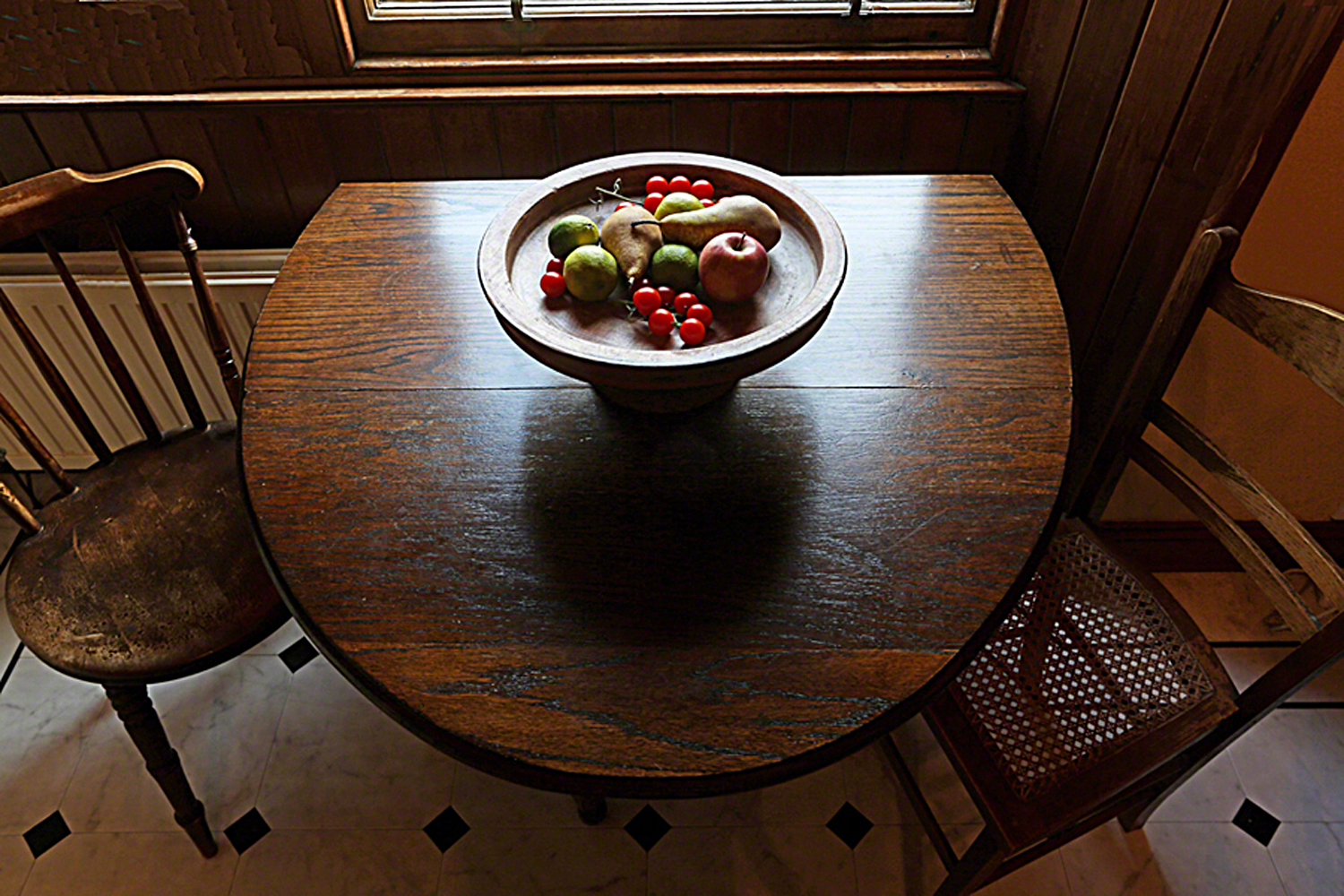
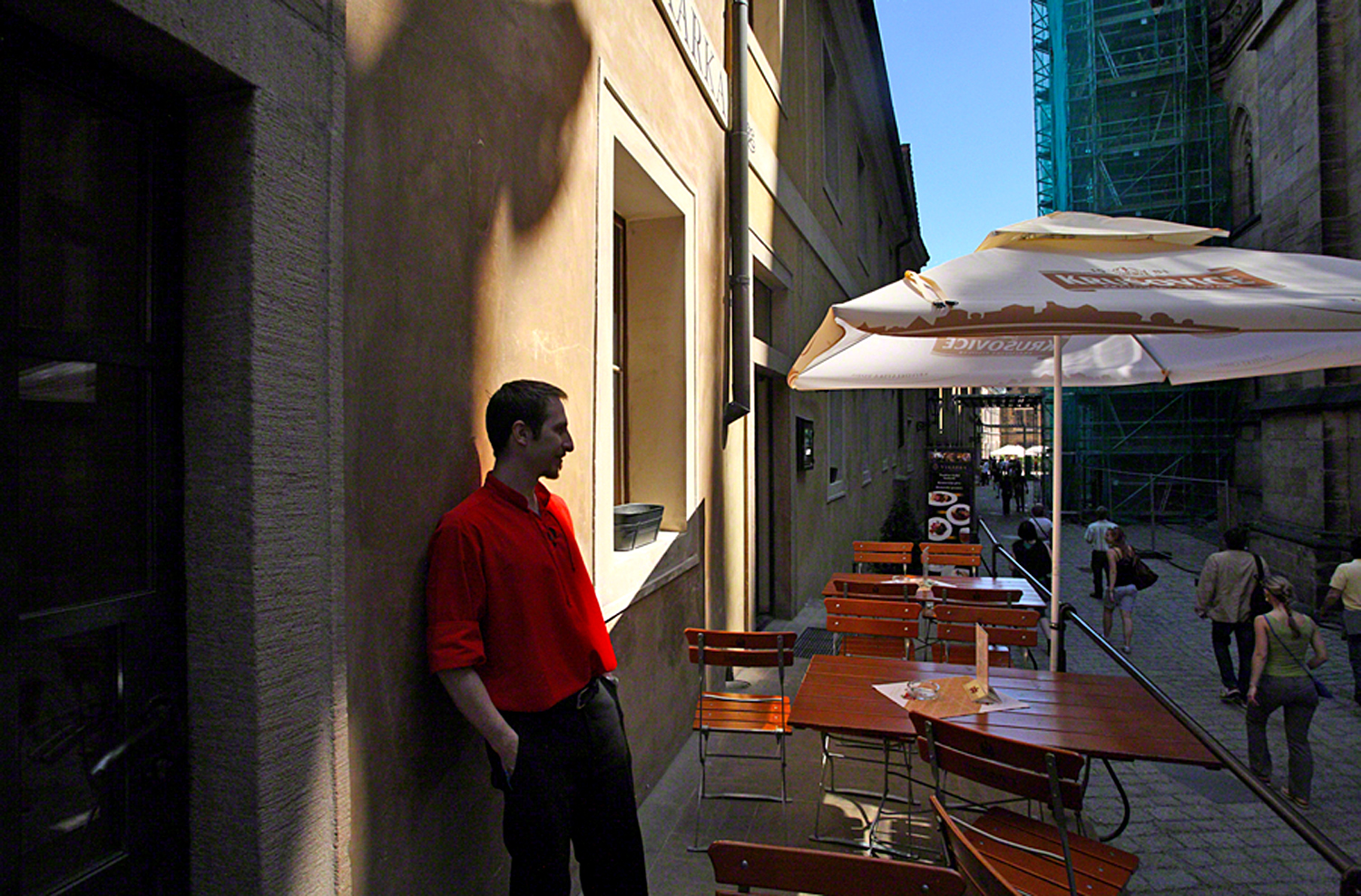
In the above photo, do you believe it? Was it exactly like that when I walked into the kitchen or did the artist in me paint it differently than the way I was actually seeing it? How about the waiter in Venice?

Do you believe it?
Do you believe it?

Do you believe he just happened to be standing there?

One last note, The same goes for any post-processing I might do to one of my images. Before I hit save, I lean back and look at it through the eyes of the viewer…I then ask myself would he believe it.

Visit my website at www.joebaraban.com, and check out my workshop schedule at the top of this blog. Come shoot with me sometime.

JoeB

Food For Digital Thought: Dealing with Distortion Part II

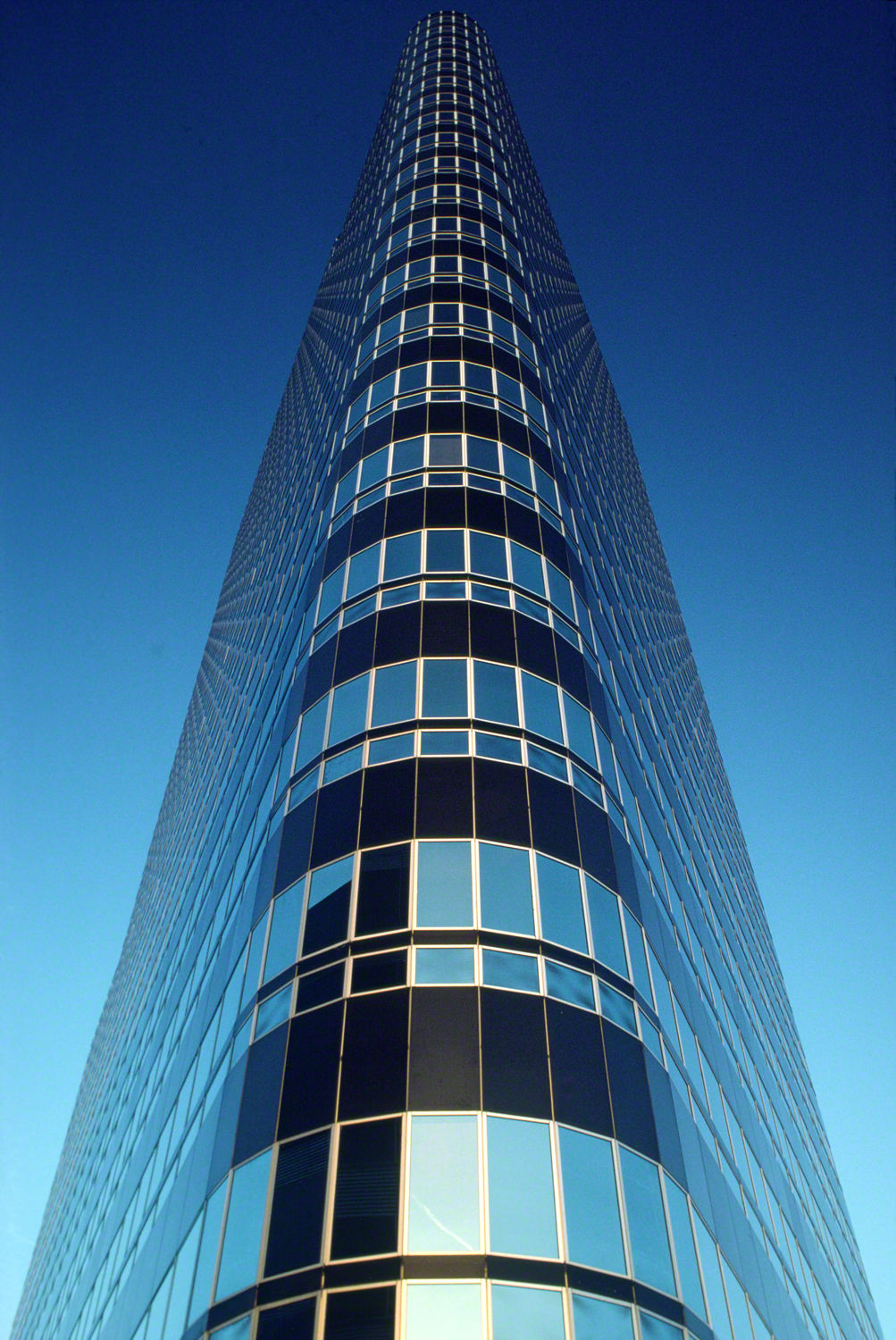
I see three triangles with the help of the edges of my frame.

In my latest part I post, I was dealing with distortion. I talked about the difference you get when you stand off to one side or the other while photographing a building, or standing in the middle of it to achieve symmetrical distortion.

In this post I want to talk about the entire composition; thinking about everything that’s contained within the four edges of your frame. I’m talking about both the positive space (the space that has mass), and everything else that would be called the negative space. I call it,  “The whole enchilada”, and several years I wrote a post on it.

When I talk to my online students at the BPSOP, and in my daily critiques with those that take my “Stretching Your Frame of Mind” workshops I conduct around out planet, I talk about why we shouldn’t crop anywhere but in the camera.

There are several reasons, one of them is to use the edges of your frame as a compositional tool.  If you’re familiar with my teachings, that is incorporating the elements of visual design into your photography, You know that shape is one of the basic elements, and squares, circles, rectangles and triangles are the four basic shapes.

If you were to think about those four shapes when you’re composing one of your photos, it would open up a new door for you as far as creating visual interest and tension. Of course, this would take right-brained thinking to be able to see these elements.

Keeping in mind what I just talked about in my part I post on symmetrical distortion, and add to that thought this post on shapes, and using the edges of the frame as a compositional tool, you’ll come up with images as the one I submit to you now.

In composing this photo of an office building in the Galleria area of Houston for the oil company that took up several floors, I thought about shapes; specifically triangles. By using the right side of my brain, I no longer saw a building (left brain thinking), I saw a triangle. I thought about  the triangle I was creating with the building by standing (up close and personal) in the center, and the two triangles I created on either side all with the help of the edges of my frame.

So my fellow photographers, the next time you go out shooting, think about the effects of negative space that borders and defines the positive space ie., your subject, and try to create shapes wit

Visit my website at: www.joebaraban.com, and check out my 2017 workshop schedule at the top of this blog. Come shoot with me sometime.

Send me a photo and question to: AskJoeB@gmail.com, and I’ll create a video critique for you.

JoeB
Food for Digital Thought: Form

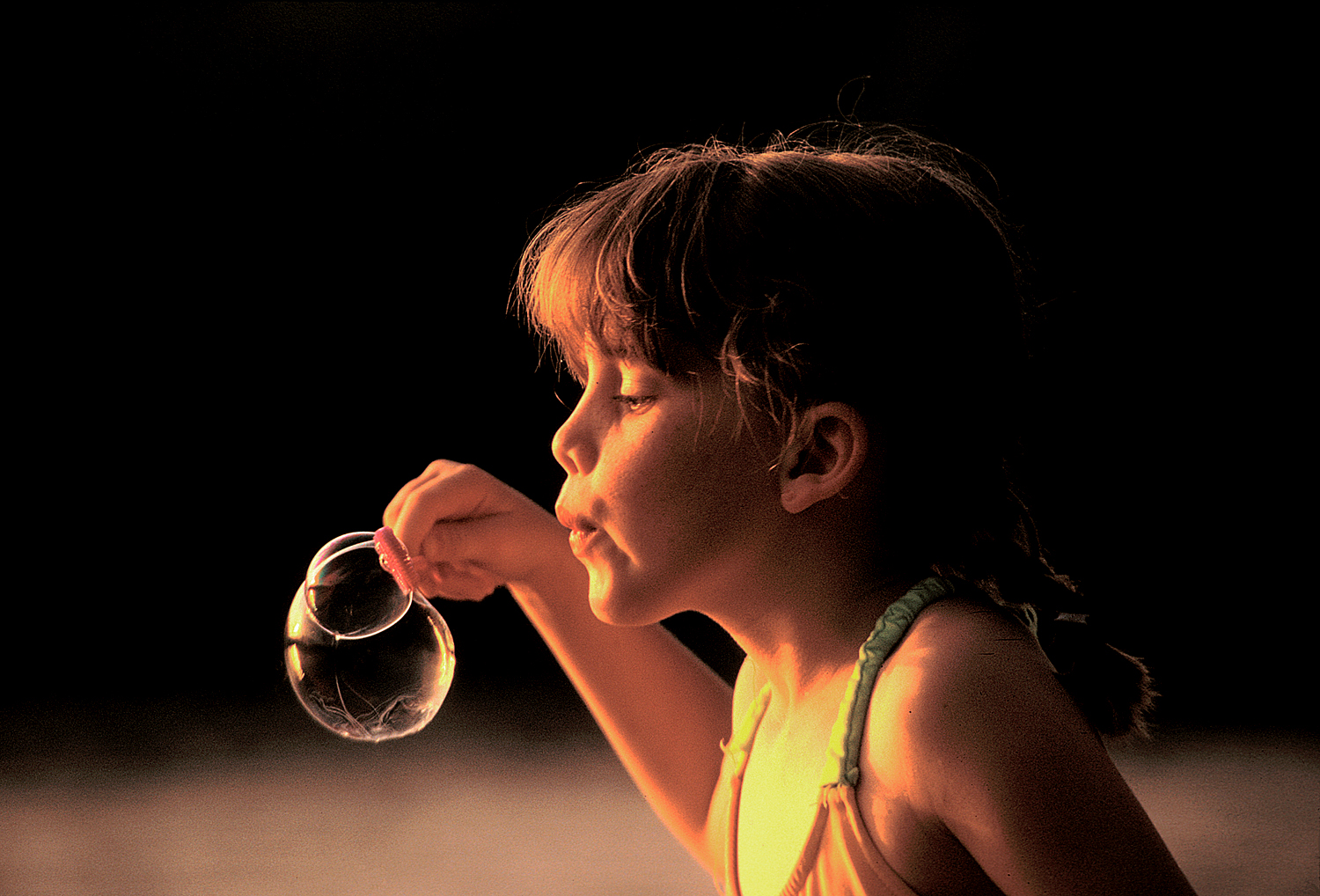
Light from 9:00 O’clock

My background is not in Photography, rather in Art. Up until I was twenty-0ne I had either a colored pencil, brush, or a piece of charcoal in my hand.

I studied just about everything there was to study as far as courses in art were concerned. Throughout my years of study, I was always interested in the elements of visual design, and how they made a drawing or painting stronger.

When I changed the medium to a camera, those elements came with me, and now as I help students in my online class with the BPSOP, and in my “Stretching Your Frame of Mind” workshops I conduct around the planet become stronger photographers, these same elements play a key role in developing their eye.

One of the elements of visual design that I talk about is Form. To many of my fellow photographers, Form can be taxing and difficult for photographers to capture, although if you pay attention to where the source of the light is, it’s really quit simple.

Form simply refers to the three dimensional qualities of an object. Since the camera has just one eye, it can only see in two dimensions…height and width. Where the light is coming from is critical in creating the third dimension, depth.

Light from 3:00 o'clock
Light from 3:00 o’clock

To best create the illusion of depth, the light should be coming in from the side. On my imaginary clock, for straight sidelight the light needs to coming from either 9:00 o’clock or 3:00 o’clock.

Value refers to the lightness and darkness of an object, and it defines Form. I talk mostly about the sidelight on a subject or even a landscape, but what you also have to consider in sidelight is the shadows that will be created. The soft to strong contrast within a composition will also define the limits where the  highlights and shadows edges are placed.

It’s the shadows that give the illusion of depth, and as I always tell my students, shadows are your best friend.

Visit my website at: www.joebaraban.com, and check out my 2016 workshop schedule at the top of this blog. Come shoot with me sometime. The end of July marks my twenty-eight year at the Maine Media workshops. It’s a wonderful way to immerse yourself for a week and think about nothing but photography. It’s the same week as the Lobster Festival down the road in Rockland, and offers a completely different set of photo ops than the beautiful Maine coastline, amazing lighthouses, and quaint fishing villages. The full description is at the top of this blog.

The Los Angeles Center for photography has invited me to come out and conduct a three day intensive workshop over the July 15th weekend. I’ll be making a presentation of my work on Thursday July 14th and the public is invited. The full description can be see at the top of this blog, with a link to the site. I hope to spend the weekend with all of you.

I have added a new workshop to my 2016 schedule. On September 21st, ten photographers will get together with me at my evening “meet and greet” to begin a fantastic five-day workshop in New York, New York. Check out my description at the top of this blog. Come shoot with me.

Send me a photo and question to: AskJoeB@gmail.com, and I’ll create a video critique for you.


Food For digital Thought: More on Proximity.

This is a follow-up to my first post on one of the concepts of Gestalt I teach  in one of my three online classes with the BPSOP, as well as in my “Stretching Your Frame of Mind” workshops I conduct around the planet This concept is called Proximity and if used in your thought process, it will help you make stronger more memorable photos.

Besides what I talked about in my first post, another way Proximity can make your images stronger is by grouping your subjects together so that a relationship or common bond is created. Research suggests that the viewer prefers to see similar objects grouped together, and by placing objects close together you will be offering the viewer an explanation of the message you’re trying to get across.

One example is when you purposely arrange the elements of your composition so that they relate to one another and becomes a visual unit.

We all love repeating forms, shapes and colors, and if you can include these in your grouping, it will create a pleasing rhythm and a sense of unity that will keep the viewer around longer. Another good example is watching a flock of Geese fly overhead. I, for one, find it visually interesting and will usually watch them until they become dots on the distant horizon.

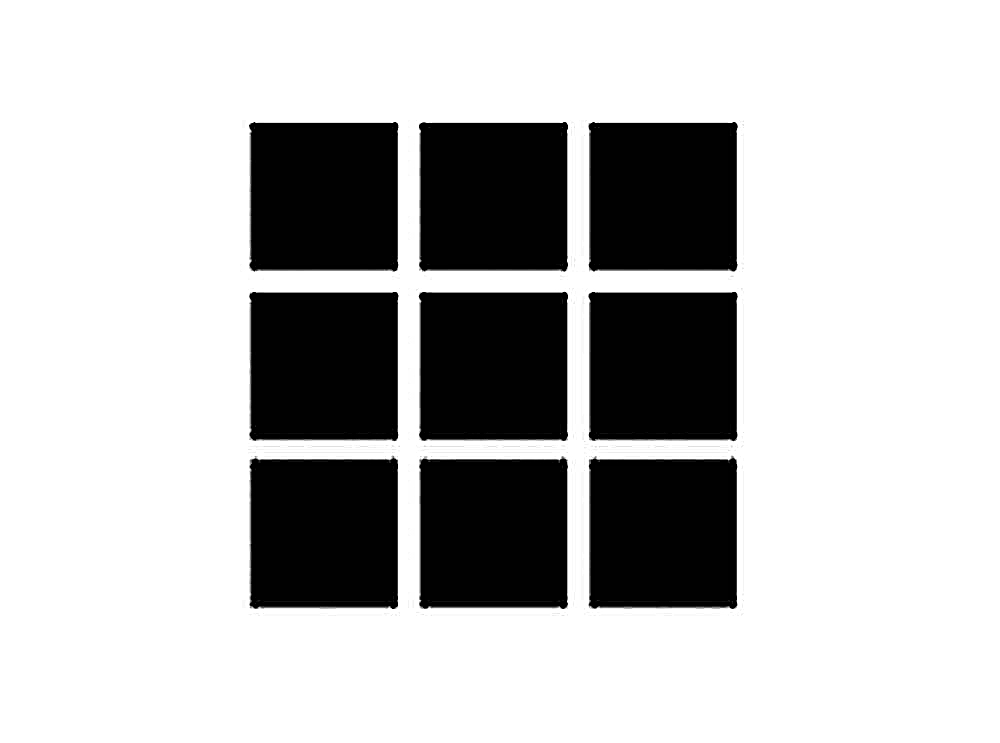
 A well known set of diagrams will show you how it can work in your favor. In diagram (1), you see the nine elements scattered around and although they all look alike there’s not a visual bond between them and they are perceived as nine similar squares. In diagram (2) by placing the nine elements together, they form one big square and are perceived as one unit.

Diagram (2)
Diagram (2)

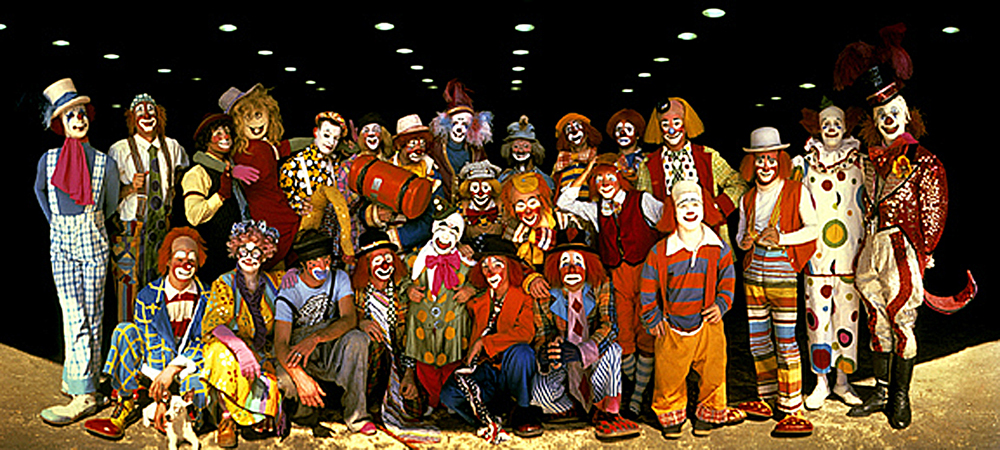
In the above photo, my goal was to have the viewer perceive this group portrait of all the clowns of Ringling Brothers & Barnum& Baily Circus as one unit. I also shot them with a 35mm Widelux panoramic camera so I could get close while getting them all in.

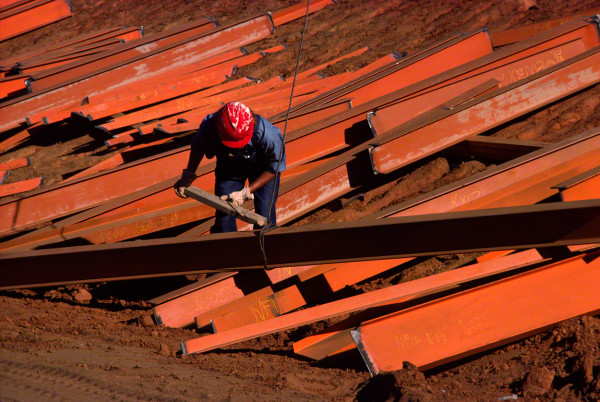
Here’s some more examples:

So, the next time your out and about, consider this concept in your composition. I think you’ll find it a big help in taking your photos what I always call “up a level”.

Visit my website at: www.joebaraban.com, and check out my 2016 workshop schedule at the top of this blog. come shoot with me sometime. In conjunction with the Santa Fe Workshops, I’ll be leading a group to Cuba for the third time next March. Come join me in what I’ll guarantee you to be an amazing experience, and you’ll return home with memorable photos from a wonderful country.

Don’t forget to send me a photo and question to: AskJoeB@gmail.com, and I’ll create a video critique for you.

JoeB
Food For Digital Thought: Copyright Protection

Registered and released

I’ve been an advertising and corporate photographer for forty-eight years, and in that time, I’ve had my share of legal problems over the unauthorized use of my images. For some incredible reason, people think that they can just come and take my photos for their own use and not pay for them. Since I’ve spent the majority of these years in film, it was a constant issue, and one that was very hard to find out about.

I had to see my photo in a magazine, a brochure, on a billboard, or for a second on the television. The only other way was to have someone (usually another photographer) recognize my shot and call me to let me know. I once was sitting at a light and glanced over to a bench next to a bus stop and saw a photo that I knew a friend of mine had taken. I decided to call him and “lo and behold,” he knew nothing about it.

In my online class with the BPSOP, and in my “Stretching Your Frame of Mind Workshops” I conduct around the planet, I’m always telling my fellow photographers that putting a ‘C’ in a circle next to your name not fully protect it.  People always think it does, but I have some bad news for you…it doesn’t. Your image has to be registered with the Library of Congress to even be able to sue for infringement. Not only does it have to be registered, but if it was not registered before the commencement of the infringement, you will be severely limited in how much you can recover from settlement or suit.

Because most infringements of photographs involve an advertising use – and it’s virtually impossible to prove the amount of profits “attributable to the (advertising) infringement” – if the image is not registered prior to the infringement, you can only recover the license fee you could have charged for the use in an “arms-length” transaction. Compare that recovery with what you can get if registered before infringement; statutory damages of up to $150,000 per work infringed plus attorneys’ fees, expert witness fees, court costs and interest.

I was teaching at the Julia Dean Workshop in Hollywood and made a comment on the size one of my students had embedded her name and copyright mark on her submission for review. It was too large and quite distracting. Another of my students asked me if I had ever heard of a company called Digimarc. I said I hadn’t so he proceeded to fill me in on what is proving to be one of the best pieces of advice ever given to me in my long career.

Digimarc offers a way to protect your image with an invisible embedded watermark;a very simple and subtle way to help identify infringers of your image. The real beauty about using Digimarc is that they will monitor your images by continuously searching the internet (worldwide} for any infringement of your copyright. For more information, you can click on the Digimarc logo seen on this blog. Btw, I receive no monetary compensation if you register. I do it as a professional courtesy to my fellow photographers.

For this post, I’ve called on my attorney to make a statement about his experience on Copyright issues. Dana LeJune is a Houston based lawyer who is one of the foremost authorities on the current issues involving copyright infringement. Here’s what he had to say:

“Copyright infringement in the areas of music, film, photography, and architecture is at an all-time high. Home builders are hiring draftsmen (usually, licensed architects won’t risk it) to redraw house plans, ad agencies are downloading images from Google, or scanning them from magazines, and teens are using file-sharing to pirate popular music every day, in every part of the country.  Because litigating such a case can be very expensive for the copyright holder, the contingent fee arrangement may make prosecution affordable for the “little guy.”

Here’s what you need to understand: if the work was not registered before the infringement began, the potential recovery is often insufficient for the lawyer to pursue using the contingent fee arrangement. Without the ability to recover statutory damages and attorneys’ fees, and because of the likely inability to prove what profits were attributable to the infringement (in an advertising use), most lawyers will decline to accept the case.

The moral of the story is, REGISTER YOUR WORK REGULARLY. Photographers have a special prerogative to register their works, en masse, so there’s not a huge financial disincentive. Just make sure to list the name of each photo in the registration separately, even if on an attached list. This way the single registration for several hundred images will (probably) permit the recovery of multiple statutory damage awards for a single registration.

If you have any questions that are not answered by my website, www.copyrightsuit.net, I don’t charge for telephone consultations, so don’t hesitate to ask me a question. You may also email me at dlejune@triallawyers.net. Good luck and wealth for the rest of 2015 and 2016.”

That’s pretty sound advice, and it comes from someone that knows what he’s talking about. If you find that someone has used your photo without authorization and it was registered, calling my attorney would be an excellent idea. If it wasn’t registered, it wouldn’t be. Registering these days has been made as easy as it gets, and you can do it online with the Library of congress. There’s people that actually talk to you if need be.

Visit my website at: www.joebaraban.com and be sure tyo check out my 2016 workshop schedule at the top of this blog. come shoot with me sometime.

Keep sending in your photos and questions to: AskJoeB@gmail.com, and I’ll create a video critique for you.

JoeB
Food for digital Thought: The Etymology of “Photography”

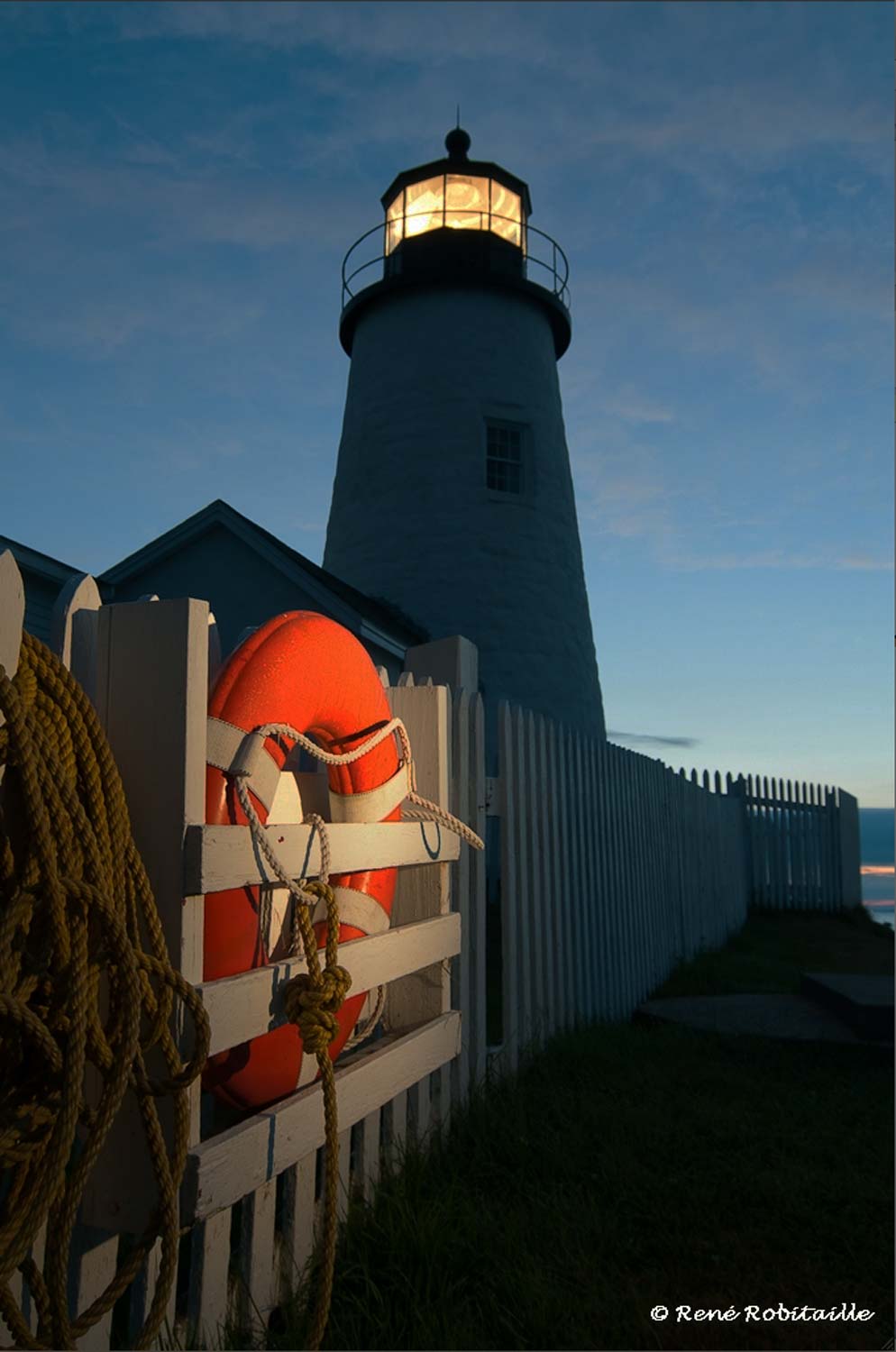
Rene painted with light.

One of the biggest areas we work on in both my online class with the BPSOP, and in my “Stretching Your Frame of Mind” workshops I conduct around our planet, is the use of light.

To me light is everything, and the cornerstone to creating memorable photos. Unless you’re street shooting where capturing the moment is so important, and is the only thing that can trump light, light (as I just said) is everything.

The word Photography comes from the Greek roots that means “drawing with light”. Although this can mean different things in different applications,  I want to center my attention to one area that really is about drawing with light; the use of a flashlight before the sun comes up and after it’s gone down; “Light Painting” is what it’s referred to.

I don’t mean any old  flashlight, I mean one that’s powerful enough to throw a beam (in spotlight mode) up to 200 yards. The flashlight I use is made by Red Line and is about six inches long and has an output of 300 lumens. It also works on regular batteries.

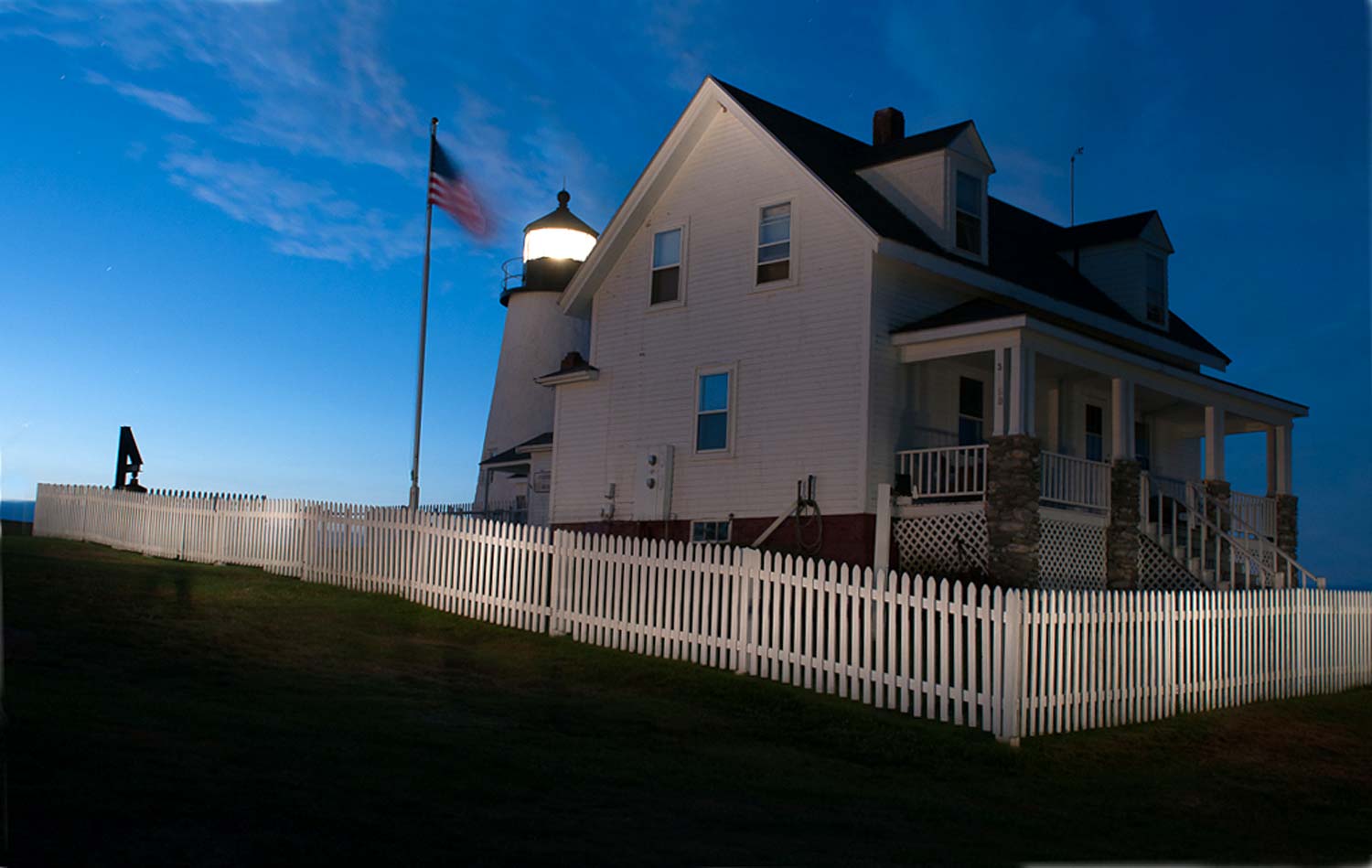
A great example of how you draw with light can be seen in the above and below photos.It was taken by a student of mine that was taking my Maine Media Workshop. Every year I take the class to Pemaquid Point Lighthouse, and it’s become a tradition. We arrive there an hour before the sun comes up so we can get a nice glow behind the lighthouse but not any direct sun.

Everyone sets up where they wanted, and opened their shutters. While their shutters were opened, I walked around with the flashlight and literally painted the building for them. When the sun comes up, the class starts shooting in the early morning light.

Painting with light.

Afterwards, we all go to Moody’s Diner, and breakfast is on me.

My Maine Media Workshop is coming up on July 26th, and it will be my 27th year there. I’ve always picked this week as it’s the week of the Lobster Festival down the road in Rockland.  It offers a completely set of photo ops than the beautiful coast of Maine, the fishing towns, and lighthouses: light, design, color, motion, energy, people watching and portraits. Here’s a couple of links to past Maine workshops to show what my fellow photographers shot during the week:

https://joebaraban.com/workshop-stuff-2014-maine-media-workshop/

https://joebaraban.com/2013-maine-media-workshop/

Visit my website at: www.joebaraban.com and be sure to check out further workshops as they come up.

Keep sending those photos and questions to: AskJoeB@gmail.com, and I’ll create a video critique for you.

JoeB
Food For Digital Thought: When Do You Need a Release

He made it real easy for me...no release required!!!
He made it real easy for me…no release required!!!

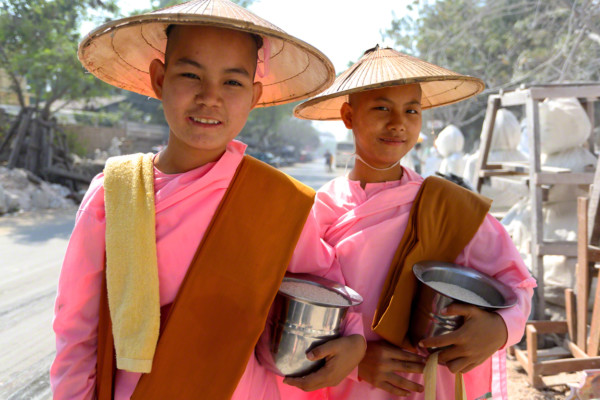
I’ve been asked several times by my online students with the PPSOP, my “Stretching Your Frame of Mind” workshops I conduct around the planet, and several of you that had ask me on my blog as to when you need a model release.

The following is an article I had Dana Lejune (http://www.triallawyers.net/, my attorney, write for my blog. Since he’s an expert on the subject, I thought it would be great for you to read it straight from him. I guarantee you that what he says is the Gospel and can be taken to the bank. It might be a little long, but you know how lawyers are!!!

Here’s what he had to say:

“These days, it is commonplace to view photographs in newspapers, websites, and magazines depicting everyday people in a bustling city square, busy airport, or crowded stadium. Most will look at such pictures without a second thought. However, this might make one wonder if all the people in these photos are aware they are forever encapsulated in a stranger’s photograph. More importantly, how would they react if they were to find out? If a photographer isn’t careful, he can be held liable for violations of the laws governing invasion of privacy. This area of the law can be vast, encompassing common law, constitutional law, statutory law, and international law. However, this article will focus on three specific types of privacy incursions, which photographers must consider in their art: (1) Intrusions and harassment in the course of photography in public places; (2) The dissemination of misleading or false information; and (3) the appropriation of name or likeness.

Intrusion upon seclusion: One who intentionally intrudes, physically or otherwise, upon the solitude or seclusion of another or his private affairs or concerns, is subject to liability to the other for invasion of his privacy, if the intrusion would be highly offensive to a reasonable person. A claim for intrusion upon seclusion requires the matter into which there was an intrusion is of the kind that is entitled to be private, and is kept private by the plaintiff. This comes down to what the average person views as a matter of one’s private business. Photographers shooting in a public place will generally be shielded from this cause of action. The courts have determined anything visible in a public place can be recorded by means of a photograph since this amounts to nothing more than giving publicity to what is already public and what anyone would be free to see.

Simply put, there is just no reasonable expectation of privacy in apublic place, which would lead an objective viewer to weigh a plaintiff’s interest in privacy over a photographer’s interest in shooting there. So an individual who spots himself in a magazine advertisement walking to work on a crowded city street, generally should have no cause of action against the photographer.

False Light: A photographer who gives publicly to a matter concerning another that places the other before the public in a false light is subject to liability to the other for invasion of his privacy, if: (a) The false light in which the other was placed would be highly offensive to a reasonable person, and (b) The actor had knowledge of or acted in reckless disregard as to the falsity of the publicized matter and the false light in which the other would be placed. False light invasion of privacy can be, and often is, compared to defamation. However, there’s a few major caveats which differentiates the two. First defamation only requires “publication,” which means that the communication merely requires communication to another person. False light, on the other hand, requires “publicity.” This means that in order to be successful in a false light suit, the plaintiff must show there was a wider communication of the information to the public at large.

Additionally, a key component to false light is the manner in which an individual is depicted, not what is actually stated. That is to say, the photographer doesn’t have to actually make a false and defamatory statement to be liable. A photographer could be liable for false light so long as a reasonable person would insinuate a highly offensive false impression. For example, often certain religious fundamentalist photographers will take pictures of men walking near massage parlors or adult entertainment clubs. These photographers could be liable for false light invasion of privacy, if one of these men subsequently loses his job or gets divorced as a result of the publicity of this image.

Despite the damaging consequences such acts can have on an individual, false light remains the least-recognized and most controversial aspects of invasion of privacy law, and many jurisdictions do not recognize this cause of action at all. While photographers should be aware of false light invasion of privacy; in many jurisdictions, including Texas, a photographer cannot be held liable for merely depicting another in a false light in a photograph.

Appropriation of name or likeness: One who appropriates to his own use or benefit the name or likeness of another is subject to liability to the other for invasion of his privacy. Unlike intrusion upon seclusion and false light, this cause of action surrounds the commercial nature of the photograph. It is only when the publicity is given for the purpose of appropriating to the defendant’s benefit the commercial values associated with the name or the likeness that the right of privacy is invaded. Put another way, there must be something unique or special about the individual’s name or likeness that would result in commercial profit from using his image in the photograph in question.

For example, if a photographer captures a picture of George Clooney standing next to a brand new Ferrari and uses it for an advertisement for Ferrari; the photographer could be liable for appropriation of name or likeness. However, a picture of a local pizza delivery boy doing the same—much less likely.

Example: A group of patrons at a dog-racing park were photographed in the stands, and the park printed the picture in an advertising brochure. The patrons were not identified by name and were not considered celebrities or prominent members of society in any form. The court concluded that there was no unique quality or value in the patrons’ likenesses that would result in commercial profit to the park simply from using a photograph that included them, and their action failed. If you use a photograph for a commercial purpose, it’s a good idea to get a release. However, shots of public scenes will likely fall into the ” no reasonable expectation of privacy” category regardless of its use. It just wouldn’t be practical to try and get 10,000 releases for a photo of a section of a football stadium.

Photographers Must Be Aware of Their Surroundings. Generally, a photographer shooting in public would have scant liability to those who incidentally appear in an image. Nevertheless, photographers should do what they can to protect themselves. A prudent photographer should always carry prepared release agreements, and seek permission to publicize an individual’s face in a photograph.”

Btw, Photos used for education or news stories do not generally require releases because there’s no appropriation issue. However, these uses could become susceptible to false light defamation, or claims for commercial appropriation by a celeb or professional model.  

When shooting children, always have a parent sign a minor release.

Visit my website at: www.joebaraban.com, and be sure to check out my upcoming workshops. I have two spots left for my photo trip (in conjunction with Epic Photo Tours) to Myanmar. This top rated company has been taken groups there for a long time and the testimonials have been outstanding. I’ve had several past students tell me that it was one of the best experiences since they’ve been shooting…a first class adventure.

Don’t forget to send me a photo and question to: AskJoeB@gmail.com

JoeB

Food For Digital Thought: Texture

Information type of texture

In my online class with the PPSOP, and in my “Stretching Your Frame of Mind” workshops I conduct around the planet, I teach my fellow photographers how to incorporate the elements of visual design into their imagery.

One of the basic elements is Texture. Texture, simply put refers to the surface quality of a shape. The use of texture can grab the attention of the viewer, and can be a powerful tool in creating good photographs. There are three kinds of texture: Detail, Drama, and Information.

Detail is just that. By moving the camera in close to an object, the camera records the detail while the actual objects becomes less important. An example would be a close up of a rock formation.

Drama is the kind of texture we see that adds to your composition. In this instance, texture plays a supporting role rather than the principal role as in the detail variety. The color or contrast of this texture is what’s relevant here so it’s important to consider that in your composition. An example would be a large canyon with layers of different colored rock.

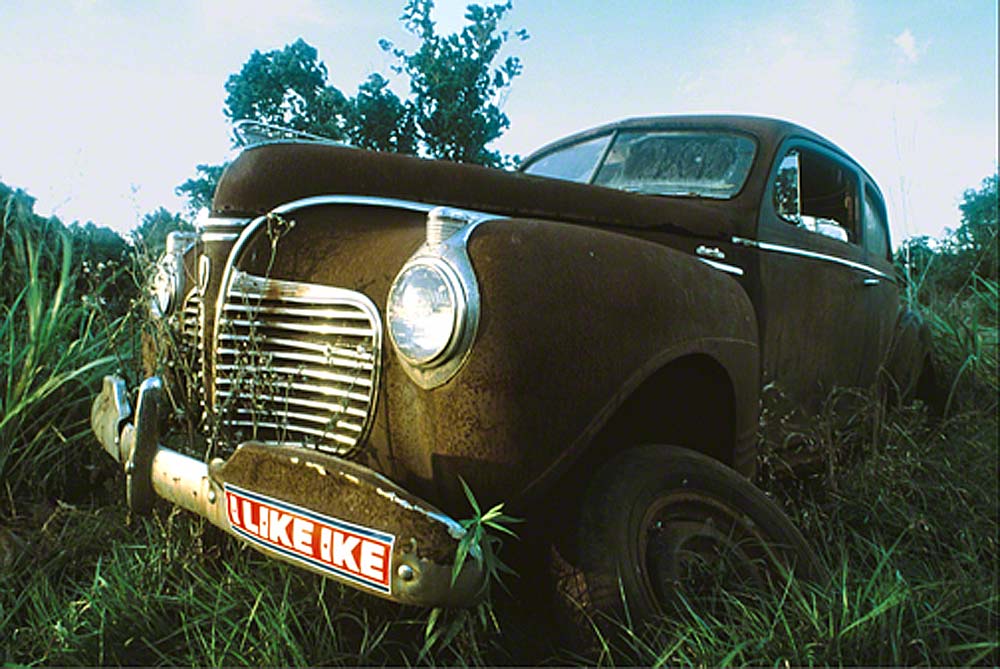
Information is when we utilize this texture to communicate an idea that will enhance the final impact of your image. An example would be an image of a decades old rusty car in the desert (shown above). This texture alludes to the history of which the car was a part of.

We think of texture as prickly, sharp, rough and hard. Texture can also be smooth and cold. Since we were young, texture has been instilled in our thought process. As a result, we’ve been aware of touch: Don’t touch that it’s sharp, don’t touch that it’s wet, don’t touch that it’s dirty, don’t touch that you don’t know where it’s been.

Texture, as an element of design, can best be accomplished during “golden hour’. This is when texture can be viewed as a bolder relief. Late or early light adds richness to texture and saturates the color within it.By using texture, we can make the viewer feel like touching the photograph. It can add realism and character to your images.

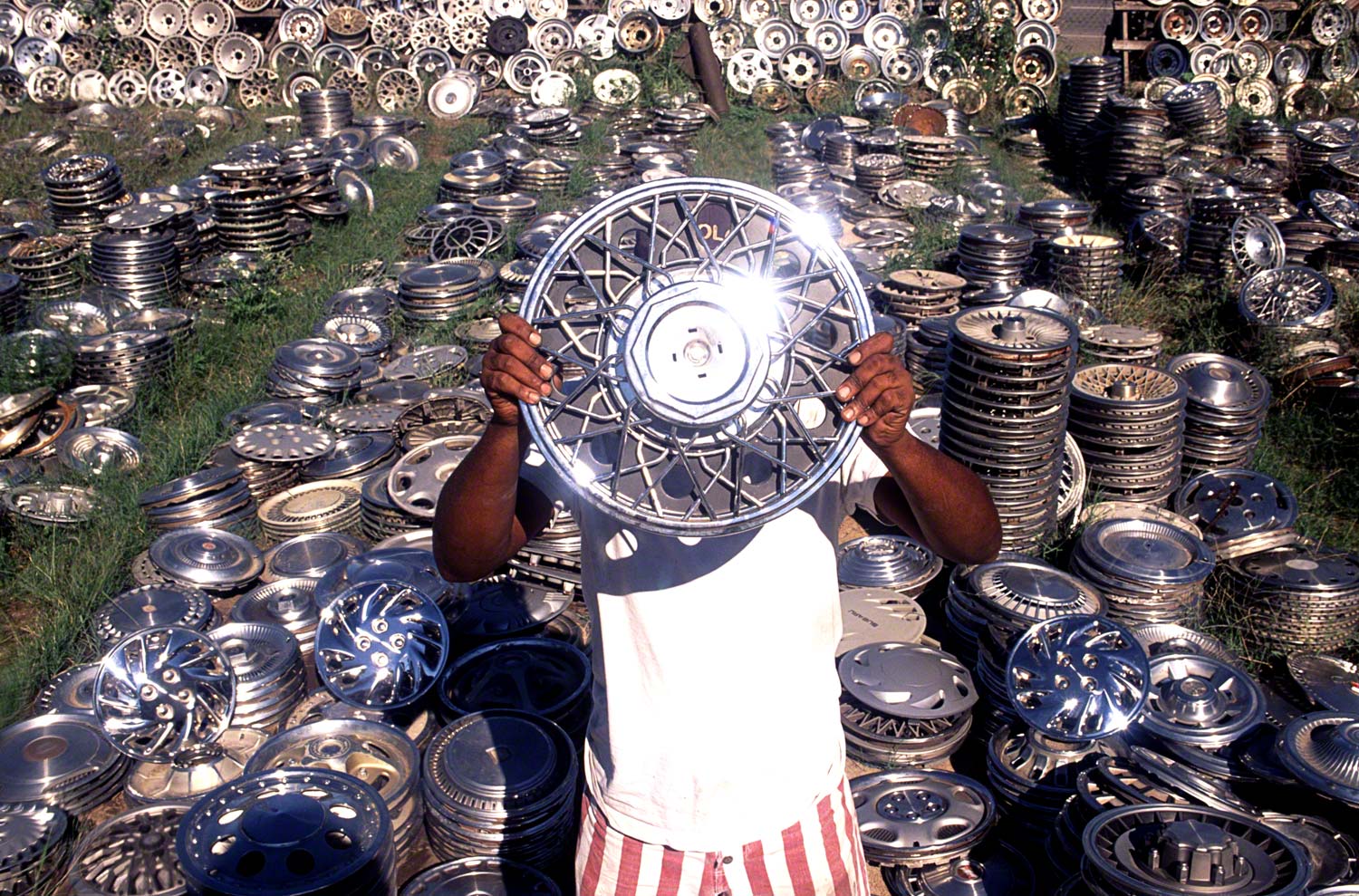
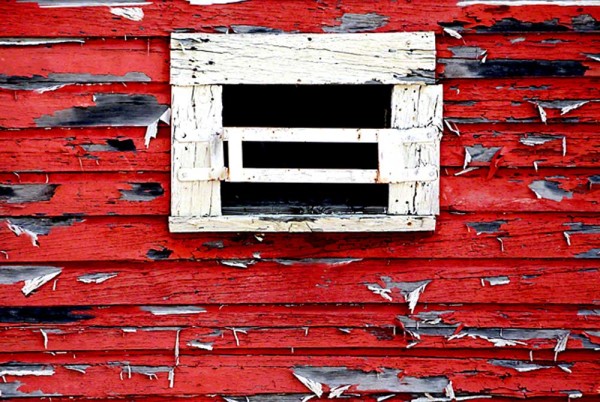
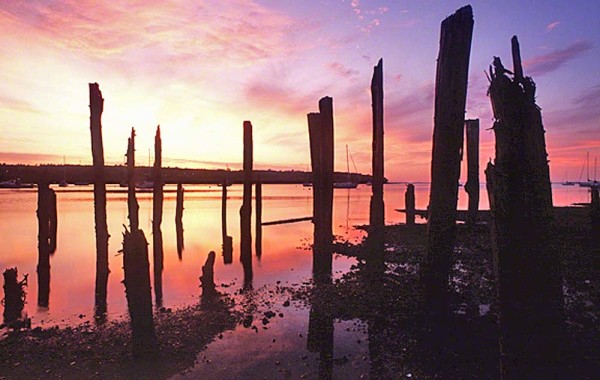
Here’s some examples of Texture…enjoy:

Visit my website at: www.joebaraban.com, and check out my 2014 workshop schedule at the top of this blog. Come shoot with me in Jerusalem September 17th.

Don’t forget to send me a photo and question to: AskJoeB@gmail.com.

 JoeB