Quick Photo Tip: Don’t Underexpose to be Moody
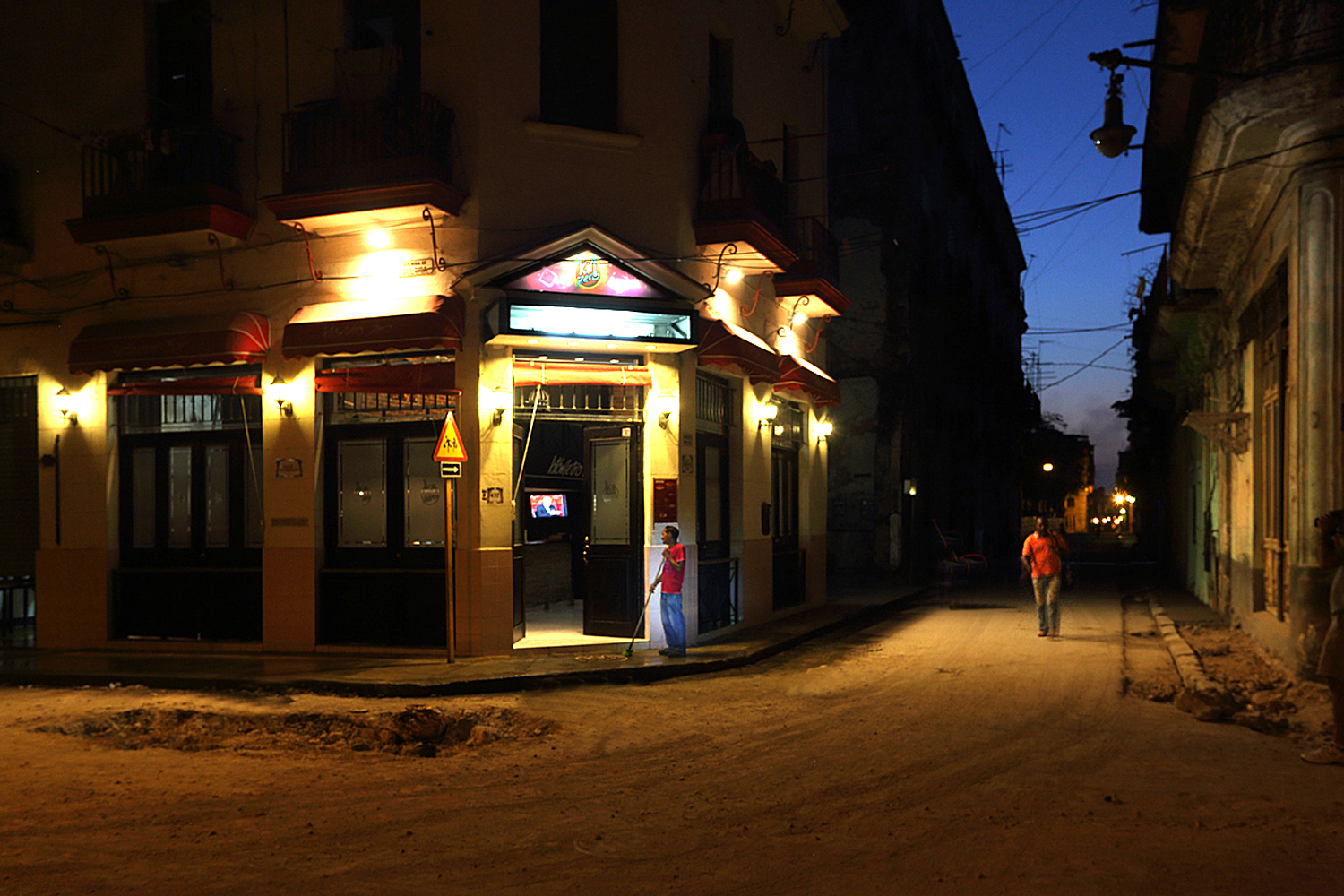
pearl of wisdom

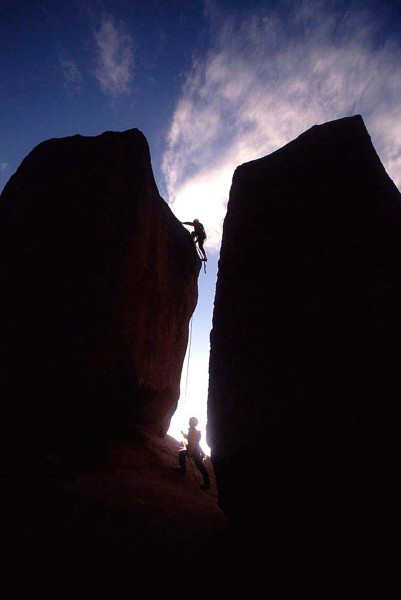
I have found that in my past online classes and also in my “Stretching Your Frame of Mind” workshops I conduct around our planet, so many people think that to create a mood, especially one that pulls at the proverbial “heart strings”, while drawing out an emotional response, you have to underexpose your photos. I mean underexpose to the extent that the viewer has no idea what he’s looking at. My fellow photographers also will try to underexpose a scene that was taken at a time of day where there is no possibility of created the kind of mood they want…as in high noon!!!!!

My answer is always the same, and fairly simple. If you’re trying to take a picture and your message to the viewer is dark and moody, then start out with something that’s already dark and moody and occurring naturally in nature. Or, at least a good start and adding ancillary lighting to finish the job.

OK, you can’t expect to find this happening outdoors naturally if you go out after breakfast…say mid-morning. You also can’t expect to see this if you go out after an afternoon nap and before dinner. If those are the only times you can shoot, for one reason or another, then go indoors where it will be easier to create a mood. This is also a good idea if it’s overcast outdoors…I don’t mean stormy, stormy is good. I mean a midday gray overcast sky.

If you can go out early or late, then it’s going to be a lot easier to pull on those heartstrings and create a photo that’s moody. Look for areas in shadow with little or no ambient light coming in. Or better yet, look for those dark areas that has a little natural light coming in from somewhere out of the frame and hitting your subject.

If you expose for the brightest part of the composition, as in the light falling on your subject, then everything else will be darker and the mood will be forthcoming.

Having said this, if you want a piece of advice don’t rely on the meter in your camera to help; because it won’t. Shoot on manual because the meter doesn’t know that you’re going for a mood. It will read the area in shadow and try to give you some detail in said shadows. If and when that happens, you can kiss the mood goodbye.

Shoot on manual (which is what I’m always preaching to the choir), take control and put your camera on spot metering, and expose for just the highlights. Do that, and you’ll achieve the mood you were after.

Visit my website at: www.joebaraban.com and follow me on Instagram: www.instagram.com/barabanjoe. Watch for my workshop schedule at the top of this blog. Come shoot with me sometime, and we’ll be moody together.

JoeB
Food For Digital Thought: Showing Scale Part II

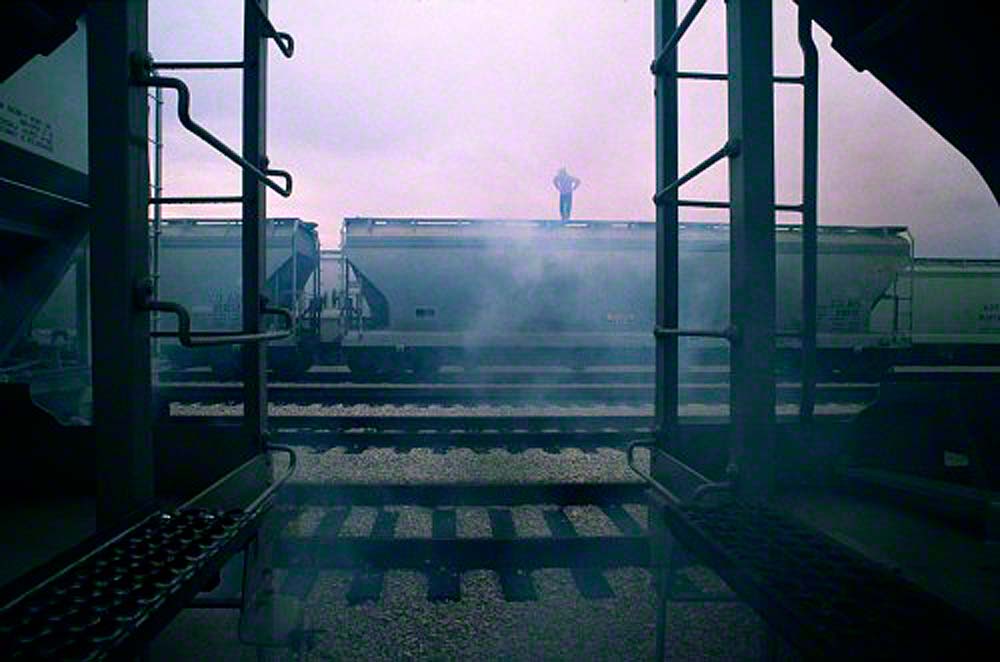
man-on-the-train-car-in-the-fog_DM

This is a continuation of a previous post when I talked about showing scale in a landscape photograph. Since I’m not a Purist when it comes to taking landscape photos, I like to give the viewer a sense of how vast an area is when I look through the viewfinder. For me, it puts things into perspective. It also gives the viewer a chance to discover new elements in my images. For example, a person or object somewhere in the frame that’s not immediately seen. Since I’m a follower of the psychology of Gestalt, I want the viewer to become an active participant in my thought process, and by having him discover new things when looking at my work, he’ll do just that.

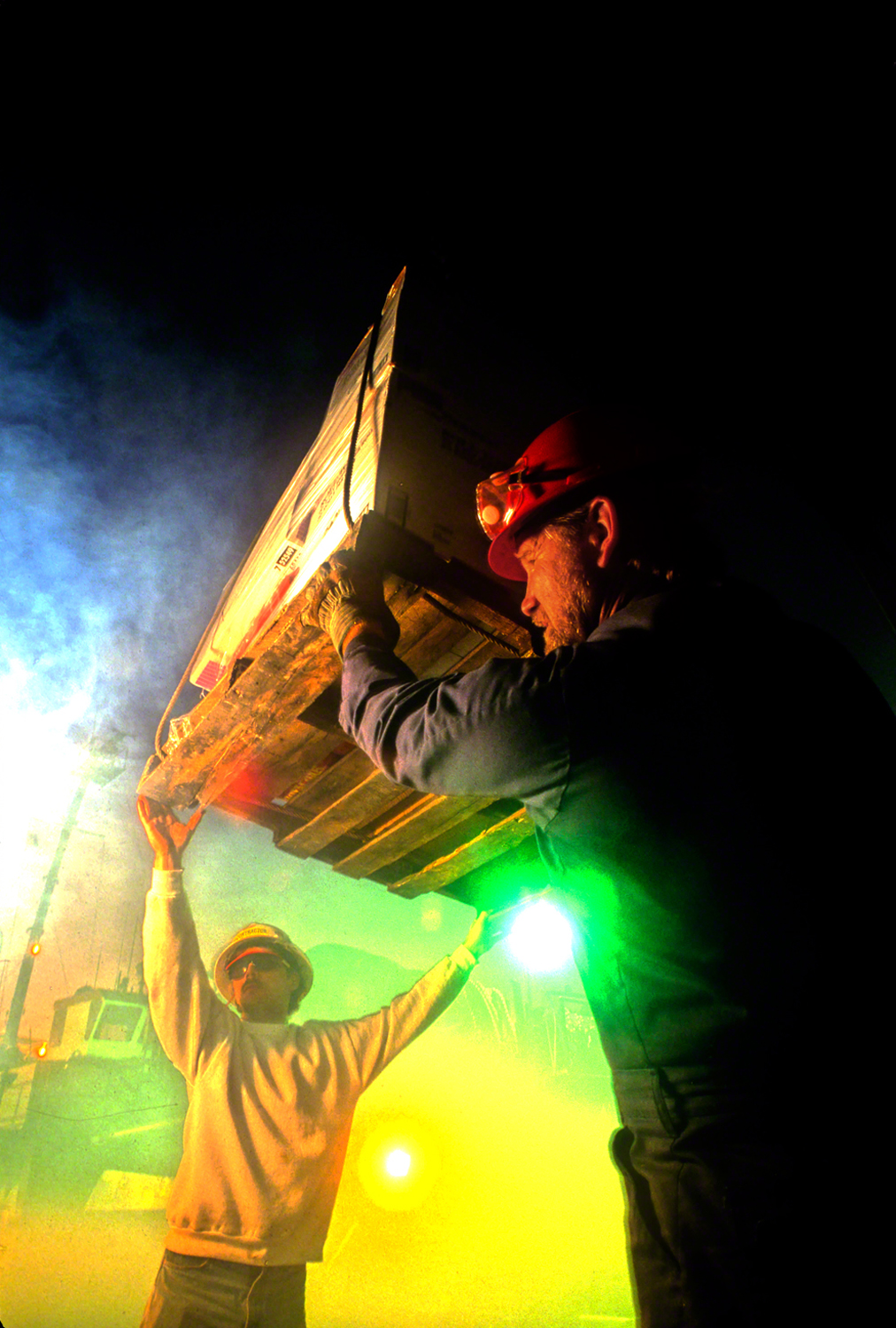
There is another way that I like to show scale in my photos, and that is to show a person or object in relation to something much larger and man made. There’s a dichotomy created when I put a person in opposition to something that’s larger and/or more powerful. Animate verses inanimate. One of the ways to create Visual Tension is to have opposites sharing the same composition, thus competing with one another. The contrast creates energy, and the formula I’ve always given both in my online classes and in the “Stretching Your Frame of Mind” workshop I conduct around the planet is: Tension=Energy.

Besides the visual tension that’s created, the photo takes on an editorial feel by communicating some sort of story. Why is that person doing whatever it is that he’s doing. Why are they there? Where is he exactly, etc.

Here are a few examples of showing scale in a non-landscape environment.

Visit my website at: www.joebaraban.com, and follow me on Instagram: www.instagram.com/barabanjoe. Check out my workshop schedule at the top of this blog. Although I put them up, they fill rather quickly and then I take them down.Come shoot with me sometime.

JoeB
Food for Digital Thought: Dealing with Distortion Part I

Symmetrical distortion

To many of my fellow photographers, distortion is very bad and would rather not take the shot than to have it look distorted; I agree, in part. Having said that, there are times when distortion is not a problem and can actually help you take your image what I refer to as “up a notch”.

There’s two aspects to distortion that I want to talk about in my part one and two posts on the subject, and that has to do within the  architectural  genre, and both come up in my  “Stretching Your Frame of Mind” workshops I conduct all over our planet.

I often get submissions from photographers that have buildings in them, and the majority of the time they are falling/leaning over to one side or another. The most common reason for that is where the photographer decides to take the picture from. Where you stand is very important in keeping the building straight.

If you’re standing off to the right or left of the middle of the building and aim your camera back placing the building in where you think the center of the frame is you’re going to get some form of distortion; and to me it’s not the good kind.

You’re not going to be able to straighten both the vertical and horizontal lines at the same time, you’ll only be able to straighten one of them and there lies the problem. You’re going to have distortion if you tilt your camera up to get the entire building in no matter what; it’s called Parallax Distortion.

What you can do to make it look better is to make the distortion symmetrical by standing right in the middle of the building, as seen in my photo of the First International Building in downtown Houston.

My next post will deal with the second aspect of distortion, so stay tuned.

Visit my website at: www.joebaraban.com, and follow me on Instagram: www.instagram.com/barabanjoe. Check out my workshop schedule at the top of this blog. Come shoot with me sometime.


JoeB
Famous Quotes: One Picture Is Worth a Thousand Words

One picture tells a story.

How many times in your life have you heard this old adage? For me, I’m putting it at a million to be one the low side. I’ve also said it to my online class with the BPSOP and my “Stretching Your Frame of Mind” workshops as many times. One picture is worth a thousand words can fit all types of applications, for all types of people.

The quote has been attributed to several sources throughout the years from a Chinese proverb to Arthur Brisbane, a newspaper editor who said it in 1911. In any event the meaning has really come to light in the digital era as truth in our new transparent culture. It’s now talked about ad nauseam in social media, but the simple fact is that it’s all about being able to (very quickly) convey so much meaning with so little or no explanation at all in one photograph.

For my fellow photographers it especially has meaning since we talk about it in my online class with the BPSOP, and in my “stretching your frame of mind” workshops I conduct around our planet. Just let your image do the talking for you since you’re not going to be around to share your thought process with the viewer. Unless you’re going for an abstract in which case you’re leaving it up to others to see what they want to see, then it needs to be what I refer to as a “quick read”.

If you’re trying to tell a story, then get to it because it’s not easy to hold the viewer’s attention for very long. Imagine that you’re a cinematographer shooting a scene at twenty-four frames a second. Stop the projector and take one frame out and show it to the viewer. That’s what you’re up against when you’re shooting stills and have to portray whatever it is you’re trying to portray in one image…not like motion where you have some time to get the message across. Btw, did you know that one page in a screenplay is equal to one minute on the screen?

The methods we use to gain attention to our photography varies, but what’s important is how we manage what the viewer perceives and processes when looking at the visual information we lay out to him in the form of a photograph. Visual input is a part of our everyday life, and when you’re trying to gain attention, by telling a story, we want to take immediate control of what the viewer sees when contemplating the message we’re putting out.

In other words as the Notre Dame football teams were know for…”rock em sock em” when it comes to telling it in one photo.

Visit my website at: www.joebaraban.com and follow me on Instagram: www.instagram.com/barabanjoe. Watch for my workshop schedule at the top of this blog. Come shoot with me sometime.

JoeB
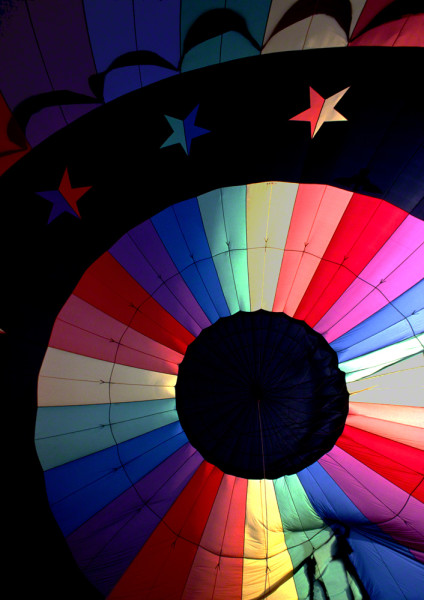
Food for Digital Thought: Color or B/W

It's all about capturing their soul.
It’s all about capturing their soul.

When I first starting my career, right at the beginning of recorded history, I knew nothing about color photography. I had studied painting and design my entire life and almost always worked in color.

However, at the time when I was shooting with my first real camera, a Pentax Spotmatic with a 50mm lens, I was shooting in B/W. The reason being that I was also learning all about photography and how to process my film to eventually make my own prints. Color wasn’t an option even if I did know or think about it…which I didn’t.

In 1971, when I started shooting for UPI, AP, and was a Black Star photographer we shot primarily in B/W, so that’s the way I saw things. Besides at that time I was looking for the moment, that moment that assured me that my photo would be bought ( for ten dollars apiece) and transmitted. Color never entered my mind.

To me, that was the best way to shoot B/W…with B/W film. Now, As I tell people in my online classes with the BPSOP, and in my “Stretching Your Frame of Mind” workshops I conduct around the planet, if you’re going out with the intention of shooting B/W, then either look for the action and capturing it or look for the ten different tones that’s between white and black.

As I’ve told my fellow photographers, my background is in painting, drawing, and design. One of the exercises I remember is completing the grayscale with white and black tempera paint. I had to start out with a block of white and by adding a little black at a time get to black in ten steps. We referred it to: 10% of black, 20%, 30%, 40%, 50%, etc. until we got to 100%…pure black right out of the bottle. You might try it sometime. It will help you better understand how we perceive our environment around us without any color.

Contrast will be so important when composing, and you’ll want to have areas of pure white and areas of pure black..as well as the complete tonal range. It takes some getting use to if you’ve never thought that way, but in the long run, I think your images will turn out much stronger than just sit in front of the computer and deciding to convert a color image.

My  B/W image is from those early days when I only thought in B/W. Unfortunately it’s a digital files so it’s lost a lot of the real beauty it had when it was a print.

Btw, Ted Grant, a Canadian photojournalist once said, “When you’re thinking and shooting in color you’re photographing their clothing, and when you’re shooting in B/W, you’re taking pictures of their soul”.

Visit my website at: www.joebaraban.com, and follow me on Instagram: www.joebarabam.com/barabanjoe. Check out my upcoming workshop description at the top of this blog. Come shoot with me sometime.

JoeB
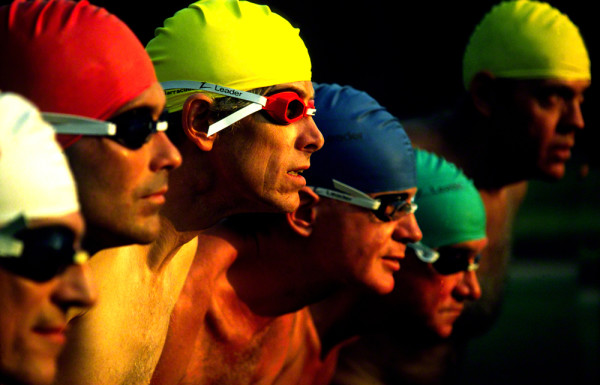
Food For Digital Thought: How I Apply the Use of Gestalt in my Photography

Do you see a triangle?

Circles, squares, rectangles and triangles are the basic shapes, and Shape is one of the elements of Visual Design. When you create photos using these shapes, they will definitely take your pictures what I refer to as “up a notch”. In my “Stretching Your Frame of Mind” workshops around our planet. One of the areas I also cover is on the Psychology of Gestalt, and one of them is called Closure, and it’s about letting the viewer fill in the missing pieces you’ve laid out in the form of a puzzle.

Where am I going with this? Think about combining what’s learned in my workshops far as the triangle is concerned with what you learn in my Gestalt class as far as Closure is concerned and you have the gist of what goes through my thought process when I’m making my pictures.

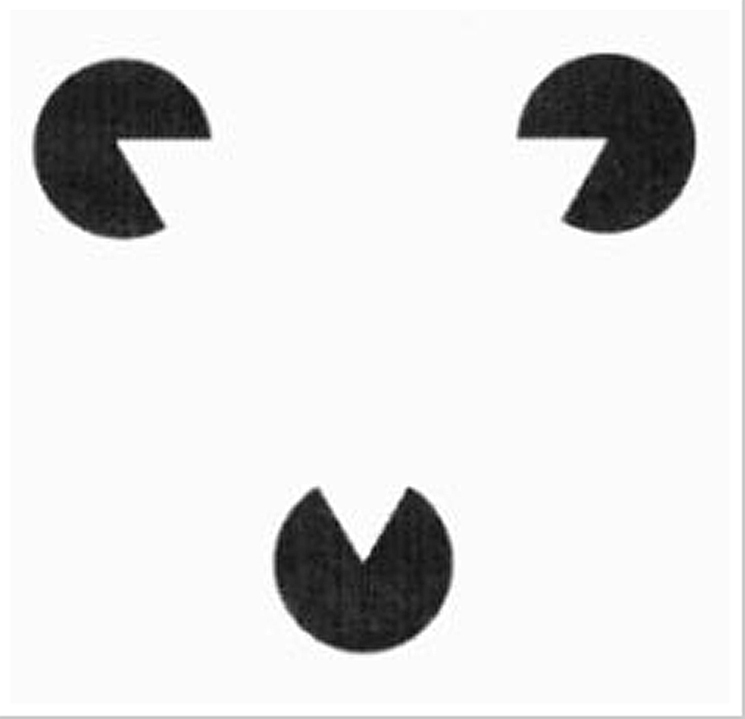
What I mean is this: I show my fellow photographers a series of diagrams I’ve collected over the past thirty years, that I’m always thinking about when I’m out shooting. One of them I call my PacMan diagram, and it’s to show how we can fill in the missing pieces whether it be in a diagram or a photograph.

Do you see a triangle?

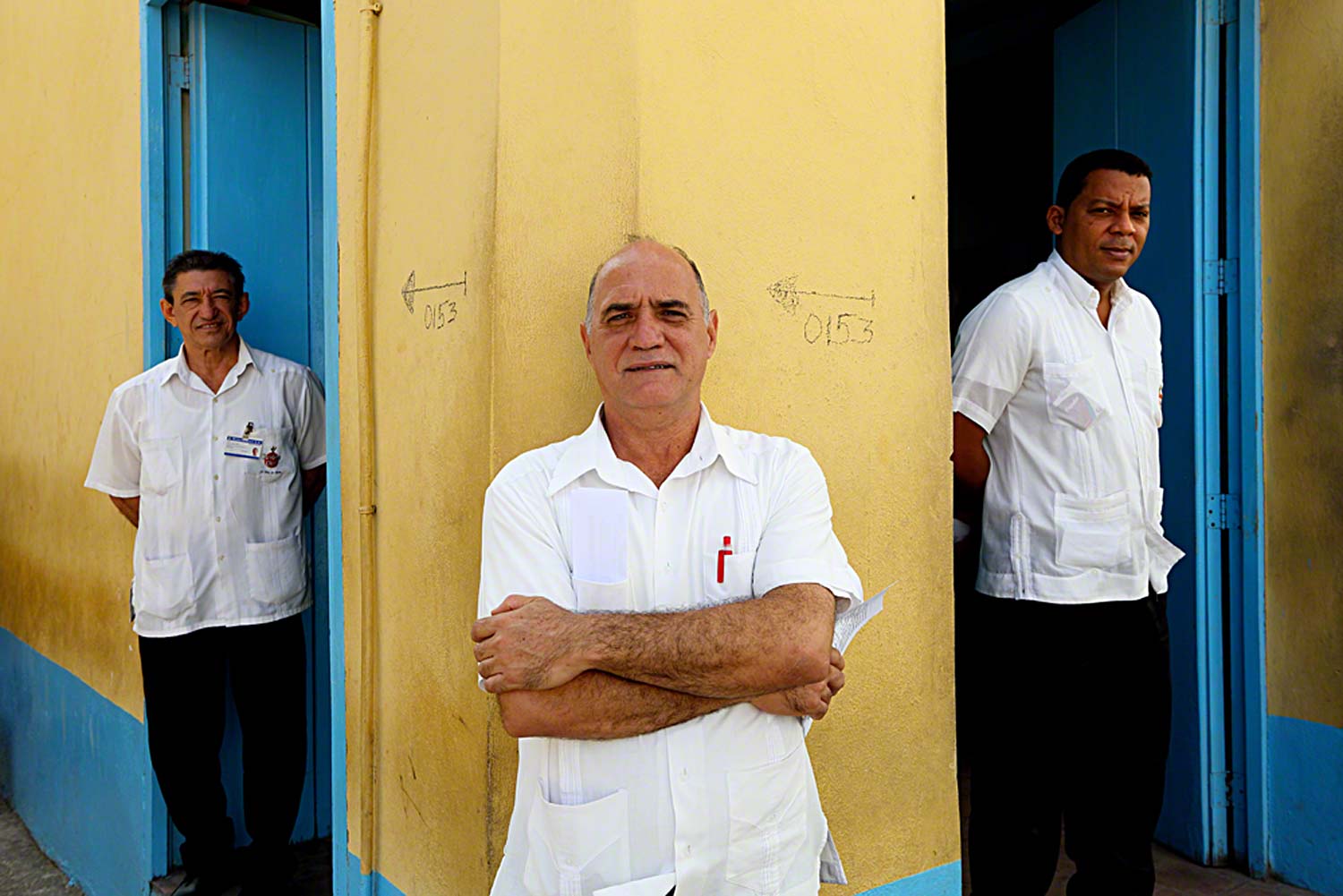
After looking at the PacMan diagram and the above photo, you can start to see how I use certain methods to keep the viewer as active participant when he looks at my photos. In the photo of the three men taken in Cuba, the initial processing of the pieces (of the final puzzle) will be of three waiters. From that he’ll  fill in the missing and implied lines that connects the three men and will perceive a triangle…creating a sense of unity and will be viewed as one.

Visit my website at: www.joebaraban.com, and follow me on Instagram: www.instagram.com/barabanjoe. Check out my upcoming workshops. Come shoot with me sometime.

Don’t forget to send me a photo and question to: joe@joebatraban.com and I’ll create a video critique for you.

JoeB

Food For Digital Thought: Subjective vs Objective Photography

I took the shot

Here’s something to think about next time when you pick up a camera and go out shooting. Is your approach to taking pictures more of a objective nature or are you more subjective in the way you see things?

Let me explain by giving you an example: If you’re out shooting and you see two dressed up women standing side by side, and all of a sudden one of them picks her nose, do you take the shot?

If the answer is yes, then you’re being objective…why? Because you’re not being influenced by any personal feelings; you’re merely representing the facts.

You also probably have an ulterior motive, that being you caught someone in an act and you’re after some recognition for being ‘quick on your feet’; and the forthcoming laughter from the viewer(s).

Conversely,  if you’re somewhere and you see two women all dressed up standing side by side, and all of a sudden one picks her nose…but it’s your favorite aunt, do you take the shot?

If the answer is no, then you’re being subjective…why? Because you’re being influenced by personal feelings; you don’t want to represent the fact that your aunt picks her nose.

I will often get images from people that take my online class with the BPSOP, and my StretchingYour Frame of Mind” workshops I conduct around the planet, that may or may not show something like that happening.

During the critique they will tell me that they have other variations where the subject isn’t doing something embarrassing. The problem is that they’re not as interesting.

Part of my answer is in the form of ways to create Visual Tension. Visual Tension gives your photograph strength and intensity. Tension equals energy, and it’s a psychological force to be reckoned with and used correctly can take your photography what I refer to as “up a notch”.

When you hear the word tension you more than likely associate it with mental or emotional stress since that’s the most popular definition. After all, how many commercials have you seen or heard where they talk about “the tension headache”, and that their pill works better than all the rest to get rid of it?

I’m talking about the kind of Visual Tension that’s comes as a result of forces acting against one another; which creates energy and visual interest.

When Visual Tension is present, it’s the feeling that something is going to (or has occured) occur that will change the dynamics of the message we’re trying to get across to the viewer. There are several ways to do this and two of them fits this post: body language and gesture.

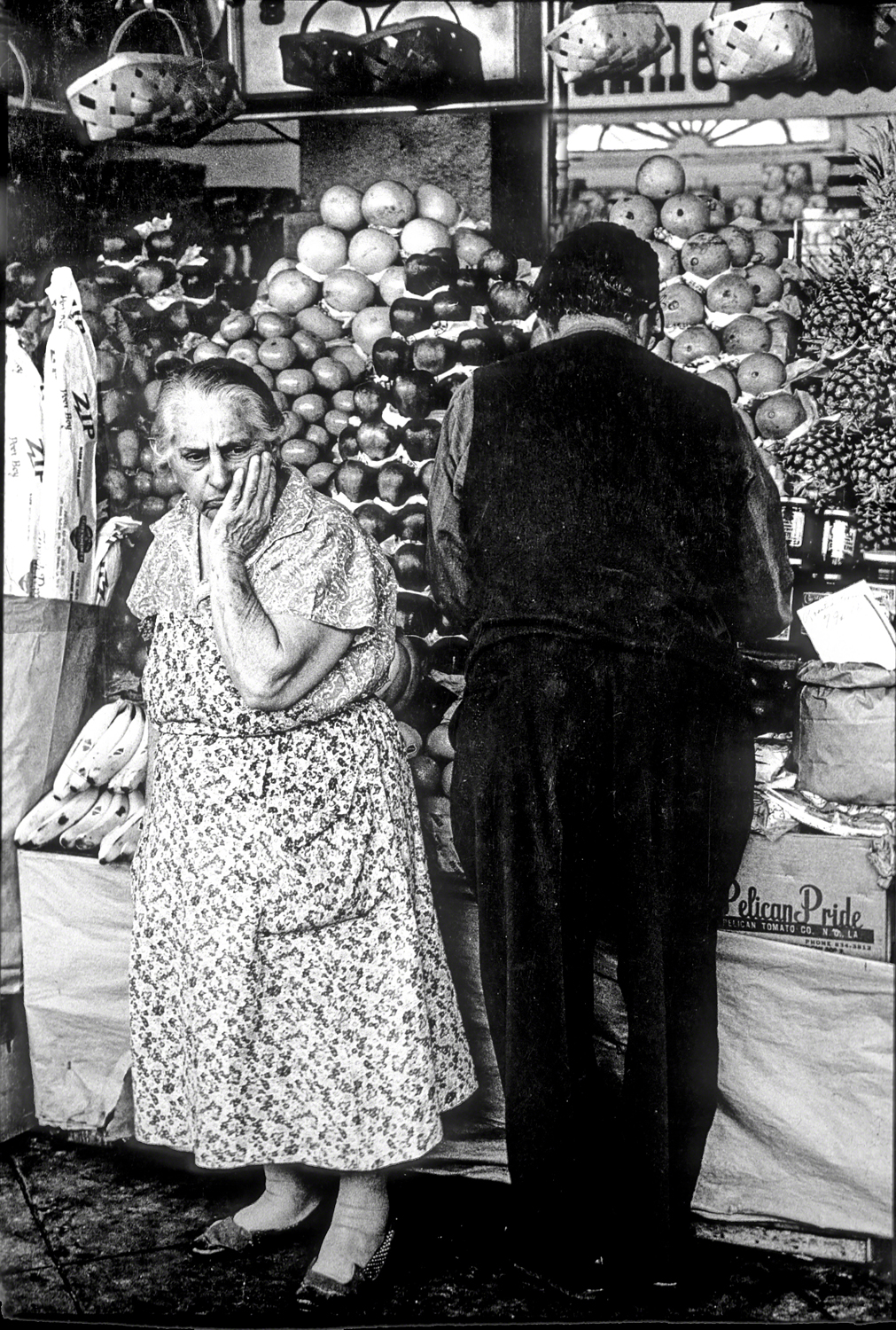
In the above photo, I was walking around New Orleans during Mardi Gras, and stopped to take a picture of this couple. At that moment the man turned around but the woman, through her body language, told me that she was very old and very tired from being on her feet all day for countless years.

Do I become subjective and not take the shot, or do I transcend any personal empathy and take the shot; I took the shot and now it’s in the permanent photography collection at the Museum of Fine Art in Houston.

So my fellow photographers, it will be a tough choice…do you go for the gold and become objective? Do you sell your aunt down the proverbial river, or do you protect her by waiting until she’s through picking?

For me, it all depends on whether I’m in her will.

Visit my website at: www.joebaraban.com, and check out my workshop schedule at the top of this blog. Come shoot with me sometime.

JoeB

Food for digital Thought: The Seven Steps to Better Sight

All seven steps.
All seven steps.

When I taught online with the BPSOP, and now when I also conduct my “Stretching Your Frame of Mind” workshops around the planet. I teach my fellow photographers how to incorporate the elements of visual design into their photography. I also show them how to use their eye, and to see past first impressions. to not look at things but to see them.

There is a skill in photography called ‘seeing’, a few have it naturally, most people don’t, but can be shown the way.

The first step is the ability to frame just the part of the scene in front of you that makes a good, interesting photograph; this will take time to develop.

The second step is to fill the frame with your subject and to photograph ‘bits of things; pieces of the puzzle. Instead of the building just the window, instead of the window, the texture of the faded, peeling paint.

When out on the street and you look at the scene in front of you there are probably 30 or 40 good images you could take. Seeing is the ability to pick them out one at a time. Each potentially being the individual pieces that makes up the finished puzzle.

After a while you’ll realize that you have been walking around blind. It’s an epiphany, a sudden exciting realization that brings you into your own personal reality…perhaps for the first time.

The third step is ‘seeing’ the lighting and only taking images when the lighting is good, this takes a lot longer; a lot more discipline.

The fourth step is deciding on the best composition for your images, keeping in mind that balance is a basic element of visual design. Cropping only in the camera, and using the edges of your frame as a compositional tool.

The fifth step to consider is applying color contrasts, keeping in mind those colors that are in harmony, and juxtaposition of the light to your images; one of the best ways to generate Visual Tension.

The sixth step is simplifying the images, paring down the subject to its bare essentials. Remembering that it’s not what you put into a picture that counts, it’s what you don’t put in that matters.

The seventh and last step is grabbing the ‘moment’. The moment it all comes together, recording it to secure it’s place in our history…by clicking the shutter.

It’s a long, long learning curve.

I didn’t mention the word camera because it’s the least important part of the whole process. Clicking the shutter is the easiest part of photography.

Visit my website at: www.joebaraban.com, and follow me on Instagram: www.instagram.com/barabanjoe. Check out my website schedule at the top of this blog. Come shoot with me sometime.

JoeB

Food for digital Thought: Color

Color was my subject

When I go out shooting, I never look for a particular subject. For example: flowers, fences, boats, cars, buildings, planes, trains, rivers, oceans, etc. What I look for is color, and color is often the subject. A white picket fence is not just a picket fence. It’s a ‘white’ picket fence. The type of flower is unimportant; it’s the color that attracts me to it.

Coming from a background in color theory, painting and design, I have over the years, trained my eye to look for color, and it often requires looking past your initial impression. The use of color can come either first or last in our thought process, and for me, it’s usually first and foremost.

When I’m working with my online students with the BPSOP, and also in my “Stretching Your Frame of Mind” workshops, I’ll put color on their Artist Palette as one of the basic elements of visual design.

Since my background is also in Journalism (as in a BA) I love to write and tell stories. Now, my medium is photography, so I will often use color as my way of communicating ideas. For me, color is a stimulant for our eyes, and ties the elements of a photograph together. Color affects every moment of our lives, and has an enormous impact on our photography. Knowing color is one of the first steps in taking consistently good photographs.

Being a student of the color wheel will help you as far as creating harmony and balance when composing. Harmony, as it applies to photography is a way of more than one color making sense to one another.

Studying the psychological effects of color is a class in itself. For example: Blue is calming or depressing. Brown is earthy and provides an element of comfort. Orange is an attention grabber. Purple is sexy, powerful, and regal.

Yellow is cheerful. Green is the color of freshness. Black is mysterious. White is associated with cleanliness. Red, the most powerful color of all, stimulates the heart and brain. It’s sexy, angry, ambitious, and can imply risk-taking. Artists use color to achieve several effects.

Color can give you a sense of mood as well as a sense of place, and time. It can also be used to move the viewer’s eye around your composition.

Here’s a portfolio of examples

Visit my website at: www.joebaraban.com, and follow me on Instagram: www.instagram.com/barabanjoe. Check out my 2016 workshop schedule at the top of this blog. Come shoot with me sometime.

I have added a new workshop to my 2016 schedule. On September 21st, ten photographers will get together with me at my evening “meet and greet” to begin a fantastic five-day workshop in New York, New York. Check out my description at the top of this blog. Come shoot with me.

JoeB

Food For Digital Thought: Using the Edges of Your Frame.

Using the edges of my frame.
Using the edges of my frame to imply a black triangle

I recently had one of my blog followers send me this note:

Hi Joe,

I’ve followed your blog and website for some time now, and things are usually very clear and instructive.
In this edition, you stated:

“BTW, when you crop in front of a computer, you’ll never know where the edges of your frame are, nor will you ever be able to use the edges as a compositional tool.”

I am completely unsure as to what you mean – can you elaborate?

Thanks and keep up the great work!

I’m glad he asked because it’s a question I often get either in my online class with the BPSOP, or in my “Stretching Your Frame of Mind” workshops I conduct around our planet.

First, here’s an excerpt from an interview done on Henri Cartier-Bresson, who is adamantly against cropping. He said, “We have to have a feeling for the geometry of the relation of shapes, like in any plastic medium. And I think that you place yourself in time, we’re dealing with time, and with space.

Just like you pick a right moment in an expression, you pick your right spot, also. I will get closer, or further, there’s an emphasis on the subject, and if the relations, the interplay of lines is correct, well, it is there. If it’s not correct it’s not by cropping in the darkroom and making all sorts of tricks that you improve it. If a picture is mediocre, well it remains mediocre. The thing is done, once for all.”

I’ve also read that shooting loosely and cropping in post-processing are signs of sloppy technique and a lack of discipline…that would include yours truly.

To create stronger photos, use the edges of your frame as a compositional tool. For example shape is one of the basic elements of Visual Design that I teach both in my online classes and my workshops. The four basic shapes are circles, squares, rectangles, and triangles. If you were to use one or two sides of your frame to complete the third line of a triangle, you would be making your image stronger.

I hope this post helped clears it up, and thanks for asking.

Visit my website at: www.joebaraban.com, and follow me on Instagram: www.instagram.com/barabanjoe. Check out my upcoming workshops at the top of this blog. Come shoot with me sometime.

JoeB

Food For Digital Thought: You’re First Child’s Baby Picture.

The very first baby photo

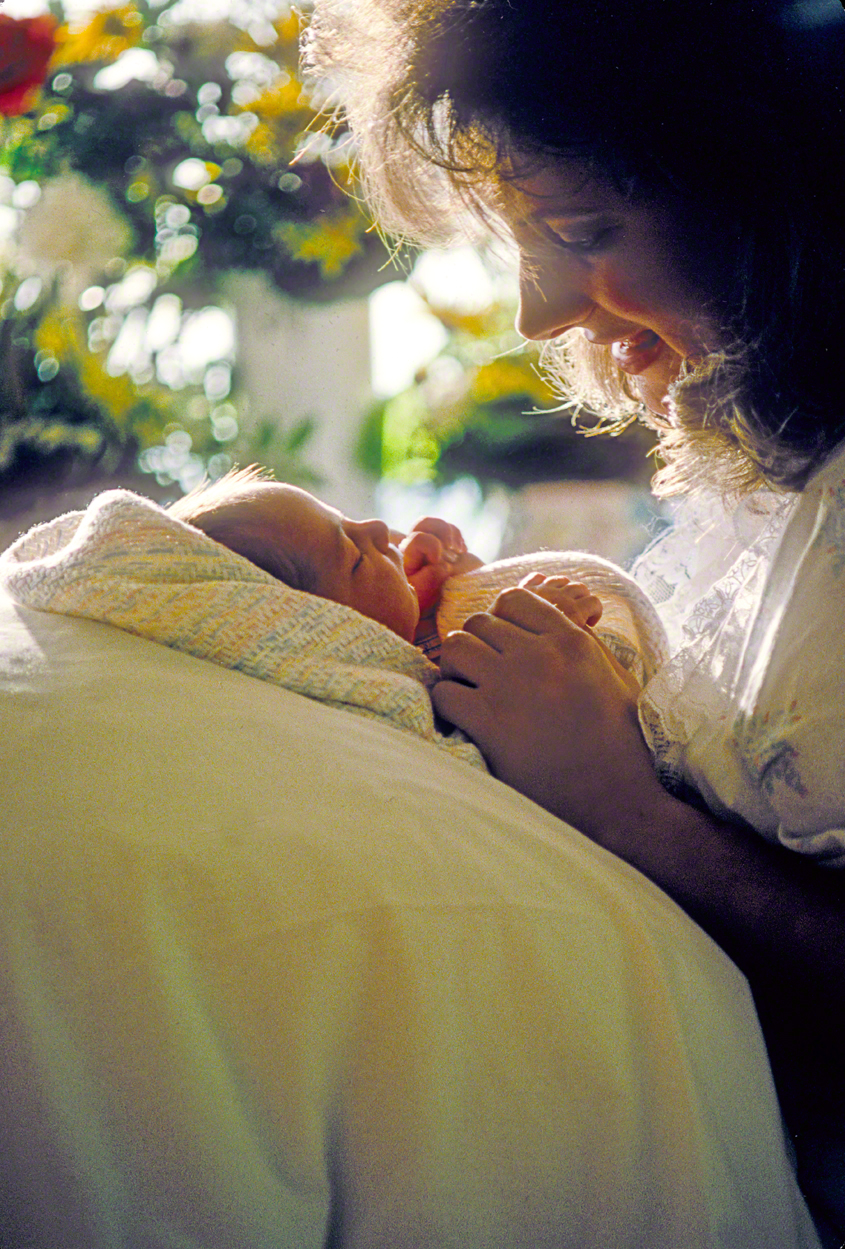
For all you new to be parent’s or grandparents, the first baby photo is usually taken in the hospital room, and I can tell you from experience, it’s probably the worst place on earth to take a photo; regardless of the subject matter. A photo that could only be counted as time goes by as the very first..especially if said first photo was taken by a phone!!!

Here’s what’s going to happen: The room will be dark, with the only light on being above the bed the new mom is laying in.  This is going to put those well-known “Raccoon” eyes on mom, you know the ones, the ones where deep black sockets replaced the actual eyes. Except to those in the cast of The Adam’s Family, going through what mom just did might not make her look as good as she could, , and dark eye sockets won’t add too much.

So, if you want some advice, and it’s the same advice I give to my online students with the BPSOP, and in my “Stretching Your Fame of Mind” workshops I conduct around our planet, think about the light first and foremost. All it takes is a little thought and knowing how to expose properly to add visual tension and interest to take a photo that can stand the test of time and be considered worthy of sharing it with others every chance you can get…no matter how old the baby grows up to be.

In the above photo, I simply opened the curtain to let some available light into the room. I then exposed for the mother so I could blowout the window behind her…a very good thing and never let anyone tell you different. I used a real camera (not a phone with a built-in camera) and choose a narrow DOF to place the emphasis solely on the mom and baby.

Always take an alternative photo.

So my fellow photographers, what kind of first baby picture to you want to take?

Visit my website at: www.joebaraban.com, and follow me on Instagram: www.instagram.com/barabanjoe. Check out my workshop schedule at the top of this blog,

Come and shoot with me sometime.

JoeB

Food For digital Thought: Think

Think then shoot

Most people know me from years of writing these posts, actually starting from 2011. I spend over fifty years as an advertising, corporate, and editorial photographer, and now I teach an online class with the BPSOP, and I conduct workshops all over the planet…the round planet I might add.

Having said that, I can tell you from my years of shooting and teaching that the more you think while composing your image, the stronger your image will be.

I’m talking about an image that can stand the test of time, an image that when you’re thumbing threw your old photos and can come across any one of them no matter if it was taken a year or five years, it’s still as it was when you first clicked the shutter.

How do you do that you ask? You do that by thinking about the way your composition will be received by the viewer. Will you be able to keep him around for at least eight seconds? Doesn’t sound that long does it? Well, take it from me that eight seconds is a long time to keep someone interested. So then how about six seconds? Still a long time to have someone admire your photo. Just check out my thinking by clicking on the link!!!

Visit my website at: www.joebaraban.com, and follow me on Instagram: www.instagram.com/barabanjoe. Then why don’t you come and shoot with me some time. Check out my workshop descriptions at the top of this blog.

JoeB

Did It Do It: Did It Show A New Way Of Looking At Ordinary Ideas?

A new way of looking at the ordinary.

This is my ninth post in my series I call “Did It Do It”.

In my online classes at the PPSOP, and in my “Stretching Your Frame of Mind” workshops I conduct around the planet, I show fellow photographers how to incorporate the elements of Visual Design and composition into their thought process, and as a result, they’re able to take their photos what  I refer to as “up a notch”. I also give them my “did it do it” list which is a set of guidelines I’ve been thinking about for the majority of my career. These are not rules, since I don’t like nor do I follow any rules that others before me have put out there to create mediocre photographers.

In this new post, I want to talk about looking at new ways to photograph ordinary ideas. During my forty-five year career as a corporate and advertising photographer, I was always asked by an Art Director (who was told by a client) to take a photo of an incredible ordinary idea. To be sure, it wasn’t ordinary to the powers that be; quite the contrary, it was ground breaking to them. To be able to live with myself, I always took it as a challenge to come up with a new way of showing the same old, same old.

I tell my students to “consider the scene and it’s outcome”. In other words take a step out of your body and right before you think that you’re ready to snap the shutter ask yourself if what you’re about to take is a photo that you would think is ordinary if someone had shown it to you. If there’s the slightest chance that it is, why take it? Why not look for a way to say the same thing, but in a new way; at least a way you haven’t seen before.

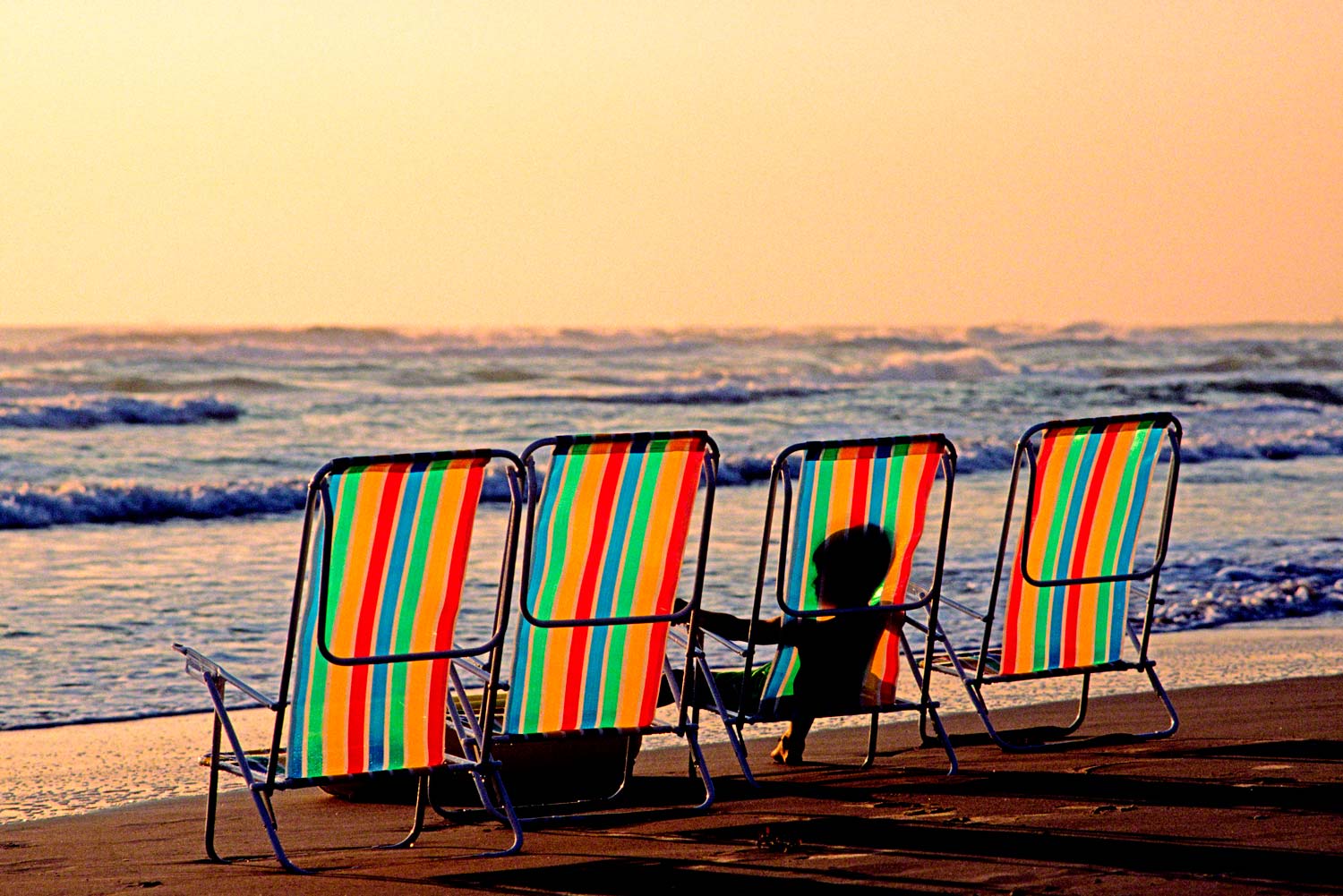
In the above photo, i was hired by the advertising agency that handled Texas Tourism. As is usually the case, they had a list of ideas (ordinary) that they once again wanted to portray in the ads they were running in local and national magazines. One of the ongoing ideas was to show a family of four enjoying the beaches on South Padre Island. It had been done so many times that even the Art Director” got nauseous at the mere thought of reliving it again.

There was no way I was going to take a photo of a mom, dad, son, and daughter enjoying the beach. I would have rather had my ‘eye’ carved out with a snow shovel. So what did I do?  I went to the nearest tourist shop and found four colorful beach chairs. I set them up as though there were the family sitting there, only there was just one at the time. The rest of the family was implied. The client loved it!!!!!

Visit my website at: www.joebaraban.com and check out my 2013 workshop schedule at the top of this blog. Come shoot the un-ordinary with me sometime.

Don’t forget to send me a photo and question to: AskJoeB@gmail.com.

JoeB

Food For Digital Thought: Lifestyle Photos

An everyday occurence fror him.

In the last couple of years I’ve seen a trend develop concerning my fellow photographers that take my three classes with the BPSOP, and also in my “Stretching Your Frame of Mind” workshops I conduct around the planet.

It seems that everyone wants to have a website and actually try to generate some income from it. I’m often been asked what type of photos would need to be in it in order for people to be interested in buying their services.

My first question to anyone is what do you like taking pictures of? That’s so important, because if you don’t love your subject matter, you’ll never be happy with whatever outcome befalls you. Second question would be where do you want this new generated income to be coming from. Are you looking for people to buy prints from your site, or do you want someone to hire you to shoot original photography.

If you’re only interested in selling prints, then the subject matter should be generic in nature. In other words, color photography of land or seascapes, flowers, abstracts, or B/W editorial or photojournalism. Of course any of the areas I’ve mentioned can also be shot in B/W.

If you’re interested in being hired to shoot editorial, corporate, or advertising photography, then it’s very important to be able to shoot people. People like to see people in photos, and for an editor, art director, or graphic designer to hire you you need to be good at what’s called Lifestyle Photography.

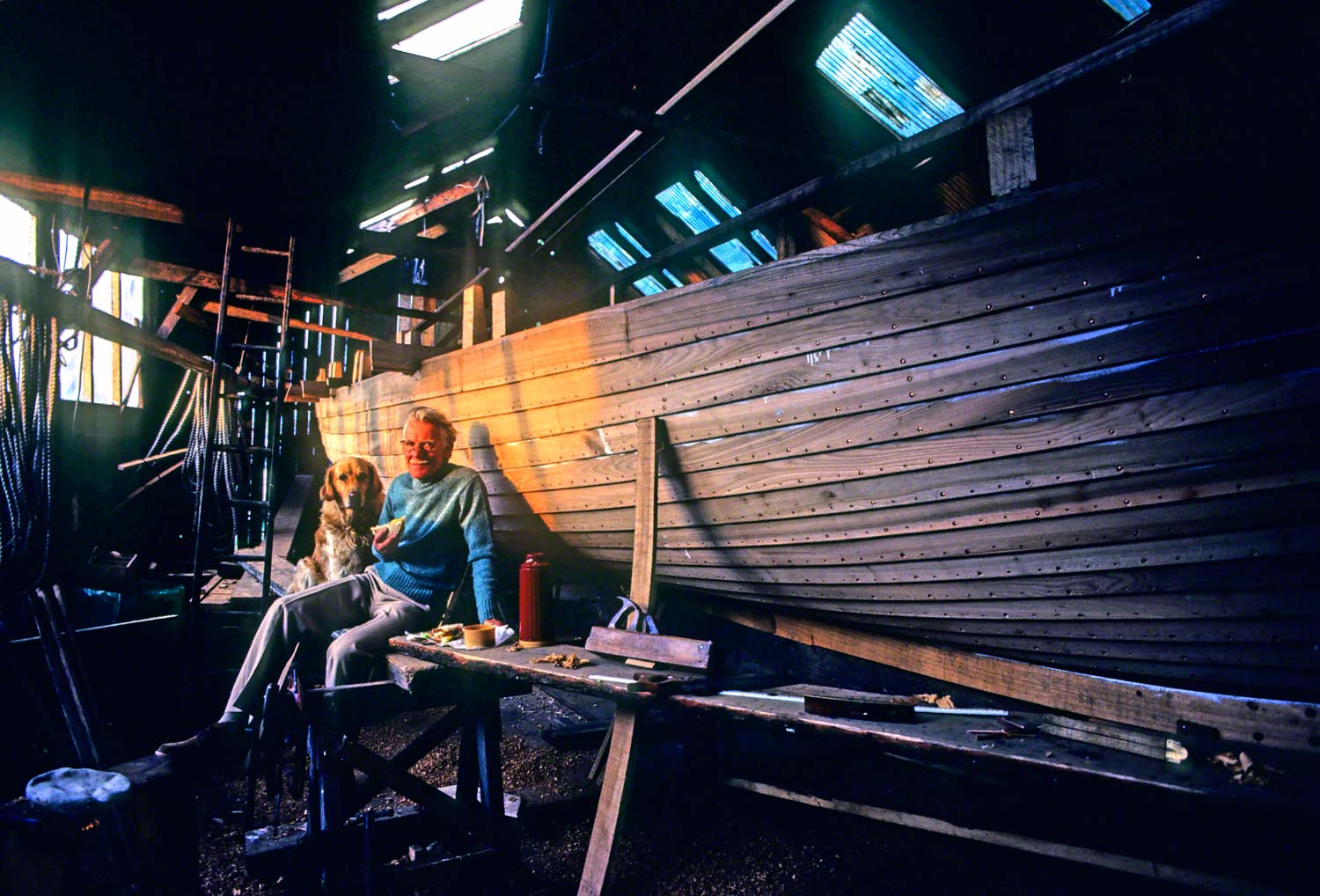
Lifestyle was one of the areas I was best known for back in the days when I was shooting for all three of these avenues. It’s about capturing people in everyday life. Situations that are common to the people that will be looking at your pictures. Situations that they are involved in every day of their lives. Needless to say these Lifestyle photos need to be shot by portrait or people photographers and handled in an artistic manner.

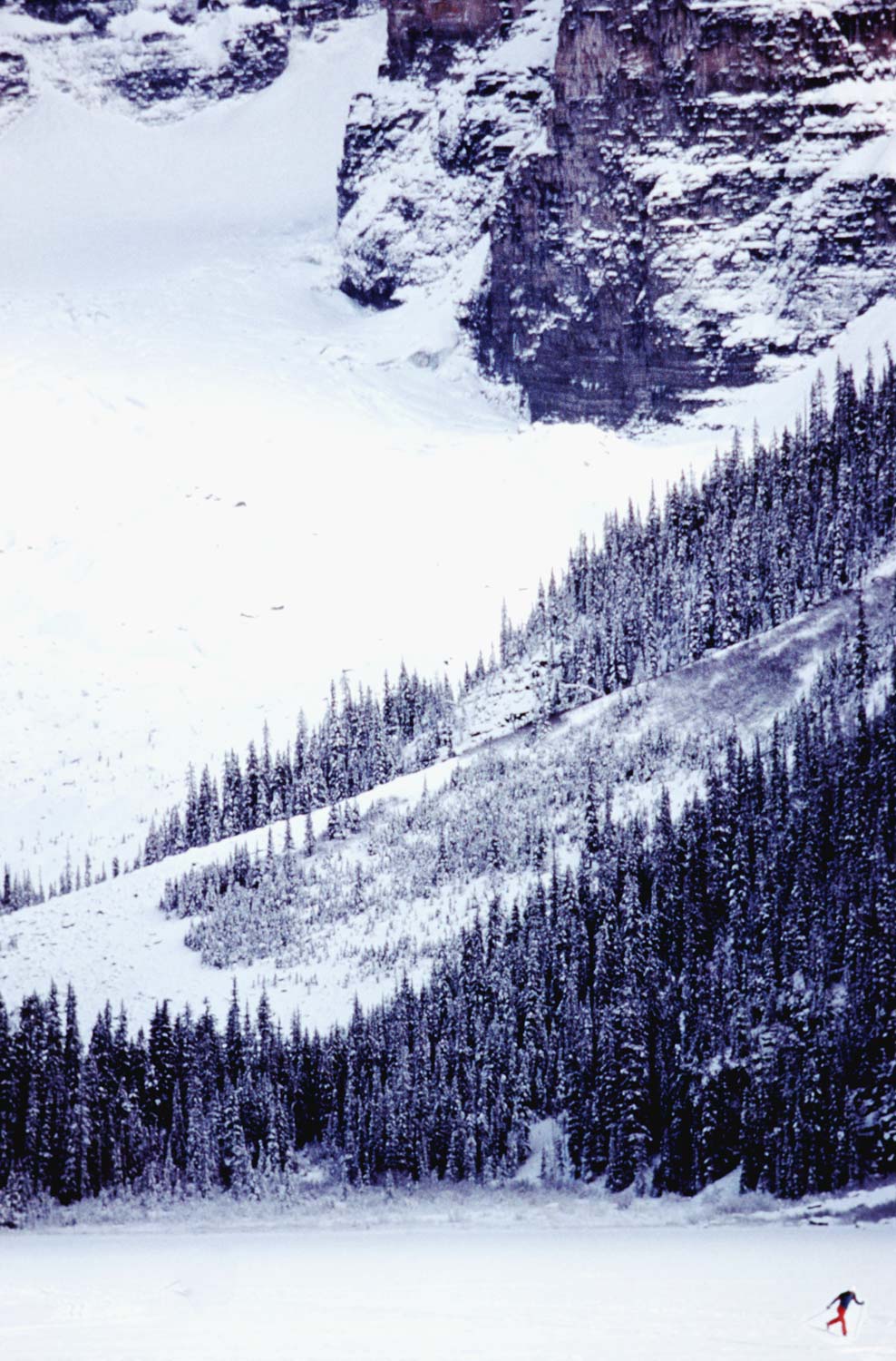
Although Lifestyle photography depicts common everyday occurrences, it would also include those moments that are not seen everyday, but still include people interacting with other people or people being alone with nature. For example a lone cross country skier alone against the elements. Lifestyle, but not an everyday occurence.

Think of situations that you’ve experienced or seen being experienced by others. Finding these happening in real time…real life may take you a long time to accumulate enough images to put on a site.

Or, try setting  these scenarios up and then shooting in a reportage style. In other words, set up a situation and shoot it as if it were really happening.

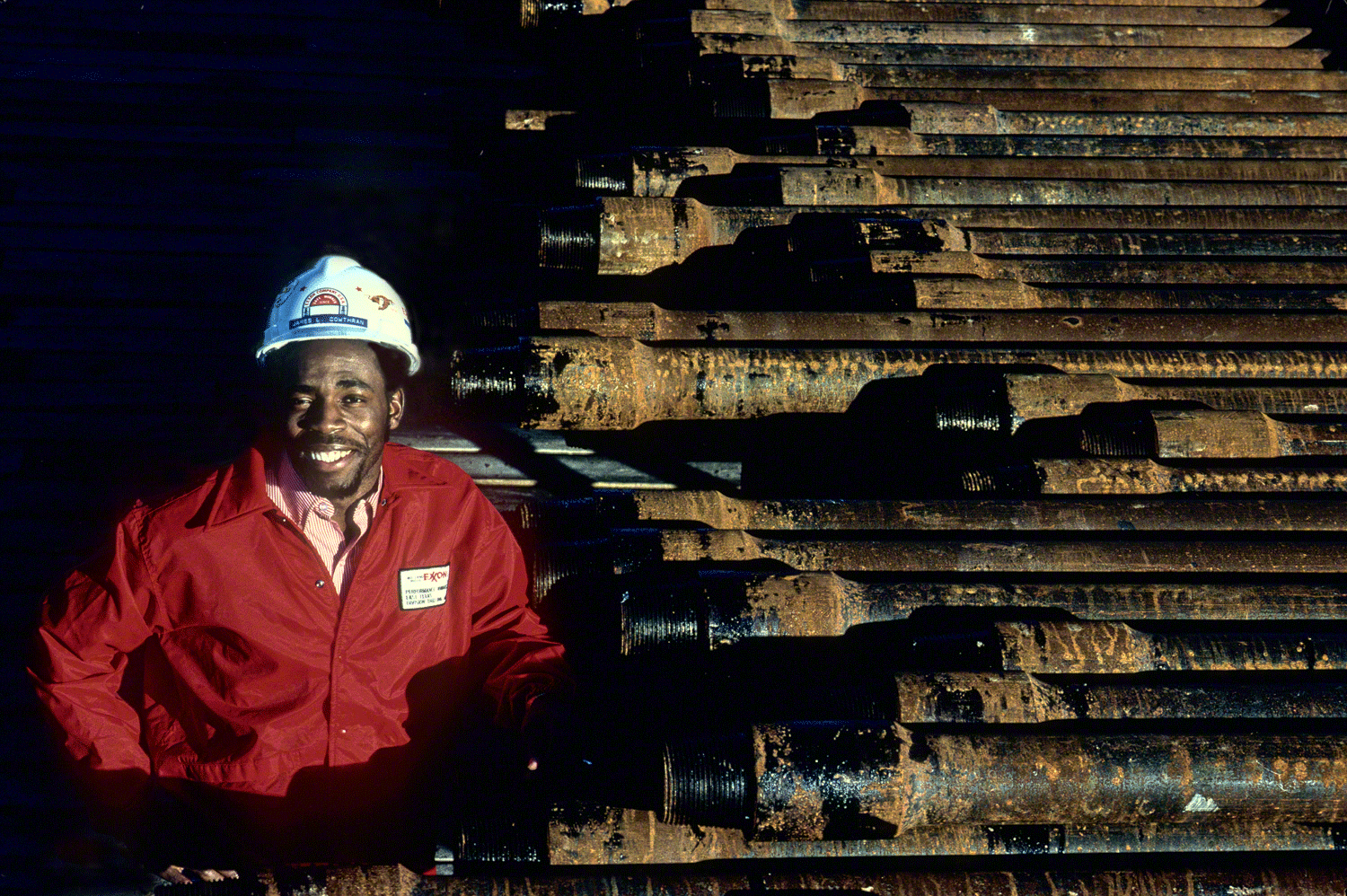
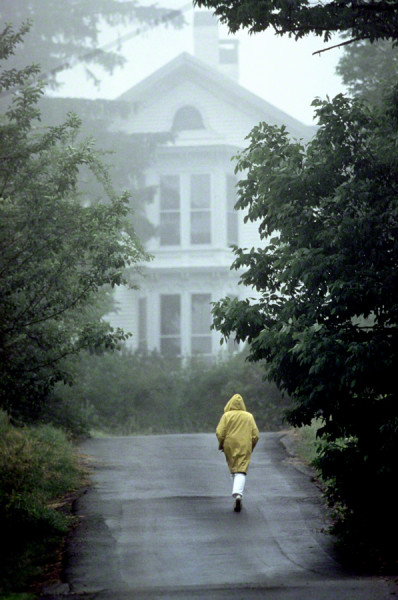
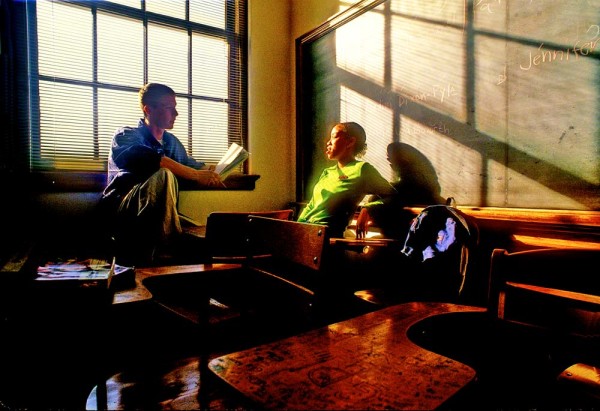
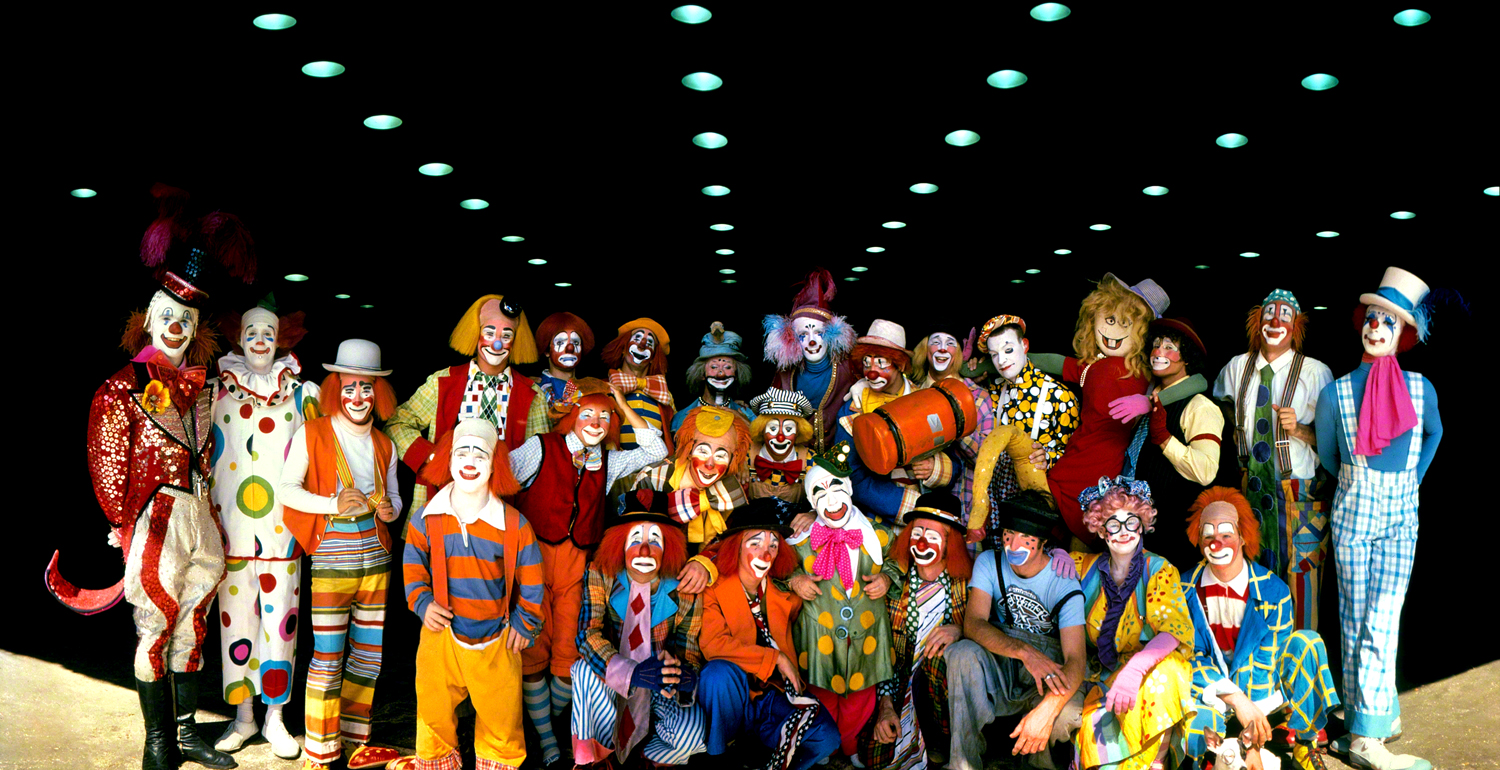
Here’s a few examples of what I mean:

Visit my website at: www.joebaraban.com, and follow me on Instagram: www.instagram.com/barabanjoe. Check out my workshop schedule at the top of this blog. come shoot with me sometime.

JoeB