Did It Do It: Did It Make People Want To Give Your Photograph More Than A Cursory Look?

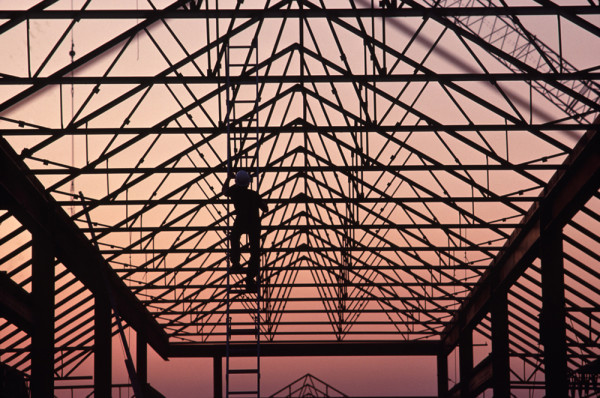
Moving the viewer around the frame

Well my fellow photographers, here is another in the series of my “did it do it” list for good composition. If you study all of them that wll be forthcoming, you’re imagery will most definitely go what I refer to as “up a notch”. As I’ve said all along, these are not rules since rules will hinder your creative thinking. They are guidelines to making strong photos; photos that will be remembered.

Will your composition make people want to give your photograph more than a cursory look? Well first things first. First let’s see what the dictionary says about the cursory:

cursory |ˈkərsərē|
adjective
hasty and therefore not thorough or detailed : a cursory glance at the figures.

In other words, will it make the viewer want to stick around and spend more time looking. In order for the viewer to be more thorough or detailed, you have to provide enough elements for him to be thorough with.

In my online classes with the BPSOP, and in my “Stretching Your Frame of Mind” workshops I conduct around the planet, I teach my fellow photographers how to use the elements of Visual Design and Composition to create strong photos. A lot of what I teach includes the power of Gestalt. The methods we use to gain attention to our photos will vary, but what’s important is how we manage what the viewer perceives and processes when he/she looks at the visual information we lay out to him in the form of a photograph.

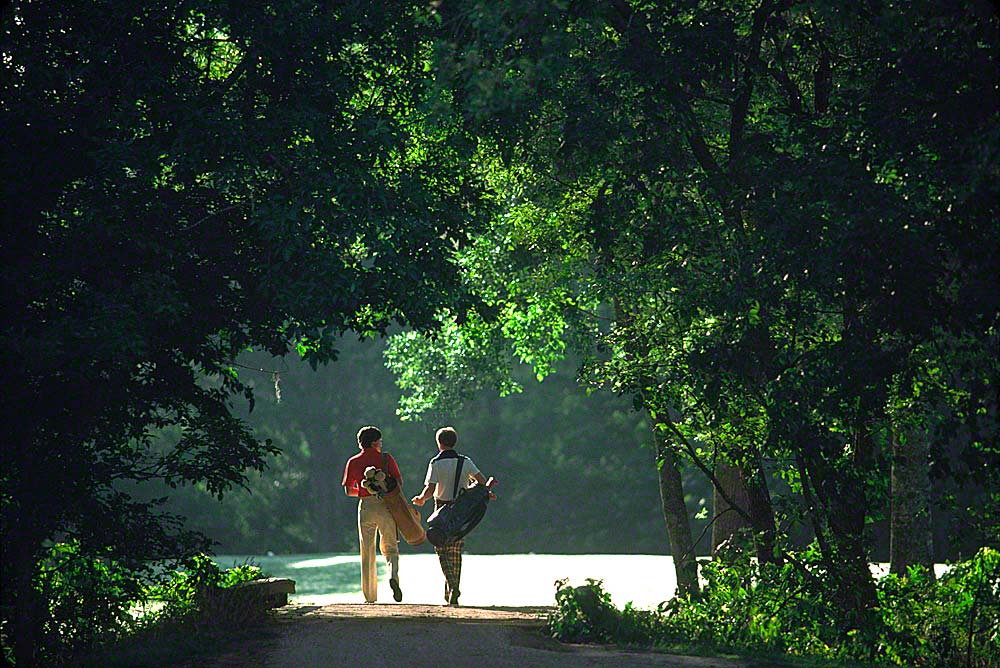
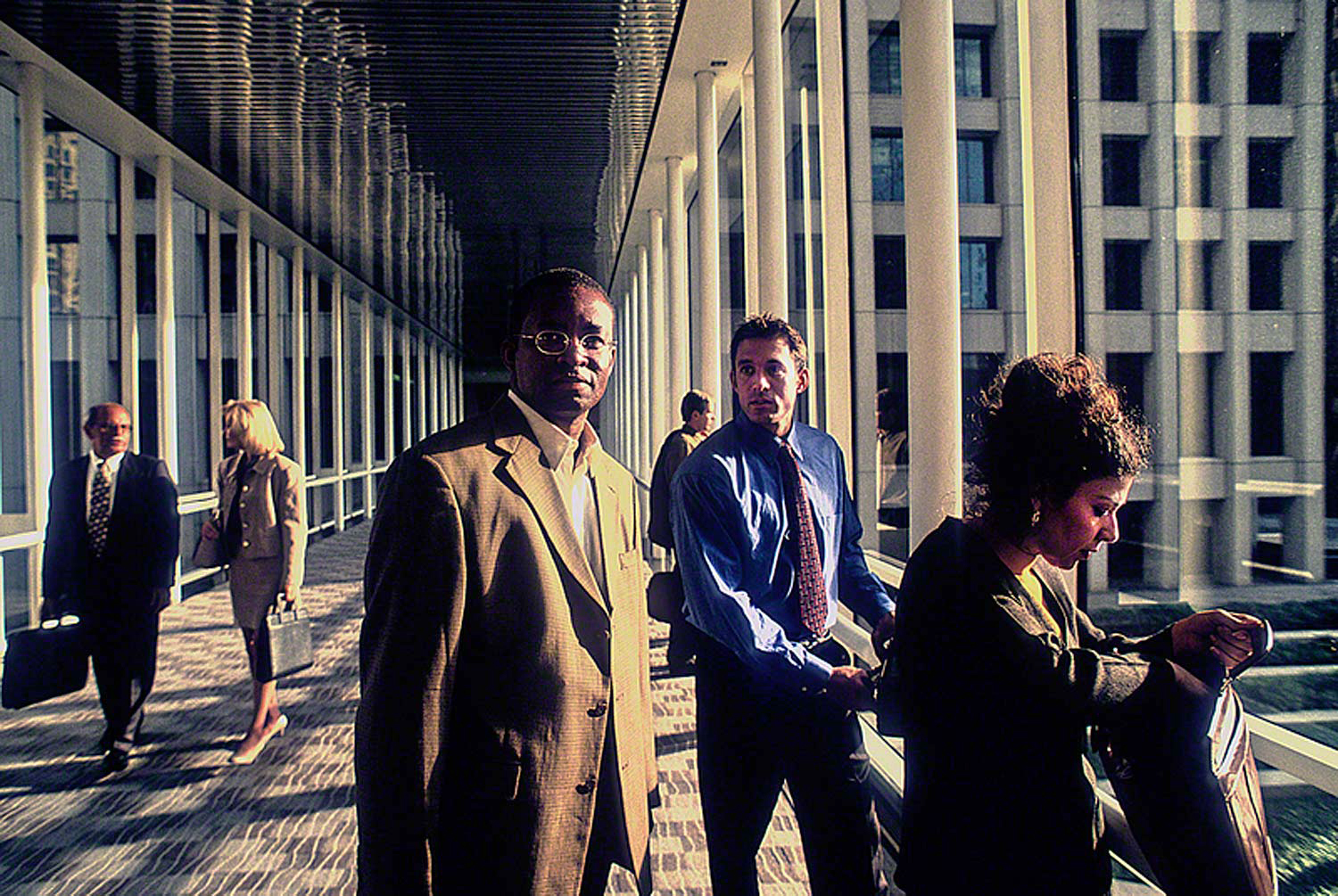
Visual input is a part of our everyday life. As photographer’s it’s up to us to present this information in a way that will control what the viewer sees when looking at our imagery. The more ways we can get the viewer to move around our composition, while at the same time leaving and entering our frame, the longer they will stick around. The more things we can get the viewer to discover ( layers of interest) while moving him around will also keep him around longer. This is how the elements of Visual Design can play an important part in giving our images more than a cursory look.

Isn’t that just what we want?

🙂

Visit my new website at: www.joebaraban.com, and check out my 2019 workshop schedule.

JoeB

Food For Digital Thought: giving a dramatic edge to your photos.

  As I’ve always said, Light is everything, and should be considered first, even before your composition. When it interacts with shadows, the results can be incredible. It’s a sure fire way to take our imagery “up a notch”. Light is important for sure, but equally important are the shadows. Not only is it important to know where the light is going to be, but it’s equally important to know where the shadows will fall.

In my online class with the BPSOP, and my “Stretching Your Frame of Mind” workshop I conduct around the planet, students learn beforehand exactly where shadows will fall any day of the week, anywhere in the world. Using a program called Sunpath, and coupling it with a hand bearing compass called a Morin 2000 not only do they learn where the shadows will fall, but which direction the light will be coming from, when it will be coming,  how long it will be there, and when it will leave.

Pretty important information if you ask me!

Once the interrelationship between light and shadow is established, a mood is set and the results can range from mysterious to downright scary. This is where the Theory of Gestalt comes in. Shadows can affect how the viewer perceives and is a quick way to conjure up all kinds of emotions by giving a dramatic edge to your composition.

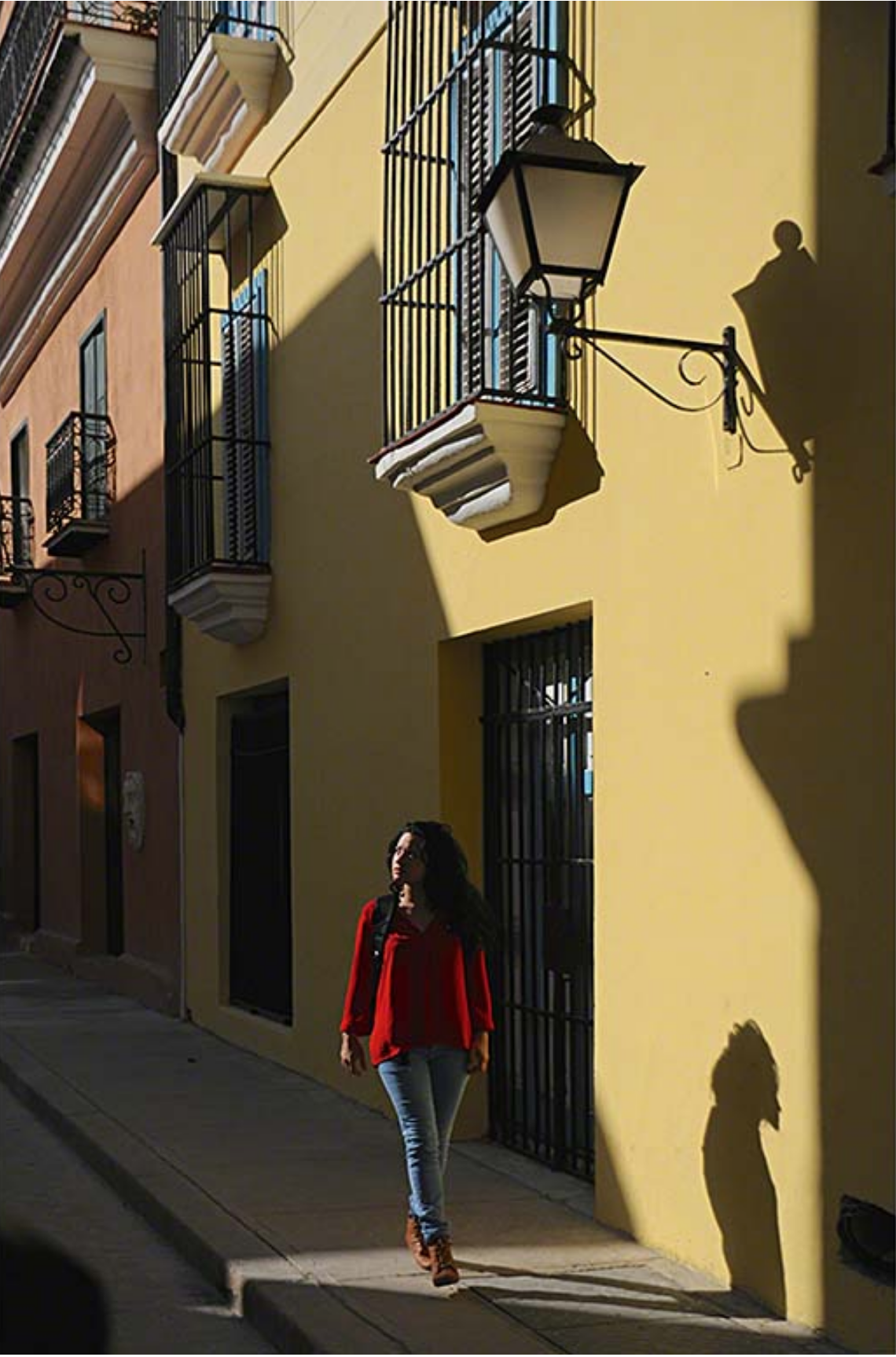
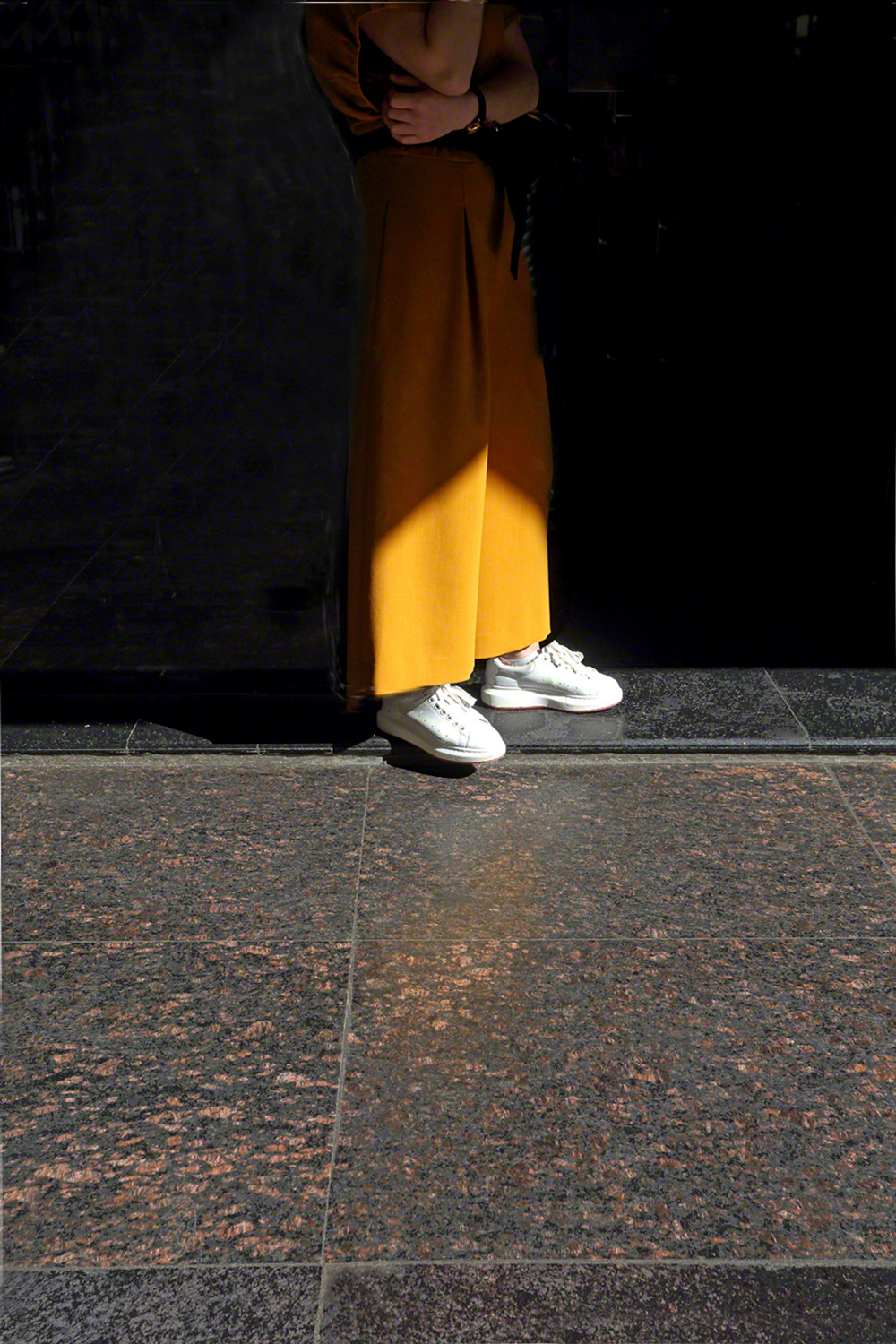
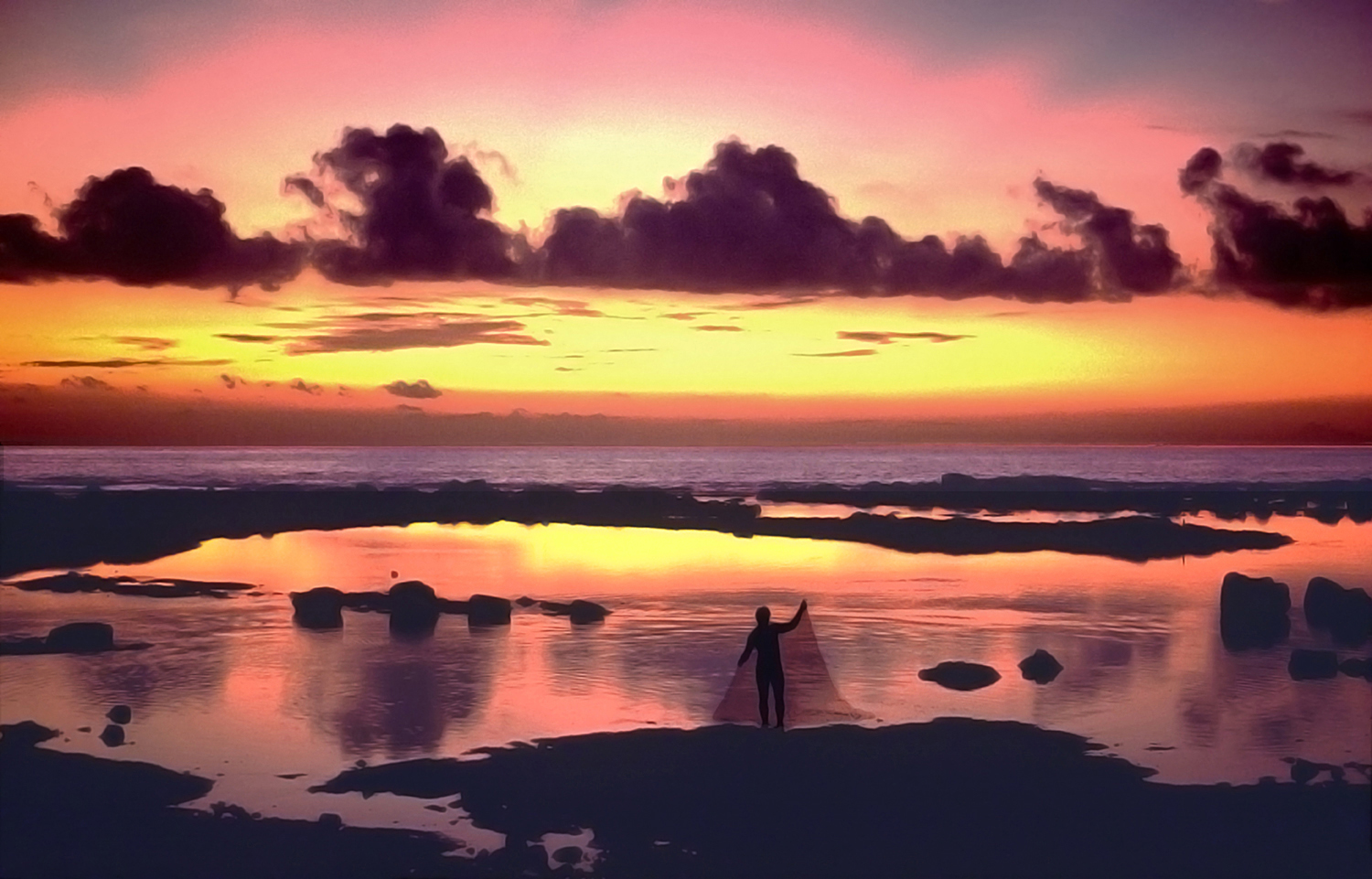
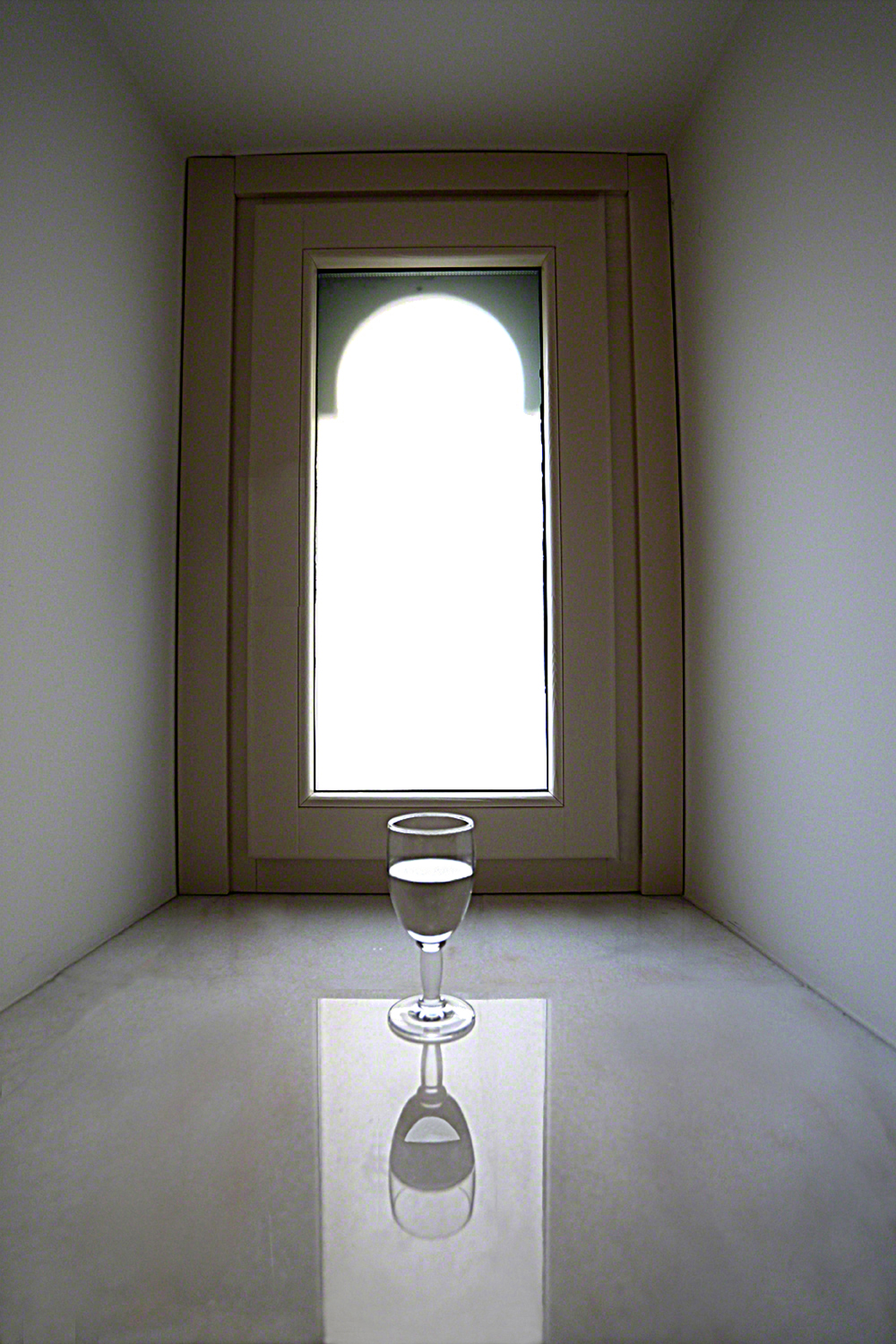
In both these images, I’ve made the shadows important enough as to make them the subject.

Photographers usually don’t give shadows any consideration; in fact, to many they can be intimidating.  Truth be told, they are leaving out a very important part of their imagery. Shadows can suggest what we can’t see in our reality. In fact, shadows help us to “celebrate the unseen”. Btw, the next time you’re out shooting, don’t think/worry about shadows falling on people’s faces.

Finally, when you master the light, be sure to master the shadows as well. We should pay tribute to the shadow, as it can help us take our imagery to “a place where no man has gone before”!!!

Visit my new website at: www.joebaraban.com, and check out my workshop schedule at the top of this blog. Come shoot with me sometime.

JoeB

Anecdotes: Oil Tools Limited

Somebody up there liked me that day.

Every once in a while I find myself going through old images and will generally stop on one that brings back fun (and not so much fun) memories.

I was hired by Lowell Williams design who was hired by an oil company in London…Oil Tools Limited. They were to begin drilling in Asia and wantd to create a high quality tabletop book that they could give out.

They sent the designer and myself to Malaysia, Indonesia, and the Philippines to photograph whatever I wanted that would visually represent the culture of the countries.

We had a driver that would take us all around the cities: Kuala Lumpur Malaysia, Jakarta, Indonesia, and Manilla, Philippines. We would also travel around the countryside outside these three cities as well. If I saw something interesting I would tell the driver to stop while I got out and took pictures.

We were driving down the highway outside Kuala Lumpur and I looked out into the field and saw this young woman tossing water on her Water Buffalo. I asked what she was doing and our driver told us that she was keeping the animal cool; it was very hot and humid.

I jumped out, threw my Nikkor 300mm F/2.8 on an F3 motor drive, loaded a roll of Kodachrome 25, hooked it up to my tripod, and started running out towards her. I made it about thirty yards before I started bogging down in the mud.

I quickly set up, started waving at her, and began shooting. I can only imagine what she was thinking since I was pretty sure I was the first one to ever do whatever it was that I was doing!!

Well, the photo Gods were with me that day. She smiled and continued throwing water while I was shooting.

I waved to her and headed back to the car with a huge smile spreading from ear to ear. I couldn’t believe my good fortune as I thought I had at least one good shot; hard to tell in those days since it was on film and no way to see what I had shot.

I got back to the car and needed to change my jeans and tennis shoes. I set the camera and still attached (very big) lens on the top of the car while I changed. I was still very excited at the amazing experience I just had, so excited that I jumped into the car and we drove off looking for more photo ops.

It didn’t take long for me to realize that the camera and lens were still on the top of the car; just where I had left it.

I was panicked to say the least. I didn’t want to yell at the driver because he might suddenly slam on the brakes and any chance of rescuing my equipment would be compromised.

With a very slow, steady, and low voice, I explained  what was going on and would he take his foot off the gas and slowly come to a stop; which he did.

Now came the moment of truth when I opened the door and nervously looked up (with both eyes barely opened) to where the camera had been. I couldn’t believe my luck…it was still there!!!!

The photo Gods were looking out at this fool that day.

Btw, I’m always telling my online students with the BPSOP and my fellow photographers that join me in one of my “Stretching Your Frame of Mind” workshops to always know where your equipment is at all times; and to always check the area around you before you leave.

Visit my new website at: www.joebaraban.com, and check out my workshops at the top of this blog. Come shoot with me some time.

JoeB

Food For digital Thought: Checks and Balances

A balanced photograph

Ok, in this day and age we’re hearing this term almost on a daily basis. Just to be sure everyone knows the full definition, here you go:

Checks and balances: A system that allows each branch of a government to amend or veto acts of another branch so as to prevent any one branch from exerting too much power.

Yesterday, while listening to a news program, I kept hearing it and suddenly it all became crystal clear!!!

When I say it became clear,  I mean photographically speaking…how, you’re asking yourself right about now?

In my online classes with the BPSOP, I work with my fellow photographers on how to effectively use the basic elements of visual design in their imagery. I also discuss these as refreshers/reminders during the daily reviews with my “Stretching Your Frame of Mind” workshops; since many participants have taken my online classes beforehand.

One of the basic elements is Balance, and it’ about visual weight. A balanced photo is what we as photographers try to achieve because it makes for visually inviting images. A balanced photo gives the viewer a feeling of stability. We all are more comfortable when the environment around us is feels firm and steady.

The balance between the Positive and Negative Space is important in creating either symmetrical or asymmetrical balance. There is positive space, that area that has mass (visual weight), and the negative space that is everything else.

Btw, if you want to find out if your photo is balanced right away to check it, try looking at you photo on the LED glass…upside down!!! The proper checks and balances can be achieved by using my 15 Point Protection Plan.

Visit my new website at: www.joebaraban.com, and check out my 2019 workshop schedule at the top of this blog. Come shoot with me sometime. I have one last spot on my New York workshop starting this coming September 17th. We’ll be shooting in all five boroughs.

JoeB

Did It Do It: Did It Show A New Way Of Looking At Ordinary Ideas?

A new way of seeing

This is another point on my did it do it list of twelve reasons why a photo works. Did it show a new way of looking at ordinary ideas? These are not rules, since I don’t like rules. Rules are a hindrance and can and will get in the way of those creative juices. They’re merely guidelines I’ve been using for a very long time; most of the fifty years I’ve been a photographer.

I feel strongly enough about the list that I show it to all my classes I teach online with the BPSOP, and I share them with my “Stretching Your Frame of Mind” workshops I conduct around the planet.

After a long career, I can tell you that there are few original ideas left, but that’s ok. The challenge comes with looking at a subject in a new light. It might be a different POV. For example, have you ever laid on your stomach to get a different perspective on something; getting dirt on your shirt? Have you ever adding some props to an existing location that’s been photographed a hundred times before you got there.

Maybe it’s the time of day since so many of my fellow photographers wait until after breakfast to go out shooting, or quit so they can have dinner…missing the great late evening sun. This alone would make a huge difference between your photos and everyone elses. Light can do wonders to ordinary ideas. I’ve often said that if you find the light you’ll find the shot.

It could be something as simple as using a lens you would never have thought of. Have you ever shot a portrait with a 200mm lens? How about a 17mm lens or a 100mm macro? No? Well you’re missing out on a great way to shoot people.  What about a landscape shot as a vertical? Trust me, it can work.

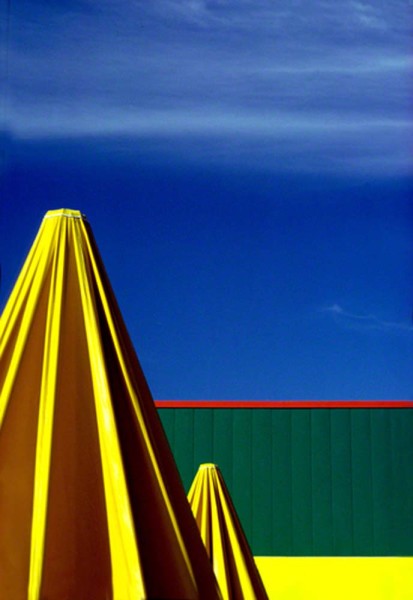
In the photo above, I found a new way of showing Venice, as well as ordinary umbrellas.

The key to all this is what the title to my classes and workshops is all about. You just gotta go out and stretch your frame of mind, or as my students refer to it as “SYFOM”.

Visit my new website at: www.joebaraban.com, and check out my 2019 workshop schedule at the top of this blog. I still have two spaces left for my workshop in New York, where we will be shooting in all five boroughs. Come shoot with me.

JoeB

My Favorite Quotes: Unknown

Try looking at what's above you.
Try looking at what’s above you.

Every so often, I like to submit a quote to all my fellow photographers out there. These are quotes I’ve written down over time that I find from all different sources, and don’t necessarily come from photographers. It’s kind of a library of thoughts I’ve accumulated that were said at one time or another sometimes going back at least a hundred years. By now I know most of these quotes from memory and I’ll refer back to one when the timing is right.

It’s a pity that this author is unknown since it’s one of my all time favorites. At some point in time, someone once said, “If you always do what you did, you’ll always get what you got”.

In my online class with the BPSOP, and in my “Stretching Your Frame of Mind” workshops I conduct around our planet, I’m constantly working with people that have a particular way of looking at things. A particular way of composing, and a whole lot of them live by the rules laid down by people that only require you to  achieve mediocrity.

It’s all about coloring outside the lines, and looking at new ways of seeing things. It’s  about going out and forgetting about putting your subject in one of the intersections required by the Rule of Thirds. It’s about not worrying that your subject is leaving the frame instead of making sure there’s plenty of room for your subject to walk into.

When you go out shooting. leave the left side of your brain at home. That’s the analytical side that only sees a tree. Go out with the right side of your brain turned on, that way you’ll see a tree but you also see the texture of the bark, the shapes created by the leaves, the Negative space between the leaves that defines them. Study the way the light falls on the tree, whether front, side or backlit.

Off a car’s hood

If you’ve always brought the camera up to your eye and composed from that height, try getting on your knees. Lay on your stomach and get some dirt on your shirt. Follow the light and let it be your guide as far as where to stand in relation to the subject.

Stop fearing shadows, instead embrace them because they are your best friend. Don’t leave just because the sun has gone down. Shoot in the blue hour, using silhouettes as your center of interest.

Try shooting through things, or shooting the reflections coming off buildings or glass. When you’re walking around looking for subject matter, don’t just look straight ahead; make your field of vision 360 degrees. Look from the ground in front of you to the sky above you because you just never know what you might see happening.

Instead of going out shooting after breakfast or before dinner, go out before breakfast and after dinner. This is when the light is the best.

If you try some of these ideas, I can guarantee you that your images will begin to go (what I always refer to) up a notch. Stop doing what you’ve always done so you can stop getting what you’ve always got.

Visit my new website at: www.joebaraban.com, and check out my workshop schedule at the top of this blog. I have added a new workshop to my 2019 schedule. On September 17th, ten photographers will get together with me at my evening “meet and greet” to begin a fantastic workshop in New York shooting in all the five boroughs. Check out my description at the top of this blog. Come shoot with me.

JoeB

Food For Digital Thought: Tighten Up

Tightened up by moving closer

After getting out of college, in the early part of 1970 I moved to Houston. My second job after graduating was with a newly formed advertising agency working as an art director.

One of our clients was Archie Bell and the Drells, and in 1968 they recorded a song called Tighten Up. It was our job to do any graphics and public relationss for them.

I got to know Archie and every once in a while on Siriusxm they play his big hit; which always maks me smile.

Just recently, I was talking to one of my online students with the BPSOP about one of his images he submitted for a critique. Since I had just heard the song, the title of Archie’s song immediately popped into my head; Tighten Up.

What I was talking to the student about was his  constant desire to crop his photos, dealing with any problems later sitting in front of a computer.

Let me digress for a moment to say that in my classes there’s no cropping allowed…I want to see their thought process right out of the camera. I tell them that in fifty years of shooting I’ve never, not ever, cropped one of my photos.

Tightened up by changing lens

Btw, I’ve had similar conversations with photographers that join me in one of my “Stretching Your Frame of Mind” workshops I conduct aound our planet.

If there’s things in your composition you don’t like, deal with them then not later. Having said this, cropping in front of a computer will hone your skills as a digital artist; if that’s your preference. What it won’t do is make you a better photogrpher.

What will make you a stronger photographer is to keep changing your initial composition by making adjustments. Adjustments come in all varieties, but the one that usually offeres the most benefits is to tighten up said composition.

Tighten it up by simply moving in closer, or perhaps changing lens to get rid of superfluous objects or unnecessary people. Using your 15PPP, your Border Patrol, and checking the four corners is the best way to do that.

Remember my fellow photographers, it’s not what you put into your photo that counts, it’s what you don’t put in that matters.

If you’ve never heard the song click on this link. If you do remember and want to remember the good old days click on the link!!

The Tighten Up

Visit my new website at: www.joebaraban.com, and check out my workshop schedule at the top of this blog. Come shoot with me sometime. I have a spot open for my New York Workshop this Septmber 17th if you want to photograph all five borougs.

JoeB

Personal Pearls of Wisdom: It’s not always what it seems

  One of the many ways to create visual interest and tension is to get the viewer to  believe what he’s seeing is actually what he thinks he’s seeing (make any sense?), and one of the ways to do that is to trick the camera (which has one eye…the lens) into creating a sense of perspective, or depth, or height (that requires two eyes), or all three at the same time. Sound complicated? Well, in actuality, it’s fairly easy and straightforward.

It starts with an idea you have that’s implanted into the viewer’s imagination. It needs to be something he’s familiar with whether it be from watching TV, reading a book, or perhaps something that he’s actually experienced in the past.

Then you need just one thing…a wide angle lens, a great sunrise, and the perfect environment.

An entire lesson is what my online class with the BPSOP works on, and when the occasion arises in my “Stretching Your Frame of Mind” workshops I conduct around the planet, I can physically show my fellow photographers exactly what I mean and how to achieve it…in the camera.

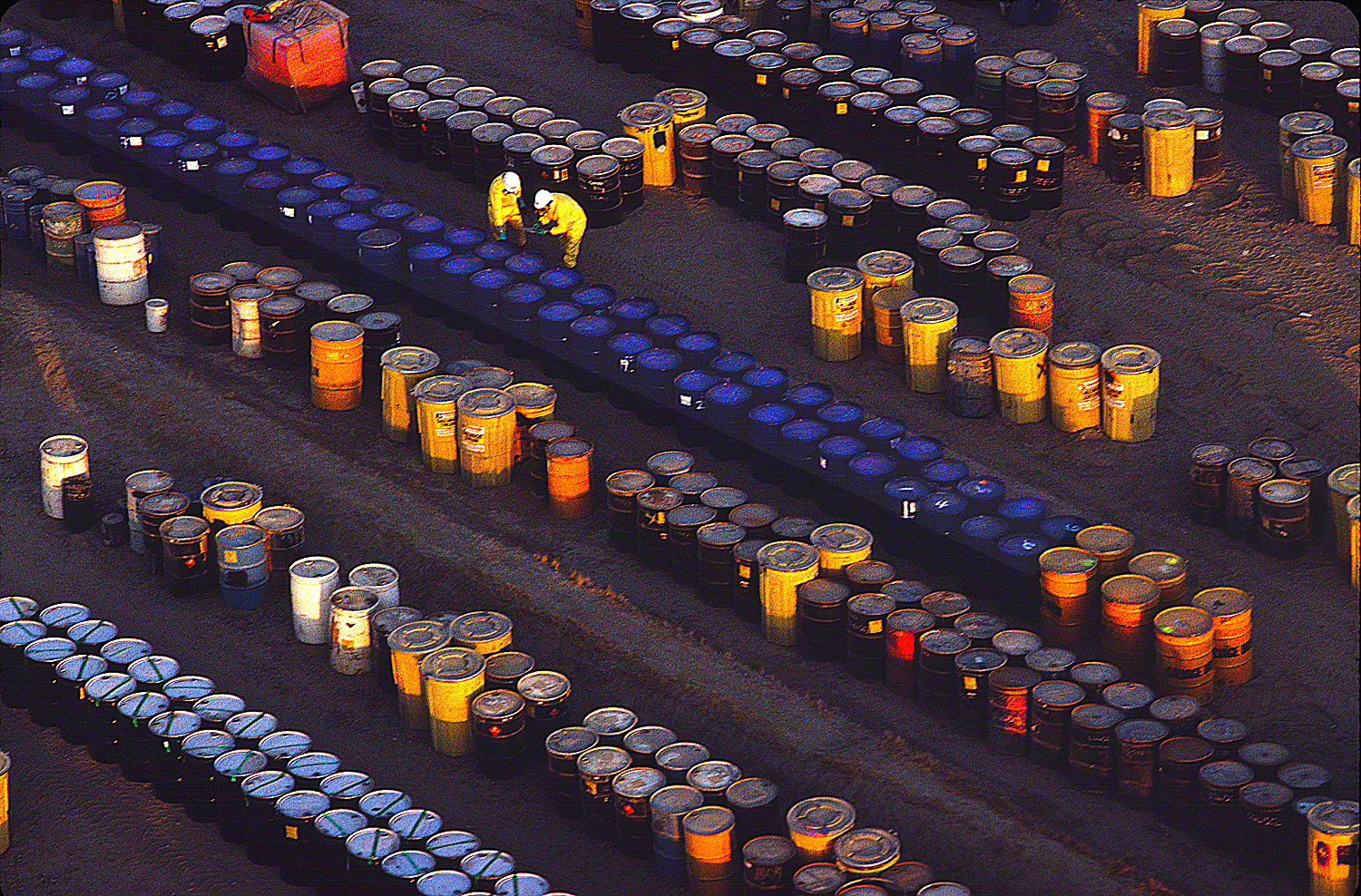
The above photo was taken during one of my Workshops. I was looking for just the right location to show the class how to use a wide angle lens to create the feeling of height, visual interest and tension. It was about thirty minutes before the sun came up and I desperately wanted to find something that had potential. It’s important here to tell you that the workshop was during the last week of July and the first week in August, and although it was chilly that morning the high that day was going to be close to 85 degrees.

Having said that, We passed by a huge lot filled with rock salt used to spread on the highways during the upcoming winter months; an idea immediately began forming in my mind. I had my assistant put on a yellow hooded sweatshirt I just happen to have in my assortment of props and wardrobe I always carry around…just for this moment.

I put on my “go to” lens which was my 20-35m, and I set the focal length at 20mm and got down close to the ground. I positioned the lens right behind a big chunk of salt so I could “anchor it in the foreground, creating layers of interest” and depth by getting “up close and personal” to it; while providing texture to the salt. I waited for the sun to just come up enough to light the top of the pile, keeping everything else in shadow.

It worked like a charm, creating the feeling that the man was considerably higher that the fifteen feet he actually was, and the rock salt created the snow, and the look/idea I was hoping for.

The production shot was taken after my shot and from a different position; when the sun was up much higher and the sky much bluer. It’s merely to show you how high my assistant actually was, and how I could trick the camera…and the viewer.

Taken 30 minutes after sunrise.

Visit my brand new website at: www.joebaraban.com, and check out my workshop schedule at the top of this blog. I still have two spots open for my upcoming workshop in New York beginning September 17th. Come shoot the five boriughs with me.


Food For Digital Thought: Can’t See the Forest for the Trees?

The Whole Enchilada

Here’s a saying that has been around as long as I can remember; somewhere right after the last dinosaur disappeared.

I’m sure that at one time you have either said it yourself, it has been directed to you, or you read it, “Can’t see the forest for the trees”.

For those that don’t know the actual meaning, it’s an idiom ( https://www.dictionary.com/browse/idiom) and it means…”an expression used of someone who is too involved in the details of a problem to look at the situation as a whole”.

Another definition is, “To focus only on small details and fail to understand larger plans or principles”; basically the same thing.

At this point you’re probably asking yourself what does this have to do with taking pictures?

I have seen this first hand with many of my fellow photographers that have either taken my online classes with the BPSOP or have seen it during the critiques in my “Stretching Your Frame of Mind” workshops I conduct around the world.

They get so zoned into a subject that they fail to see the environment that surrounds it. This causes confusion when the viewer can’t figure out what you’re trying to visually say.

One of the problems I observe is that I see people walking around and all of a sudden they’re shooting pictures of things that could have been shot anywhere; For example, coming in close on a person, just a face, an object, something in a window, Etc.

This all works when you’re back from your trip and have the family over for the proverbial slideshow and you’re able to talk your way through each photo.

That’s all well and good, but for the most part you probably won’t be around to explain the pictures. If you want to say where the photo was taken (without being there), you’ll want to show some of the environment to give your subjct a place; including a name of the city (if at all possible) somewhere where the viewer can read it.

This what I refer to as The Whole Enchilada.

Btw, in the above image I was looking at the patterns, color, and light on the tent. When I stepped back I saw the ferris wheel!!!

🙂

Visit my brand new website at: www.joebaraban.com, and checkout my workshop schedule at the top of this blog. Come shoot with me sometime and we’ll slow down together and smell the roses. I still have an opening for my upcoming workshop in New York starting this coming September 17th. I hope you can come join us as we shoot all the five boroughs.

JoeB

Quick Photo Tip: Shooting Through Things

Shooting through the glass

A lot of the inspiration for writing these posts comes from either dicussing a photo a student taking my BPSOP online classes has submitted or from a fellow photographer that has taken one of my “Stretching Your Frame of Mind” workshops I conduct around our planet.

This post comes directly from working with a photographer during my last workshop in Berlin; walking the streets in Pottsdam.

We were walking past a shop that had two doors. One wooden door with small panes of glass that was open wide, and a screen door that was closed and being used as the main door for patrons to enter.

This photographer was about to walk by because the screen door was closed. I stopped him and pointed out the fact that if he was to shoot through the screen and controlled the DOF, he might get something interesting.

It had never occurred to him to try anything like that, mainly because he never considered the screen as being anything but in sharp focus; since that’s the way his eyes were seeing it.

After reminding him that he was there to “stretch his frame of mind”, we set out to try and incorporate the screen into his thought process and add a ‘layer of interest’ to his photo.

I had him compose what he thought was an interesting composition made up of silhouettes, color, and light. Then I had him try different F/stops ranging from the aperture being wide open to closed down to F/22.

Well, I have to tell you that it was an epiphany for him, and wound up being something that he could use all the time; depending on the circumstances.

Here’s a few examples: https://joebaraban.com/example/shooting-through-things/

The important thing to remember is to manually focus so you can have complete control. You’ll want to focus on the subject on the other side of whatever it is you’re shooting through and then use your aperture to try different degrees of sharpness.

It’s amazing that because of the digital era where practically everything is done for you, a lot of my fellow photographers have no idea that you can actually focus the camera all by yourself!!!

Visit my new website at: www.joebaraban.com, and check out my workshops at the top of this blog. Come shoot with me sometime.

JoeB

Food For Digital Thought: Making Not Taking Pictures

This is making pictures

If I had to name one thing that I’ve talked about the most, both in the years I’ve been teaching online with the BPSOP, and in all the “Stretching Your Frame of Mind” workshops I’ve conducted around the planet, it would be that the majority of my fellow photographers ‘take’ not ‘make’ their pictures.

I’ve seen it with my own eyes, so I know it to be soooooooo very true. They walk up to a subject whether it be a person, a structure, or even a landscape, and bring the camera up from their chest or swing it around from their shoulder. They look in the viewfinder and within a nanosecond (maybe a little more) they click the shutter and walk away. That’s taking pictures and maybe they got something worth sharing, maybe even a wall hanger; but I can tell you from years of experience…don’t count on it.

Here’s the difference in that style of photography and mine, and it’s what I teach and preach to all my students: First of all, the most important step before even thinking about bringing the camera up to your eye is to determine where the source of the light is coming from. Unless you’re street shooting where capturing the moment is critical, light is everything!!!

I want to make sure I’m either side lighting or back lighting my subject and center of interest. I do this for several reasons: Texture is one of the basic Elements of Visual Design, and to bring out the Texture, you need to either side or back light it. Form is another Element. Form refers to the three-dimensional quality of an object. height, width, and depth are the three ingredients, and to show depth, you need to side light it. Anything translucent such as: grass, flowers, and water look the best when they’re backlit; I always position myself so that my subject is between the source of the light and my camera.

I show my students how to incorporate the Elements of Visual Design into their imagery, and these elements are put on an imaginary ‘Artist Palette’. The same ‘Artist Palette’ I’ve been carrying around in the back of my mind for the past forty-four years. When I’m out shooting I look for things not immediately visible without the help of my palette. I look for: Light, Texture, Patterns, Shapes, Vanishing Points, Perspective, Color, and most important Line. I look for ways to use Negative Space to define my subjects, as well as balancing my composition. I use lines to move the viewer around the frame, especially if I can introduce a Vanishing Point. I introduce Color on overcast days, and I also use color to communicate ideas.

I also show my fellow photographers the way to use the right side of the brain…the creative side. This is the side tha tnot just sees a tree, but all the before mentioned elements of design.

This is “making pictures”, and a hell of a lot more fun than just bringing the camera up to my eyes and clicking the shutter.

Visit my brand new website at: www.joebaraban.com, and check out my workshop schedule at the top of this blog. Come shoot with me sometime.

JoeB

Food For Digital Thought: Standing the Test of Time

Standing the test of time

There are many aspects involved in taking a photo that you’ll remember and that will stand the test of time; or perhaps just another background memory clouded by the passing of our daily lives.

Since I enjoy the game of golf and I often play (I’m a much better photographer), I can draw this analogy…to simply hit a golf ball straight and not necessarily far, it takes a number of things all working together at the same time: Your stance, grip, wrist, shoulders, head, knees, follow-through,  tempo, backswing, and that’s not counting all the separate nuances that are associated with each one of those aspects. FYI, according to my brother, who’s a Master Professional, only five percent of all the golfers in the world can break 100.

Well the same hold true for photography, fortunately for all of us there’s not quite so many!!!

In my online classes with the BPSOP and in my “Stretching Your Frame of Mind’ workshops I conduct around our planet, we work on incorporating the elements of visual design.

We also work on light, exposure, balance, composition, unity, rhythm, meaning, visual interest, and the ability to see past first impressions, are all some of the important aspects necessary before you click the shutter; if you expect your photos to stand the test of time.

What do I mean by standing the test of time? I mean that when you look at your photo a day, week, month, six months, a year or longer, and it still looks as good to you as the day you shot it, then it will stand the test of time and become timeless. Will it convey the same meaning, tug at the same heartstrings, the same smile no matter how much time goes by?

Moreover, if in the same stretch of time you take a second look at it and you wonder why in the hell you ever clicked the shutter, then maybe you shouldn’t have been so hasty. That’s where those aspects I mentioned come into play. A good photo is going to be a good photo no matter what new technology forces its way into the art of photography…and make no mistake, it is art.

Photographers are artist who have chosen a camera as their medium. A camera on a tripod is just like a blank canvas on an easel.

I find that the more plug-ins, programs, software, and buttons there are, the harder it is to take a simple photo and have it last through all these photo fads. Case in point, look at all the great photographers that shot with a lens and a camera. People like: Cartier-Bresson, Ansel Adams, Steichen, Haas, Lange, Eugene Smith, Newman, Walker, Penn, and so many more.

Their images are more sought after today than ever before and will continue their popularity even as our generations change hands and younger/newer photographers take over with more advanced, more powerful, newer, smarter, more megapixel cameras . I just don’t think you can say that with the type of photos that one sees every day. They will come and go as fast as the new spring fashions that come out year to year.

For a photo to stand the test of time, it takes a commitment to the process. Take the time to get all these aspects going for you before you click the shutter, not in front of a computer. Think before you bring that camera up to your eye, and you’ll wind up shooting less and being more productive.

Visit my brand new website at: www.joebaraban.com and check out my workshop schedule at the top of this blog. Come shoot with me sometime.

JoeB

Anecdotes: The New York Times Magazine

One exposure, one frame, one click

For those of you new to my blog, I teach an online class with the BPSOP, and I also conduct my “Stretching Your Frame of Mind” workshops all over the planet.

I love writing these posts because they bring back great memories of when I was working as an advertising, corporate, and editorial photographer; that would be right after the last dinosaur disappeared.

That period of time when everything had to be one click, one exposure, on one piece of Kodachrome film; ‘Adobe’ was a type of house in the Southwest part of the USA.

The New York Stock Exchange called me to shoot a portrait of (at that time) the youngest recipient of a heart pacemaker.

Since this little girl was so young and more than likely shy, I had an idea for the shoot and had my studio manager call her parents to find out what she loved doing and what she wanted to be when she got older; also, did she dress up while playing?

We were told that she was taking ballet lessons and wanted to be a ballerina when she grew up. Perfect I thought, and we instructed her mother to have her come fully dressed in her balet attire.

I had a location scout locate a place that would work for the environment, and she came back with the absolutely ideal room; and it was only a mile away at Rice University.

I scouted the room and found that the row of windows face west so the light would be perfect if we shot late in the afternoon.

Being a firm believer in covering my butt at all times and Murphy’s Law, I decided not to trust whether it was going to be a clear sunny day with golden light streaming through the windows.

That said, I was able to secure additional monies to bring in my own lights; two 12K daylight balanced HMI’s (used in television commercials and motion picture films), a really big generator, a grip, and his assistant; and a fog machine just for the hell of it!

The day of the shoot, the sun was hidden behind a dark overcast sky so we went for plan B and through the window I lit the room with the lights I had brought in…and smoked it up a touch.

The little girl arrived wearing her favorite outfit and held tightly by her mother on one side and her father on the other…not good!!!

As I predicted she was very shy and her mother giving her directions didn’t help. So, what do you do? You make the parents leave the room, that’s what you do.

At that point I wasn’t going to try and direct her so I composed the shot the way I wanted by aiming the camera towards the mirror, putting on a 20mm lens, and left my camera on a tripod. I then attached a twenty foot cable release  to it…and walked away.

I turned my back to the camera and started a conversation with my crew. When the little girl realized that no one was watching, she turned towards the mirror and started pretending. As she was doing this I started firing off shots.

Visit my brand new website at: www.joebaraban.com, and check out my workshop schedule at the top of this blog. Come shoot with me sometime.

JoeB

Food For digital Thought: Color That Inspires

Color (and light) inspires me

When I go out shooting I never look for a particular subject, for example: flowers, fences, boats, cars, buildings, planes, trains, rivers, oceans, etc. What I look for is color and light to be my subject. I’m usually looking for both to be co-subjects since it creates a strong, powerful relationship. A white picket fence is not just a picket fence, it’s a ‘white’ picket fence. The type of flower is unimportant; it’s the color that attracts me to it.

In my online classes with the BPSOP, and also my “Stretching Your Frame of Mind” workshops, I emphasize how color and light working in tandem creates those kinds of images that will stand the test of time.

Color is a stimulant for our eyes, and ties the elements of a photograph together. Color affects every moment of our lives, and has an enormous impact on our photography; knowing this, is one of the first steps in taking consistently good photographs.

I want to digress for a moment and put in a piece of information I read on the internet, if nothing else to show you how little value you should place when reading a considerable amount of photographic gibberish that’s out there..

This is what I read…” Colors that clash cause confusion to the eye and result in a poor image. Too many clashing colors create multiple focal points, causing the eye to dart around the image not sure what to look at first or what to focus on. Rather, choose one dominant color that becomes the focal point of the image and draws the eye of the viewer to it immediately. The greater the intensity of the color, the more it’s going to dominate so be careful that your subject in an image has the dominant color, otherwise a secondary subject could overshadow it because it has a dominating color”.

I couldn’t disagree more, and it leads me to the title of my post…I have created a link to the section on my brand new website to show you how color inspires me.

Since color is a basic element of visual design, it’s a very important ingredient in taking our imagery what I refer to as…”up a notch”. We should want to use color to it’s fullest dgree.

“I’m all about getting a viewer to feel some emotion when looking at my images. Except for the savvy photographer, most people aren’t really concerned how I compose a photo. Having said that, everyone responds when I’ve made them feel something; and nothing does it better than color.

So, my fellow photographer, the next time you go out shooting think of using color as your subject; using it to set a mood. If you really want your color to stand out think about the time of day you choose to shoot.

For example, photos taken in the early part of the day or in the late afternoon will have a warmer cast, which will make the scene seem inviting and cheerful.

Converesly, photos taken at mid-day will have a cooler cast and could render the different hues hot, contrasty and bold; not particularity relaxing…but definetely a look.

Visit my brand new website at: www.joebaraban.com, and check out my workshop schedule at the top of this blog. Come shoot with me sometime.

JoeB