Quick Photo Tip: Photographing a Complete Stranger
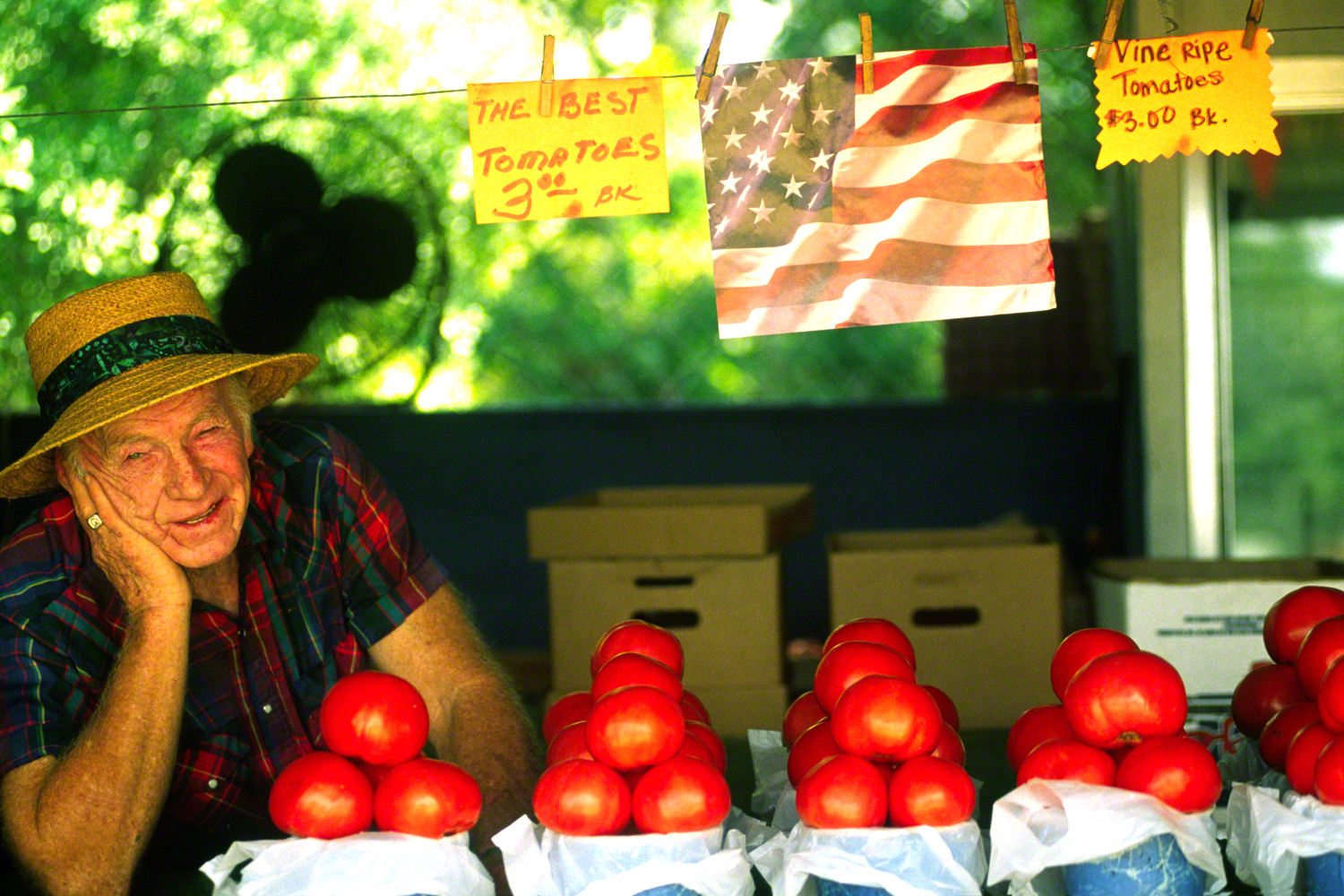
Great tasting tomatoes!!

Over the years, one question that keeps surfacing in my online classes with the BPSOP and also in my “Stretching Your Frame of Mind” workshops is how do I approach a stranger to ask him or her to let me take their picture?

My students will tell me that either they’re afraid of being turned down and they just couldn’t take the rejection, or the minute they see them coming camera in hand, they turn and walk away. Or it one extreme case, he was afraid of the person mugging him and stealing his camera.

Here’s what I’ve been doing for the past fifty years, and it usually works: Depending on the situation, I’ll either leave my camera in the car when I approach someone, or I arrange the strap so that the camera is hidden behind my back.  What you don’t want to do is approach someone with the mindset that you’re a photographer with an expensive camera, and therefore you deserve to take their picture.

A camera can be very intimidating, and can turn people off in a heartbeat.  It can also connote some financial plan you have for yourself at their expense.  For example, are you going to sell their image? Are you going to charge them for it?

If the person is selling something, whatever it is…buy it!!! If they’re entertaining a crowd, donate to the cause. If they need some kind of assistance, offer it. What you want to do is to make friends as soon as possible. You want them to relax their guard by being friendly. Since there’s not much of that going around anymore it just might shock them into reciprocating the gesture.

If it means buying their ‘souls’, expect to pay a little more. Stealing people’s souls is soooooo tacky! I’ve heard that it can take you to Purgatory where you’ll spend eternity playing Go Fish with the rest of the souls of sinners, instead of heaven; although that just might be a urban legend.

In the above photo I took while working on a photo essay entitled “back road businesses”, I saw this man across the highway and immediately turned around. I left my camera in the car and walked up and began to admire his home grown tomatoes. After buying two baskets (I happen to love home grown tomatoes), I asked him if I could take a picture of his tomatoes since they were so beautiful. At this point, I had left my camera in the car.

He said, “Sure thing”. I think maybe since I didn’t have a camera with me, he though I meant at some point in the not too distant future. I went back and got my camera and started shooting the tomatoes. After a couple of minutes, I asked him if he would be in the shot with his tomatoes. Now, since the tomatoes were the stars, he didn’t have a problem with it.  Here’s the way I think…all they can say is no.

Oh, one other thing…you gotta get over the hump and develop a little Chutzpah!!!

Visit my website at: www.joebaraban.com, and check out my workshop schedule at the top of this blog. Come shoot with me some time. This coming January Along with William Yu, I’ll be taking a group to China to photograph the flooded rice terraces and also the tribal villages. Next February in conjunction with the Santa Fe Workshops, I’ll be returning to Cuba for the fourth time. My next springtime workshop will Berlin next May; an incredibly beautiful city.

If you’ll send me a photo and question, I’ll create a video critique for you.

JoeB
Quick Photo Tip: Seeing Between the Lines

Visual Tension

I know all or most of you have at one time or another heard the expression, “Reading between the lines”. I recently heard a friend saying it and it immediately had me thinking of a post I wanted to write. Btw, I never know when an idea will pop into my brain, so I look forward to them each and every time; and have been for six years and almost six hundred posts ago.

When I go out shooting, I always have my Artist Palette securely positioned in the back of my mind. As the photographers that have taken both my online classes with the BPSOP, and the ones that have been with me on one of my “Stretching Your Frame of Mind” workshops I conduct around the planet know, my Artist Palette has all the elements of visual design and composition; it’s the same palette they all are using now as well.

One of the elements we work on in my part I class is ways to create Visual Tension. I’m not talking about the tension that comes from mental or emotional strain. I’m talking about the kind of tension that occurs when forces act upon one another. It’s the anticipation of something about to happen, as in the two forces colliding with one another.

One of the ways to generate visual Tension is to frame a subject within a frame. Framing serves to help define the subject, it adds depth to a composition, and it leads the viewer past the frame and into the picture…to the payoff…or subject.

A more non-traditional way to frame a subject is to put it between two strong lines. This will not only lead the viewer in and provide depth (by the manipulation of lines), but it will give a feeling of motion; as in moving the viewer across the frame.

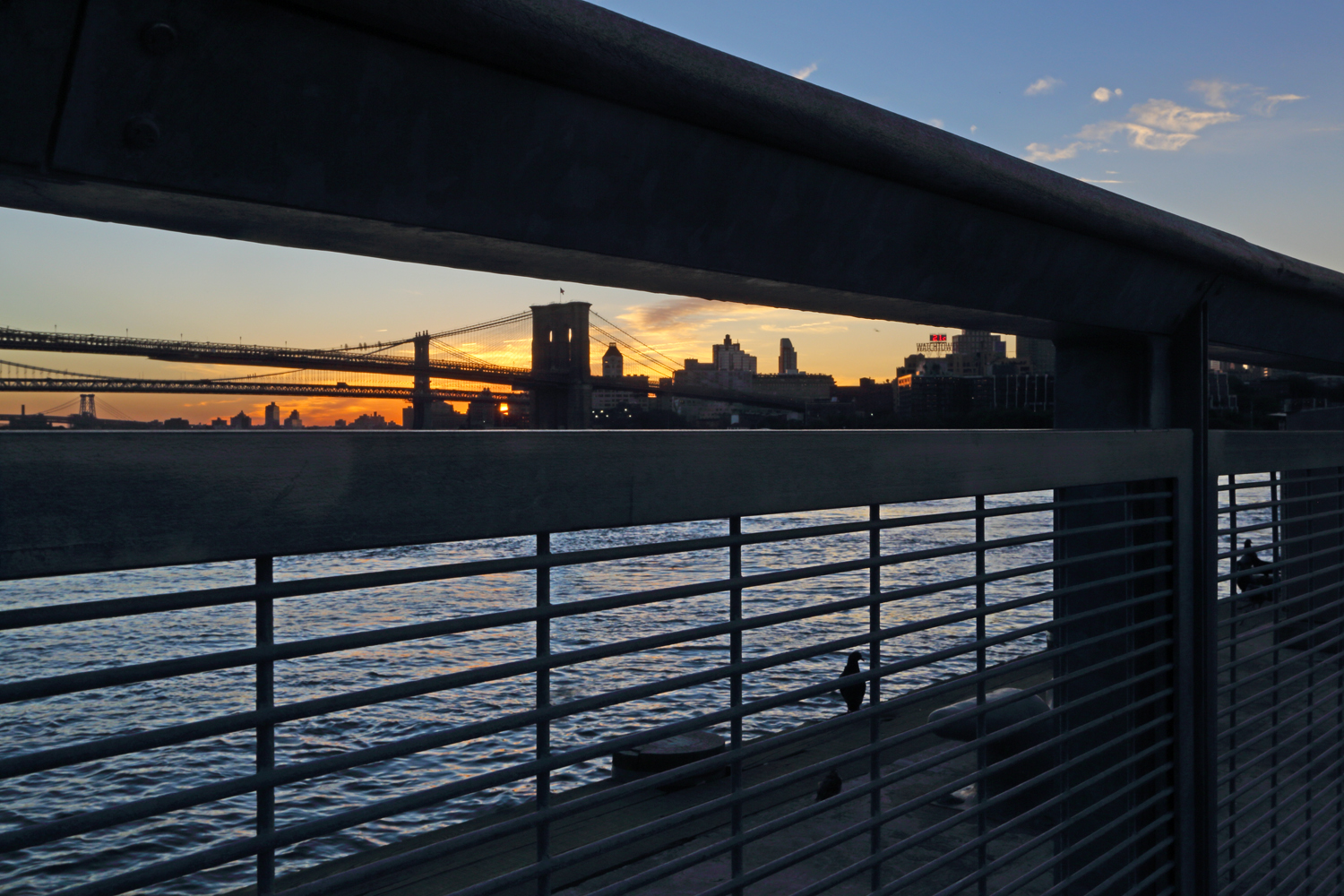
In the above picture, I was with my workshop in New York one sunrise and while working with one of my students, I pointed out a way to shoot the Brooklyn Bridge in a less predictable way; a way less traveled in photographic jargon.

By placing the skyline in between the thick black lines I not only created visual interest, but visual tension as well. It certainly passes the six-eight second rule…I hate rules you know!!!


Visit my website at: www.joebaraban.com, and check out my workshop schedule at the top of this blog. Come shoot with me some time. This coming January Along with William Yu, I’ll be taking a group to China to photograph the flooded rice terraces and also the tribal villages. Next February in conjunction with the Santa Fe Workshops, I’ll be returning to Cuba for the fourth time. My next springtime workshop will Berlin next May; an incredibly beautiful city.

Send me a photo and question to: AskJoeB@gmail.com, and I’ll create a video critique for you.

JoeB
Quick Photo Tip: Call Shotgun!!

I’m so glad I wasn’t driving.

SHOTGUN!

For most of the people that are now reading my blog that have heard or have used this expression, you understand its importance in our society. For those that don’t, it was a common declaration growing up that meant if you said it out loud and before anyone else could say it, you got to sit in the front passenger seat next to the window;  it was written in stone and no one could dispute it; except maybe a much bigger friend.

Now that I’m no longer a kid, although I still consider myself extremely immature, I can sit there whenever I want. As I tell my students that take my online classes with the BPSOP, and those that have been with me on multiple workshops around the planet, I will often quote people that have played a significant part in the way I approach photography. This time it’s Eddie Adams who once said, “When you get lucky, be ready”.

What I mean is that by sitting shotgun with a camera in your lap you just never know what you’re going to see when stopped either at a red light or during rush hour. Btw, I won’t always do this because of the position of the sun, but I’ll jump at the chance when the sun is low on the horizon either early in the morning or late in the afternoon.

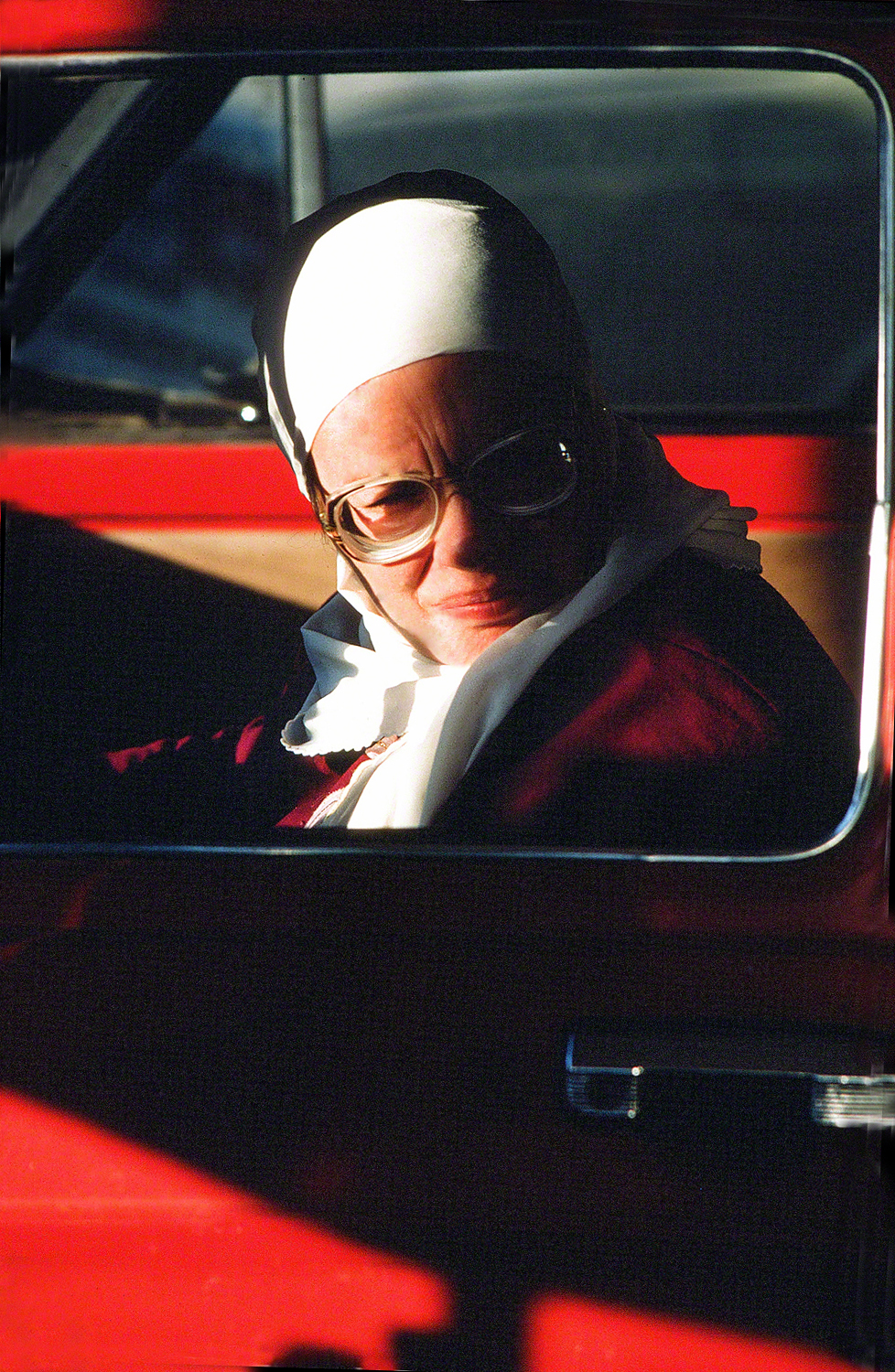
In the above photo, it was late in the afternoon and we were downtown stuck in a rush hour traffic jam. I had decided beforehand that it was a good time to call shotgun (even though it was just my wife and I). No one around us seemed to be very happy except me, since I was pre-occupied with the light…as is usually the case.  As I  was looking around for the light, a car driven by a woman pulled up right next to me who appeared to be wearing a white hijab.

I noticed the light hitting all around both sides of her car and brought my camera (my little Lumix DMC-LX7) up to the ready position. I was watching her while she was sitting in the car’s interior shadows,  and it was obvious she didn’t want to be there anymore than anyone else that afternoon. In just the quickest of moments she stuck her head out the window and because I was ready when I got lucky, I got off one shot.

So my fellow photographers, the next time you know that you’ll be stuck in traffic, take a camera along with you and call shotgun. You just never know when and where that “OMG” photo will raise it’s head, and if you’re ready for it and can anticipate what might happen, you’ll thank me for it.


Visit my website at: www.joebaraban.com, and check out my workshop schedule at the top of this blog. Come shoot with me some time. This coming January Along with William Yu, I’ll be taking a group to China to photograph the flooded rice terraces and also the tribal villages. Next February in conjunction with the Santa Fe Workshops, I’ll be returning to Cuba for the fourth time. My next springtime workshop will Berlin next May; an incredibly beautiful city.

If you send me a photo and question to AskJoeB@gmail.com. I’ll create a video critique for you.

JoeB
Quick Photo Tip: Getting into your zone

“Got him”!!

Although I’m not able to spend a lot of time walking around a city, I know that when I do plan on going out street shooting, I need to prepare myself by getting into a mindset…a zone. I want to blend in so I can best feel the heartbeat of humanity…it’s soul.

Here’s what I suggest:

Don’t think too much..rely on your instinct. Your eyes should be constantly moving in every direction, and paying close attention to what I call my 25X4=100 rule; more of a guideline than a rule…I don’t like rules!!!!!!!!!!!

Watch for unusual movement going in a different direction. Remember that the viewer will always look towards the brightest part of your composition, so look for changes in light.

Anticipate the action, in other words if you’re following someone interesting, look ahead so you can put him or her into the area you’ve created.

Henri Cartier-Bresson was a master at this method. although he would shoot the moment it was happening, he would also set up a composition and wait for the person to walk into his frame; sometimes waiting for quite awhile.

Avoid wearing colorful or bright clothes, as it would not be the best way to integrate yourself into the general population that walks on either side of the street. Having said this, I like to walk on the shady side and shoot into the bright side…why? Because I’m looking for contrast behind the shadows that are tangent with the areas in sunlight.

I have discussed this not only with my online class with the BPSOP, but walking around with my fellow photographers that are taking my “Stretching Your Frame of Mind” workshops I teach around the planet.

I’ll recommend that they have two exposures settings saved in their cameras that they can switch back and forth to. What I mean is that when they’re shooting into the brightest areas on one side of the street, they have one exposure set for that.

When they decide to shoot into the shady side of the street, change over to your exposure that was set for that. This will make a big difference in capturing that moment and have it close to being properly exposed.

Small cameras with small lens…decide on a lens, or have some small bag that can hold one other…just for a change. Going around with a big Canon or Nikon with a big lens might get some looks of envy and make you feel important, (if that’s your thing) but it won’t go very far when you’re trying to stalk that illusive “moment in time”.

You’ll maintain better focus if you walk alone, that is if you’re taking it seriously. A small group of photographers can be fun, but probably not as rewarding as far as the number of quality photos you come home with. Meet up later over a glass of wine at some outdoor restaurant and compare notes.

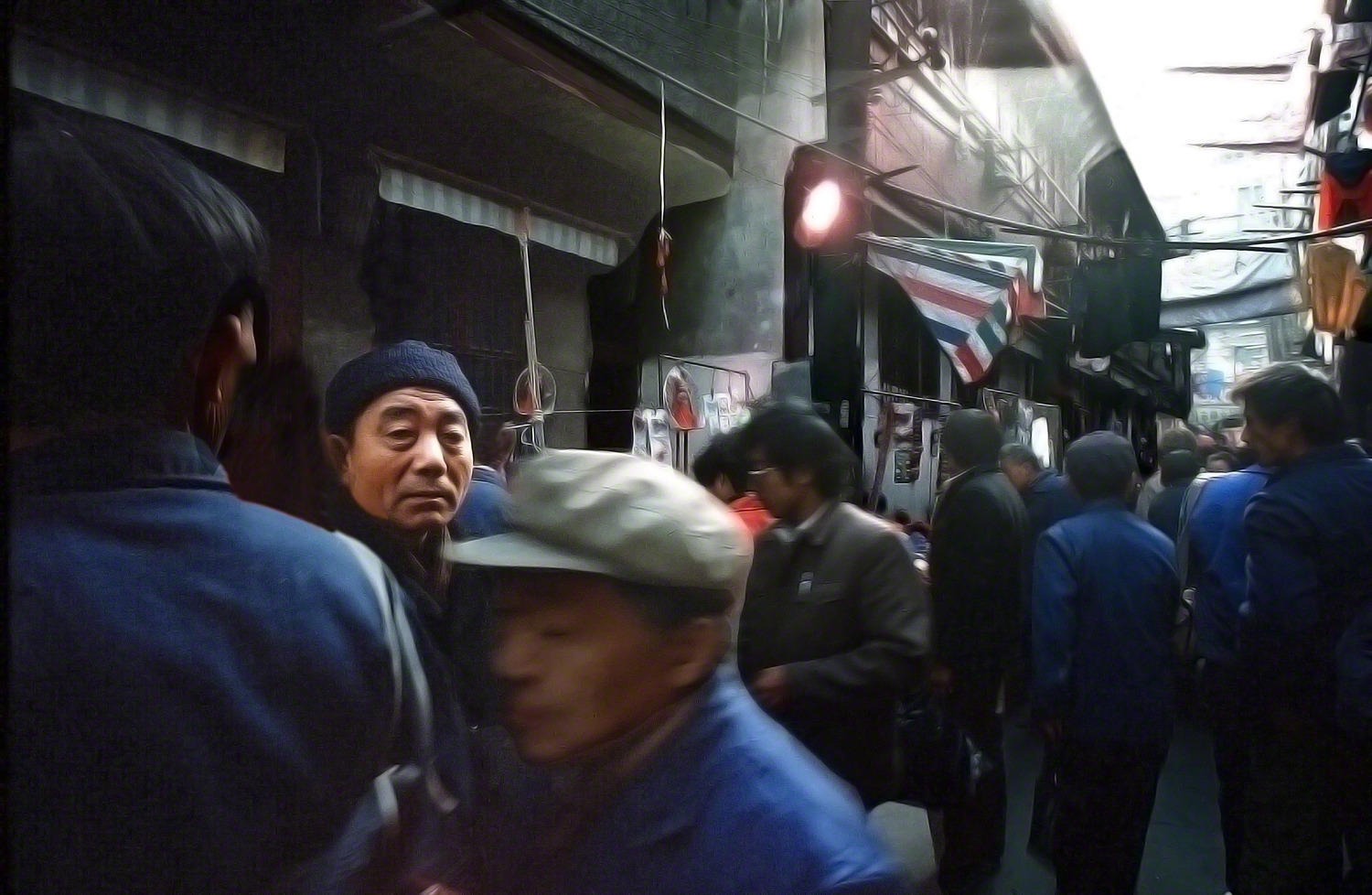
In the above photo, I was walking down a street in Shanghai, China among the masses and stopped to scan the faces of all the men (mostly wearing the same color jacket). I noticed a man that had stopped and was looking around for something. I had a feeling that this might be the shot so I began to zone in on him. While  I was moving the camera from right to left, keeping one eye on him, he looked right at me.

I had my exposure already set just in case, and the split second I saw him looking at me I clicked the shutter, and as Eddie Adams once said, “When you get lucky, be ready”.


Visit my website at: www.joebaraban.com, and check out my workshop schedule at the top of this blog. Come shoot with me some time. This coming January Along with William Yu, I’ll be taking a group to China to photograph the flooded rice terraces and also the tribal villages. Next February in conjunction with the Santa Fe Workshops, I’ll be returning to Cuba for the fourth time. My next springtime workshop will Berlin next May; an incredibly beautiful city.

Send me a photo and question to: AskJoeB@gmail.com, and I’ll create a video critique for you.

JoeB
Quick Photo Tip: Two Birds With One Stone

 I’m always being asked how do I come up with these weird analogies and the answer is simple. Ideas come into my mind all the time because I’m always watching, reading, and listening…even sleeping. When an idea pops into my mind, I figure I have about five seconds to either pick up my phone, take it out of my pocket, lift it off my nightstand, go to my notes, and jot it down before it vanishes somewhere in the cosmos…usually lost forever; isn’t it hell being old and gray!!!

But I digress.

I like shooting in all kinds of genre be it landscapes, nature, industrial, people, environmental portraits, architecture, etc. The two I like to combine are people and architecture, and this is where the title of this posts comes in.

There are two reasons (birds) I like to do this: one is that people like to see people in photographs. Showing a gondola in Venice floating by itself and tied to a set of stairs down one of the many canals doesn’t say the same thing as a gondola with two young lovers being chauffeured down the same canals by a Gondolier while having a glass of Chianti; especially if they’re backlit by the last rays of a beautiful setting sun.

In my online classes with the BPSOP and in my “Stretching Your Frame of Mind” workshops I conduct around our ever changing planet ( 🙁 ), I’ll often show examples of exactly what I mean; after all isn’t one picture worth a thousand words?

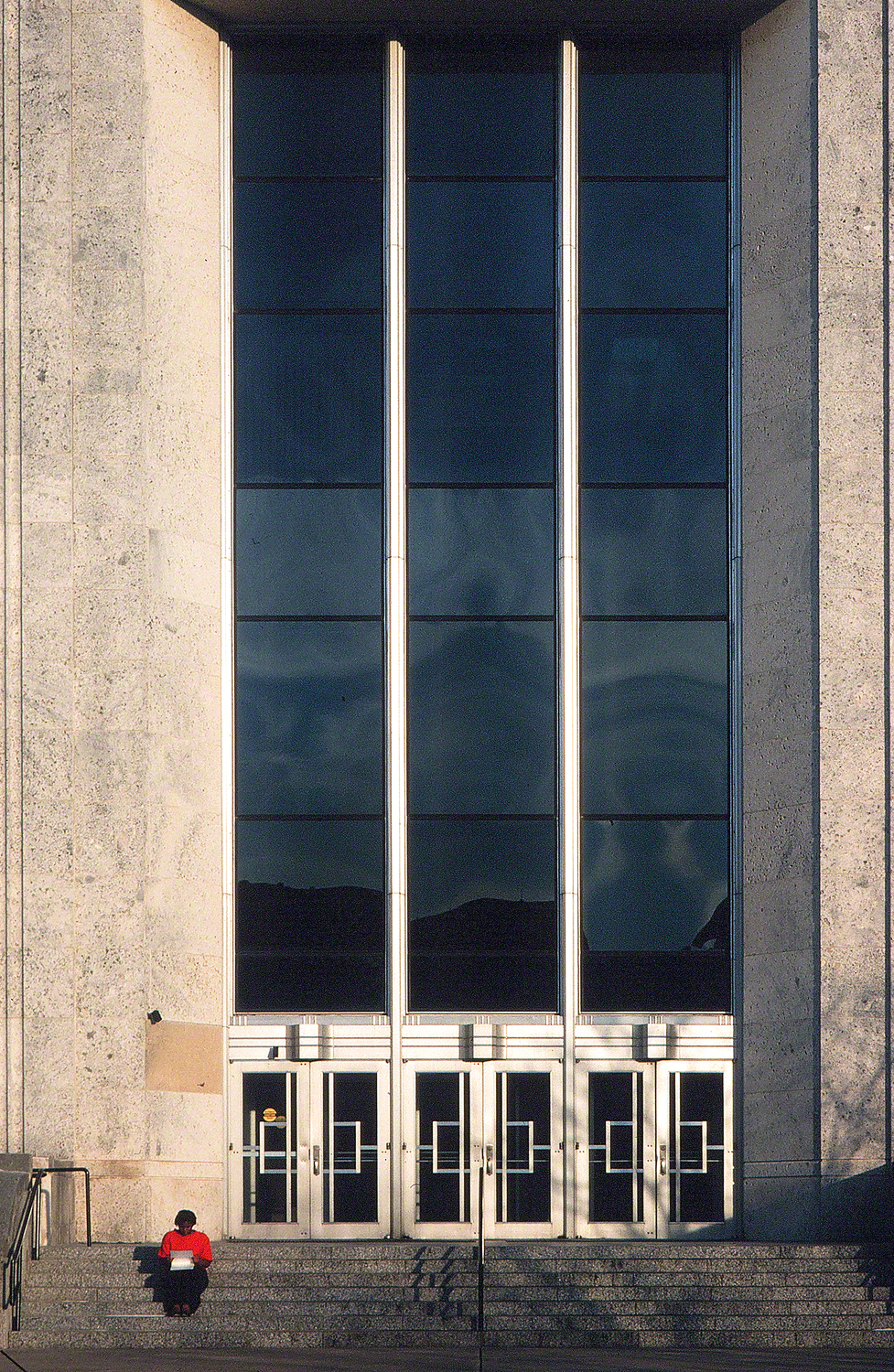
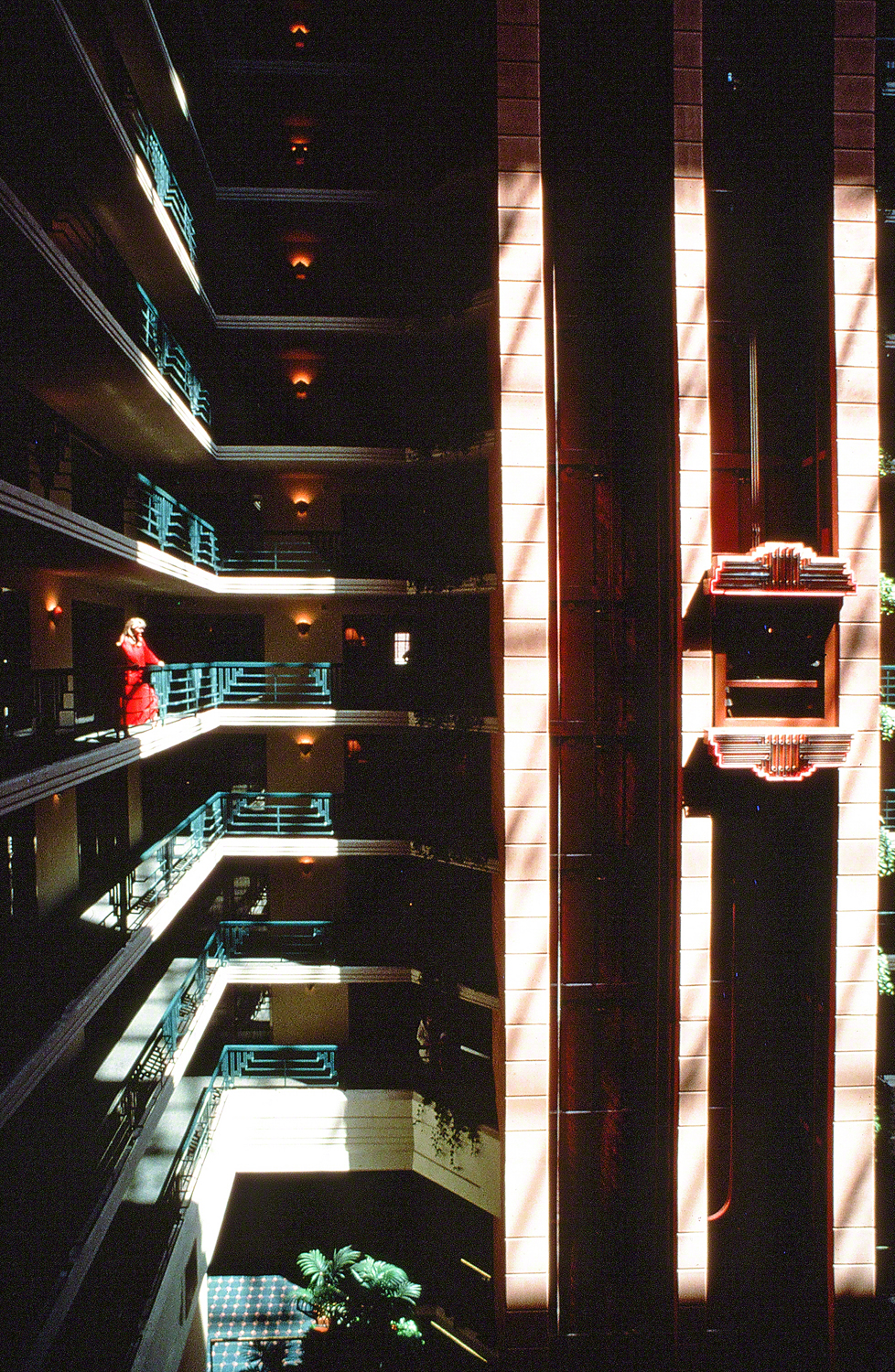
The other reason is I like to include people to show scale of either a building or an architectural detail. The viewer can relate to the size of a person since he’s familiar with average heights, and depending on where you place the person in your composition you can generate visual tension.

For example, placing a person in the middle of the frame and close to the lens gives a feeling of intimacy, whereas placing the person  in the bottom right corner sends a message of loneliness; as well as the feeling of being small in the environment surrounding him or her.

Another way to create Visual Tension is by using body language, gesture, and stopping the action of someone and leaving it un-completed. Blurring a person walking or running through your composition and in front of the building not only adds interest, but adds energy to your images. Color is a good way to draw attention to a person, especially if they’re wearing red.

One last note…when traveling be sure to photograph the people as they are the key to the countries culture.


Visit my website at: www.joebaraban.com, and check out my workshop schedule at the top of this blog. Come shoot with me some time. This coming January Along with William Yu, I’ll be taking a group to China to photograph the flooded rice terraces and also the tribal villages. Next February in conjunction with the Santa Fe Workshops, I’ll be returning to Cuba for the fourth time. My next springtime workshop will Berlin next May; an incredibly beautiful city.

If you send me a photo and question I’ll create a video critique for you: AskJoeB@gmail.com.

JoeB

Quick Photo Tip: Now Look Right at Me.

Photographing people has always come natural to me since the early days of my well spent youth as a stringer for AP, UPI, and being a Black Star photographer. Whether it be simple portraits or including a lot of the environment surrounding them, I’m in my comfort zone.

Over the years as one of the instructors for the BPSOP, an online photography school, and in my “Stretching Your Frame of Mind” workshops I often see portraiture submitted. More often than not my fellow photographers will usually have the subject looking away; that’s fine but they’re missing something important…what you say?

I teach two classes with the BPSOP and they’re about how to incorporate the Elements of Visual Design into your imagery; the most important of all the elements being Line.

With Line, none of the other elements would exist. Three of them: Pattern, Texture, and Shape all require Line to be elements. In fact planes, trains, automobiles, and even you and I couldn’t exist because we all have an outLine.

There are lines and then there are implied lines, and these types of lines are what’s important in portraiture…WHAT?

These implied lines are merely suggestions and not directly revealed to the viewer. To me, the implied line between the subject’s eyes and the camera’s lens is very powerful; I’m looking past their conscious thought and right into their soul; of course without stealing it!!!

Implying content outside the frame.

I feel a bond has been created, and a trust arises from the subject willing to look me straight in the eye. That said, there’s one time when I DO want them looking away from the camera.

When you place the subject close to the edge of the frame you’re creating Visual Tension. When you have them looking out of the frame at that point you’re implying content outside of the frame. In other words you’re suggesting to the viewer that there’s more to the story that meets the eye; the viewer will wonder what he/she is looking at.

This makes the viewer an active participant and he will stick around looking longer…isn’t that what you want?

Visit my website at: www.joebaraban.com, and check out new workshops as I add them in 2018. Come shoot with me sometime. I have two spots left in my joint workshop with William Yu to photograph the tribal villages and rice terraces in China

I have two spots left in my Springtime Workshop in Berlin starting May 23rd. My sixth workshop in conjunction with Santa Fe to Cuba is now open to register. It begins February 11th.

Send me a photo and question to: AskJoeB@gmail.com, and I’ll create a video critique for you.

JoeB
Quick Photo Tip: You Can Never Go Back

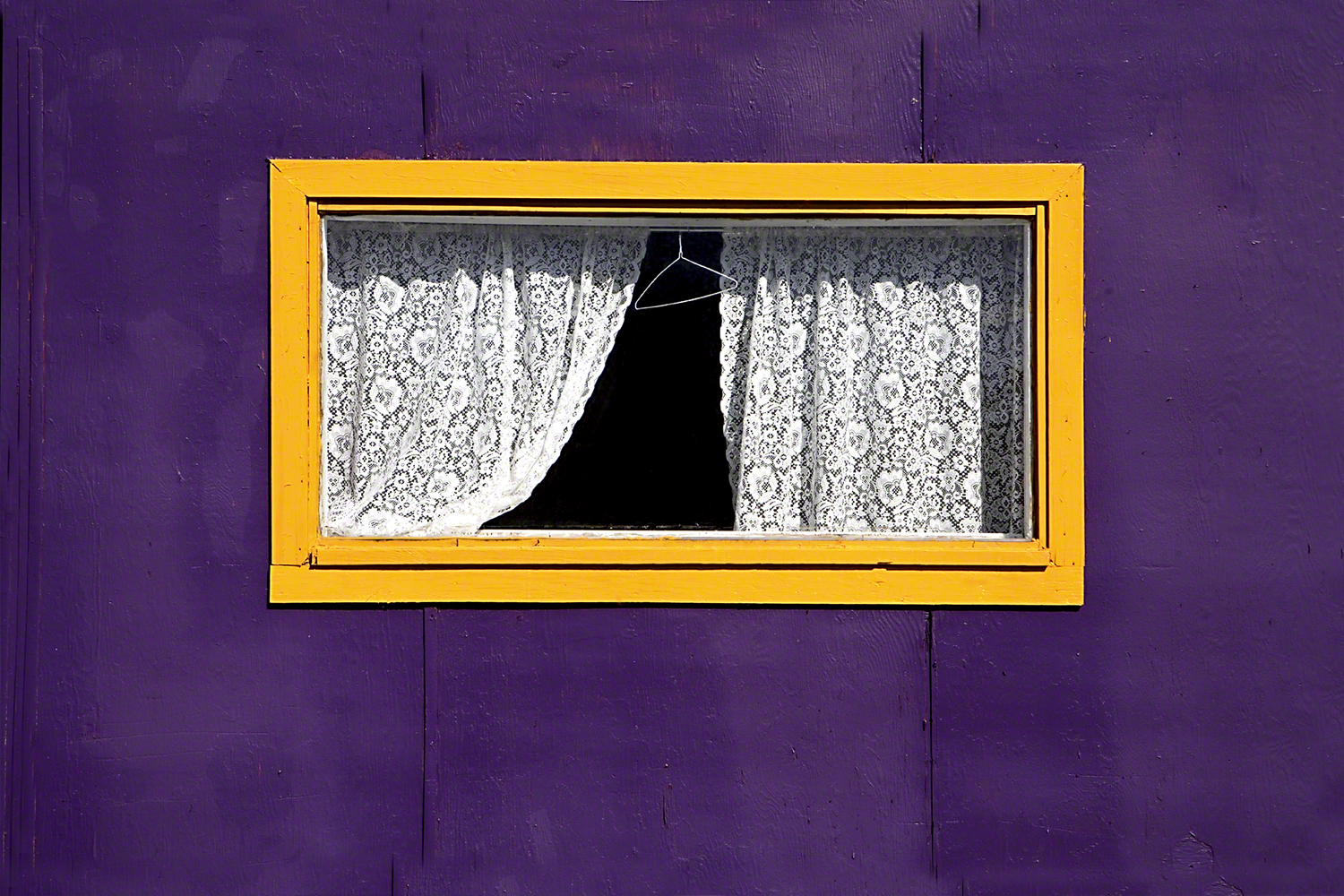
This building was gone in two days.

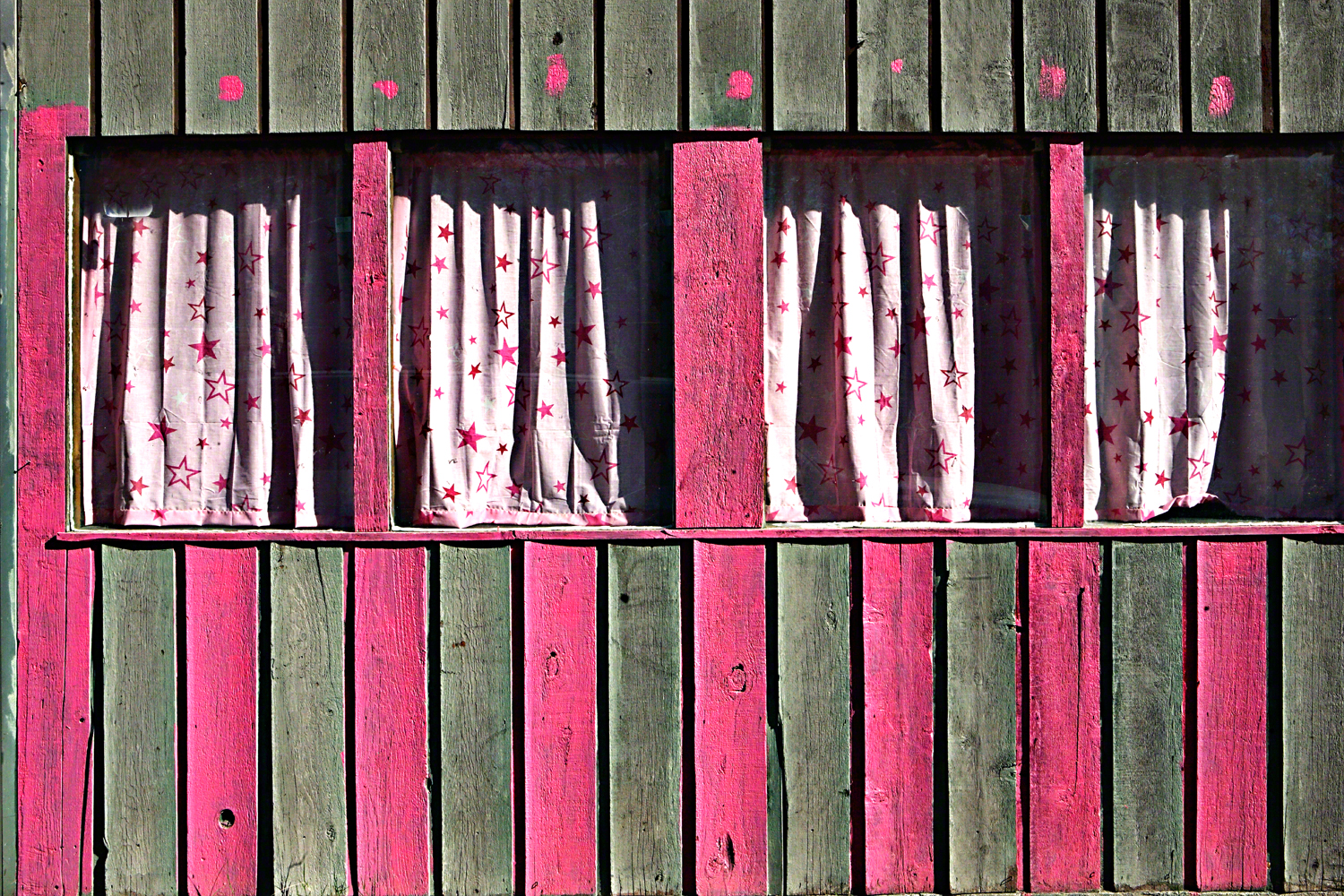
Even though I’ve realized this for most of my career, it didn’t really come into focus until I started working on my fine art series called Window Dressings.

Besides working on great advertising and corporate assignment that took me around the world, the biggest kick I get is when I load my dog into my car with my camera bag, a map, and an ice chest and head out for parts unknown; without a clue as to where I’m going.

My goal is to find great looking old worn-out windows, windows that if they could speak what would they tell me. Imagining who the last person to look out the abandoned window was and what they saw before leaving for good.

I come to an intersection on an interstate or two-lane blacktop and flip a coin as to what direction I’m going to go in, and look for small towns that have a center square with streets running out in all directions.

This building became a dance studio.

Unfortunately, I don’t have the luxury of coming across one of these windows when the light is low on the horizon. I take what I can get at the time I pull up to one of them. I’m certainly not going to try and come back to it under better lighting conditions, especially when I’m trying to cover as much ground as I can in a few days. But that’s just half of it.

When I’m talking to my online students with the BPSOP, and observing photographers that are with me on one of my “Stretching Your Frame of Mind” workshops I conduct around our planet.

I will often hear from one of them that they plan on going back to shoot something at a later date for one reason or another, usually because they just didn’t want to take the time or had something else to do; even though it had great possibilities.

I’m here to tell you that there’s a very good chance that when you do decide to go back it won’t be the same. There might be a large truck parked just where you were going to stand, there’s a construction crew that has roped it off, inclement weather, it just might not be there anymore, or a brand spanking new security guard shaking his head no.

This window had been boarded up in a week.

Case in point, the photo at the top was taken on the way to my lakehouse just outside Crockett Texas. I had never noticed it before and really didn’t have a reason to. I passed by it and after a few miles, I had the feeling that I better turn around and take a closer look at the building. I decided to go back and photograph it; especially since I had one of my cameras and a tripod.

As it turns out, it’s one of my favorites and my intuition was right. Coming back from Crockett on my way back home in Houston I looked to where the Mexican restaurant had been just to days before and now it was gone…as in where did it go in two days!!

And so my fellow photographers, if you see something that tickles your fancy don’t think you’ll just go back at a later date. Stop and shoot it right then and there…even if the light isn’t ideal. At least you have it in the can, and then you can think about going back under better conditions with more time.

Visit my workshop at www.joebaraban.com, and check out future workshops at the top of this blog. Come shoot with me sometime.

JoeB

Quick Photo Tip: North Light

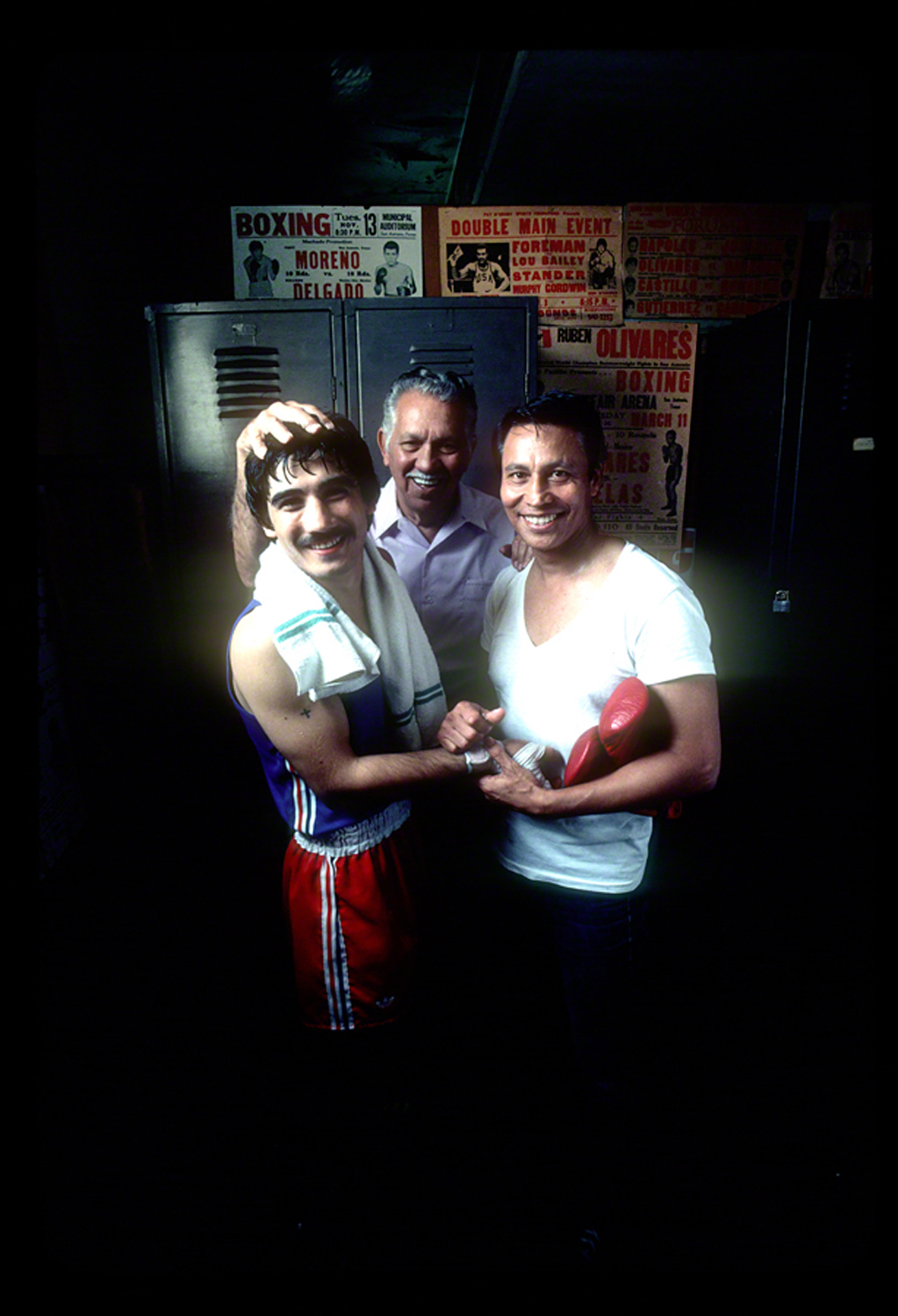
Thank you Rembrandt.

The next time you want to take a portrait of a friend, relative, spouse, your kids, or your pet, and you either don’t have the right lighting equipment (the flash on your camera is not the right equipment) or you can’t afford it,  think about the best source of light there is…North light.

If you want to find out just how important North light really is, just go to Google and type in North light rental studios in let’s say New York, and you’ll find several to choose from.

Why is North light so sought after?

Let me digress or a moment and say that in 1971 I opened my first studio in the bottom floor of an old house in Houston. I also rented one room upstairs that had a window that faced North. I used that for my only light (I couldn’t afford any lighting)  when I shot portraits. Back then I didn’t realize the importance of North light; the importance being that direct light will never come in the window keeping the quality of the light and color balance the same all day.

My clients (few but growing) loved the way they looked when I put them next to the window while adding a little white reflector on the dark side of their face. Since I studied painting and not photography, I remembered the way Rembrandt painted and now, three hundred and fifty years later, his light is referred to by photographers as Rembrandt lighting.

The above photo of a boxer, his manager, and trainer was shot for Budweiser beer. We had just finished a big production shot that included several hours of setting up lights in a very dimly lit gym in San Antonio. As I was heading to the bathroom I noticed this small window that was facing North. I went back to where we had been shooting, grabbed all three of them and took them back to the window. In a matter of about a minute I had taken a picture that the client wound up using.

What I tell the students that take my online class with the BPSOP, and my fellow photographers that join me in my “Stretching Your frame of Mind” workshops, make like simple for yourself. Find a window in your house that faces North, and try it out for yourself; you’ll be glad you did.

Visit my website at: www.joebaraban.com, and check out my workshop schedule at the top of this blog. Come shoot with me sometime. On July 30th I begin my 29th year at the Maine Media Workshops. I’ve had the same week since the beginning. It’s the week of the Lobster Festival down the road in Rockland. It offers a completely different set of photo ops than one would expect when coming to photograph the coastline, lighthouses, and fishing villages of Maine. Come join me and spend a week completely immersed in your love for photography.

Keep sending me photos and questions to: AskJoeB@gmail.com, and I’ll create a video critique for you.

JoeB


Quick Photo Tip: Outline the Person

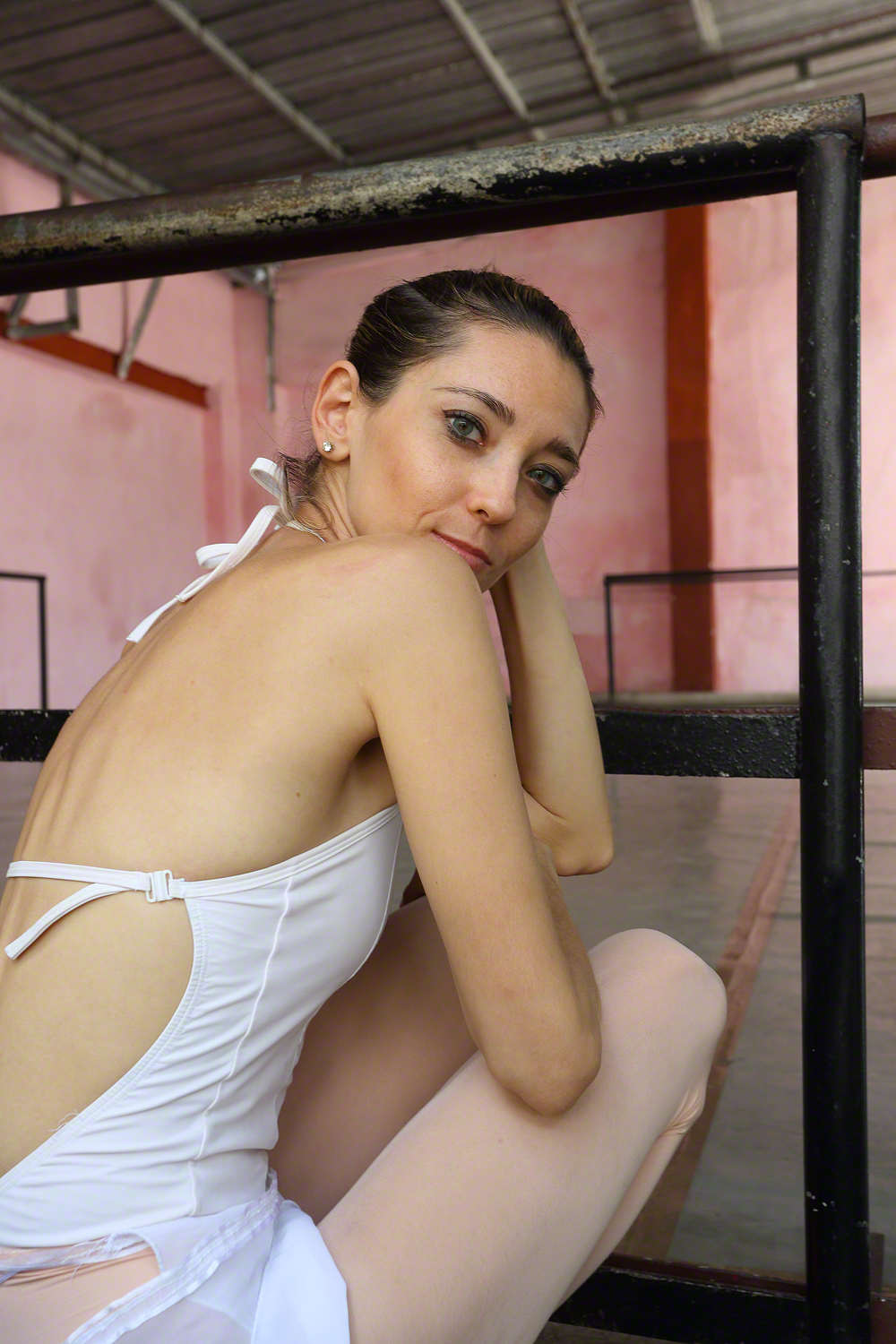
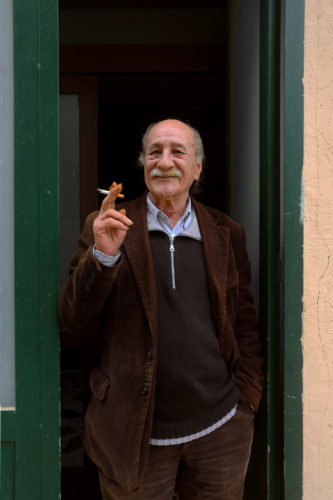
I just followed her outline with my eyes.

It’s been sooooooooo long I can’t remember when I first started relying on my fifteen point protection plan, checking my four corners, and making sure I paid attention to my borders to guide me through the process of creating strong images before I clicked the shutter. I can tell you that it’s been thirty-four years since I first shared these concepts with my fellow photographers that took my first Maine Media Workshop in 1983.

I continue to work these concepts into my online classes with the BPSOP, and in my “Stretching Your Frame of Mind” workshops I conduct around the planet. Now there’s one more I recently thought about when I was shooting an environmental portrait, but had never really thought about sharing it with others.

It was in an environment where I couldn’t move the subject or change anything. It was filled with obstacles that could easily get in the way of what I was trying to achieve in the camera. Or having no other choice, one where it would either take a long time to fix so it would look natural, or one I couldn’t fix at all; given a reasonable time table.

I went through my photo process, which by the way now takes me a very few seconds. As though I was outlining the woman in pencil I quickly ran my eye over her entire outline to see if anything was growing out of her head or in a really bad position. Remember that this was a ballet rehearsal in Cuba and I had absolutely no control other than having her glance over her shoulder at the lens.

When doing this I could make adjustments by moving one way or the other to get her where the area around her was free and clear, and avoiding unnecessary time in front of a computer that may or may not have been successful.

So the next time you’re out shooting people give it a try. Let your eye become a pencil and draw an imaginary line around the person, looking for potential problems. You’ll thank me for it later!

Visit my website at: www.joebaraban.com, and check out my workshop schedule at the top of this blog. Come shoot with me sometime. On July 30th I begin my 29th year at the Maine Media Workshops. I’ve had the same week since the beginning. It’s the week of the Lobster Festival down the road in Rockland. It offers a completely different set of photo ops than one would expect when coming to photograph the coastline, lighthouses, and fishing villages of Maine. Come join me and spend a week completely immersed in your love for photography.

Don’t forget to send me a photo and question to: AskJoeB@gmail.com, and I’ll create a video critique for you.

JoeB
Quick Photo Tip: ECU

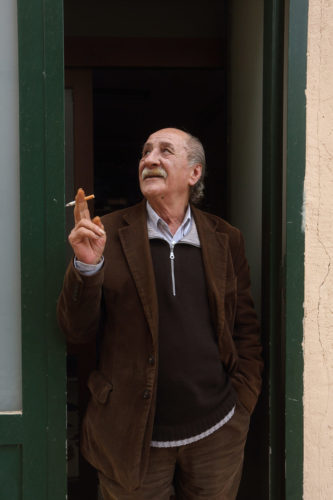
And now for her ECU
And now for her ECU

One of the terms that’s used in the film industry and you’ll see on movie scripts is the initials ECU, and it stands for extreme close-up. When I was a director-cameraman I would often put at least one close-up of a person on film just in case the powers that be would use it…they never did.

The reason is not because it didn’t look good, there just wasn’t a lot of places for one…unless you were shooting a toothpaste commercial. That doesn’t hold water anymore when I’m shooting stills, because to me it’s a great way to really get up close and personal to their personality.

I’m not talking about filling the frame with someone’s face. I’m talking about using a wide angle lens (17-40mm) putting the subject in the center, and including a lot of the environment around them or the background behind them.

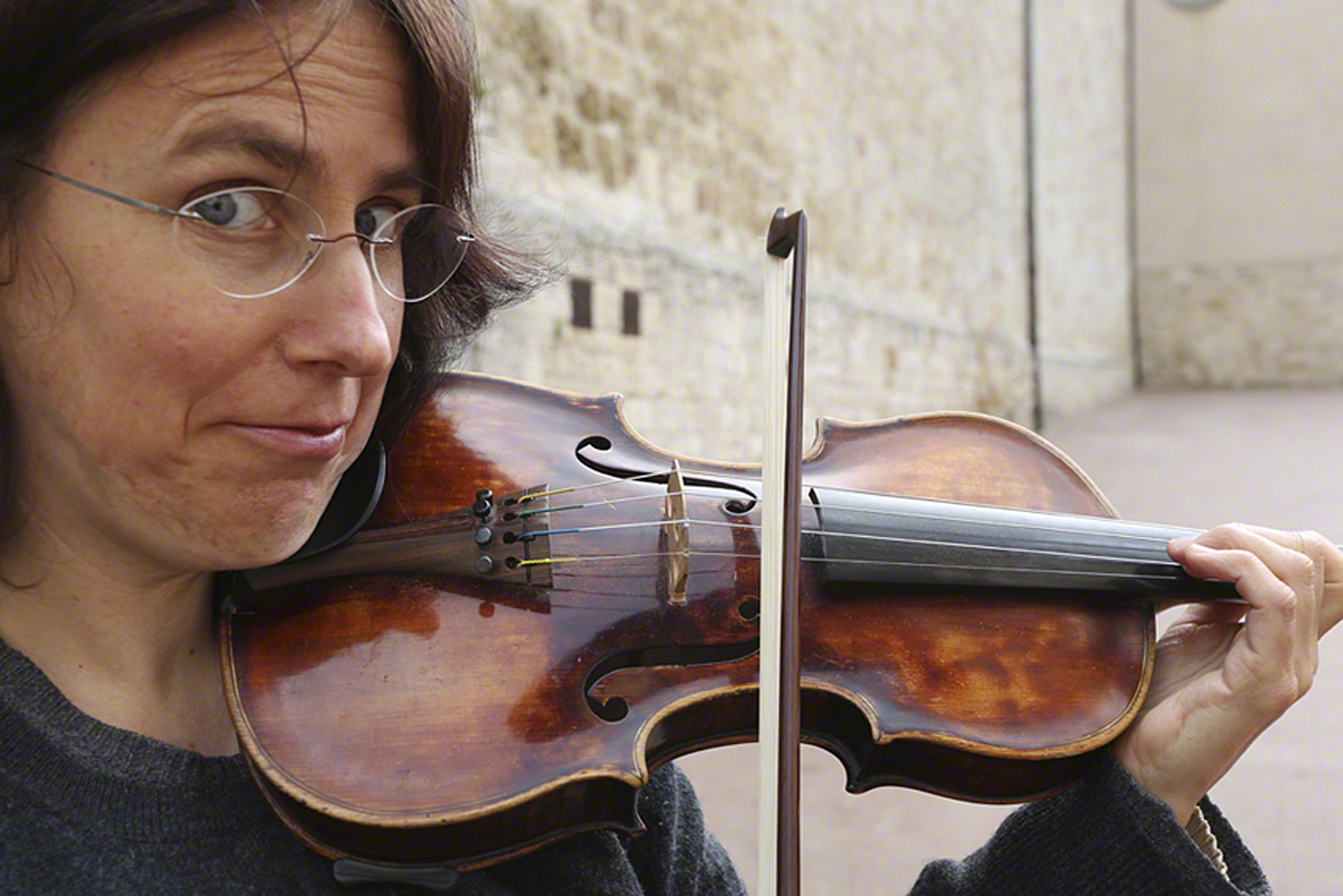
In my online classes with the BPSOP I’ll often show examples and encourage people to give it a shot. When I’m conducting one of my “Stretching Your Frame of Mind” workshops I’ll create a scenario with  someone local, ask one of my students to take his or her portrait, then I’ll show what a ECU looks like to them…as in the photo above taken in my Springtime in Tuscany Workshop.

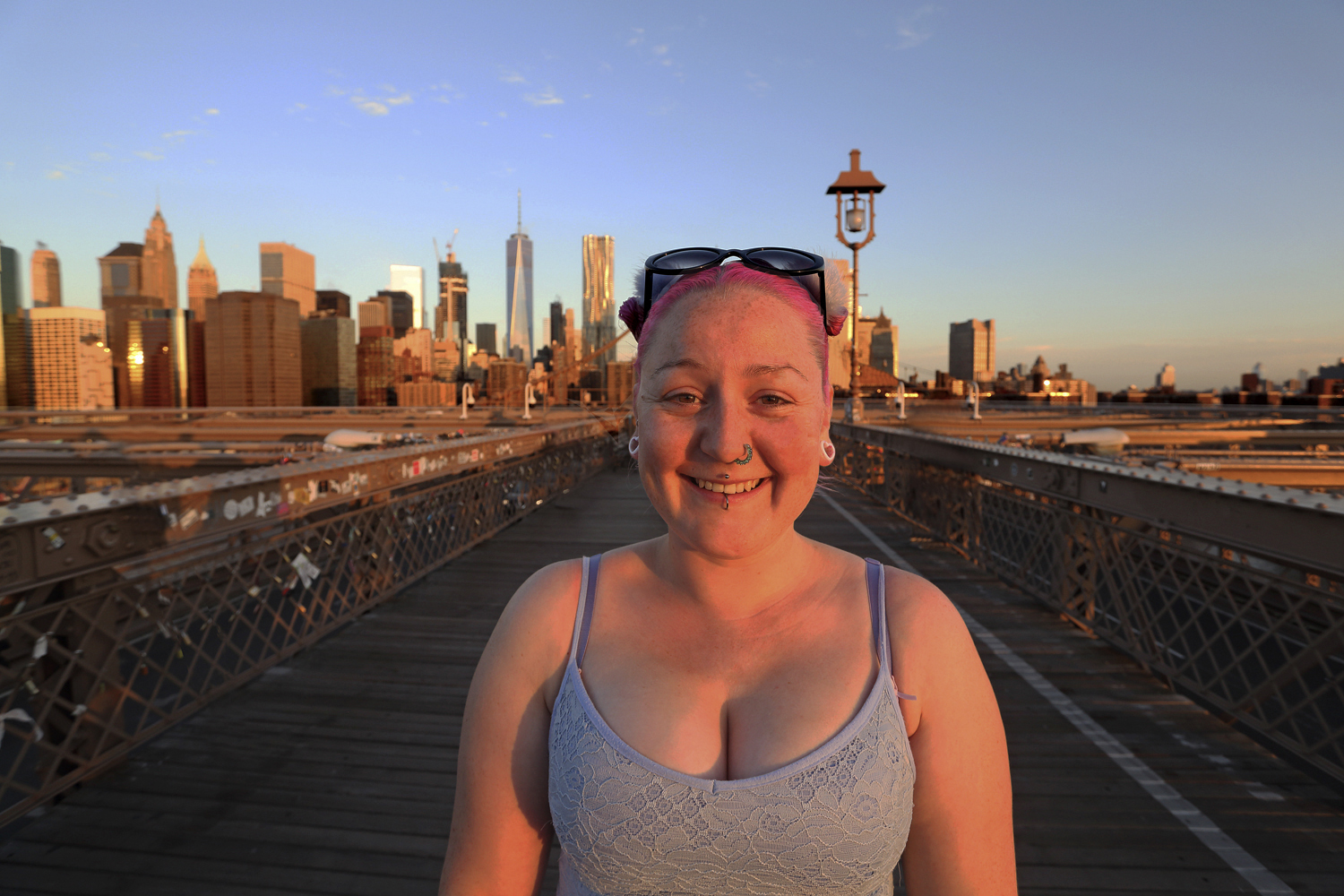
Her ECU was on the Brooklyn with the camera nice and level.
Her ECU was on the Brooklyn.

Btw, when you put someone in the center and keep your camera level, you’ll avoid any weird distortion; otherwise, well you know what that looks like and it’s the primary reason my fellow photographers don’t like to do it. Again you have to keep the camera level and the subject right in the center or very close to it.

I don’t advise you making that you’re first variation as it will probably freak out the person..which is sometimes a good idea to record their reaction. I would ease your way into it after a certain amount of rapport and then maybe the last shot is one you take..after switching lens and moving n for the ECU.

Visit my website at: www.joebaraban.com, and check out my workshop schedule at the top of this blog. Come shoot with me sometime. On July 30th I begin my 29th year at the Maine Media Workshops. I’ve had the same week since the beginning. It’s the week of the Lobster Festival down the road in Rockland. It offers a completely different set of photo ops than one would expect when coming to photograph the coastline, lighthouses, and fishing villages of Maine. Come join me and spend a week completely immersed in your love for photography.

Send me a photo and question to: AskJoeB@gmail.com, and I’ll create a video critique for you.

JoeB
Quick Photo Tip: Get Dirt on your Shirt

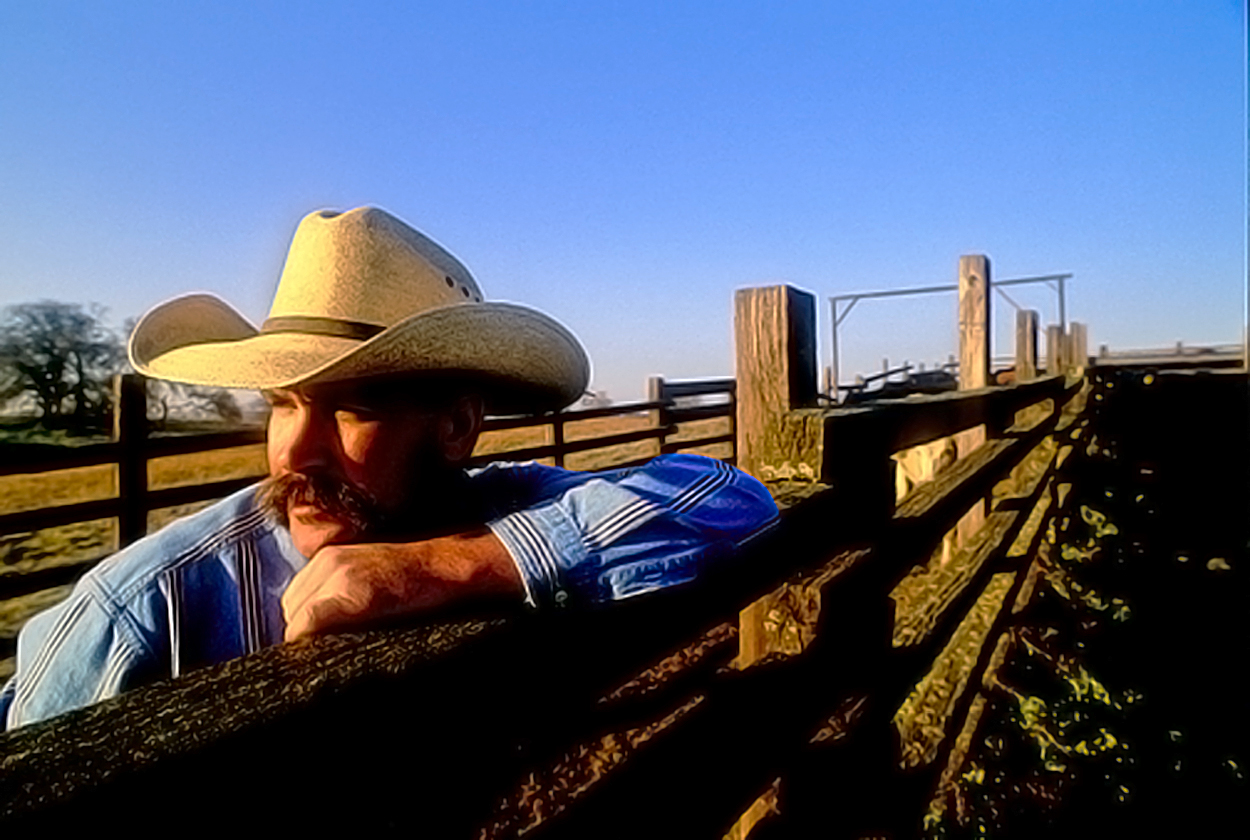
Lots of dirt and mud on my knees and shirt.

In my four week online class with the BPSOP, I give a lesson each week; made up of two parts. Unlike all the other classes, I allow each participant to submit up to two photos every day, and I create a video critique for every image.

After someone starts submitting photos that represent the lesson, I begin to get an idea of whether someone is taking or making pictures…what do I mean?

If all the photos look like they were taken at the same height, that is, the distance from the individual person’s eyes to the ground after bringing the camera (usually around their neck) up to said eyes. This shows me that there’s no effort to change the point of view, which would constitute making not just taking pictures.

Btw, I don’t get this as much in my “Stretching Your Frame of Mind” workshops I conduct around our planet simply because I’m always walking around with everyone at one time or another and suggesting that they look at their subject with a different POV.

What I’m always telling my fellow Photographers is to get some dirt on their shirts!!!

Going backward in time to when you were a kid playing outside. Did you do everything while standing on both feet? Right now as I write this, flying a kite, or model airplane are the only two things that come to mind. I’m not talking about sports, ring around the Rosie, etc., I’m talking about fun things to do while playing all by yourself.

I’m talking about things that required you to get down on your knees or stomach. Things that got you in trouble for getting dirt on your knees or shirt.

Well to me, being a grown-up should not mean that you can’t have fun anymore. Taking pictures is as much fun now as playing with small plastic soldiers in a boy-made pile of mud. Walking back to your car after taking one of your best photos and smiling as you look down at the mess you made on your shirt…is priceless, and you can’t get into trouble for doing it…or at least I hope you don’t.

Visit my website at www.joebaraban.com, and check out my workshop schedule at the top of this blog. Come shoot with me sometime.

JoeB

Quick Photo Tip: Pay Them For Their Time

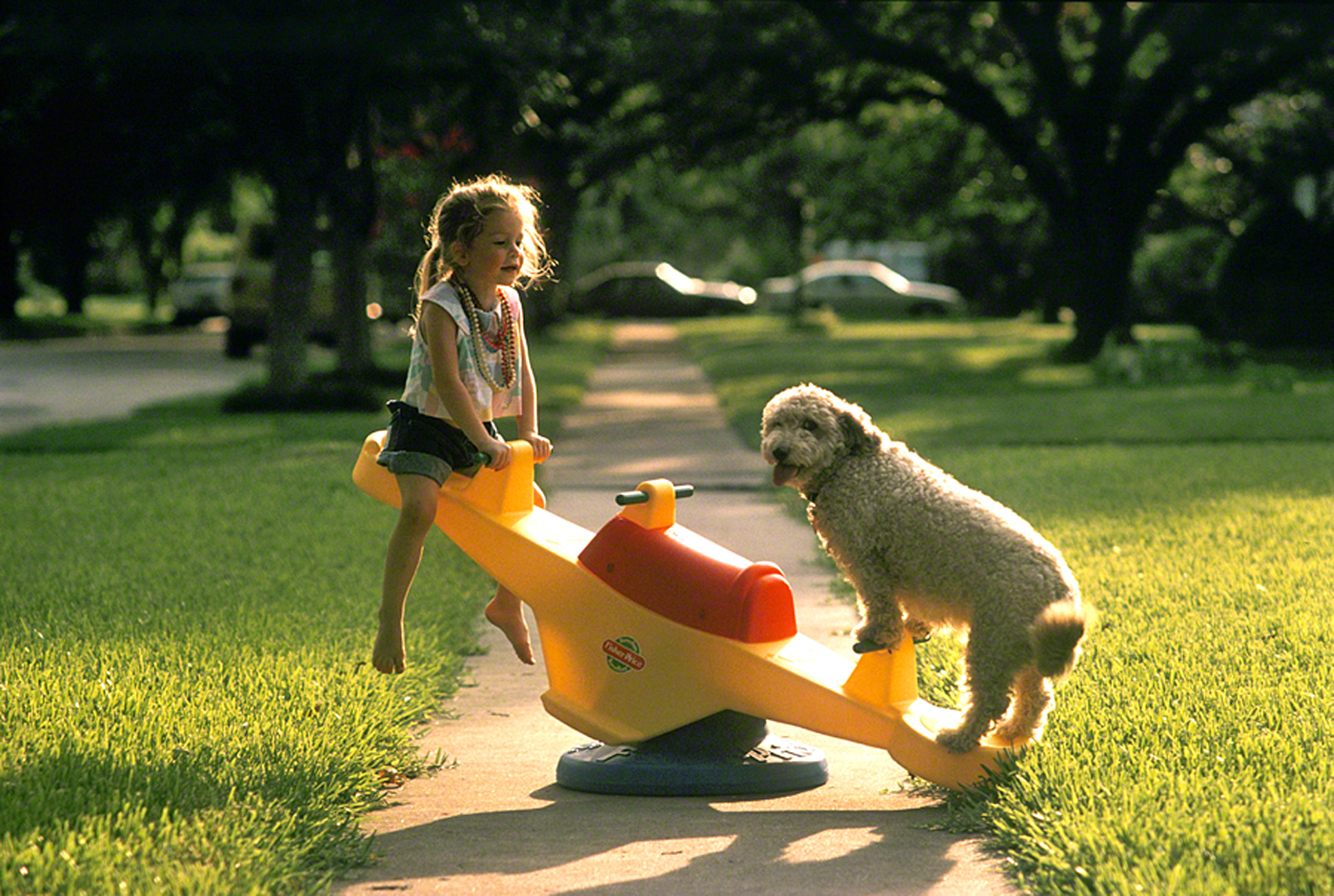
Fifty cents for Aylie, a steak bone for Lucy

I’ll bet that when you saw the title of this post you were thinking that I was going to talk about professional model fees…right? Well, you would be wrong…half wrong.

I teach an online class with the BPSOP, and I also conduct my “Stretching Your Frame of Mind” workshops around our planet. What inspired me to write this post was a photo that was submitted to me yesterday from my part II class.

This week’s lesson is about creating silhouettes and how important they can be in “making good photos”. A woman submitted a photo she took of her daughter along with a disclaimer. The disclaimer was that her daughter, who from the back looked to be about five, didn’t want to pose for her…and let her take just one shot before skipping out of sight.

Here was my reply…in so many words:

I have four children the youngest being twenty-nine, and I have photographed them since they were born. As soon as they understood the value of money (it didn’t take very long) I began paying them for their time…why not???

After all I was asking them to give up whatever they were doing to help me out. I thought it only fair to compensate them for their time; and it worked all the time.

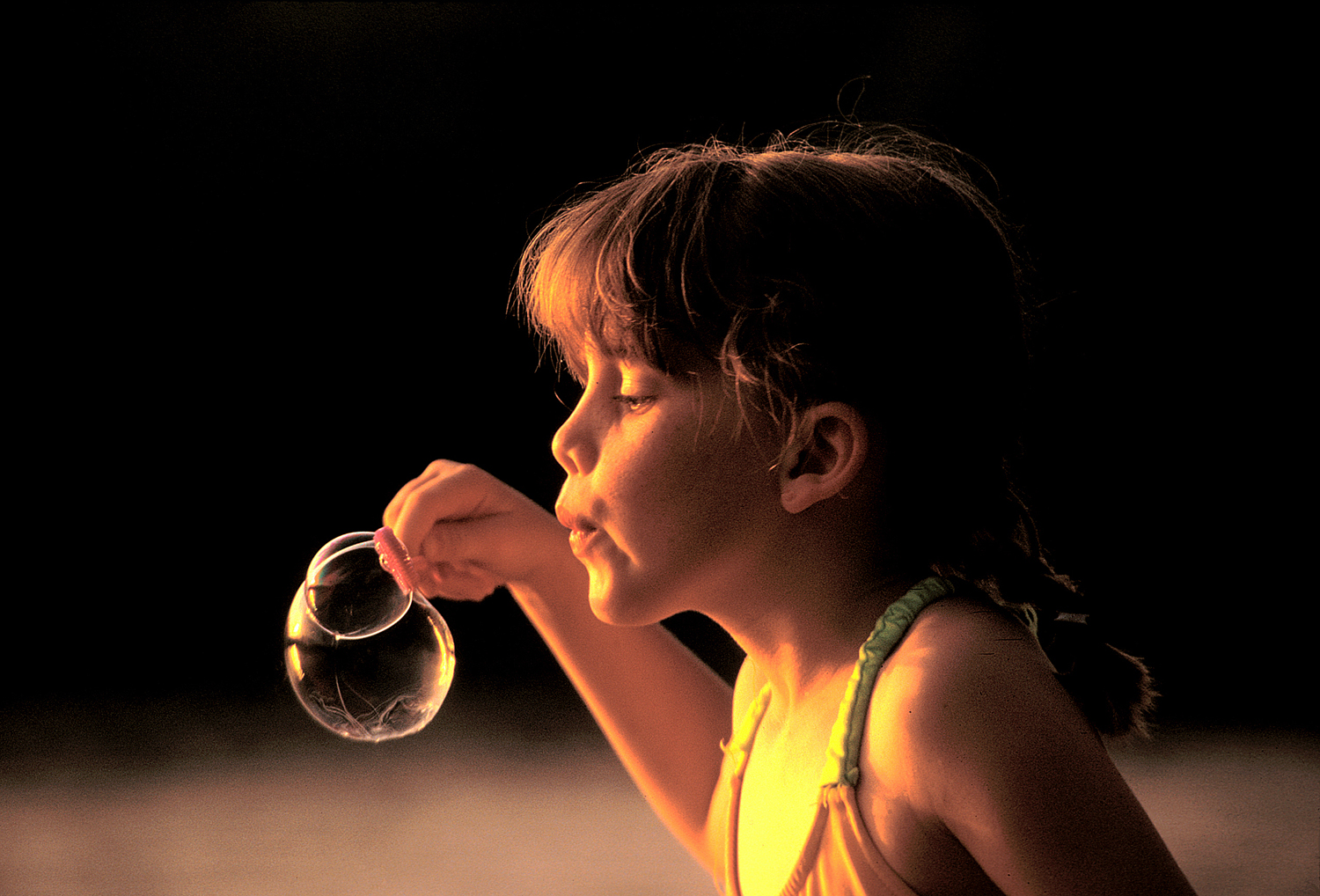
Twenty-Five cents
Twenty-Five cents

At first, around the age of five, I would offer them twenty-five cents; back then that was a pretty good rate. As they got a little older it was fifty cents, then seventy-five, then depending on how long I was going to keep them, I would give them a dollar for thirty minutes…a long time for any kid to stay interested.

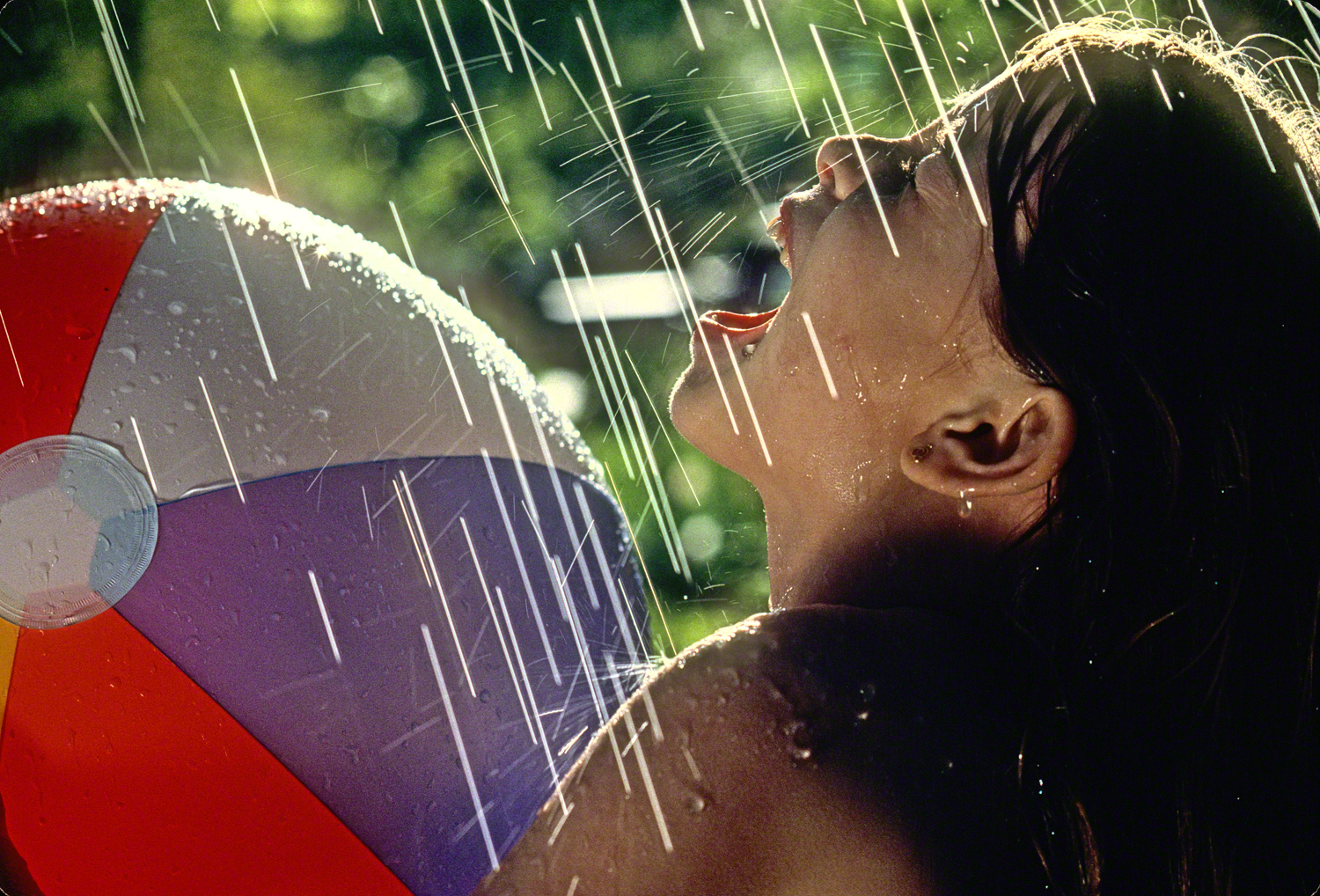
A dollar to get wet.

After a few days my online student told me that it worked perfectly, and she had never thought of that; most people don’t.

Again, let me say that I do not consider it prostituting my children, or turning them into money hungry kids, or spoiling their innocence. If anything I think it shows them the value of working for an allowance…beside cleaning their room or giving the dog a bath.

Pay them for their time…but I do suggest you pay after the photo session is completed!!!

Visit my website at: www.joebaraban.com, and check out my workshop schedule at the top of this blog. Come shoot with me sometime. On July 30th I begin my 29th year at the Maine Media Workshops. I’ve had the same week since the beginning. It’s the week of the Lobster Festival down the road in Rockland. It offers a completely different set of photo ops than one would expect when coming to photograph the coastline, lighthouses, and fishing villages of Maine. Come join me and spend a week completely immersed in your love for photography.

JoeB

Quick Photo Tip: It ain’t over til it’s over.

Despite the ominous sky, we went for it anyway.

Most of you have heard this expression that’s been around for a long time. Yogi Berra, the Hall of Fame catcher for the NY Yankees made it famous; that is if you follow baseball. Yogi said, “It ain’t over til it’s over”. I know I’ve said it myself hundreds of times during my nearly fifty year career as an advertising, editorial, and corporate photographer…Why you ask?

Well it’s all about the weather, and why it’s so important in your coming back with a good photo or not..or a photo at all. I teach an online class with the BPSOP, and I conduct my “Stretching Your Frame of Mind” workshops around our planet, and I’m constantly hearing the sad cries and complaints from my fellow photographers that say that the reason they didn’t go out shooting was because the weather was forecasted to be bad; or they went home because it got bad.

Well just think about the mailman’s motto that says, ” Neither snow nor rain nor heat nor gloom of night stays these couriers from the swift completion of their appointed rounds.” Actually, this really isn’t their real motto, it’s written on New York’s James Farley Post Office, and has no official status. What I saw when I first woke up.

If I had a nickel for every time it was raining when we were about to go out and shoot for a client and it cleared just at the right time, I would be writing this post from my private island; a blue and frothy drink with an umbrella hanging on one side in my hand…typing with the other

Don’t listen to any weather reports the night before, or even when you wake up. If you have a destination in mind don’t start worrying until you get there; don’t even look up at the sky!

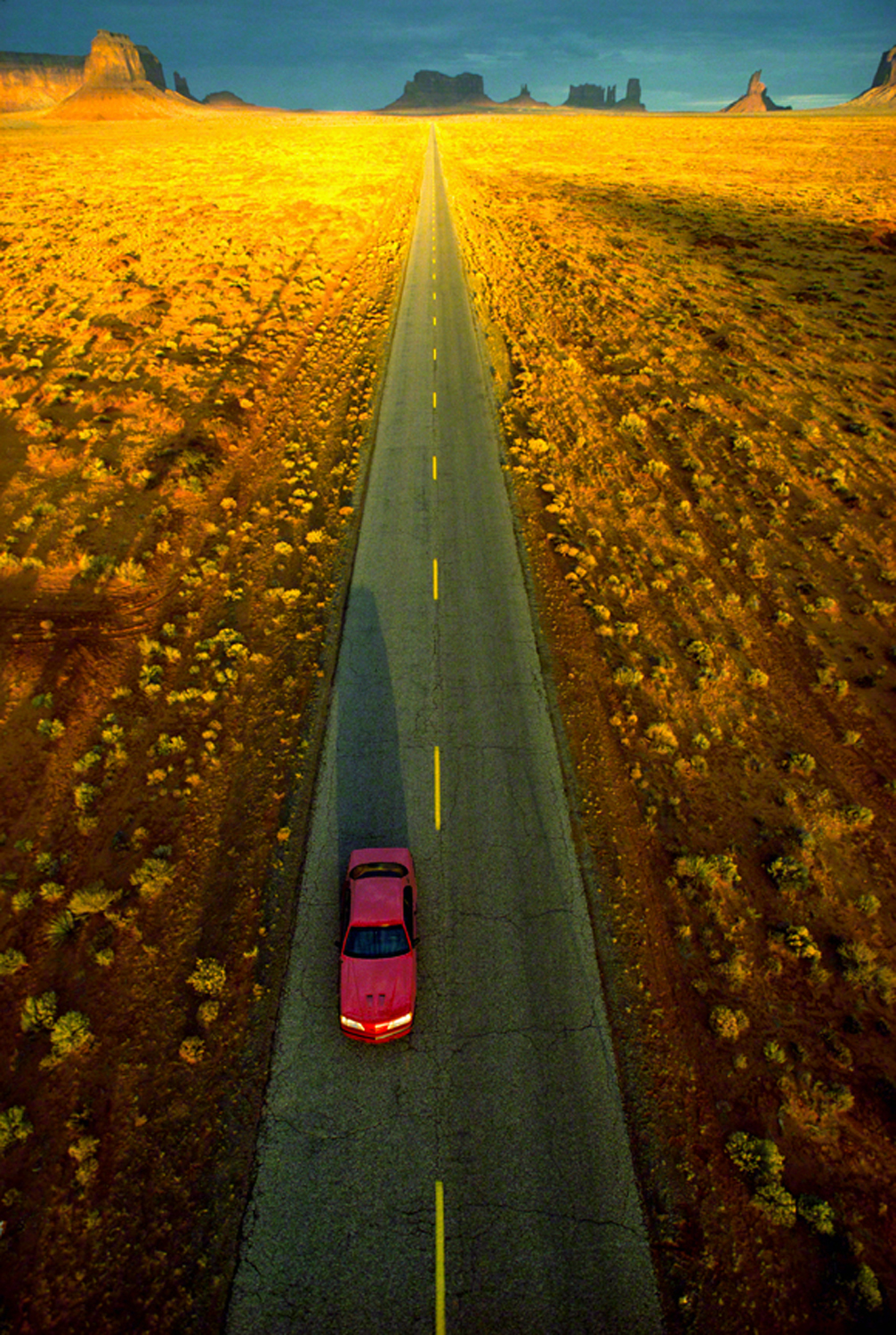
It wasn’t over until it was dark.

In the above photo for Ford, when we woke up the sky was very dark and very gray. As always, I decided to go and set up anyway just in case. Sure enough just as the sun was about to set it came out behind me and created a look I couldn’t have prayed for; and this is the actual way it looked since it was shot before the days of computers.

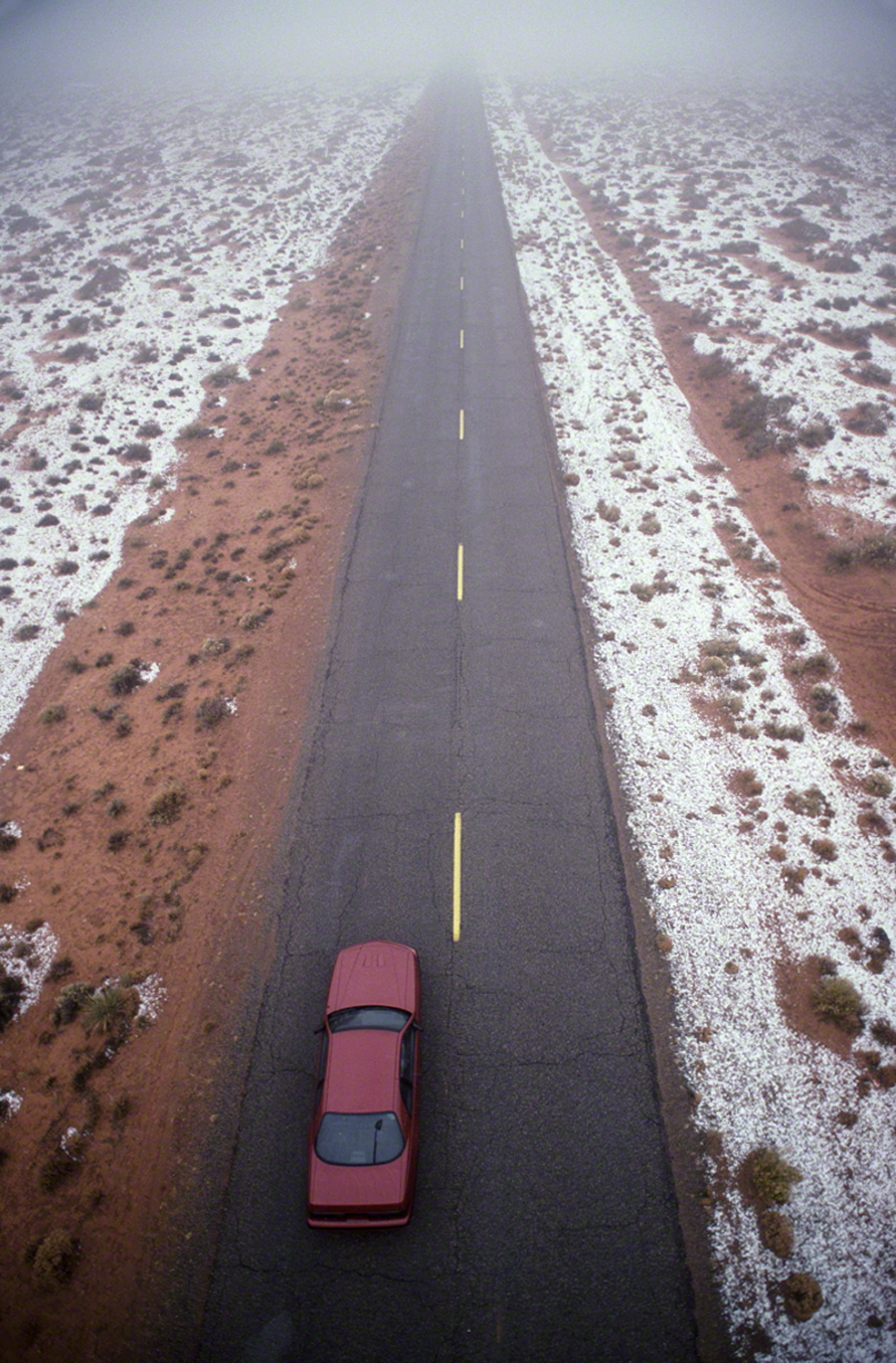
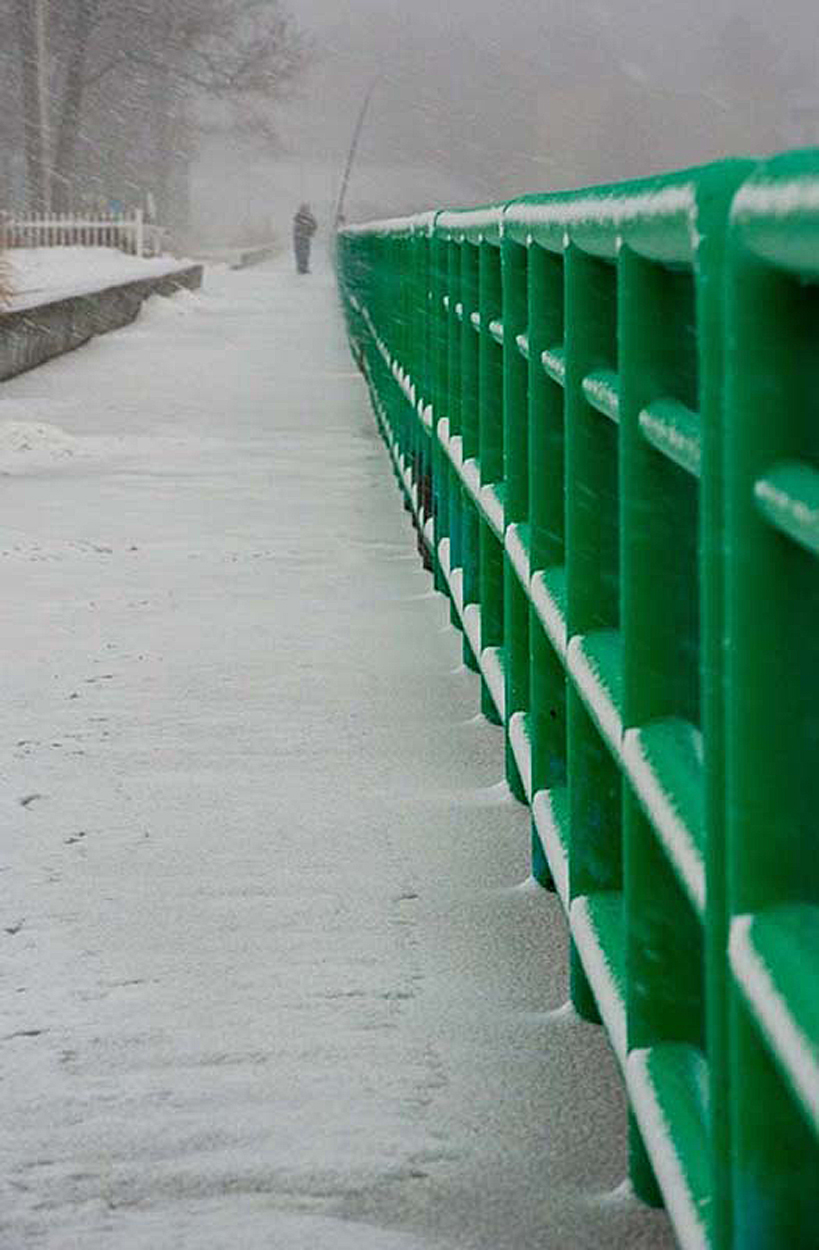
In the photo taken by one of my online students, the weather started out gloomy and went downhill from there. Still, because she was using her “Artist Palette”, she walked away with this image; taken late in the afternoon in a snowstorm.

So remember what I say, it’s never over until it’s over…as in the dark.

Visit my website at: www.joebaraban.com, and check out my workshop schedule at the top of this blog. Come shoot with me sometime. On July 30th I begin my 29th year at the Maine Media Workshops. I’ve had the same week since the beginning. It’s the week of the Lobster Festival down the road in Rockland. It offers a completely different set of photo ops than one would expect when coming to photograph the coastline, lighthouses, and fishing villages of Maine. Come join me and spend a week completely immersed in your love for photography.

Keep sending in photos and questions to: AskJoeB@gmail.com, and I’ll create a video critique for you.

JoeB
Quick Photo Tip: Using the Least Likely Lens

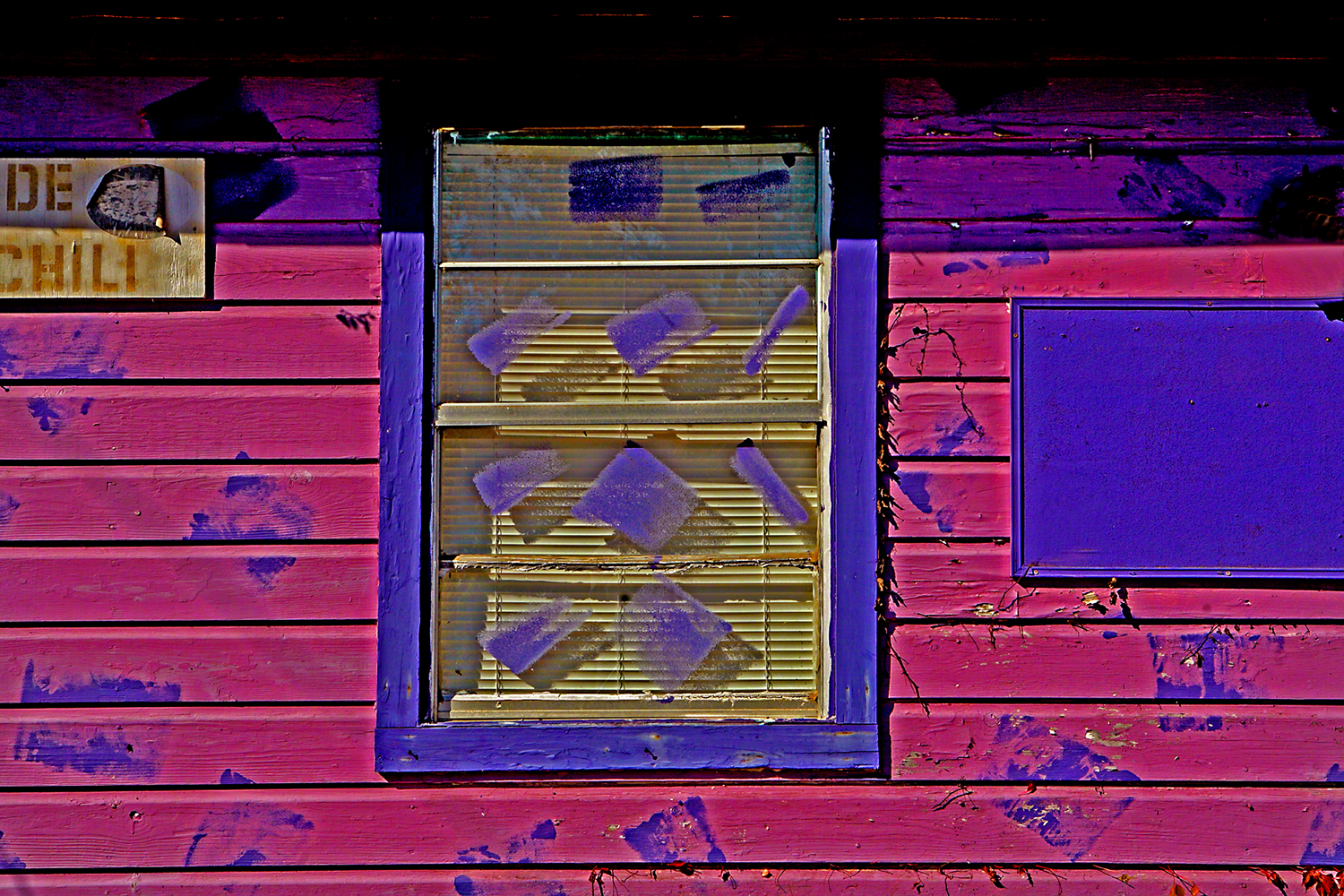
I never thought about using this lens.

I’m a huge believer in coloring outside the lines and I’m always telling my fellow photographers that take my online classes with the BPSOP and the ones that join me in my “Stretching Your Frame of Mind” workshops I conduct around our plant to do just that.

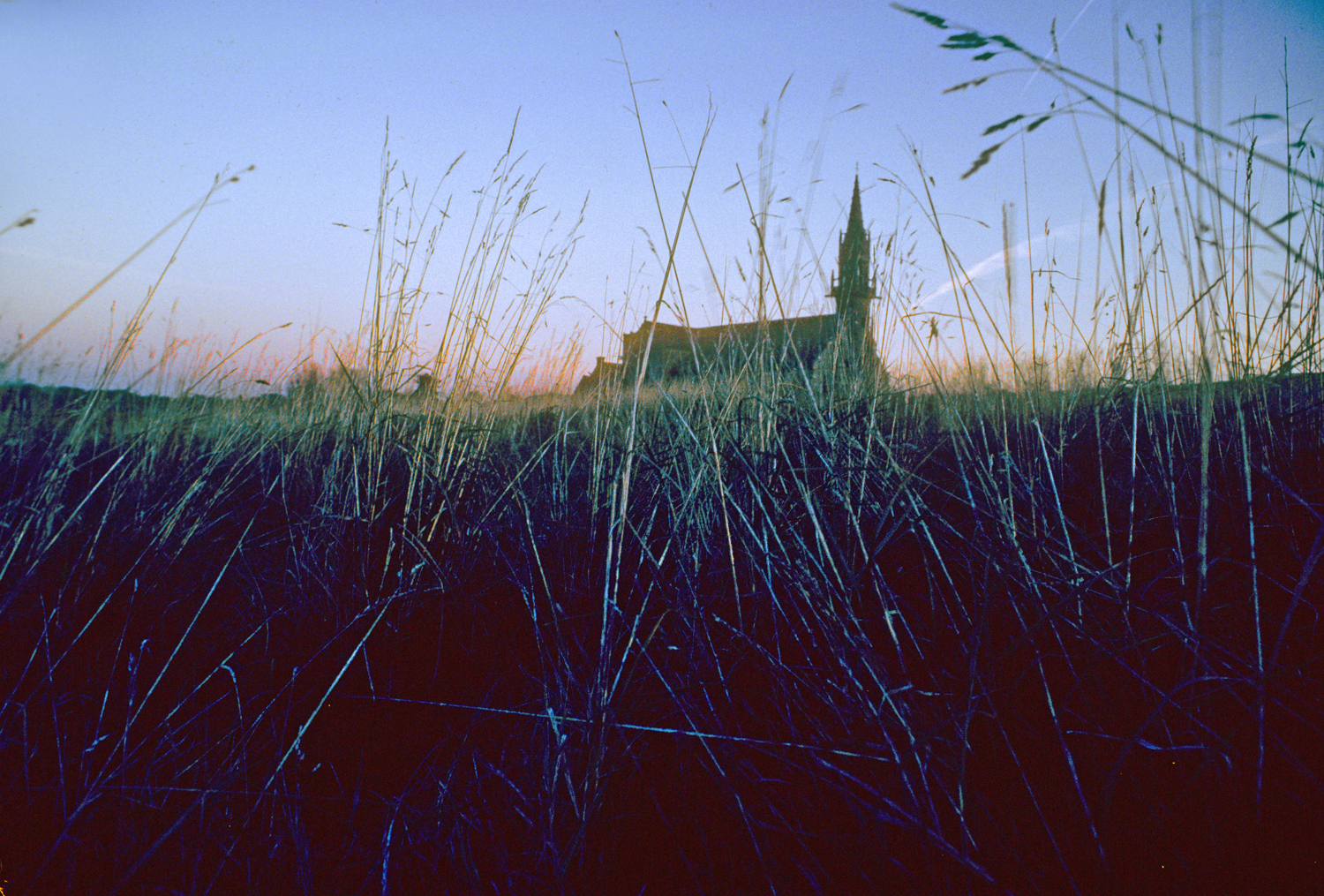
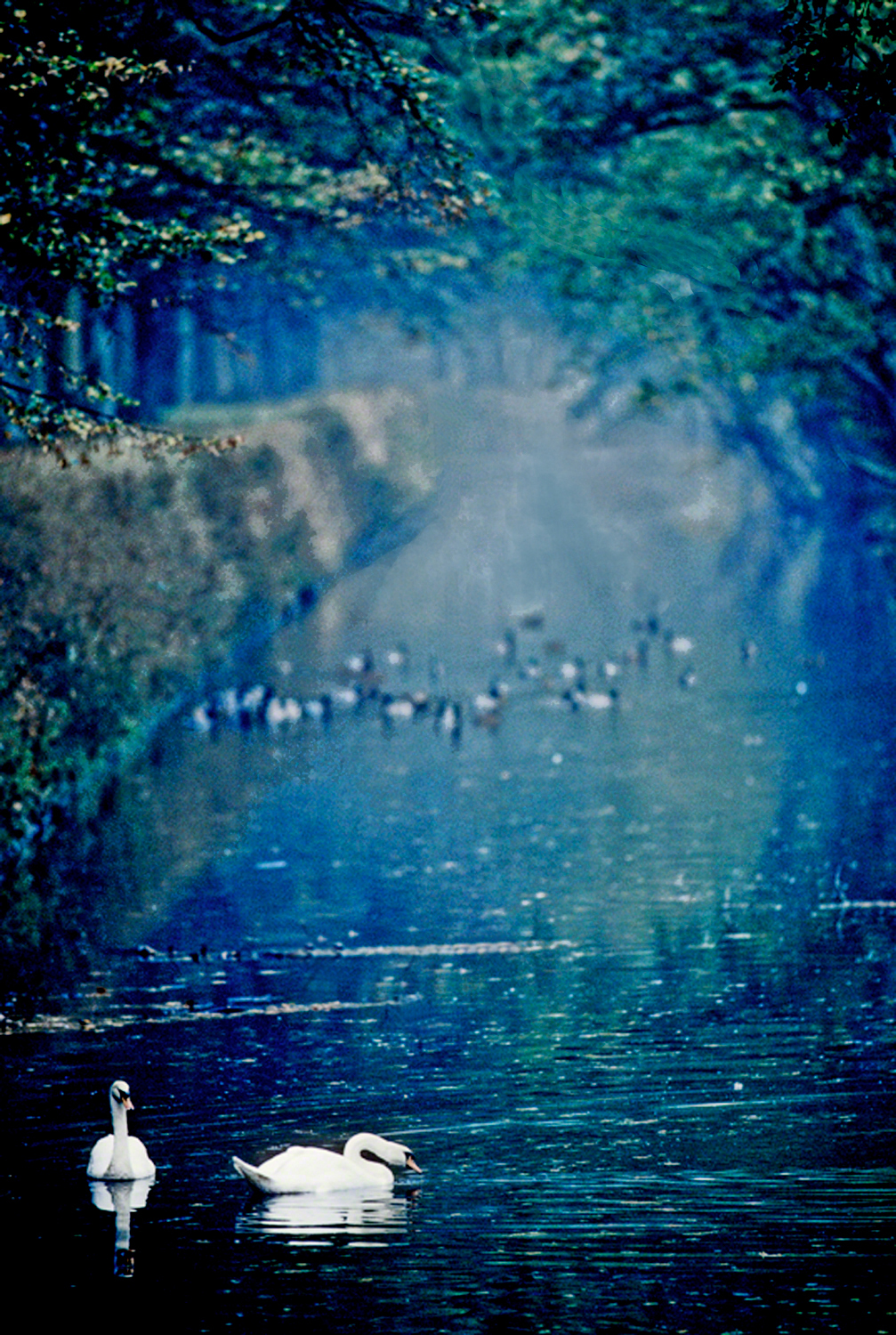
I wrote a post on it almost four years ago and because of it I followed my own advice. I was in an area in the south of France, and when I got out of my rent car to walk along the area surrounding a chateau, I decided to not use my usual go-to lens and put on something I would never think about using for this type of situation…my 100mm Macro.

It was a fortuitous decision as it turned out giving me what I still consider to be a very unusual depiction of swans that were nestled in a small stream next to this incredible well-known chateau. Although (sadly) it looks like I did considerable post processing work to it, it was shot in the camera, one exposure on one 35mm Kodachrome frame with no post work done to it; this is what Kodachrome looked like, and boy do I miss it!!!!

I know so many of you out there get comfortable with one or two lens that always reward you with good photos. The only problem is that they always look the same, as in the same compression or lack thereof, the same focal length that might be on one of your zooms, or the same dOF because you’re using a lens (like a prime) and rendering the same F/stop to all your compositions.

So my fellow photographers bite the bullet, take a leap of faith and grab a lens you haven’t use in forever, or one you would never use in a situation you’ve been in a hundred times and have been comfortable to the point of being complacent.

Visit my website at: www.joebaraban.com, and check out my workshop schedule at the top of this blog. Come color outside the lines with me sometime.

Keep sending in your photos and questions to: AskJoeB@gmail.com and I’ll create a video critique for you.

JoeB