famous photo quotes

My Favorite Quotes: Bo Diddley
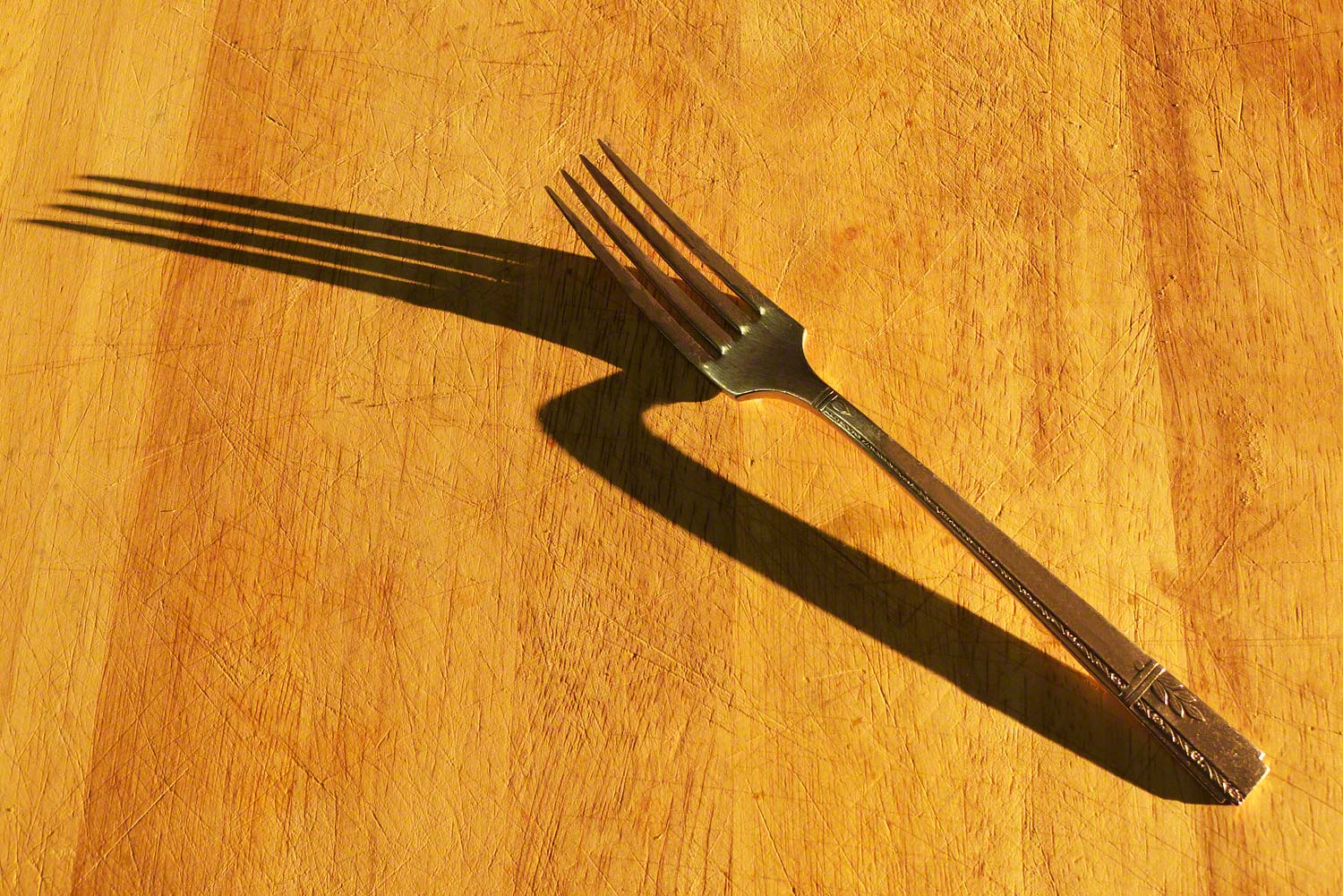
I saw a fork, but what else did I see?

Here’s another of my favorite quotes, that may have been written long ago, but I’ll always remember it being sung by an old friend named Bo Diddley. The name of the song was, “You can’t judge a book by looking at the cover”.

In the early eighties, I was on the board of the Houston Art Director Club, and my job that year was to find and provide the entertainment for the year’s award show. I thought long and hard and was told to look up agencies that represented well-known artists. On the list of possibles that fit into my budget was Bo Diddley. I couldn’t believe it!!!

I called and we worked out the details and I couldn’t believe that Bo was actually going to perform for our gala. I picked him up at the airport, took him to lunch, and stayed with him the entire day right up to the time he went on. He was soooooo cool!!!

Ok, I might be digressing a tad, but there’s a method to my madness, and here’s how it applies to the present-day task of making pictures.

So many students that take my online class with the BPSOP, and the ones that attend my “Stretching Your Frame of Mind” workshop will walk up to something and just start shooting…blindly so to speak. They just look at it with the left side of their brain and just see the obvious. If it’s a tree, then they just see a tree. If it’s railroad tracks, then that’s all they see. If it’s a fountain with a naked baby in it spitting water out of its mouth, then that’s all they see, and that’s how they judge it; by only looking at the cover.

When I look at a tree, I look at it with the right side of my brain…the creative side. I see the negative space that defines the branches, I see the texture provided by the bark and any shapes that might be hidden between the leaves. I move around it to see how the light may backlight the leaves, and look for the important shadows that are being created and laying on the ground.

If I’m looking at railroad tracks, I see patterns created by the ties, texture created by the rocks, and a Vanishing Point I can use to move the viewer around my composition. If I’m looking at a naked baby spitting water into the fountain it’s sitting in, I imagine the possibility of creating a silhouette with backlit water spewing out of his mouth.

My point is to not just walk up and judge your subject by looking at its cover. Open the book and reads what’s inside.

HEY BO DIDDLEY!!!!!

Visit my website at www.joebaraban.com and check out my workshop schedule at the top of this blog.

JoeB
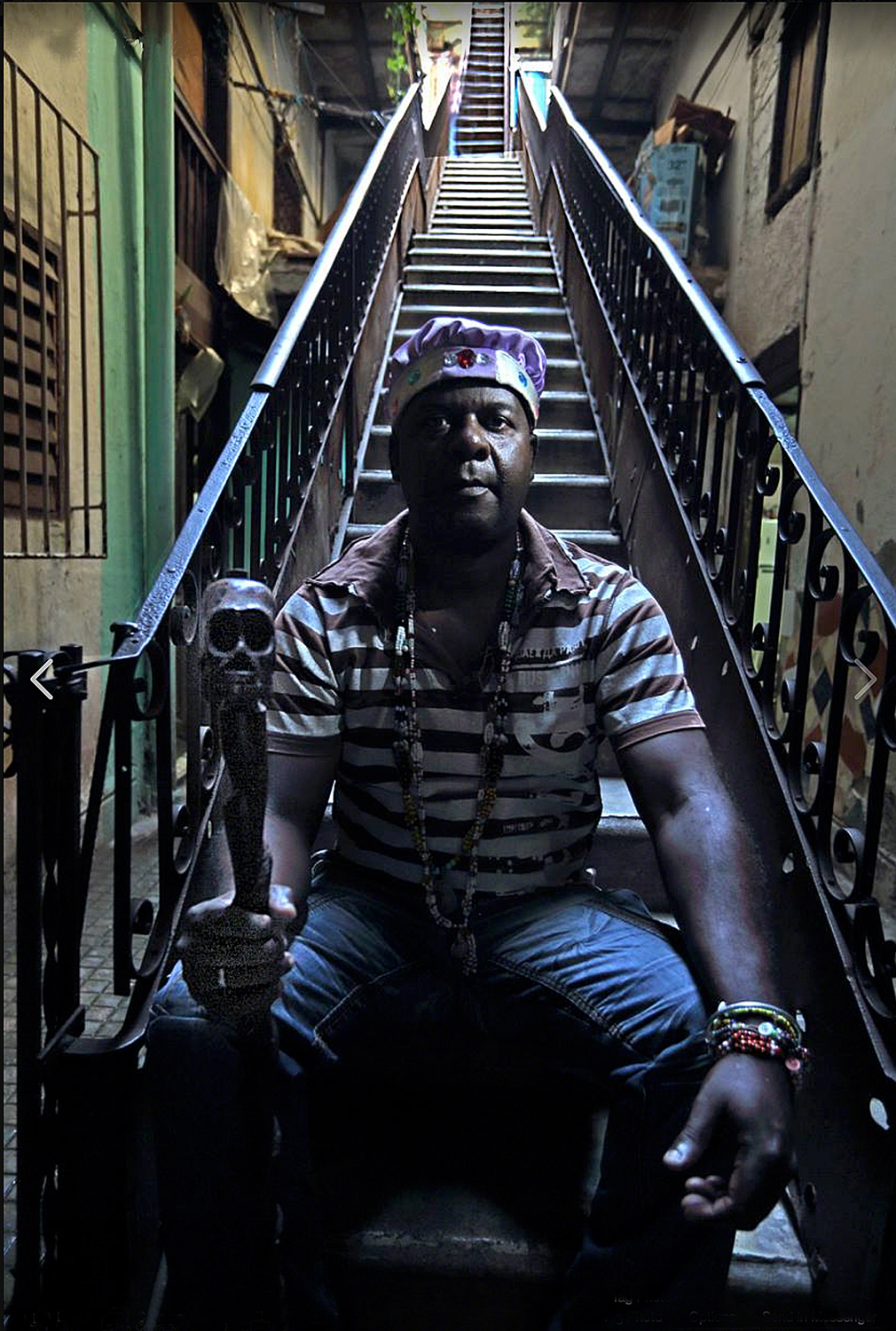
My Favorite Quotes: Yul Brynner

  I get my ideas for all my posts from the strangest places, and I never know what is going to spark an idea. They can be from listening to a description of a photo submitted by one of my online students with the BPSOP, or from those that are taking one of my “Stretching Your Frame of Mind workshops during one of my daily critiques, while sleeping, or even watching an old movie.

This idea came from a conversation with some friends during the week of Passover when for the one-millionth time I watched The Ten Commandments. I’m not sure how many of you ever watched it, but it has been one of my all-time classics starring Yul Brynner and  Charlton Heston. I’ve seen it so many times that I know most of the dialogue and say it simultaneously with the characters; much to the chagrin of my wife.

The quote was said by Brynner playing Pharoah, aka Ramseys II. He said, ” So let it be written, so let it be done.”

What in the world does that have to do with photography, you’re asking yourself as you scratch your head!!!!

Okay, here you go…it’s amazing how many times one of my students tells me that he or she did something (in creating a photo) because they had read it in a book…so it had to be true. When possible I will ask them to take a screenshot of exactly what they read, and in what book they read it.

Here are just a couple of instances of what they showed me: They actually read it wrong, they took it completely out of context, it referring to a completely different genre so as not to compare apples to apples, it was written so long ago that the way it was then is no longer the way it is now, or last but not least…the writer didn’t know what he was talking about. This last part reminds me of an old saying, “You have a great typewriter so you must be a great writer.

I digress.

Don’t get me wrong, I read a lot on the ‘information highway’ for ideas and to do research of what I heard and didn’t know, so as to answer my student but I never trust just one person, and neither should you. There’s so much misinformation out there mainly because everyone thinks they are an expert in the field. Generally, with little or no experience in the area that they’re writing about.

There are some great articles on the internet written by some of the top photographers, but I always, and let me repeat, I always seek out affirmation; by reading as much as I can on a subject and making sure everyone is on the same page…so to speak!!!

BTW, I’ve been shooting, writing, and conducting workshops since 1983, and I know a little bit about it.

Visit my website at www.joebaraban.com, and check out my workshop schedule at the top of this blog, Shoot with me sometime.

If you’re still reading this and are interested, here’s the line:

https://www.youtube.com/watch?v=h4emcNAf5lY

JoeB

My Favorite quote: The Buck Stops Here.

The buck always stops with me

When Harry S. Truman was president, he had a sign on his desk that said, “The buck stops here”. The phrase refers to the notion that the President has to make the decisions and accept the ultimate responsibility for those decisions. Truman received the sign as a gift from a prison warden who was also an avid poker player.

To digress for a moment, I grew up in KC Missouri, and one day our elementary class took a field trip to his library that’s in Independence, Missouri. He happened to be there and I actually shook hands with him.

So, what in the world does that have to do with photography???

For those new to my blog, I teach an online class with the BPSOP and I also conduct my “Stretching Your Frame of Mind” workshops around the planet. I work closely with photographers to get them to perceive and processes with the right side of their brain. I also show people to take matters into their own hands by using the elements of visual design and composition that they put on their Artist Palettes. 

Besides mastering all the elements on your palette, the three most important ways to take your level of photography “up a notch”, is to use your 15 Point Protection Plan, pay attention to the Border Patrol, and check those four corners.  If you’re diligent and make those a part of your thought process, you’ll be far better off. Conversely, if you go about your business that way you always have, you’ll have no one to blame but yourself.

I’ve heard it all after teaching since 1983, including these remarks:

  • I didn’t read that far into the manual
  • I didn’t bring the right lens
  • It’s not what the president of my camera club said to do
  • I left my filter case at home
  • I only brought one card, and it’s full
  • I didn’t charge all my batteries before I left
  • I trusted my camera to make the right exposure decision for me
  • I didn’t know it was going to be out of focus
  • I guess I should have used a tripod
  • I forgot to set my alarm
  • I was hungry so I ate first
  • I’ll just fix it later

And last but certainly not least…it wasn’t my fault!!!!

We are just like television commercial or feature film directors. The difference is that we direct still photographs. We are all responsible for the content of our images. Only we can make ourselves look good or bad. Don’t rely on excuses to make your way through the art of photography. If you just study all the things I’ve laid out to you in this post, that even means clicking on all the links, you’ll become a stronger photographer.

So, my fellow photographers, remember that ‘The buck stops with you’.

Visit my website at www.joebaraban.com, and check out my workshop schedule at the top of this blog. come shoot with me sometime.

JoeB

My Favorite Quotes: For a Few Good Men

Pretty clear what he’s doing

I know some of you are asking yourself what in the world could a quote from this movie have anything to do with photography.

Well, I’m always on the lookout for anything that might make an interesting quote, especially if it’s based on something from my online classes with the BPSOP, or in my “Stretching Your Frame of Mind” workshops I conduct around our (more than likely) round planet.

I recently had a student enrolled in my part II class submit a photo that represented the current lesson Silhouettes. She submitted a shot of someone taking a picture that was in silhouette; actually one version and another almost identical.

As I always do, I put them up side by side so I could make a comparison and talk about it in a video that I create for every submission, and there was one small detail that was in one photo but not the other.

In one of the photos where the man had his camera up to his eye, there was a small area of negative space that was separating his arm from his body. It was clear that he was taking a picture.

In the other photo, there wasn’t any separation because that small area of negative space wasn’t there. As a result, the viewer would not be able to tell what the man was doing; it just wasn’t clear.

So my fellow photographers, whatever you’re trying to say in your photography no matter what the subject is, remember that you’re not going to be around to explain your thought process so it’s going to need to be…crystal clear!!

Visit my website at www.joebaraban.com, and check out my workshop schedule at the top of this blog. Come shoot with me sometime.

JoeB

BTW, here’s where I got the quote, in case you don’t remember the scene: here it is: https://www.youtube.com/watch?v=wYqgHXFBWbg

My Favorite Quotes: When you get lucky, be ready

I was lucky and I was ready.

Over the years, I’ve managed to mentally acquire several quotes made by famous people in the arts that apply to my approach in teaching with the BPSOP, an online school I’ve been with several years and my “Stretching Your Frame of Mind” workshops I conduct around the planet.

These are quotes that really hit home for me, and as a result, have made me a better photographer for the past now closing in on fifty-four years, and a better teacher for the last thirty-three of those years. This is one of my favorite quotes and the first of many posts in this category that will cause you to “stop, listen, and learn”. The first quote I want to talk about was said by Eddie Adams, a Pulitzer Prize-winning photographer. He once said, “When you get lucky, be ready”.

For years, that has been one of my many Mantras, and it couldn’t be truer. Over those same years, I’ve had dozens of my fellow photographers ask me how I can capture some of my photos that are exposed perfectly, especially since I take most of my pictures in the camera with little or no post-processing. I tell them that when I’m just walking down the street with a camera over my shoulder I always take a few generic photos just to get the exposure down. I’ll take several different exposures, usually based on a fast shutter speed, and pick the right combination of shadows and highlights. This is when the action is happening to fast to bracket. Now I’m ready and waiting to get lucky.

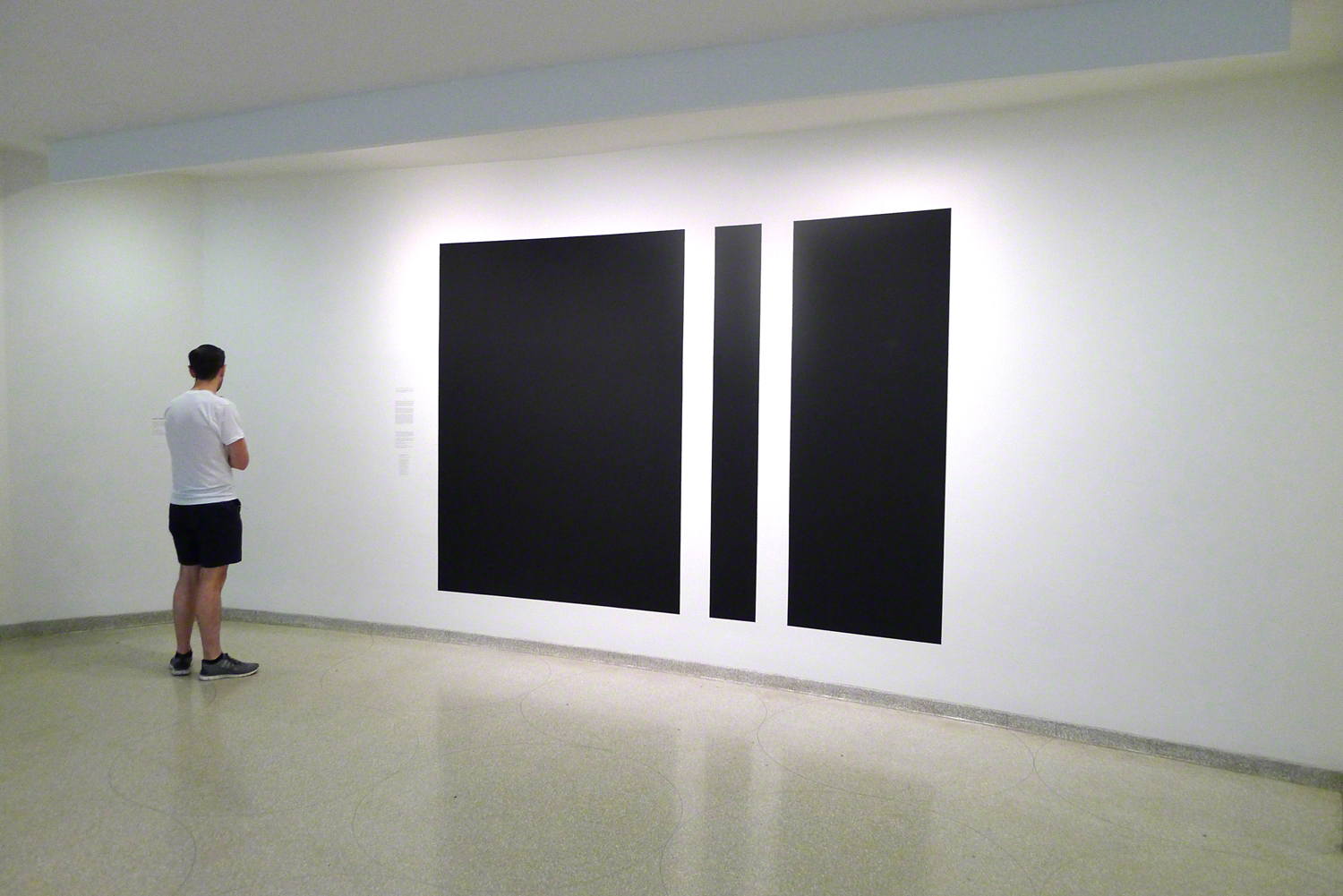
The above photo was taken in the Guggenheim Museum in New York. I was coming back down after seeing the Kandinsky exhibit ( my very favorite abstract artist) when I stopped to look at this work of art. While I was wondering what the artist’s message was, this man walked up and started reading about the painting.

I always have my little Lumix DMC-LX-7 with me and since photos are frowned upon above the lobby I had it in my pocket with my finger on the trigger (Texas talk) just in case something was to happen, and for a moment it did.

Since this guy couldn’t figure out what the artist was saying, he read for a couple of seconds and was gone…but not before I got off one shot.

Although there are many interpretations of this quote that apply to my style of shooting, this one sticks out the most as it seems to happen all the time to me.

Visit my website at www.joebaraban.com, and check out my workshop schedule at the top of this post. Come get lucky with me sometime.

JoeB

My Favorite Quotes: Bob Marley

Feeling the rain

I keep saying how much I love writing for this category. Some of the quotes I write are written by photographers, while others were written by other types of artists; from singers, songwriters, and musicians to novelists and poets.

One of the quotes that have stayed with me over the years was said by Bob Marley. Yes, it’s the same guy you’re thinking of…the Reggae King from Jamaica. Bob Marley died from Cancer about thirty years ago at a hospital in Miami. He was only thirty-six, but his music and lyrics were filled with thoughts and ideas that I’ve found to be in keeping with the way I not only approach my online class with the BPSOP but in my “Stretching Your Frame of Mind” workshops I conduct around the planet. One quote has always stuck with me. Bob said, “Some people feel the rain, while others just get wet”.

If you think about it, it can have a profound impact on the way we approach picture-taking. Ok, my students and fellow photographers might ask, what does that quote have to do with my ability to take pictures”?

Well, it’s all about the difference between taking and making pictures. It’s about the total immersion into your new found passion and craft. It’s about mastering light and understanding exposure. It’s about getting some dirt on your shirt or at least your knees. It’s about taking on the challenge of being a good photographer, not a good computer artist or digital technician. Let me explain further:

Determining the light and the direction it’s coming from before you raise your cameras up to their eye to me is the most important factor. Making your own decisions as to the correct exposure to use instead of letting the camera and lightroom do the work for you, scouting ahead of time and pre-visualizing your ideas in your mind then executing it, and spending more time than the “I came, I shot, I left”  frame of mind I find happening all the time, is about “Feeling the rain”.

The “I’ll fix it later” mentality that has come along with the digital era, has sucked the life and breath out of the right side of our brain; the creative side.  Why should I bracket when I can do it in lightroom? Why should I worry about the horizon line being straight when I can just use my straightening tool later in front of my computer? It just goes on and on, and this is all about “just getting wet”.

I’ve been following this train of thought since I first picked up a camera fifty-three years ago, in the days way before digital. It’s always been the love of my life, and I suppose that’s what has made it easier for me to caress it and “feel the rain”.

Visit my website at www.joebaraban.com and check out my workshop schedule at the top of this blog. Come shoot with me sometime.

JoeB

My Favorite Quotes: Minor White

Do you often go out shooting on your own for the pure pleasure of creating impressionable photographs for you and others to enjoy? If the answer is not only yes, but hell yes, then “read on McDuff “.

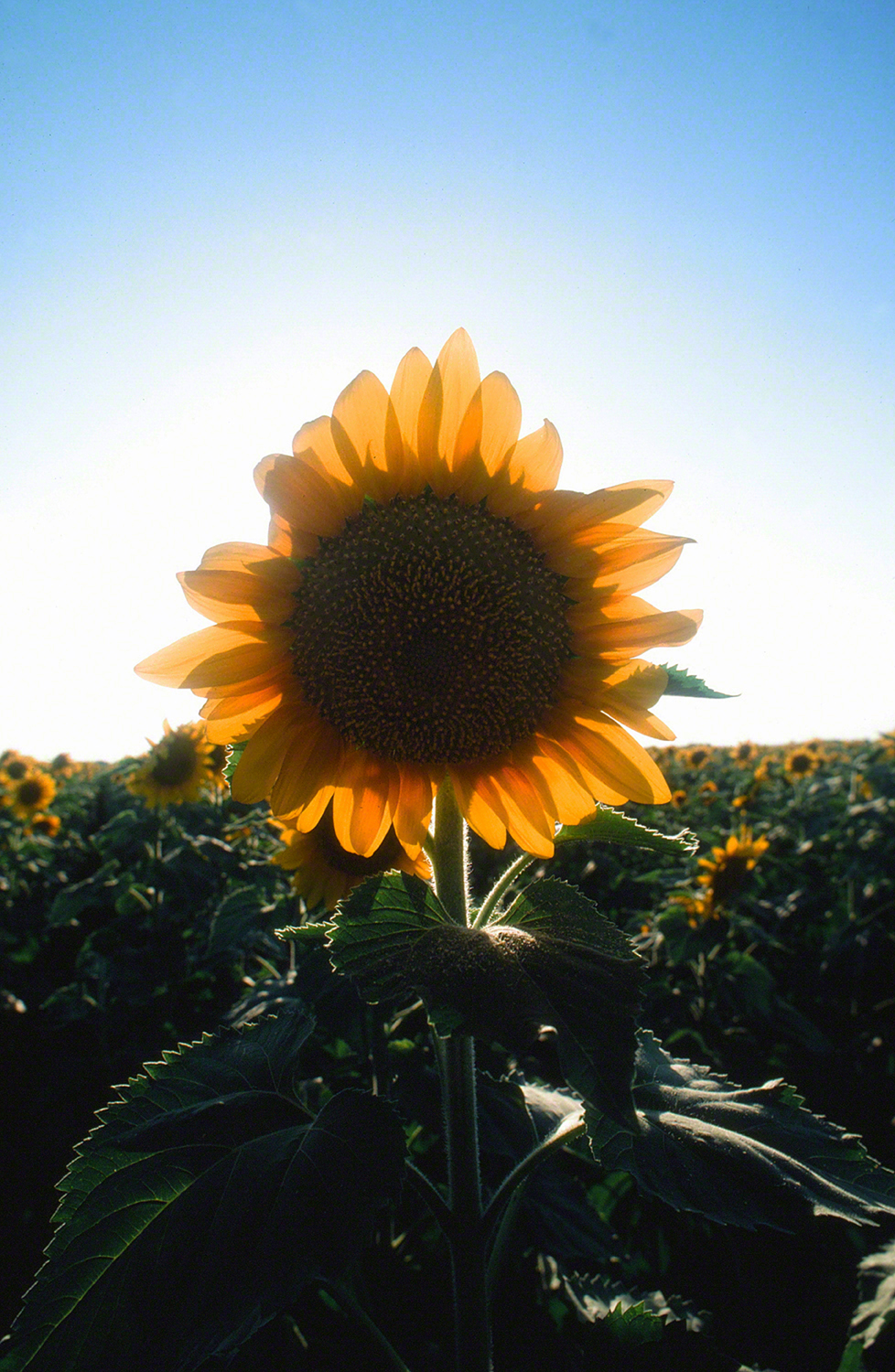
If you go out very early one morning, you see a field of sunflowers and you decide to photograph them. Do you take a photo just because they pretty to see and they make you smile? Of course that alone is a good enough reason, but there’s a lot more to it than that.

Let me backtrack and say that among some of the photographers whose work I often look at is a photographer named Minor White. who once said, “One does not photograph something simply for ‘what it is’, but ‘for what else it is.”

Over the years I have thought about that and have used the expression in various forms in my own teachings both in my online classes with the BPSOP, and in my “Stretching Your Frame of Mind” workshops I conduct all around our (very round) planet.

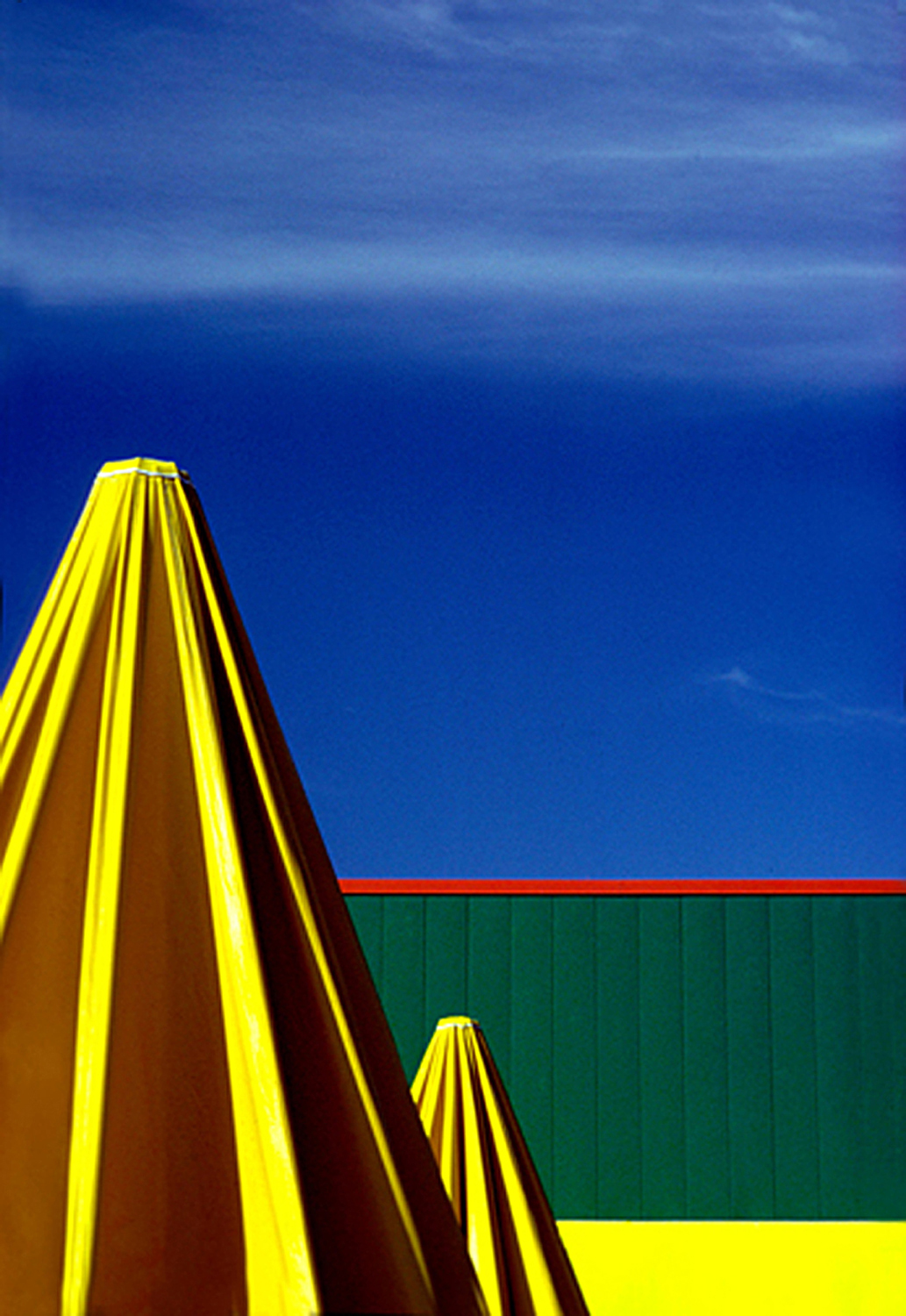
Suppose you have taken your kids to Sesame Park in Dallas, and you see several yellow umbrellas set up for parents to hide under from the sun. Is it the umbrellas that interest you, or is it because you also see very big yellow triangles creating depth from overlapping each other?

How about the triangles created by the shadows in between the ridges of yellow? Or just the shadows themselves? Or even to go as far as the red, blue, and yellow colors that incidentally are the three primary (pigment) colors; not counting the red, blue, and green colors that make up primary light?

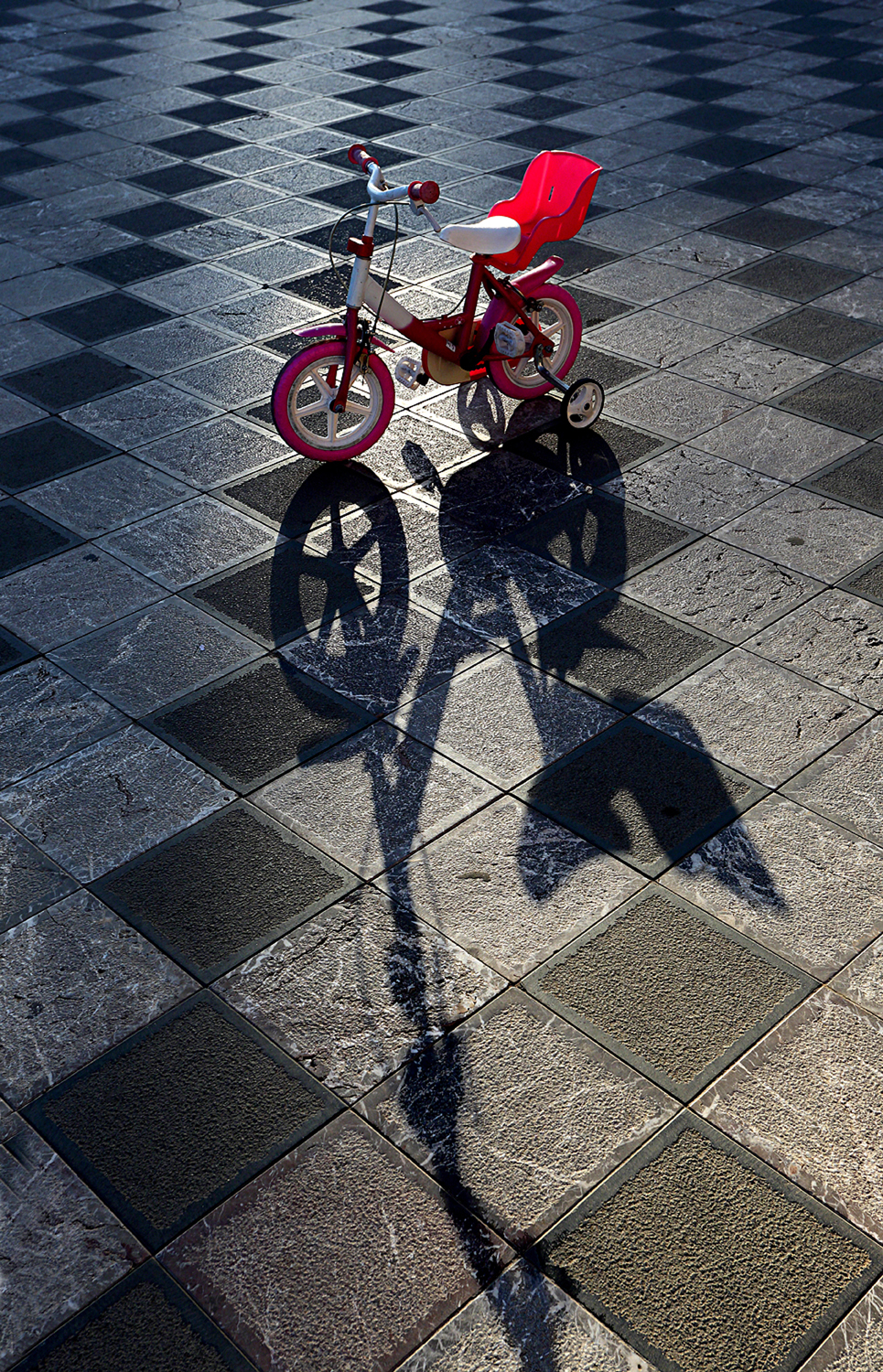
So you’re traveling and stop in a plaza in Sicily for some famous Gelato and you spot a toddler walking away from his bike. Do you try to photograph the kid or the bike? If it were me, I would take a photo of the patterns surrounding the bike that create all those fabulous diamonds and squares; and the shadows of the bike caused by the backlight.

  OK, so getting back to the sunflowers, You see a sunflower, but what else is it? It’s a flower that has petals glowing from the sun directly behind it that creates a pattern of color. It has beautiful texture that just happens to be one of the elements of visual design.

And so my fellow photographers, when you’re out ‘making’ your works of art, remember that the left side of your brain, the analytical side, sees an umbrella, a bike, and a sunflower. The right side of your brain, the creative side, sees everything else.

Visit my website at: www.joebaraban.com, and check out my workshop schedule at the top of this blog. Come shoot with me sometime.

JoeB

My Favorite Quotes: Pablo Picasso

Break all the rules!

Before reading this post, for all of you that have taken my part I and II classes, the school is bringing back my Gestalt class for a month, starting the first week in May. Here’s the link: https://bpsop.com/courses-1/

Every so often, either during a conversation with one of my online students with the BPSOP or in one of my “Stretching Your Frame of Mind” workshops I conduct all over the place, I’m told by one of my fellow photographers that they were, in turn, told to not do something while taking pictures. Well, it just happened again, so while it was still fresh in my mind I thought I would share it with you.

But first I’m going to digress a touch and give you the reason for this post. One of my all-time favorite painters was Pablo Picasso. Although I could go on and on about him, he was a painter that constantly re-invented himself. He was always bringing ‘something new to the art scene.

Picasso once said, ” Learn the rules like a pro, so you can break them like an artist.”

I suppose it’s (maybe) true that we must learn the rules of photography, which to me is a complete waste of time. Rules are a hindrance to our imagination and the shackles keeping us from any creative thought. But, far be it for me to dispute one of the most imaginative and creative painters to ever have lived.

Getting back to the photographer I’m referring to, this person was obsessed with the notion that you always wanted your subject facing into the composition; leaving lots of room for him or it to walk, drive, or fly into. After a time trying to de-program him, especially since his mentor and president of the local camera club told him so, it was an aha moment for me…president of the camera club…that started to make perfect sense.

When he followed it up with always put your subject in the Rule of Thirds, and make sure to check the Histogram before clicking the shutter, I knew I had a photographer that would always ‘color inside the lines’.

Showing him examples of images that broke all the rules just couldn’t pull him away…even though he really liked them he was just past the ‘point of no return’.

A retired civil engineer and a confirmed left-brain thinker, I realized that it was better to just let him be and continue on down the road well-traveled.

Well, you can’t win them all.

Visit my website at www.joebaraban.com, and check out my workshop schedule at the top of this blog. Come shoot with me sometime.

JoeB

My Favorite Quotes: Wassily Kandinsky

  Since my background is in painting and design, I show photographers how to incorporate the basic elements of Visual Design into their imagery.

One of the elements is Color, which leads me to a quote said by one of if not my favorite artists. Wassily Kandinsky once said, “Colour is a power which directly influences the soul.”

Color is a universal language and is a great way to communicate ideas, and I’m always looking for it. For example, you see a group of people with their backs to you at a park. They’re all wearing the same color sweatshirt. What would that mean to you?

Color is a stimulant for our eyes and ties the elements of a photograph together. Color affects every moment of our lives and has an enormous impact on our photography. Knowing color is one of the first steps in making (not taking) consistently good photographs.

Color can give you a sense of mood, a sense of place, and a sense of time.  It can also be used to move the viewer’s eye around your composition; use it to create harmony and balance.

People that take my online class with the BPSOP, and those that participate in my “Stretching Your Fram of Mind” workshops I conduct around the world will often comment on the color saturation in my photos.

It usually is, and it’s not because of Photoshop. The main reason is that I shoot mostly in “Golden Light”, and I use the angle of the existing light as an important aid.

Having said all this, the one thing that really sticks out in my mind after reading Kandinsky’s quote that’s not always the case is that when you photograph people in color you’re photographing their clothes and when you’re photographing them in black and white you’re photographing their souls.

Visit my website at www.joebaraban.com, and check out my workshop schedule at the top of this blog. Come shoot with me sometime.

JoeB

My favorite Quotes: Al Pacino

Rural China

Although I love all my categories, “my favorite quotes” is way up in my list of favorites. For those of you that for some reason have not read any, these quotes are from all areas of the arts and literature and not just photography.

There are some that I’ve known since my early days of being a professional photographer (fifty years and still counting) and there are those I’ve read since I started teaching  (while shooting professionally) in 1983. I often recite these quotes in my “Stretching Your Frame of Mind” workshops I conduct around our planet, as well as in my online class with the BPSOP.

When I find a quote that makes me say “OK, that’s cool” to myself, I’ll instantly think of how it fits into my thought process when I’ve been out shooting, and how it can become a teaching aid to my approach to turning my fellow photographers on to the way I see and/or shoot.

One of my all time favorite movies was Scarface, and one of my all time favorite lines in that (or any) movie was spoken by actor Al Pacino. “Say hello to my little friend”.  was said as the bad guys were coming in. Ok, I’m sure you’re wondering how in the hell does this relate to photography.

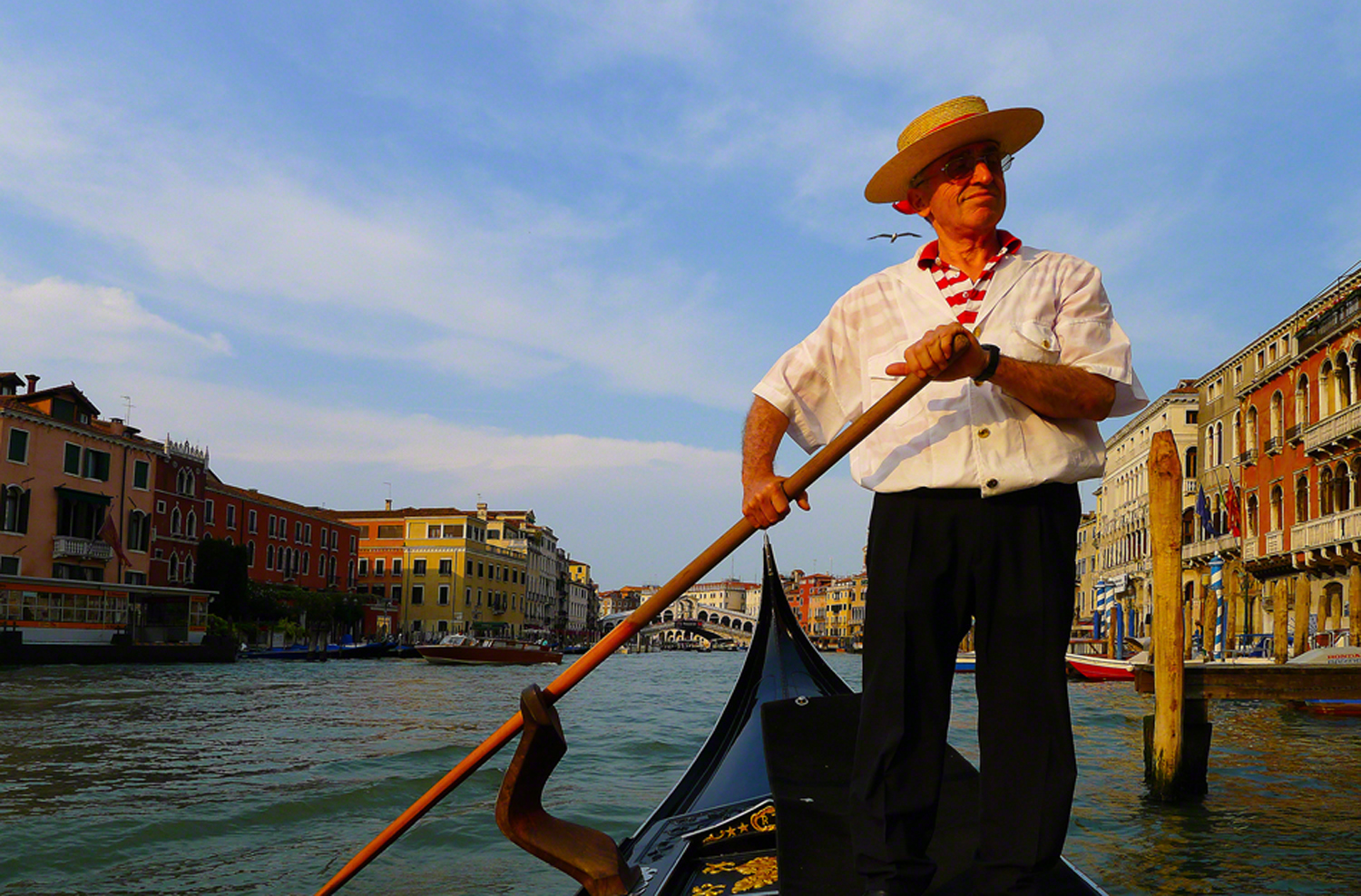
While on a sunset romantic cruise in Venice.

As I tell my students, always have a camera on your person. Well, one man (among others) once said to me that it was impossible to always have his big DSLR with him and that smaller point and shoot’s just can’t take good pictures”…WHAT I said!!!

In the modern age, there are cameras that have ten or more megapixels, and have lenses that are very fast and very sharp…that will fit in your pants (or shorts in my case) pocket. They can do as much as a large DSLR. Remember that it’s not the camera, it’s the ten inches behind it that’s important.

Waiting for lunch

I keep a Lumix DMC-Lx5 in my pocket all the time. It’s the identical camera to the Leica D-Lux 5 (same lens, same sensor, same look) but is half the price. You’re paying twice as much for that little ‘L’ in a red circle, but I know people out there with giant egos that would rather pay more so people will be impressed. Btw, I’ve recently replaced it (with an electronic viewfinder) with the LX7. 

Walking around Lisbon

After doing a lot of reading, it was the camera for me. The new one is a ten megapixel camera and has a new F/1.4 lens…”WOW”, and you can get a viewfinder for it that shows you exactly what you’re getting.

I can assure you that carrying around this “little friend” will add to the possibilities of never missing a good photo again. Ernst Haas, one of my all time favorite photographers whose work hangs in my house said , “The camera doesn’t make a bit of difference. All of them can record what you’re seeing…but, you have to see.”

FYI, here’s the scene where Al Pacino said this now famous line: https://www.youtube.com/watch?v=AVQ8byG2mY8

Visit my new website at: www.joebaraban.com, and check out my workshop schedule at the top of this blog. Come shoot with me sometime, and bring along your little friend.

JoeB

My Favorite Quotes: This One Comes From Yours Truly

In the manual mode

I was recently reminded after watching a news segment on the assassination of JFK on November 22, 1963, I thought it might be good timing to suggest for your approval, one of my recent quotes. Like so many people of my generation, I remember exactly what i was doing the moment I had heard. I was sitting in a barber chair getting my hair cut.

Now, in remembrance of those incredible times, I offer you this quote that you’ll hopefully take to heart and include in your thought process when composing your photos: “Ask not what your camera can do for you, ask what you can do with your camera”. There’s no disrespect meant here, since I like so many others in that generation loved the president and agree that his famous quote will go down as one of a poignant reminder of such a tragic time.

With my online class with the BPSOP and in my “Stretching Your Frame of Mind” workshops I conduct around the planet, I work mainly with fellow photographers that have only been shooting in the digital era. The era where you no longer have to worry or think for that matter about how to take a picture…it’s so simple you see. All you have to do is aim the lens at something and pull the trigger; that’s Texas talk for clicking the shutter. The camera will do all your thinking for you, and what the camera leaves out, the computer and all the software you crammed in it will do the rest.

It will blink when you’re clipping a highlight, it shows you a histogram so you don’t have to actually study the light for yourself, It tells you what exposure to use, whether you like it or not, It focuses automatically which is a luxury not a necessity. It can bracket automatically which is a good thing, and some cameras even cleaned the sensor for you. Last, it provides so many different shooting programs that to know what all of them mean would take a degree from MIT.

I’ve heard of plans for some states to make it legal to actually marry your camera…No, say it ain’t so!!!

Ok, here’s some of the things you can do with your camera. You can crop in it so you’ll know where the edges of your frame are and use those edges as a compositional tool. You can move your camera to the ‘M’ setting.

For those of you that have no idea what ‘M’ stands for, it stands for manual. From there you can set your own shutter speed/aperture combination thus beginning to study and learn about the light. You can focus it yourself when those weird times come into play where the camera can’t decide what exactly it is you want in focus.

For those people that only shoot horizontally (and you know who you are), you can turn the camera 90 degrees and shoot vertically; btw, there’s more energy in a vertical than a horizontal. You can either look through the viewfinder or use live view when you’re in a weird spot. Some people even hide behind it to be invisible; war photographers did this all the time. If you put your camera on a tripod, you become the same artist as the ones that put a canvas on an easel. With the help of your camera, you can capture the beauty that surrounds you, making you feel good. And last, I seen people hammer small nails with their camera!!!

And so my fellow photographers, “Ask not what your camera can do for you, ask what you can do with your camera”

Visit my brand new website at: www.joebaraban.com, and check out my workshop schedule at the top of this blog.  Come shoot with me sometime.

JoeB

My Favorite Quotes: Marcel Proust

What else do you see besides a window?

Here’s a quote written by Marcel Proust, a French Novelist that lived in the late 19th century and early 20th. In my English Literature class we touched on his writings, but it wasn’t until I started teaching online with the BPSOP, and conducting my “Stretching Your Frame of Mind” workshops that I happened upon one of his quotes. It’s a quote that has stuck with me and one that I constantly tell my fellow photographers that say they can’t find anything worthwhile to shoot anymore.

Proust said, “The real voyage of discovery consists not in seeking new landscapes but in having new eyes.”

When I think about the part that says “new eyes”, my Artist Palette immediately comes to mind. I teach my fellow photographers how to use the elements of visual design and composition to create stronger photos. We work on “making pictures” that include Texture, Pattern, Line, Shape, Form, Balance, Perspective, Vanishing Points, and Negative Space. It’s a lot, but they all fit comfortably on a palette.

Before students have taken my online class or my workshop, they’ve gone out and photographed what they saw, or have photographed what others have before them. The problem is that they never thought about “seeing past first impressions”. A tree is just a tree to them. They are of the mindset that looking at a label is fine, never mind that they’ve haven’t a clue as to what’s inside.

I had a student that lives on a ranch in Montana. She told me that there was nothing left to photograph, and was ready to give up photography. I had her create a path or trail if you will, that surrounded the house, the barn, farm machinery, the pens for the animals, and the fence line. I told her to follow the path exactly the same way each time, going past the exact same things each time. The first couple of times I just wanted her to take pictures of whatever she saw. As expected, her photos lacked substance, and meaning. It was obvious that she had become bored with her ranch.

Then I told her to take her ‘(imaginary) Artist Palette’ with her and look for the elements that were on it. When you go past the fence, forget that it’s a fence. instead, think of it as a way to frame one of the other buildings, Think of the areas between the posts as a Shape…a long rectangle that’s created by the Negative space that surrounds and defines it. Look at the texture, and try getting “up close and personal” to it. Image the top and bottom of the fence as converging lines that move the viewer around the frame…maybe to one of the structures. Most important, I told her to walk the path at different times of the day. Walk it at sunrise, the middle of the day and sunset to see how the light can play a huge part. How about side lighting the sides of the bard, to emphasis the texture. Then, I told her to go the other way around to see things completely different.

As I knew it would happen, she started seeing things she never knew were there before. It was a true “voyage of discovery” that she was able to see with her “new eyes”.

So my fellow photographers, you don’t have to travel to take good photos. Sometimes you only need to look in your own backyard.

Visit my new website at: www.joebaraban.com, and check out my workshop schedule.

JoeB

My Favorite Quotes: W. Eugene Smith

Think, feel, and see

W. Eugene Smith is probably one of if not my favorite photographer. Since the beginning of my career as an advertising, corporate, and editorial photorapher, I shot mostly black and white. His images made a profound impact on the way I was starting to see, and I identified with just about all of them.

Bur recently, I discovered a side of him that I really felt made us kindred spirits; and it was all about the ways I approach teaching.

I teach an online class with the BPSOP, and I also conduct my “Stretching Your Frame of Mind” workshops all over the planet. I teach my fellow photographers how to incorporate the elements of visual design into their images, so when I read what Gene Smith said, I immediately saw so many parallels to the way I do things.

He said, “If I can get them to think, get them to feel, get them to see, then I’ve done about all I can as a teacher.”

Get them to think: One of the most common threads between photographers is that they’re in a rush to click the shutter. Sometimes that’s necessary, as in street shooting when a ‘moment’ occurs and you have to be fast to get it. Most of the time it’s not that important. What happens is that you wind up having to spend time in front of a computer to fix what you didn’t see when you ‘rushed to judgment’.

Think about what you’re doing when you’re trying to convey a message to the viewer. It can be any subject, i.e., landscapes, portraits, still lifes, etc. If the viewer doesn’t know what you’re trying to say/show, he won’t spend much time working to figure it out.

Get them to feel: Well it’s all about the difference between taking and making pictures. It’s about the total immersion into your new found passion and craft. It’s about mastering the light and understanding exposure. It’s about getting some dirt on your shirt or at least your knees. It’s about taking on the challenge of being a good photographer, not a good computer artist or digital technician. Let me explain further:

Determining the light and the direction it’s coming from before you raise your cameras up to their eye to me is the most important factor. Making your own decisions as to the correct exposure to use instead of letting the camera and lightroom do the work for you, scouting ahead of time and pre-visualizing your ideas in your mind then executing it, and spending more time than the “I came, I shot, I left”  frame of mind I find happening all the time.

The “I’ll fix it later” mentally that has come along with the digital era, has sucked the life and breath out of the right side of our brain; the creative side.  Why should I bracket when I can do it in lightroom? Why should I worry about the horizon line being straight when I can just use my straightening tool later in front of my computer? It just goes on and on.

Get them to see: Is it just a tree? I talk a lot about right and left brain thinking. The left brain is the analytical side while the right side is the creative side.

For example, if you were to look at a fence around a little league baseball infield, the left side would see a fence around a little league baseball infield. If you were to look at that same fence with the right side of your brain, you would see Pattern, Shape, and Line; three of the basic elements of visual design.

Make sure that when you’re out shooting don’t view things as they are and what you first see, look past those initial reactions to things so you can see what else they represent. It will open so many other photo possibilities.

Visit my new website at: www.joebaraban.com, and check out my workshop schedule at the top of this blog. Come shoot with me sometime.

JoeB

My Favorite Quotes: Paul Strand

What do you see?

Since I’m always on the lookout for articles of interest and observing well-known photographers (as well as other tyoes of artists) and their quotes, I get excited when I read one by a photographer whose work I’m familiar with.

Paul Strand is one of those photographers, who once said, “The artist’s world is limitless. It can be found anywhere, far from where he lives or a few feet away. It is always on his doorstep.”

For those of you new to my blog, I’m a semi-retired advertising, corporate, and editorial photographer who now teaches an online class with the BPSOP, as well as conducting my “Stretching Your Frame of Mind” workshops around our planet.

I teach my fellow photographers how to incorporate the basic elements of visual design into their photography. I also show students how to see past first impressions and instead of seeing with the left side of their brain, the analytical side, we work on using the right side of the brain, the creative side.

“Even in your own backyad”, I once said to one of my mentoring students who wasn’t able to leave her small farm. “It’s not just an old wooden fence” I remarked. “You see an old wooden fence with the left side of your brain, right? But what do you see with the right side?”, I asked.

I continued, “With the right side you see a possible Vanishing Point (leading and directional lines), Pattern, Texture, Shapes, and most importantly Line.

So my fellow photographers make no mistake we are artists who have chosen the camera as the medium. Our world really is limitless, and to me the best way to see it is to take the road less traveled. Strike out on your own, using your own imagination. Remember that it’s a beautiful world out there when in the hands of a photographer.

Remember that if you always do what you did, you’ll always get what you got!!!

Visit my brand new website at: www.joebaraban.com, and check out my upcoming workshops at the top of this blog. Come shoot with me sometime.

JoeB