Food For Digital Thought: Can’t See the Forest for the Trees?
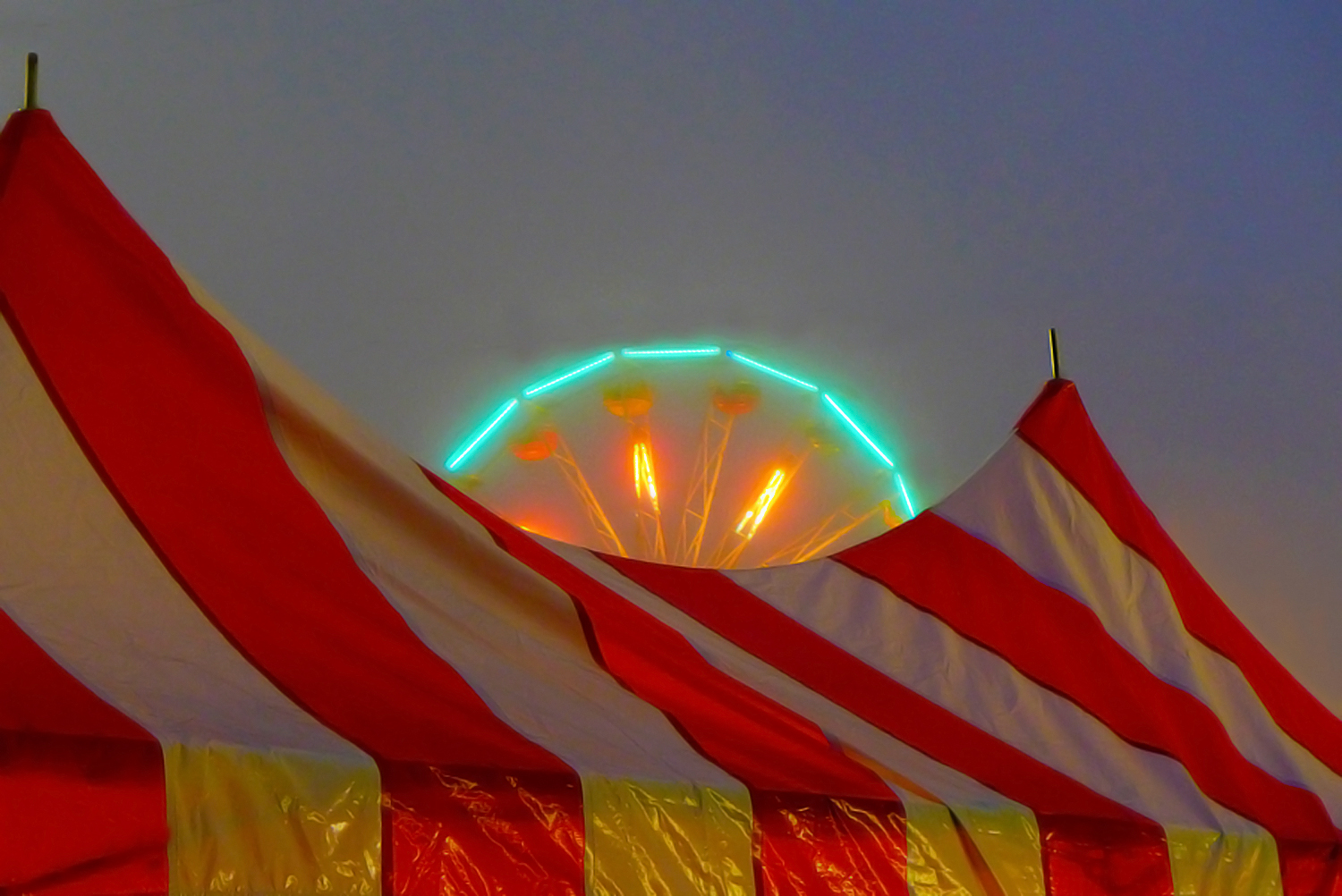
The Whole Enchilada

Here’s a saying that has been around as long as I can remember; somewhere right after the last dinosaur disappeared.

I’m sure that at one time you have either said it yourself, it has been directed to you, or you read it, “Can’t see the forest for the trees”.

For those that don’t know the actual meaning, it’s an idiom ( https://www.dictionary.com/browse/idiom) and it means…”an expression used of someone who is too involved in the details of a problem to look at the situation as a whole”.

Another definition is, “To focus only on small details and fail to understand larger plans or principles”; basically the same thing.

At this point you’re probably asking yourself what does this have to do with taking pictures?

I have seen this first hand with many of my fellow photographers that have either taken my online classes with the BPSOP or have seen it during the critiques in my “Stretching Your Frame of Mind” workshops I conduct around the world.

They get so zoned into a subject that they fail to see the environment that surrounds it. This causes confusion when the viewer can’t figure out what you’re trying to visually say.

One of the problems I observe is that I see people walking around and all of a sudden they’re shooting pictures of things that could have been shot anywhere; For example, coming in close on a person, just a face, an object, something in a window, Etc.

This all works when you’re back from your trip and have the family over for the proverbial slideshow and you’re able to talk your way through each photo.

That’s all well and good, but for the most part you probably won’t be around to explain the pictures. If you want to say where the photo was taken (without being there), you’ll want to show some of the environment to give your subjct a place; including a name of the city (if at all possible) somewhere where the viewer can read it.

This what I refer to as The Whole Enchilada.

Btw, in the above image I was looking at the patterns, color, and light on the tent. When I stepped back I saw the ferris wheel!!!

🙂

Visit my brand new website at: www.joebaraban.com, and checkout my workshop schedule at the top of this blog. Come shoot with me sometime and we’ll slow down together and smell the roses. I still have an opening for my upcoming workshop in New York starting this coming September 17th. I hope you can come join us as we shoot all the five boroughs.

JoeB
Food For Digital Thought: Making Not Taking Pictures

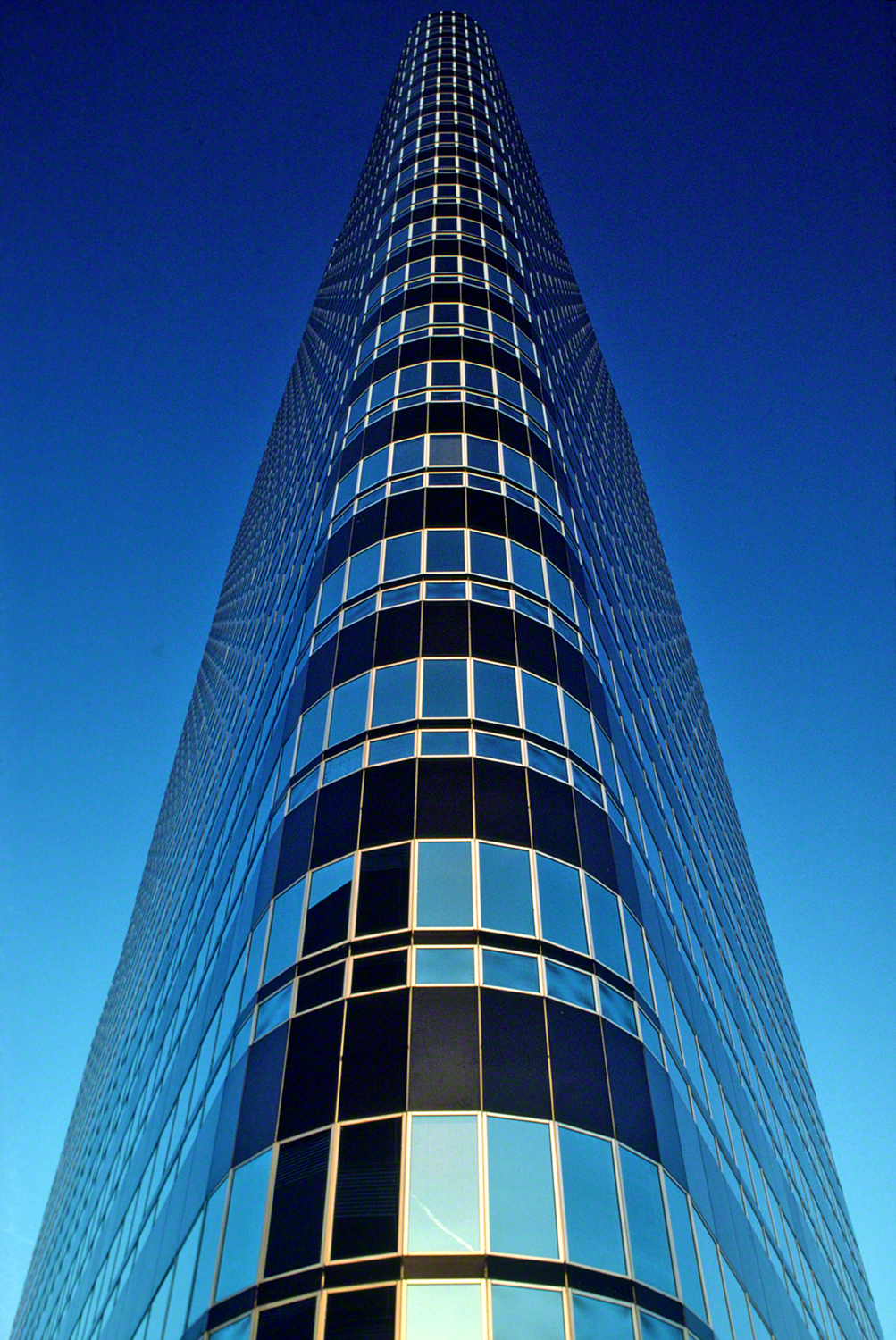
This is making pictures

If I had to name one thing that I’ve talked about the most, both in the years I’ve been teaching online with the BPSOP, and in all the “Stretching Your Frame of Mind” workshops I’ve conducted around the planet, it would be that the majority of my fellow photographers ‘take’ not ‘make’ their pictures.

I’ve seen it with my own eyes, so I know it to be soooooooo very true. They walk up to a subject whether it be a person, a structure, or even a landscape, and bring the camera up from their chest or swing it around from their shoulder. They look in the viewfinder and within a nanosecond (maybe a little more) they click the shutter and walk away. That’s taking pictures and maybe they got something worth sharing, maybe even a wall hanger; but I can tell you from years of experience…don’t count on it.

Here’s the difference in that style of photography and mine, and it’s what I teach and preach to all my students: First of all, the most important step before even thinking about bringing the camera up to your eye is to determine where the source of the light is coming from. Unless you’re street shooting where capturing the moment is critical, light is everything!!!

I want to make sure I’m either side lighting or back lighting my subject and center of interest. I do this for several reasons: Texture is one of the basic Elements of Visual Design, and to bring out the Texture, you need to either side or back light it. Form is another Element. Form refers to the three-dimensional quality of an object. height, width, and depth are the three ingredients, and to show depth, you need to side light it. Anything translucent such as: grass, flowers, and water look the best when they’re backlit; I always position myself so that my subject is between the source of the light and my camera.

I show my students how to incorporate the Elements of Visual Design into their imagery, and these elements are put on an imaginary ‘Artist Palette’. The same ‘Artist Palette’ I’ve been carrying around in the back of my mind for the past forty-four years. When I’m out shooting I look for things not immediately visible without the help of my palette. I look for: Light, Texture, Patterns, Shapes, Vanishing Points, Perspective, Color, and most important Line. I look for ways to use Negative Space to define my subjects, as well as balancing my composition. I use lines to move the viewer around the frame, especially if I can introduce a Vanishing Point. I introduce Color on overcast days, and I also use color to communicate ideas.

I also show my fellow photographers the way to use the right side of the brain…the creative side. This is the side tha tnot just sees a tree, but all the before mentioned elements of design.

This is “making pictures”, and a hell of a lot more fun than just bringing the camera up to my eyes and clicking the shutter.

Visit my brand new website at: www.joebaraban.com, and check out my workshop schedule at the top of this blog. Come shoot with me sometime.

JoeB

Food For Digital Thought: Standing the Test of Time

Standing the test of time

There are many aspects involved in taking a photo that you’ll remember and that will stand the test of time; or perhaps just another background memory clouded by the passing of our daily lives.

Since I enjoy the game of golf and I often play (I’m a much better photographer), I can draw this analogy…to simply hit a golf ball straight and not necessarily far, it takes a number of things all working together at the same time: Your stance, grip, wrist, shoulders, head, knees, follow-through,  tempo, backswing, and that’s not counting all the separate nuances that are associated with each one of those aspects. FYI, according to my brother, who’s a Master Professional, only five percent of all the golfers in the world can break 100.

Well the same hold true for photography, fortunately for all of us there’s not quite so many!!!

In my online classes with the BPSOP and in my “Stretching Your Frame of Mind’ workshops I conduct around our planet, we work on incorporating the elements of visual design.

We also work on light, exposure, balance, composition, unity, rhythm, meaning, visual interest, and the ability to see past first impressions, are all some of the important aspects necessary before you click the shutter; if you expect your photos to stand the test of time.

What do I mean by standing the test of time? I mean that when you look at your photo a day, week, month, six months, a year or longer, and it still looks as good to you as the day you shot it, then it will stand the test of time and become timeless. Will it convey the same meaning, tug at the same heartstrings, the same smile no matter how much time goes by?

Moreover, if in the same stretch of time you take a second look at it and you wonder why in the hell you ever clicked the shutter, then maybe you shouldn’t have been so hasty. That’s where those aspects I mentioned come into play. A good photo is going to be a good photo no matter what new technology forces its way into the art of photography…and make no mistake, it is art.

Photographers are artist who have chosen a camera as their medium. A camera on a tripod is just like a blank canvas on an easel.

I find that the more plug-ins, programs, software, and buttons there are, the harder it is to take a simple photo and have it last through all these photo fads. Case in point, look at all the great photographers that shot with a lens and a camera. People like: Cartier-Bresson, Ansel Adams, Steichen, Haas, Lange, Eugene Smith, Newman, Walker, Penn, and so many more.

Their images are more sought after today than ever before and will continue their popularity even as our generations change hands and younger/newer photographers take over with more advanced, more powerful, newer, smarter, more megapixel cameras . I just don’t think you can say that with the type of photos that one sees every day. They will come and go as fast as the new spring fashions that come out year to year.

For a photo to stand the test of time, it takes a commitment to the process. Take the time to get all these aspects going for you before you click the shutter, not in front of a computer. Think before you bring that camera up to your eye, and you’ll wind up shooting less and being more productive.

Visit my brand new website at: www.joebaraban.com and check out my workshop schedule at the top of this blog. Come shoot with me sometime.

JoeB

Food For digital Thought: Color That Inspires

Color (and light) inspires me

When I go out shooting I never look for a particular subject, for example: flowers, fences, boats, cars, buildings, planes, trains, rivers, oceans, etc. What I look for is color and light to be my subject. I’m usually looking for both to be co-subjects since it creates a strong, powerful relationship. A white picket fence is not just a picket fence, it’s a ‘white’ picket fence. The type of flower is unimportant; it’s the color that attracts me to it.

In my online classes with the BPSOP, and also my “Stretching Your Frame of Mind” workshops, I emphasize how color and light working in tandem creates those kinds of images that will stand the test of time.

Color is a stimulant for our eyes, and ties the elements of a photograph together. Color affects every moment of our lives, and has an enormous impact on our photography; knowing this, is one of the first steps in taking consistently good photographs.

I want to digress for a moment and put in a piece of information I read on the internet, if nothing else to show you how little value you should place when reading a considerable amount of photographic gibberish that’s out there..

This is what I read…” Colors that clash cause confusion to the eye and result in a poor image. Too many clashing colors create multiple focal points, causing the eye to dart around the image not sure what to look at first or what to focus on. Rather, choose one dominant color that becomes the focal point of the image and draws the eye of the viewer to it immediately. The greater the intensity of the color, the more it’s going to dominate so be careful that your subject in an image has the dominant color, otherwise a secondary subject could overshadow it because it has a dominating color”.

I couldn’t disagree more, and it leads me to the title of my post…I have created a link to the section on my brand new website to show you how color inspires me.

Since color is a basic element of visual design, it’s a very important ingredient in taking our imagery what I refer to as…”up a notch”. We should want to use color to it’s fullest dgree.

“I’m all about getting a viewer to feel some emotion when looking at my images. Except for the savvy photographer, most people aren’t really concerned how I compose a photo. Having said that, everyone responds when I’ve made them feel something; and nothing does it better than color.

So, my fellow photographer, the next time you go out shooting think of using color as your subject; using it to set a mood. If you really want your color to stand out think about the time of day you choose to shoot.

For example, photos taken in the early part of the day or in the late afternoon will have a warmer cast, which will make the scene seem inviting and cheerful.

Converesly, photos taken at mid-day will have a cooler cast and could render the different hues hot, contrasty and bold; not particularity relaxing…but definetely a look.

Visit my brand new website at: www.joebaraban.com, and check out my workshop schedule at the top of this blog. Come shoot with me sometime.

JoeB

Food for digital Thought: Light In Four Part Harmony

Four Part Harmony

One of my favorite topics to discuss with students taking my online BPSOP class,  and in my “Stretching Your Frame of Mind” workshops I conduct around the planet is the Light. Unless you’re street shooting where timing and and capturing a moment are important, Light is everything.

I’ve been a student of light for as long as I can remember, including those B/W years spent shooting with AP and UPI. I studied art and design, with a couple of semesters plodding through Art History, where we studied each of the Masters and later impressionists approach. This is where I learned notable techniques like Renaissance portrait lighting.

When I first started studying the Light, I broke it down in what I termed Four Part Harmony: Hue, Intensity, Direction, and Quality.

Hue: Refers to the color of the light. The color is dependent on the time of day you’re shooting. When the sun is low on the horizon, it appears warmer since it’s going through more atmosphere. As the sun rises in the sky, the color of the light becomes bluer. The reason being that it’s going through the shorter blue and violet wavelengths.

Intensity: The intensity of the light is associated with how hard or soft the light source is. When you consider the intensity, don’t think of it as being either bright or dim. It means a whole lot more than that. One needs to think about it in terms of how it will render the final outcome to your photos. When you consider the Hue, consider the intensity as well. The lower the light is to the horizon, the more atmosphere it’s going through making the light much softer than it is when the sun is higher and going through less atmosphere.

Cloud cover can have a huge effect on your images, mostly when the sun is high and it’s a day that’s considered partly sunny. It’s a good time to shoot as it’s referred to as open shade. The only drawback is that with open shade, it’s hard to create the third dimension (depth) since you need side light to accomplish that.

Using artificial light can greatly impact the intensity of the light. Aiming your flash directly at your subject will render it harsh and contrasty. Shooting through diffusion, or bounced off a white umbrella, or bounced off the ceiling will provide a softer light; it’s the only way I light when I’m indoors.

Direction: There are three basic ways to light a subject. Side, front, and back. The first thing I ever do, before raising the camera to my eye, is to determine where the source of the light is. I avoid front light like the plague…why? because Form is a basic element of visual design, and it refers to the three-dimensional quality of a subject. When you front light, you eliminate the third dimension (depth) and as a result you’re left with the other two…height and width. Front light provides the least amount of information.

When you sidelight your subject you create the third dimension…depth. A simpler concept is when you side light, you provide shading to your subject. Side light is also used to emphasize the texture of an object; or any patterns in your composition. It’s also a good way to separate the subject from the background.

Back light is when the source of the light is behind your subject. It’s my favorite way to light since it adds a rim of light around the subject. When I’m shooting something transparent, such as water, grass, flowers, leaves, etc.,  the back light makes those subjects glow. It also can add strong shadows, and as I always say, shadows are your best friend.

Quality: The quality of the light affects mood and drama. It also refers to the softness or hardness of the light source. What kind of look or mood you’re trying to create is determined by how the light is used. Harsh direct light gives you sharp and defined shadows, where a softer diffused or bounced light might not offer near as defined shadows, and sometimes none at all.

My favorite light is available light. As far as the quality of the light goes, most of the studio shooters I know, including myself try to emulate available light and will go to great lengths and expense to do so. I can’t tell you how many “North Light Studios” there are to rent in NY. I say North light because it’s the softest. Since it faces north, you’ll never get any direct sunlight coming in to affect your photos; and the light remails constant throughout the day.

Visit my website at: www.joebaraban.com, and check out my workshop schedule at the top of this blog. Come shoot with me sometime. I just announced my New York, New York Workshop beginning September 17th ,2019 and ending at noon on the 23rd. This will be my second workshop there and this time we’ll be shooting in all the five boroughs.

JoeB
Food For Digital Thought: Incident vs Reflected Light

I was recently mentoring a student that was just beginning to take the plunge into being a full time professional photographer. He was setting up a portrait shoot in his semi-new studio and showed me his lighting setup; using his son as a stand in. He ws having trouble getting the background to show up…even a little.

I finally spotted the incident meter and new immediately why he was having trouble getting the light balanced on the son’s face and a much darker background.

It’s one of the very important pieces of information on light I always share with my online class with the BPSOP, and my “Stretching Your Frame of Mind” workshop I conduct around the planet.

Okay, there are two different ways to read the light. There is incident light, and there’s reflected light.

Incident light is the light falling on a subject, and reflected light is the light reflecting (bouncing) off a subject. For the past forty years, when I take a reading, I take a one degree spot reading of a scene or subject (reflected) because it will be  more accurate. BTW, it’s a hand held meter made by Minolta; they aren’t made anymore but you can find them on Ebay. Incidentally, I’ve been reading that the hand held meter is gaining popularity.

I’m sure you have all seen a photo that has both white and black people in it. In almost all examples, the black person looks darker that the white person…Why?

Because the black person absorbs more light than he reflects; much less than the white person. If you were to take an incident reading of both people standing right next to one another, you would get the same reading…you’re measuring the light falling on them. It’s the same falling light, and it doesn’t know where or what it’s landing on.

If you were to take a reflected reading of both their faces, there would be a big difference between the two people. When I’m shooting both people in one shot, I always have the black man stand next to the edge of the frame, so I can bounce some extra light on him to bring him up to the same exposure as the others. Yes, I know you can do all this in Photoshop To a point), but like myself, there’s a lot of photographer’s still out there that like doing things in the camera. For me, not only does it make you a better shooter, but it’s a lot more challenging…and I love a challenge!!!

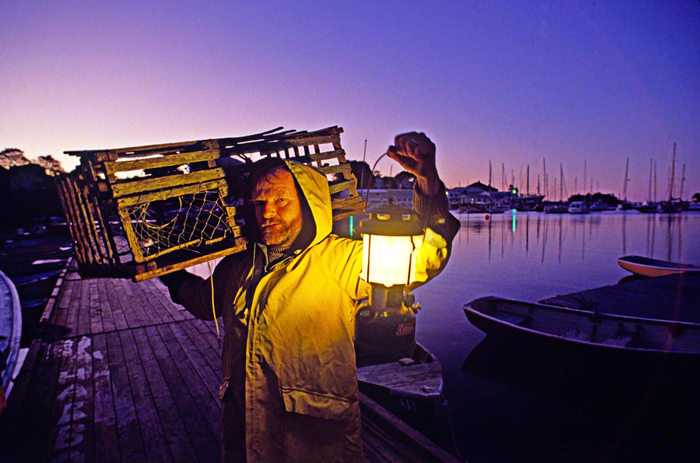
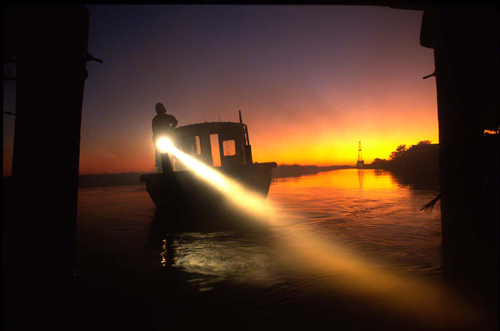
The same goes with other subjects and scenes. Take a look at the above photo of the Lobster fisherman holding the trap. First of all, I knew to the degree where the sun was going to come up by using my Sunpath software and my Morin 2000 hand bearing compass.

I read the early morning sky somewhere between the brightest and darkest part, then the light on his face. When both readings were the same (reflective light), I knew it was time to shoot. As the ambient light got brighter, in order to keep the exposures the same, I had him move the lantern closer to his face until I had lost all the colors of dawn  in the sky behind him.

If I had used an incident meter, I would not have been able to get as close a reading as I did…why? Because the sky was reflecting (reflected light) a completely different exposure than the one falling (incident light) on hs face.

I’m all into having complete control which is why I like to read one degree of reflected light at a time, and shooting photos “in the camera”, because I like the process and the challenge.

So, getting back to my mentoring student problem: The light falling on the dark background and the light falling on the subject were being read exactly the same. If he had been reading the reflected light off the background and the reflected light reflcting off the subject’s face, he could have easily adjusted for it…which he finally did!!!

Visit my website at: www.joebaraban.com, and check out my workshop schedule at the top of this blog. Come shoot with me sometime. I just announced my New York, New York Workshop beginning September 17th ,2019 and ending at noon on the 23rd. This will be my second workshop there and this time we’ll be shooting in all the five boroughs.

JoeB
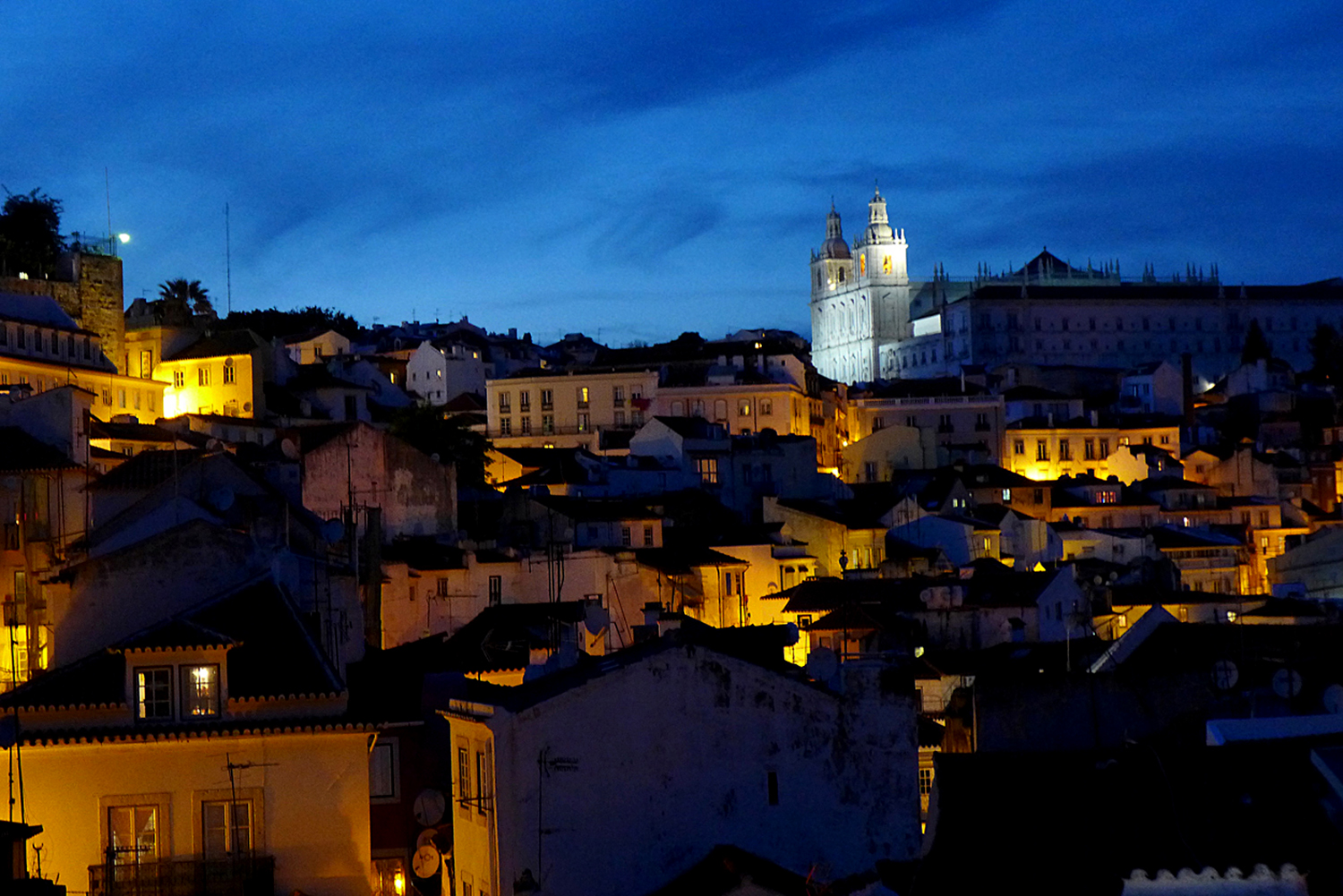
Food For Digital Thought: Shooting in the Blue Hour

After a beautiful sunset

I have always been surprised when someone in either my online class with the BPSOP, or in my “Stretching Your Frame of Mind” workshops I conduct all over our planet asks me what I mean when I say not to forget to shoot in the Blue Hour.

As a result these same photographers will get to a location maybe a few minites before the sun comes up or will pack up when the sun sets (or even sooner) and head for home. All I can tell you out there that you’re missing out on some quality time.

OK, maybe for some of you out there I need to explain exactly what I mean by the Blue Hour, and let’s get the technical stuff out of the way first:

Depending on where you are on our planet and the time of year, the blue hour occurs when the sun  is between -6 to -8 degrees below the horizon. During the blue hour the sun is so far below the horizon that only the blue and violet wavelengths are  scattered and visible in our sky; while the red and yellow wavelengths pass through into the rest of the universe.

As the sun comes up (golden hour) the blue and violet wavelengths diminish leaving the red yellow and orange to start taking over; this is what’s referred to as dawn. Dawn lasts until the sun breaks the horizon, and at that point it’s sunrise.

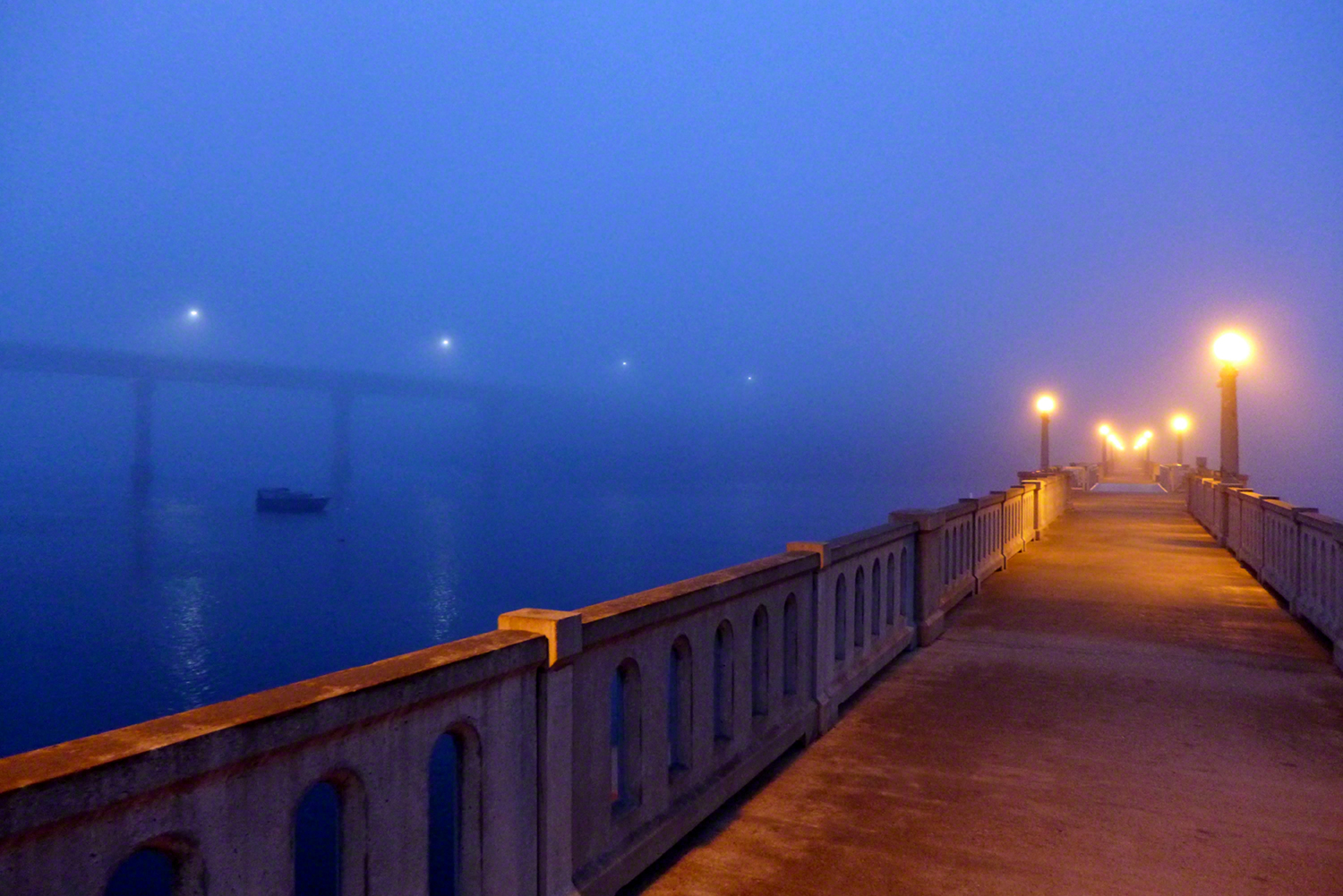
After a gray overcast sunset

Conversely, Sunset (golden hour) is when the sun is nearing or on the horizon, and it’s followed by dusk when there’s no direct sunlight anymore. The red, yellow, and orange wavelengths are fading and the blue and violet are becoming dominant; this is the blue hour…then only darkness.

Btw, blue hour happens even when it’s overcast so don’t pack it in and go home. The length and strength depends on how much cloud cover there is.

I love shooting in the blue hour. It’s moody and magical and can often make up for not so good photos you’ve taken during the day; especially if for some reason you were late for the golden hour.

Since it requires longer exposures and slower shutter speeds, unless you’re using ancillary lighting, you best finish up any portraits before the sun is too far off the horizon.

I like shooting landscapes scenes with structures in them, cityscapes, silhouettes, and anything that has water as one of the main subjects or dominates the foreground. Red and white car lights are great subjects, filled with visual interest and tension.

So, my fellow photographers, next time you go out either go out earlier for the morning blue hour or stay late after the sunset. You’ll thank me for it!!!

Visit my website at: www.joebaraban.com, and check out my workshop schedule at the top of this blog. Come shoot with me sometime. I just announced my New York, New York Workshop beginning September 17th ,2019 and ending at noon on the 23rd. This will be my second workshop there and this time we’ll be shooting in all the five boroughs.

JoeB
Food For Digital Thought: The Bigger Picture

Paying attention to the big picture.

I’m writing this post after a Skype conversation and photo review from a photographer that’s taking my mentoring program. Like others, she took my online classes with the BPSOP, and to date, has joined me on two of my personal workshops I conduct all over the place.

Our conversation was based on my 15 Point Protection Plan, and how valuable it is as far as taking her level of photography what I refer to as…Up a Notch.

What it eluded to was her focusing in on small parts of the composition, the subject, and highlights that were so blown out as to distract. Now, ordinarily, I love to blow out the highlights, when in doing so I make them the subject or at least a secondary subject.

Btw, don’ t ever let anyone tell you to never do that (clip the highlights) because all they’re really trying to do is to take you down a one-way path to mediocrity.

I digress.

It’s not just about a subject or mulitple subjects and/or centers of interest.  It’s important to pay attention to the Bigger Picture as well.

It’s like a recipe. Ok, you’re having a dinner party, and you spend the morning shopping. You finally begin to cook, and your’re reading down the list of ingredients and one of them isn’t measured right or left out entirely; that will impact the finished meal.

My guess is that you were having a glass of wine and excited that good friends were coming over, and weren’t paying close enough attention. You won’t realize it until you sit down and start eating. By then it’s too late.

The analogy I’m drawing is similar: You get up all excited, because you have the day to go out and shoot. You gather all your gear, and head to that location you’ve been dying to photograph.

You’re so excited because the light is great that you have forgotten to use your  15 Point Protection Plan, your Border Patrol, and the four corner check.

Yes, I realize that you can fix things in post-processing…but NOT all the time. Don’t count on it, especially when you try to darken a really distracting blown out highlight…that ain’t happening.

So, my fellow photographers, when you go out next time think about The Big Picture and not just your subjects (s).

Visit my website at: www.joebaraban.com, and check out my workshop schedule at the top of this blog. Come shoot with me sometime. I just announced my New York, New York Workshop beginning September 17th ,2019 and ending at noon on the 23rd. This will be my second workshop there and this time we’ll be shooting in all the five boroughs.

JoeB
Food for digital Thought: Your Most Important Piece of Equipment

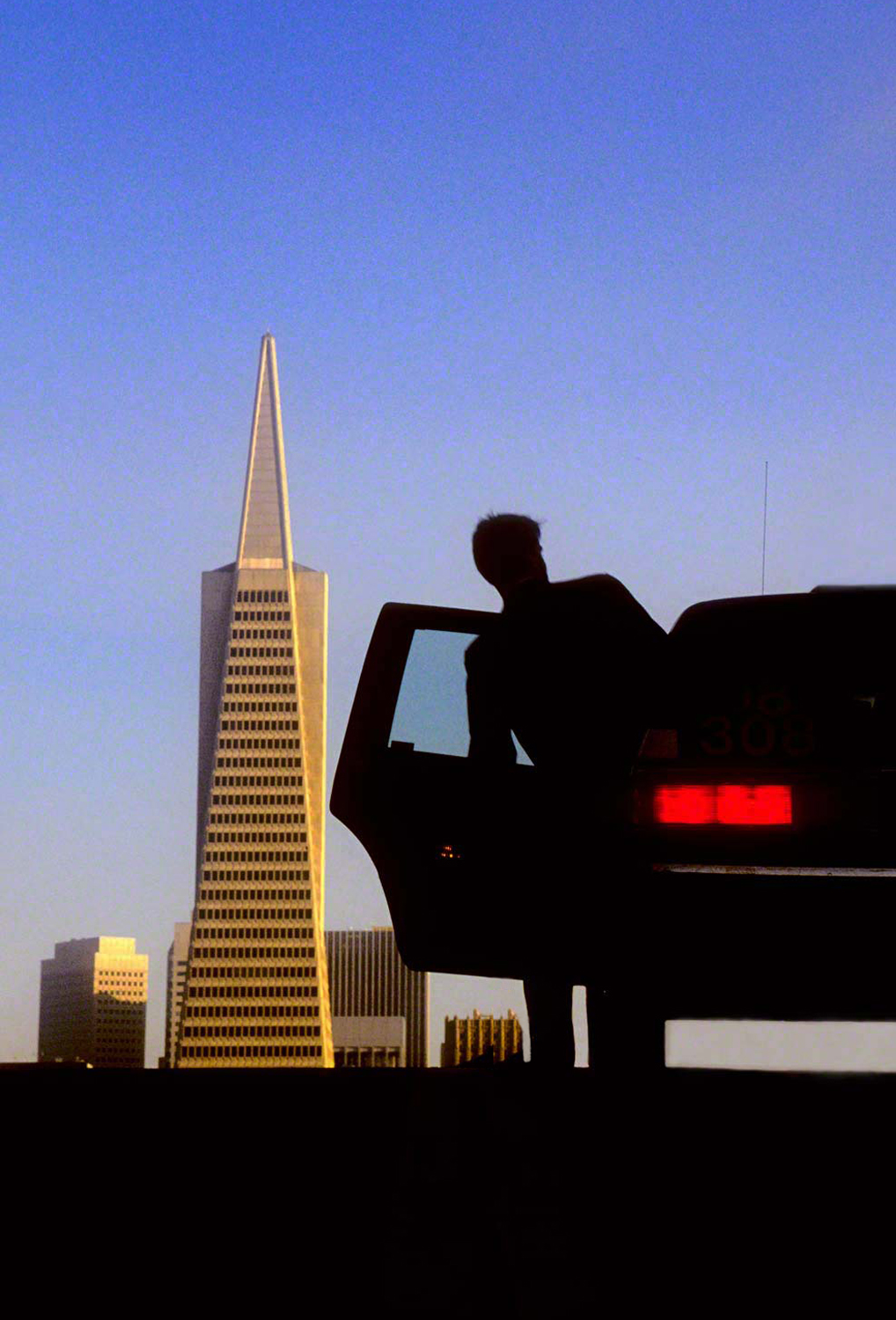
It took the ten inches behind the camera to think of it, then lots of work to make it happen.

: The 10 Inches Behind The Camera

Definition of non sequitur 

1 : an inference (see inference sense 2) that does not follow from the premises (see premise entry 1 sense 1) specifically : a fallacy resulting from a simple conversion of a universal affirmative (see affirmative entry 1 sense 3) proposition or from the transposition of a condition and its consequent (see consequent entry 1 sense 1)

2. a statement (such as a response) that does not follow logically from or is not clearly related to anything previously said.

The online students I teach with the BPSOP, and the ones that attend the “Stretching Your Frame of Mind” workshops I conduct around the planet, are always asking me what camera they should get that will take better photos than the one they have. I also hear people saying that some lens take better pictures than others.

That’s like saying that because you have a great typewriter you must be a great writer.

WHAT???

Since I shoot with Canon, here’s what I tell them: If you go out and buy a new Canon 5D Mark II from B/H photo (what I shoot with and where I buy them), it’s not going to make you a better photographer. What it will do is make you the very proud owner of a Canon 5D Mark II. Camera stores are filled with top of the line cameras, because the people that buy them find out that it takes more than a great camera to take good photographs.

It’s a labor of love that takes:

  • Work
  • Diligence
  • Work
  • Perseverance
  • Did I mention work?
  • Tenacity
  • Patience
  • And above all…Work

The most important part of your camera is the ten inches behind it.  Ernst Haas, one of my all time favorite photographers whose work hangs in my house said , “The camera doesn’t make a bit of difference. All of them can record what you’re seeing…but, you have to see.”

As for lenses and zoom lenses, Haas also said, “The most important zoom lens you have are your legs”.

JoeB

Food For digital Thought: Know Thy Subject

I knew my subject, did you?

So I was reading the other day and came upon this proverb that I’m pretty sure a lot of people out there has heard…”Know thyself”.

As is usually the case, I get my ideas for all these posts I write from all kinds of sources and from these sources, mixed with personal experiences, I wind up with what you’re reading now.

That said, within a couple of days of reading the proverb, I had a student taking my online class with the BPSOP submit a photo for my daily video critiques.

This person had submitted a portrait (for one of my assignments) of a woman sitting on a large rock, and right next to her on the exact same plane was another rock…the same size as her subject was.

This immediately brought to mind the proverb I had read, only it wasn’t about “knowing thyself” but knowing thy subject.

In the photo, the photographer had positioned the large rock right next to the woman whose portrait she was taking.  The problem was that to the viewer there might have actually been two subjects: the woman and the rock.

It’s important to keep things as easy to understand as humanly possible, and that means making sure the viewer understands your thought process.

Both in my online classes and in my “Stretching Your Frame of Mind” workshops I conduct around our planet, I will often refer to the basic elements in the psychology of Gestalt, and how they apply to photography.

I write:

“The methods we use to gain attention to our photography will vary, but what’s important is how we manage what the viewer perceives and processes when looking at the visual information we lay out to him in the form of a photograph.

Humans rely on perception of the environment that surrounds them. Visual input is a part of our everyday life, and as photographers it’s our prime objective to present this visual information in a way that takes control of what the viewer sees when looking at our imagery.”

If I’m photographing something or someone, I want to make sure that it’s the main subject and for the viewer to not to be confused with a potential second subject; that will compete or distract from what I’m really trying to say.

I will use other means to help me establish the main subject, and that is everything else that’s important in the environment…including other centers of interest.

Visit my website at: www.joebaraban.com, and check out my upcoming workshops. Come shoot with me sometime.

JoeB

Food For Digital Thought: Dangling a Carrot

Who and why?

Besides being an advertising, corporate, and editorial photographer for the past fifty years, prior to that I had received a BA in Journalism and was writing even before I was taking pictures; soon after I became a Black Star photoographer and shot for UPI and AP.

I have always loved telling a story photographically as well, and especially getting the viewer to do some thinking when looking at my images. I call it…“dangling a carrot”.

I have written on similar subjects where I either implied the presence of humanity. or I have talked about every picture telling a story…don’t it? What I really love doing is creating some kind of mystery in my imagery so that I can keep the viewer around as long as possible.

The viewer will perceive and process information we lay out to him in the form of a photograph. It’s in our DNA to rely on the perception of the environment that surrounds us, and visual input is a part of everyday life.

If we can make him an active participant in out thought process as it relates to photography, he’ll stay around longer looking at our photos. For me, I want the viewer to do some thinking by asking a question or to form an opinion; a very good way to keep him involved.

In the above photo, I was conducting one of my “Stretching Your Frame of Mind” workshops Houston, my hometown. As usual, there were several people that had taken both my online classes with the BPSOP.

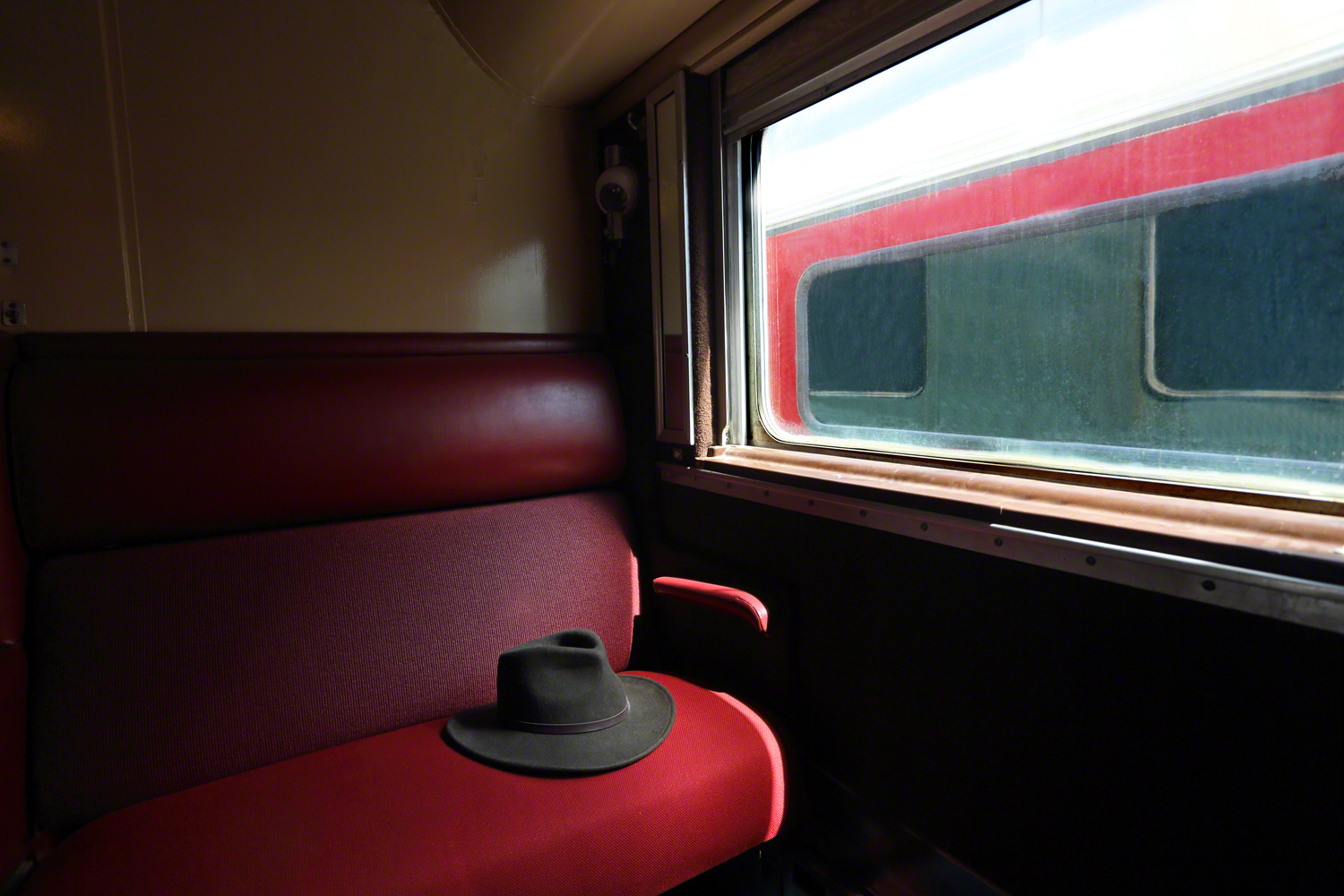
One of the locations we shot at was the Railroad Museum in Galveston, about an hour away. I was walking through one of the passenger cars and immediately though of a way to create a visual mystery.

I took off my fedora and set it on the seat. I stepped back and created just that with my 17-40mm lens. Now it was up to the viewer to figure out why some guy left it there, and why would he have.

So, my fellow photographers, the next time you goout shooting, take a prop or two with you. You just never know when there’s a story to be told.

Visit my website at: www.joebaraban.com, and check out my 2018 workshop schedule at the top of this blog. Come shoot with me sometime.

This coming July 29th will be my 30th anniversary teaching at the Maine Media Workshop. I’ve always picked this time as it’s the week of the Lobster Festival down the road in Rockland. This ofers a unique set of photo ops, different from the Maine Coast, fishing villages and lighthouses. The Lobster Festival is all about color, design, light, energy, people watchng and environmental portraits everywhere you look; some people are there in costumes and loved to be photographed.

In conjunction with The Santa Fe Workshops, on October 2nd I’ll be leading a group in San Miguel de Allende. A beautiful oasis and artist colony, and the entire city is a UNESCO site.

Come join me for a week of fun and photography…what could be better?

JoeB

Personal Pearl of Wisdom?

I just love diamonds, don’t you?

Ok, I’m not sure what category this fits into so I’m thinking three of them: My Favorite Quote since there’s a little of that, Food for Digital Thought since there’s some of that, and a Personal Pearl of Wisdom since there’s also a touch of that.

What am I getting at? Well I was talking to a friend that has a kid whose age is just right to let her watch The Wizard of Oz. He said that they were singing some of the songs together and reciting some of the dialogue.

As soon as they said, “lions and tigers and bears! Oh my!” a thought hit my eye like a big Pizza Pie! “squares and circles and triangles! Oh my! Btw, I left out rectangles since it just didn’t have the same flow.

Where in the world am I going with this you ask? Well, I show people how to use the elements of visual design in their photography. I do this in my online class with the BPSOP, and I often remind people during my daily critiques in my “Stretching Your Frame of Mind” workshops I conduct all over the place.

Shape is one of these elements and if used to enhance your composition, you will definitely be on your way to creating stronger photos.

There are four basic shapes, hence the inclusion of three of them in my adjusted quote for any upcoming remake of the iconic movie. Although shapes are all around us there are four basic ones: circles, squares, triangles, and rectangles.

Whether the viewer knows it or not, he’ll see them and react. When you begin to see with the right side of your brain, the creative side, you’ll be able to use shapes in your imagery. They will provide a sense of structure and unity to your composition, and will be perceived by the viewer as systematic, stable, and symmetrical.

The shapes that are similar but are more irregular such as an isosceles triangle or a trapezoid have more energy. Besides those that are more prevalent in our world, the diamond is a great shape, filled with a great deal of energy and evokes a sense of motion; not to be overlooked.

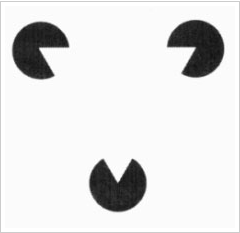
There are even implied shapes that one can perceive through the use of Closure; one of the six concepts in the Psychology of Gestalt; For example, in this diagram the viewer will fill in the triangle:

I saw a triangle

Shapes live among us and once you begin seeing past first impressions you’ll be able to not only see the positive shapes, the implied shapes, but the negative shapes as well. When we think of shapes, we think of the kind that has mass and therefore considered as positive space.

However, a shape can be the negative variety that’s created by the positive space that surrounds it. Imagine an ornate fence that has a row of wrought iron circles at the top and running the length of the fence. The circles are positives shapes and have mass, but what about the area inside the round wrought iron? Those are also circles, but they have been created by the positive shape and have no mass. They are the negative shapes.

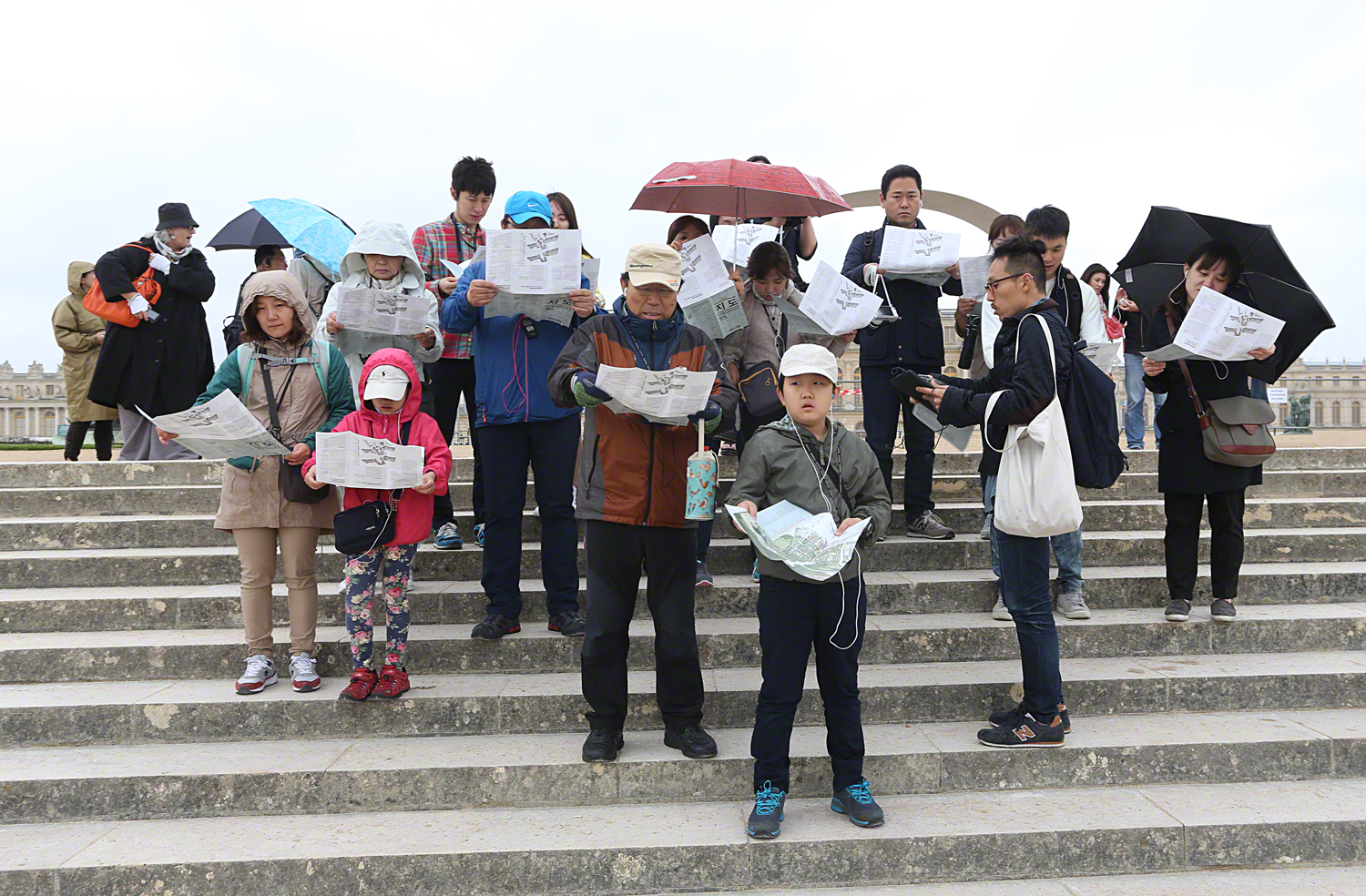
As I was talking about seeing past first impressions and using the right side of your brain, this certainly came in handy during my springtime in Paris workshop. The group went to the Palace of Versaille one cold and gray day so I was walking around looking for something else to shoot.

I noticed a group of Asians standing on the steps, all of them looking at the map of the entire grounds. What I saw was not a group of Asians all looking at maps, what I saw was a triangle made up of Asians all looking at their maps. I laughed and quickly took their picture, and as I always say, humor is the one thing that can work even with bad light.

Visit my workshop at: www. joebaraban.com and check out my workshop schedule at the top of this blog. Come shoot with me sometime.

JoeB

Food For Digital Thought: Visual Relief

  Once again I was surfing through the channels, gliding non-stop through each number and name, my trusted remote comfortably positioned in my hand, and my thumb firmly resting on the button. For one brief shiny moment I stop on a series of old but still famous television commercials. As chance would have it I just happened to stop at the beginning of an old commercial for Alka-Seltzer. It ran in the sixties and it brought back memories sitting around the television watching programs that it sponsored.

Later that evening while lying in my bed after a romp down the perverbial memory lane, it began to conjure up an entirely different meaning. A concept that I had been talking about just that morning through one of my video critiques I make daily for those online students in my BPSOP class.

It’s also what we talk about every morning in my critiques during one of my “Stretching Your Frame of Mind” workshops and photo tours I conduct every year  in different cities all over the place. I call it Visual Relief.

I think one of the biggest mistakes I see is that photogrphers are in too much of a hurry to shoot and move on and as a result there’s no consideration for the area around their subject or subjects; a recipe for confusion and distraction. There’s no place for the viewer to rest his eyes, especially when the subject is placed too close to the edge of the frame.

Those of you that know about my 15 Point Protection Plan and my Border Patrol and are diligent about using them will usually catch this and apply a quick remedy; creating some Negative Space around the subject or between the subject and the edge of the frame; in other words allowing the viewer some visual relief.

It’s so imporant to place as much emphasis on the negative space, the space that borders the positive space. It helps to only to give visual relief but it important in defining the subject as well.

How about now?

When you look at the above photo I hope it will demonstrate what I mean by giving your image some visual relief. Look at how I created negative space (and therefore visual relief) by using the sky…down to the small area that defines where his elbow ends and his waist begins. It’s the same thought process in the other two photos.

So, my fellow photographers, I know you’re just dying to see how this post came about: www.youtube.com/watch?v=bxjb2UJZ-5I

🙂

Visit my website at: www.joebaraban.com, and check out my workshop schedule at the top of this blog. Come shoot with me sometime and we’ll toast with an Alka-Seltzer Martini.

JoeB

Food For Digital Thought: Quit Burning Daylight

I wasn’t going to burn daylight.

The phrase “burning daylight” is film industry slang and it comes from my days as a director/cameraman. It’s still used to tell the crew to hurry up since the natural daylight is so fleeting. The sun’s position and the quality of the light change so fast that we always need to have continuity from one scene to another; even with the light.

I write this because I’m always telling my online students with the BPSOP and especially in my “Stretching Your Frame of Mind” workshops I conduct all over the place to stop standing or sitting around talking when the light is the best.

Not too long ago I returned from my latest “Springtime” workshop that was held in Berlin. I always find a location that can support ten photographers, and be able to spread out enough as not to step on each other’s toes…or even see each other for that matter.

On more than one occasion I will walk up to a few that have gotten together to chat. Now I don’t mind people talking about what they shot, what they shot it with, where was it, and even what was your lens and exposure; after all, it is their nickel.

That’s all well and good and should be talked about over dinner and or drinks, but not when the sun is starting to get right…that would be called burning daylight.

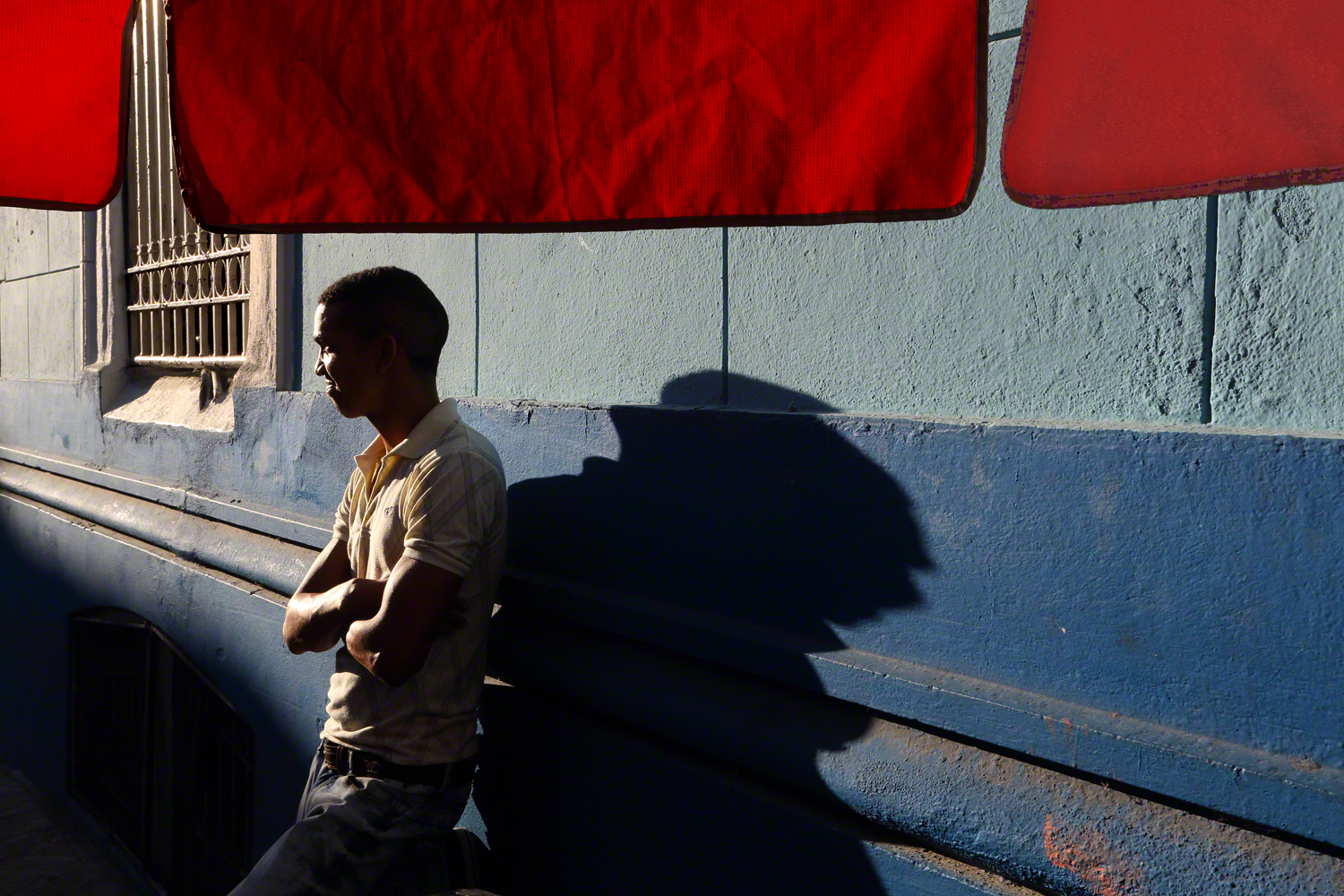
In the photo above, I walked up to a group and had barely finished my sermon about wasting beautiful light and getting them to break it up when I saw this man leaning against the wall. I raced over and was able to get off a couple of shots, and within twenty seconds the light was gone.

So how does this apply to you? In a matter of speaking the same way. If you’re just out and about shooting during midday, and just enjoying yourself and whatever location you’re at, that’s one thing.

However, if you’re out early in the morning or late in the afternoon (possibly with a friend) and you want that elusive ‘OMG’ shot, think about what you’re doing and why you’re doing it when you’re doing it…as in getting up before the sun comes up.

Don’t stop at a Starbucks for a cold latte and run into a friend and decide to sit down for thirty minutes…then all of a sudden jump up because the light has dropped considerably. More than just likely you will miss what could have been the best photo you had ever taken; at least up to then. At least get it at the drive-thru!!!

🙂

And so my fellow photographers, don’t let the visual world pass you by and take that beautiful light with it. Don’t burn up the best daylight hours of which there’s so little of. Don’t procrastinate and waste precious time getting started, or when you’re out shooting. Above all, don’t waste precious seconds with the settings on your camera.

Or, on the other hand, a tall, half-caf, half de-caf, double half expresso, half cappuccino with low-fat foam, and a twist of lemon might just hit the spot.

Visit my website at www.joebaraban.com, and check out my workshop schedule at the top of this blog. Come shoot with me sometime.

JoeB