Food for Digital Thought: Jarring The Creative Juices
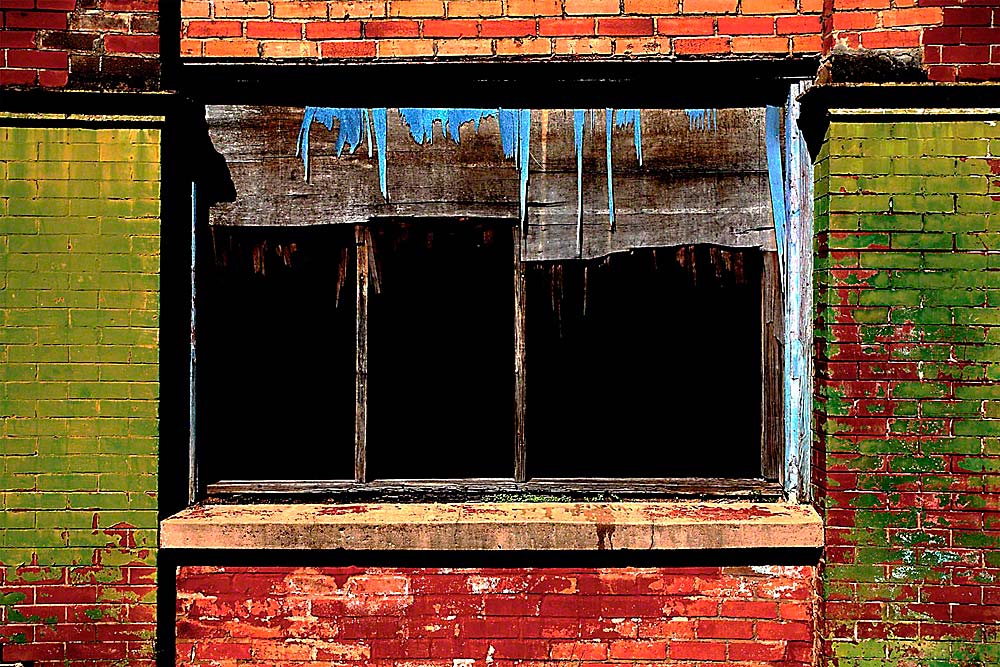
My very first window.

In my six month Mentoring program, I often work with photographers that feel that they have run out of ideas and things to shoot…tired eyes!!! They need a little pat on the old Caboose if you know what I mean. Besides working on the elements of visual design and composition on their Artist Palette, we’ll work on a self help photography project (another name for a photo essay). I’ll offer several ideas based on their main interest and off they go with new found energy and a higher kick when placing one foot in front of the other and moving forward.

I’ve been able to motivate my students by talking about my personal project I’ve been working on for the past three years, and showing some of the results. I call my project “Window Dressings”. Here’s my essay and how it started:

I started my series of windows three years ago quite by accident. I was driving to Nashville from Houston because my all-natural Bloody Mary Mix was included in the gift basket that was to be given to the presenters and award winners at the 2008 Country Music Awards. I had decided to drive to Nashville to take some extra time photographing the countryside. On the return, I drove through a small town in Mississippi looking for any interesting subject matter. As I was leaving town, I decided to take one final left turn before getting too far away from what was left of the downtown area. It was the face of serendipity screaming at me to pull over when I noticed an old deserted building that had an interesting front door.

It was enough to make me get out of my car and set up my equipment. Halfway through my setup, I became bored with the light since the door was in shadow and walked around the side where I saw several old and interesting windows that were in bright sunlight. I settled on one particular window, and even though it had weathered poorly through the years, there was something almost mystical about it; I knew I was onto something. It was one of those feelings you get when something affects you in such a way that it would wind up consuming the better part of your next three years…and still counting!

I finished and was breaking down my equipment when I noticed an old man, whose tattered clothes suggested that of a homeless person. After watching for a time, he approached me and asked if I would tell him why I was taking a picture of the windows. I said that I found them to be beautiful in their own way, and I wanted to make prints some day. He looked at me then the window, nodded and walked away. I called out to him and asked if he knew what this building use to be.

He stopped, turned around and with a mouth filled with a few remaining teeth said, “Sure, it was the bank. It’s where I kept all my money.” With that, he walked away.

Now when the urge hits me, I gather up my equipment and my dog Gertie, and we hit the road and begin “Window Shopping”.  I rarely see anything worthwhile on the Interstates, but I use them to get to the small cities and smaller towns. There’s no rhyme or reason as to which exit I’ll take, and as far as which direction to turn once I’m off the Interstate it’s pretty much Eeny, Meeny, Miny Moe.

In just about every small town in Texas there is a square where all the roads coming in from each direction end up, and that’s where I head first. Starting from the square, I pick a direction and follow the road until I’ve been out of the town for several miles.  Then I turn around, head back to the square and pick another direction. I keep doing that until I’ve exhausted every possible way in and out. This is usually where I have the most luck. That and the roads in-between each town usually affords the best chances to find that illusive window…that one in fifty, strong enough to make it onto my Canon 5D Mark II’s CF card.

So what’s my criterion for a keeper? It has to have at least six attributes going for it: Light, Color, Texture, Pattern, Shape, and Line.

As I always say to my online students with the BPSOP, and my “Stretching Your Frame of Mind” workshops I conduct around the planet, Light is everything. Unfortunately, I can’t always shoot at Golden Hour since I’m continuously driving to get as miles as I can in a day. A lot of the time I’m shooting in the middle of the day when the light is harsh. The key to this is to not show the sky and underexpose a lot, which isn’t much of a problem.

The Texture is important as I want the viewer to want to touch the windows. Patterns within the window are also important, and has the rhythm of the patterns been broken. Line is the most important of all the elements of visual design, so how the windows use line to take the viewer around the window, and the different types of lines are critical. Color is obviously the most important quality, and it takes more than a painted window against a painted wall for me to stop. How time has affected the color, if additional color was applied over the existing color, and how the different colors compliment one another are considered. The Shape of the window is also important. It’s amazing that when you start looking, how many sizes and shapes windows come in.

All I can think of after all these years is that I’m involved with some kind of weird and peculiar courtship with these windows. Each window has its own personality and winds up the way it does when all the criteria falls into place. Father Time aided by the elements, does its thing in transforming the windows into a cacophony of colors, shapes,  lines, textures, and patterns.

The direction the window faces, how much of the day it’s in bright sun, is it exposed to the wind, all are important pieces of the puzzle in determining the final look of a window when I photograph it; result can be incredibly alluring. The decaying charm of a window that’s morphed into a “work of art” has a certain persona that needs no further explanation than to say that its beauty lies in the eyes and minds of the beholder.

Now as I travel throughout the states window shopping, I always try to imagine what the windows I photograph could tell me if they could speak. Did they look out at a backyard filled with the shrieks’ of children at play? Or the manly hoots and howls coming from a periodic family reunion, or birthday party?

The large majority of structures have long since been abandoned, and I can only wonder who the last person was to look out this particular window, and what they might have seen and thought before they left for good.

As is usually the case when I’m taking photographs, I am always searching for a unique angle or height when I’m out shooting; not this time as there is a voice that tells me not to distort the integrity of these amazing windows. Perhaps it’s the spirit of better days gone by.

These windows are photographed as they exist today, and use virtually no help from Photoshop. Three of my windows have made it into the permanent photography collection at the Museum of Fine Art in Houston, Texas.

Here are just a few of my windows. If you would like to see the entire collection of one hundred and sixty, you can go to: http://www.flickr.com/photos/78440307@N06/sets/72157629317463102
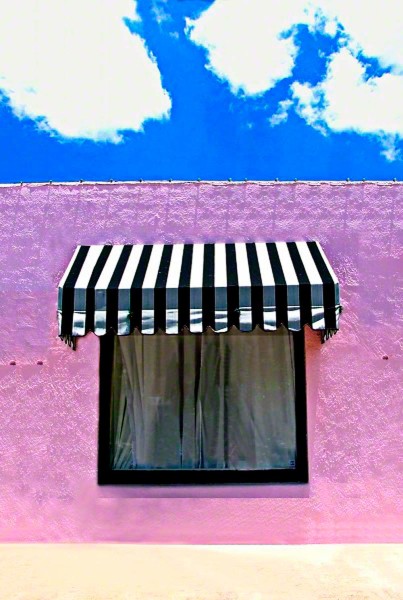
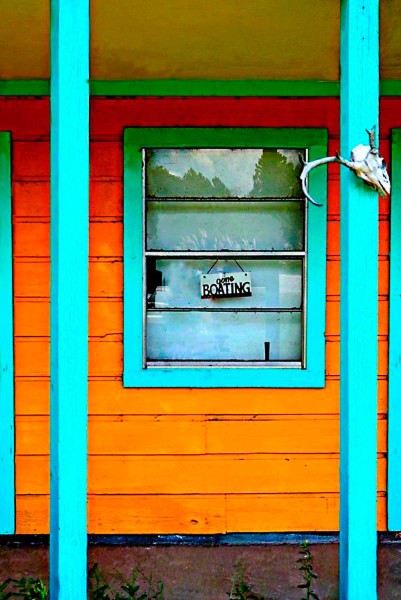
Prints of these windows are numbered and there’s only an edition of twenty-five. For more information, you can contact me at: joe@joebaraban.com.

Visit my website at: www.joebaraban.com, follow me on Instagram www.instagram.com/barabanjoe/, and check out both my mentoring program and my 2023 workshop schedule at the top of this blog. Come shoot with me sometime.

JoeB
Food For Digital Thought: Conflict and Tension

The greater the conflict, the greater the tension.

As I tell my fellow photographers that either take my online classes with the BPSOP, or participate in one of my “Stretching Your Frame of Mind” workshops, we want our viewers to stick around as long as possible. The goal is to make them active participants when looking at our images.

I tell them that the greater the conflict, the greater the tension. Tension as in Visual Tension.

In my class on Gestalt, one of the six concepts is Figure-Ground. This is the way to separate the Figure, the subject, from the Ground, the background. If both the figure and the background each carry the same visual weight, it can create tension; as each threatens to overtake the other.

This happens the most when either the subject is dark against a lighter background, or the subject is light against a darker background. A great way to achieve this is to have the negative space as important as the positive space.

Contrast is also one of the ways. Putting bright highlights adjacent to the shadow area. Bright areas against very dark areas.

Diagonal lines have more energy than horizontal and vertical lines. The conflict is in the fact that diagonal lines are perceived as less stable and the feeling of the lines falling forward.

Having the subject either very close to the edge of the frame or partially out of the frame. It creates an uneasiness and draws the eye to it.  When we generate Visual Tension, the viewer feels like there’s something going to happen.

As I said, all these examples will make the viewer stick around longer…exactly what we want him to do.

Visit my website at www.joebaraban.com, and follow me on Instagram  www.instagram.com/barabanjoe Come shoot with me sometime in one of the workshops I have listed above.

JoeB


Food For digital Thought: Anticipation

Anticipating the action

No, I’m not talking about the song Carly Simon sang in 1971…for those old enough to remember it. I’m talking about how the word anticipation plays a key role in “Street Shooting”.

In my online class with the BPSOP, and in my “Stretching Your Frame of Mind” workshops I conduct around the planet, I often talk about being aware of your surroundings at all times. This is when it will happen…that shot that could make your day!!!

I’m usually talking about keeping an eye out for the light, and how important it is in coming home with that elusive OMG photo. That keeper that will either go on your wall or in your portfolio…or both.

But in this post, I’m talking about anticipating the action. The action that can occur at any moment when you’re walking down a street looking for photo opts.

A good sports photographer knows the sport he’s covering backward and forwards. He knows it well enough to be playing in it, and at some level sometimes does. A good street shooter has that same instinct, or he at least should if he’s going to be successful.

I watch everything when I’m walking, and even have those proverbial “eyes in the back of my head”. If I see someone that’s sticking out of the environment around him for one reason or another, I’ll watch him/her for several minutes…with my camera halfway up my chest. If nothing happens, I’ll move on to someone else. Sooner or later I’ll see something that makes me focus in tight. I’ll watch and anticipate their next move. A move that I would maybe make myself. It’s people watching at its finest.

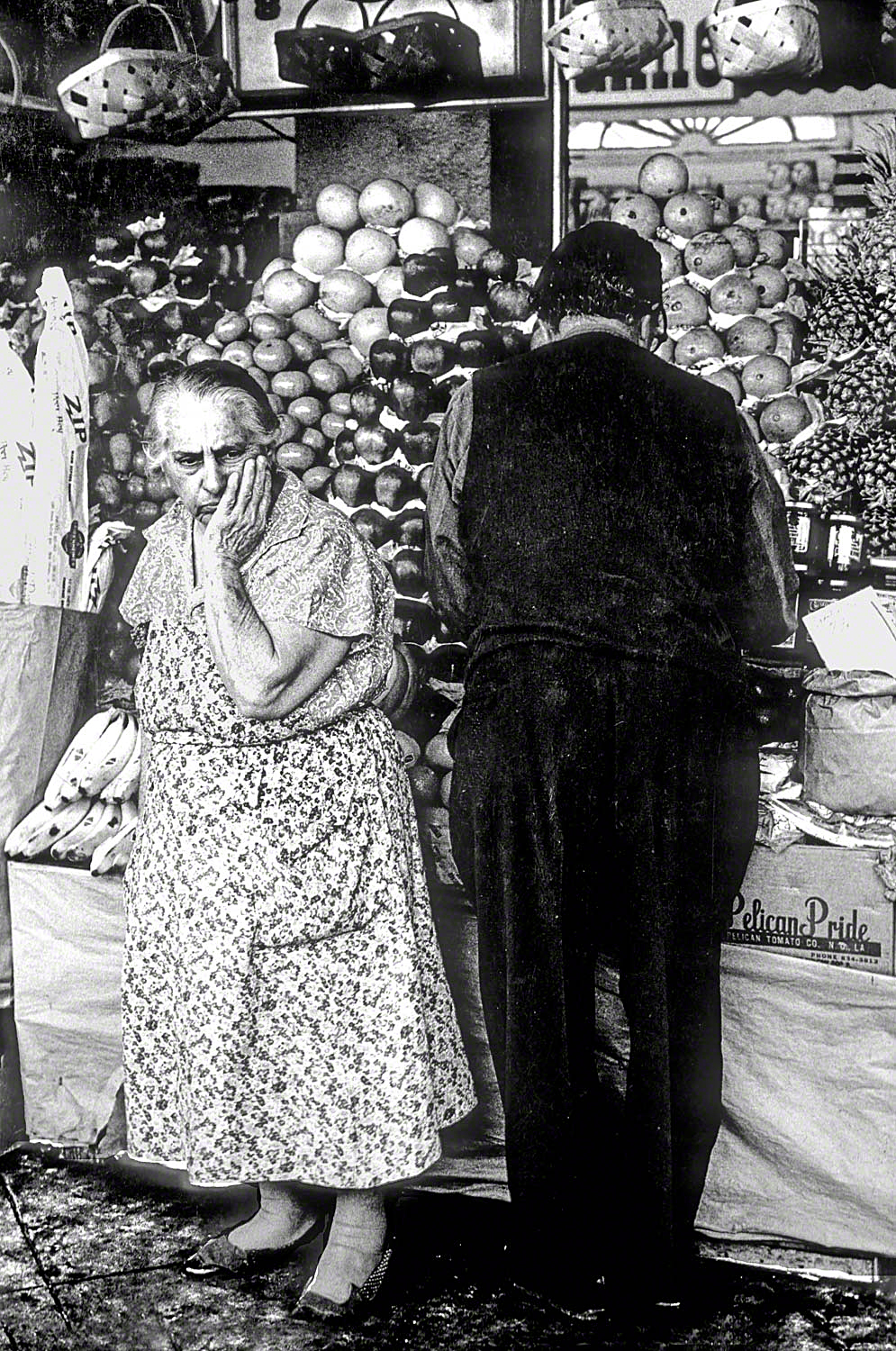
When I was younger and shot primarily B/W on the streets, I was always looking for that one shot, and if I was very lucky, and I mean very lucky, I might capture someone in a moment where they are expressing their thoughts in some form of body language or gesture. In the above photo, that’s exactly what happened. I was shooting and writing a story for a local Sunday supplement on Mardi Gras day and what the locals had to deal with as far as the crowded streets and sidewalks were concerned. I watched her for some time and just had a feeling that something was going to happen. In a brief moment she had summed up her day to me and because I had waited and anticipated I got the shot.

Btw, this photo is now in the permanent photography collection at the Museum of Fine Arts in Houston.

One of my favorite things to do is to put on my longest lens and then put the camera on a tripod. I’ll position myself in a crowded area and in a 360-degree movement I’ll pan the people. An analogy for you old movie buffs is watching Robert Mitchum in The Enemy Below when he’s in a submarine panning the horizon at periscope depth looking for targets…Ok,  not actually an analogy, but for me, it’s mighty close.

I could literally do that for hours, and on occasion have come close.

Visit my website at: www.joebaraban.com, and follow me on Instagram… www.instagram.com/barabanjoe. Check out my workshop schedule at the top of this blog, and come shoot with me sometime.

JoeB

Food For Digital Thought: What is the subject without light?

It’s all about the light

For those new to my blog, I teach an online class with the PBSOP, and I conduct my “Stretching Your Frame of Mind” workshops around our perfectly round planet. Now, before I get into my post, I wanted to explain exactly what light is all about:

LIGHT: “Light or visible light is electromagnetic radiation within the portion of the electromagnetic spectrum that is perceived by the human eye. Visible light is usually defined as having wavelengths in the range of 400-700 nanometres (nm), corresponding to frequencies of 750-420 terahertz, between the infrared (with longer wavelengths) and the ultraviolet (with shorter wavelengths).”

For those that understood this definition, you are way above my pay grade…and probably, for the most part, left-brained thinkers. However, for those like me, we are right-brained thinkers. For those that are switch hitters, I’m always impressed when I meet one of you.

To me light is everything. There are two reasons why light is not necessarily everything. Humor can replace great light, and street shooting when you’re trying to capture a moment in time.

Other than those, light is what makes or breaks an image. To get to that point, it’s important to know where to stand in relation to the light source, when, and how long to stand there.

Don’t just stand there, bring your camera up to your eye and ‘take a picture. Take a look around and see what direction the light is coming from.

I have seen images that were submitted to my online classes, and I have seen it firsthand when watching a photographer in one of my workshops. As I constantly tell my fellow photographers, before you do anything, think about whether you want to sidelight, backlight, or front light your subject?

My favorite form of light is when it’s available…I just love North light softly coming into a window, etc. It’s also important to comprehend the phases of natural light.

Learn to distinguish the Golden Hour, the Blue Hour, and the twilights of daytime and nighttime. Explore the ways each can be used to create varying degrees of warmth and saturation in our images.

I assure you that if keep all in mind when you’re out shooting, your work will show it.

Visit my website at www.joebaraban.com, and follow me on Instagram www.instagram.com/barabanjoe/. Check out my workshop schedule at the top of this blog. Come shoot with me sometime.

JoeB
Food For Digital Thought: Roaming

  It’s interesting to note that whenever you hear the word roaming in these days of rapidly changing technology, you immediately think of your ‘Smart Phone’.

Well, while that’s true, I conjure up something completely different. I think of the psychology of Gestalt, and how it plays such an important part in keeping the viewer of our photos around as long as possible.

In my online class with the BPSOP, and in my “Stretching Your Frame of Mind” workshops I conduct around the planet we work on the different ways to manage how the viewer perceives and processes when looking at the visual information we lay out to him in the form of a photograph.

Since humans rely on the perception of the environment that surrounds them, it’s our objective to present information in such a way as to take control of what he sees.

The more ways we can get the viewer to ‘roam’ around our composition, looking for new things to discover, the longer he’ll stick around.

What I try to do is create “layers of interest” in my imagery. What I mean is while I like to have one subject or center of interest, I like having secondary points of interest.

Generally, that means having pieces of the puzzle sprinkled around the four edges of my frame, and letting the viewer put all these pieces together creating the finished product…A well-composed, balanced photo that meets several of the criteria I’ve discussed in my “did it do it” category. a photo that the viewer will remember long after he’s moved on.

Visit my website at: www.joebaraban.com and check out my workshop schedule.

https://www.instagram.com/barabanjoe/

JoeB

Food For Digital Thought: The facilitator of Vision

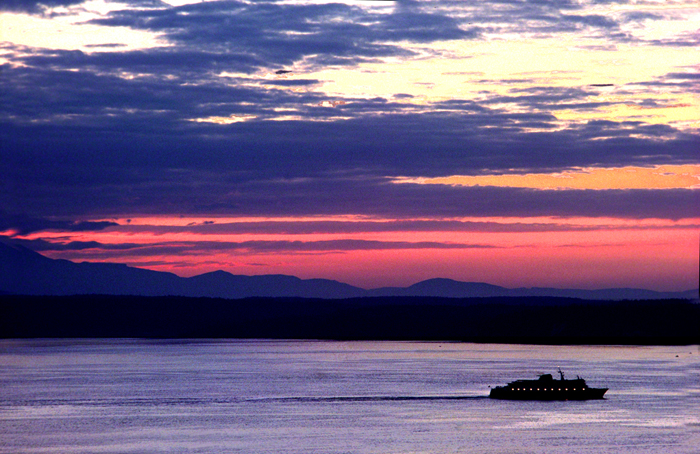
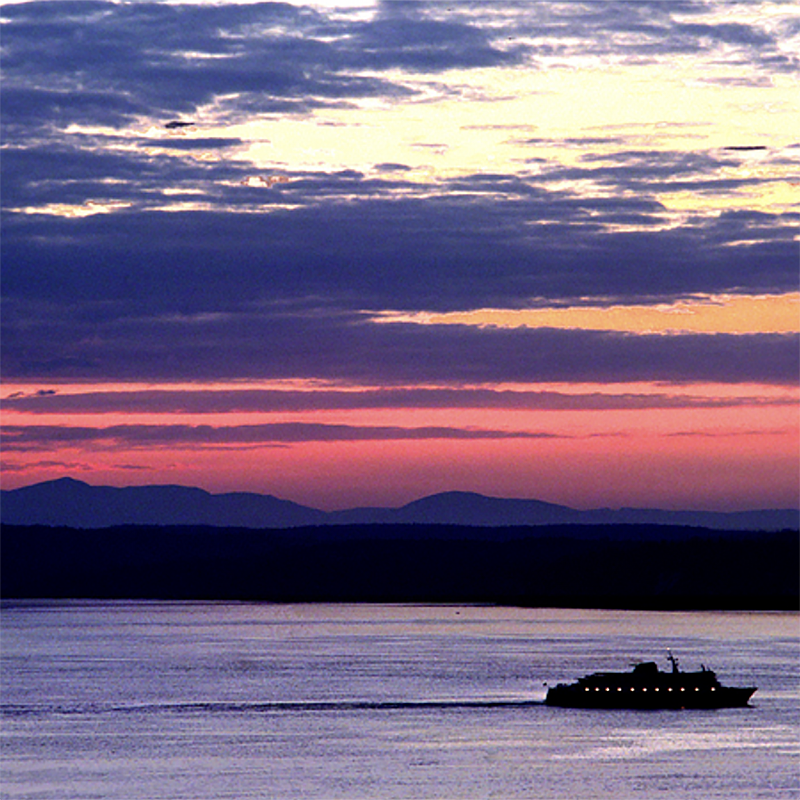
It was my vision not my camera that took this photo

To my fellow photographers that follow my blog, either those that have taken my online class with the BPSOP, or have taken one of my “Stretching Your Frame of Mind” workshops I conduct around the world, or those that have just found me in one way or another I have a thought for you.

I have had discussions with photographers that say, “Technology is the facilitator of vision”.  First of all, here is the actual definition:

fa·cil·i·ta·tor| fəˈsiləˌtādər | nouna

person or thing that makes an action or process easy or easier: a true educator acts as a facilitator of learning | a program run by trained facilitators.

In other words, all the new equipment that’s coming out will make you take better pictures. Ok, here’s the definition of vision:

vi·sion| ˈviZHən | noun 1

the faculty or state of being able to see:

She had defective vision. the images seen on a television screen: the box converts the digital signal into sound and vision on an ordinary TV.

2 the ability to think about or plan the future with imagination or wisdom: the organization had lost its vision and direction. a mental image of what the future will or could be like: a vision of retirement.

3 an experience of seeing someone or something in a dream or trance, or as a supernatural apparition: the idea came to him in a vision. (often visions) a vivid mental image, especially a fanciful one of the future: he had visions of becoming the Elton John of his time.

4 a person or sight of unusual beauty: madame was a vision in black velvet. 

If we just concentrate on the first definition, the state of being able to see, How in the world does technology have anything to do with it?

For me, before I raise my (whatever camera technology affords me) camera up to my eye, I have to see what it is I want to shoot. The old expression, “It’s not the camera, it’s the ten inches behind it that count” couldn’t be more true.

I quickly pre-visualize the composition I want then I raise my camera to take the shot.

I guess I’m just too old and gray, but I’ve seen some of these new cameras where you almost have to have a left-brain degree to understand what all the programs and buttons mean.

So, my fellow photographers that have these awesome mirrorless cameras, more power to you and I’m sort of jealous of what they can do.

For example, I was shooting sports for AP, a very long time and standing on the sidelines of an NFL game, and had a 200mm lens on that I had to focus myself. Try getting a running back that’s coming right at you sharp when you’re on manual and focussing the camera all by your lonesome. Now all these Sports Illustrated photographers just have to aim their camera and they get perfect pictures.

I also had to walk five miles to the game in a snowstorm!!!! Oh well, it is what it is.

Visit my website at www.joebaraban.com , and follow me on Instagram https://www.instagram.com/barabanjoe/

JoeB


Food for digital Thought: Give it a Second Thought

One shot is all I got.

First of all, the expression “Don’t give it a second thought” is an idiom. So, to begin with, let me explain what an idiom is:

Essential Meaning of idiom

1: an expression that cannot be understood from the meanings of its separate words but that has a separate meaning of its ownThe expression “give way,” meaning “retreat,” is an idiom.

To make it easy, here are some common idioms: rock and roll, going bananas, a wet blanket, a tall order, a blind spot. So, now you understand what the title of this post is…or not???? Let me explain ‘where I’m coming from…another idiom.

I recently heard someone say that and I immediately thought of a post to write, but changing the wording just a touch so it refers to photography.

When I’m doing a critique of one of my student’s photos in my online class with the BPSOP, and also talking about stuff in my “Stretching Your frame of Mind” workshops I tell my fellow photographers to not just take one shot of any subject in any photo genre. I guarantee you that the odds are that it won’t be a ‘wall-hanger’; on your wall or anyone else’s…especially mine.

For me, it’s a series of adjustments and variations. The adjustment is moving to the right, left, raising your camera, or lowering it. I do these to get rid of the things I don’t want in my composition or the things I do want. Of course, the best way to do that is to always do my ‘Border Patrol’, check the four corners, and especially the 15PPP.

Then, the variations are different ways to look at the same subject. Whether it’s laying on my stomach or on my knees, Moving around to one side or the other…or behind it. This is to see how the different the light affects the person or object. Changing lens or depth of field is also on my checklist.

Don’t be a “one and done” (another idiom) type of photographer. The only time that’s a possibility is when I’m street shooting and I have one chance to freeze a moment in time, as in the photo above.

The rest of the time…take time and you’ll see all the options you’ll have when you’re sitting in front of the computer viewing your photos.

Visit my website at www.joebaraban.com, and follow me on Instagram https://www.instagram.com/barabanjoe/

Check out any upcoming workshops at the top of this blog. Come shoot with me sometime…another idiom!!!

JoeB

Food For digital Thought: Moving the viewer around the frame.

Making a statement using Line.

I teach my fellow photographers how to incorporate the elements of visual design and composition into their imagery. In my online class with the BPSOP, and in my “Stretching Your Frame of Mind” workshops I conduct around the planet, My goal is to provide my students with an ‘Artist Palette’. On that palette are all the elements we work on during the class, and the most important of all the elements is Line. Without Line, none of the other elements would exist. Vanishing Points, texture, patterns, and shapes are all made up of Line. Planes, trains, automobiles, even you and I wouldn’t be around if it wasn’t for Line; we all have an outLINE.

Creating memorable photos, as you probably know, is not an easy task. Keeping the viewer around as long as possible is a very important ingredient in doing just that. Unless you’re shooting strictly for yourself, the idea is to take control of how the viewer perceives and processes our images. Making him an active participant is the best way I know of to achieve this lofty goal.

One of the best ways is to use Line to move the viewer around your composition. Leading him in and out of the frame using lines to do so will keep him interested. Another way to use Line effectively is to arrange the lines to leave an impression or make a statement that communicates a visual idea.

Visit my website at: www.joebaraban.com, and follow me on www.instagram.com/barabanjoe. Check out my workshop schedule at the top of this blog. Come shoot with me sometime.

JoeB
Food For digital Thought: Proofread

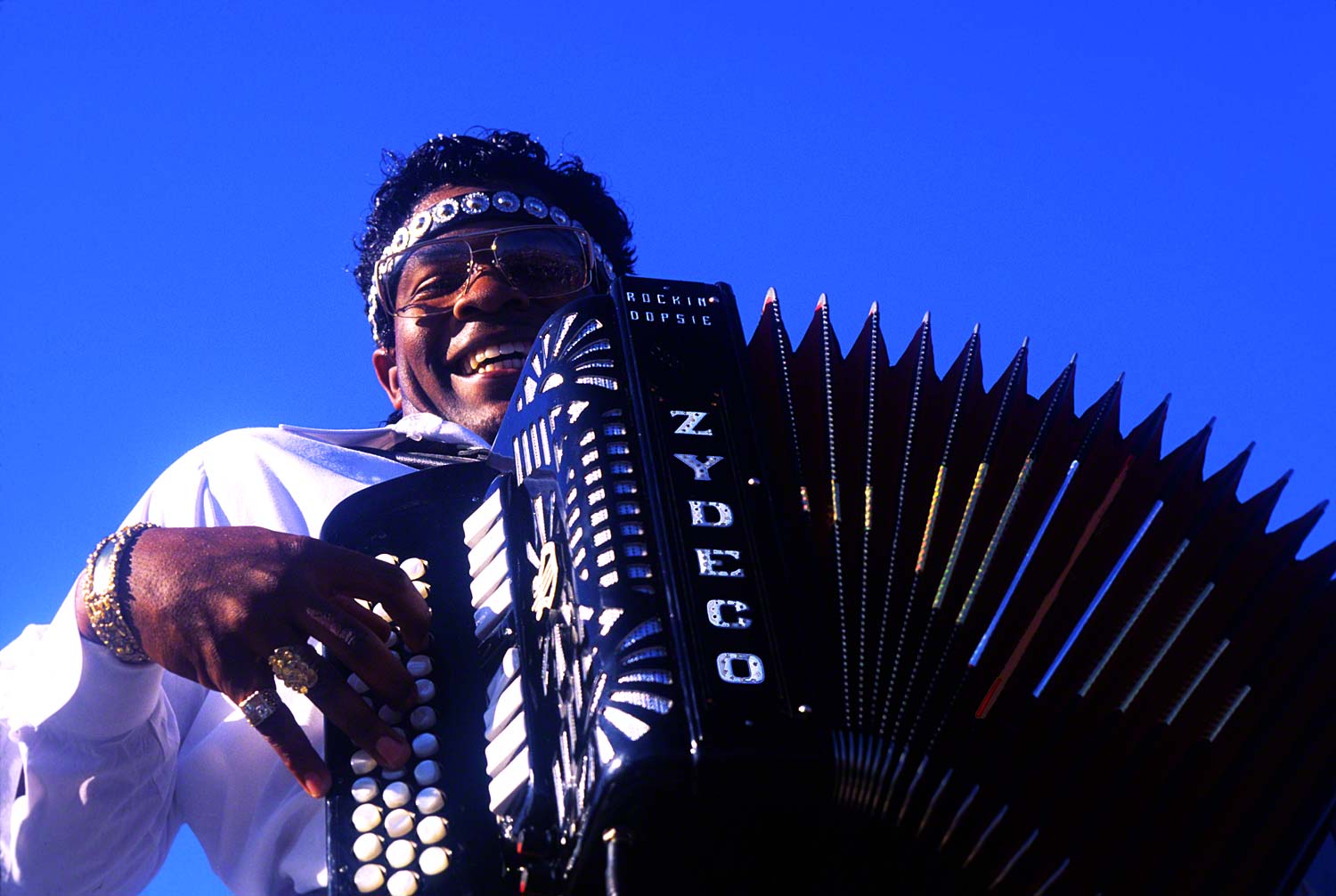
I love Zydeco!!!
I love Zydeco!!!

How many of you have ever written a letter, poem, story, e-mail, or perhaps an epic novel? If you did you proofread it before you hit send, submitted it to a magazine, or your literary agent. It would make perfect sense, right? After all, it’s all part of looking good and proving to others that you’re halfway literate.

Well, would it not hold true for taking pictures? Wouldn’t you want to make sure that proverbial tree or lamppost wasn’t growing out of your girlfriend or mother-in-law’s ( maybe you would in that situation) head, or including the rest of someone’s hand or foot? Truth be told, most people don’t think about it right before they snap the shutter; they’re always in a hurry. Sadly to say, those people rarely proofread so it’s probably no surprise there.

In my online class with the BPSOP, and in my “Stretching Your Frame of Mind” workshop I conduct around the planet, I tell my fellow photographers to always adhere to my three checks. First, the four-corner check. I take a quick gander at each of my four corners. If for no other reason, to make sure I had the right lens shade on for unwanted vignetting, or if my filter was the cause of the same problem.

Next, I always do my Border Patrol, which entails running my eye around all four edges of my frame to make sure what I wanted in my composition was in my composition, and what I didn’t want in my frame wasn’t. This includes making sure all of my subject’s fingers and toes were included.

Last,  I do my “Fifteen Point Protection Plan”. To make sure among other things, that there’s enough negative space defining the positive space, and making sure there’s a balance between those two thoughts….as well as the things I would see in my four-corner and border patrol.

Redundant, you say? Yes, and redundancy is a good thing…at least in creating strong, and memorably photos it is. The key to this is remembering to always do it, as I have for the past forty-four years. The more you do it the faster you’ll get at it, until it becomes second nature and can be accomplished in mere seconds.

Visit my website at: www.joebaraban.com, and www.instagram.com/barabanjoe   Check out my workshop schedule at the top of this blog.

JoeB

Food for digital Thought: Is Light Everything?

I chase light

You bet it is…sometimes!!!

I recently had a conversation with a fellow photographer that follows my blog about the statement I always make to my online classes with the BPSOP and to my “Stretching Your Frame of Mind” workshops that “light is everything”.  However, according to Mark light is not everything, emotion is and then quoted Henri Cartier-Bresson. It seems that Bresson was quoted as saying that light was “just the perfume to the image”.

Ok, let’s all jump into my time machine and travel back to the year 1971, when I was a young and restless photo-journalistic, street shooting for Associated Press, United Press International, and Blackstar, besides every Sunday supplement I could convince to hire me for their feature assignments. I would absolutely agree that capturing the emotion of the moment was more important than light. To be sure, being chased down the streets during the race riots of the early seventies was not a good time to stop and ask the guys chasing me (while I was re-loading my Nikon F motor drive) if they could move over into the sunlight; or come back during the “Golden hour”.

I couldn’t have cared less if it was bright and sunny or overcast and gloomy, I cared about getting the shot, at the peak of action if I could. BTW, it wasn’t about money then since UPI paid me $60.00 a photo…if it was transmitted over the wire. If the light was nice, then yes, it was the “perfume”.

That said, that is a particular genre and while it’s still a huge factor, it’s the perfume that I’m now after. First of all, I’m way too old and gray to be chased down the street anymore. These days I’m more interested in finding ways to incorporate the elements of Visual Design and using the light to enhance them. Its Shape, Pattern, Texture, Balance, Form, Line, and of course Color. that’s on my mind.

If there’s going to be any chasing, then it will be me ‘chasing after the light’!!!

Visit my website at www.joebaraban.com and check out my workshop schedule at the top of this blog. Come shoot the light with me sometime.

Follow me on Instagram:

https://www.instagram.com/barabanjoe/

JoeB

Food For digital Thought: Tension Will Get Attention

Figure-Ground

I have been writing this blog since 2011 and have had a post come out every five days to six days from the start. For those new to my blog, I teach an online class with the BPSOP and I conduct my “Stretching Your Frame of Mind” workshops around our perfectly round planet…meant for those naysayers!!

My blogs come from all directions and sources, and ideas can at any moment…even when sleeping.

Big and Small

As I tell all my fellow photographers, to me, the most important part of photography is to keep the viewer an active participant in our imagery. I want the viewer to stick around as long as possible while enjoying what I’m offering up in my photos.

How we perceive and process visual input is a part of our everyday life, and as photographers, it’s our prime objective to present this visual information in a way that takes control of what the viewer sees when they look at our photography.

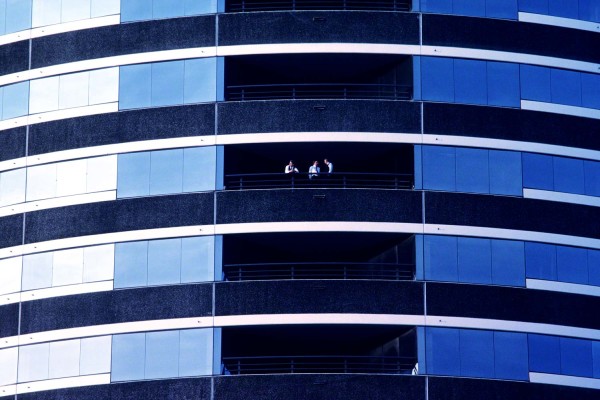
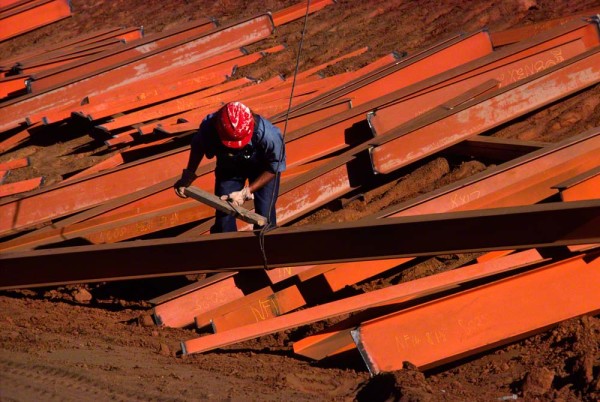
Diagonal Lines

In one of my online lessons, we work on ways to generate Visual Tension, one of the most important ways to keep the viewer around…and paying attention.

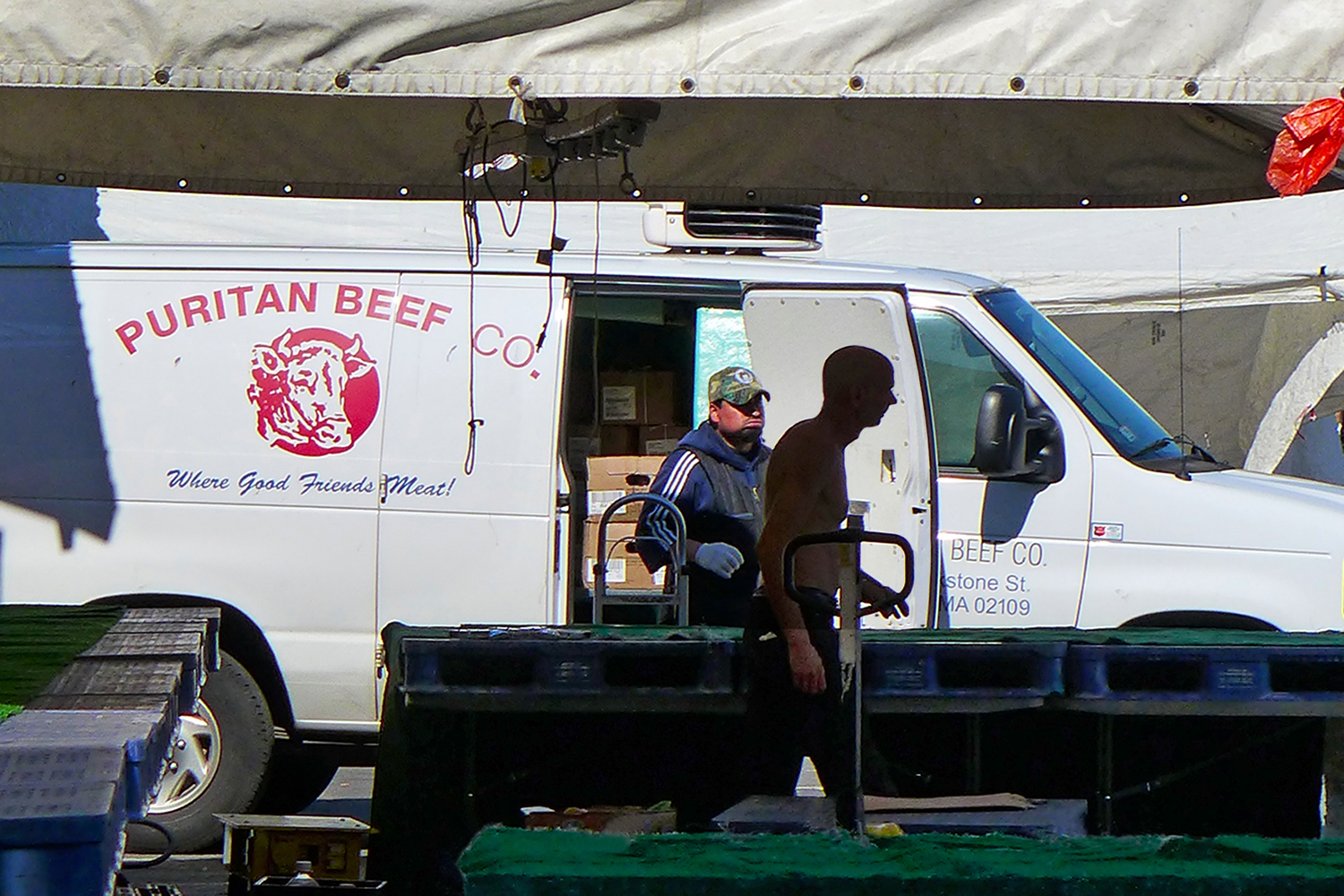
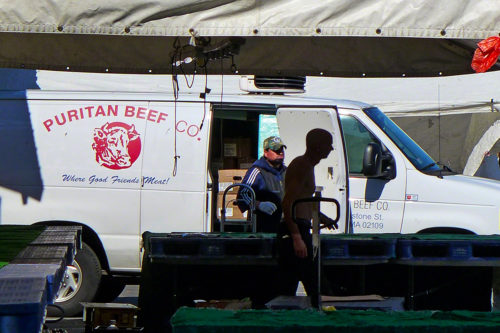
In my third class on the six concepts on the Psychology of Gestalt, one of the concepts we work on is the Figure-Ground relationship. The Figure is the subject, and the Ground is the background…see photo above. Besides the contrast, if the figure and the ground carry equal weight it can create tension; the silhouette against the truck.

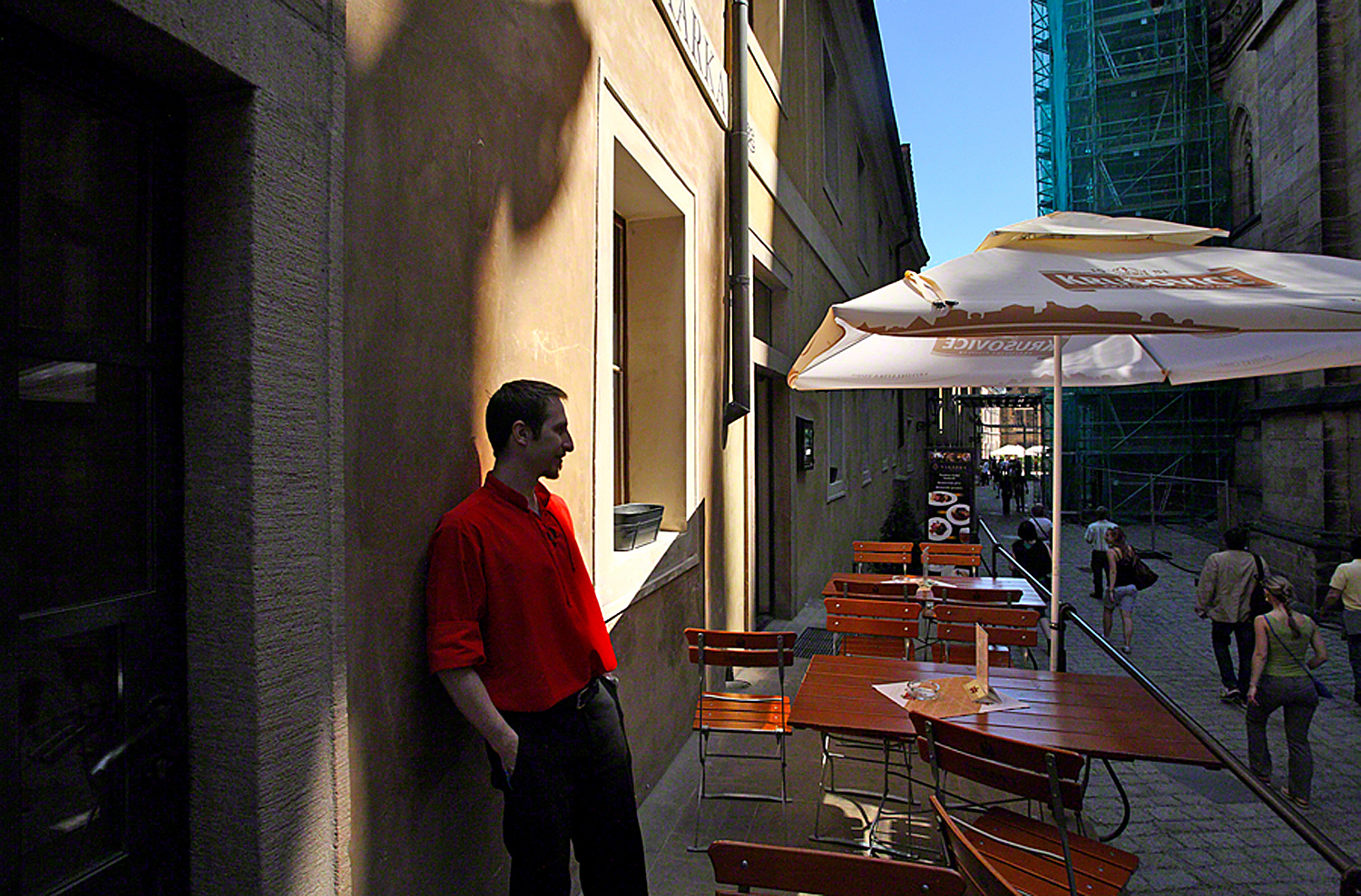
Framing Within a Frame

Contrast is another way. Not the contrast in the above photo of the silhouetted man, but in light and dark and big and small for two examples.

Diagonal lines create more tension than vertical or horizontal lines. Why? Because it’s the feeling of the diagonal lines falling forward, and they are perceived as less secured.

The subject and it’s reflection

Showing the subject and its reflection, framing within a frame, are two more ways. Of course breaking all the STUPID  rules, such as putting the subject close to the edge of the frame…instead of that creative killer known as “The rule of thirds”.

As you can see, there are many I’ve discussed and so many more. The bottom line is to use these methods to keep the viewer interested…especially for six seconds!!!

Come take my online classes and come shoot with me in one of the workshops I list at the top of my blog. We can talk about it some more.

Visit my website at www.joebarban.com.  

Follow me on Instagram:

https://www.instagram.com/barabanjoe/

JoeB


Food For Digital Thought: Transcend the Ordinary

Transcending the ordinary

I teach fellow photographers how to incorporate the elements of Visual Design and composition into their photography. In my online class with the BPSOP, and in my “Stretching Your Frame of Mind” workshops I conduct around the planet people sometimes become complacent in their approach to their photos. They’re no longer interested in being the slightest bit critical of any of their images, and therefore are not putting any effort into the final results.

I once had a man taking my online class tell me that he wasn’t really interested in using these elements to take stronger photos. He told me, “I’m only interested in taking halfway decent pictures”.

My first thought was why in the world was he taking my class, so I asked him. He told me that he didn’t think it would require as much work as it turned out to be, and after the second week in my four-week class, he quit participating.

If your photographic goals are to take halfway decent pictures, then all I can say is go for it. Follow the same path you’ve been following and before too long you’ll be there. Odds are that you don’t have very far to go if you’re not already there.

If you’re determined to become better at your newfound love or passion or if you just want to improve on a twenty-year-old passion, then you’re going to have to commit to working at it. One of the ways is to “Transcend the Ordinary”.

Henry David Thoreau once said, “It’s not what you look at. it’s what you see”. I’ll add to that with one of my older “Personal Pearls of Wisdom” and tell you that “if you don’t like what you see, then photograph what you’d like to see”.

Don’t settle on walking up to a situation, stopping and bringing the camera up to your eyes, and snapping off a couple of frames. You might walk away with a good photo, but chances are that you could have taken a photo that no one else will find interesting but you. Now, if you only take pictures for yourself with absolutely no intention of sharing them, then proceed the way you are.

If you’re like most artists (and we are artists whose medium is a camera instead of a paintbrush), then think about ways to take an ordinary situation and take what I refer to as “Up a Notch”.

The next time you go out shooting, don’t look for the same ways to shoot the obvious, instead look for new ways; ways you conjure up in your imagination.

When you’re composing your shot, and it feels or looks like photos you’ve seen before, DON’T SNAP THE SHUTTER!!! Walk away because the best photo you’ve ever taken could be a photo you saw in your mind that was right around the corner.

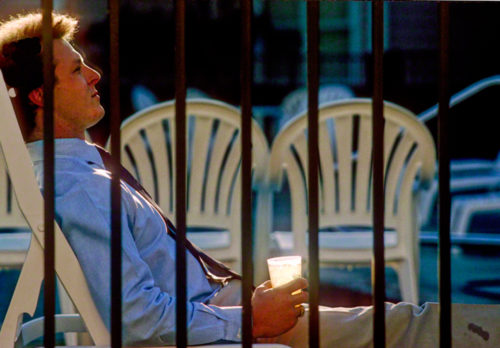
In the photo above, I was shooting a leasing brochure for the apartments the man was living at. The client wanted a shot that conveyed the idea that when you came home from work, you could come by the office and get a free cocktail and go out by the pool.

I’m not sure how many times this idea has been photographed, but it could be up in the millions. One of the problems was that the pool area was surrounded by buildings so there wasn’t going to be any “Golden Light” to help. I had to shoot it when the sun was much higher than I liked.

I knew I was crossing into the “been there, done that” world and refuse to go without a fight. I walked around the iron fence and put the man where he would be backlit. The rim light around him and the glow of his gin and Tonic made the shot work. I had transcended the ordinary!!!!

Visit my website at: www.joebaraban.com and follow me on Instagram https://www.instagram.com/barabanjoe/be sure to check out my workshop schedule at the top of this blog. Come shoot with me sometime, and it won’t be ordinary.

JoeB

How We Perceive

Here’s a really good tip for those who shoot in a square format: It’s virtually impossible to create Tension (which gives your photograph strength, and intensity) in a square.

The reason is that we don’t perceive our world in a square format, we perceive it in a rectangle, and here’s the proof:

Stand up and look straight ahead with your hands down at your sides. While you’re looking straight ahead, very slowly raise both your arms at the same time, while continuing to keep your arms straight;  also, keep your fingers extended straight out. Now, wiggle your fingers while you’re slowly raising both arms at the same time.  Still looking straight ahead, stop when you see your fingers wiggling.

Now do the same thing, but this time have one arm extended straight above your head and the other stretched downward right in front of you. Looking straight ahead slowly move your hands as if to meet at eye level in front of you. Again, wiggle your fingers and stop when you see them moving.

If you were to draw a line connecting all four points where you first saw your fingers wiggling you would be drawing a rectangle. That rectangle is in a 2X3 ratio, the same as a 35mm camera’s viewfinder.

And that’s how we see the world we live in.

Most people that shoot in a square format wind up cropping their image, but I never crop my photographs. People that crop their photographs will never become aware of the edges of their frame. In both my online class with the BPSOP, and my “Stretching Your Frame of Mind” workshop I conduct around the planet I always have the students submit their images right out of the camera. That way, I’ll know their thought process at the time they clicked the shutter.

I always want to create a good photograph in the camera. When you look at all the photographs on my website, I want to remind you that none of them were cropped.

Check out my workshop description at www.joebaraban.com, and come shoot with me sometime.

https://www.instagram.com/barabanjoe/

JoeB
Food For Digital Thought: Take Art Classes

Years of art classes

Over the years, I’ve had countless people from the way to young to the not that old ( me for example) ask me what photography classes should they be taking; they say this for several reasons: One being that they’ve run out of ideas since they’ve taken so many. Or, they’ve become bored with the same old, same old approach to learning new things and digital cameras are above their pay grade. I’ve even been told that they like the instructor and therefore didn’t get anything out of the class, and finally, they’ve learned all there is to know about Photography!!!!!!!!!!!

I also run into similar questions in my online class with the BPSOP, and in my “Stretching Your Frame of Mind” workshops I conduct around the planet. Well, I always have the same answer…don’t take photography courses, take art classes.

A brief synopsis of my background will reveal that I’ve never taken a photography class, nor have I ever studied under or assisted another photographer. It wasn’t because I thought I was too good for all that, it was because I just didn’t know you could!!! When I went to college (1964-1969) the only photography classes that anyone could take were in the Journalism Department and were described as photo-journalism. Photography was not really considered a form of art. A camera was something you used to take pictures, and a brush or pencil was something you used to paint or draw pictures…and never the twain should/would meet.

However, in my opinion, I did something far better than taking photography classes. I took art classes.

From the time I was ten, I was into art, in any form. I was allowed to take two art classes in high school, and I studied at the Kansas City Art Institute. I took art classes all through college and settled with a degree in journalism. I took classes in design, composition, illustration, figure drawing, watercolor, oil painting, printmaking, color theory, and Art History, and I’m sure I’ve left out a few. I didn’t pick up a camera until I was twenty-one, and the moment I did and looked through the viewfinder, it was love at first sight; from that moment on it was instant gratification. I didn’t have to spend days or even weeks painting a picture.  The best part was that I still considered myself an artist, I just changed the medium from a canvas on an easel to a camera on a tripod.

it was a natural progression in that I simply applied everything I had learned in all my art classes to photography. All the elements of Visual Design I had studied over the years were still applicable.

So now, when I’m asked what photo classes to take, I always tell people to take art classes instead. Put your camera away and pick up a colored pencil. Sign up for Design 1 or composition 1 at your local school, and see where it leads.

Visit my website at: www.joebaraban.com and check out my workshop schedule at the top of this blog. Come shoot with me sometime.

https://www.instagram.com/barabanjoe/

JoeB