Food For Digital Thought: People Like To See People In Pictures
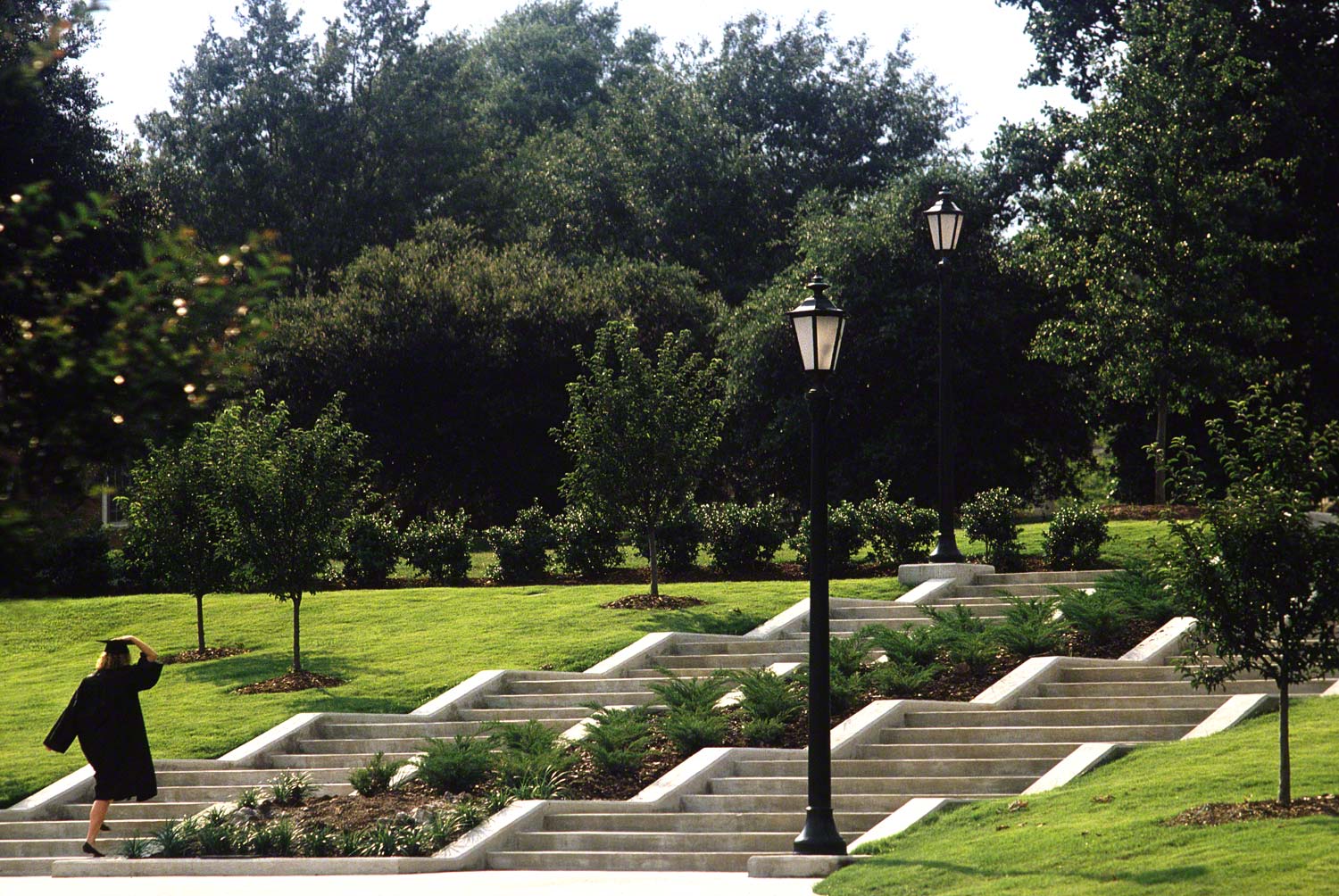
Would it have the same impact without the student running to her graduation?

From as far back as I can remember, and through all my research on the subject, I’ve known that people like to see people in pictures. In my online class with the BPSOP, and in my “Stretching Your Frame of Mind” workshops I conduct around the planet, I stress putting people into their compositions.

Photos are a powerful way to communicate ideas, or tell stories, and in the digital age, they’ve become paramount in sending information over the web. A scene without a person in it falls short in getting a message across to the viewer that’s thousands of miles away.

Showing a gondola in Venice floating by itself and moored to a set of stairs down one of the many canals, doesn’t say the same thing as a gondola with two tourists being chauffeured down the same canals by a Gondolier while having a glass of Chianti; the late afternoon adding a rim light to their and wine glasses.

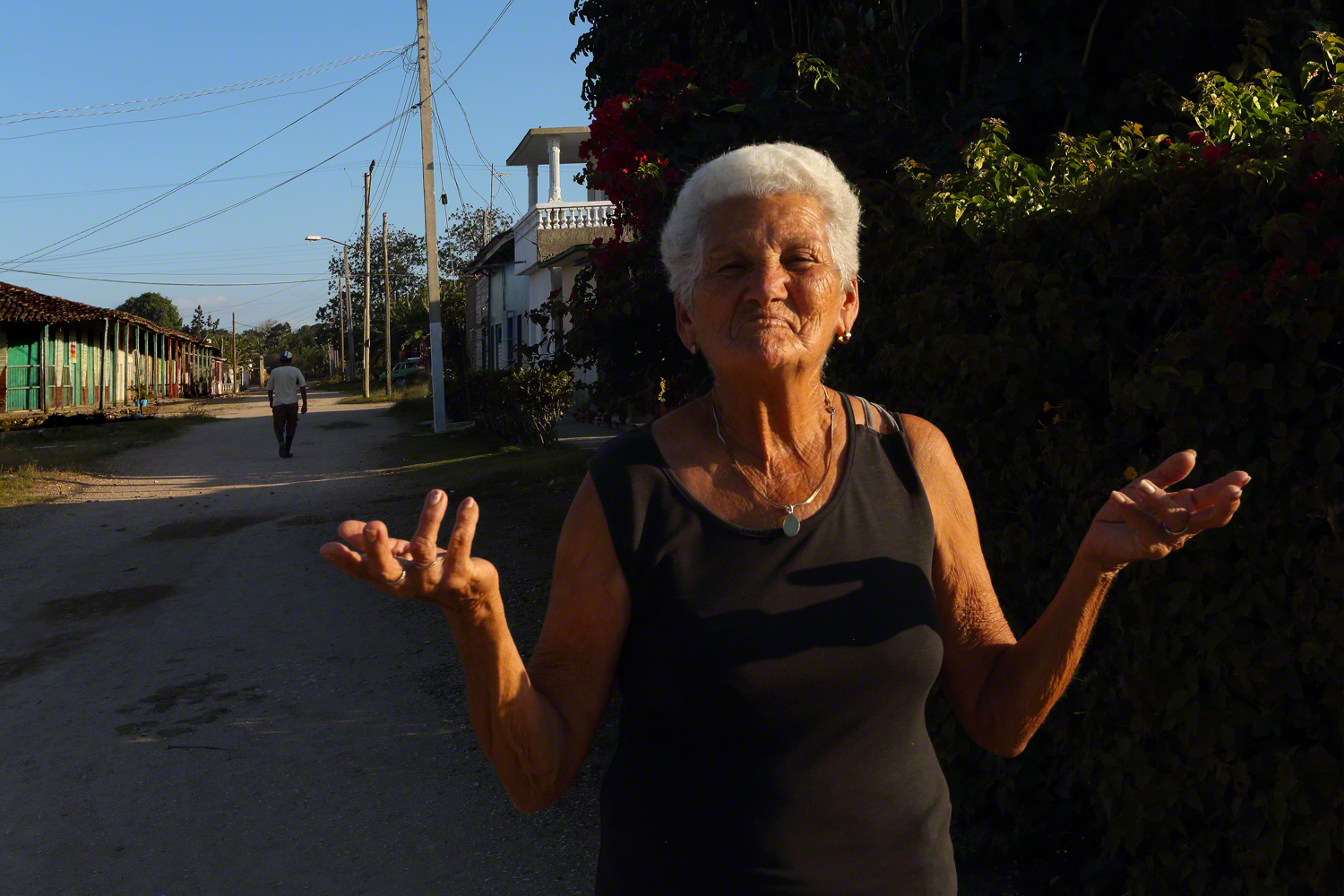
I’m always trying to put people in my photos when I’m trying to show scale to an environment. The viewer can relate to the size of a person since he’s familiar with average heights. Also, where you place the person in the frame will take on different meanings. For example, placing a person in the middle of the frame and close to the lens gives a feeling of intimacy, whereas placing the person in the bottom right corner sends a message of loneliness; as well as the feeling of being small in the scheme of things.

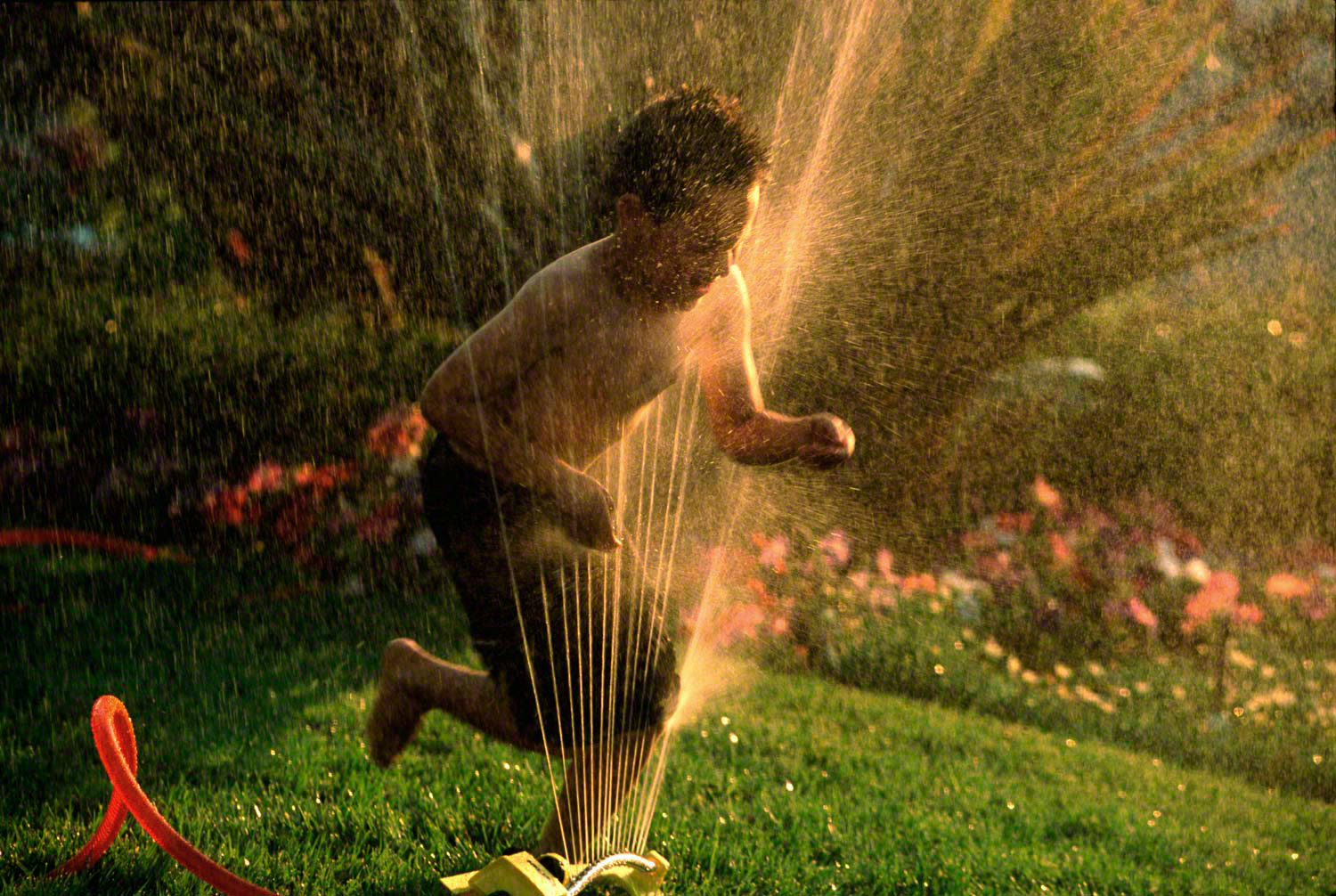
Use people to add color to your imagery as well as an ordinarily overcast day. Having someone wearing a red sweater will add Visual Tension and draw attention away from the fact that’s a gray day. Another way to create Visual Tension is by using body language, gesture, and stopping the action of someone, and leaving it un-completed. Blurring a person walking or running through your composition not only adds interest but adds energy to your images.

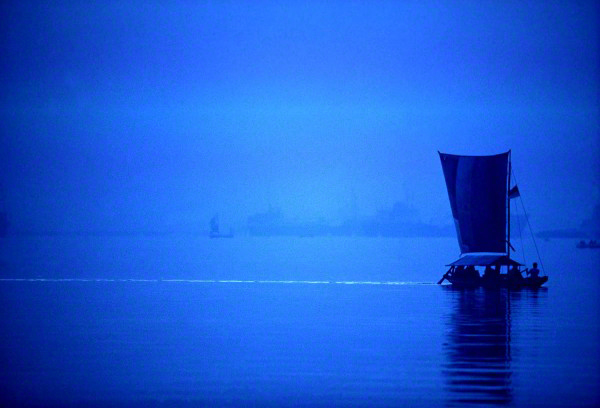
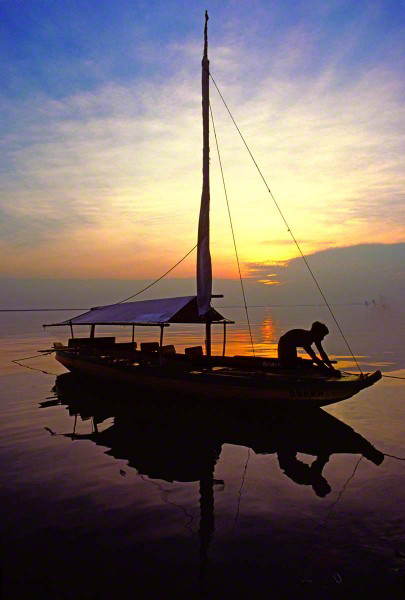
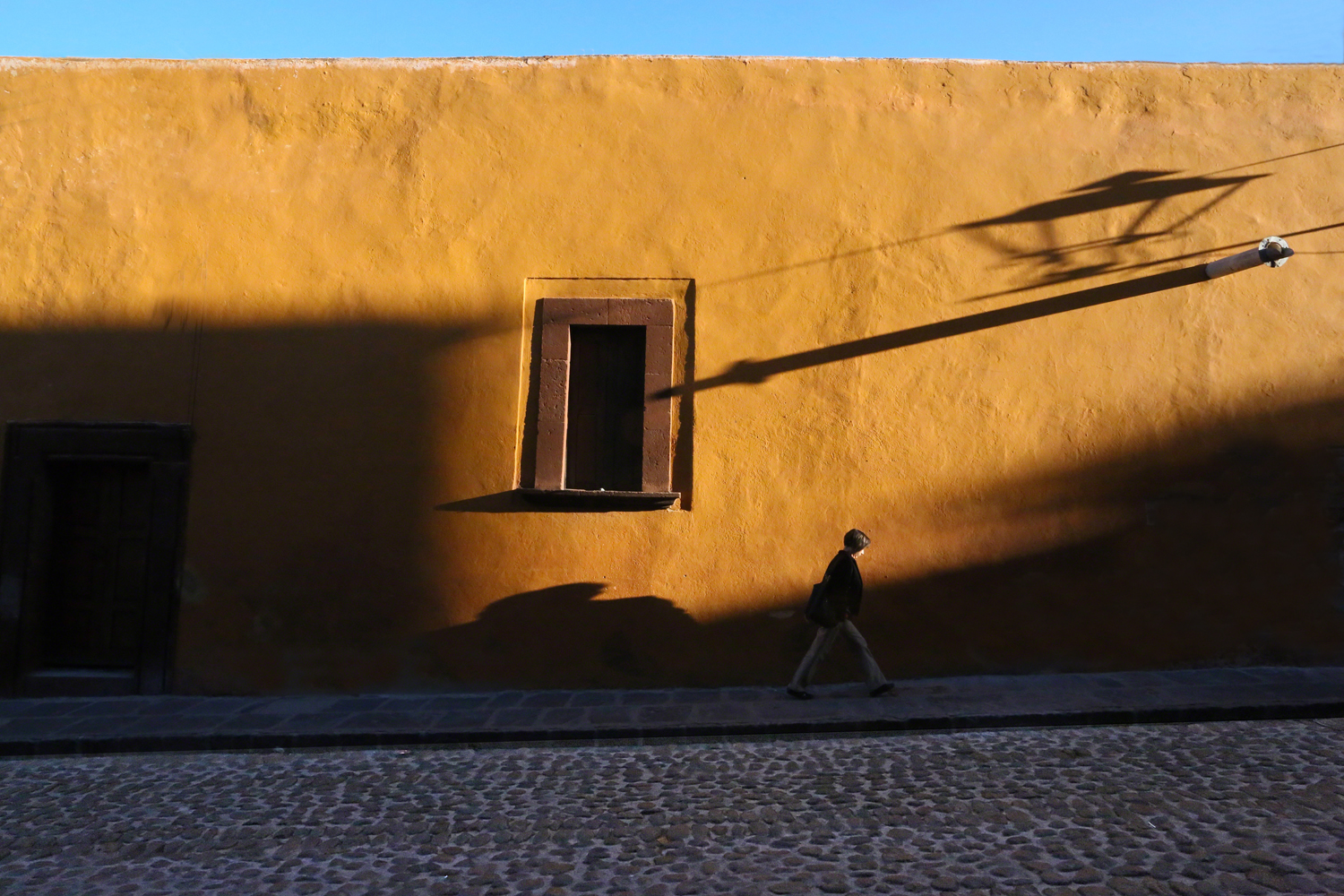
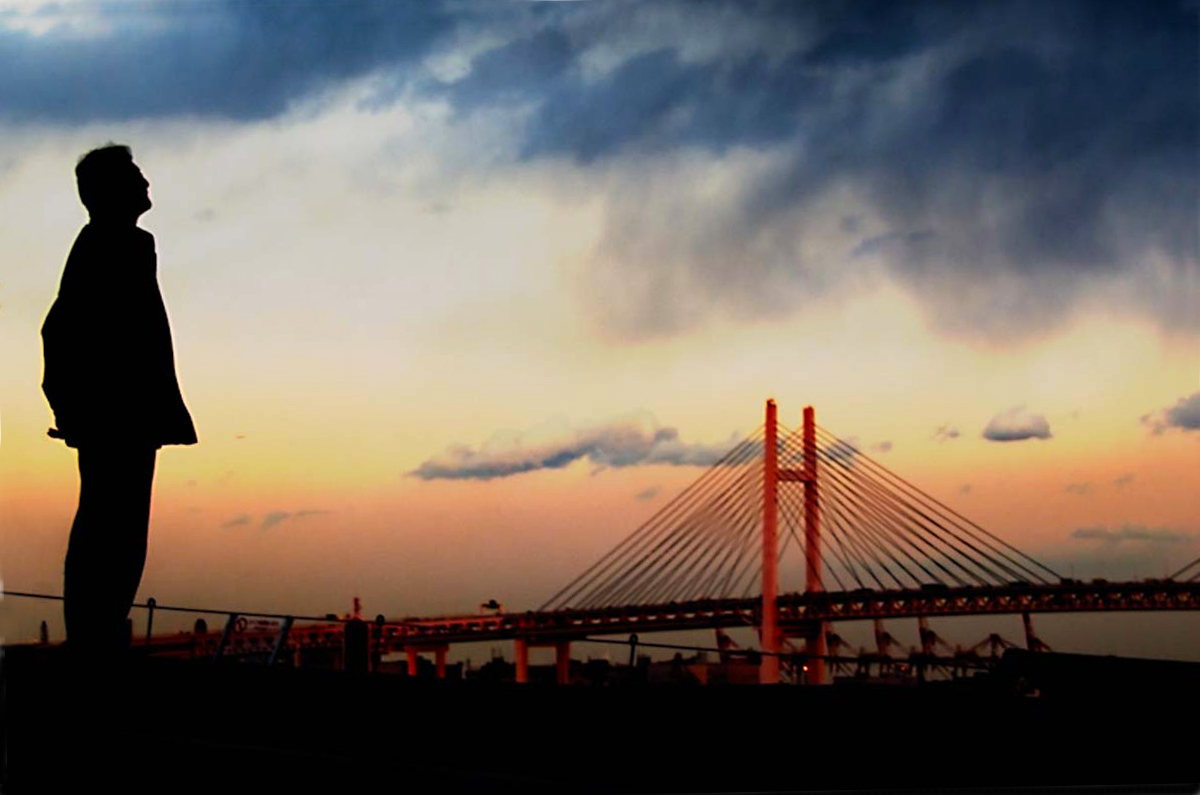
Silhouettes of people are a great way to introduce a mood to your photos. They are abstractions of a three-dimensional reality, presented in a  tw0-dimensional representation. They add a sense of mystery and drama.

Use people as a ‘payoff”, when through the use of directional lines, you move the viewer through the frame to lead to him or her. Use people as parts that when designed together create Shapes. When traveling, be sure to photograph the people as they are as the key to the countries culture.

Finally, Pattern is a basic element of visual design and I like to use people to break the rhythm of patterns.

Here are some examples that encompass all the ways I have listed:

https://joebaraban.com/example/people-like-to-see-people-in-pictures/

Visit my website at www.joebaraban.com, and check out my workshop schedule at the top of this blog.  Come shoot with me sometime.

JoeB
Food For Digital Thought: Perceive And Process

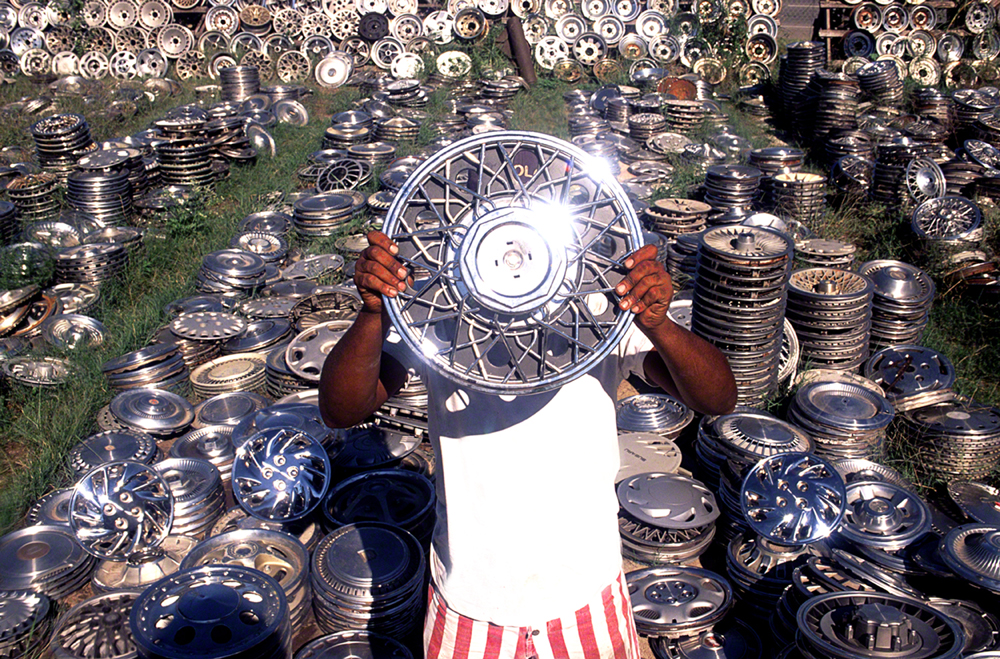
What do you think this photo is about?

I teach fellow my photographers how to incorporate the elements of visual design and composition into their imagery. I teach these elements at an online school with the BPSOP. I also teach the same elements in the “Stretching Your Frame of Mind” workshops I conduct around the planet.

After a long hiatus, I’ve begun teaching my class on how to use the six principles of Gestalt to “make stronger photos; the ones people will remember. Gestalt is all about making the viewer an active participant and as a result, it also makes him work harder when looking at our photos.

Whether it’s about having him discovering  new things when he’s looking, or leading him around the frame via directional lines and Vanishing Points, or the ways to imply more content outside of the frame, Gestalt is about Visual Perception…what the camera beholds, the viewer will perceive.`

Seems like Moses said something like that when he parted the Red Sea!!!

🙂

The viewer’s perception stops when he has gathered all the visual and sometimes esoteric/obscure information. At this point, the processing of the information takes over. What he was looking at, now that he’s taken in all the different parts, is now looking at the whole; the basic theory behind Gestalt.

There’s a lot of factors (that are the photographers’ responsibility) in what the viewer will walk away with. The process part is a series of steps the viewer will need to go through to achieve whatever end he was after the split second before he snapped the shutter.

One of the first things to consider is whether you’ve given meaning to your photo. Make sure it says what you wanted it to say because you won’t always be around to explain your intent unless you were going for an abstract in which case each viewer will walk away with something different. If you weren’t going for an abstract, then your photo needs to be a quick read.

If your photo is too esoteric the viewer won’t process the information fairly quickly. I’ve learned from watching people at photo openings that he or she will move on leaving you with a photo that you’ll be the only one to admire…and that would suck!!!

Visit my website at www.joebaraban.com and check out my workshop schedule at the top of this blog. Come shoot with me sometime.

JoeB

Food For Digital Thought: Daddy, Why Is The Sky Blue?

It's all about the blue.
It’s all about the blue.

I don’t know if your kids or grandkids ask you question after question after question, but my kids use to all the time while I was shooting them. They were great models so I shot with them all the time. I remember shooting with them late one morning and during a quick break, one came up and ask me why I didn’t shoot when the sky was blue, followed quickly by the question why is the sky blue anyway?

I told them what I tell my online students with the BPSOP, and in my “Stretching Your Frame of Mind” workshops. I like shooting during the “Golden Hour“. I like the colors and the long shadows. I like it because it’s soft easy light compared to the harsh reality of the midday sun. I can get different parts of my composition closer in exposure when the sun is low on the horizon.

It’s not that I don’t like blue skies, but in order to get the exposures close, without having to shoot away from the sun, those skies can turn a whitish blue; especially close to the horizon where the shorter blue wavelength must pass through more atmosphere and as a result, gets scattered away before reaching your lens. If I’m caught in a position where I can’t shoot under the kind of light/sky I prefer, then I’m going to compose my photo where the entire frame is about the blue sky.

“Ok, so daddy”, one of my three impetuous daughters asked, “Why is the sky blue?”

“Well sweetie”, I said to her. “It’s like this. When the sun is way up in the sky it lets out light at a short angle. This shorter angle lets my favorite colors, red, orange, and yellow, pass through the air (atmosphere) without being messed with. The shorter colors like blue and violet get eaten up by the gasses (molecules) in the air (atmosphere), which scatters their light. This causes the sky to look blue whichever direction you look; the blue light reaches you everywhere overhead.” I gave her a minute to digest what I had said and then continued with the fact that water vapor (humidity) and pollution make for a cloudy day and that’s why the sky sometimes looks gray.

She gave me what I thought was an incredibly curious and intelligent face then said, “Can I have a quarter for some ice cream?”

Visit my website at www.joebaraban.com and check out my workshop schedule at the top of this blog.

JoeB

Quick Photo Tip: Using Leading Lines

Using Leading Lines to move the viewer around the frame.

I teach fellow photographers how to incorporate the elements of visual design into their photos. Both in my online class with the BPSOP, and in my “Stretching Your Frame of Mind” workshops I conduct around the planet, we work on ways to keep the viewer sticking around and becoming an active part in our photos. The theory of Gestalt is behind this idea, and it’s also a big part of the classes I teach.

The more ways we can have the viewer travel around our composition, either from one point to another or leaving and re-entering the frame the more he’ll stay involved. One of the best ways is by using Leading Lines (also referred to as directional lines).  Line is the most important of all the elements of visual design. Without Line, none of the other elements would exist. Although Line encompasses many different facets, in this post we’ll just look at those lines that have the most movement in them; the ones that do the “leading around”.

In the photo above, I’ve used the small roads to lead the viewer around the frame. Also, notice that the roads (the lines) are moving diagonally. Of the three basic lines vertical, horizontal, and diagonal, diagonal lines have the most energy. The reason is that diagonal lines are in the process of falling forward; this gives them more energy. To be sure, you don’t need actual roads to do the leading. Any strong lines will work as in the examples in the slideshow.

Next time you’re out shooting, look for Leading Lines. It’s a sure-fire way to take your photo what I refer to as “up a notch”…https://joebaraban.com/example/directional-and-leading-lines/

Visit my website at www.joebaraban.com, and check out my workshop schedule at the top of this blog. Come shoot with me sometime.

JoeB
My Favorite Quotes: Henri Cartier-Bresson

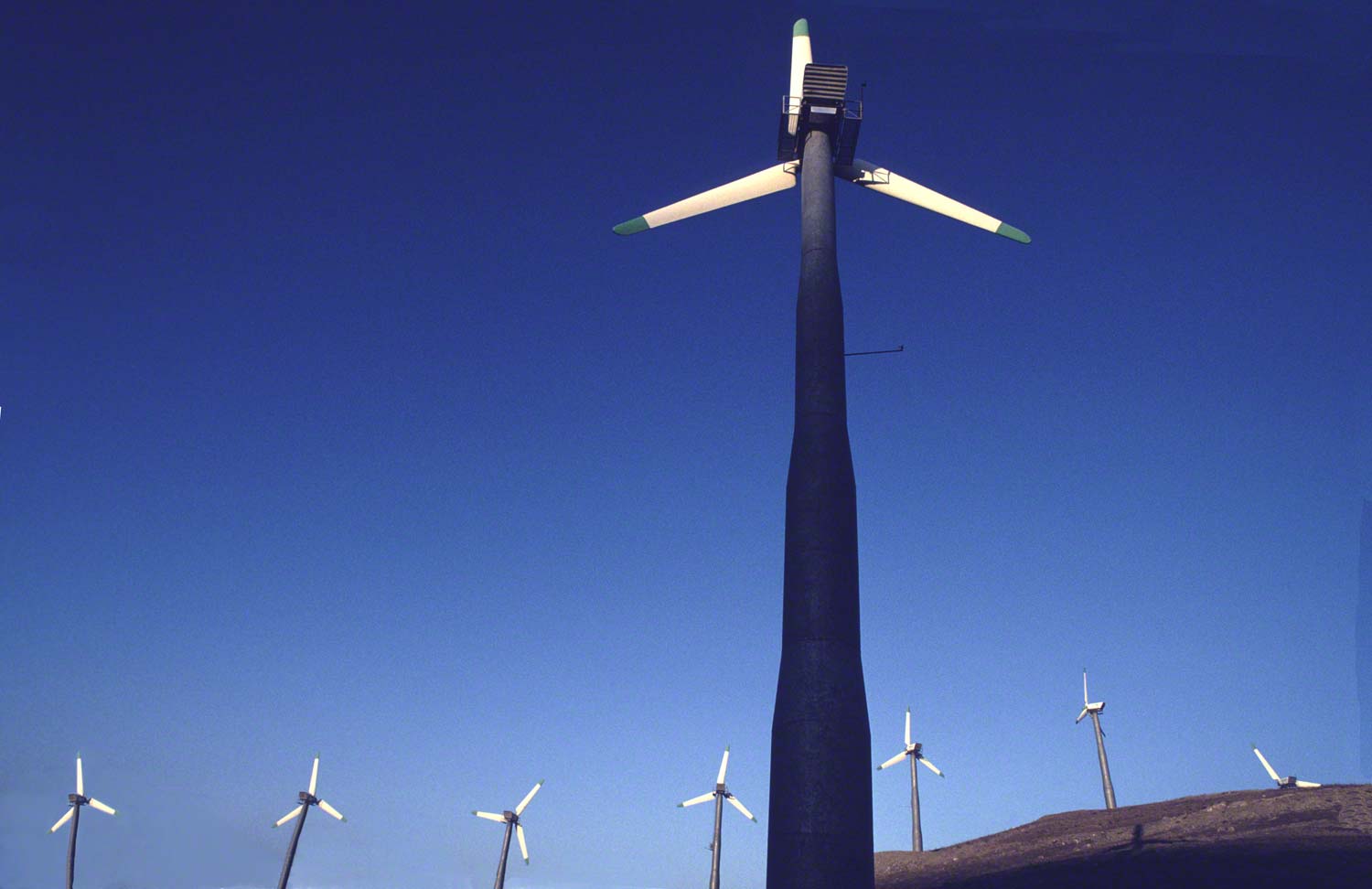
The moment it was caught in the camera.

One of my all-time favorite photographers was Henri Cartier-Bresson who by the way, said that when you crop a picture you destroy the original integrity. He also said, “The picture is good or not from the moment it was caught in the camera”.

This quote has been my mantra since I started shooting fifty-three years ago, and during these years I have never cropped one of my photos…not once! I suppose it’s because my background is not in photography but in art. Having said that, I still consider myself an artist who has changed the medium from a paintbrush to a camera; when I painted a picture, it wouldn’t make a lot of sense to crop it later…would you?

I teach online classes with the BPSOP and I also conduct my “Stretching Your Frame of Mind” workshops all over the place. In both venues, I ask photographers not to crop in front of a computer but in the camera. I once read that when you crop in front of a computer it’s a sign of a lack of discipline and sloppy technique.

One thing I have found is that when you take your time composing, you have a much better chance of getting it right the first time…as in the moment you clicked the shutter. I have seen it over and over when I’m walking along shooting with one of my fellow photographers and they bring their camera up to their eye. There’s absolutely no time spent on any thought process, they just shoot and move on; “I came, I shot, I left” will forever be your mantra.

I’m here to tell you that I’m a damn good photographer and I wouldn’t do that, so you would have to be one hell of a shooter to rely on just one shot being a ‘wall hanger’…unless, of course, you need a computer to help out. I say to each his own, and if that’s your thing then one day you’ll become a master computer artist…and not someone that can decide if a picture is bad or good from the moment it was caught in the camera.

Visit my website at www.joebaraban.com, and check out my workshop schedule at the top of this blog. Come shoot with me sometime.

JoeB
Quick Photo Tip: “When You Get Lucky, Be Ready”

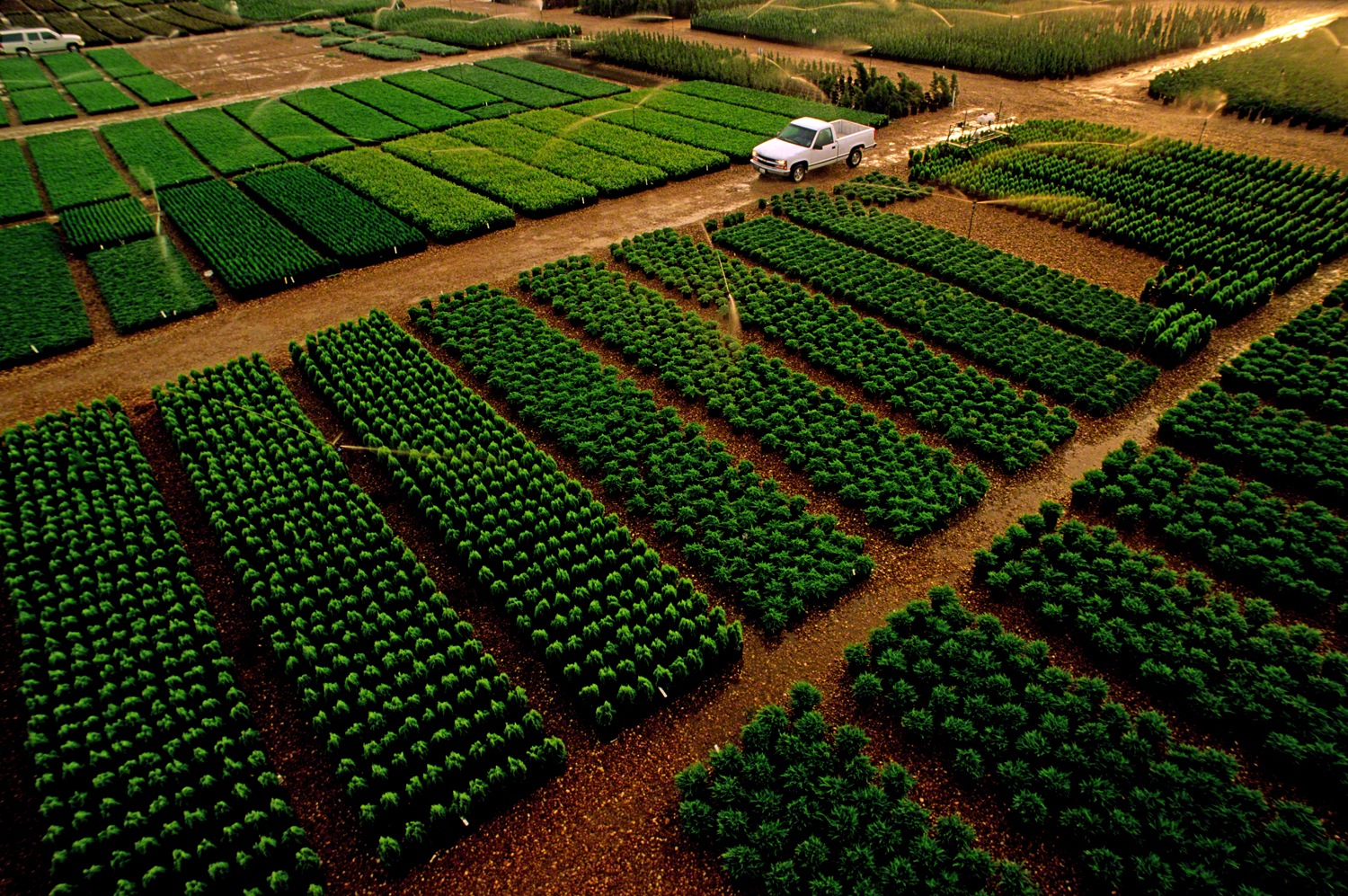
When I got lucky, I was ready

Eddie Adams was a Pulitzer Prize winning photojournalist that was known for his photo essays while being a combat photographer during the Viet Nam war.

One of my all time favorite quotes was said by Eddie, and while it refers to all the combat photographers who risked their lives, I’ve always applied it to my photography. I’ve also included it in my teachings with the BPSOP,  my online students, as well as my “Stretching Your Frame of Mind” workshops I conduct around the planet.

Eddie Adams said, “When you get lucky, be ready”. It’s easy to see how this quote can relate to war photographers, but how does it relate to civilians…like most of us for example?

I shoot predominately early in the morning and late in the evening when the light is the most dramatic and the shadows are long. As a result, it comes and goes very quick; sometimes you have seconds to see/think/compose/shoot.

After forty-two years of shooting, I’ve learned that you just never know when that extremely elusive “OMG” photo is going to materialize. It can come at any time and when it does, you better know (literally) where you stand.

So having said that, the first thing I do when I arrive at a location is to find out the direction of the sun. Since my favorite way to shoot is to side and backlight, I look for subject matter that will get that kind of light.

The next thing I do is to shoot some random exposures with nothing more in mind except to get the proper camera settings…just in case. If I have just one shot at it, I want it to be very close; close enough to work on it in post if need be. I will tell you that the challenge and sense of achievement in nailing the exposure in the camera beats sitting in front of a computer any day. To me, that’s what being a really good shooter is all about!!!

OK, there’s another part of the “OMG “ photo equation and that’s being able to anticipate the action; a good street shooter will know what I mean. I spent the early part of my career as a stringer for Blackstar, UPI then AP, so I did a lot of street shooting. By anticipating a person’s next move, whether it be as a gesture or a change in their body language, a plane, train, or automobile coming or going, or an action solely created by Mother Nature, I can now be ready for that split second I have to click the shutter. With my camera settings already in place, I stand a good chance of coming home with the bacon!!!

Here are some examples of being ready when I got lucky

Visit my website at www.joebaraban.com, and check out my 2012 workshop schedule. Come shoot with me sometime.

JoeB

Life Before Photoshop: BJ Services

  One of my favorite posts to write is for my “Life Before Photoshop” category. So many of my students with the BPSOP, an online school I teach with, and in my “Stretching Your Frame of Mind” workshops I conduct around the planet fell in love with Photography after the digital age had eliminated virtually all film cameras.

These same photographers think that Photoshop and Lightroom are just another part of taking pictures with their new digital cameras. Sitting in front of the computer is merely an extension of the process. I’ll admit that Photoshop has come to my rescue on more than one occasion, but it was part of my thought process before I click the shutter”) not in front of the computer. For example, if I couldn’t take a step one way or another to keep something from growing out of my subject’s head.

In my classes I try to get across an important point, that is to become good photographers, not good computer artists and digital technicians.  For me, the challenge is to get it right “in the camera” and not have to rely on any post-processing to make good photos. I also crop in the camera, because when you use the computer to do your cropping, you’ll never know where the edges of your frame are. Next time, try using the edges as a compositional tool…it will make you a more rounded photographer.

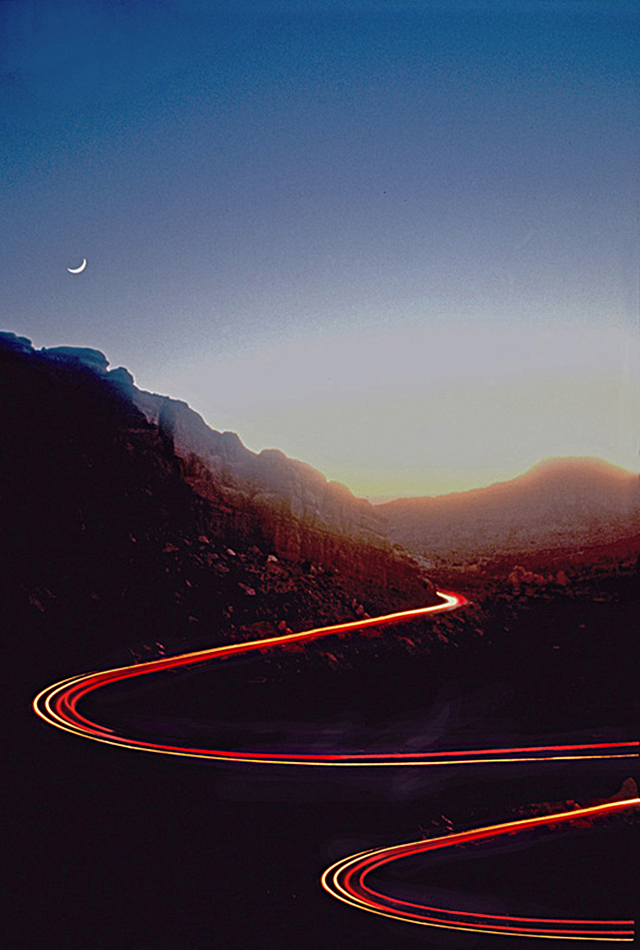
In this photo, I was sent to Grand Junction Colorado to shot for BJ Services Annual Report. BJ Services supplies various materials to oil companies that are drilling for either Natural Gas or oil. We shot the day-to-day photos at a drilling site, but they also wanted a photo to use on the cover that portrayed the ideas that they delivered 24 hours a day, 365 days a year.

I had an idea in my mind that would not only make them happy but myself as well. I scouted various locations with my Sunpath readings and my Morin 2000 hand bearing compass. As a result, I knew exactly where the sun would come up and choose this small part of the two-lane road that led to an oil rig.

I positioned one of my assistants with a walki-talki in a car going in one direction (with his foot on the brake), and the Designer with a walki-talki in another car heading in the opposite direction. I took a reading on the sky to judge how long I had to make the two cars travel to get the blurred lights across the frame. Based on a thirty-second exposure, that’s how long the cars had to complete the distance.

Btw, as the light got brighter, the cars had to cover the distance traveling faster until it became too dangerous. That’s when I knew the shoot was over!!!

Visit my website at www.joebaraban.com and check out my workshop schedule. Come shoot with me sometime.

JoeB

Food For Digital Thought: Clicking the Shutter

The easiest part of photography is when you click the shutter. Anyone can do that because this particular aspect of photography requires no practice, talent, or any knowledge of the camera itself; other than knowing exactly where the button is that you press down on that results in a photograph being taken.

Having said that, to take a photo that you would be proud of enough to put it on your wall is a whole new ballgame. Not everyone can do that, but I can help. I teach online classes with the BPSOP, and I also conduct my “Stretching Your Frame of Mind” all over this very round planet.

It’s hard to find an analogy for anything these days that specifically refers to photography, but the one that comes to mind is the ability to hit a golf ball straight; not far, just straight. For those of you that play the game, you’ll understand just where I’m going with this. For those of you that don’t, I think when I explain everything you’ll get the ‘picture’.

In the game of golf, anyone can own a set of expensive clubs, new golf balls, shoes, a golf glove, and rent a cart. However, here’s what has to happen to hit the golf ball straight: Your grip on the club, clubface square to the ball, your stance in relation to where the ball is, backswing, positioning of the shoulders, the way the hip turns, the follow-through, and keeping your head down.

So, now comes the second half of the analogy, clicking the shutter. Anyone can own the top of the line Nikon, Canon, Sony, or a Fiji, and all the lenses each camera offers. The best camera case, a carbon fiber Gitzo tripod, expensive filters, and anything else that you can possibly imagine.

Now, I can tell you that none of that matters if taking ‘wall hangers’ is what you’re after…and who doesn’t want that? When you come right down to it, the ten inches behind the camera is what matters. Having the best camera doesn’t mean a thing. It’s like someone telling you that because you have an expensive typewriter, you must be a great writer.

Here’ what matters before you click the shutter: Knowing where the light is coming from, knowing where to stand in relation to the light, when to stand to get the best light, and how long you have to shoot there. Thinking about the negative space as much as the positive space, is your composition balanced, what’s going to be in focus, aka the depth of field, correct shutter speed/exposure combination, always thinking about Dynamic Range in a composition, focus points, making sure your idea is a ‘quick read’, did you do your ‘border patrol’, checked those four corners, the 15Point Protection Plan, and when you should be using a tripod.

I’m sure there’s more, but these immediately come to mind and if you just work on these guidelines, your imagery will go up (what I refer to as ) a notch or two.

Visit my website at www.joebaraban.com, and check out my workshop schedule at the top of this blog. Come shoot with me sometime.

JoeB
Food For Digital Thought: Shake it Off

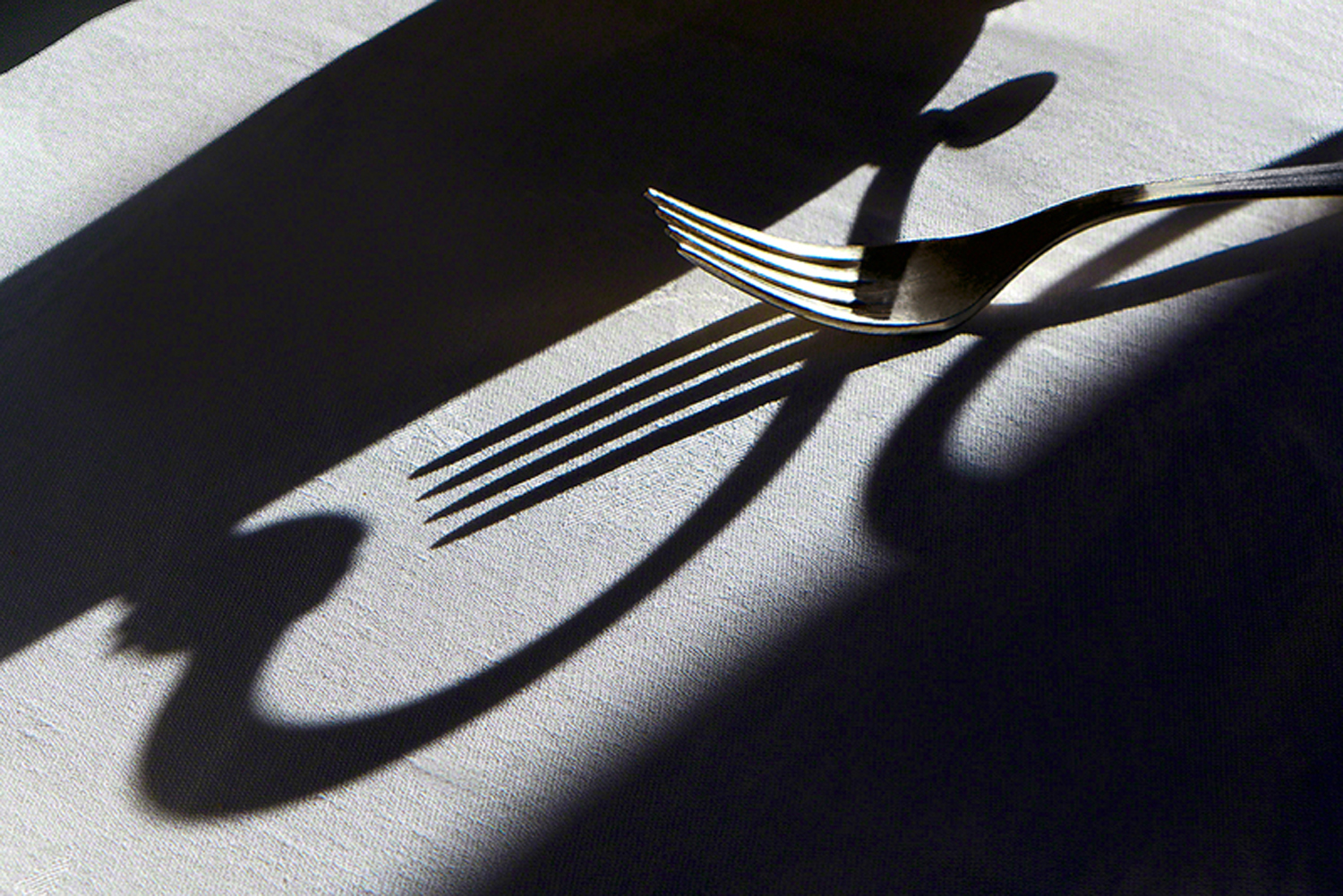
I shook it off, and my patients were rewarded.

I’ve always found this quote to bring a smile to my face, “Sometimes you’re the dog and sometimes you’re the hydrant”. So you ask yourself why in the world could this possibly have anything to do with photography?

It’s simply an analogy I use when I’m talking to my students that are taking my online class with the BPSOP, and during the daily critiques with those that take my “Stretching Your Frame of Mind” workshops I conduct all over the world.

What I’m referring to is when a photo op is suddenly gone by the proverbial wayside. It can be while walking down a small street in a Medieval Village when the woman hanging her laundry out the window sees you and before you can raise your camera up to your eye quickly ducks inside…I’ve personally had that happen more times that one.

How about when you’re about to take a photo of a couple walking down the area next to the Seine and the golden light from the sunset is streaking across the water…and as your about to click the shutter a cloud comes in and steals the last moments.

It doesn’t have to be that far away from home…it can be in your own backyard when you’re taking pictures of your dog playing with your grandchildren and (kids and dogs are the hardest subjects to photograph) one sweet loving lick in the face begins a meltdown that is irreversible; perhaps for the rest of the day; you wind up self-medicating with a cocktail.

And one of the worse ones is when you run out the door to catch the sun coming up over the lake, and when you get to the spot you had picked out, you realize that there’s no card in the camera or your camera case.

All you can do is ‘shake it off’.  It’s going to happen, and some days you’ll be the hydrant. However, you can salvage some parts of these situations…be the dog, and learn by them.

How you might ask?

Learn the movements of these women hanging laundry, and whatever you do the next time you’re confronted with this photo op…do not look directly at them!! Pre-visualize what your composition is going to be. Shoot a few photos of the environment and the light so you can get the exact exposure, then set it in your camera.

If you miss the last light, then look for an appropriate place to shoot during the Blue Hour.

As I said, kids and dogs ate the hardest to shoot. Try not giving any direction and let whatever happens…happen. Have your camera settings the way you want and wait for that one moment…it might be the only moment you get.

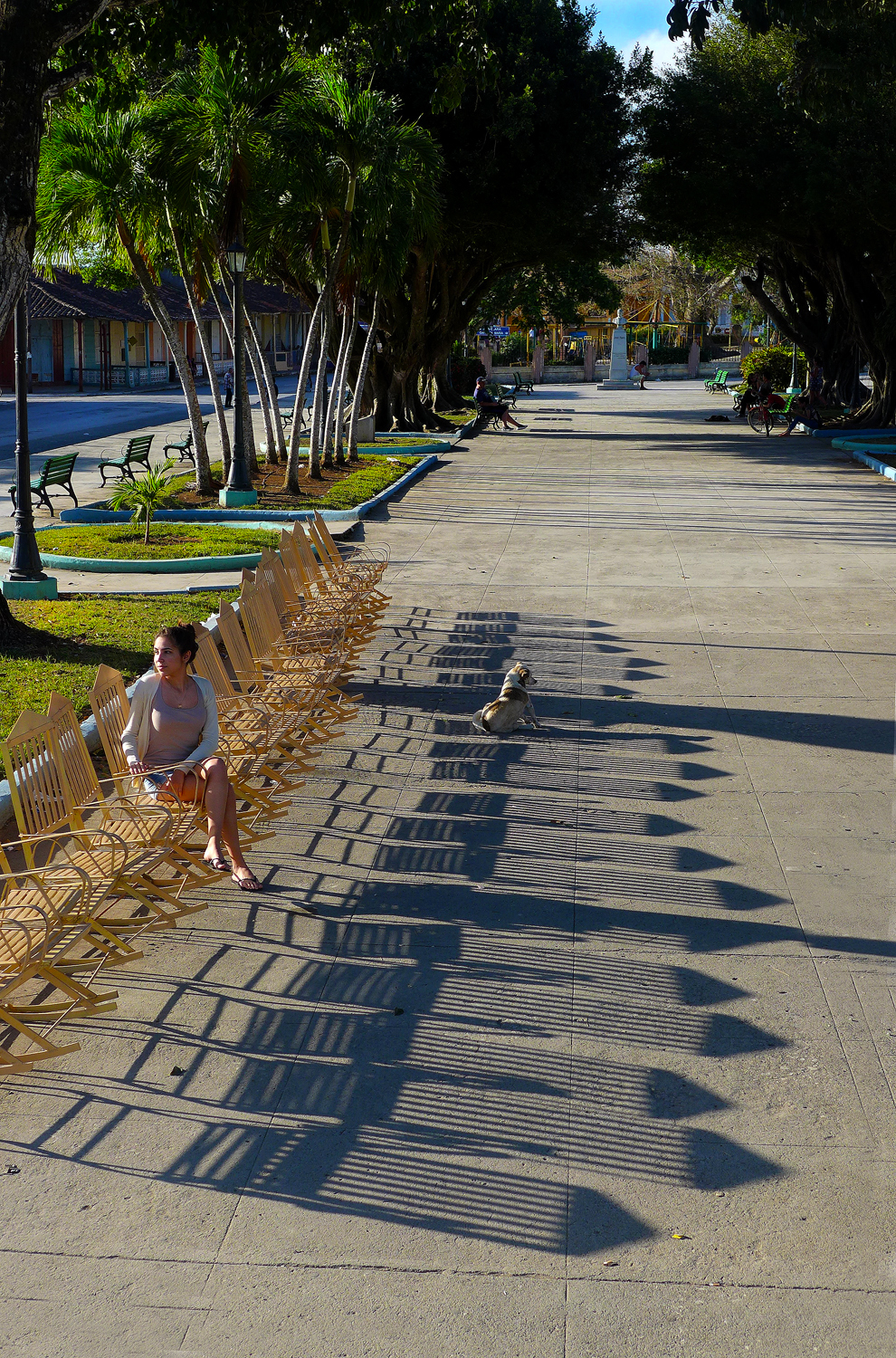
In the above photo, I was all set to shoot this family sitting on the chairs. As I brought my camera up to my eye the father spotted me and whisked his family away. Because of the shadows, I decided to wait for another opportunity. My patients were rewarded. Not only did a woman come up and sit down, but the dog wandered into my frame and sat down.

Before you go out for an extended amount of time, charge the batteries, put in a fresh card (never delete images from the camera), with a couple of backups.

And above all, you have to ‘go with the flow’ and know when to hold ’em and when to fold ’em.

Visit my website at www.joebaraban.com, and check out my workshop schedule at the top of this blog. Come shoot with me sometime.

JoeB
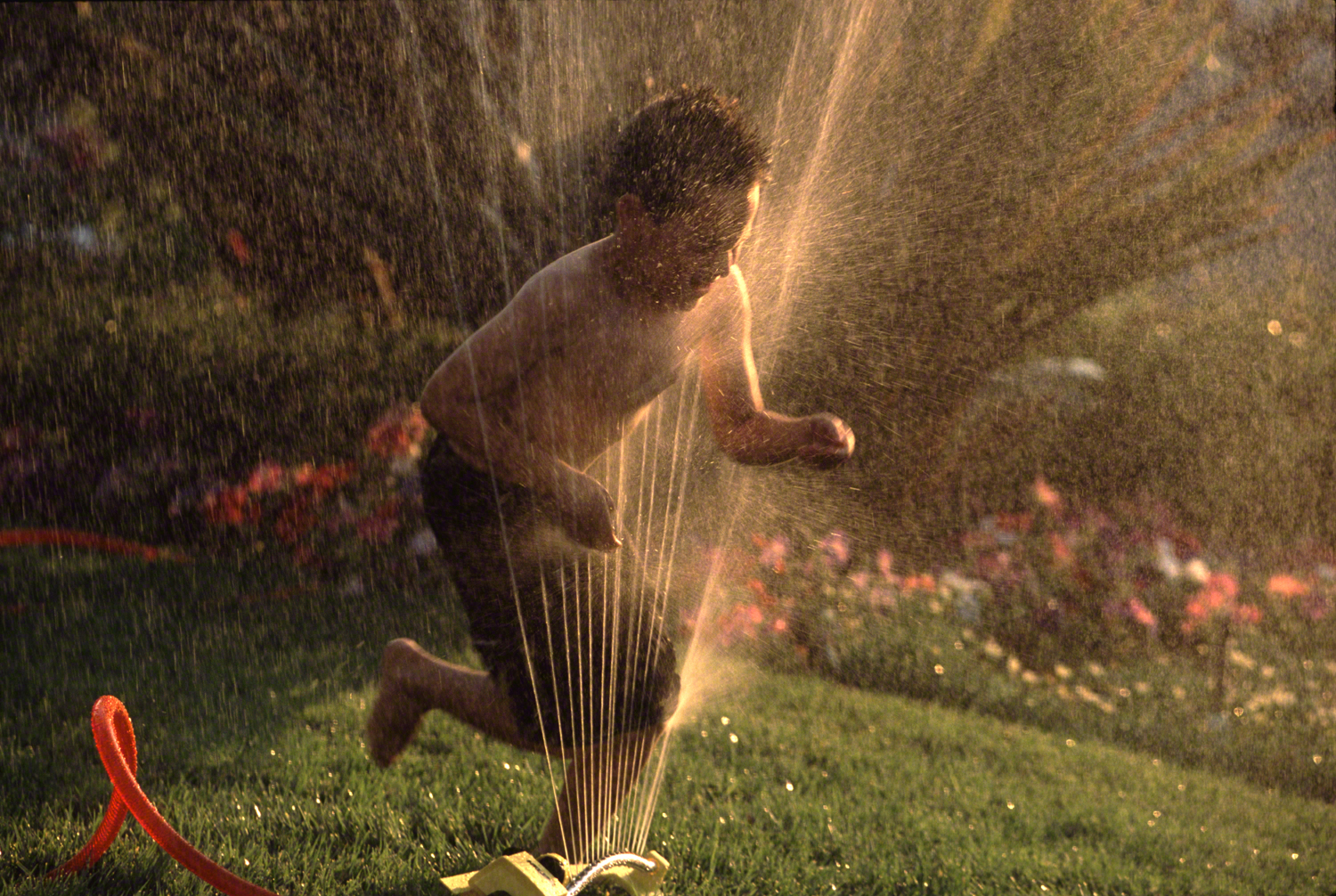
Personal Pearls of Wisdom: Tension gets your attention

Creating Visual Tension

In several of my past classes with the BPSOP, I’ve been asked about the importance of Visual Tension. So, I’m sending out this post that I wrote in 2016.

Why do we look at some photos more than others? What compels us to stick around longer for some and not for others? How we can control what the viewer perceives and processes when looking at our photos? The answer will differ and the different methods we use will vary. For me, the important part is to draw the viewer into your photo.

I teach an online class with the BPSOP, and I also conduct my “Stretching your Frame of Mind” workshops around our planet. I teach people how to use the elements of visual design to create stronger images.

I discuss how humans rely on the perception of their environment and that visual input is a part of our everyday life. If we can present this information (photographically) in such a way we can make him a visual partner, an active participant, and when we do we’ll have his undivided attention.

Our eye is constantly moving around and notices elements in out photos that stand out, and for one reason or another are significant. An example is the fact that the eye is drawn to light; like a moth to a flame.

One of the best ways to do this is by incorporating visual tension, a compositional tool,  into our imagery. Visual tension gives your photograph strength and intensity. It’s a psychological force to be reckoned with and used correctly can take your photography what I refer to as “up a notch”. Tension refers to the positioning of the physical elements in our frame, and the feeling within us of the spatial relationship when looking at a photogrph.

They’re many ways to create visual tension, and I have talked a lot about them to my fellow photographer. The use of light, contrast, i.e.,  shadows and areas in shadow, framing within a frame, combining opposites or unrelated objects, peak of action, body language, and gestures; showing the subject and its reflection are some of the ways.

The way we place the elements and creating design imbalance giving off the feeling of instability, will generate visual tension. Where we place the camera in relation to the viewer will have an impact on the viewer and will help generate the tension we’re looking for. Conversely, the placement of the subject in the frame will have an acute effect as well. Using the Rule of Thirds to place your subject will NOT create the visual tension as placing it close to the edge of the frame would.

So, I don’t know about you, but I like attention when it comes to people looking at my photos. I want them to walk away shaking their heads in amazement after being totally immersed in my imagery. If indeed you feel the same way, then think about incorporating visual tension into your photography.

Visit my website at www.joebaraban, and check out my workshop schedule at the top of this blog. Come shoot with me some time and we’ll create some visual tension together.

JoeB

Quick Photo Tip: Taking The JoeB Challenge

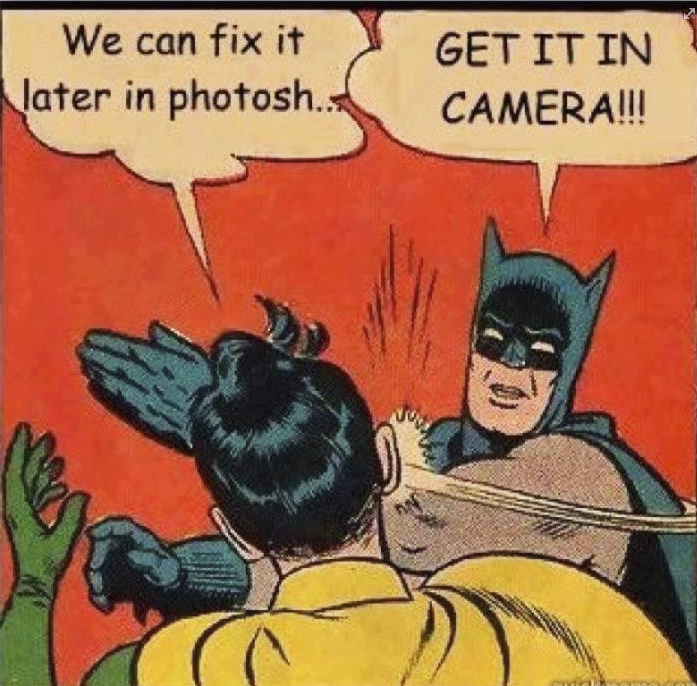
www.quickmeme.com

As most people that either follow my blog, or have taken one of my online classes with the BPSOP, or have attended my “Stretching Your Frame of Mind” workshop will tell you, I’m a firm believer in creating photos in the camera, and by doing so it will make you a stronger more rounded photographer. At this point I always say that I use Photoshop all the time but sparingly; I prefer the challenge of making my photos in the camera.

If I had a quarter for every time I heard someone say, “Why worry about it now, I’ll just fix it later”, I would be looking out the window of my Gulf Stream G650 right now on the way to my villa on the Island of Bali while sucking down Sea Breezes….that’s a lot of quarters!!!

So now let’s get down to the business as hand, taking the JoeB Challenge.  For the next few times, you go out shooting, return all your settings to their default, the way it came out of the box. Put your camera on manual and turn off the autofocus capability. Btw, the auto-focus feature is a luxury, not a necessity. Did you know that your camera is quite capable of taking great photos while being manually focused? You might feel naked for a few minutes, but it will pass. When you compose, remember that you won’t be able to crop or use any post-processing back at the ranch…YIKES, you say???? Do ye have little faith????

Trust me when I say it will make you a better photographer., and as my mother use to tell me when I was a kid (and as an adult), “When I tell you that a mouse can pull a house, don’t argue just hitch em’ up”.

Visit my website at www.joebaraban.com, and check out my workshop schedule at the top of this blog. Come shoot with me sometime. We’ll take the challenge together.

JoeB

Food For Digital Thought: Shot List To Grocery List.


My completed grocery list.

So many of my students that I teach online with the BPSOP, and in my “Stretching Your Frame of Mind” workshop I conduct around the planet, just grab a camera and go out with the intent of finding and shooting that “OMG” photo that we all yearn for. Well, that’s all well and good, and I say more power to you and good luck; it just might be your lucky day.

Of course, shooting early in the morning and late in the afternoon will greatly increase your chances, but without some kind of a plan, I wouldn’t bet on it. Your odds go down further if you don’t know where to go to begin looking for that elusive “keeper”.

As I tell fellow photographers and my students, light is everything so before I go off “half-cocked”, I want to know exactly where the light is going to be. I do that with the readout I get from Sunpath, a software program for determining where and when the sun will rise and set. I then use a hand bearing compass called a Morin2000 to locate the point on the horizon where the sun will come up and go down.

If I’m going to be at a location large enough of an area to offer several possibilities, I’ll plan out a shot list to determine which subject I want to take first. What I mean by that is what area will get the first light, then what area gets in next, and so on; until the light has become too hot and harsh and I stop. I’m looking for what subject I can backlight, sidelight, and put into the “Angle of Reflection, or what’s also referred to as “The Law of the Light“. This is predicated on the idea that I’ve pre-scouted the location before the day of the shoot which would be a very good habit for everyone to get into.

Along with my shot list, I begin working on my grocery list. I’ll write down what I’ll need to take that particular photo, as in props, people, additional wardrobe, etc. This is along with my regular “bag of solutions” I always try to include because you just never know and as Eddie Adams once said, “When you get lucky, be ready”.

If your interests are “just taking halfway decent pictures” (I was told this by a student right before he dropped out) then I suggest you ignore this post and continue down whatever path you’ve laid out for yourself. If you’re interested in taking your photography what I refer to as “up a notch”, then try doing it the way I’ve been doing it for over fifty years.

🙂

Visit my website at www.joebaraban.com and check out my workshop schedule at the top of this blog. Come work on your grocery list with me sometime.

JoeB

Food For Digital Thought: Seeing What You Saw

I get a lot of my ideas while laying in bed late at night trying to go to sleep, watching late-night TV, or I occasionally wake up with an idea. While some people may count sheep, I think of ideas to share with my online classes with the BPSOP, and also with my “Stretching Your Frame of Mind” workshops I conduct all over the place; as well as all my fellow photographers that have been following my blog since its inception in 2011.

This time I was watching a show and they started playing one of the most popular Christmas Carols Do you see what I see? While some people might get a touch nostalgic this time of year, I get inspired, and what a perfect time for this post!!!

I don’t know about you, but I not only shoot for myself, but I like to share my images with as many people that will take the time to look. Having said that, if you’re of the same mind make sure that right before you click the shutter the viewer will see what you saw.

Ok, so let me offer you at least one way to pull that off, and it’s what I do and have been doing for a very long time; started right after the Paleolithic Period!!!!

🙂

Before I click the shutter, I do a sort of body experience where I send my imagination to that of the viewer…sort of a ‘Spock’ thing!!! When I’m in their mind I’m now seeing what they’re seeing and if there’s the slightest doubt as to understanding what I’m seeing, I don’t take the shot.

Probably, photographically speaking, one of the last things I would want to happen is for anyone to ever say to me, “I don’t get it”.

Visit my website at www.joebaraban.com, and check out my workshop schedule at the top of this blog. Come shoot with me sometime.

BTW, here’s the carol: https://www.youtube.com/watch?v=ADj-Ru3JQp0

All the best to you and all of yours, stay safe and hope for a better 2021.

JoeB
Student Work: Finding Their Letter and Color


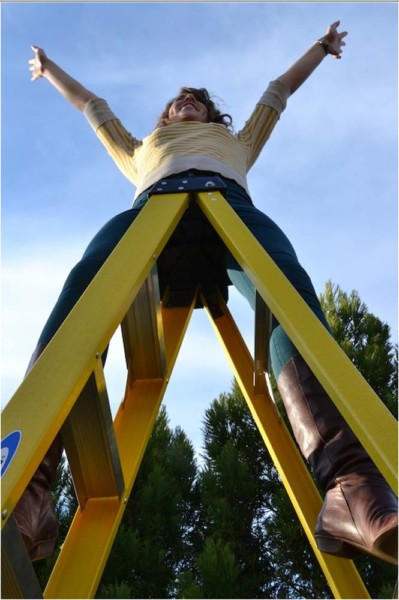
Macadore was given the color red and the letter ‘H’

Henry David Thoreau once said, “The question is not what you look at, but what you see”. For me, as long as I’ve known this quote, and it’s been a while, I’ve always thought it to be a very astute observation as it relates to how we perceive photographically.

A couple of years ago, I was thinking about an assignment I had been giving to my online students with the BPSOP and in my “Stretching Your Frame of Mind” workshop I conduct around the planet. I was (and still do) assigning a letter and a color to each person and telling them to go out and find and photograph them….hopefully, but not necessarily, in the same photo. They needed to find their color and letter as they appear naturally in reality. In my explanation to whatever class I was in at the time (or in now), as to why I always give this assignment, Thoreau’s quote has always been in the back of my brain, and the point of the assignment was for my student’s to go out and focus their eyes and mind and begin to what I’ve always referred to as, “seeing past first impressions”. I realized that I was giving the same message as Thoreau, but just wording it differently.

It was an Epiphany!!! For one brief moment in time, I actually thought  Henry David Thoreau and I just might be on the same wavelength. Here was a man that not only came up with this quote sometime between 1817 and 1862 when he died, but the author of Civil Disobedience. He was just slightly ahead of his time!!!

I’m always impressed with some of the letters and colors my students find or come up with, so I wanted to share several with you from my  BPSOP’s classes. In each of these examples, both the letter and their color are in the same photo. It has proven to be a great exercise in taking my student’s photos “Up a Notch”. In the above photo, Macadore was also working on another of my assignments, the silhouette. I’m thinking she scored a “home run”…how about you?

Visit my website at www.joebaraban.com, and check out my workshop schedule at the top of this blog. Come shoot with me sometime.

JoeB